
Background Cause 1 Japanese Occupation Indochina Vietnam Cambodia
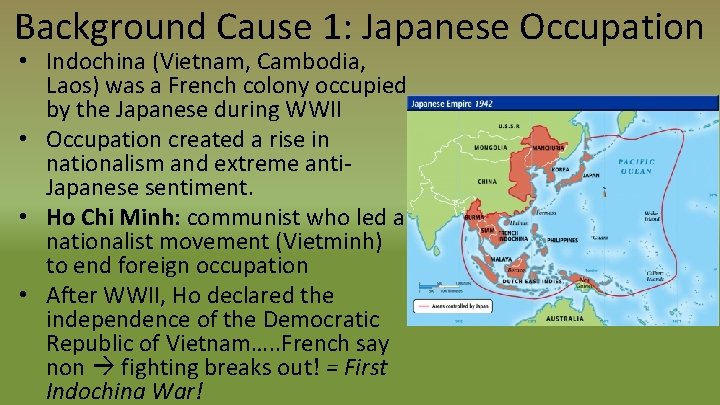
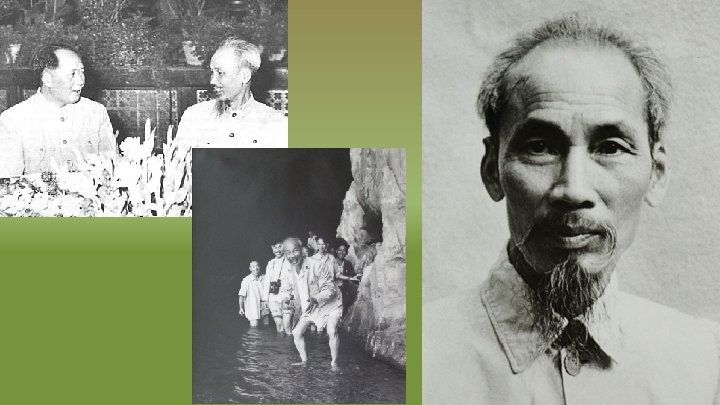
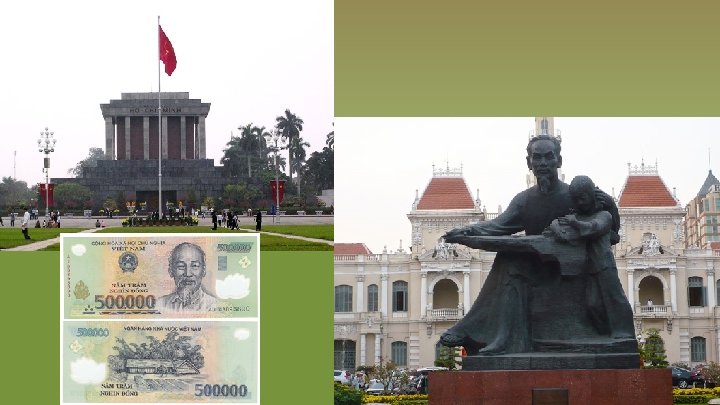
Background Cause 1: Japanese Occupation • Indochina (Vietnam, Cambodia, Laos) was a French colony occupied by the Japanese during WWII • Occupation created a rise in nationalism and extreme anti. Japanese sentiment. • Ho Chi Minh: communist who led a nationalist movement (Vietminh) to end foreign occupation • After WWII, Ho declared the independence of the Democratic Republic of Vietnam…. . French say non fighting breaks out! = First Indochina War!
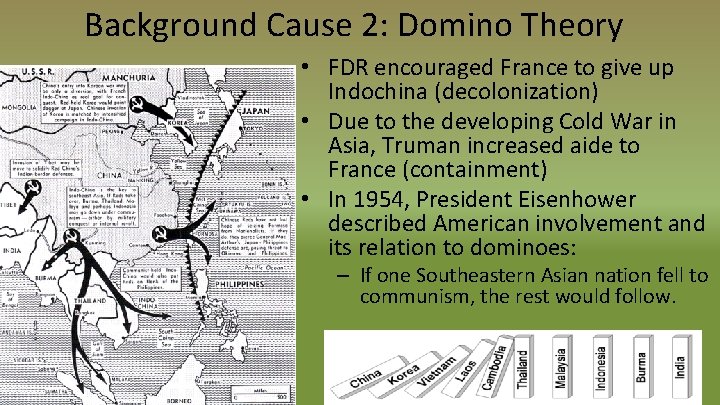
Background Cause 2: Domino Theory • FDR encouraged France to give up Indochina (decolonization) • Due to the developing Cold War in Asia, Truman increased aide to France (containment) • In 1954, President Eisenhower described American involvement and its relation to dominoes: – If one Southeastern Asian nation fell to communism, the rest would follow.
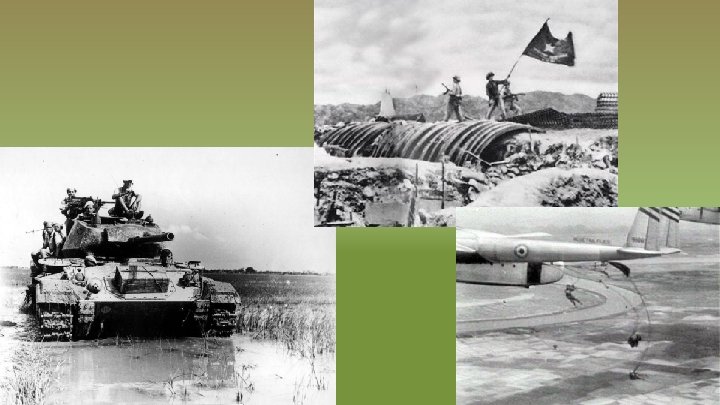
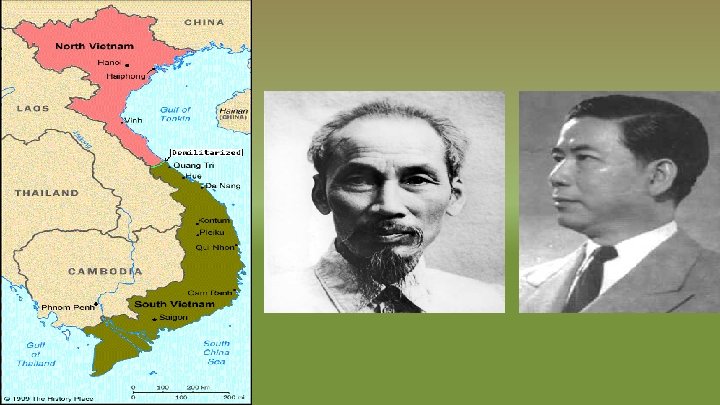
Background Cause 3: Geneva Accords • By 1954, the US funded 80% of the war • French were defeated at the battle of Dien Bien Phu • The Geneva Accords: 1954 peace settlement that divided Vietnam into two separate nations along the 17 th parallel • Ended French occupation (Vietnam, Laos, Cambodia recognized as independent) • Ho Chi Minh became president of the new Communist North Vietnam. • Ngo Dinh Diem became president of the anti-Communist South Vietnam. • Elections were supposed to be held in 1956 to unify Vietnam, but South Vietnam refused and it remained divided. • US did not sign Geneva Accords, and in response, strengthened the South through guaranteed protection by SEATO
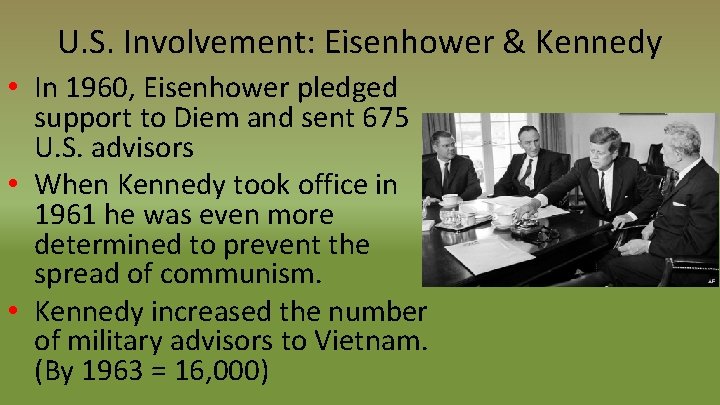
U. S. Involvement: Eisenhower & Kennedy • In 1960, Eisenhower pledged support to Diem and sent 675 U. S. advisors • When Kennedy took office in 1961 he was even more determined to prevent the spread of communism. • Kennedy increased the number of military advisors to Vietnam. (By 1963 = 16, 000)
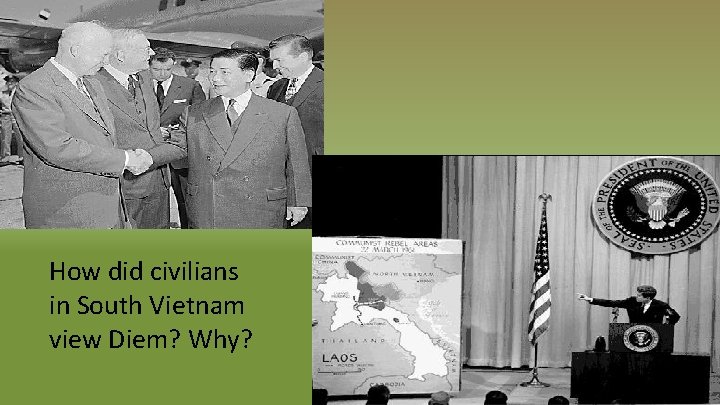
How did civilians in South Vietnam view Diem? Why?
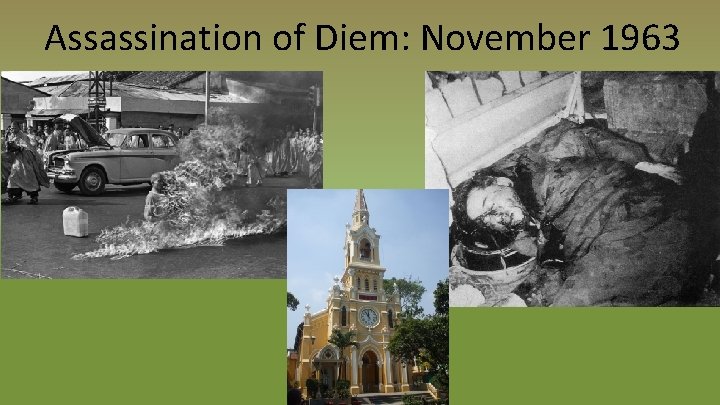
Assassination of Diem: November 1963
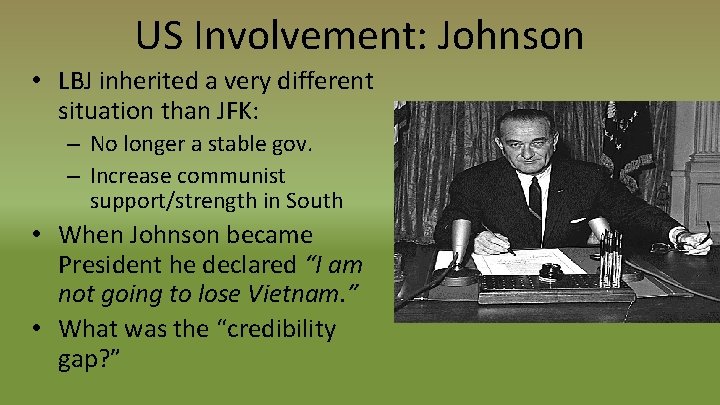
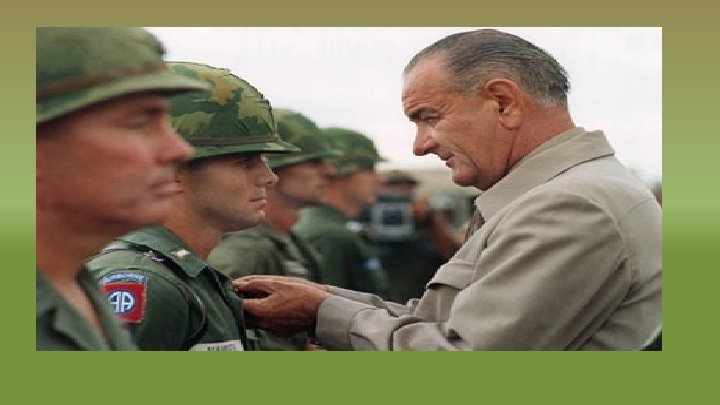
US Involvement: Johnson • LBJ inherited a very different situation than JFK: – No longer a stable gov. – Increase communist support/strength in South • When Johnson became President he declared “I am not going to lose Vietnam. ” • What was the “credibility gap? ”
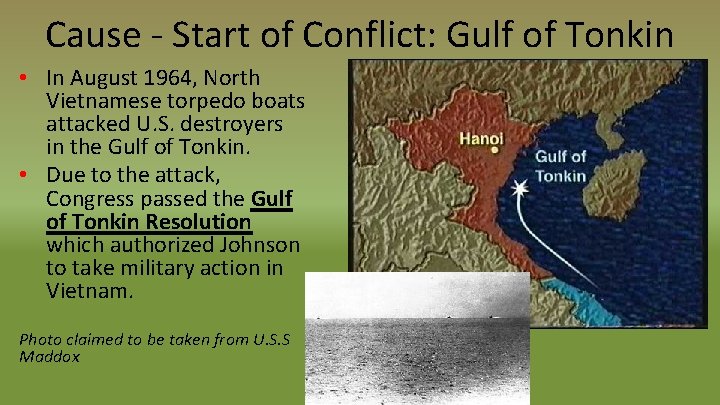
Cause - Start of Conflict: Gulf of Tonkin • In August 1964, North Vietnamese torpedo boats attacked U. S. destroyers in the Gulf of Tonkin. • Due to the attack, Congress passed the Gulf of Tonkin Resolution which authorized Johnson to take military action in Vietnam. Photo claimed to be taken from U. S. S Maddox
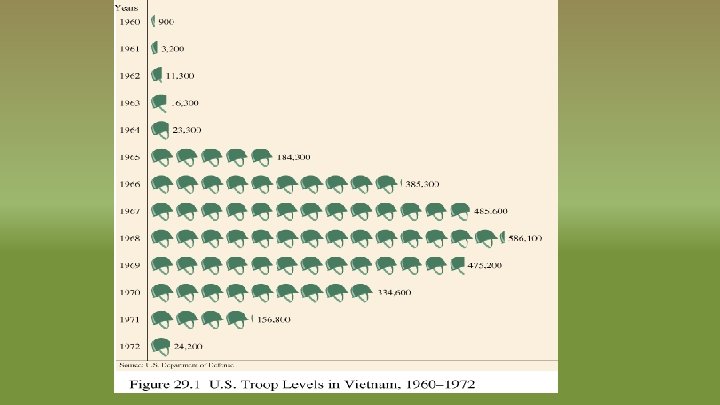
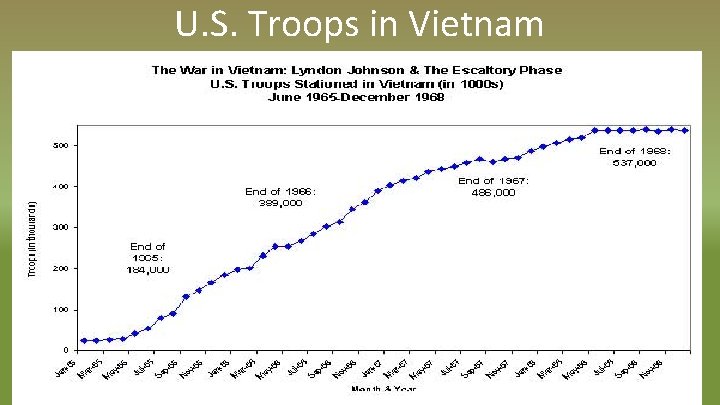
U. S. Troops in Vietnam
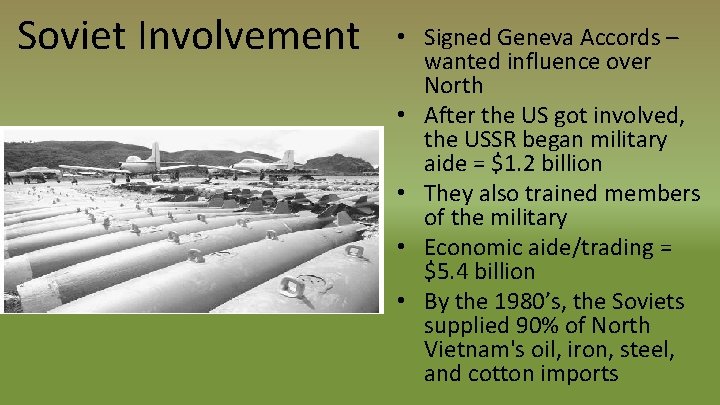
Soviet Involvement • Signed Geneva Accords – wanted influence over North • After the US got involved, the USSR began military aide = $1. 2 billion • They also trained members of the military • Economic aide/trading = $5. 4 billion • By the 1980’s, the Soviets supplied 90% of North Vietnam's oil, iron, steel, and cotton imports
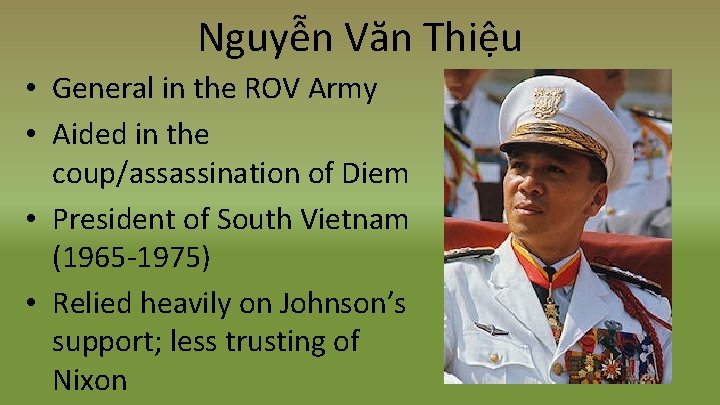
Nguyễn Văn Thiệu • General in the ROV Army • Aided in the coup/assassination of Diem • President of South Vietnam (1965 -1975) • Relied heavily on Johnson’s support; less trusting of Nixon
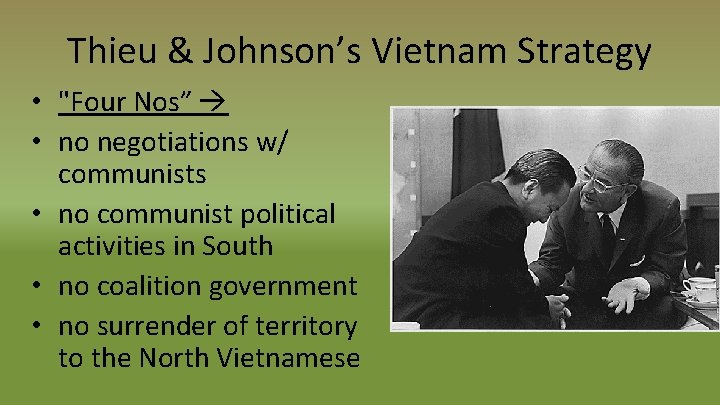
Thieu & Johnson’s Vietnam Strategy • "Four Nos” • no negotiations w/ communists • no communist political activities in South • no coalition government • no surrender of territory to the North Vietnamese
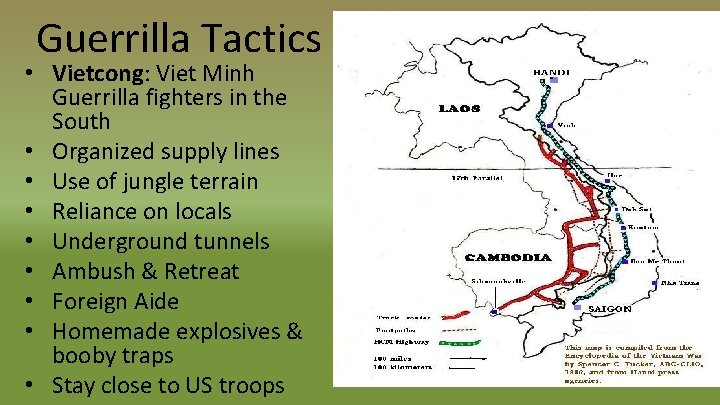
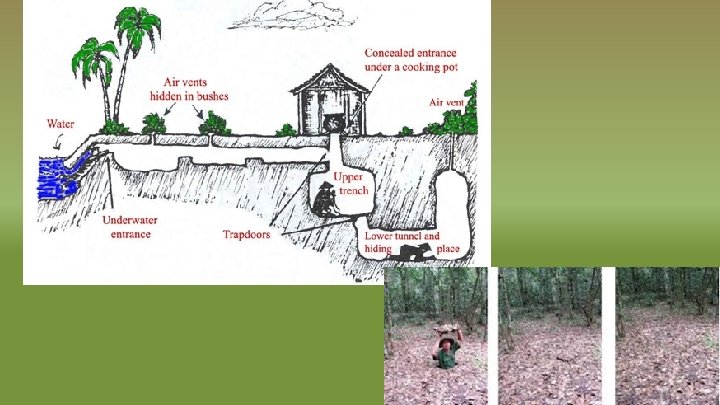
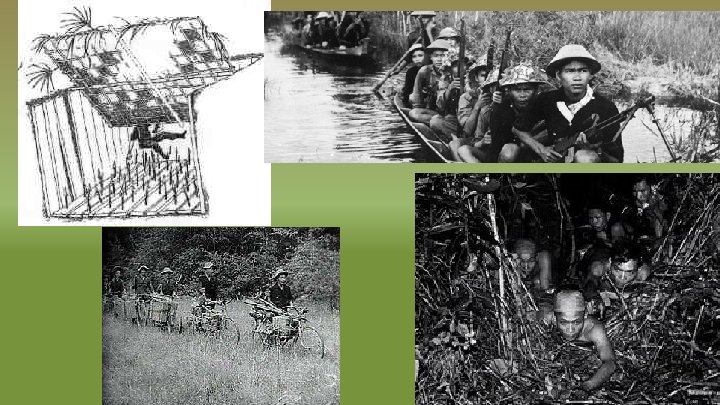
Guerrilla Tactics • Vietcong: Viet Minh Guerrilla fighters in the South • Organized supply lines • Use of jungle terrain • Reliance on locals • Underground tunnels • Ambush & Retreat • Foreign Aide • Homemade explosives & booby traps • Stay close to US troops
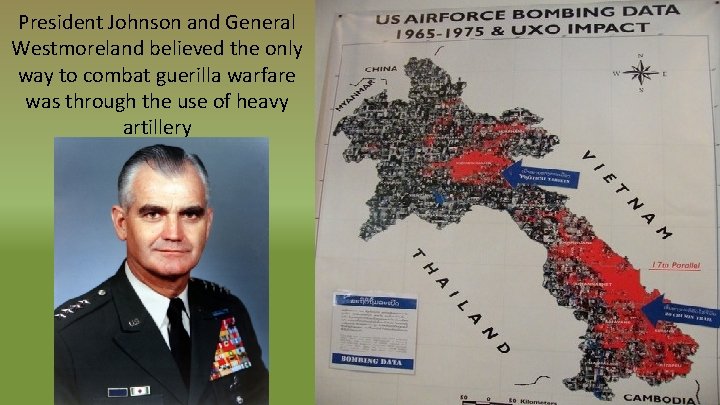
President Johnson and General Westmoreland believed the only way to combat guerilla warfare was through the use of heavy artillery
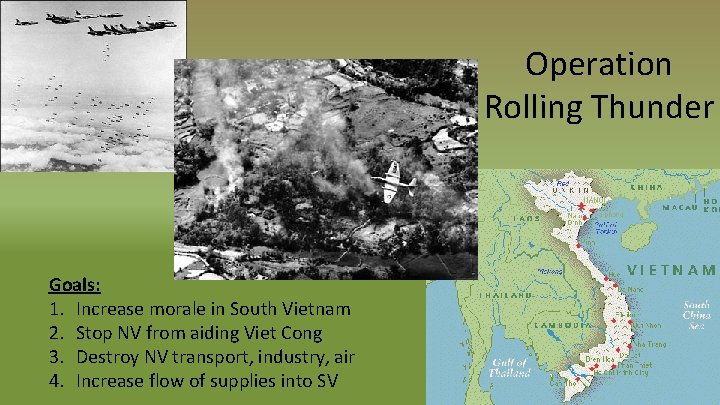
Operation Rolling Thunder Goals: 1. Increase morale in South Vietnam 2. Stop NV from aiding Viet Cong 3. Destroy NV transport, industry, air 4. Increase flow of supplies into SV
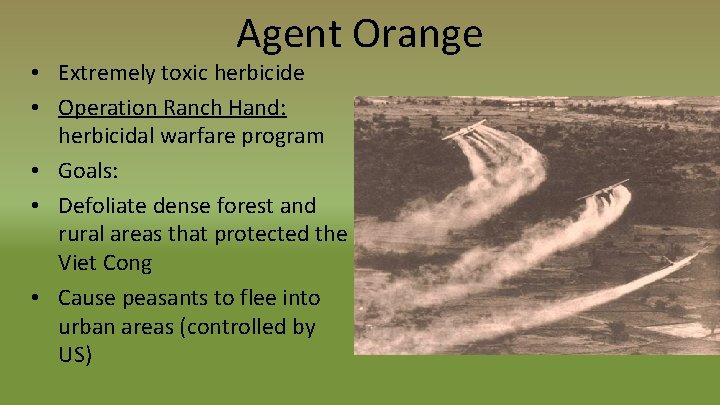
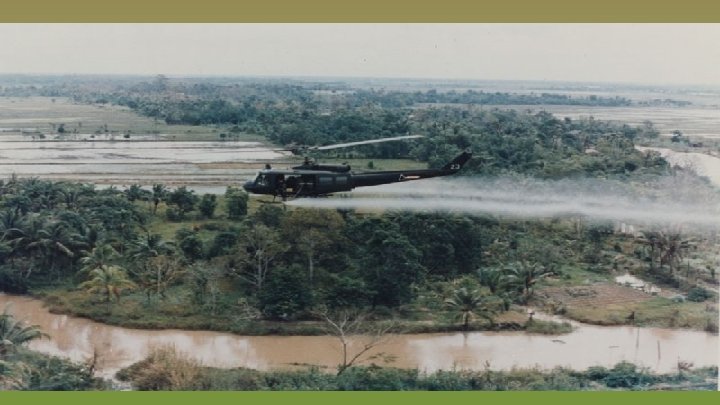
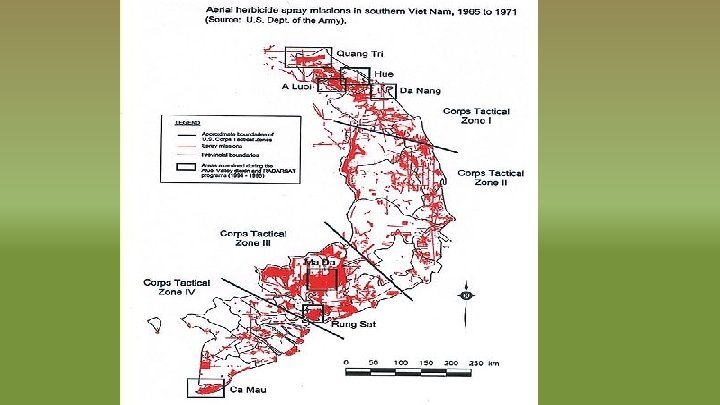
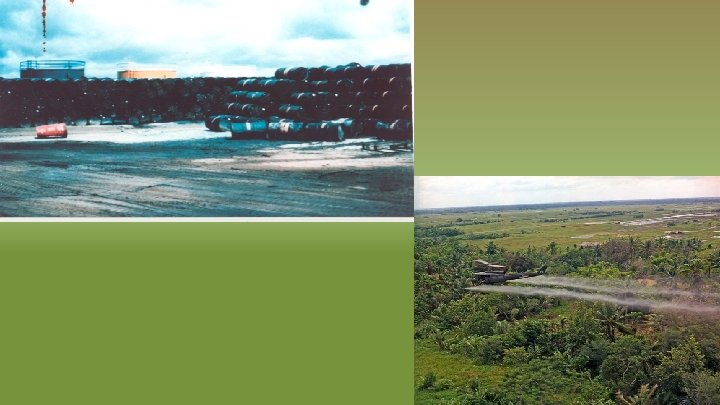
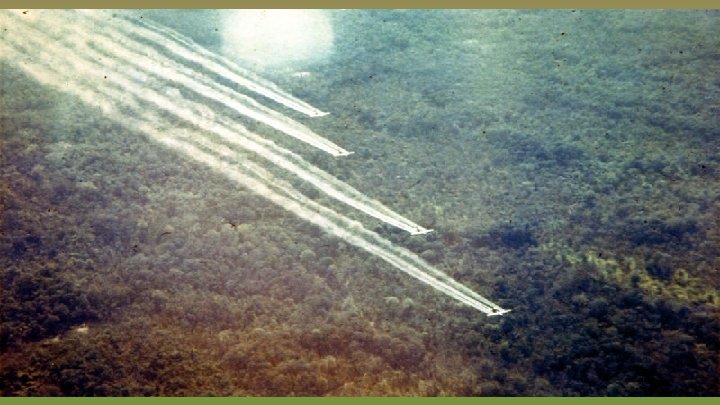
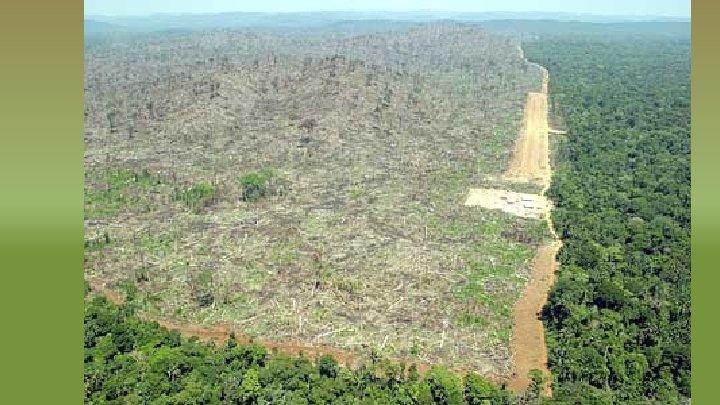
Agent Orange • Extremely toxic herbicide • Operation Ranch Hand: herbicidal warfare program • Goals: • Defoliate dense forest and rural areas that protected the Viet Cong • Cause peasants to flee into urban areas (controlled by US)
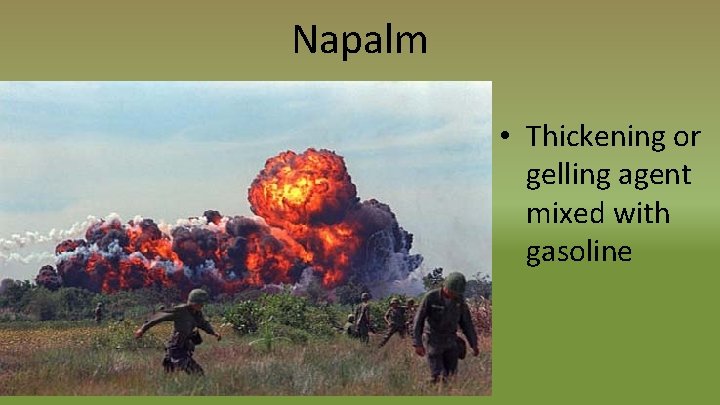
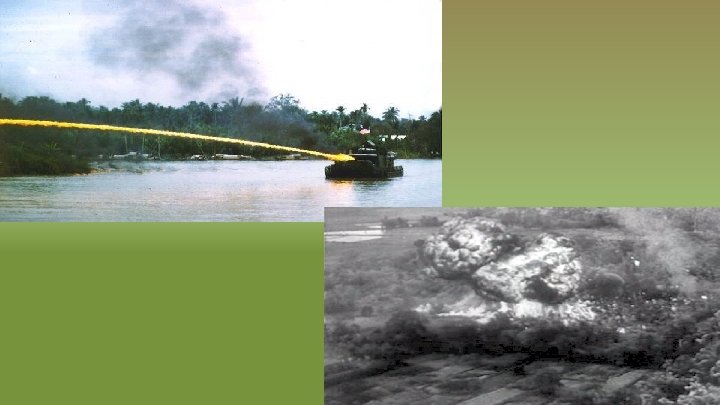
Napalm • Thickening or gelling agent mixed with gasoline
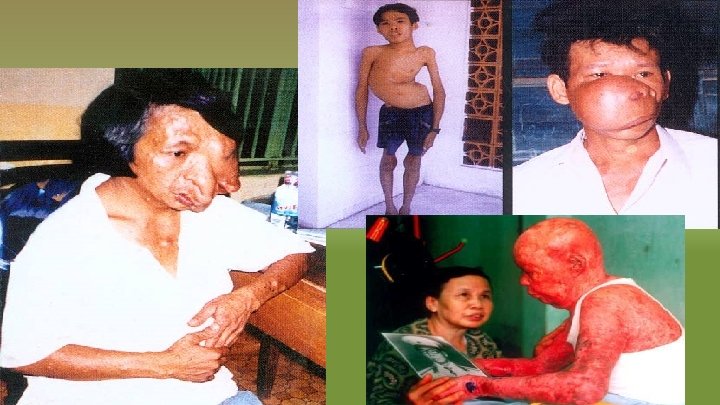
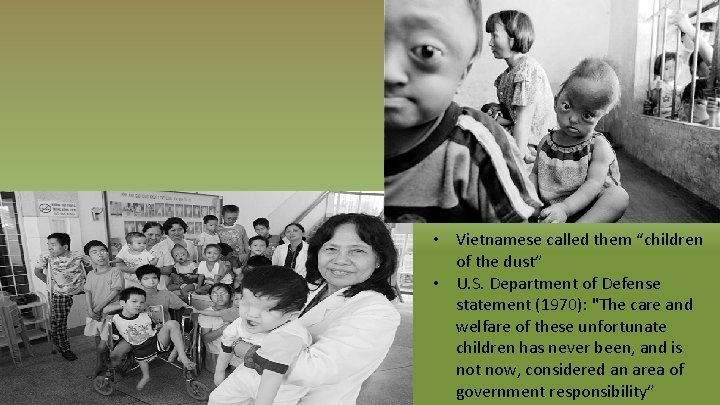
• Vietnamese called them “children of the dust” • U. S. Department of Defense statement (1970): "The care and welfare of these unfortunate children has never been, and is not now, considered an area of government responsibility”
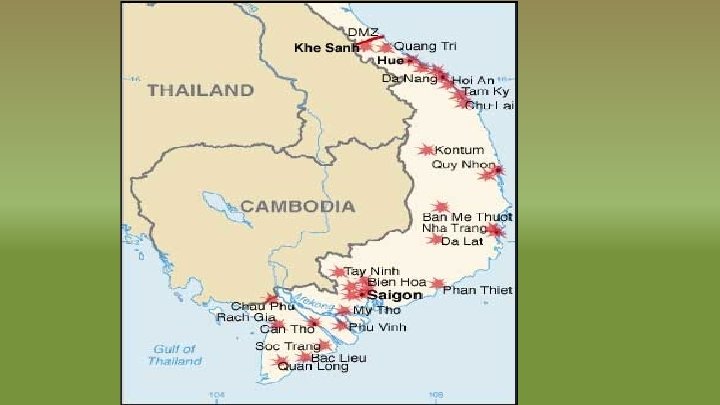
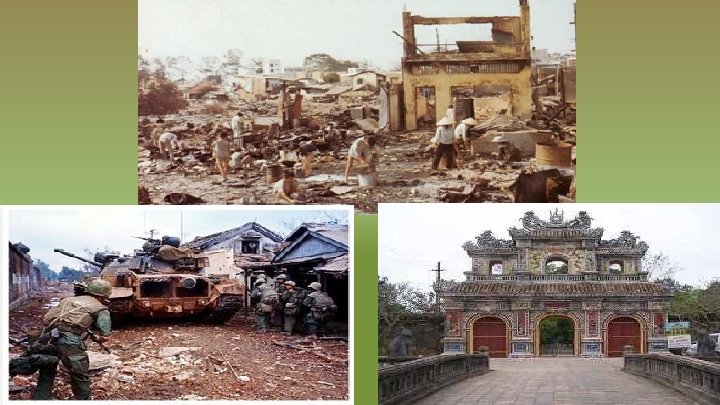
Tet Offensive • On January 30, 1968, Communist forces launched a major surprise attack on civilian & military targets in South Vietnam. • The first day of the Vietnamese New Year, or Tet. • Within 24 hours, 84, 000 Communist soldiers had stormed more than 100 South Vietnamese cities and towns, 12 U. S. military bases, and the U. S. Embassy in Saigon. • U. S. and South Vietnamese forces eventually retook most of the targets, but it destroyed the cities and landscape of South Vietnam.
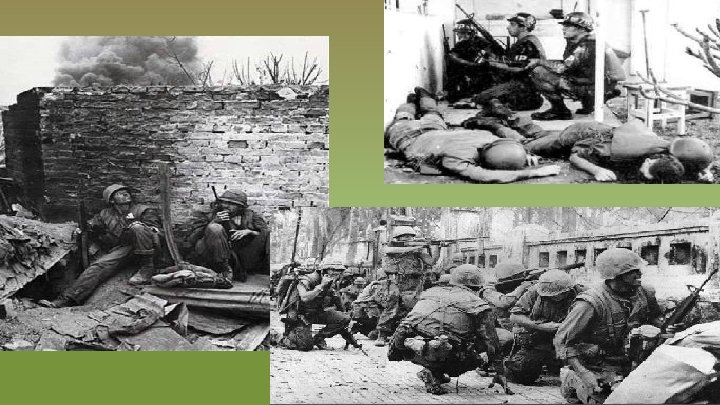
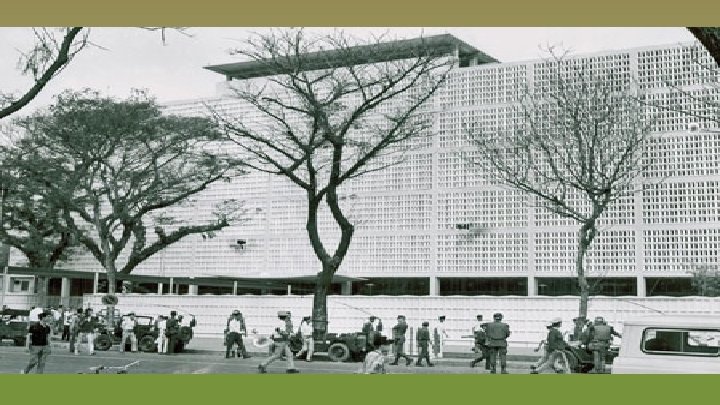
Tet Offensive Aftermath U. S. killed 33, 000 Viet. Cong 1, 100 U. S. troops killed 2, 300 South Vietnamese troops killed 12, 500 Vietnamese citizens killed More than 1 million Vietnamese became refugees. Dozens of South Vietnamese towns and villages lay in ruins. One army officer said: “We had to destroy the town to save it. ” Considered the turning point of the Vietnam War because it showed that no place in South Vietnam – not even the U. S. Embassy, was safe from attack. • It shattered American confidence and raised doubts about Johnson’s policies in Vietnam. • •
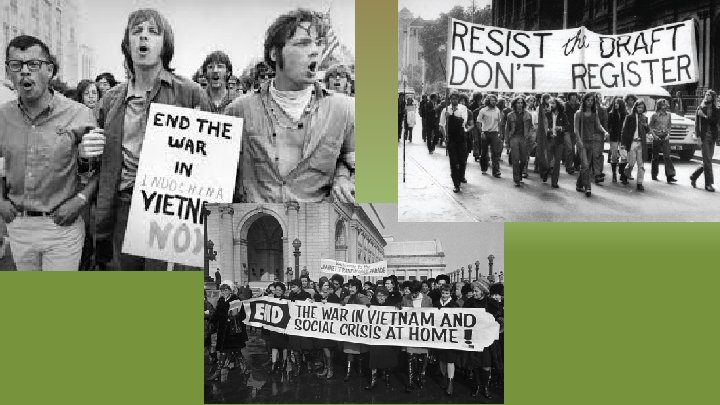
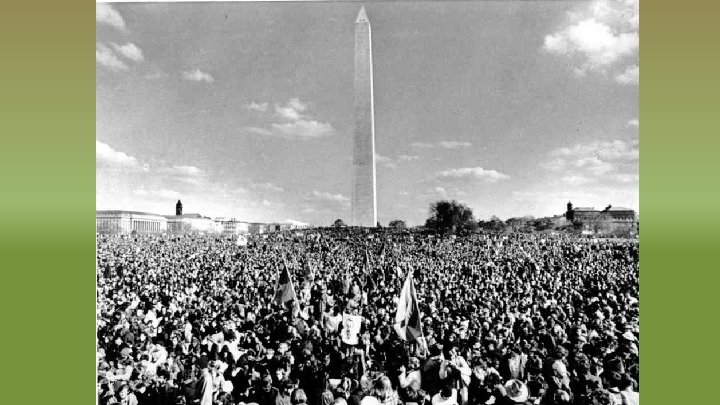
Vietnam Protest Slogans • Hey, Hey LBJ, how many kids will you kill today? • One, two they’ll kill you; three, four stop the war; five, six piss on Nix • Make love, not war • I don’t give a damn for Uncle Sam, I ain’t going to Vietnam • Eighteen today, dead tomorrow, don’t make us live this constant sorrow • Stop the war, feed the poor • Give peace a chance!
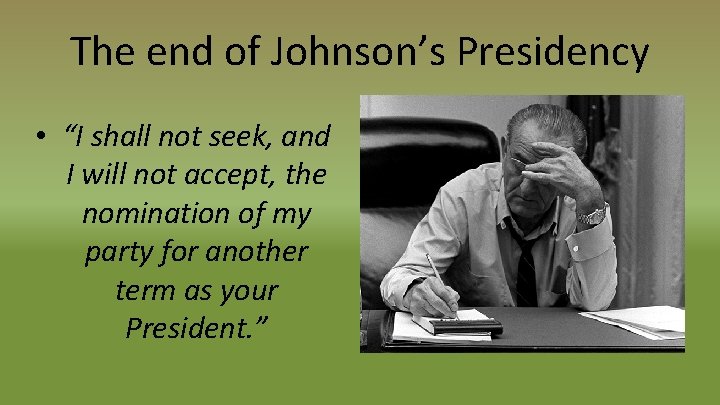
The end of Johnson’s Presidency • “I shall not seek, and I will not accept, the nomination of my party for another term as your President. ”
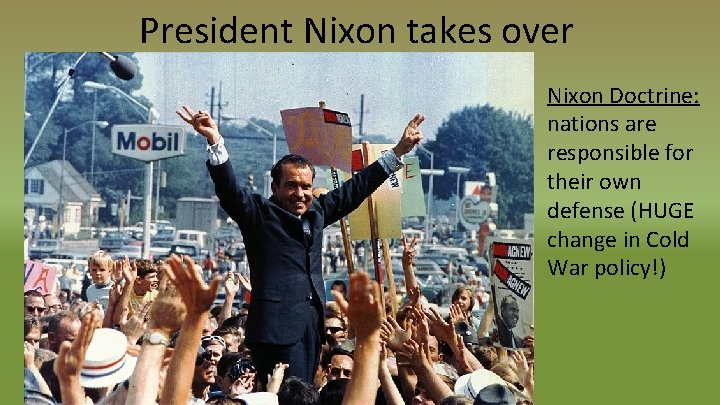
President Nixon takes over Nixon Doctrine: nations are responsible for their own defense (HUGE change in Cold War policy!)
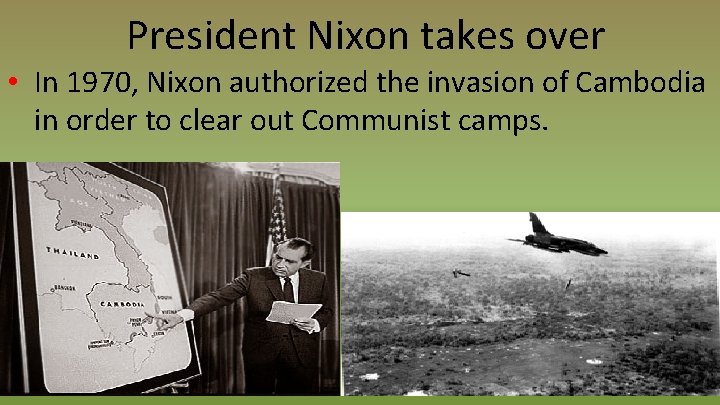
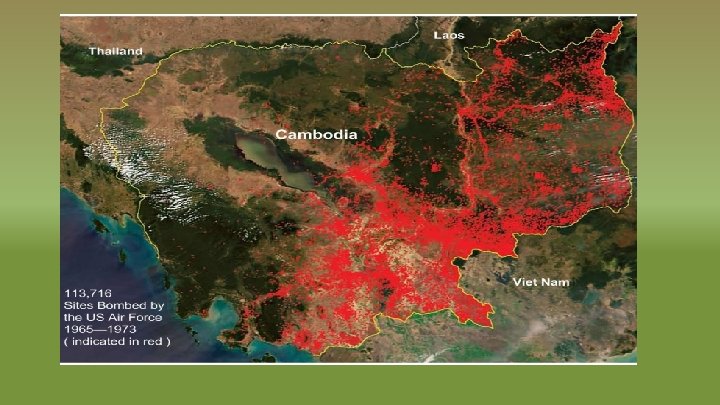
President Nixon takes over • In 1970, Nixon authorized the invasion of Cambodia in order to clear out Communist camps.
Paris Peace Treaty • Evident that neither side would back down…… “Peace with honor!” • In January 1973, the U. S, South Vietnam, North Vietnam and the Viet Cong signed a peace agreement in Paris (thanks to détente with China!) • The provisions of the agreement were: 1. The U. S. would withdraw from Vietnam within 60 days. 2. All prisoners of war would be released. 3. All parties would end military activities in Laos and Cambodia. 4. The 17 th parallel would continue to divide North and South Vietnam.
End of Vietnam War • After the U. S. left Vietnam in 1973, the south and north continued to fight for two more years. • The Vietnam War officially ended in 1975 when the whole country of Vietnam fell to communism. • Cambodia & Laos fell to communism in 1975
After this lesson, complete the following term cards: Causes of Vietnam War Johnson
- Slides: 49