
Back to the public Paris water management reform
Back to the public : Paris’ water management reform
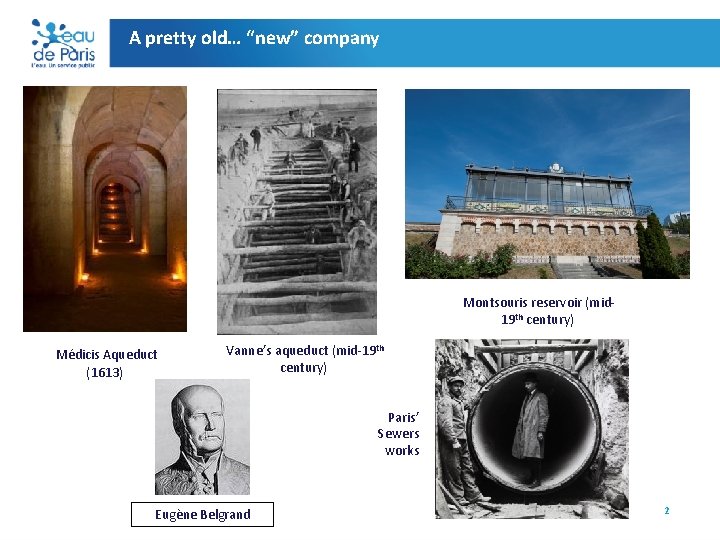
A pretty old… “new” company Montsouris reservoir (mid 19 th century) Médicis Aqueduct (1613) Vanne’s aqueduct (mid-19 th century) Paris’ Sewers works Eugène Belgrand 2
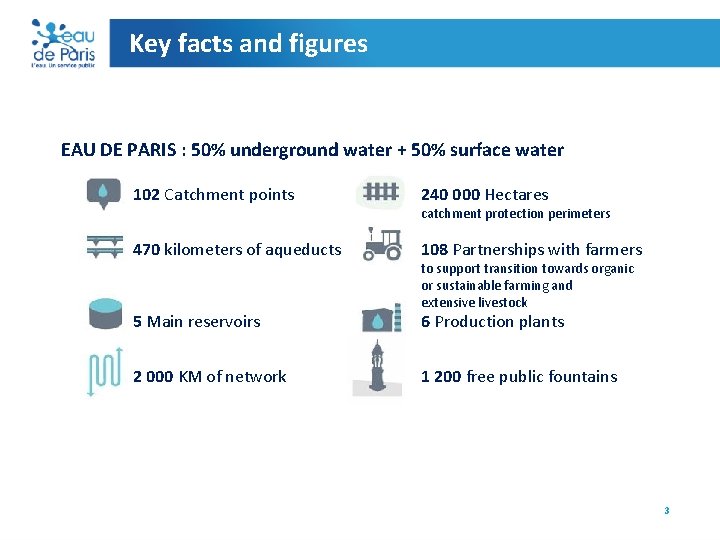
Key facts and figures EAU DE PARIS : 50% underground water + 50% surface water 102 Catchment points 240 000 Hectares 470 kilometers of aqueducts 108 Partnerships with farmers 5 Main reservoirs 6 Production plants 2 000 KM of network catchment protection perimeters to support transition towards organic or sustainable farming and extensive livestock 1 200 free public fountains 3
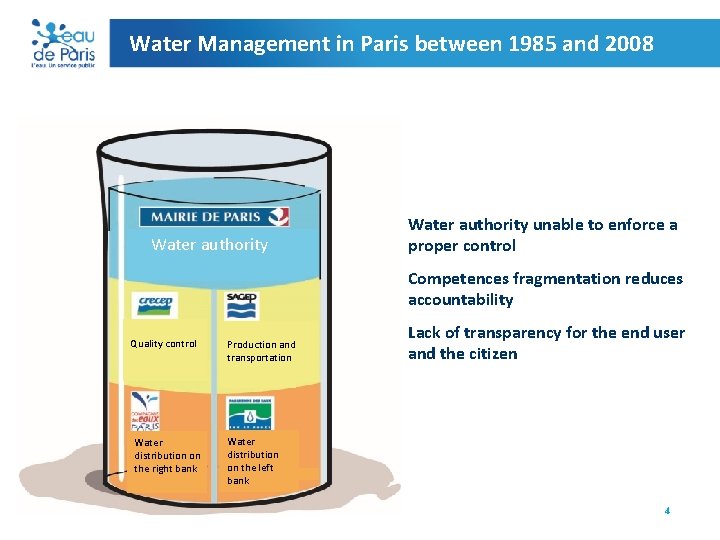
Water Management in Paris between 1985 and 2008 Water authority • Water authority unable to enforce a proper control • Competences fragmentation reduces accountability Quality control Water distribution on the right bank Production and transportation • Lack of transparency for the end user and the citizen Water distribution on the left bank 4
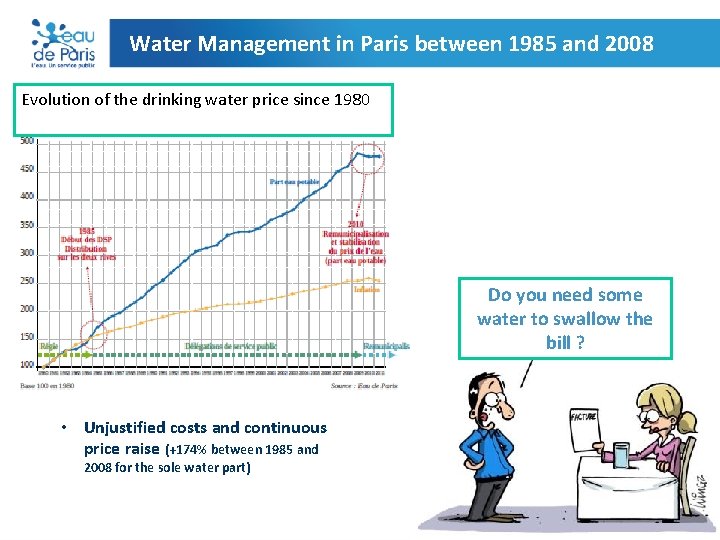
Water Management in Paris between 1985 and 2008 Evolution of the drinking water price since 1980 Do you need some water to swallow the bill ? • Unjustified costs and continuous price raise (+174% between 1985 and 2008 for the sole water part) 5
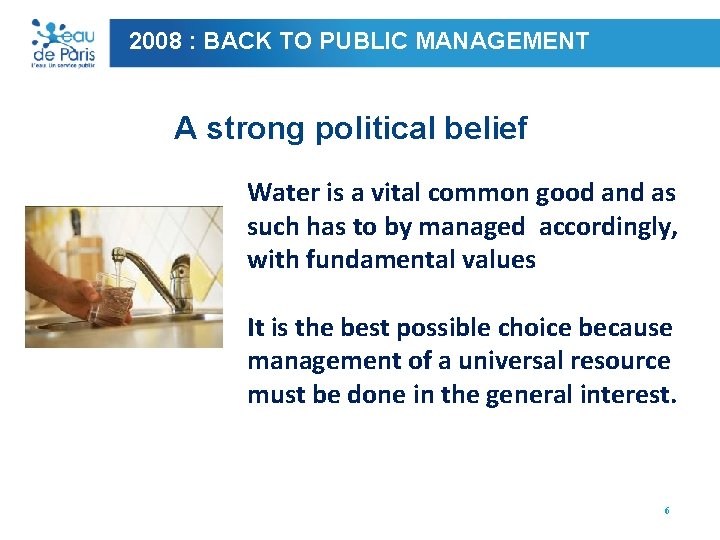
2008 : BACK TO PUBLIC MANAGEMENT A strong political belief Water is a vital common good and as such has to by managed accordingly, with fundamental values It is the best possible choice because management of a universal resource must be done in the general interest. 6
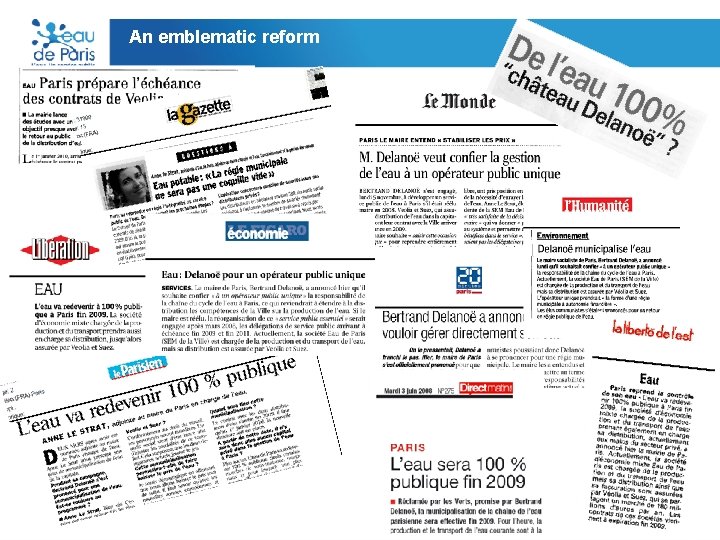
An emblematic reform 7
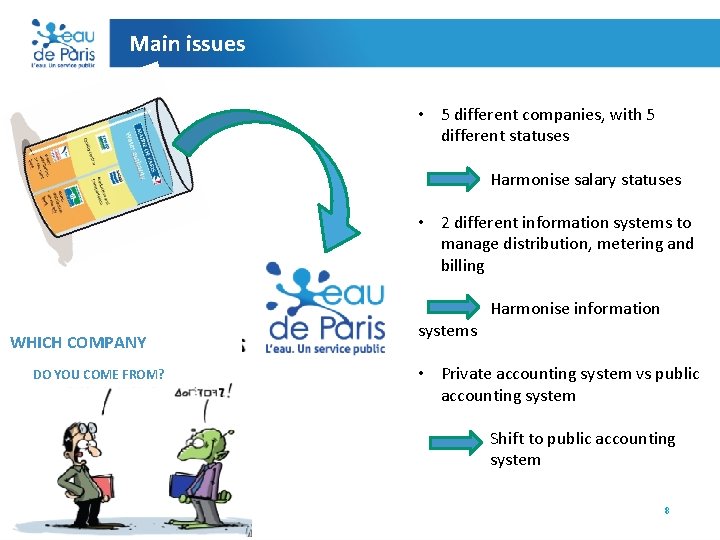
Main issues • 5 different companies, with 5 different statuses Harmonise salary statuses • 2 different information systems to manage distribution, metering and billing WHICH COMPANY DO YOU COME FROM? systems Harmonise information • Private accounting system vs public accounting system Shift to public accounting system 8
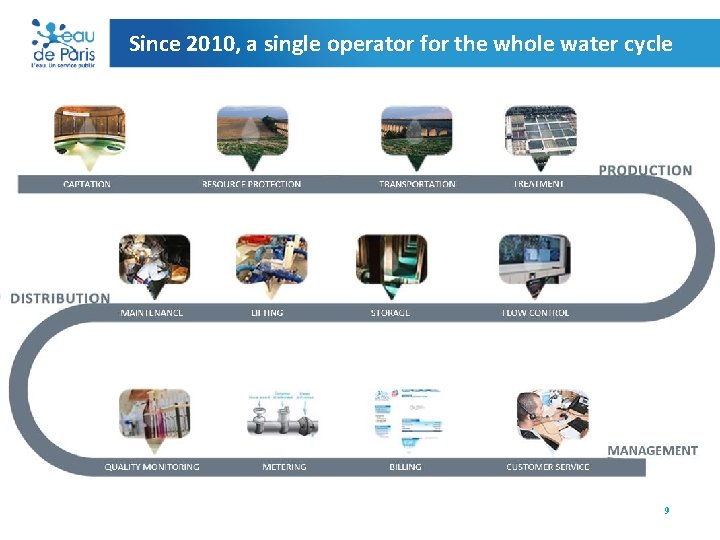
Since 2010, a single operator for the whole water cycle 9
Public management, real performances 7 years after the reform, real performances : Ø Sanitary compliance: 99, 86% on physicochemical parameters (France average 99, 2%) et 99, 97% on microbiological parameters (France average 99, 4%) (State control) Ø Customers : 97% satisfied with the service / Customer service of the year award winner 5 years in a row Ø 89, 6% network yield (France average : 79, 7%) Ø 74% self-financing of investments, 75 M€ invested each year Ø 3, 4164 €/m 3 incl. taxes (1, 08 € HT/m 3 for the sole water part) – The lowest in Ile de France 10
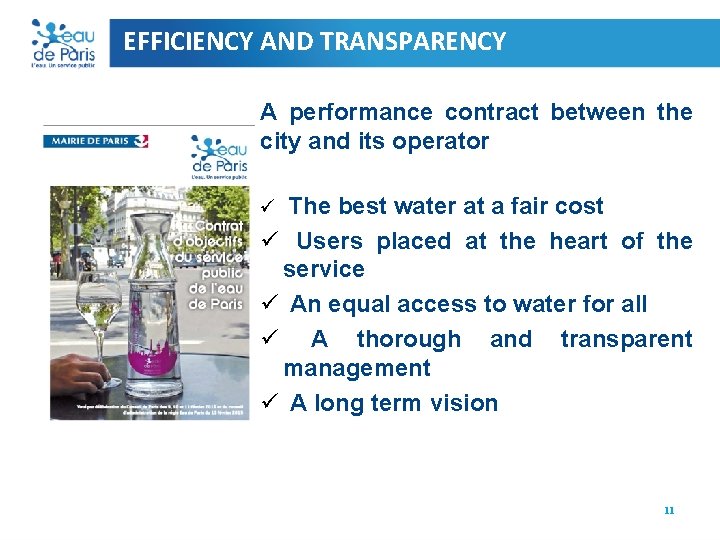
EFFICIENCY AND TRANSPARENCY A performance contract between the city and its operator ü The best water at a fair cost ü Users placed at the heart of the service ü An equal access to water for all ü A thorough and transparent management ü A long term vision 11
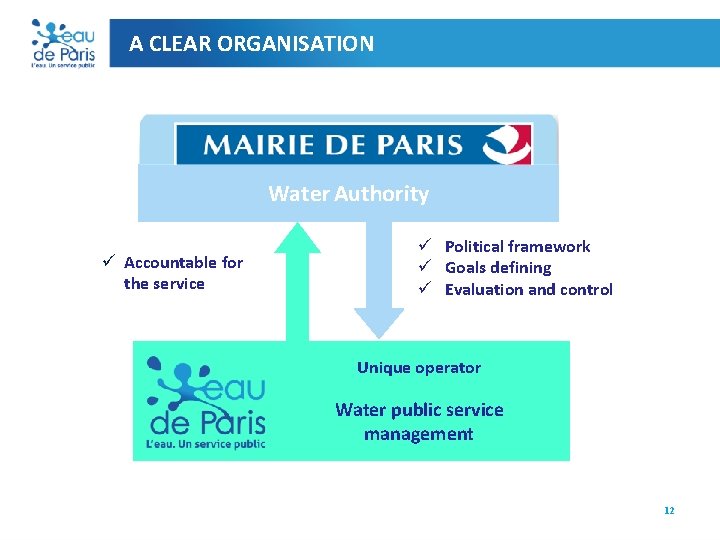
A CLEAR ORGANISATION Water Authority ü Accountable for the service ü Political framework ü Goals defining ü Evaluation and control Unique operator Water public service management 12
AN OPEN GOVERNANCE Eau de Paris’ board : 20 administrators : • 13 Council of Paris’ elected officials, • 3 stakeholders representatives, • 2 employees representatives • 2 qualified experts Parisian Water Observatory: A participatory democracy body, established by the city of Paris • Stakeholders representatives, Council of Paris’ elected officials, experts… • A place for information, discussions and consultation 13
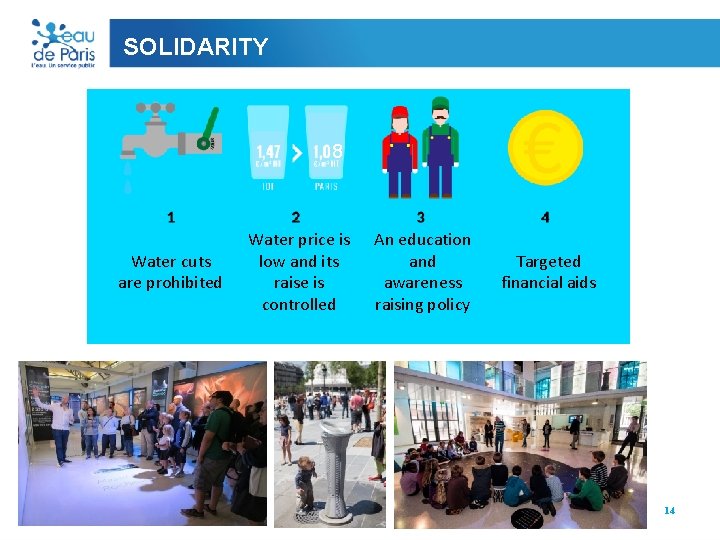
SOLIDARITY 8 Water cuts are prohibited Water price is low and its raise is controlled An education and awareness raising policy Targeted financial aids 14
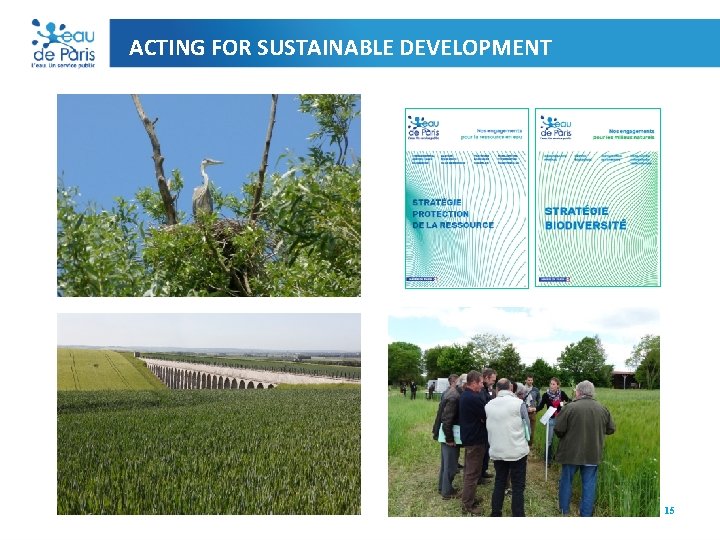
ACTING FOR SUSTAINABLE DEVELOPMENT 15
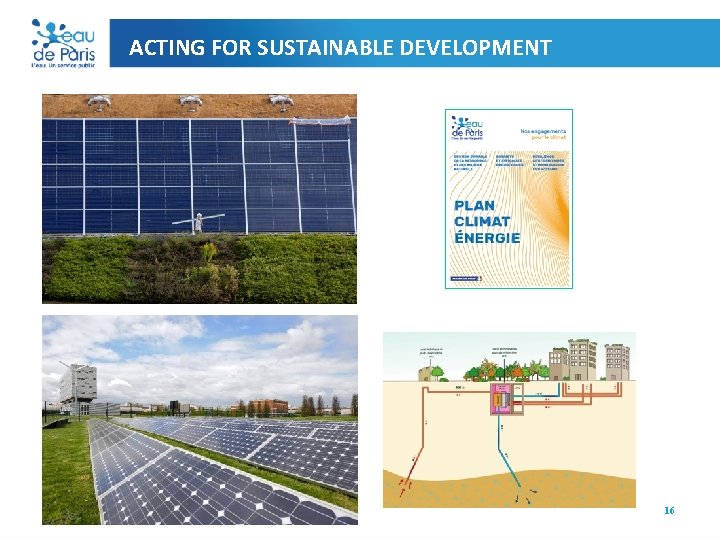
ACTING FOR SUSTAINABLE DEVELOPMENT 16

The french territorial reform A reform adopted in 2015 that will change France’s institutional landscape Eau de Paris is ready to help and share the Parisian experience 17
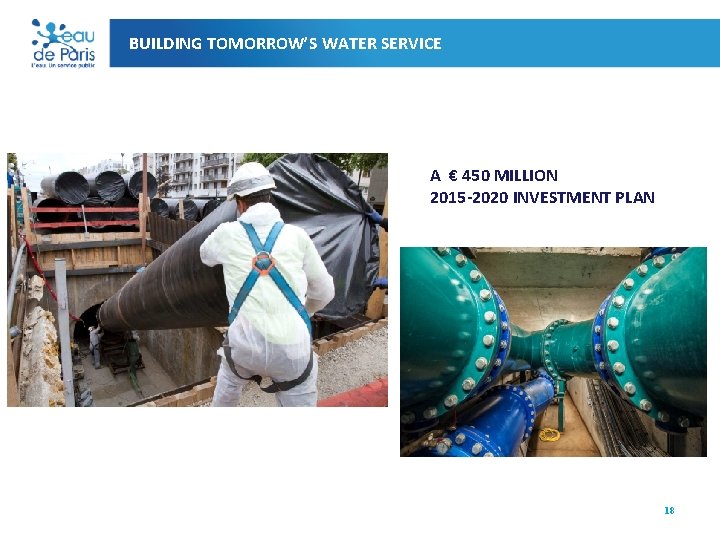
BUILDING TOMORROW’S WATER SERVICE A € 450 MILLION 2015 -2020 INVESTMENT PLAN 18
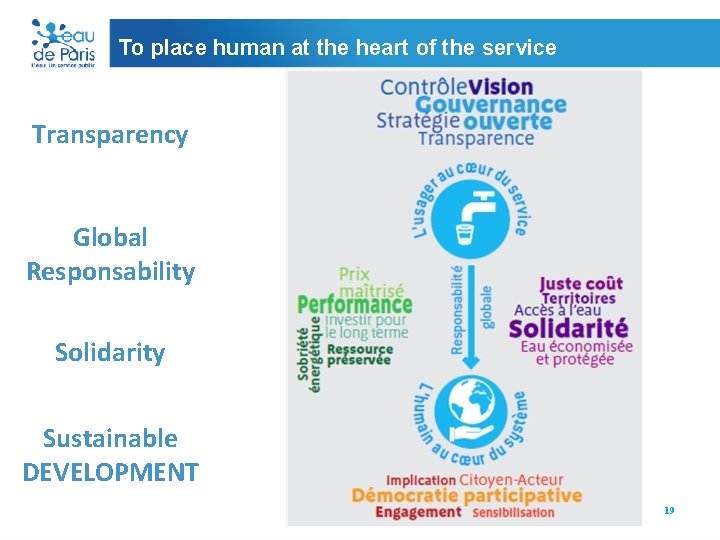
To place human at the heart of the service Transparency Global Responsability Solidarity Sustainable DEVELOPMENT 19
- Slides: 19