
Back to the Future Scientific and technological progress

Back to the Future Scientific and technological progress from an historical perspective

Back to the future • The modern advencements in science in technology are based on historical achievements. • There is a very wide array of scientific developments: biology, chemistry, physics, etc. • We will focus on applied mathematics. • Why? Because why not!
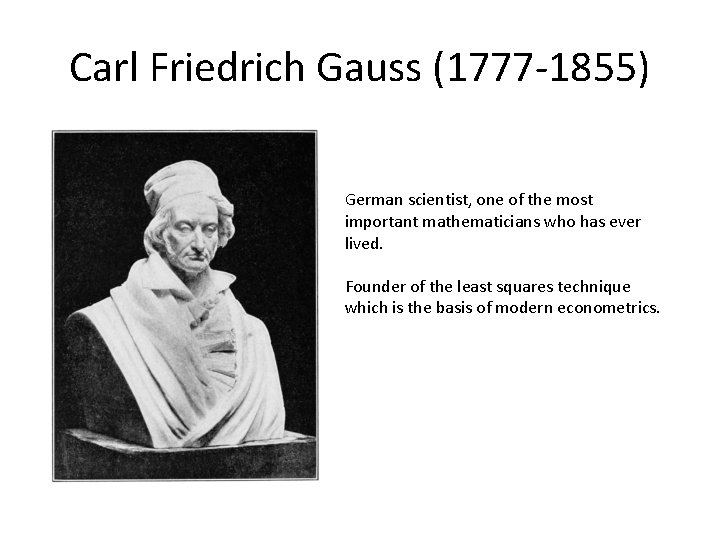
Carl Friedrich Gauss (1777 -1855) German scientist, one of the most important mathematicians who has ever lived. Founder of the least squares technique which is the basis of modern econometrics.

Ceres (Antique Rome) The Goddess of Soil and Fertility: A dwarf planet in the Solar system is named after her.

Ceres (Dwarf Planet)
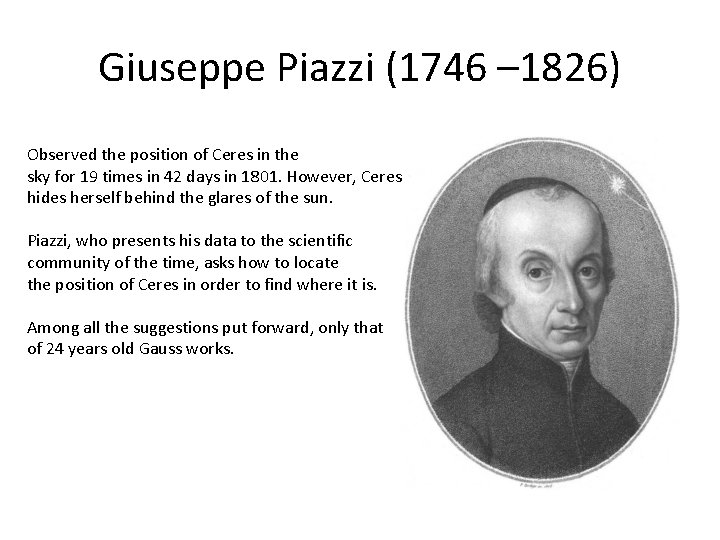
Giuseppe Piazzi (1746 – 1826) Observed the position of Ceres in the sky for 19 times in 42 days in 1801. However, Ceres hides herself behind the glares of the sun. Piazzi, who presents his data to the scientific community of the time, asks how to locate the position of Ceres in order to find where it is. Among all the suggestions put forward, only that of 24 years old Gauss works.
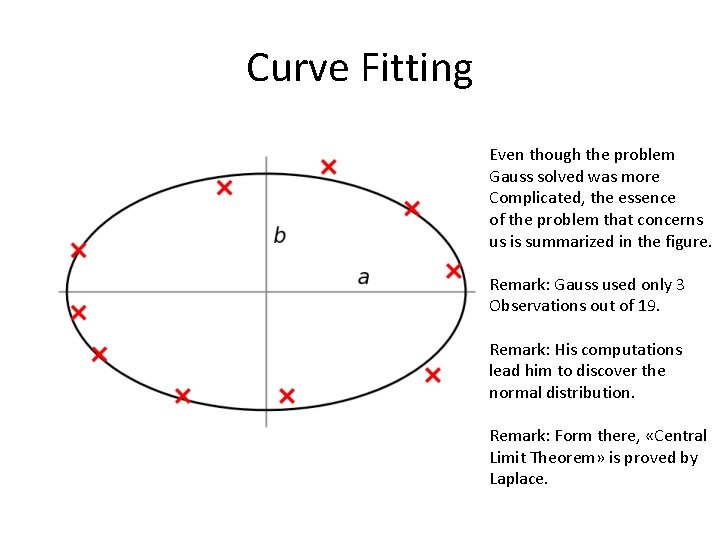
Curve Fitting Even though the problem Gauss solved was more Complicated, the essence of the problem that concerns us is summarized in the figure. Remark: Gauss used only 3 Observations out of 19. Remark: His computations lead him to discover the normal distribution. Remark: Form there, «Central Limit Theorem» is proved by Laplace.
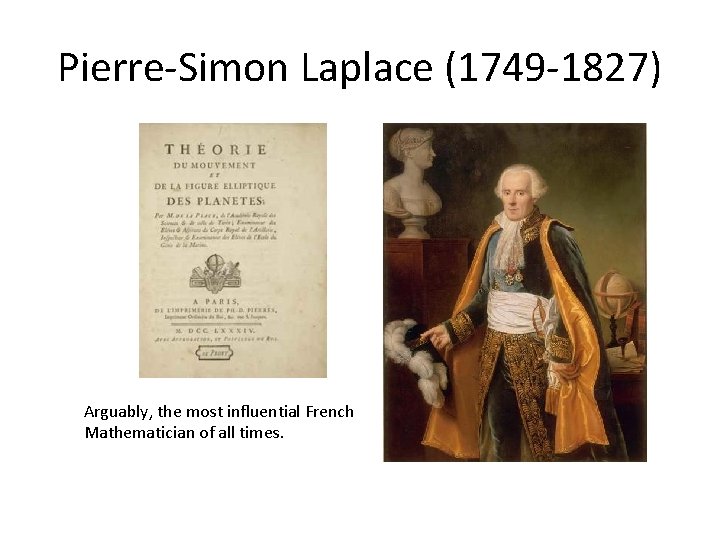
Pierre-Simon Laplace (1749 -1827) Arguably, the most influential French Mathematician of all times.

Least Squares: •
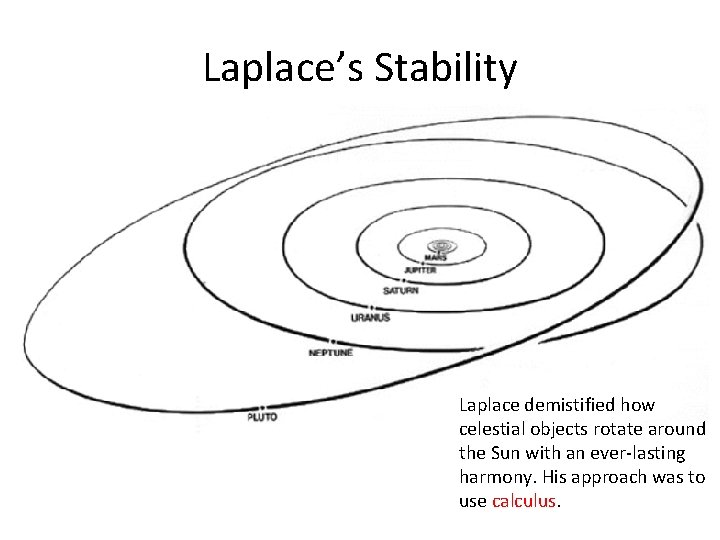
Laplace’s Stability Laplace demistified how celestial objects rotate around the Sun with an ever-lasting harmony. His approach was to use calculus.
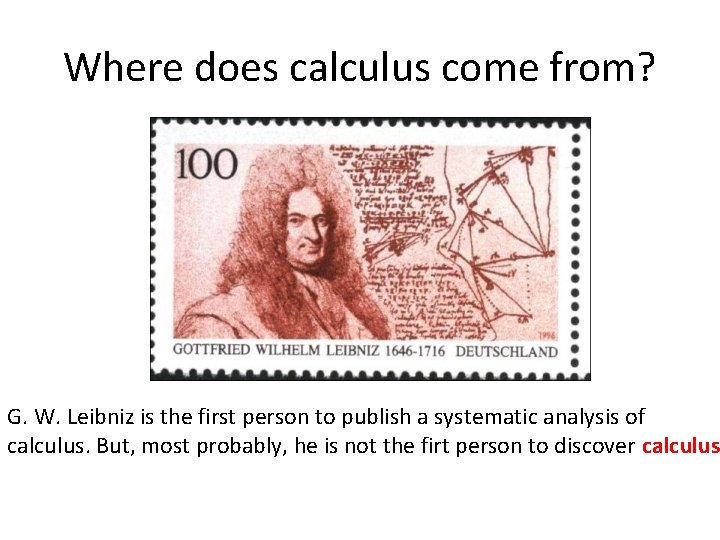
Where does calculus come from? G. W. Leibniz is the first person to publish a systematic analysis of calculus. But, most probably, he is not the firt person to discover calculus
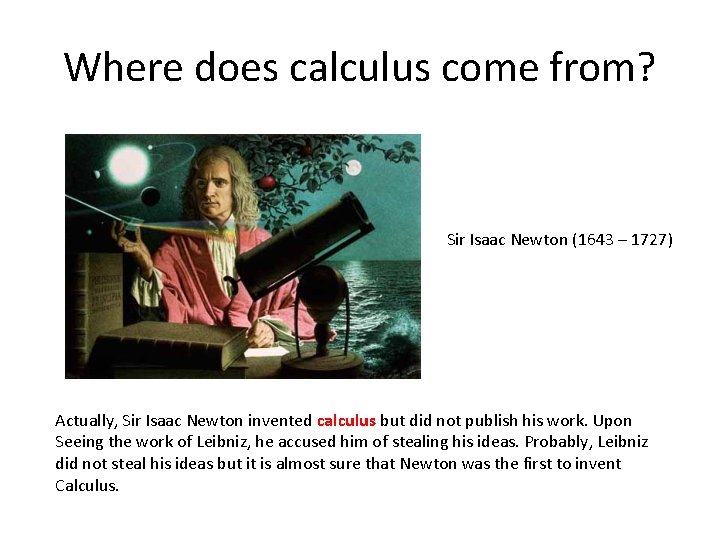
Where does calculus come from? Sir Isaac Newton (1643 – 1727) Actually, Sir Isaac Newton invented calculus but did not publish his work. Upon Seeing the work of Leibniz, he accused him of stealing his ideas. Probably, Leibniz did not steal his ideas but it is almost sure that Newton was the first to invent Calculus.
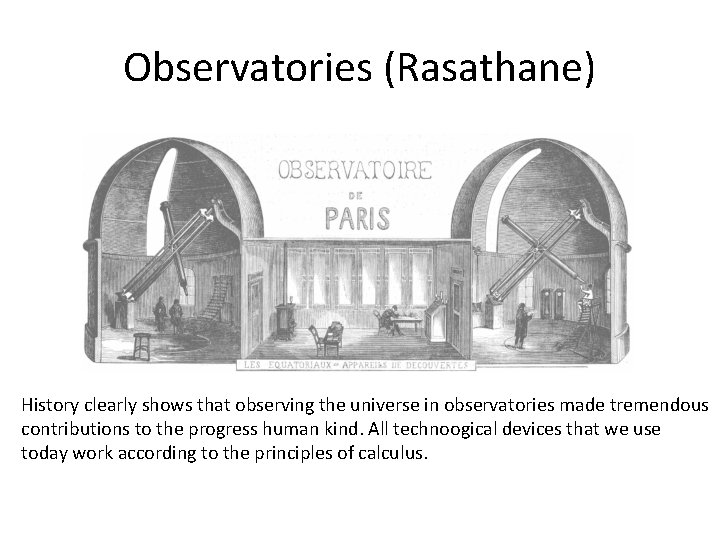
Observatories (Rasathane) History clearly shows that observing the universe in observatories made tremendous contributions to the progress human kind. All technoogical devices that we use today work according to the principles of calculus.
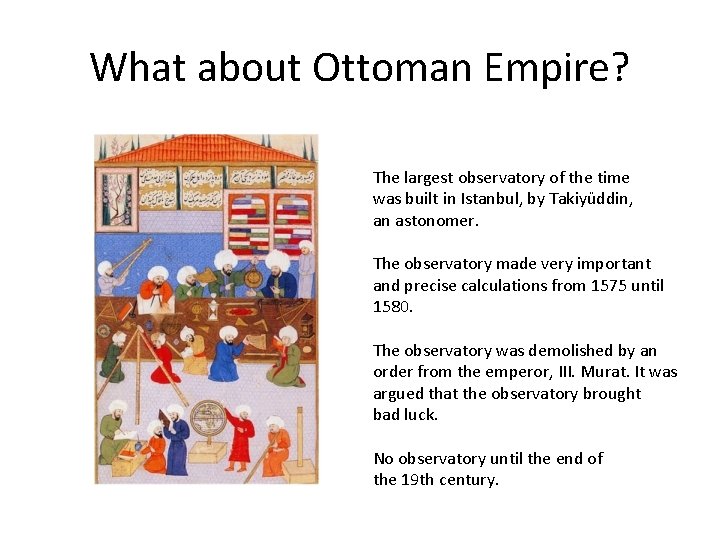
What about Ottoman Empire? The largest observatory of the time was built in Istanbul, by Takiyüddin, an astonomer. The observatory made very important and precise calculations from 1575 until 1580. The observatory was demolished by an order from the emperor, III. Murat. It was argued that the observatory brought bad luck. No observatory until the end of the 19 th century.
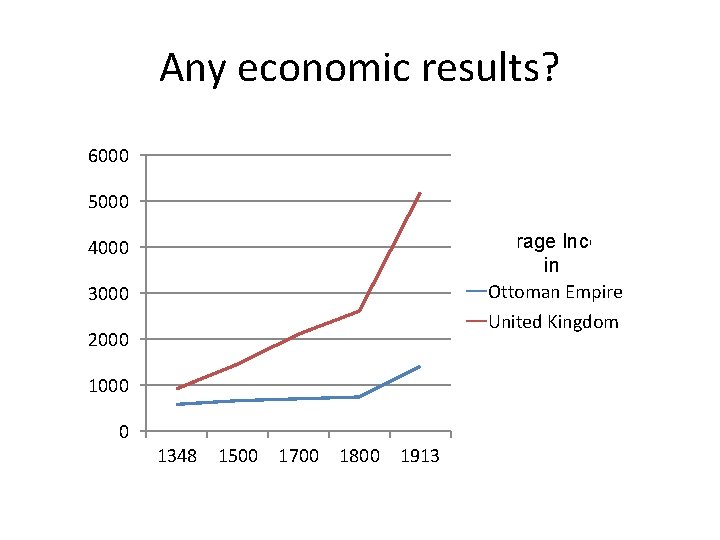
Any economic results? 6000 5000 Average Income in Ottoman Empire United Kingdom 4000 3000 2000 1000 0 1348 1500 1700 1800 1913
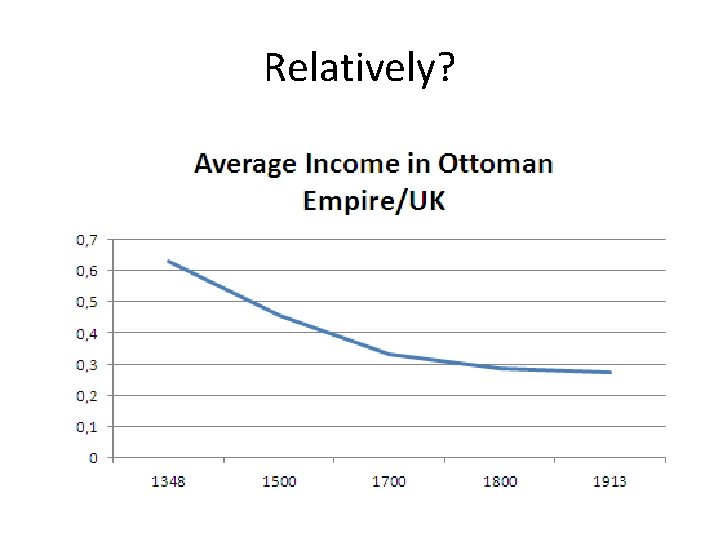
Relatively?
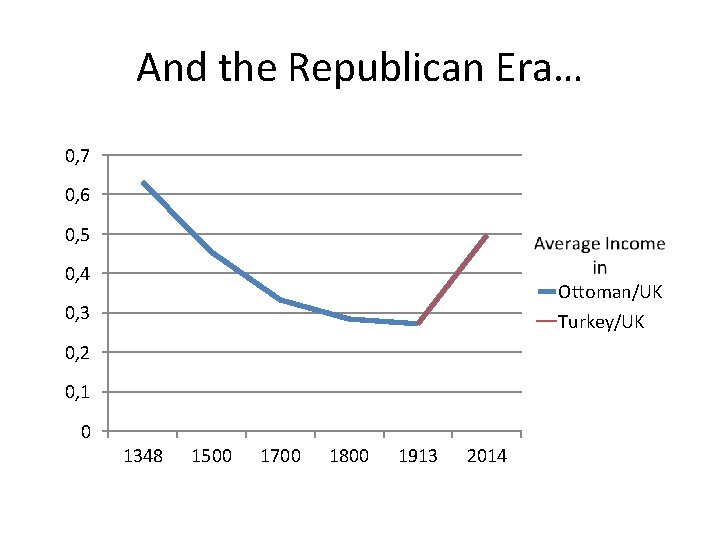
And the Republican Era… 0, 7 0, 6 0, 5 0, 4 Ottoman/UK Turkey/UK 0, 3 0, 2 0, 1 0 1348 1500 1700 1800 1913 2014
Summary: • Britain improved its position relative to the Ottoman Empire until the end of the 18 th centruy. • Then Turkey took-off and started catch-up… • But still Britain is richer.
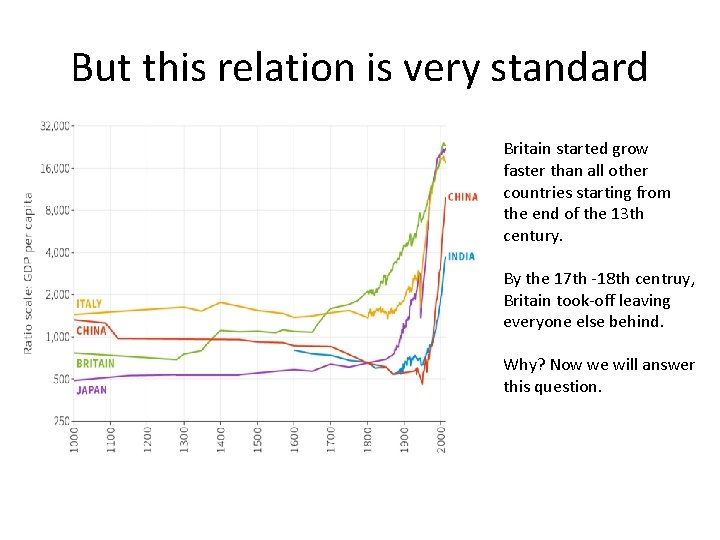
But this relation is very standard Britain started grow faster than all other countries starting from the end of the 13 th century. By the 17 th -18 th centruy, Britain took-off leaving everyone else behind. Why? Now we will answer this question.
Why Britain? • Why was Britain so successful with respect to other countries? • A possible answer is: «Industrial Revolution started in Britain» . • But we can ask again: Why Britain? • Allen (2011) «Why the industrial revolution was British: commerce, induced invention, and the scientific revolution» Economic History Review
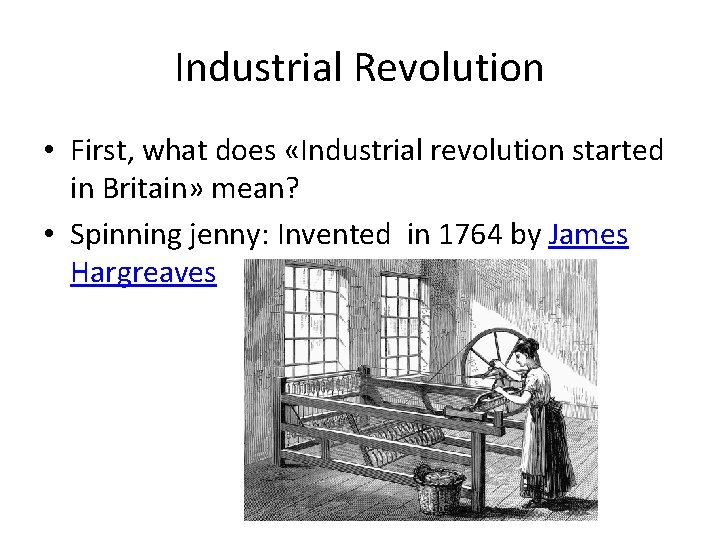
Industrial Revolution • First, what does «Industrial revolution started in Britain» mean? • Spinning jenny: Invented in 1764 by James Hargreaves
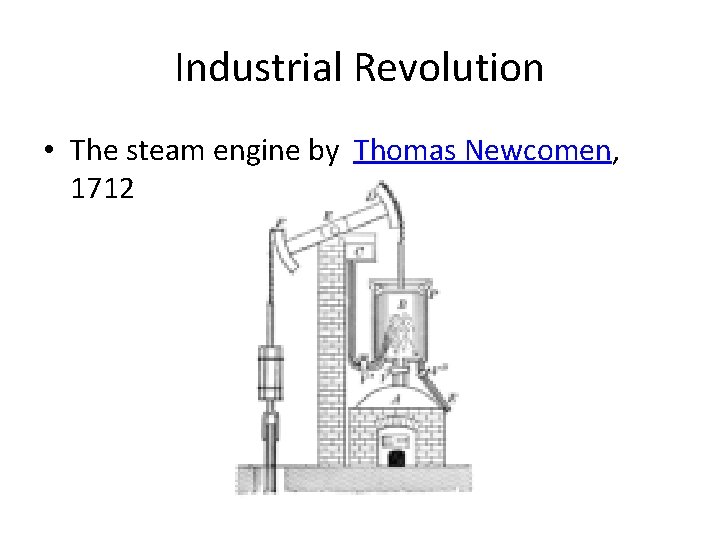
Industrial Revolution • The steam engine by Thomas Newcomen, 1712
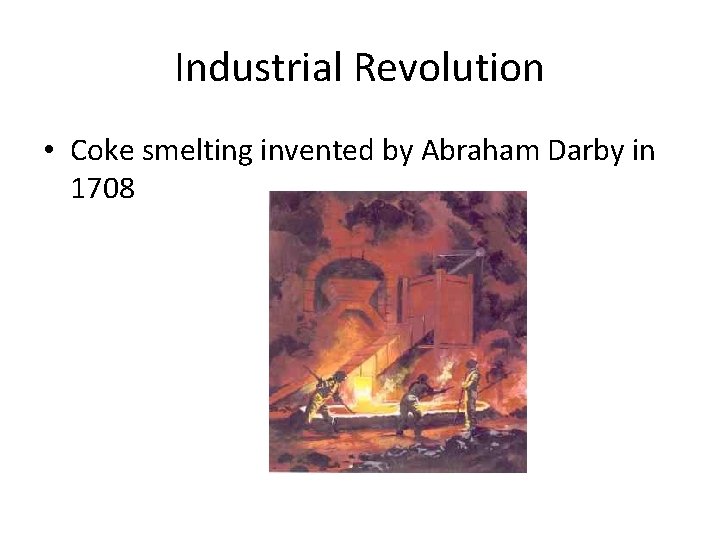
Industrial Revolution • Coke smelting invented by Abraham Darby in 1708
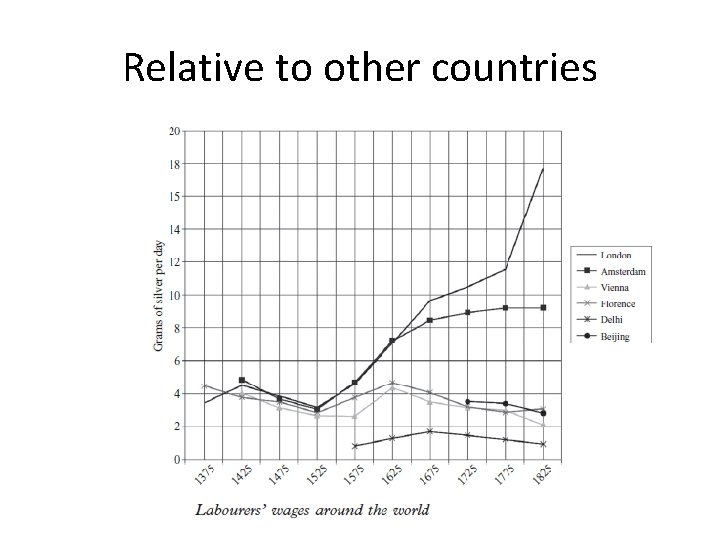
Why were these invented in Britain? • Recent research has emphasized noneconomic factors like the British constitution. or British culture. • But there is a purely economic explanation: • British wages were exceptionally high compared to wages in other parts of Europe and in Asia, while the prices of capital and energy were exceptionally low prior to the Industrial Revolution.
Relevance of High Wages • High wages motivated process innovation: labor saving technology. • The high real wage also stimulated product innovation since it meant that Britain had a broader mass market for ‘luxury’ consumer goods including imports from east Asia. • It also meant that the population at large was better placed to buy education and training than their counterparts elsewhere in the world. The resulting high rates of literacy and numeracy contributed to invention and innovation.

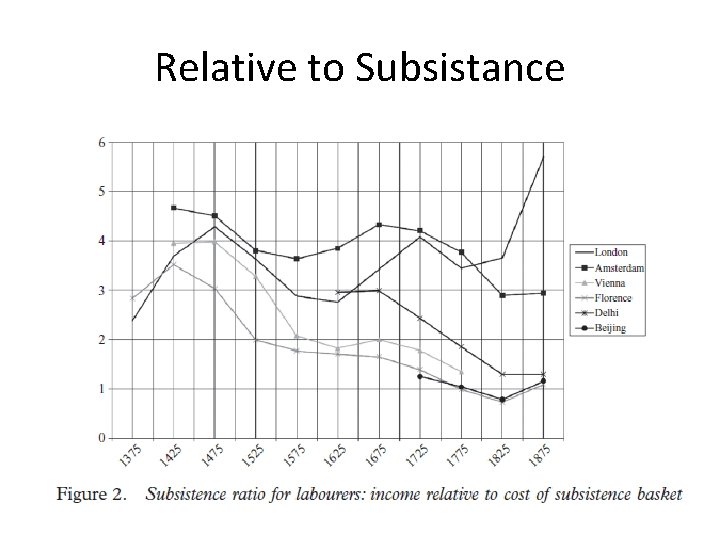
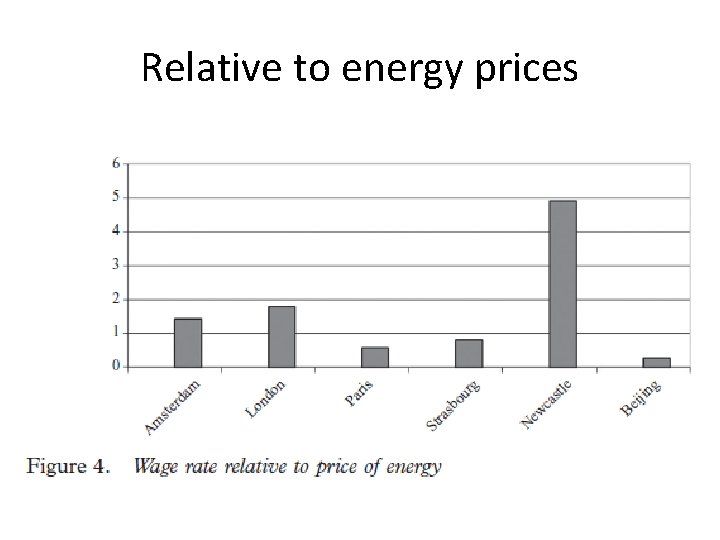
What does «high wage» mean? • Britain was a high-wage economy in four senses. 1) Firstly, British wages were higher than those of its competitors. 2) Secondly, workers’ living standards were higher than elsewhere. 3) Thirdly, British wages were high relative to capital prices. 4) Fourthly, wages in Britain were exceptionally high relative to energy prices.
Relative to other countries
Relative to Subsistance
Relative to energy prices
Why were wages high, anyway? • Logically, the next question, therefore, is to explain what determined the wages and prices. • Britain’s unusual wages and prices were due to two factors. • The first was Britain’s success in the global economy, which was in part the result of state policy. • The second was geographical—Britain had vast and readily worked coal deposits.
First One • The superior real wage performance of northwestern Europe was due to a boom in international trade. The English boom began with the export of ‘new draperies’ in the late sixteenth century. These were light woolen cloths made in East Anglia and exported to the Mediterranean through London.
Second One • Coal deposits were a second factor contributing to England’s unusual wage and price structure. • First, coal was not just abundant in Britain—it was cheap, at least in northern and western Britain on or near the coalfields.
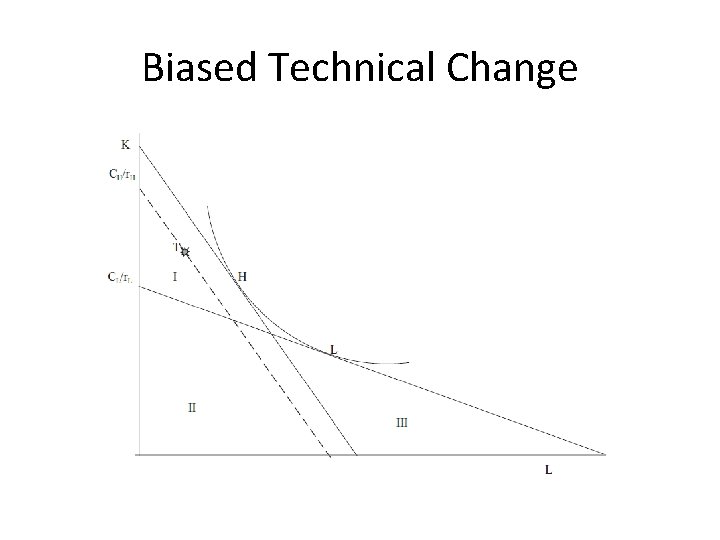
Biased Technical Change
- Slides: 33