
Back to the Bible A Five Lesson Home

Back to the Bible A Five Lesson Home Bible Study 1. The Bible is God’s Word 2. Applying the Bible Today 3. Theme of the Bible 4. What the Bible Says about Salvation 5. The Church in the Bible Each Lesson Last One Hour Or Less
Back to the Bible – Lesson One The Bible Is God’s Word I. The Resurrection of Christ from the Dead A. Why begin here? B. Evidence of the resurrection II. God Is and His Word is True A. God is… B. His Word is True III. Inspiration of the Bible A. Plenary (Complete) B. Verbal (Every word)
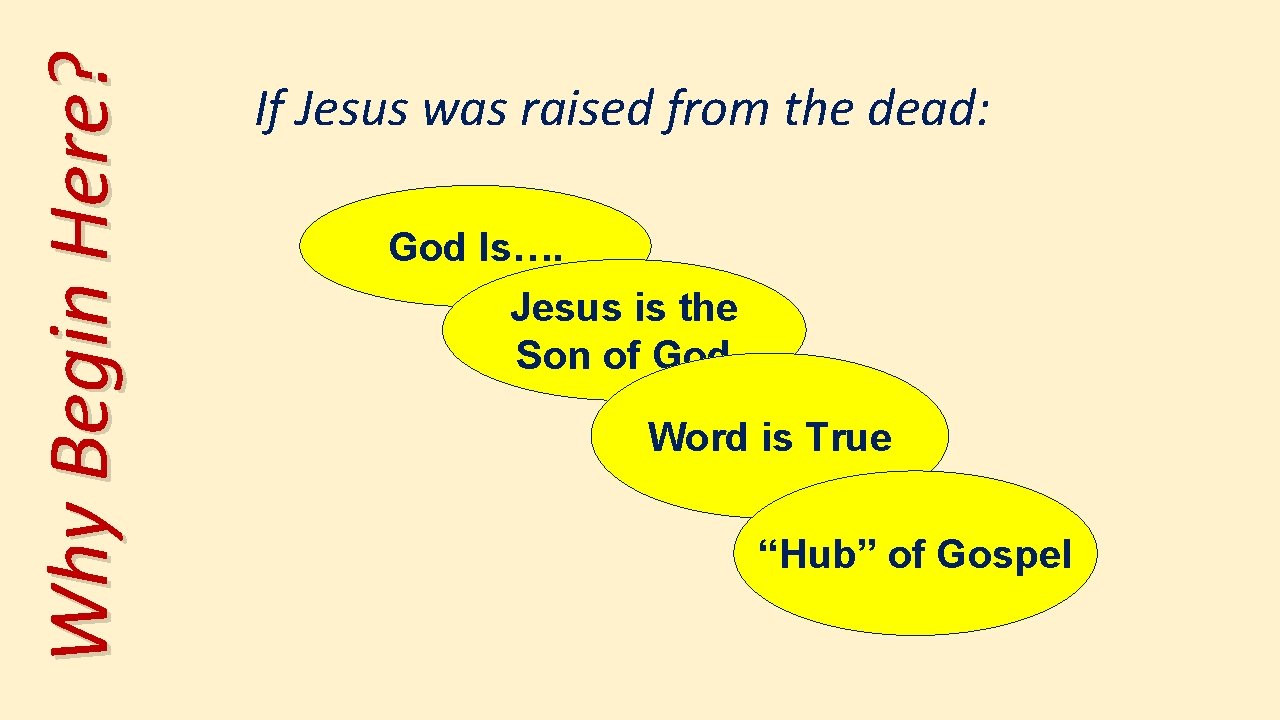
Why Begin Here? If Jesus was raised from the dead: God Is…. Jesus is the Son of God Word is True “Hub” of Gospel
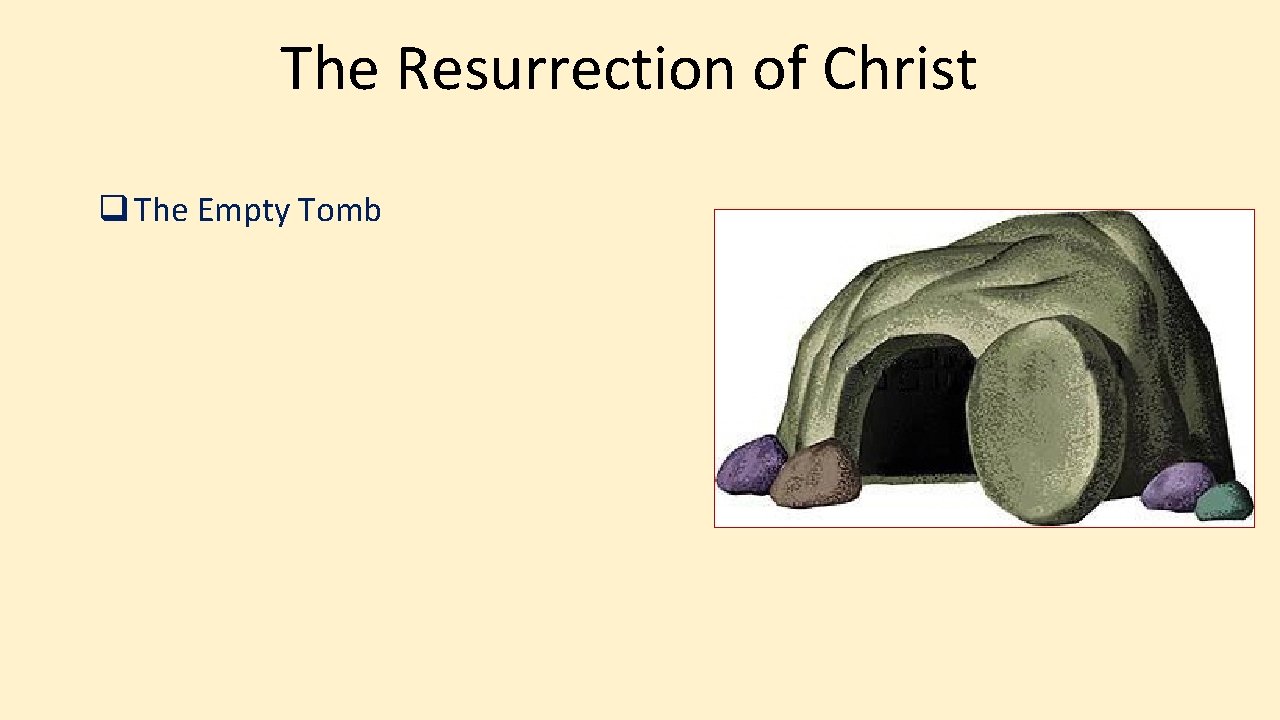
The Resurrection of Christ q The Empty Tomb
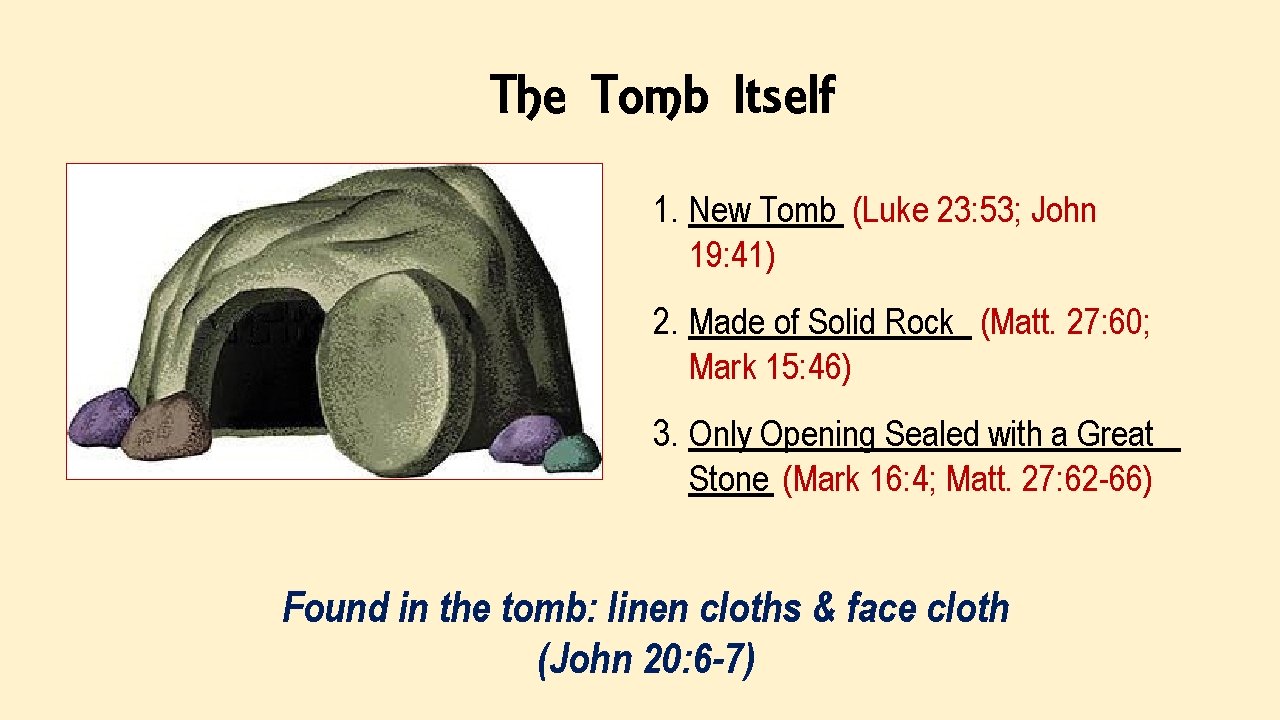
The Tomb Itself 1. New Tomb (Luke 23: 53; John 19: 41) 2. Made of Solid Rock (Matt. 27: 60; Mark 15: 46) 3. Only Opening Sealed with a Great Stone (Mark 16: 4; Matt. 27: 62 -66) Found in the tomb: linen cloths & face cloth (John 20: 6 -7)
The Resurrection of Christ q The Empty Tomb ü Tomb was empty (Matt. 28: 6) ü How did it become empty? § “Swoon” Theory § Disciples stole it § Enemies stole it § Really raised from dead!
The Resurrection of Christ q The Empty Tomb q Transformation of Disciples ü Hearts were troubled (John 14: 1 -3) ü Shortly after – Changed! ü Peter is an example: § Prior to death (Matt. 26: 69 -75) § At tomb (Luke 24: 12) § Within days he was bold: o Acts 4: 19 -20 o Acts 5: 29
The Resurrection of Christ q The Empty Tomb q Transformation of Disciples q Change in the Jews ü They wanted to kill Jesus (Mk. 15: 13 -14) ü Heard sermon about resurrection (Acts 2: 21 -36) ü Convinced & obeyed (Acts 2: 37 -41)
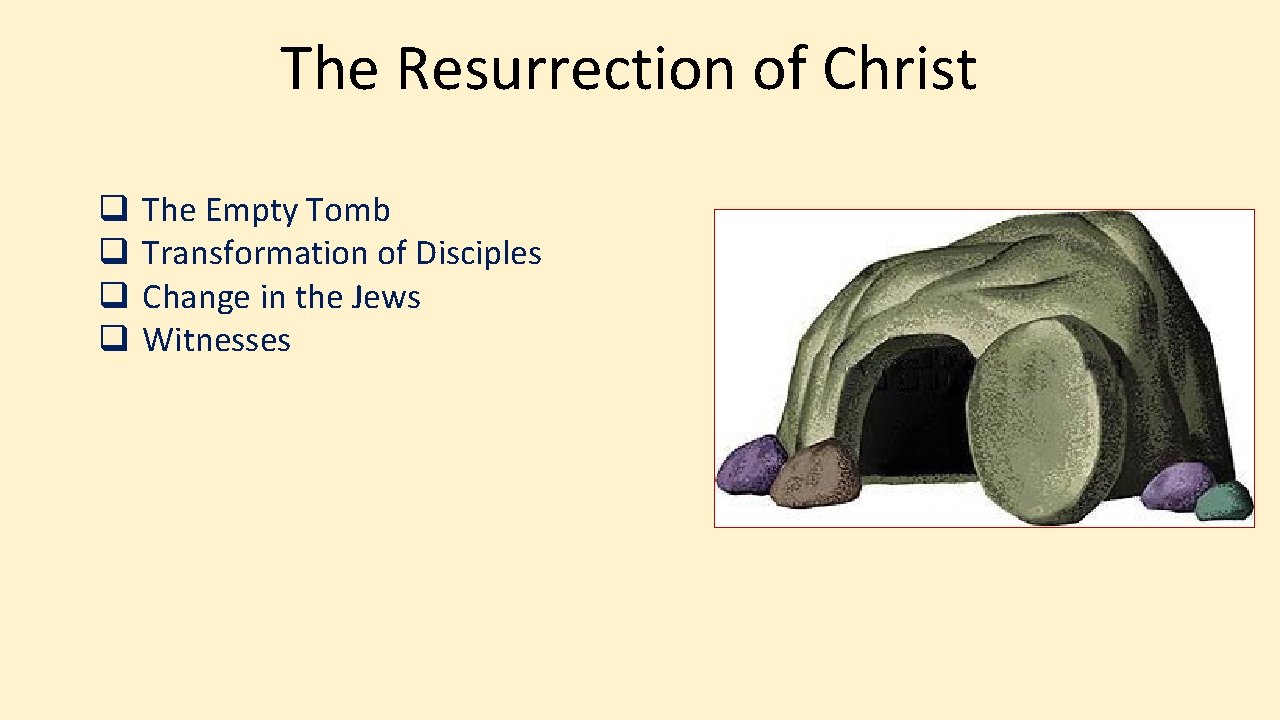
The Resurrection of Christ q q The Empty Tomb Transformation of Disciples Change in the Jews Witnesses
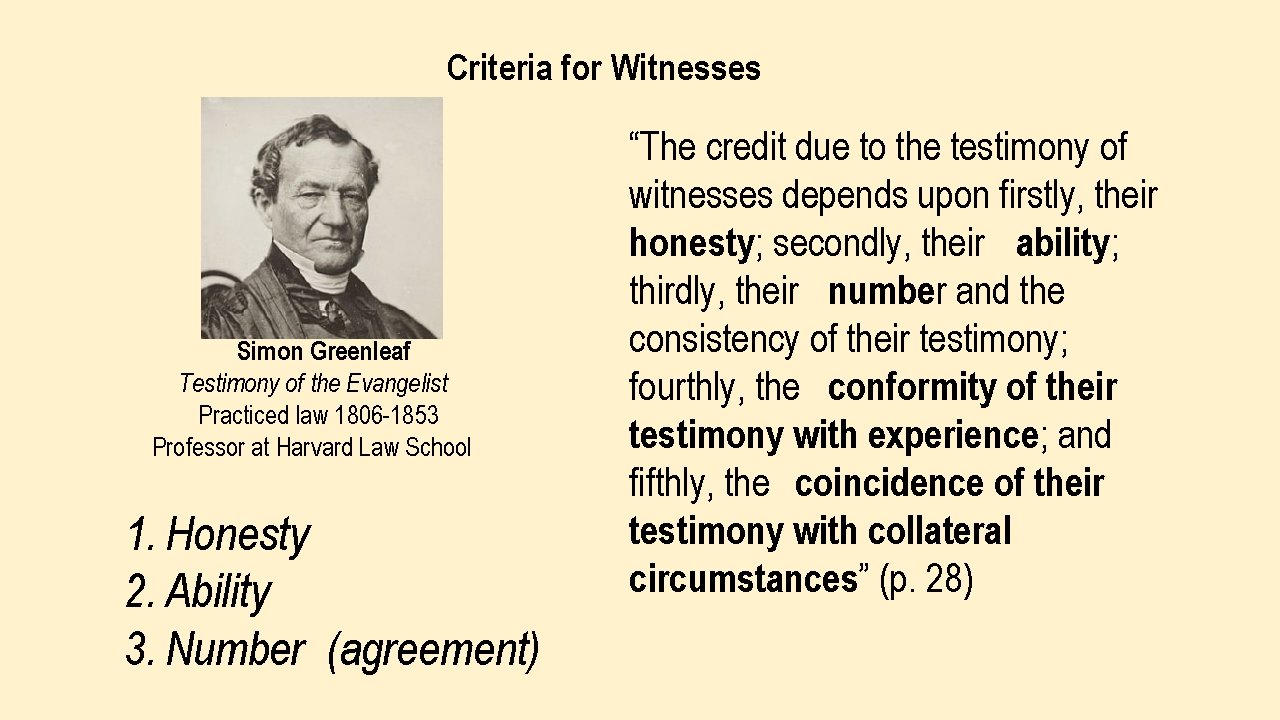
Criteria for Witnesses Simon Greenleaf Testimony of the Evangelist Practiced law 1806 -1853 Professor at Harvard Law School 1. Honesty 2. Ability 3. Number (agreement) “The credit due to the testimony of witnesses depends upon firstly, their honesty; secondly, their ability; thirdly, their number and the consistency of their testimony; fourthly, the conformity of their testimony with experience; and fifthly, the coincidence of their testimony with collateral circumstances” (p. 28)
W ti e n s s s e 1. Honest • Suffered for cause (would they if knew it was a lie? ) • Tell of own faults: ü Peter’s denial (Matt. 26: 69 -75) ü Ambition (Matt. 20: 20 -28) ü Failure to understand (Jn. 20: 9) • Reasons for lying cannot be found: ü Fear – testified in face of death! ü Greed – had nothing to gain ü Ambition – no power was gained
1. Honest W ti e n s s s e 2. Competent (Ability) • Been with Christ since his baptism (Acts 1: 2122) • Matthew was a tax collector • Luke was a doctor • Peter, Andrew, James & John were business men • John noted details (Jno. 20: 7) • Paul was highly educated
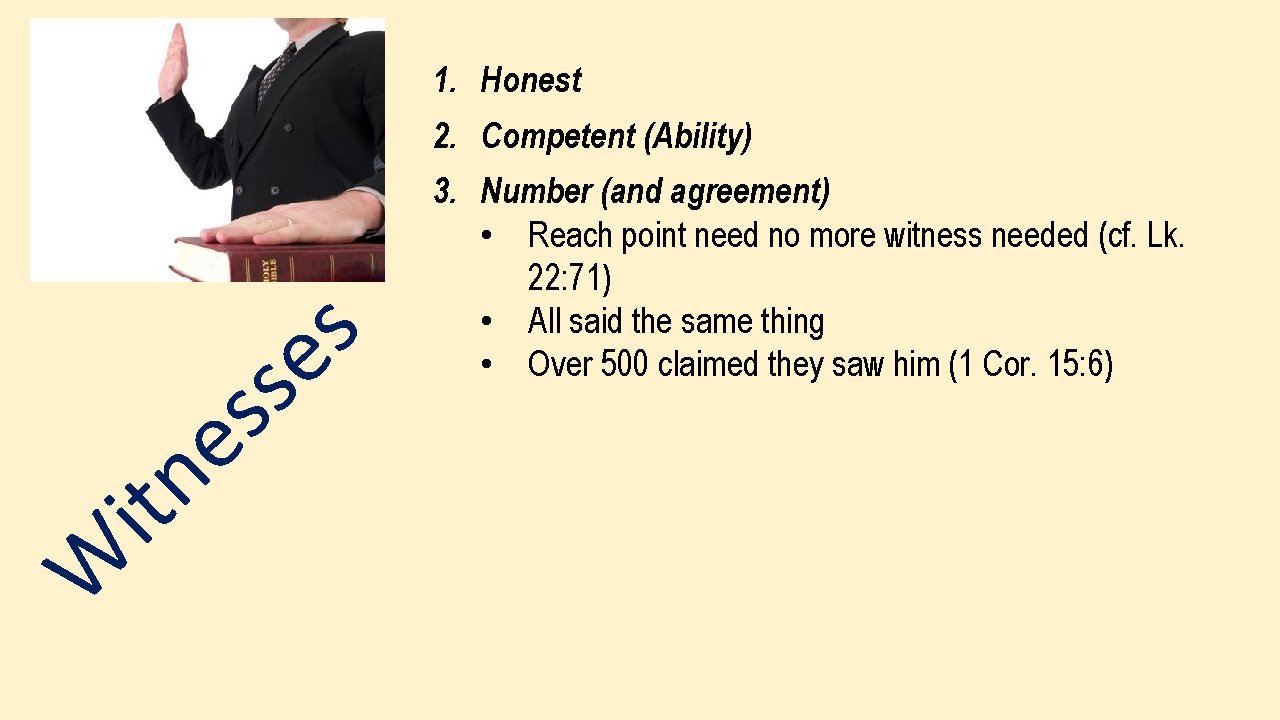
1. Honest 2. Competent (Ability) W ti e n s s s e 3. Number (and agreement) • Reach point need no more witness needed (cf. Lk. 22: 71) • All said the same thing • Over 500 claimed they saw him (1 Cor. 15: 6)
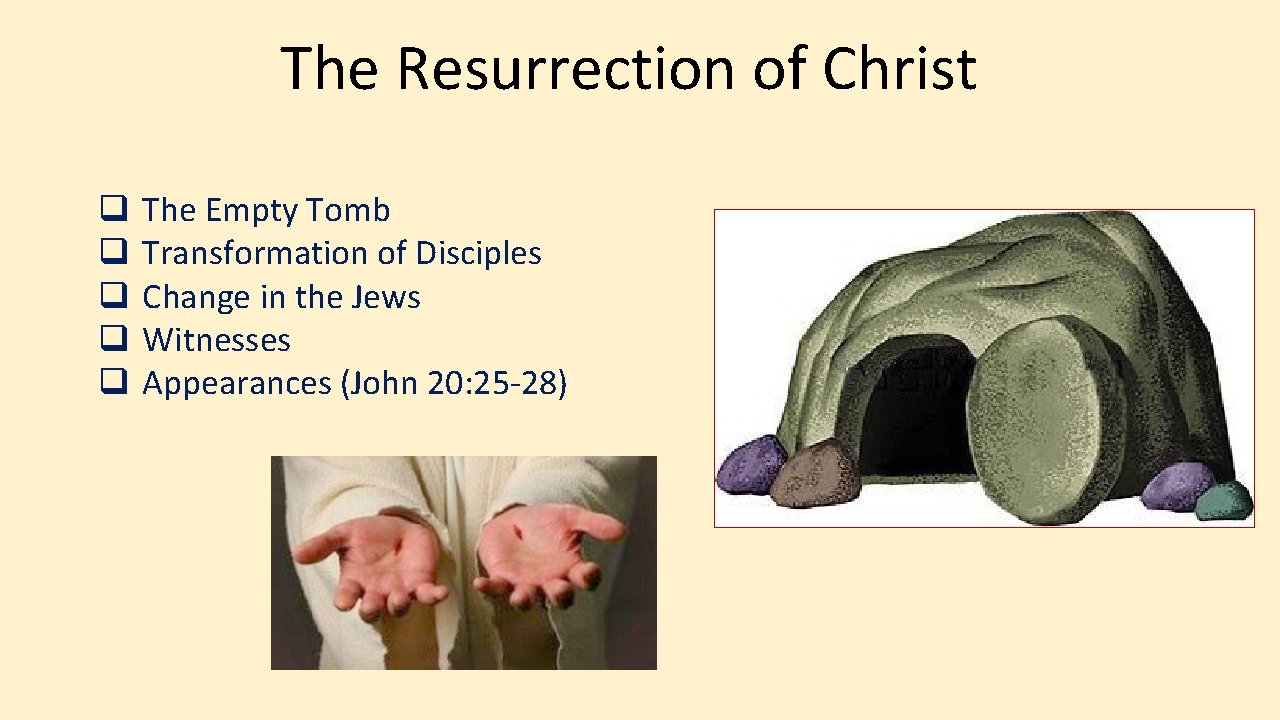
The Resurrection of Christ q q q The Empty Tomb Transformation of Disciples Change in the Jews Witnesses Appearances (John 20: 25 -28)
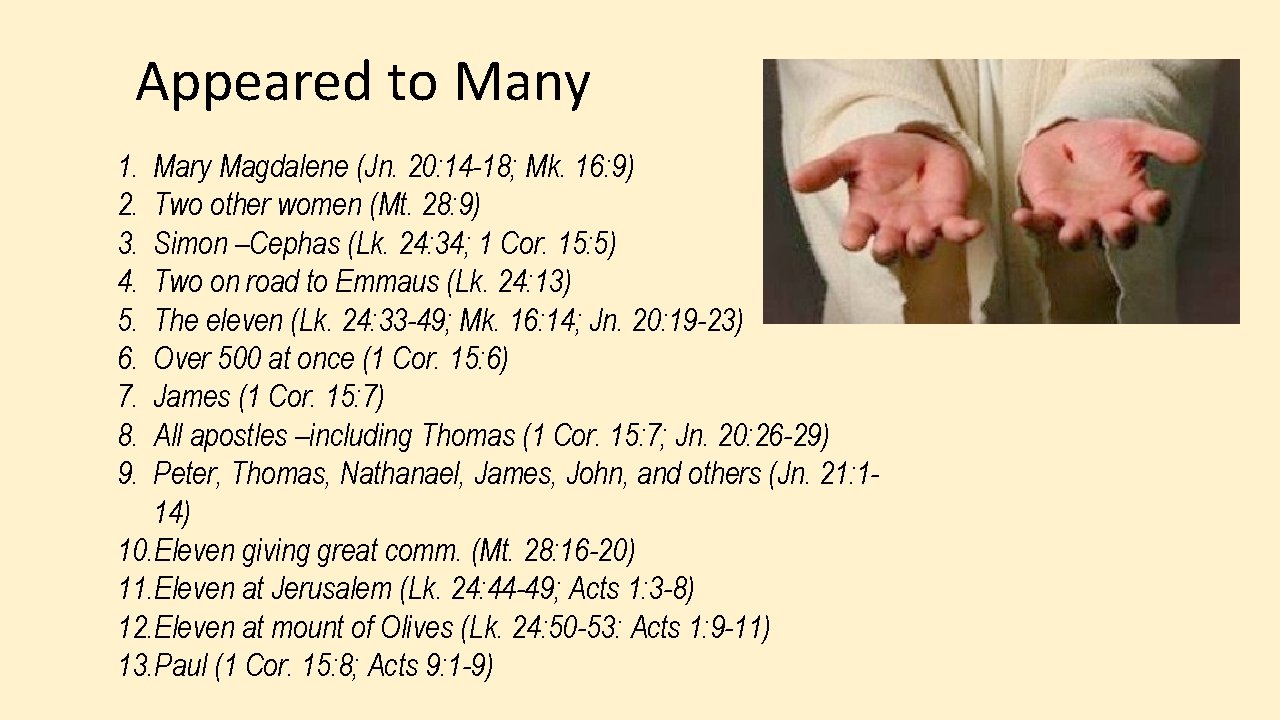
Appeared to Many 1. 2. 3. 4. 5. 6. 7. 8. 9. Mary Magdalene (Jn. 20: 14 -18; Mk. 16: 9) Two other women (Mt. 28: 9) Simon –Cephas (Lk. 24: 34; 1 Cor. 15: 5) Two on road to Emmaus (Lk. 24: 13) The eleven (Lk. 24: 33 -49; Mk. 16: 14; Jn. 20: 19 -23) Over 500 at once (1 Cor. 15: 6) James (1 Cor. 15: 7) All apostles –including Thomas (1 Cor. 15: 7; Jn. 20: 26 -29) Peter, Thomas, Nathanael, James, John, and others (Jn. 21: 114) 10. Eleven giving great comm. (Mt. 28: 16 -20) 11. Eleven at Jerusalem (Lk. 24: 44 -49; Acts 1: 3 -8) 12. Eleven at mount of Olives (Lk. 24: 50 -53: Acts 1: 9 -11) 13. Paul (1 Cor. 15: 8; Acts 9: 1 -9)
The Resurrection of Christ q q q The Empty Tomb Transformation of Disciples Change in the Jews Witnesses Appearances (John 20: 25 -28) Conversion of Saul
Conversion of Saul v Argument Presented by Lord George Lyttelton in 1747 1. Gilbert West – Resurrection of Christ 2. Lord Lyttelton – Conversion of Saul 3. Set out to disprove the resurrection 4. Changed – to believe in resurrection 5. Lyttelton: “The conversion was of itself a demonstration sufficient to prove Christianity to be a divine revelation”
Conversion of Saul v Argument Presented by Lord George Lyttelton in 1747 v Lyttelton’s Four Propositions: 1. Paul was an imposter 2. Paul was an enthusiast – imagination 3. Paul was deceived (by others) 4. What he said about his conversion – really happened
Conversion of Saul v Argument Presented by Lord George Lyttelton in 1747 v Lyttelton’s Four Propositions: v Paul was not an imposter 1. No motive for lying • Money • Reputation • Power 2. Placed his story on road to Damascus 3. Miracles he worked shows he as not a fraud (Acts 13, 14, 16)
Conversion of Saul v Argument Presented by Lord George Lyttelton in 1747 v Lyttelton’s Four Propositions: v Paul was not an imposter v Paul was not an enthusiast 1. An enthusiast sees things he is looking for – Saul was not looking for resurrected Lord 2. Were other witnesses (Acts 22, 26) 3. No marks of an enthusiast • Temper – wild and unreasonable • Ignorance – (cf. Acts 26: 24) • Misguided zeal
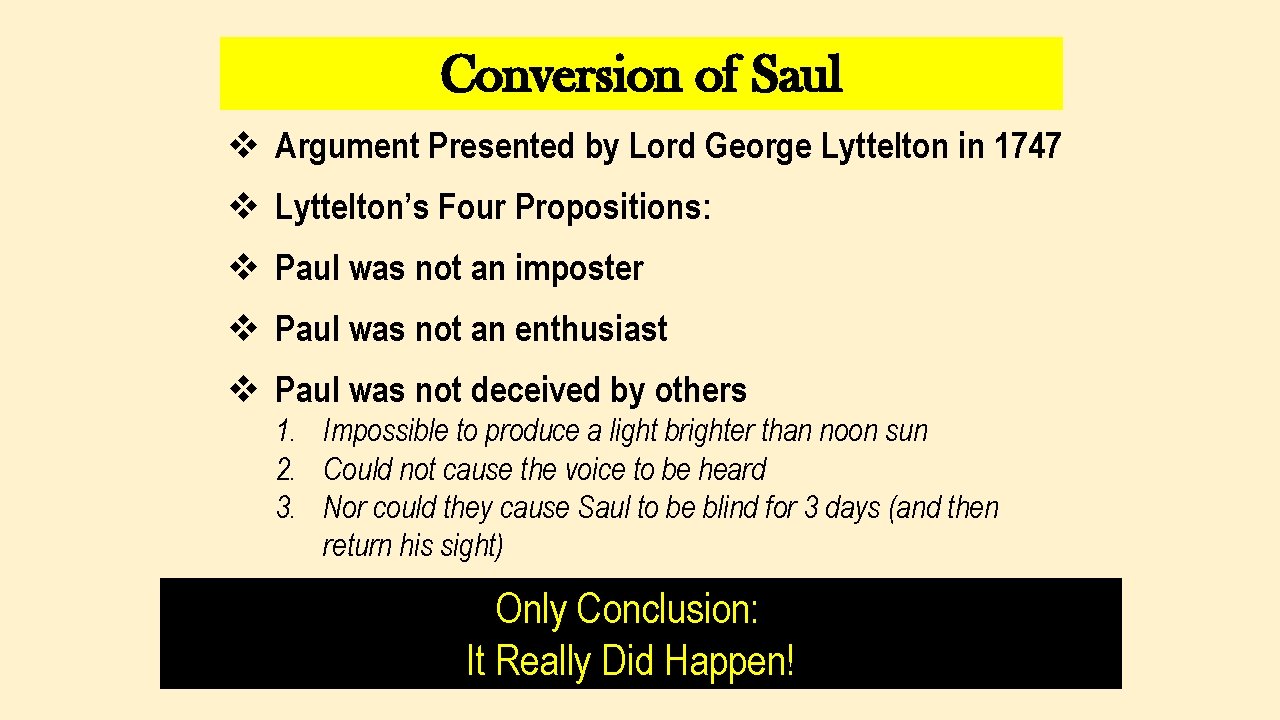
Conversion of Saul v Argument Presented by Lord George Lyttelton in 1747 v Lyttelton’s Four Propositions: v Paul was not an imposter v Paul was not an enthusiast v Paul was not deceived by others 1. Impossible to produce a light brighter than noon sun 2. Could not cause the voice to be heard 3. Nor could they cause Saul to be blind for 3 days (and then return his sight) Only Conclusion: It Really Did Happen!
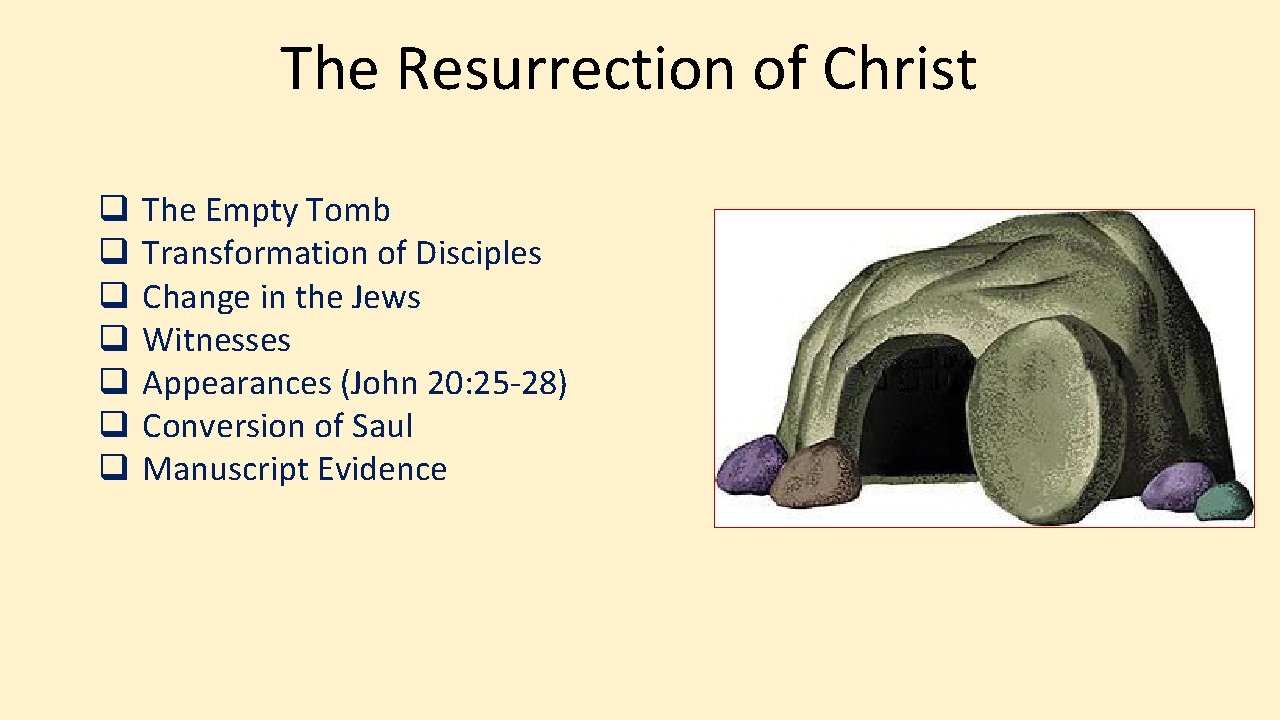
The Resurrection of Christ q q q q The Empty Tomb Transformation of Disciples Change in the Jews Witnesses Appearances (John 20: 25 -28) Conversion of Saul Manuscript Evidence
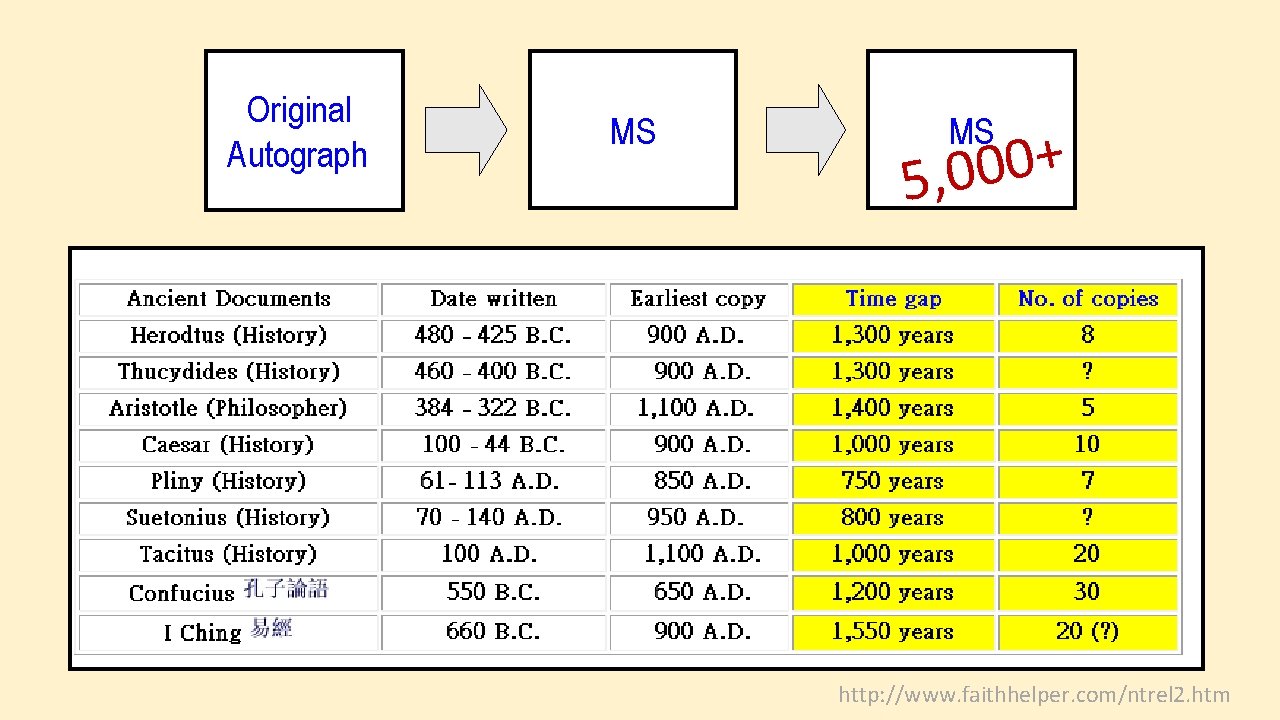
Original Autograph MS MS + 0 0 5, 0 http: //www. faithhelper. com/ntrel 2. htm
Back to the Bible – Lesson One The Bible Is God’s Word I. The Resurrection of Christ from the Dead A. Why begin here? B. Evidence of the resurrection II. God Is and His Word is True A. God is… B. His Word is True III. Inspiration of the Bible A. Plenary (Complete) B. Verbal (Every word)
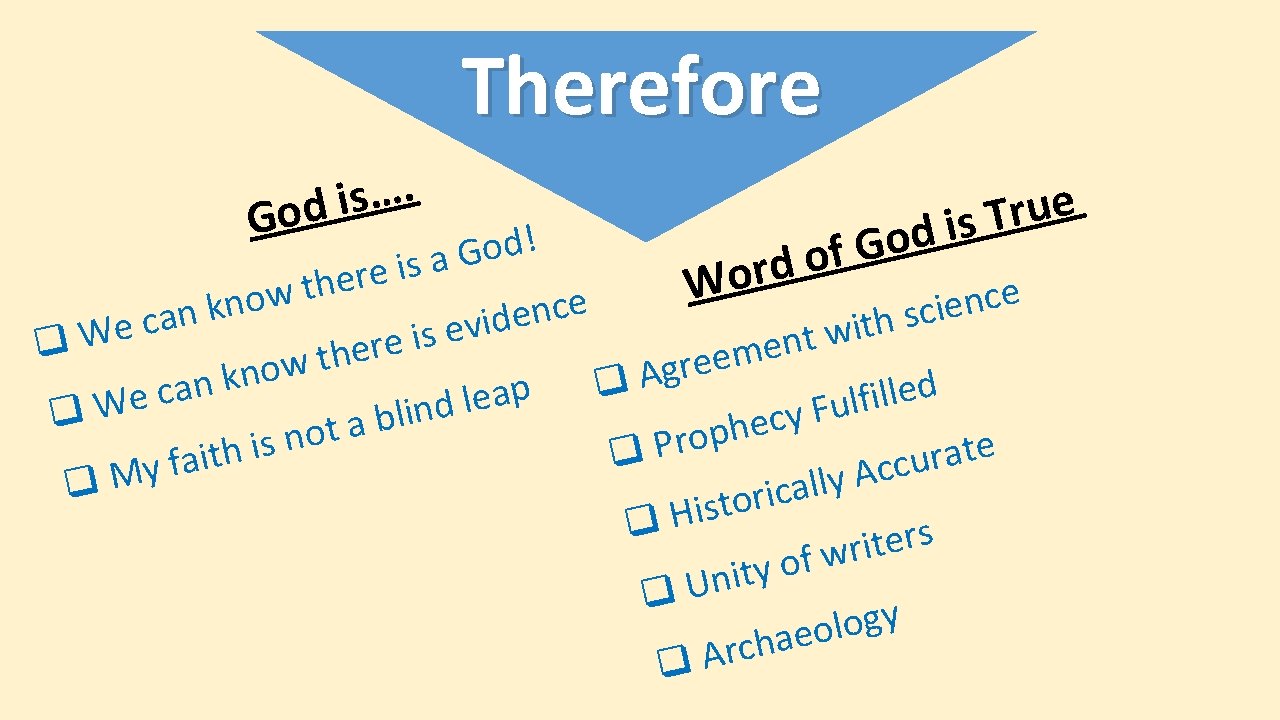
Therefore. … s i God e u r T s i d ! o d o G G f a o s i d r e r o e h t W e w c o n e c k i n c n s e a d h i c t v i e e w s W i t n e q r e e m h t e e w r g o n A k n q d a p e l c a l i e e f l l u W d F n i l q y b c e a h t p o o n r s P i e t h a t q i r a u f c c y A y l l q. M a c i r o t s i q. H s r e t i r w f o y t i n U q y g o l o e a h c r q. A
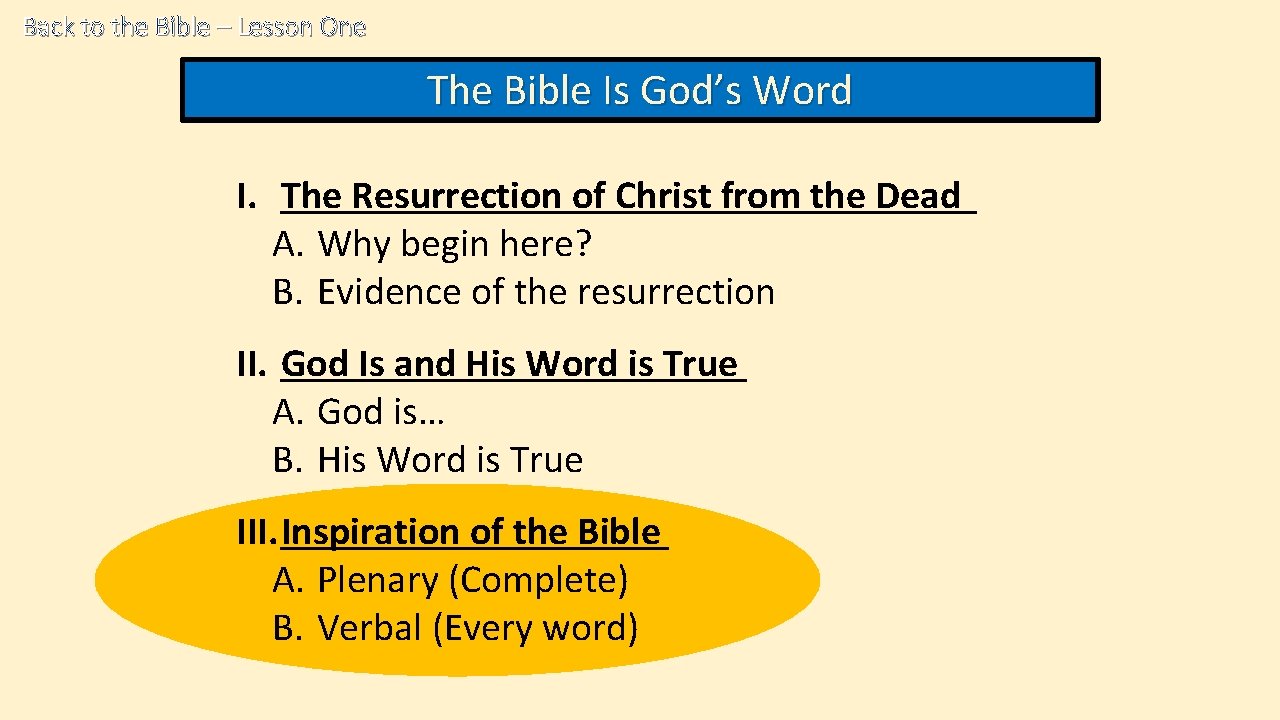
Back to the Bible – Lesson One The Bible Is God’s Word I. The Resurrection of Christ from the Dead A. Why begin here? B. Evidence of the resurrection II. God Is and His Word is True A. God is… B. His Word is True III. Inspiration of the Bible A. Plenary (Complete) B. Verbal (Every word)
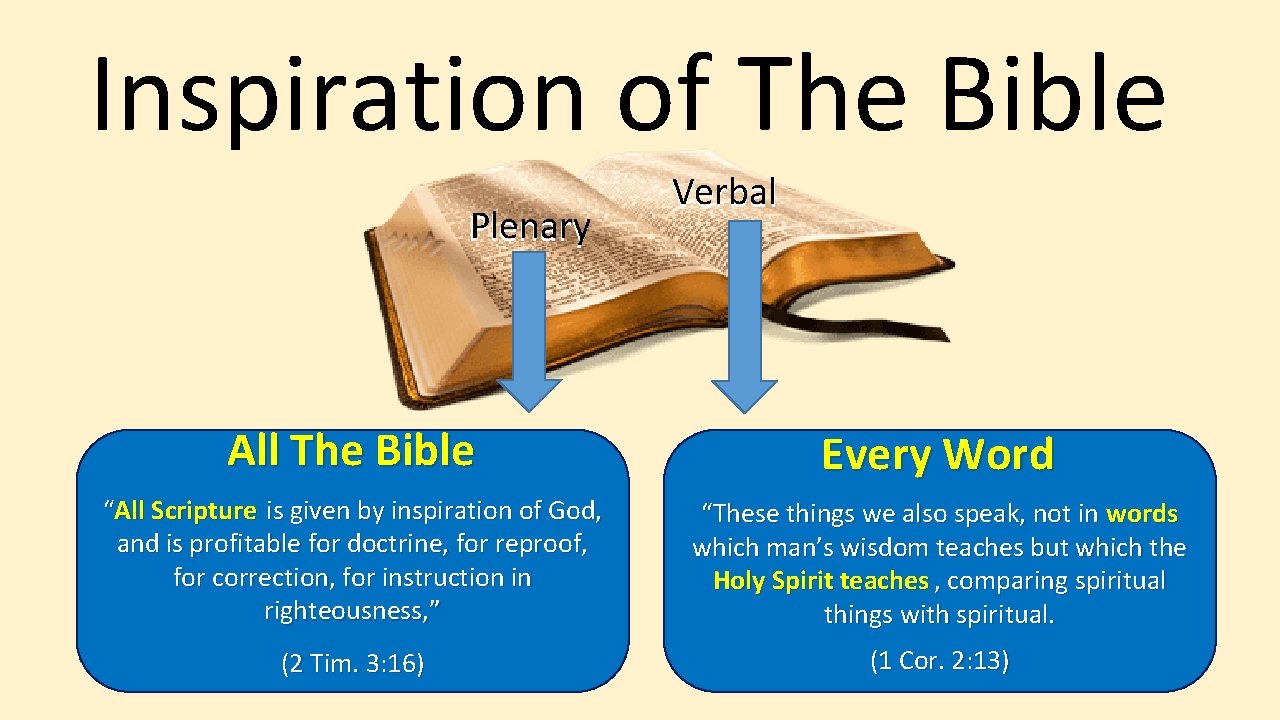
Inspiration of The Bible Plenary Verbal All The Bible Every Word “All Scripture is given by inspiration of God, and is profitable for doctrine, for reproof, for correction, for instruction in righteousness, ” “These things we also speak, not in words which man’s wisdom teaches but which the Holy Spirit teaches , comparing spiritual things with spiritual. (2 Tim. 3: 16) (1 Cor. 2: 13)
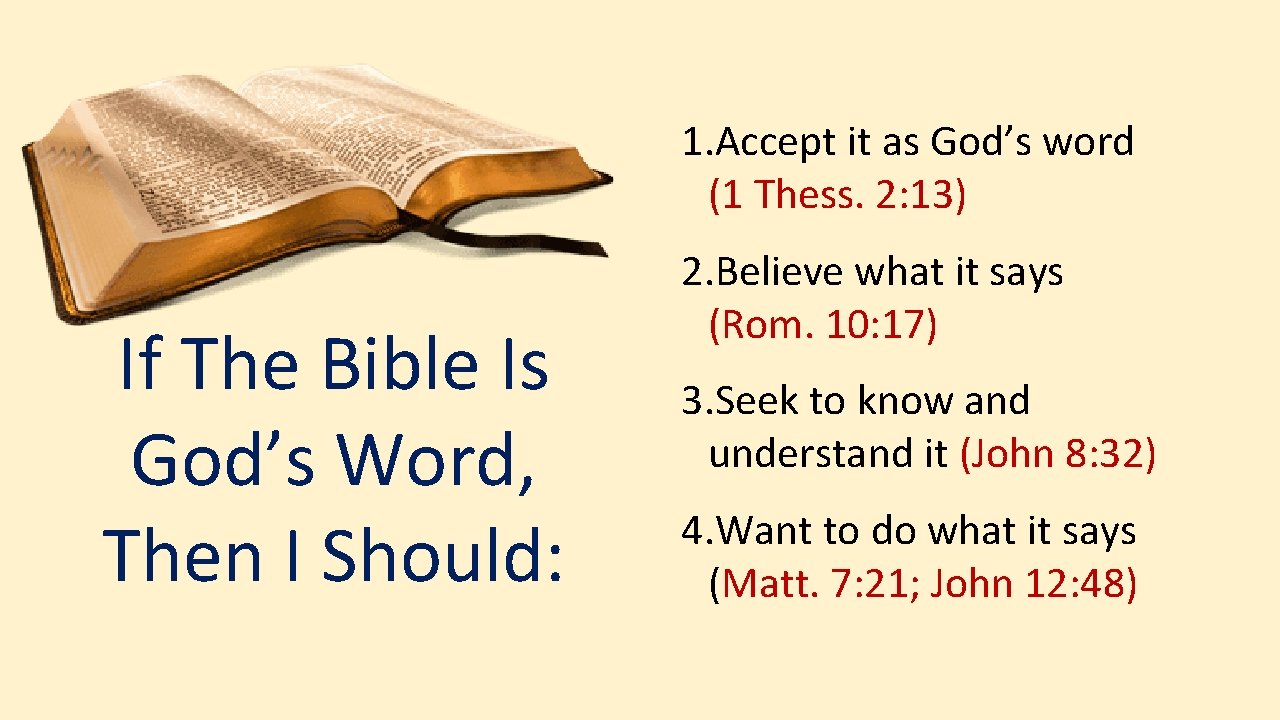
1. Accept it as God’s word (1 Thess. 2: 13) If The Bible Is God’s Word, Then I Should: 2. Believe what it says (Rom. 10: 17) 3. Seek to know and understand it (John 8: 32) 4. Want to do what it says (Matt. 7: 21; John 12: 48)
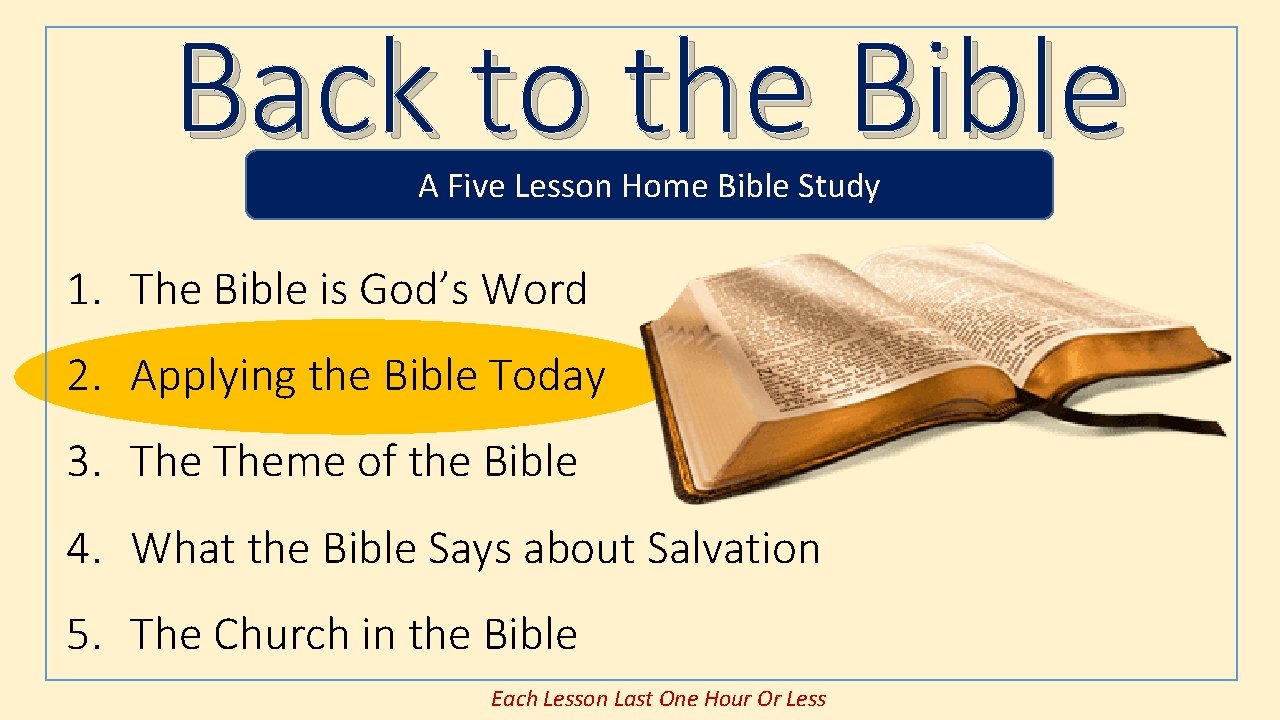
Back to the Bible A Five Lesson Home Bible Study 1. The Bible is God’s Word 2. Applying the Bible Today 3. Theme of the Bible 4. What the Bible Says about Salvation 5. The Church in the Bible Each Lesson Last One Hour Or Less

- Slides: 31