
Back to Basics Old School Approaches for New

Back to Basics: Old School Approaches for New First- Generation Students Nancy Davis, Academic Advisor, College Of Engineering, UC Davis Michael (“Mike”) Valenzuela, Academic Advisor, College Of Letters And Science, UC Davis
Learning Outcomes During this session you will: Examine the general characteristics of new first-generation college students Discuss the University of California, Davis "lens" for academic support services for this population, especially during the first year Determine applicability of some of UC Davis' first-gen programs to your home campus Explore the "Back to Basics" advising approach Complete an action plan to develop or enhance support to new firstgeneration students on your campus
First-Generation Students: Common Characteristics More than 46% of first-year students in higher education 1. 3 times more likely than their peers to leave in their first year. “Overrepresented in the most disadvantaged racial, income and gender groups” Many from high-performing high schools and/or highly ranked community colleges; could be well prepared, academically, for college. Check your assumptions!
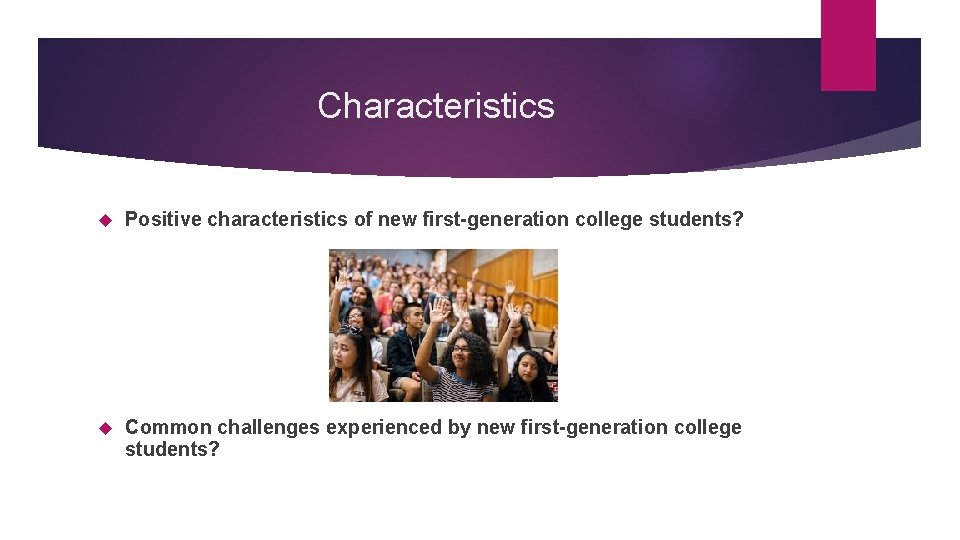
Characteristics Positive characteristics of new first-generation college students? Common challenges experienced by new first-generation college students?
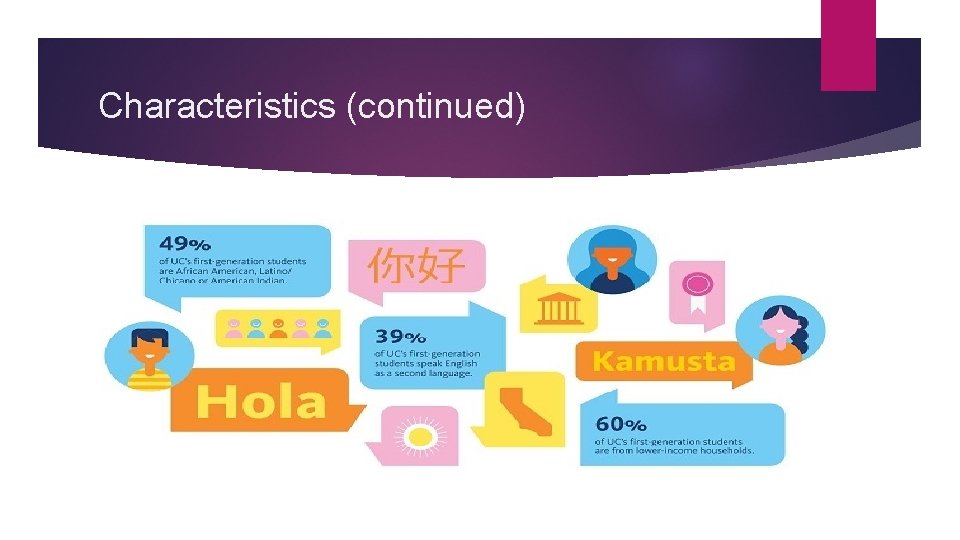
Characteristics (continued)
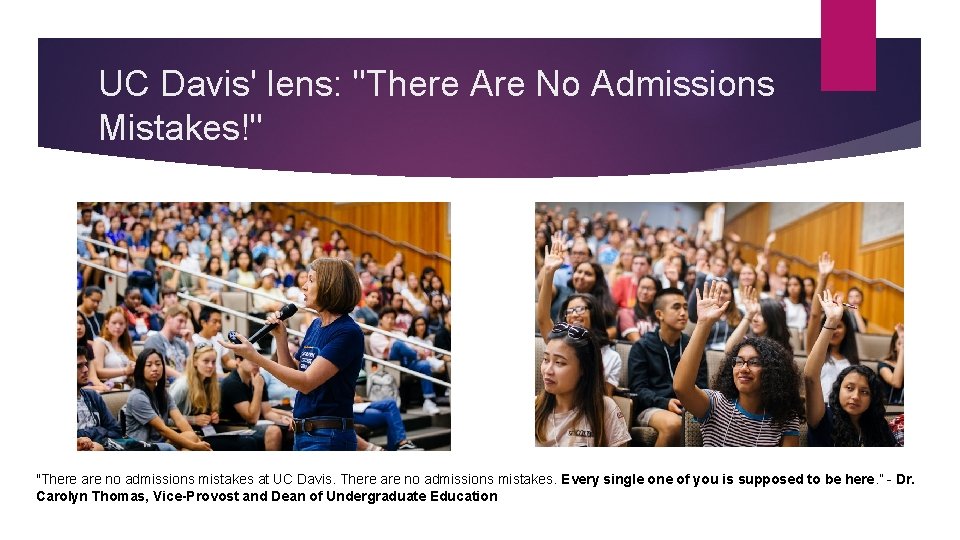
UC Davis' lens: "There Are No Admissions Mistakes!" "There are no admissions mistakes at UC Davis. There are no admissions mistakes. Every single one of you is supposed to be here. ” - Dr. Carolyn Thomas, Vice-Provost and Dean of Undergraduate Education

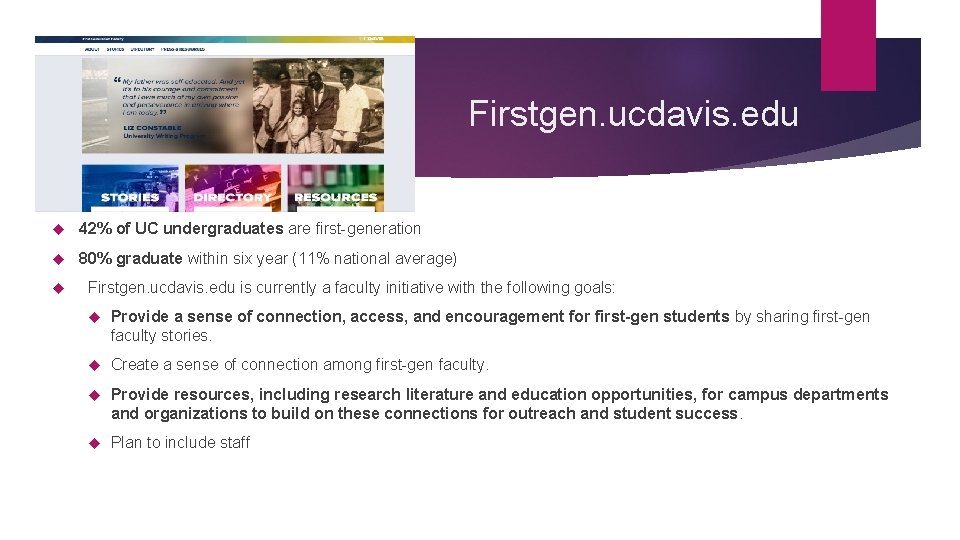
Firstgen. ucdavis. edu 42% of UC undergraduates are first-generation 80% graduate within six year (11% national average) Firstgen. ucdavis. edu is currently a faculty initiative with the following goals: Provide a sense of connection, access, and encouragement for first-gen students by sharing first-gen faculty stories. Create a sense of connection among first-gen faculty. Provide resources, including research literature and education opportunities, for campus departments and organizations to build on these connections for outreach and student success. Plan to include staff
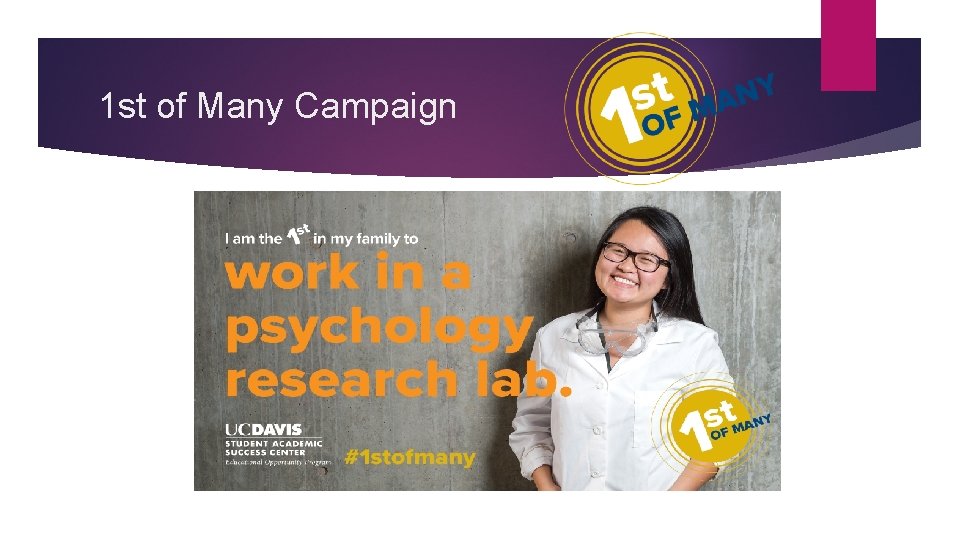
1 st of Many Campaign
First-Gen Academic Programs College of Letters and Science (L&S) "STa. R Program" Fall Quarter Success Seminar (first-year and transfer version) LEADR Program, College of Engineering Avenue. E Program, College of Engineering
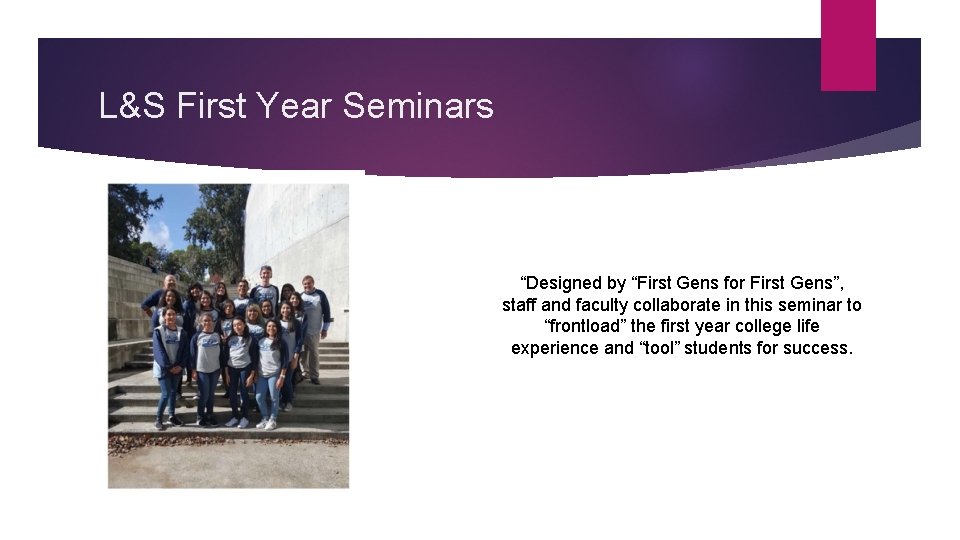
L&S First Year Seminars “Designed by “First Gens for First Gens”, staff and faculty collaborate in this seminar to “frontload” the first year college life experience and “tool” students for success.
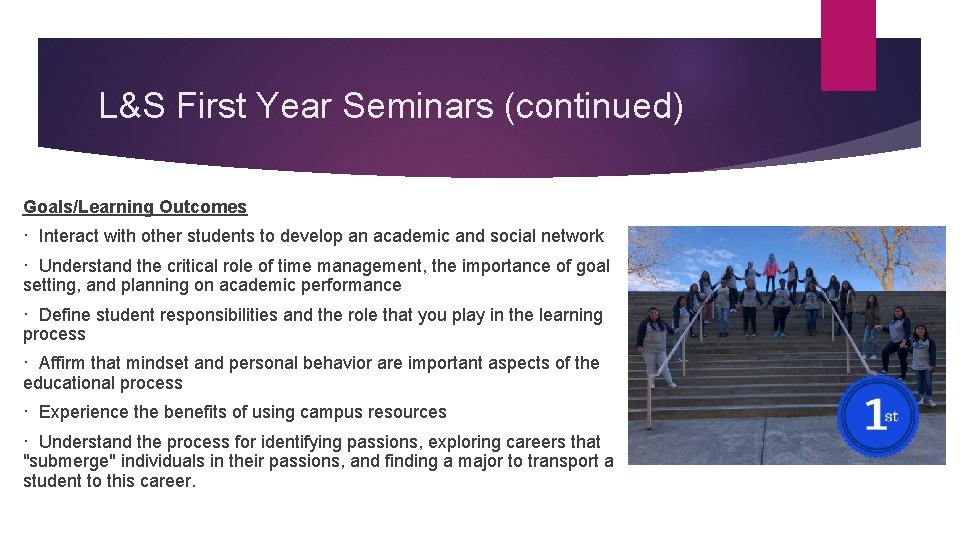
L&S First Year Seminars (continued) Goals/Learning Outcomes · Interact with other students to develop an academic and social network · Understand the critical role of time management, the importance of goal setting, and planning on academic performance · Define student responsibilities and the role that you play in the learning process · Affirm that mindset and personal behavior are important aspects of the educational process · Experience the benefits of using campus resources · Understand the process for identifying passions, exploring careers that "submerge" individuals in their passions, and finding a major to transport a student to this career.
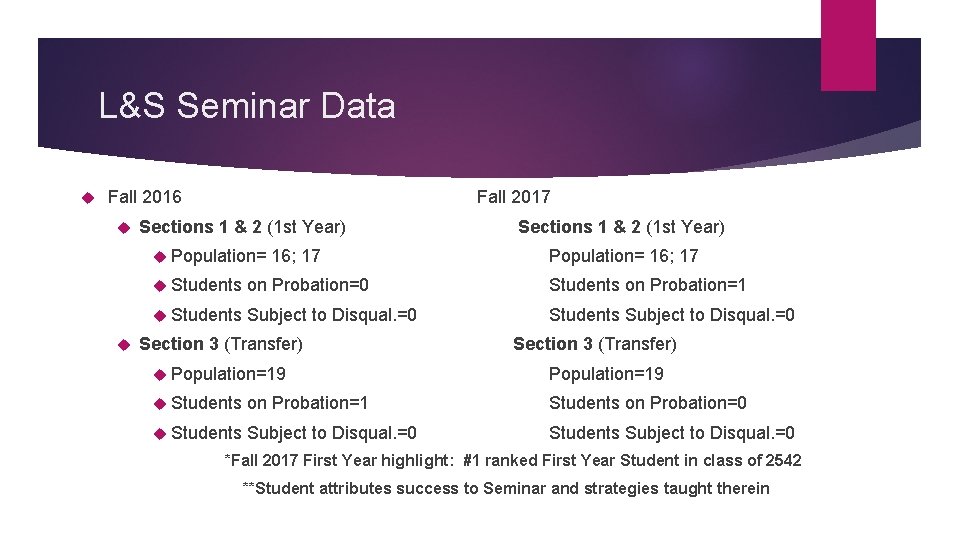
L&S Seminar Data Fall 2016 Fall 2017 Sections 1 & 2 (1 st Year) Population= 16; 17 Students on Probation=0 Students on Probation=1 Students Subject to Disqual. =0 Section 3 (Transfer) Population=19 Students on Probation=1 Students on Probation=0 Students Subject to Disqual. =0 *Fall 2017 First Year highlight: #1 ranked First Year Student in class of 2542 **Student attributes success to Seminar and strategies taught therein
College of Engineering LEADR program First years and transfer students Focused on First Gen and/or EOP students from historically underserved groups Quarterly advising Weekly meetings for first year students; biweekly meetings for second years and transfer/third year students Study Center
College of Engineering Avenue. E program Transfer students from local community college districts Cohort model with two week summer bridge program Weekly meetings Quarterly advising Mentors – students matched with industry and/or faculty
5 Core Principles ("Back to Basics")
What our students are saying “The FRS seminar eased my transfer transition into UC Davis. As I was experiencing imposter syndrome, Mike and his team taught me how to attend office hours and they provided me with the tools necessary to succeed in a renowned university. Furthermore, they cultivated a family in which I could express my disappointments and my accomplishments. My FRS class was undoubtedly my favorite class, and I recommend first generation or transfer students take it! Honestly, I cannot fathom what my UC Davis experience would have been had I not met Mike and taken his course. ” -Areli, FRS Student ’ 16
Discussion & Action Plan for your home campus Talk through the following questions: 1. Do you know who your campus' first-gen students are? 2. Which office or person hosts this data? 3. With whom would you need to discuss If you wanted to implement some outreach or programming to this population? 4. Are there examples on your campus of successful programs that are a collaborative between student affairs and academic affairs for other populations (i. e. EOP; re-entry students; international students)? If so, how could it serve as a model to expand or develop to serve your new first-gen students?
Discussion and Action Plan (continued) Discuss with your small group or partner: What are one or two things you could potentially do on your campus? Who could you approach to be your ally in this effort (e. g. faculty or administrator)? Begin to fill out the Fall 2018 Action Plan handout alone (5 minutes) Share your Fall 2018 Action Plan with your table group or partner
Questions What questions do you have for us or for each other?
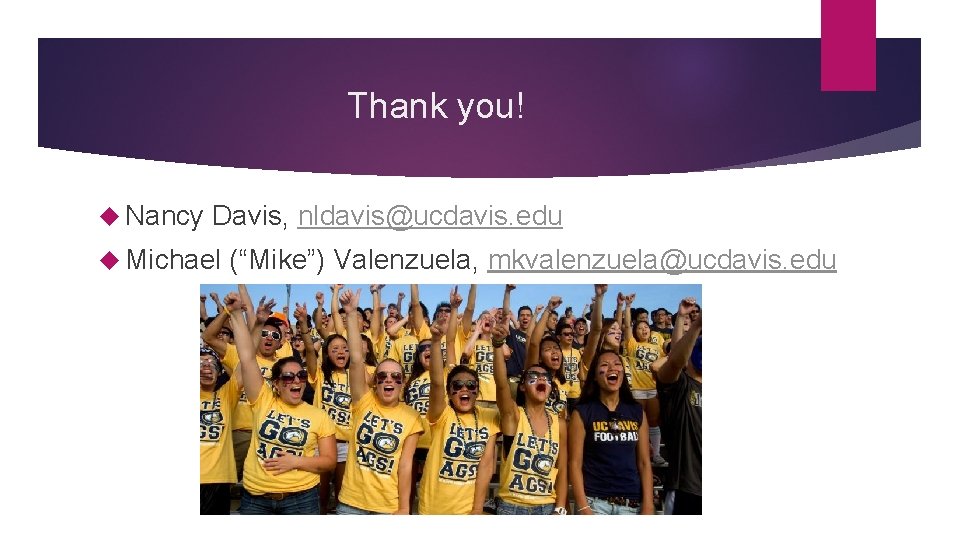
Thank you! Nancy Davis, nldavis@ucdavis. edu Michael (“Mike”) Valenzuela, mkvalenzuela@ucdavis. edu
- Slides: 21