
Bab 6 Analisis Permintaan Pasar Tujuan 1 Mahasiswa

Bab 6 Analisis Permintaan Pasar
Tujuan 1. Mahasiswa mampu mengidentifikasi jenis pasar 2. Mahasiswa mampu menjelaskan proses peramalan penjualan 3. Mahasiswa mampu menjelaskan pemilihan segmen pasar

• Salah satu alasan utama perusahaan melakukan riset pemasaran adalah untuk mengidentifikasi peluang pasar. • Setelah riset selesai, perusahaan harus mengukur dan memperkirakan ukuran, pertumbuhan, dan potensi laba tiap-tiap peluang pasar.
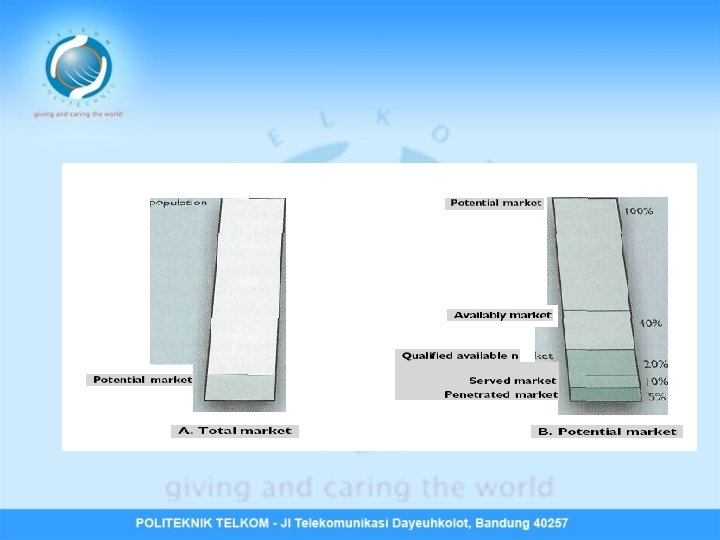
Metoda Penilaian Pasar 1. metode pembentukan pasar (the market build up method) yang digunakan khususnya oleh para pemasar untuk konsumen bisnis atau perusahaan 2. metode indeks berbagai faktor (the multiplefactor index method) yang digunakan khususnya oleh para pemasar untuk konsumen akhir atau barang konsumsi.
• Mengestimasi Permintaan yang Akan Datang. Sangat sedikit produk atau jasa yang mudah untuk dibuat ramalannya. • Dari yang sedikit itu, umumnya adalah produk yang tingkat kecenderungan absolutnya relatif konstan dan yang tidak mengalami persaingan (perusahaan penyedia jasa umum) atau produk yang menghadapi persaingan yang stabil (oligopoli murni).
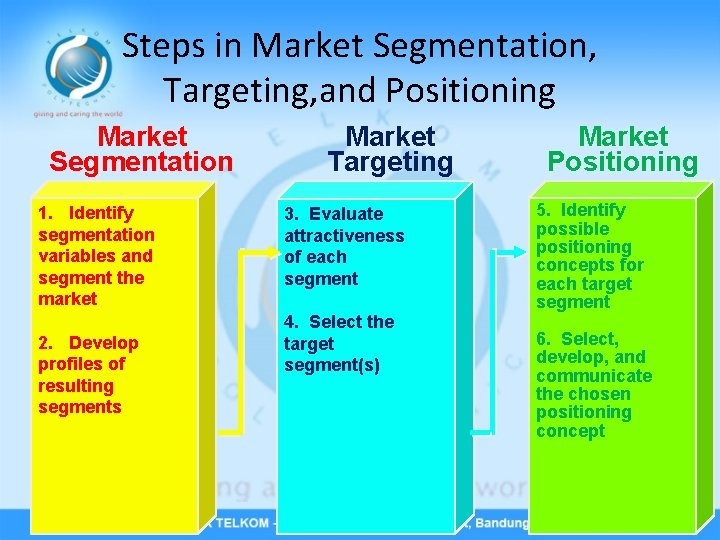
Steps in Market Segmentation, Targeting, and Positioning Market Segmentation 1. Identify segmentation variables and segment the market 2. Develop profiles of resulting segments Market Targeting 3. Evaluate attractiveness of each segment 4. Select the target segment(s) Market Positioning 5. Identify possible positioning concepts for each target segment 6. Select, develop, and communicate the chosen positioning concept
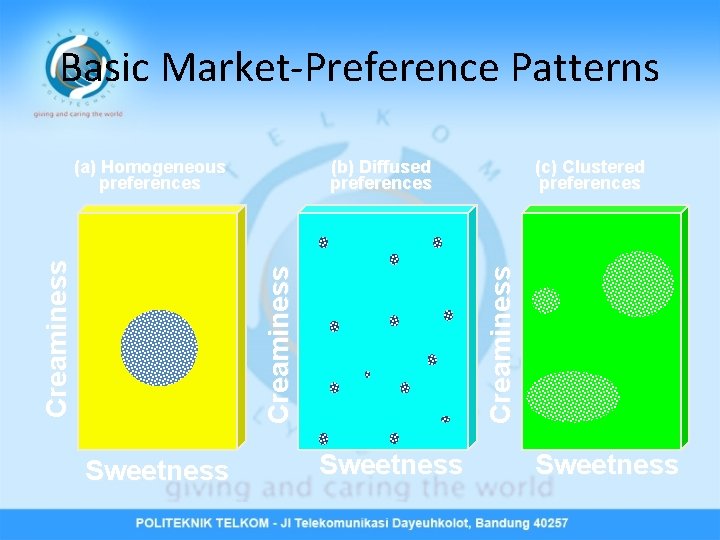
Basic Market-Preference Patterns (b) Diffused preferences Sweetness (c) Clustered preferences Creaminess (a) Homogeneous preferences Sweetness

Market-Segmentation Procedure ¶Survey – Motivations – Attitudes – Behavior ·Analysis – Factors – Clusters ¸Profiling

Bases for Segmenting Consumer Markets Geographic Region, City or Metro Size, Density, Climate Demographic Age, Gender, Family size and Fife cycle, Race, Occupation, or Income. . . Psychographic Lifestyle or Personality Behavioral Occasions, Benefits, Uses, or Attitudes

Bases for Segmenting Business Markets • • • Demographic Operating Variables Purchasing Approaches Situational Factors Personal Characteristics
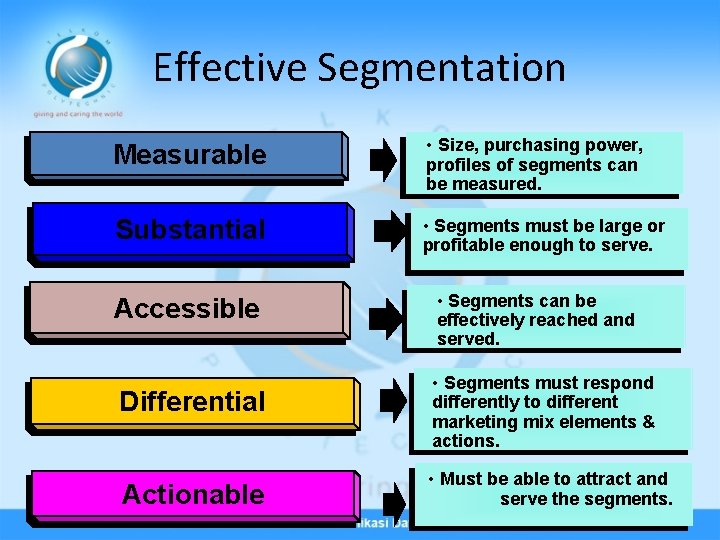
Effective Segmentation Measurable • Size, purchasing power, profiles of segments can be measured. Substantial • Segments must be large or profitable enough to serve. Accessible Differential Actionable • Segments can be effectively reached and served. • Segments must respond differently to different marketing mix elements & actions. • Must be able to attract and serve the segments.

Five Patterns of Target Market Selection Single-segment concentration Product specialization Selective specialization M 1 M 2 M 3 P 1 P 1 P 2 P 2 P 3 P 3 Market specialization Full market coverage M 1 M 2 M 3 P = Product M = Market M 1 M 2 M 3 P 1 P 2 P 3
- Slides: 13