
B Overview of Models Brian Joyce SEI Denis
B: Overview of Models Brian Joyce, SEI Denis Hughes, Rhodes University Mark Howells, KTH 1
Outline • Brian and Denis describe: – WEAP model of Orange-Senqu – How WEAP model is consistent with other modeling in the region – Initial results showing climate change impacts • Mark describes: – SAPP model of South African power pool – How SAPP model is consistent with other modeling in the region – Initial results showing climate change impacts 2
Water Modeling 3
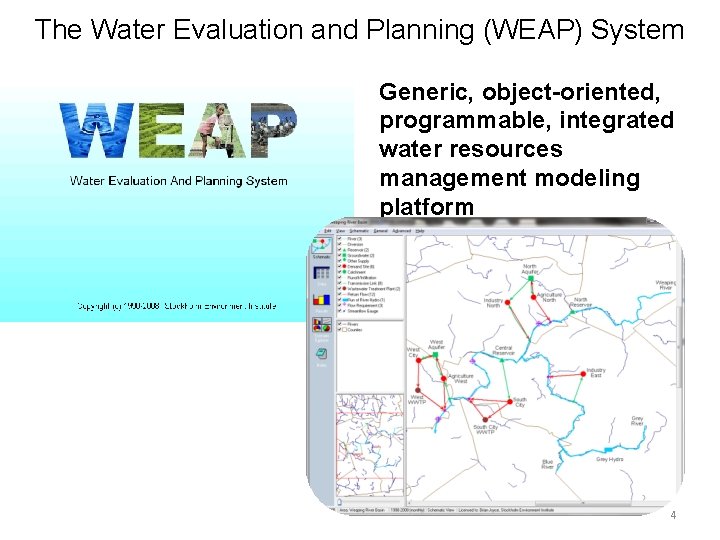
The Water Evaluation and Planning (WEAP) System Generic, object-oriented, programmable, integrated water resources management modeling platform 4
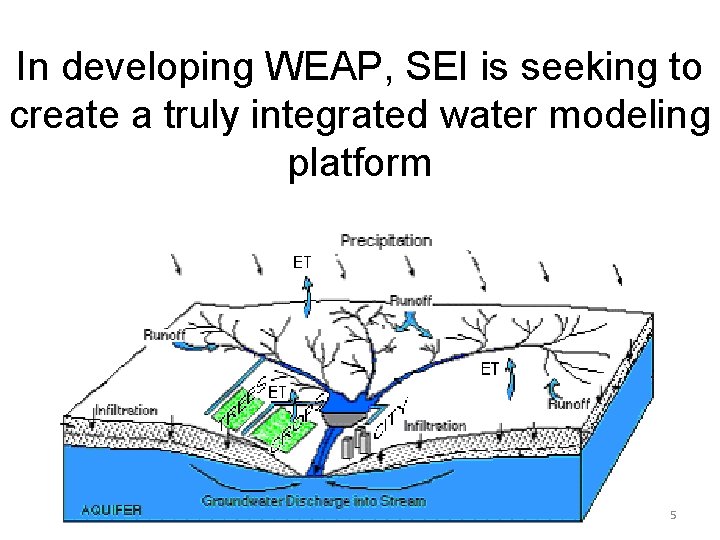
In developing WEAP, SEI is seeking to create a truly integrated water modeling platform 5
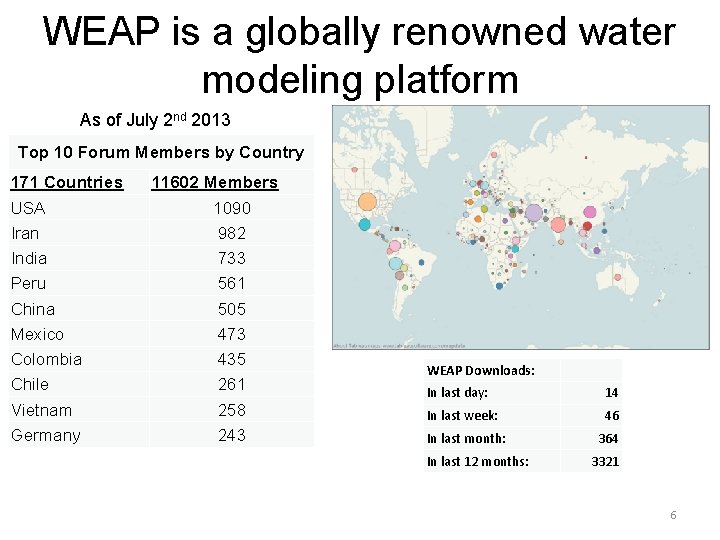
WEAP is a globally renowned water modeling platform As of July 2 nd 2013 Top 10 Forum Members by Country 171 Countries USA Iran India Peru China Mexico Colombia Chile Vietnam Germany 11602 Members 1090 982 733 561 505 473 435 261 258 243 WEAP Downloads: In last day: 14 In last week: 46 In last month: 364 In last 12 months: 3321 6
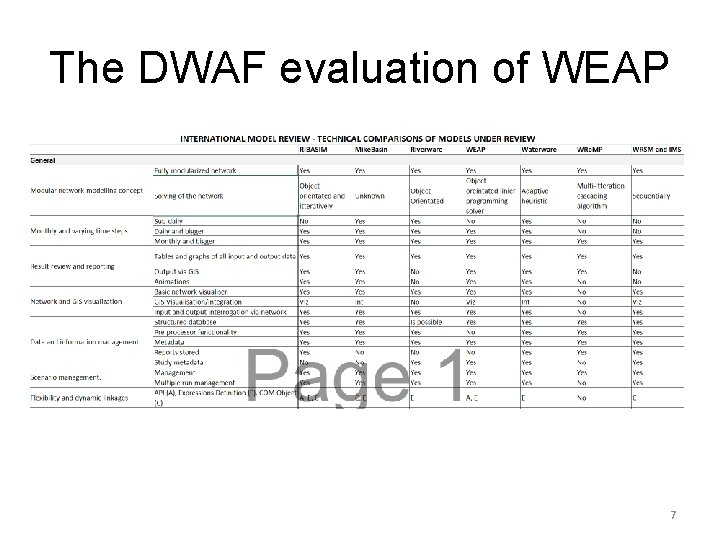
The DWAF evaluation of WEAP 7
Conclusions from DWAF Evaluation • WEAP water use estimates similar to WRSM “Even though most of the international models would be able to mimic these water use estimates through their interoperability, the evaluation shows that WEAP and RIBASIM seems to have the most explicitly defined comparative water use definitions to WRSM. ” • Integration of WEAP hydrology seen as benefit “It was found that all the models have similar hydrological and system feature capabilities. Mike. Basins, WEAP and Ribasim, however, had strong interoperability capabilities to make provision for any shortcomings in the WRSM capabilities. ” • WEAP water quality routine has regional importance “WEAP links directly to Qual 2 K which is currently seen as one of the important eutrophication models and is currently used to assess operational planning in one of the main rivers in South Africa” 8
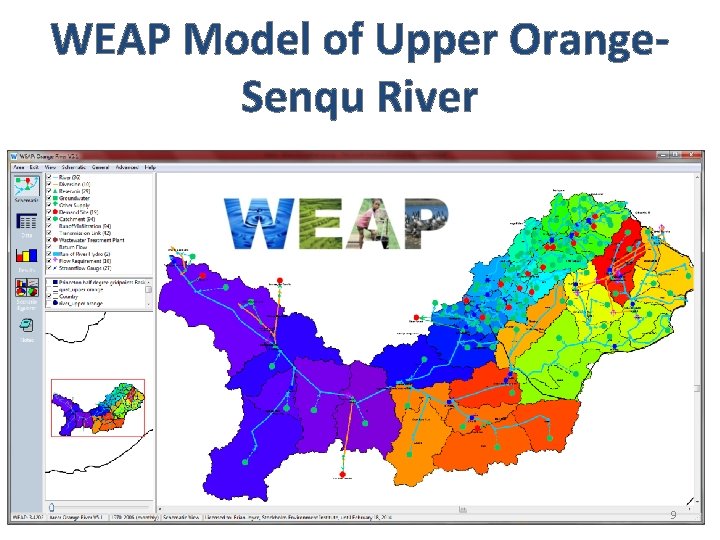
WEAP Model of Upper Orange. Senqu River 9
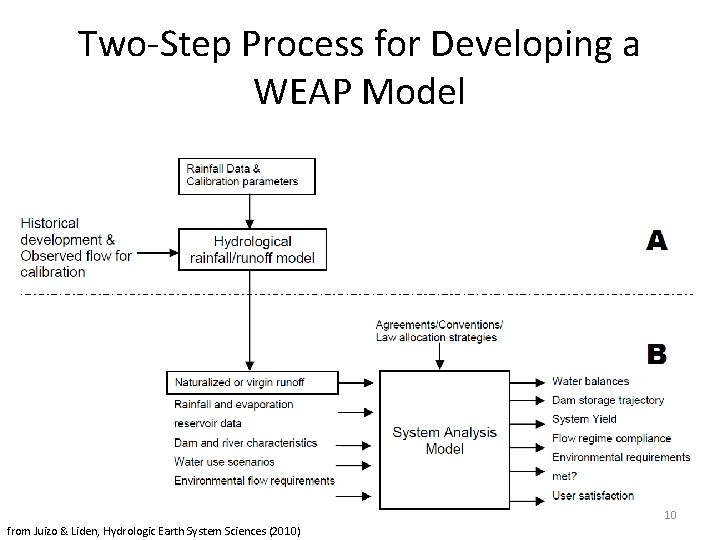
Two-Step Process for Developing a WEAP Model 10 from Juizo & Liden, Hydrologic Earth System Sciences (2010)
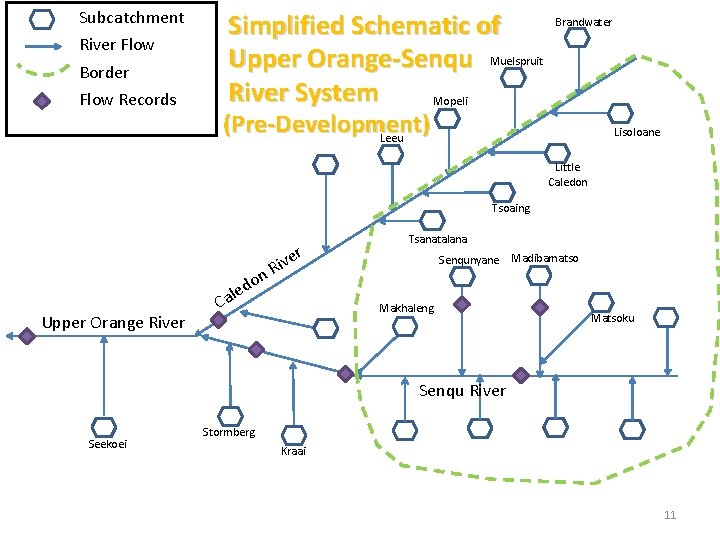
Subcatchment River Flow Border Flow Records Simplified Schematic of Upper Orange-Senqu Muelspruit River System Mopeli Brandwater (Pre-Development) Leeu Lisoloane Little Caledon Tsoaing r n o led Upper Orange River Ca e Riv Tsanatalana Senqunyane Madibamatso Makhaleng Matsoku Senqu River Seekoei Stormberg Kraai 11
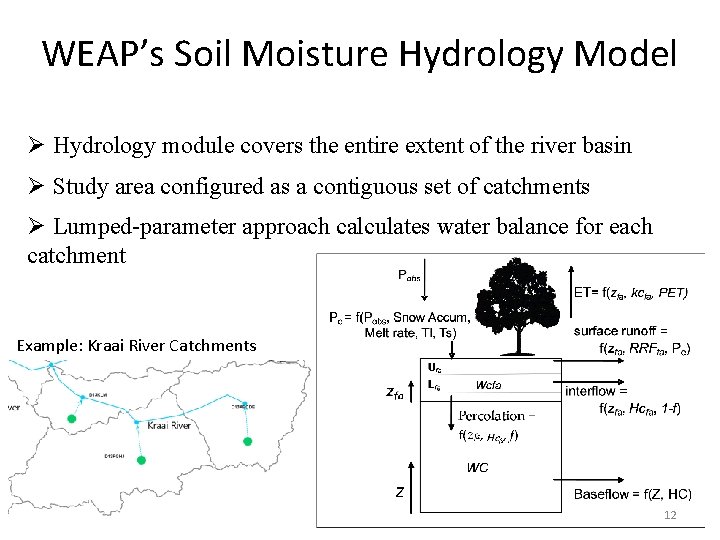
WEAP’s Soil Moisture Hydrology Model Ø Hydrology module covers the entire extent of the river basin Ø Study area configured as a contiguous set of catchments Ø Lumped-parameter approach calculates water balance for each catchment Example: Kraai River Catchments 12
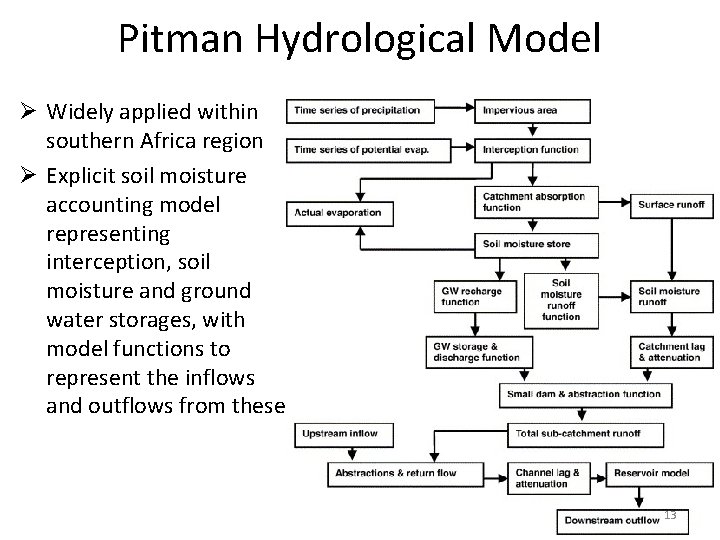
Pitman Hydrological Model Ø Widely applied within southern Africa region Ø Explicit soil moisture accounting model representing interception, soil moisture and ground water storages, with model functions to represent the inflows and outflows from these 13
Pitman versus WEAP • Pitman flexibility: – Represent total stream flow from different sources using built-in components. • WEAP flexibility: – ‘Expression builder’ allows for additional flexibility within a relatively simpler model. – Example is using a moisture storage threshold to limit baseflow outputs and generate zero stream flow in ephemeral rivers. 14
Some specific differences • Surface runoff generation: – Pitman based on monthly rainfall total only. – WEAP based on combination of monthly rainfall total and moisture storage state. – Makes comparison between parameter sets of the two models more difficult. • Flexibility: – Pitman model flexibility is built-in through more complexity. – WEAP model requires experience in the use of the ‘expression builder’ options. – Ultimately, both require expert knowledge to use effectively. 15
Overall comparison of the two models • Within the Orange – Senqu system: – Able to calibrate the WEAP model to reproduce very similar patterns of stream flow as simulated by the Pitman model. – Most of these achieved with similar water balance components (surface runoff, baseflow, evaporative losses, etc. ). • General conclusions: – Similar uncertainties in the application of the two models. – Given adequate user experience, the calibration efforts required for the two models are very similar. 16
Orange-Senqu WEAP calibration for natural conditions. • Learn from Pitman model experience: – Calibration parameters in different parts of the basin. – Pitman model results in un-gauged parts of the basin. – Experience comes from WR 90, WR 2005, ORASECOM and some IWR studies in the Caledon River sub-basin. • Couple Pitman model outputs with observed stream flow data where available (and not impacted by upstream developments) to evaluate WEAP model. 17
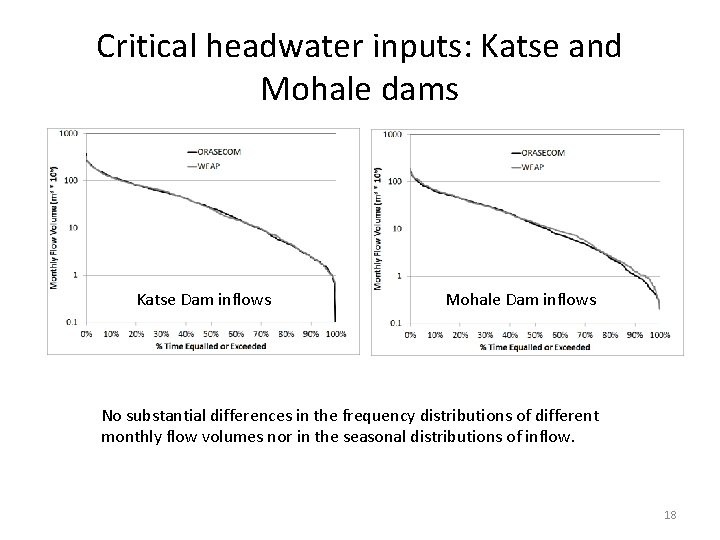
Critical headwater inputs: Katse and Mohale dams Katse Dam inflows Mohale Dam inflows No substantial differences in the frequency distributions of different monthly flow volumes nor in the seasonal distributions of inflow. 18
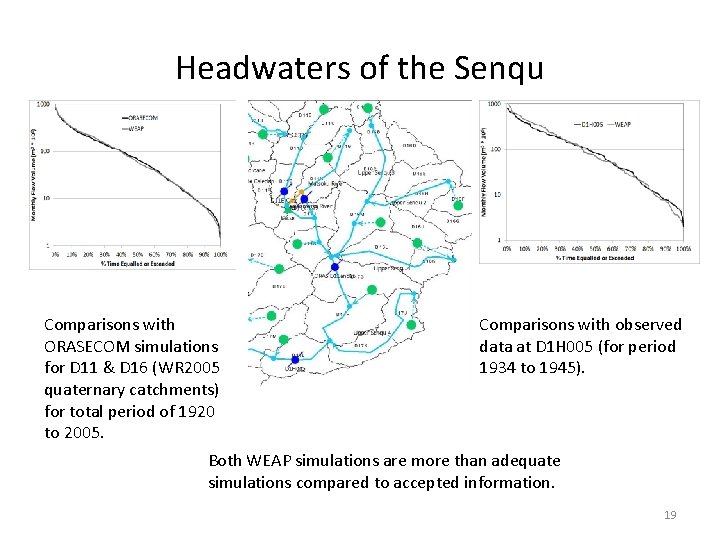
Headwaters of the Senqu Comparisons with ORASECOM simulations for D 11 & D 16 (WR 2005 quaternary catchments) for total period of 1920 to 2005. Comparisons with observed data at D 1 H 005 (for period 1934 to 1945). Both WEAP simulations are more than adequate simulations compared to accepted information. 19
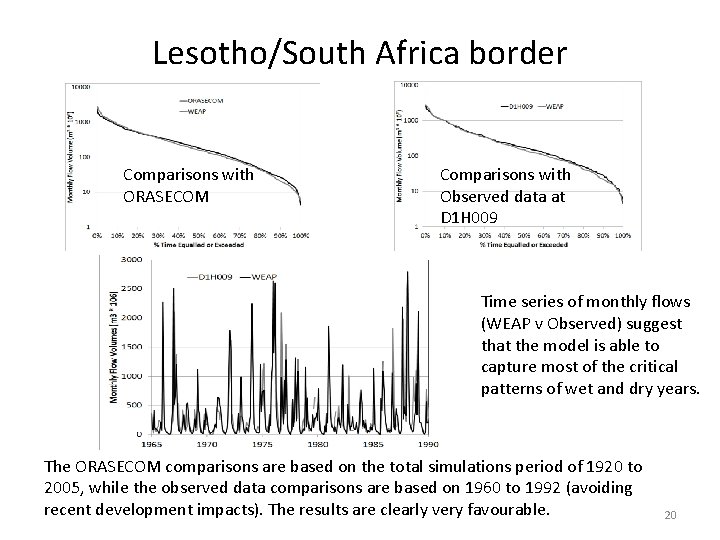
Lesotho/South Africa border Comparisons with ORASECOM Comparisons with Observed data at D 1 H 009 Time series of monthly flows (WEAP v Observed) suggest that the model is able to capture most of the critical patterns of wet and dry years. The ORASECOM comparisons are based on the total simulations period of 1920 to 2005, while the observed data comparisons are based on 1960 to 1992 (avoiding recent development impacts). The results are clearly very favourable. 20
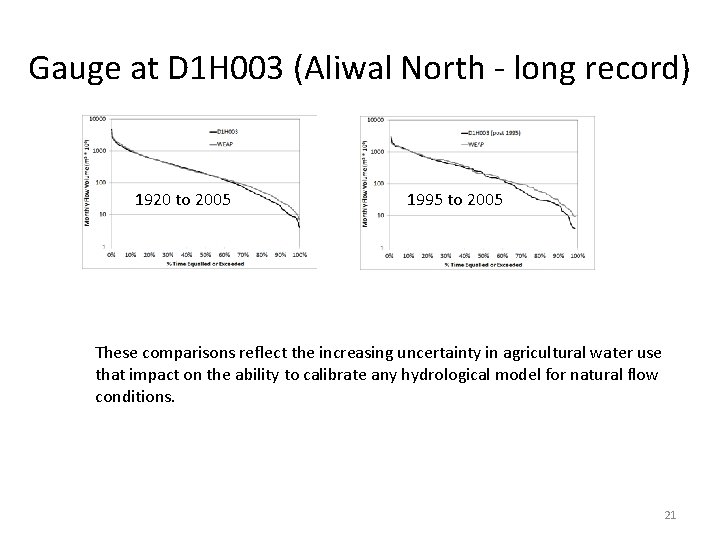
Gauge at D 1 H 003 (Aliwal North - long record) 1920 to 2005 1995 to 2005 These comparisons reflect the increasing uncertainty in agricultural water use that impact on the ability to calibrate any hydrological model for natural flow conditions. 21
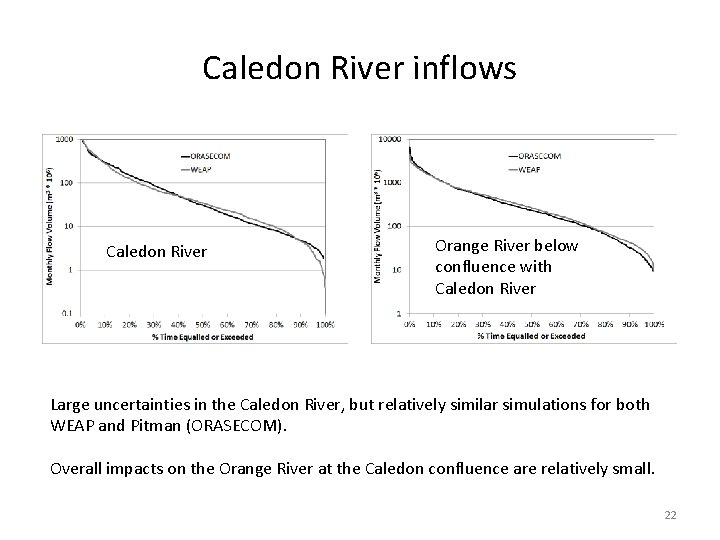
Caledon River inflows Caledon River Orange River below confluence with Caledon River Large uncertainties in the Caledon River, but relatively similar simulations for both WEAP and Pitman (ORASECOM). Overall impacts on the Orange River at the Caledon confluence are relatively small. 22
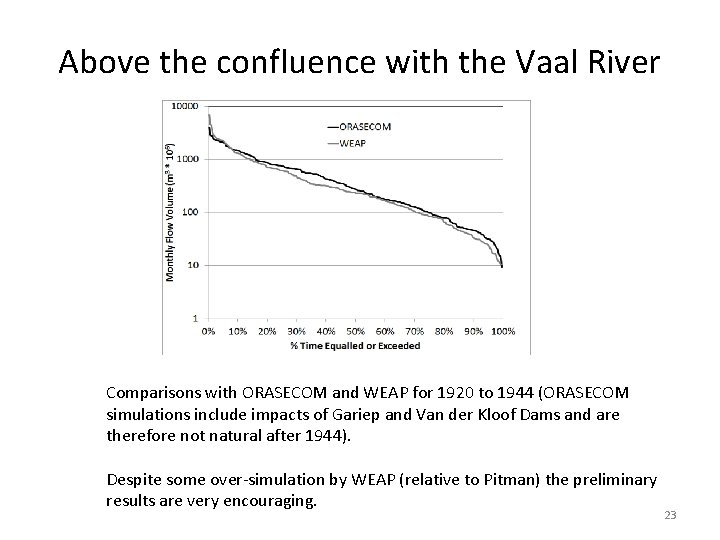
Above the confluence with the Vaal River Comparisons with ORASECOM and WEAP for 1920 to 1944 (ORASECOM simulations include impacts of Gariep and Van der Kloof Dams and are therefore not natural after 1944). Despite some over-simulation by WEAP (relative to Pitman) the preliminary results are very encouraging. 23
Natural simulations - refinements • The project team are confident about most of the simulations. – Particularly in the Senqu River/Lesotho parts of the basin, when compared with ORASECOM results. • However, there are some areas in the lower parts of the system where refinements are possible: – Some of these could follow a comparison of simulated developed conditions with recently observed flows. – Part of the uncertainty is related to the not very well quantified agricultural use in the South African parts of the Orange and Caledon Rivers. 24
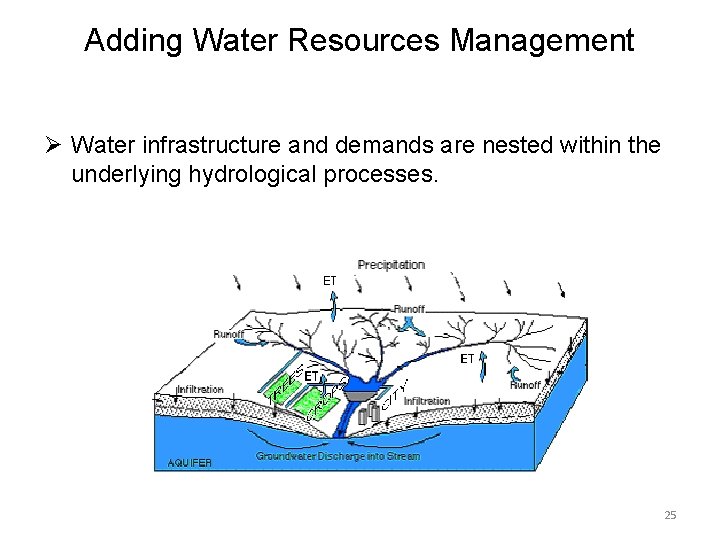
Adding Water Resources Management Ø Water infrastructure and demands are nested within the underlying hydrological processes. 25
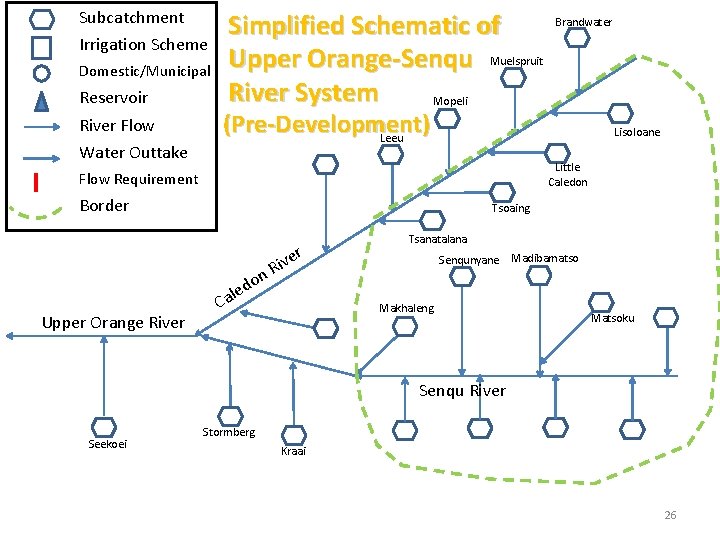
Subcatchment Irrigation Scheme Domestic/Municipal Reservoir River Flow Water Outtake Simplified Schematic of Upper Orange-Senqu Muelspruit River System Mopeli (Pre-Development) Leeu Lisoloane Little Caledon Flow Requirement Border Tsoaing r n o led Upper Orange River Brandwater Ca e Riv Tsanatalana Senqunyane Madibamatso Makhaleng Matsoku Senqu River Seekoei Stormberg Kraai 26
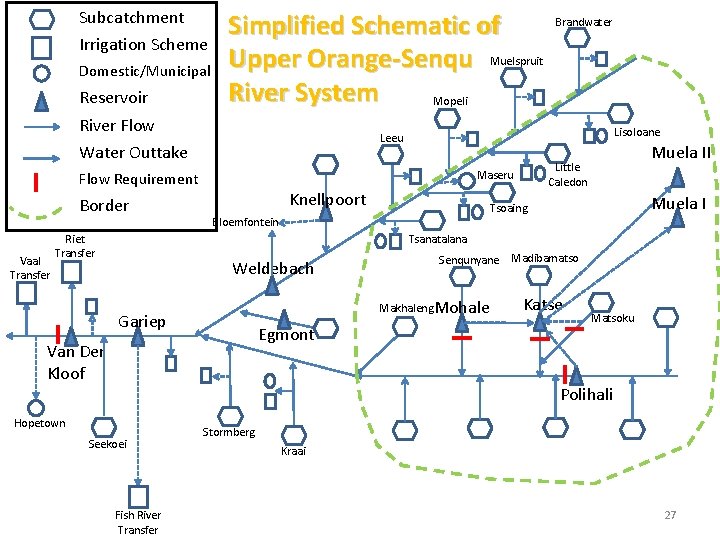
Subcatchment Irrigation Scheme Domestic/Municipal Reservoir Simplified Schematic of Upper Orange-Senqu Muelspruit River System Mopeli River Flow Vaal Transfer Knellpoort Muela II Little Caledon Maseru Flow Requirement Riet Transfer Lisoloane Leeu Water Outtake Border Brandwater Muela I Tsoaing Bloemfontein Tsanatalana Weldebach Senqunyane Madibamatso Makhaleng. Mohale Gariep Egmont Van Der Kloof Katse Matsoku Polihali Hopetown Seekoei Fish River Transfer Stormberg Kraai 27
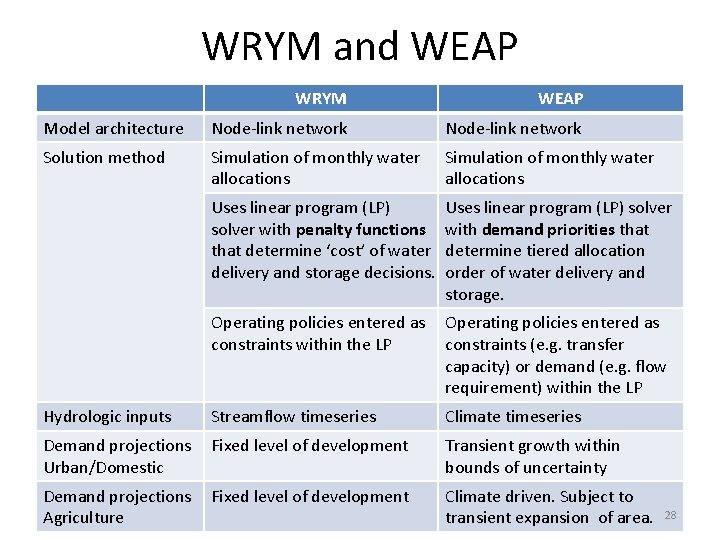
WRYM and WEAP WRYM WEAP Model architecture Node-link network Solution method Simulation of monthly water allocations Uses linear program (LP) solver with penalty functions that determine ‘cost’ of water delivery and storage decisions. Uses linear program (LP) solver with demand priorities that determine tiered allocation order of water delivery and storage. Operating policies entered as constraints within the LP Operating policies entered as constraints (e. g. transfer capacity) or demand (e. g. flow requirement) within the LP Hydrologic inputs Streamflow timeseries Climate timeseries Demand projections Urban/Domestic Fixed level of development Transient growth within bounds of uncertainty Demand projections Agriculture Fixed level of development Climate driven. Subject to transient expansion of area. 28
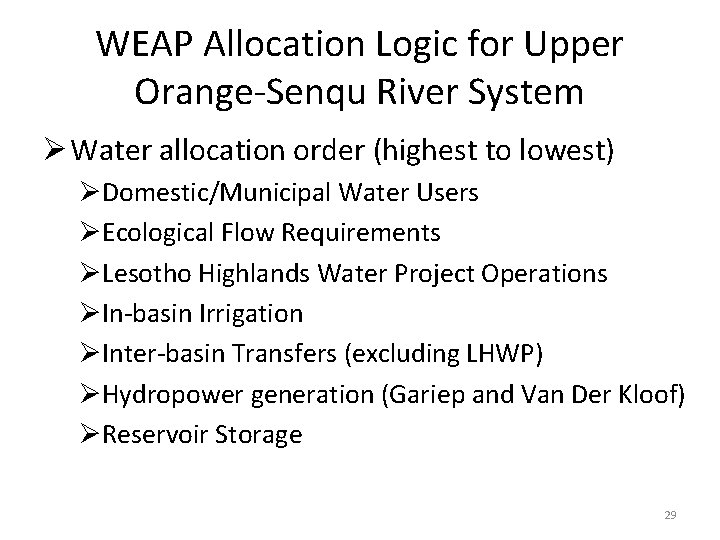
WEAP Allocation Logic for Upper Orange-Senqu River System Ø Water allocation order (highest to lowest) ØDomestic/Municipal Water Users ØEcological Flow Requirements ØLesotho Highlands Water Project Operations ØIn-basin Irrigation ØInter-basin Transfers (excluding LHWP) ØHydropower generation (Gariep and Van Der Kloof) ØReservoir Storage 29
Comparison of WEAP to Historical • WEAP operational rules lead to similar reservoir storages 30
Energy Modeling 31
An Introduction to OSe. MOSYS Open Source energy MOdeling SYStem • At present there exists a useful, but limited set of accessible energy systems models. They often require significant investments in terms of human resources, training and software purchases. Leading International Partners • OSe. MOSYS is a fully fledged energy systems linear optimisation model, with no associated upfront financial requirements. • It extends the availability of energy modelling further to researchers, business analysts and government specialists in developing countries. • An easily ledgible – 500 line long – open source code written in GNU Mathprog with an existing translation into GAMS. 32
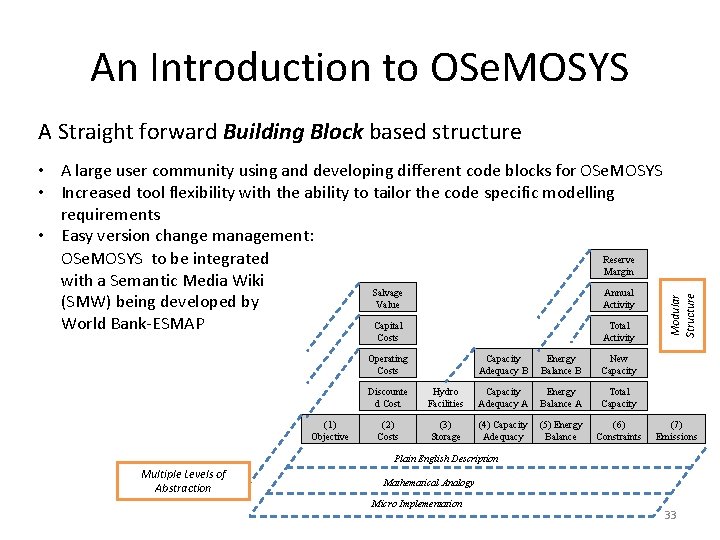
An Introduction to OSe. MOSYS • A large user community using and developing different code blocks for OSe. MOSYS • Increased tool flexibility with the ability to tailor the code specific modelling requirements • Easy version change management: Reserve OSe. MOSYS to be integrated Margin with a Semantic Media Wiki Salvage Annual (SMW) being developed by Value Activity World Bank-ESMAP Capital Total Costs Activity Operating Costs (1) Objective Capacity Adequacy B Energy Balance B New Capacity Discounte d Cost Hydro Facilities Capacity Adequacy A Energy Balance A Total Capacity (2) Costs (3) Storage (4) Capacity Adequacy (5) Energy Balance (6) Constraints Modular Structure A Straight forward Building Block based structure (7) Emissions Plain English Description Multiple Levels of Abstraction Mathematical Analogy Micro Implementation 33
An Introduction to OSe. MOSYS Useful for: • Medium- to long-term capacity expansion/investment planning • To inform local, national and multi-regional energy planning • May cover all or individual energy sectors, including heat, electricity and transport Main Assumptions • Deterministic linear optimisation model - assumes perfect competition on energy markets. • Driven by exogenously defined demands for energy services. • These can be met through a range of technologies. • Technologies consume resources, defined by their potentials and costs. • Policy scenarios impose certain technical constraints, economic implications or environmental targets. • Temporal resolution: consecutive years, split up into ‘time slices’ with specific demand or supply characteristics, e. g. , weekend evenings in summer. 34
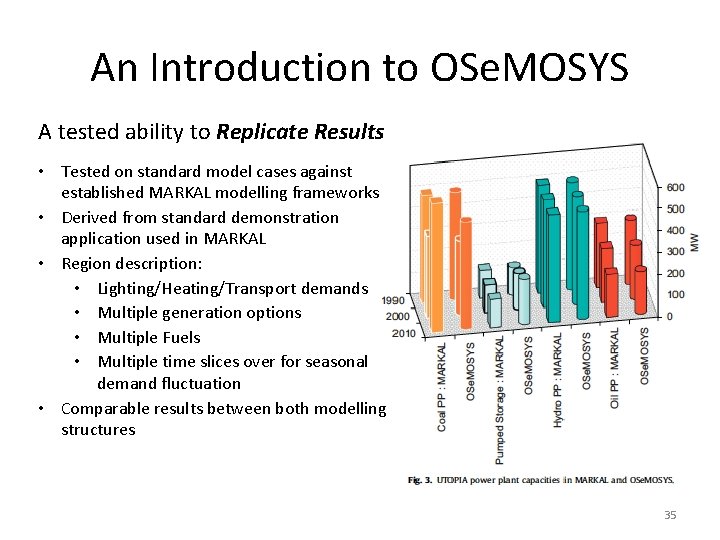
An Introduction to OSe. MOSYS A tested ability to Replicate Results • Tested on standard model cases against established MARKAL modelling frameworks • Derived from standard demonstration application used in MARKAL • Region description: • Lighting/Heating/Transport demands • Multiple generation options • Multiple Fuels • Multiple time slices over for seasonal demand fluctuation • Comparable results between both modelling structures 35
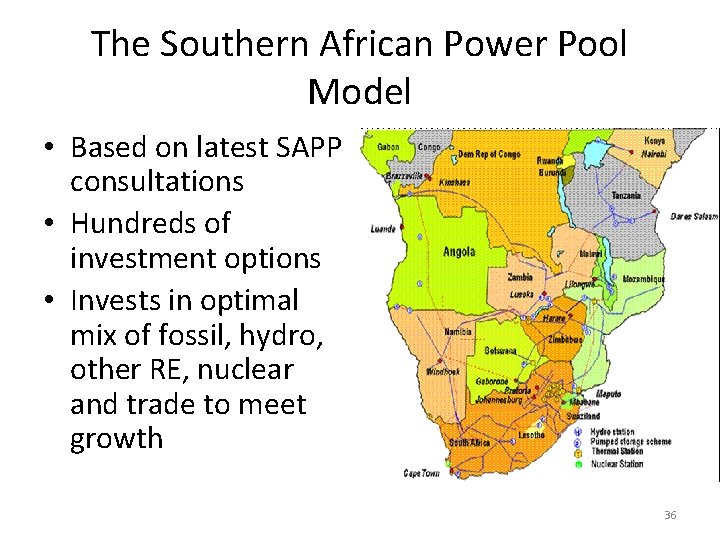
The Southern African Power Pool Model • Based on latest SAPP consultations • Hundreds of investment options • Invests in optimal mix of fossil, hydro, other RE, nuclear and trade to meet growth 36
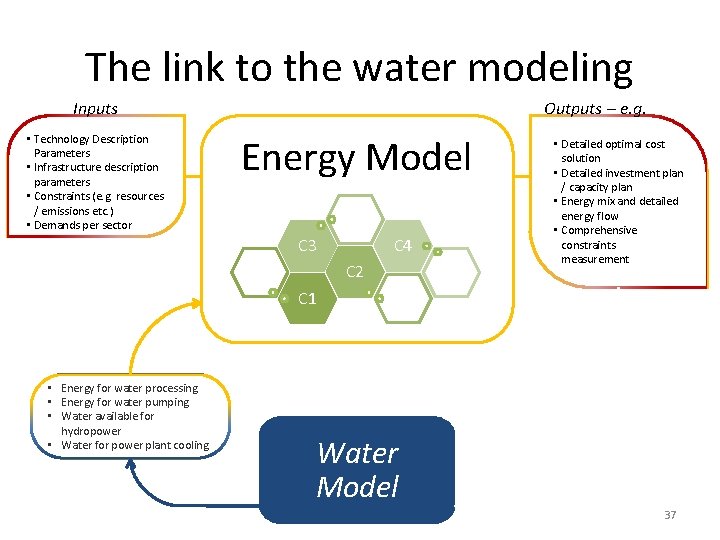
The link to the water modeling Inputs • Technology Description Parameters • Infrastructure description parameters • Constraints (e. g. resources / emissions etc. ) • Demands per sector Outputs – e. g. Energy Model C 4 C 3 C 2 • Detailed optimal cost solution • Detailed investment plan / capacity plan • Energy mix and detailed energy flow • Comprehensive constraints measurement C 1 • Energy for water processing • Energy for water pumping • Water available for hydropower • Water for power plant cooling Water Model 37
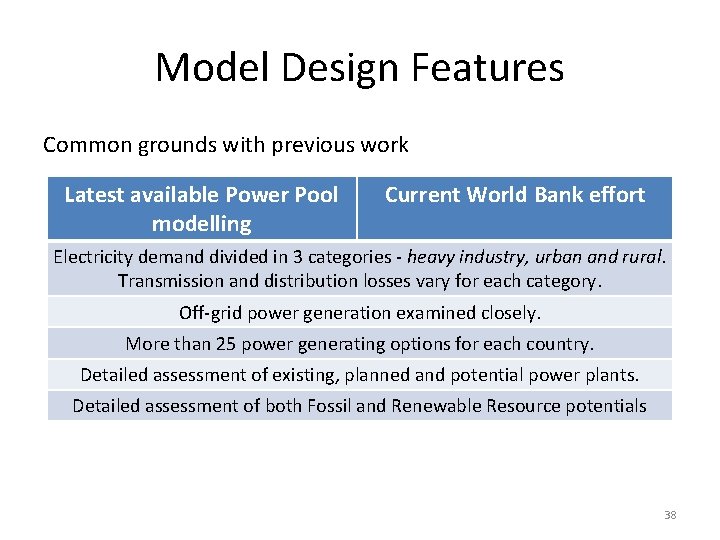
Model Design Features Common grounds with previous work Latest available Power Pool modelling Current World Bank effort Electricity demand divided in 3 categories - heavy industry, urban and rural. Transmission and distribution losses vary for each category. Off-grid power generation examined closely. More than 25 power generating options for each country. Detailed assessment of existing, planned and potential power plants. Detailed assessment of both Fossil and Renewable Resource potentials 38
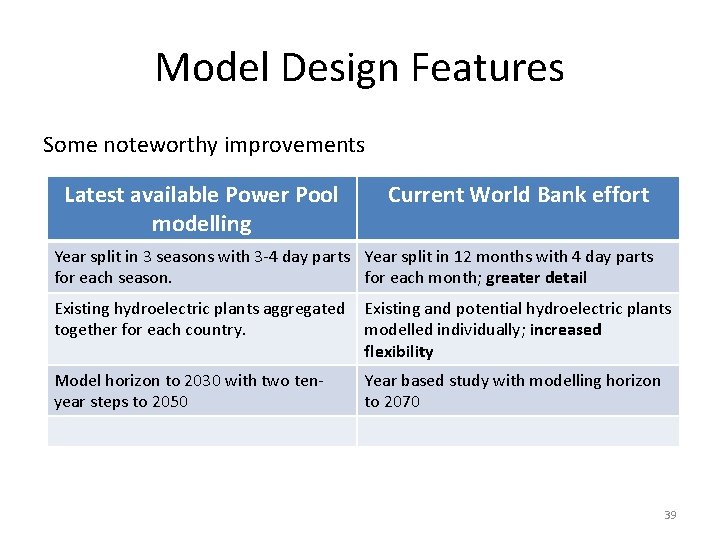
Model Design Features Some noteworthy improvements Latest available Power Pool modelling Current World Bank effort Year split in 3 seasons with 3 -4 day parts Year split in 12 months with 4 day parts for each season. for each month; greater detail Existing hydroelectric plants aggregated together for each country. Existing and potential hydroelectric plants modelled individually; increased flexibility Model horizon to 2030 with two tenyear steps to 2050 Year based study with modelling horizon to 2070 39
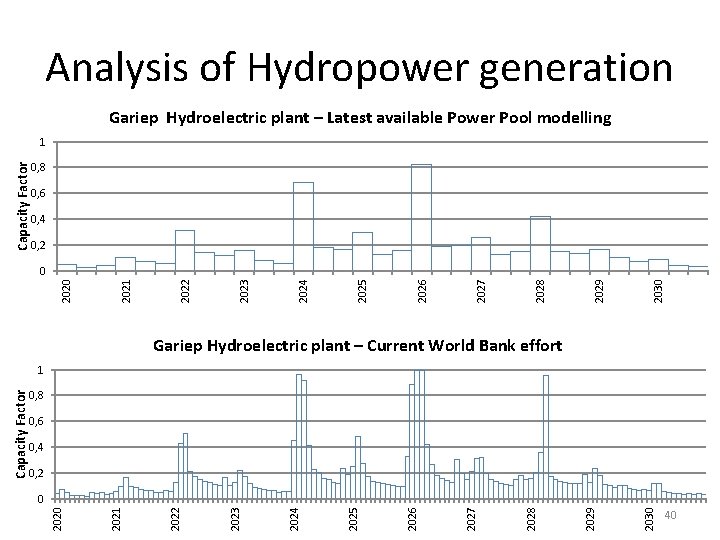
Analysis of Hydropower generation Gariep Hydroelectric plant – Latest available Power Pool modelling Capacity Factor 1 0, 8 0, 6 0, 4 0, 2 2030 2029 2028 2027 2026 2025 2024 2023 2022 2021 2020 0 Gariep Hydroelectric plant – Current World Bank effort 0, 8 0, 6 0, 4 0, 2 2030 2029 2028 2027 2026 2025 2024 2023 2022 2021 0 2020 Capacity Factor 1 40
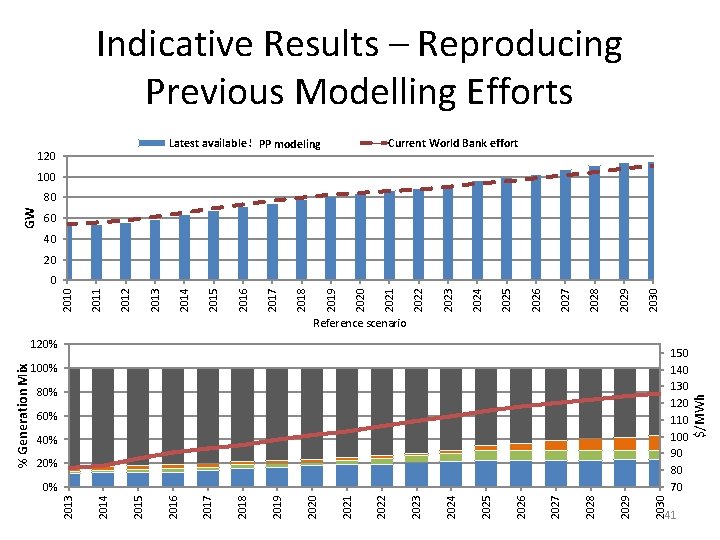
Indicative Results – Reproducing Previous Modelling Efforts Latest available SAPP modeling 120 Current World Bank effort 100 GW 80 60 40 20 2030 2029 2028 2027 2026 2025 2024 2023 2022 2021 2020 2019 2018 2017 2016 2015 2014 2013 2012 2011 2010 0 150 140 130 120 110 100 90 80 70 100% 80% 60% 40% 2030 2029 2028 2027 2026 2025 2024 2023 2022 2021 2020 2019 2018 2017 2016 2015 2014 0% 2013 % Generation Mix 120% 41 $/MWh Reference scenario
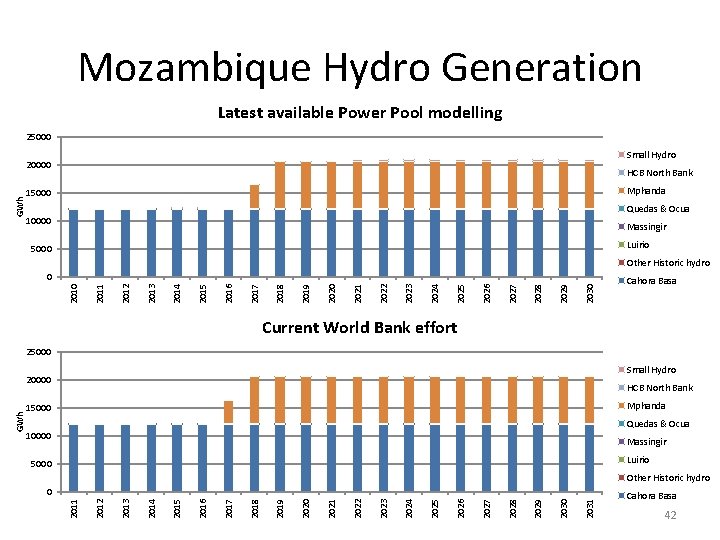
Mozambique Hydro Generation Latest available Power Pool modelling 25000 Small Hydro GWh 20000 HCB North Bank Mphanda 15000 Quedas & Ocua 10000 Massingir Luirio 5000 Other Historic hydro 2030 2029 2028 2027 2026 2025 2024 2023 2022 2021 2020 2019 2018 2017 2016 2015 2014 2013 2012 2011 2010 0 Cahora Basa Current World Bank effort 25000 Small Hydro HCB North Bank Mphanda 15000 Quedas & Ocua 10000 Massingir Luirio 5000 Other Historic hydro 2031 2030 2029 2028 2027 2026 2025 2024 2023 2022 2021 2020 2019 2018 2017 2016 2015 2014 2013 2012 0 2011 GWh 20000 Cahora Basa 42
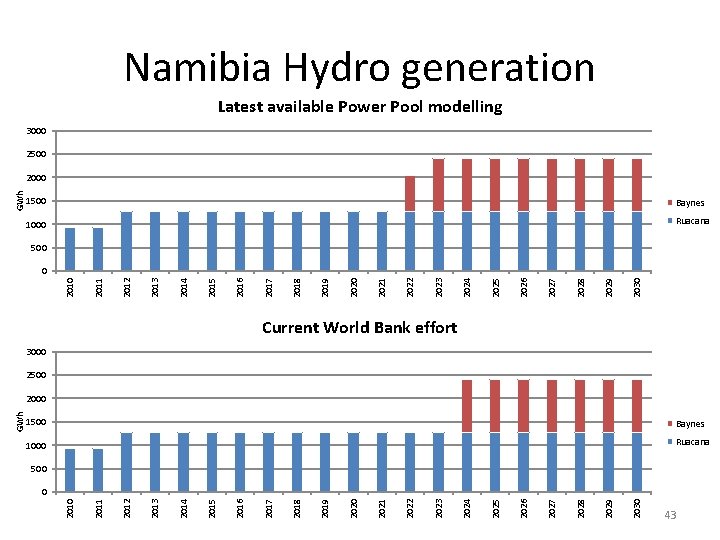
2030 2029 2028 2027 2026 2025 2024 2023 2022 2021 2020 2019 2018 2017 2016 2015 2014 2013 2012 2011 2010 GWh Namibia Hydro generation Latest available Power Pool modelling 3000 2500 2000 1500 Baynes 1000 Ruacana 500 0 Current World Bank effort 3000 2500 2000 1500 Baynes 1000 Ruacana 500 0 43
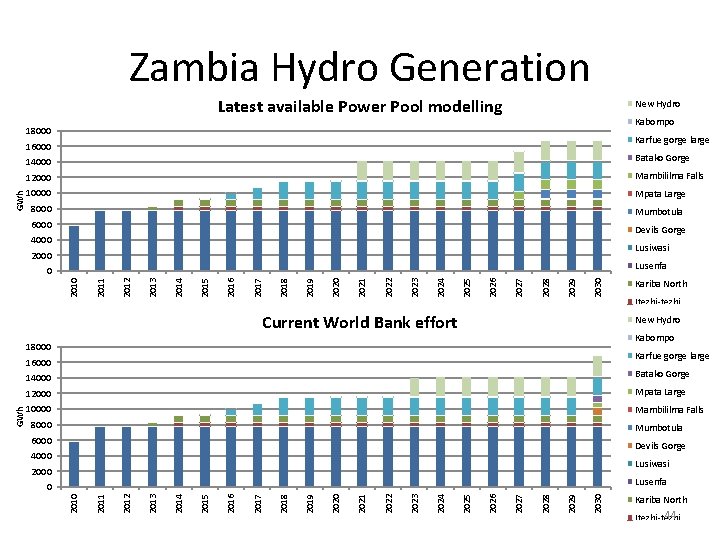
Zambia Hydro Generation Latest available Power Pool modelling New Hydro Kabompo 18000 Karfue gorge large GWh 16000 14000 Batako Gorge 12000 Mambililma Falls 10000 Mpata Large 8000 Mumbotula 6000 Devils Gorge 4000 Lusiwasi 2000 Lusenfa 2030 2029 2028 2027 2026 2025 2024 2023 2022 2021 2020 2019 2018 2017 2016 2015 2014 2013 2012 2011 2010 0 Current World Bank effort Itezhi-tezhi Existing New Hydro hydro Kabompo 18000 Karfue gorge large 16000 14000 Batako Gorge 12000 Mpata Large 10000 Mambililma Falls 8000 Mumbotula 6000 Devils Gorge 4000 Lusiwasi 2000 Lusenfa 2030 2029 2028 2027 2026 2025 2024 2023 2022 2021 2020 2019 2018 2017 2016 2015 2014 2013 2012 2011 0 2010 GWh Kariba North 44 Itezhi-tezhi Exsisting Hydro
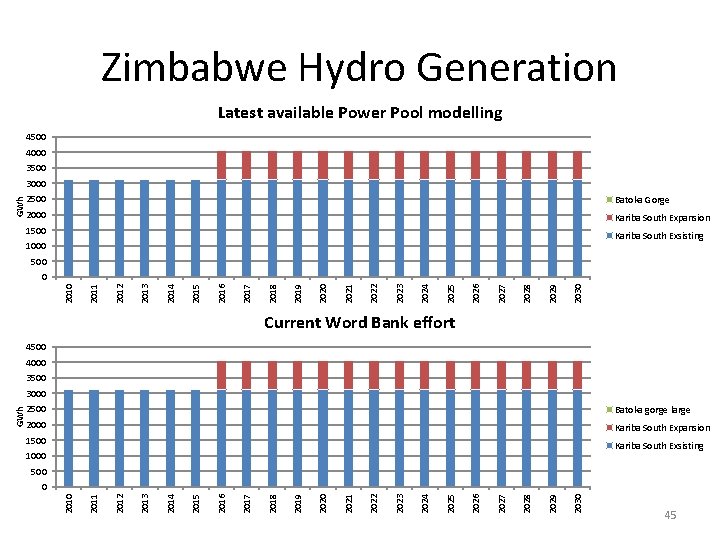
Zimbabwe Hydro Generation Latest available Power Pool modelling 4500 4000 3500 GWh 3000 2500 Batoka Gorge 2000 Kariba South Expansion 1500 Kariba South Exsisting 1000 500 2030 2029 2028 2027 2026 2025 2024 2023 2022 2021 2020 2019 2018 2017 2016 2015 2014 2013 2012 2011 2010 0 Current Word Bank effort 4500 4000 3500 2500 Batoka gorge large 2000 Kariba South Expansion 1500 Kariba South Exsisting 1000 500 2030 2029 2028 2027 2026 2025 2024 2023 2022 2021 2020 2019 2018 2017 2016 2015 2014 2013 2012 2011 0 2010 GWh 3000 45
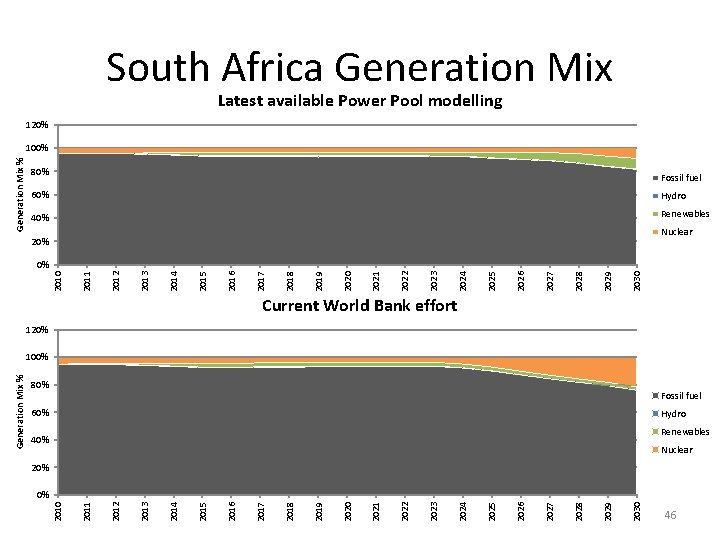
South Africa Generation Mix Latest available Power Pool modelling 120% Generation Mix % 100% 80% Fossil fuel 60% Hydro 40% Renewables Nuclear 20% 2030 2029 2028 2027 2026 2025 2024 2023 2022 2021 2020 2019 2018 2017 2016 2015 2014 2013 2012 2011 2010 0% Current World Bank effort 120% 80% Fossil fuel 60% Hydro Renewables 40% Nuclear 20% 2030 2029 2028 2027 2026 2025 2024 2023 2022 2021 2020 2019 2018 2017 2016 2015 2014 2013 2012 2011 0% 2010 Generation Mix % 100% 46
Introducing Climate Projections 47
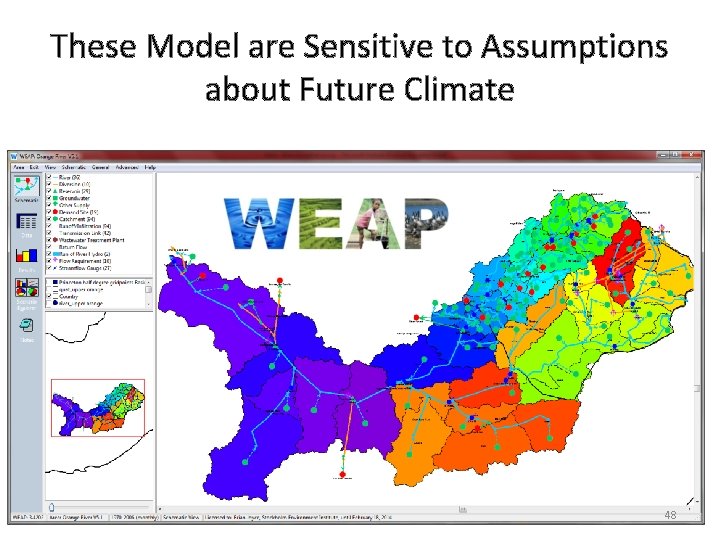
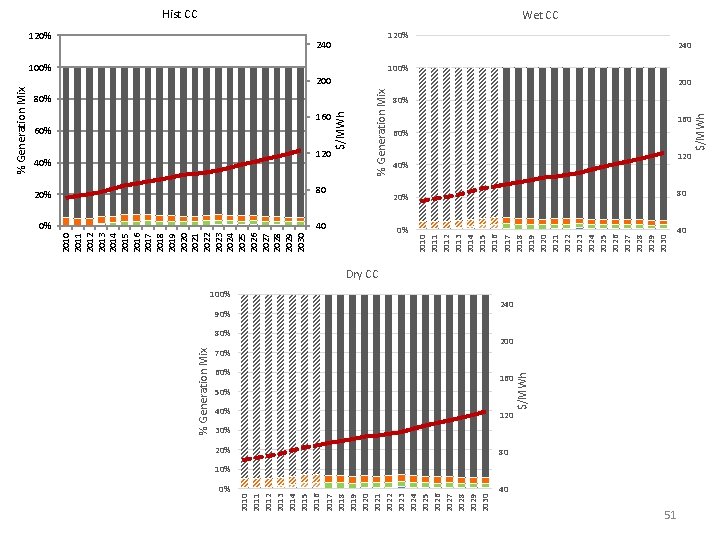
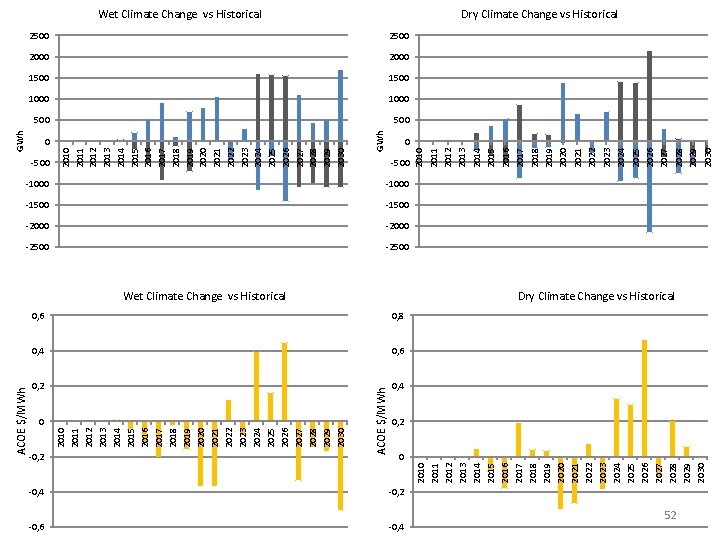
These Model are Sensitive to Assumptions about Future Climate 48
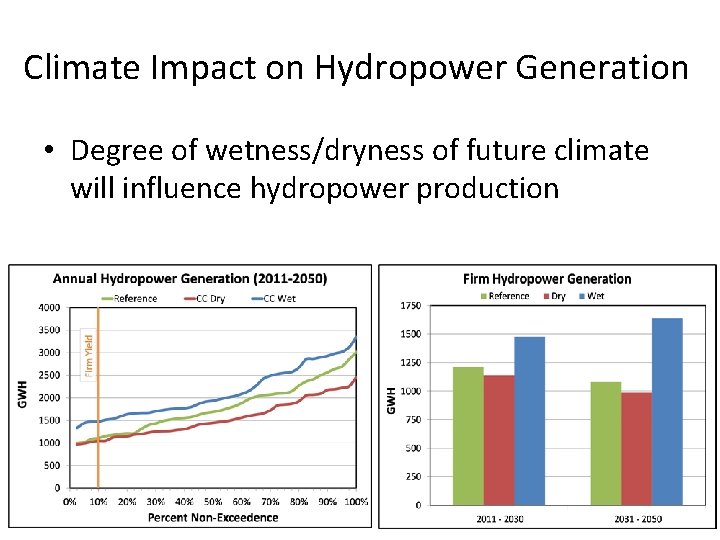
Climate Impact on Hydropower Generation • Degree of wetness/dryness of future climate will influence hydropower production 49
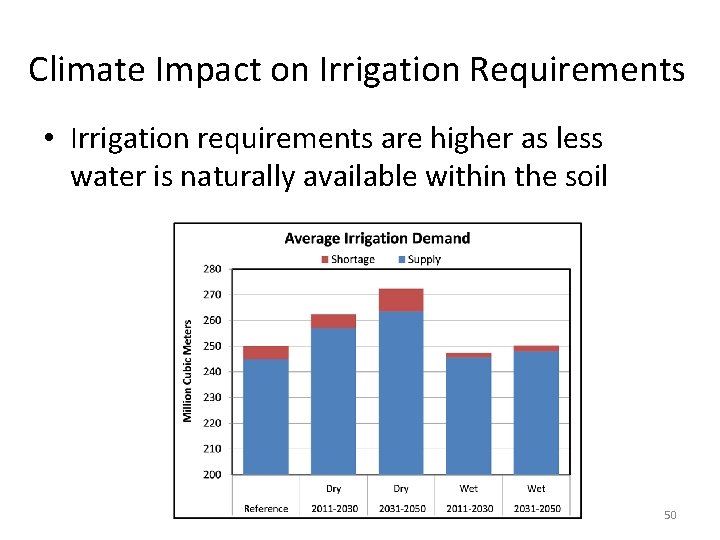
Climate Impact on Irrigation Requirements • Irrigation requirements are higher as less water is naturally available within the soil 50
0% 2010 2011 2012 2013 2014 2015 2016 2017 2018 2019 2020 2021 2022 2023 2024 2025 2026 2027 2028 2029 2030 % Generation Mix 80% 160 40% 120 20% 80 0% 40 % Generation Mix 120% 100% 200 60% 160 40% 0% 120 20% 80 Dry CC 100% 90% 240 80% 70% 200 60% 50% 160 40% 120 30% 20% 80 10% 40 51 40 $/MWh 240 2011 2012 2013 2014 2015 2016 2017 2018 2019 2020 2021 2022 2023 2024 2025 2026 2027 2028 2029 2030 60% $/MWh 120% $/MWh 2010 2011 2012 2013 2014 2015 2016 2017 2018 2019 2020 2021 2022 2023 2024 2025 2026 2027 2028 2029 2030 % Generation Mix Hist CC Wet CC 240 100% 200 80%
2010 2011 2012 2013 2014 2015 2016 2017 2018 2019 2020 2021 2022 2023 2024 2025 2026 2027 2028 2029 2030 MW -500 -0, 2 0 2500 2000 1500 1000 500 -500 -1000 -1500 -2000 -2500 Wet Climate Change vs Historical 0, 6 0, 8 0, 4 0, 6 0, 2 0, 4 -0, 2 -0, 6 -0, 4 2010 2011 2012 2013 2014 2015 2016 2017 2018 2019 2020 2021 2022 2023 2024 2025 2026 2027 2028 2029 2030 GWh 0 ACOE $/MWh 2010 2011 2012 2013 2014 2015 2016 2017 2018 2019 2020 2021 2022 2023 2024 2025 2026 2027 2028 2029 2030 ACOE $/MWh Wet Climate Change vs Historical Dry Climate Change vs Historical 0, 2 0 52
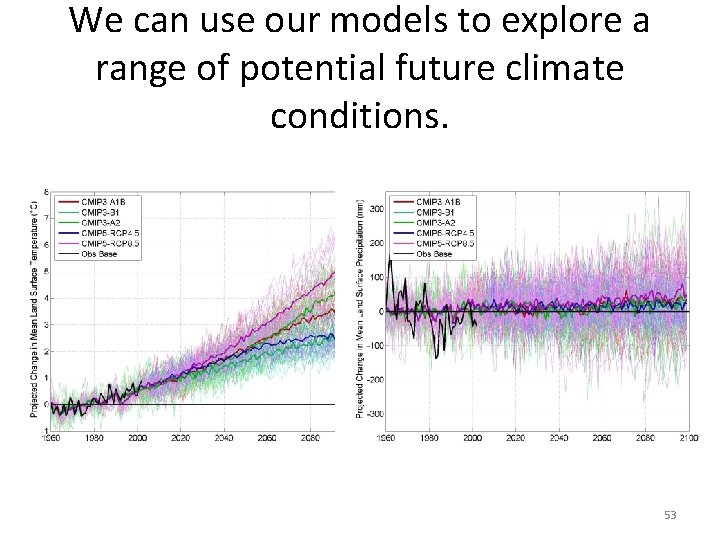
We can use our models to explore a range of potential future climate conditions. 53
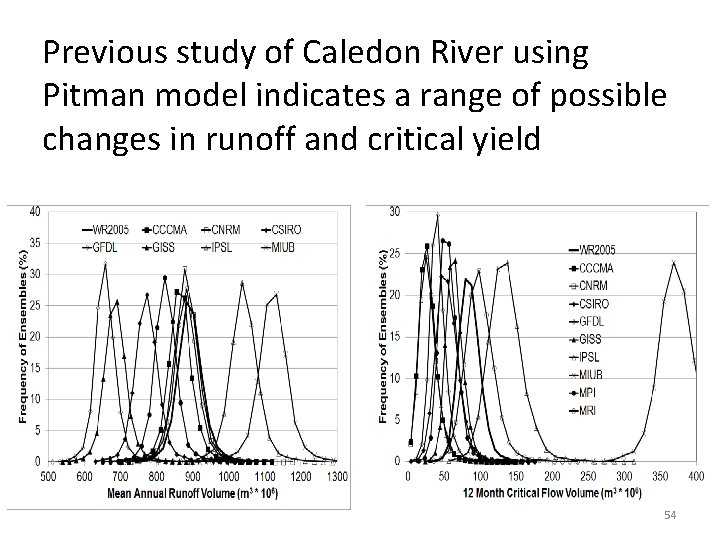
Previous study of Caledon River using Pitman model indicates a range of possible changes in runoff and critical yield 54
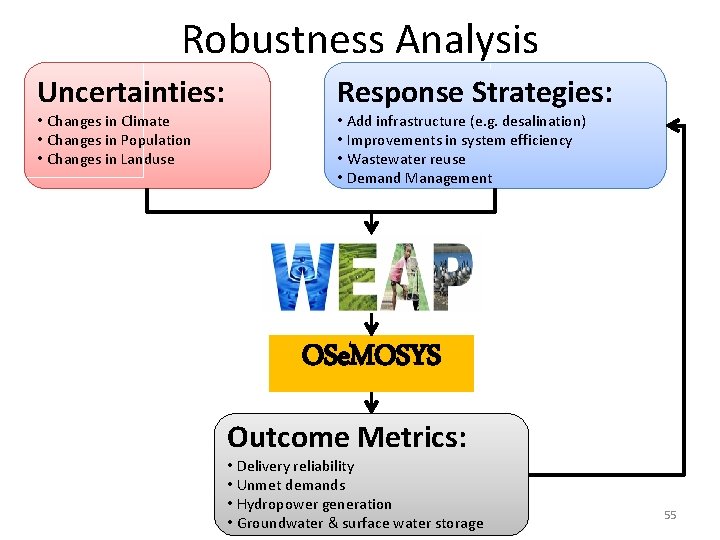
Robustness Analysis Uncertainties: • Changes in Climate • Changes in Population • Changes in Landuse Response Strategies: • Add infrastructure (e. g. desalination) • Improvements in system efficiency • Wastewater reuse • Demand Management OSe. MOSYS Outcome Metrics: • Delivery reliability • Unmet demands • Hydropower generation • Groundwater & surface water storage 55
- Slides: 55