
B Lymphocytes There are c 10 million different
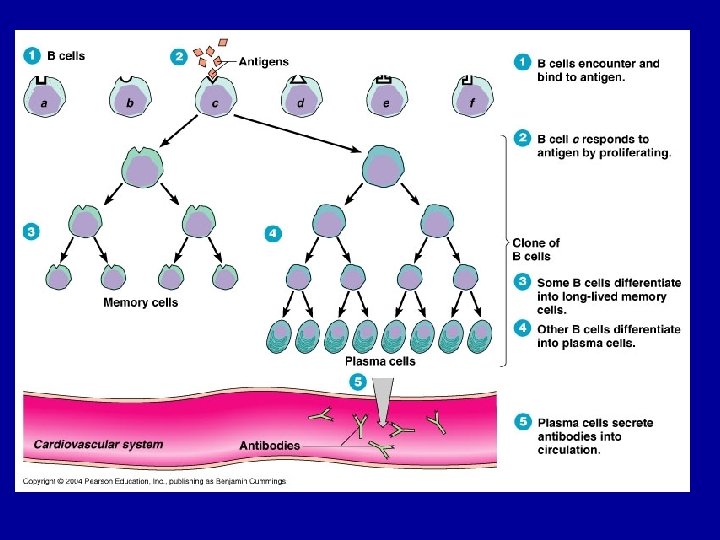
B -Lymphocytes • There are c. 10 million different Blymphocytes, each of which make a different antibody. • The huge variety is caused by genes coding for abs changing slightly during development. • There a small group of clones of each type of B-lymphocyte
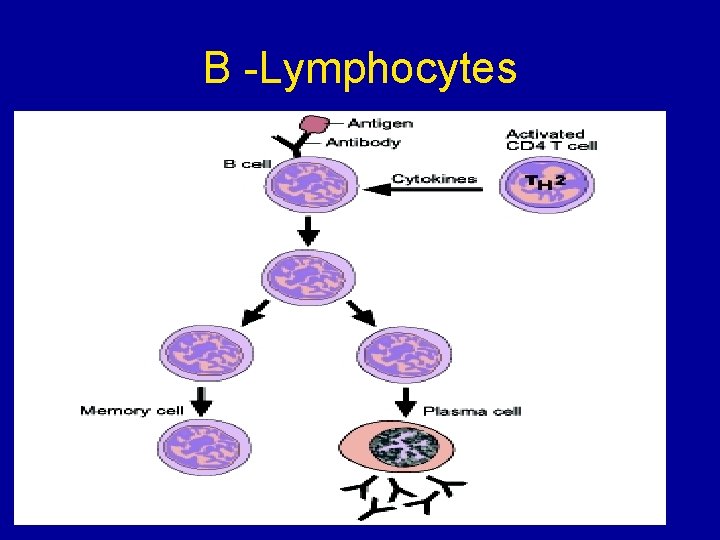
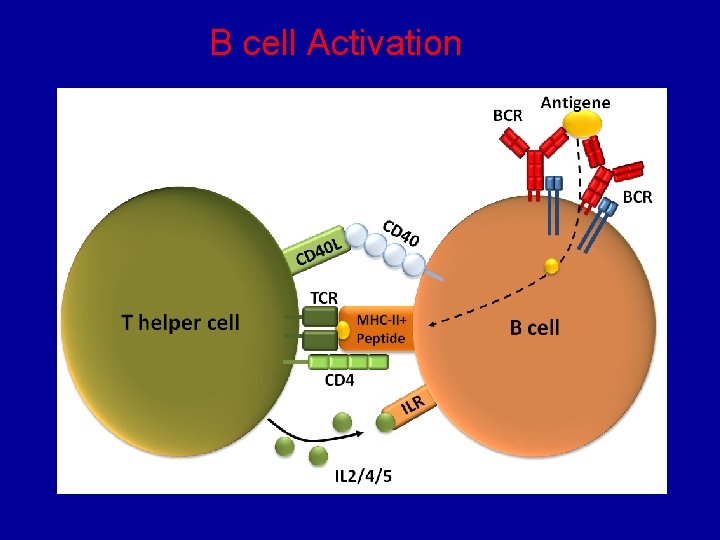
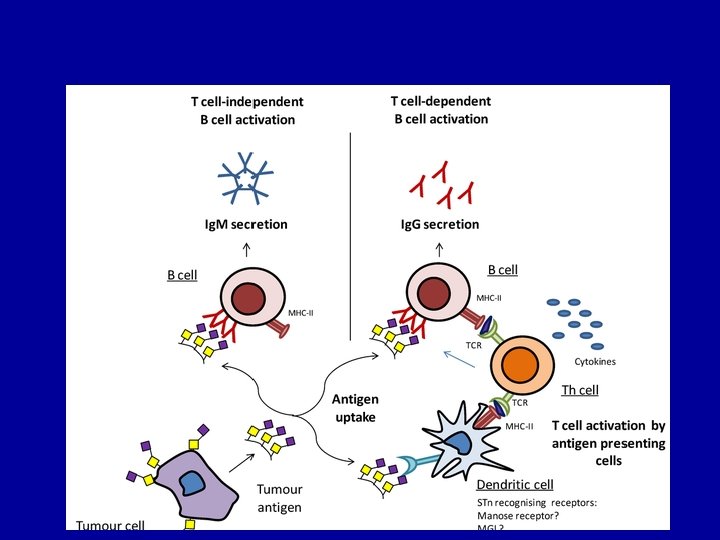
Antibody-mediated immune response B cells produce antibodies that bind to specific antigen particles in blood or interstitial fluid B -Lymphocytes • At the clone stage antibodies do not leave the B-cells. • The abs are embedded in the plasma membrane of the cell and are called antibody receptors. • When the receptors in the membrane recognise an antigen on the surface of the pathogen the B-cell divides rapidly. • The antigens are presented to the B-cells by macrophages
B -Lymphocytes
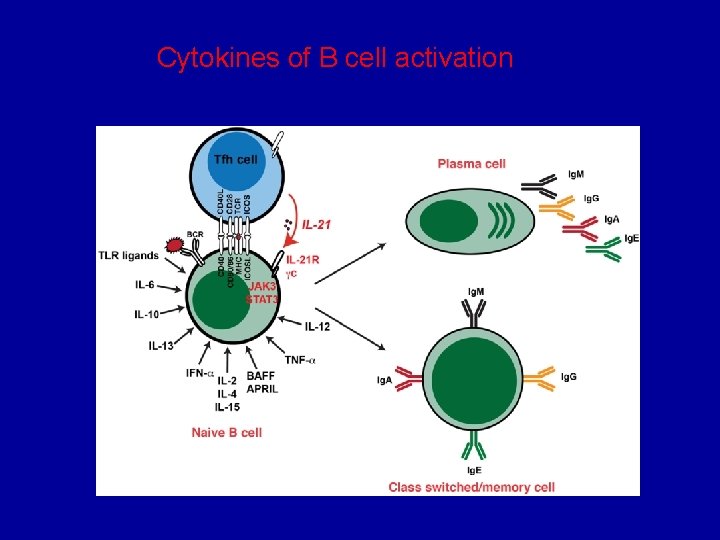
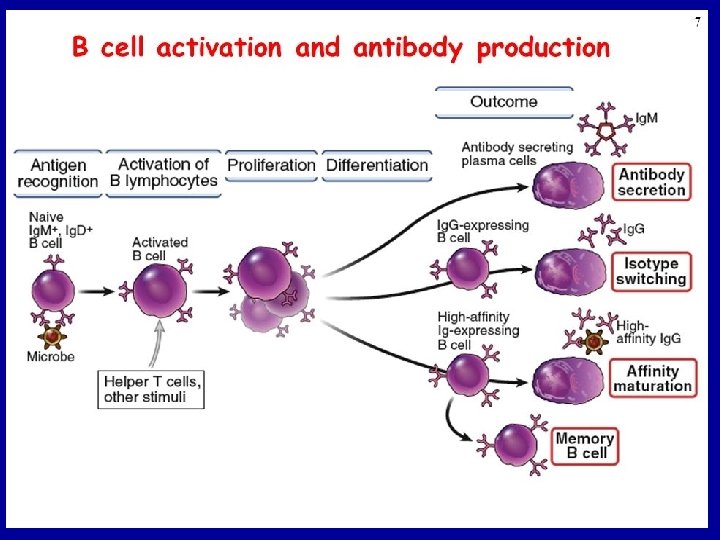
B -Lymphocytes • Some activated B cells PLASMA CELLS these produce lots of antibodies, < 1000/sec • The antibodies travel to the blood, lymph, lining of gut and lungs. • The number of plasma cells goes down after a few weeks • Antibodies stay in the blood longer but eventually their numbers go down too.
B -Lymphocytes • Some activated B cells MEMORY CELLS. • Memory cells divide rapidly as soon as the antigen is reintroduced. • There are many more memory cells than there were clone cells. • When the pathogen/infection infects again it is destroyed before any symptoms show.
B cell Activation
Cytokine Receptors
Cytokines of B cell activation
- Slides: 11