
B Cells and B Cell Development Dr Colin
B Cells and B Cell Development © Dr. Colin R. A. Hewitt crah 1@le. ac. uk © crah 1@le. ac. uk 2000. Slide 1/33
This is second in the series of cellular immunology lectures. The purpose of the lecture is to illustrate the key points of B cell biology and to emphasise the mechanisms that B cells use to generate a diverse B cell repertoire whilst preventing self reactivity. To use the lecture, click on the projection screen icon below then just click your way through the presentation Don’t forget to try the online multiple choice questions at the end to find your strengths and weaknesses. © crah 1@le. ac. uk 2000. Slide 2/33
What you should know by the end of this lecture • B cells develop pre-natally in the liver, and post-natally in the bone marrow • Anti-self B cells are eliminated once Ig is expressed at the cell surface • Self-reactivity is controlled by clonal deletion and clonal anergy • Stages of B cell differentiation are defined by Ig gene rearrangement • The structure and function of the pre-B cell receptor • The meaning of, purpose of and evidence for allelic exclusion • How the order of Ig gene rearrangement makes B cell development efficient • The development and functions of the germinal centre © crah 1@le. ac. uk 2000. Slide 3/33
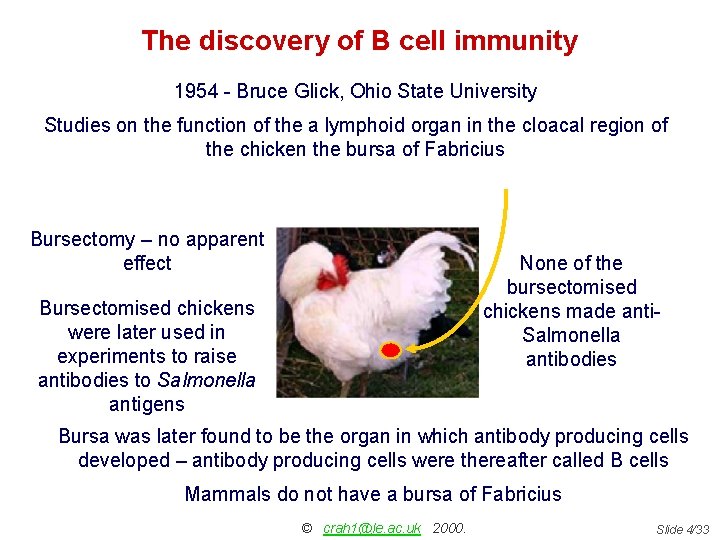
The discovery of B cell immunity 1954 - Bruce Glick, Ohio State University Studies on the function of the a lymphoid organ in the cloacal region of the chicken the bursa of Fabricius Bursectomy – no apparent effect None of the bursectomised chickens made anti. Salmonella antibodies Bursectomised chickens were later used in experiments to raise antibodies to Salmonella antigens Bursa was later found to be the organ in which antibody producing cells developed – antibody producing cells were thereafter called B cells Mammals do not have a bursa of Fabricius © crah 1@le. ac. uk 2000. Slide 4/33
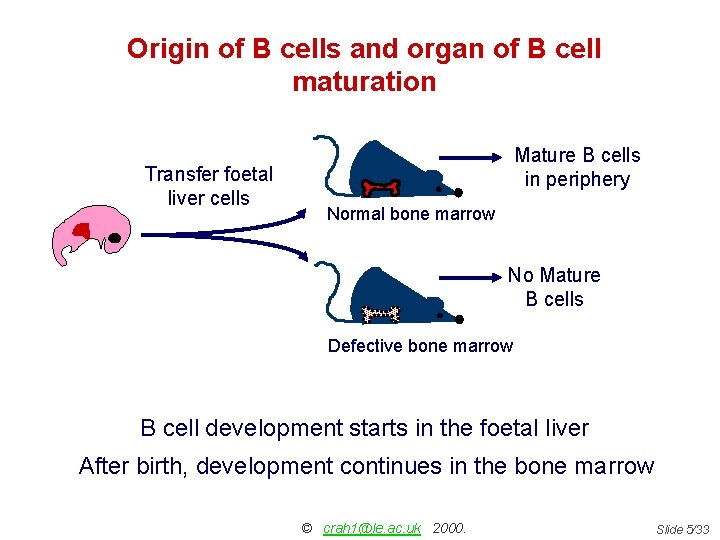
Origin of B cells and organ of B cell maturation Transfer foetal liver cells Mature B cells in periphery Normal bone marrow No Mature B cells Defective bone marrow B cell development starts in the foetal liver After birth, development continues in the bone marrow © crah 1@le. ac. uk 2000. Slide 5/33
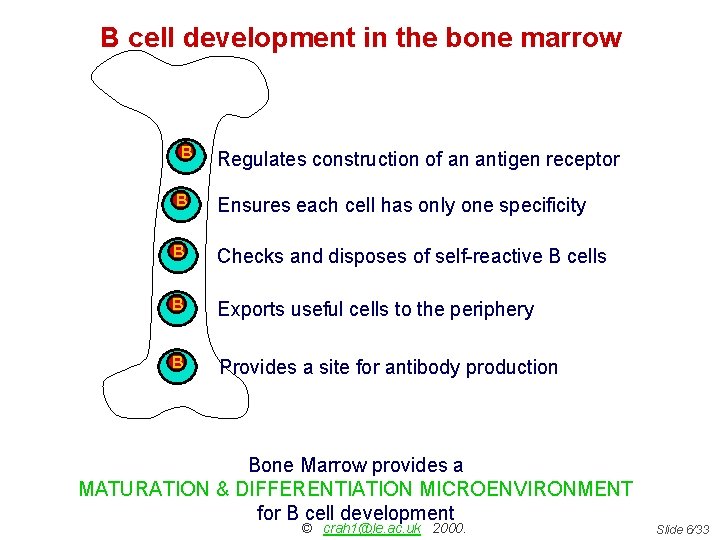
B cell development in the bone marrow B Regulates construction of an antigen receptor B Ensures each cell has only one specificity B Checks and disposes of self-reactive B cells B Exports useful cells to the periphery B Provides a site for antibody production Bone Marrow provides a MATURATION & DIFFERENTIATION MICROENVIRONMENT for B cell development © crah 1@le. ac. uk 2000. Slide 6/33
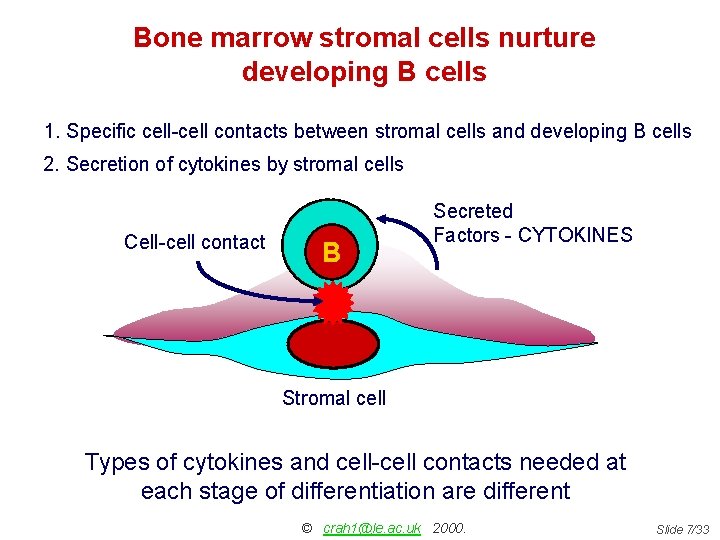
Bone marrow stromal cells nurture developing B cells 1. Specific cell-cell contacts between stromal cells and developing B cells 2. Secretion of cytokines by stromal cells Cell-cell contact B Secreted Factors - CYTOKINES Stromal cell Types of cytokines and cell-cell contacts needed at each stage of differentiation are different © crah 1@le. ac. uk 2000. Slide 7/33
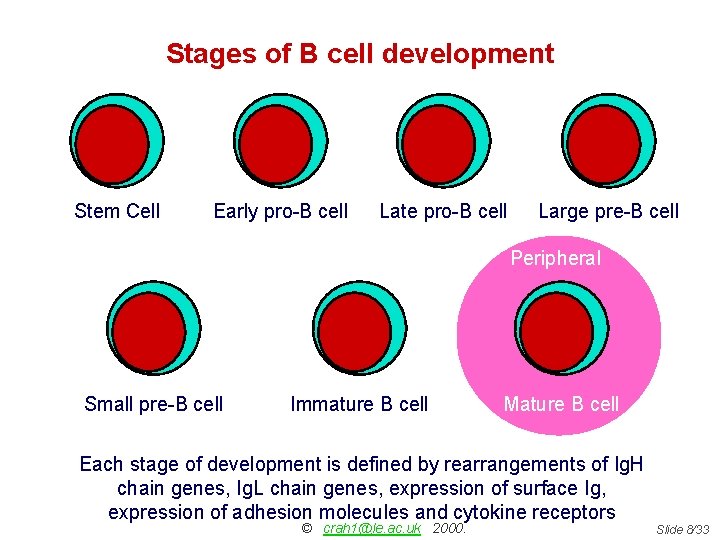
Stages of B cell development Stem Cell Early pro-B cell Late pro-B cell Large pre-B cell Peripheral Small pre-B cell Immature B cell Mature B cell Each stage of development is defined by rearrangements of Ig. H chain genes, Ig. L chain genes, expression of surface Ig, expression of adhesion molecules and cytokine receptors © crah 1@le. ac. uk 2000. Slide 8/33
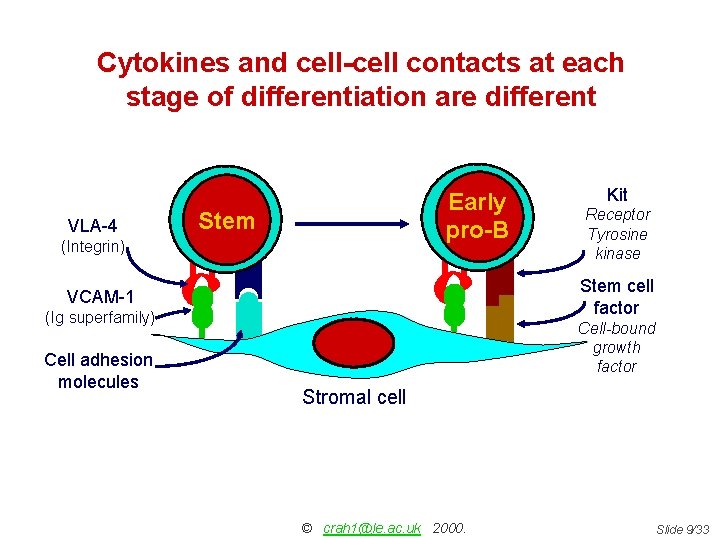
Cytokines and cell-cell contacts at each stage of differentiation are different VLA-4 Early pro-B Stem (Integrin) Receptor Tyrosine kinase Stem cell factor VCAM-1 (Ig superfamily) Cell adhesion molecules Kit Cell-bound growth factor Stromal cell © crah 1@le. ac. uk 2000. Slide 9/33
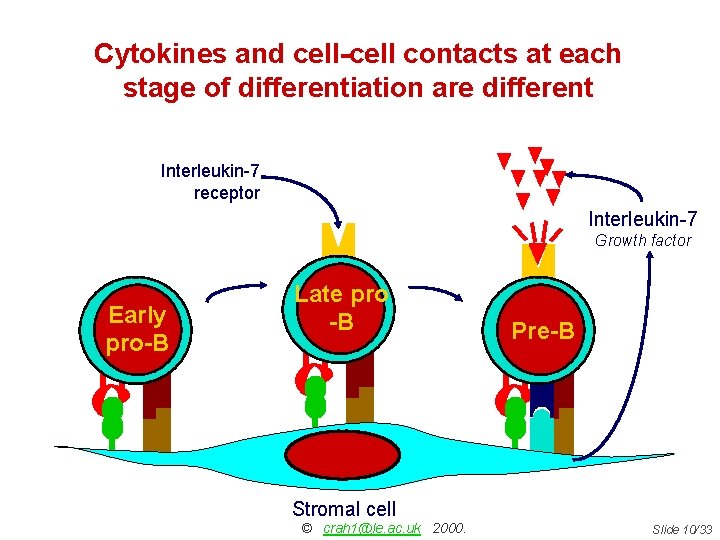
Cytokines and cell-cell contacts at each stage of differentiation are different Interleukin-7 receptor Interleukin-7 Growth factor Early pro-B Late pro -B Pre-B Stromal cell © crah 1@le. ac. uk 2000. Slide 10/33
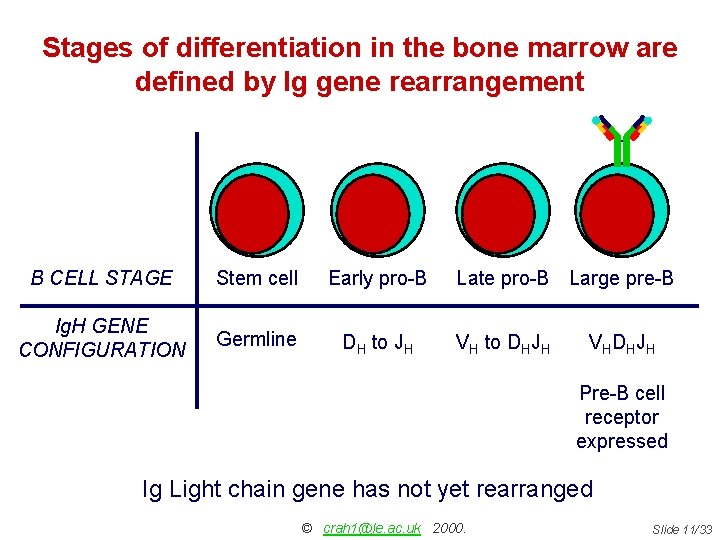
Stages of differentiation in the bone marrow are defined by Ig gene rearrangement B CELL STAGE Stem cell Early pro-B Ig. H GENE CONFIGURATION Germline DH to JH Late pro-B Large pre-B VH to DHJH VHDHJH Pre-B cell receptor expressed Ig Light chain gene has not yet rearranged © crah 1@le. ac. uk 2000. Slide 11/33
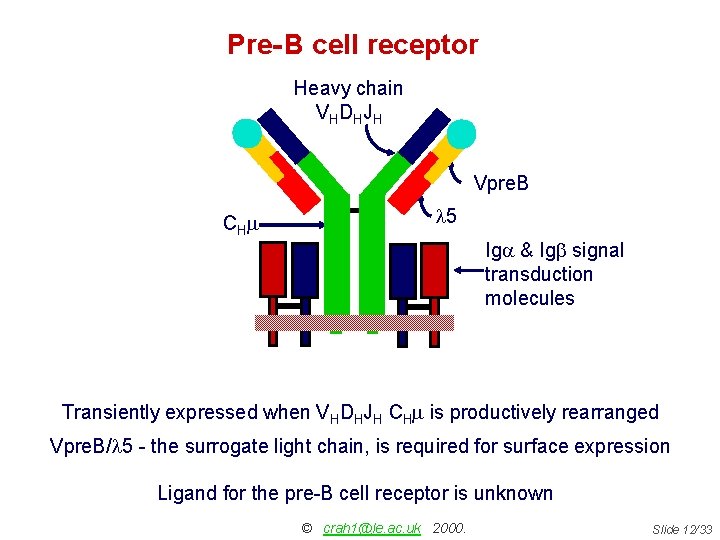
Pre- B cell receptor Heavy chain VHDHJH Light chain VLJLCL Vpre. B CHm l 5 Iga & Igb signal transduction molecules Transiently expressed when VHDHJH CHm is productively rearranged Vpre. B/l 5 - the surrogate light chain, is required for surface expression Ligand for the pre-B cell receptor is unknown © crah 1@le. ac. uk 2000. Slide 12/33

Ligation of the pre-B cell receptor 1. Suppresses further H chain rearrangement 2. Triggers entry into cell cycle Large Pre-B Unknown ligand of pre-B cell receptor 1. Ensures only one specificty of Ab expressed per cell Stromal cell 2. Expands only the pre-B cells with in frame VHDHJH joins ALLELIC EXCLUSION © crah 1@le. ac. uk 2000. Slide 13/33
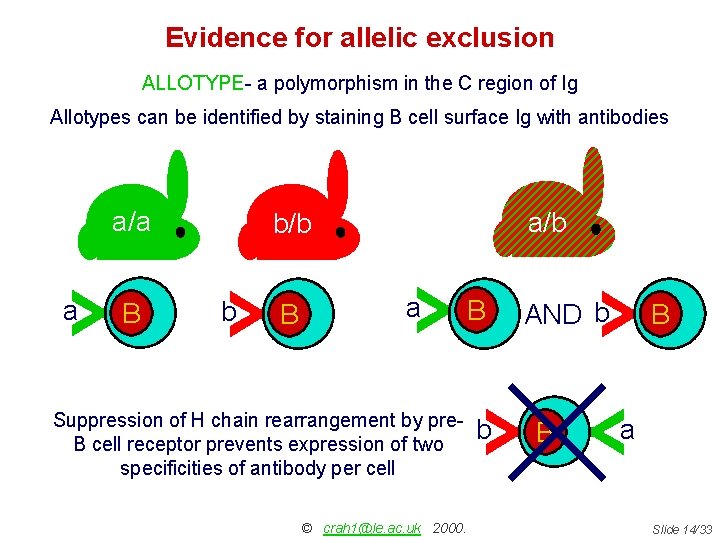
Evidence for allelic exclusion ALLOTYPE- a polymorphism in the C region of Ig Allotypes can be identified by staining B cell surface Ig with antibodies B a B © crah 1@le. ac. uk 2000. AND b b B B Y Suppression of H chain rearrangement by pre. B cell receptor prevents expression of two specificities of antibody per cell Y b Y B Y a a/b b/b Y Y a/a a Slide 14/33
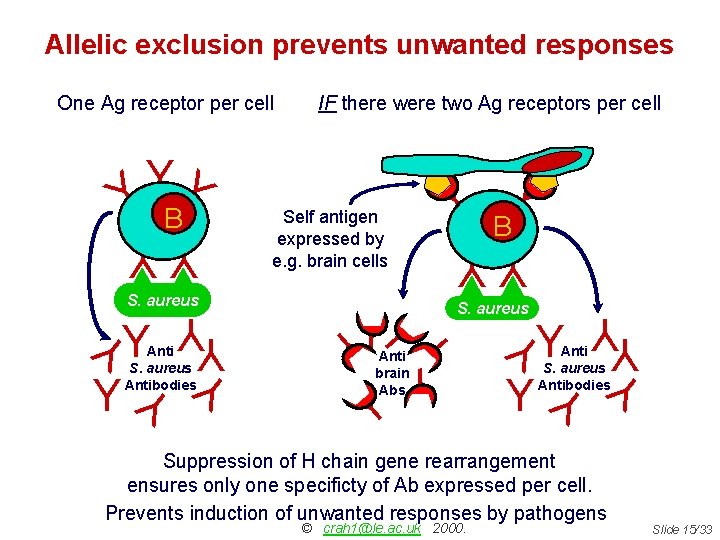
Allelic exclusion prevents unwanted responses One Ag receptor per cell IF there were two Ag receptors per cell Y Y Y B Self antigen expressed by e. g. brain cells YY YY S. aureus Y Y Anti brain Abs Y Y Y Y Y Anti S. aureus Antibodies Y Y S. aureus Y Y Y B Y Y Anti S. aureus Antibodies Suppression of H chain gene rearrangement ensures only one specificty of Ab expressed per cell. Prevents induction of unwanted responses by pathogens © crah 1@le. ac. uk 2000. Slide 15/33
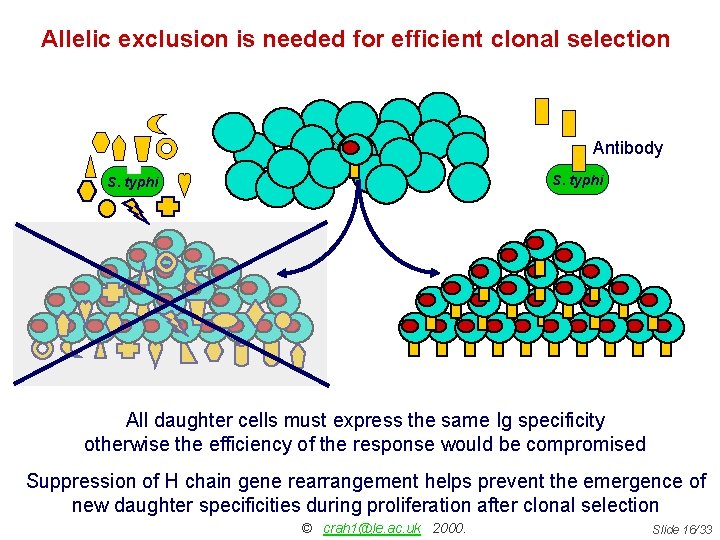
Allelic exclusion is needed for efficient clonal selection Antibody S. typhi All daughter cells must express the same Ig specificity otherwise the efficiency of the response would be compromised Suppression of H chain gene rearrangement helps prevent the emergence of new daughter specificities during proliferation after clonal selection © crah 1@le. ac. uk 2000. Slide 16/33
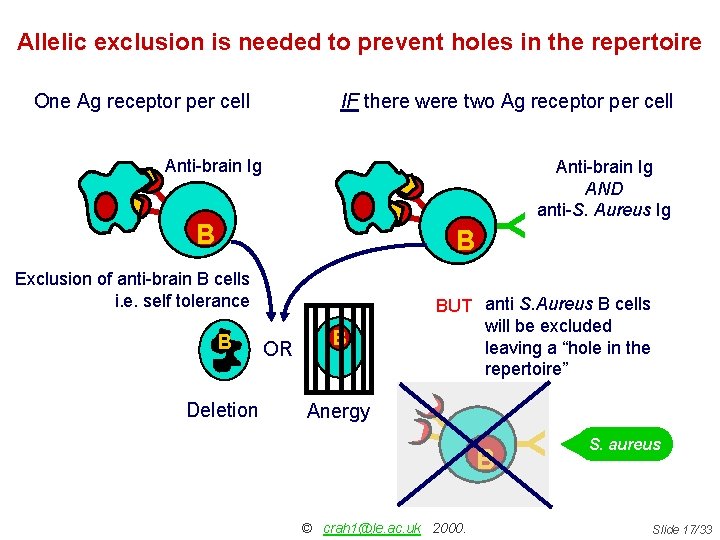
Allelic exclusion is needed to prevent holes in the repertoire One Ag receptor per cell IF there were two Ag receptor per cell Anti-brain Ig Y Y Y B Exclusion of anti-brain B cells i. e. self tolerance Deletion OR B Anergy BUT anti S. Aureus B cells will be excluded leaving a “hole in the repertoire” © crah 1@le. ac. uk 2000. B Y Y Y B B Y Y Anti-brain Ig AND anti-S. Aureus Ig S. aureus Slide 17/33
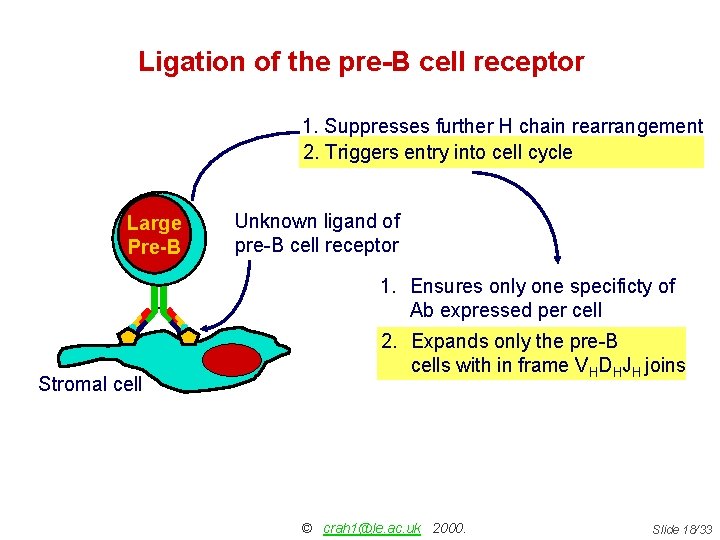
Ligation of the pre-B cell receptor 1. Suppresses further H chain rearrangement 2. Triggers entry into cell cycle Large Pre-B Unknown ligand of pre-B cell receptor 1. Ensures only one specificty of Ab expressed per cell Stromal cell 2. Expands only the pre-B cells with in frame VHDHJH joins © crah 1@le. ac. uk 2000. Slide 18/33
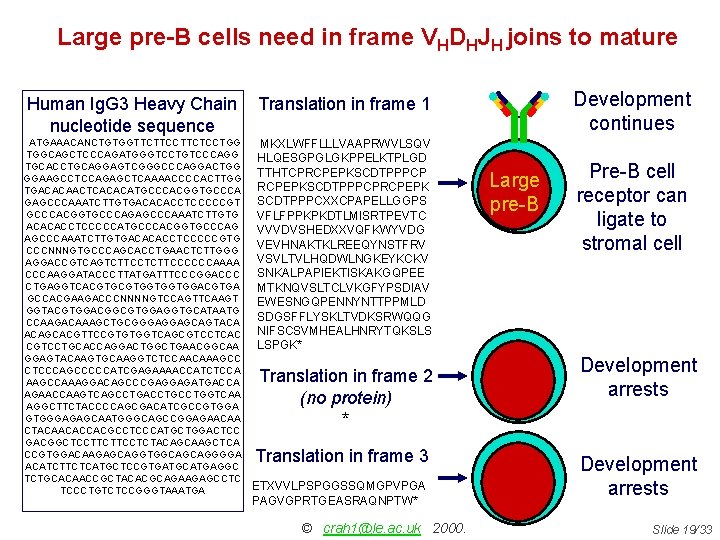
Large pre-B cells need in frame VHDHJH joins to mature Human Ig. G 3 Heavy Chain nucleotide sequence Translation in frame 1 ATGAAACANCTGTGGTTCTTCTCCTGG TGGCAGCTCCCAGATGGGTCCTGTCCCAGG TGCACCTGCAGGAGTCGGGCCCAGGACTGG GGAAGCCTCCAGAGCTCAAAACCCCACTTGG TGACACAACTCACACATGCCCACGGTGCCCA GAGCCCAAATCTTGTGACACACCTCCCCCGT GCCCACGGTGCCCAGAGCCCAAATCTTGTG ACACACCTCCCCCATGCCCACGGTGCCCAG AGCCCAAATCTTGTGACACACCTCCCCCGTG CCCNNNGTGCCCAGCACCTGAACTCTTGGG AGGACCGTCAGTCTTCCCCCCAAAA CCCAAGGATACCCTTATGATTTCCCGGACCC CTGAGGTCACGTGGTGGTGGACGTGA GCCACGAAGACCCNNNNGTCCAGTTCAAGT GGTACGTGGACGGCGTGGAGGTGCATAATG CCAAGACAAAGCTGCGGGAGGAGCAGTACA ACAGCACGTTCCGTGTGGTCAGCGTCCTCAC CGTCCTGCACCAGGACTGGCTGAACGGCAA GGAGTACAAGTGCAAGGTCTCCAACAAAGCC CTCCCAGCCCCCATCGAGAAAACCATCTCCA AAGCCAAAGGACAGCCCGAGGAGATGACCA AGAACCAAGTCAGCCTGACCTGGTCAA AGGCTTCTACCCCAGCGACATCGCCGTGGA GTGGGAGAGCAATGGGCAGCCGGAGAACAA CTACAACACCACGCCTCCCATGCTGGACTCC GACGGCTCCTTCTTCCTCTACAGCAAGCTCA CCGTGGACAAGAGCAGGTGGCAGCAGGGGA ACATCTTCTCATGCTCCGTGATGCATGAGGC TCTGCACAACCGCTACACGCAGAAGAGCCTC TCCCTGTCTCCGGGTAAATGA MKXLWFFLLLVAAPRWVLSQV HLQESGPGLGKPPELKTPLGD TTHTCPRCPEPKSCDTPPPCPRCPEPK SCDTPPPCXXCPAPELLGGPS VFLFPPKPKDTLMISRTPEVTC VVVDVSHEDXXVQFKWYVDG VEVHNAKTKLREEQYNSTFRV VSVLTVLHQDWLNGKEYKCKV SNKALPAPIEKTISKAKGQPEE MTKNQVSLTCLVKGFYPSDIAV EWESNGQPENNYNTTPPMLD SDGSFFLYSKLTVDKSRWQQG NIFSCSVMHEALHNRYTQKSLS LSPGK* Translation in frame 2 (no protein) Development continues Large pre-B Pre-B cell receptor can ligate to stromal cell Development arrests * Translation in frame 3 ETXVVLPSPGGSSQMGPVPGA PAGVGPRTGEASRAQNPTW* © crah 1@le. ac. uk 2000. Development arrests Slide 19/33
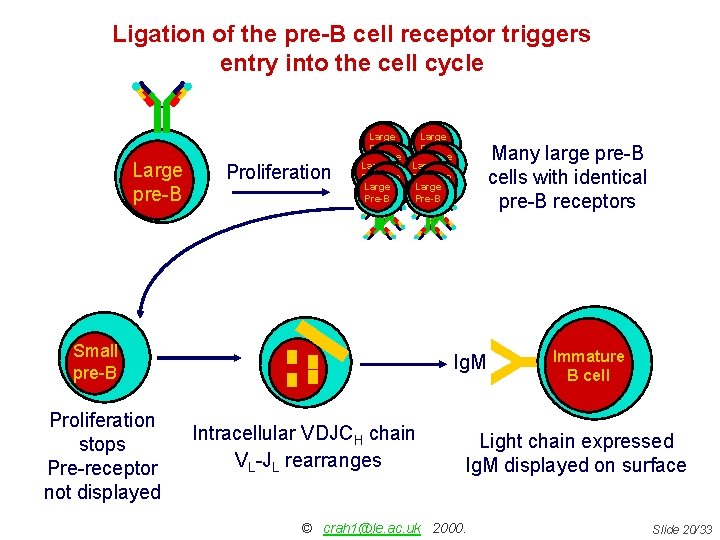
Ligation of the pre-B cell receptor triggers entry into the cell cycle Proliferation Large Pre-B Large Pre-B Small Large pre-B Proliferation stops Pre-receptor not displayed Many large pre-B cells with identical pre-B receptors Y Large pre-B Large Pre-B Large Pre-B Ig. M Intracellular VDJCH chain VL-JL rearranges Immature B cell Light chain expressed Ig. M displayed on surface © crah 1@le. ac. uk 2000. Slide 20/33
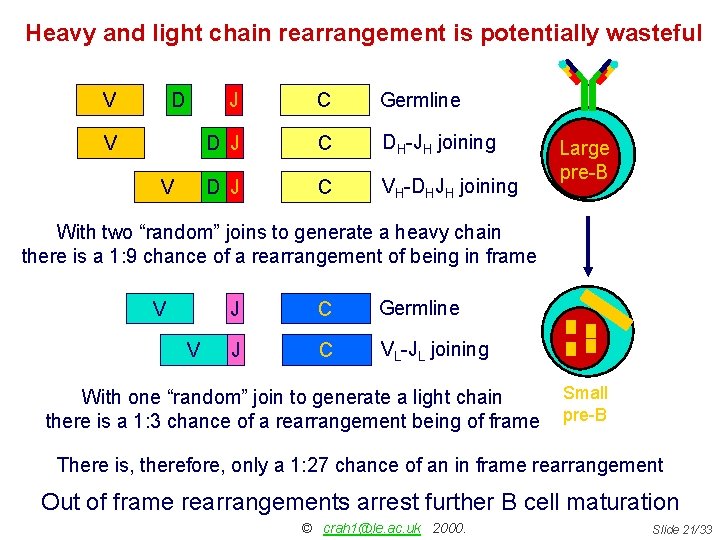
Heavy and light chain rearrangement is potentially wasteful V D J C Germline V D D J C DH-JH joining C VH-DHJH joining V V D J Large pre-B With two “random” joins to generate a heavy chain there is a 1: 9 chance of a rearrangement of being in frame V J C Germline V V J C VL-JL joining With one “random” join to generate a light chain there is a 1: 3 chance of a rearrangement being of frame Small pre-B There is, therefore, only a 1: 27 chance of an in frame rearrangement Out of frame rearrangements arrest further B cell maturation © crah 1@le. ac. uk 2000. Slide 21/33
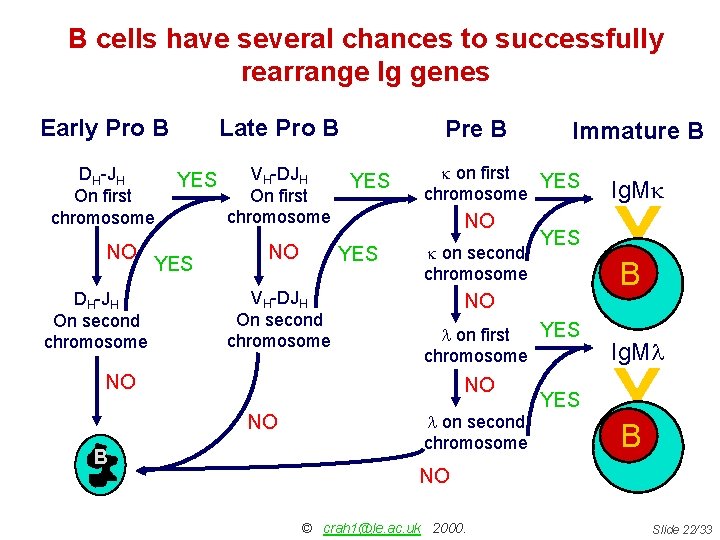
B cells have several chances to successfully rearrange Ig genes Early Pro B DH-JH On first chromosome NO DH-JH On second chromosome Late Pro B YES VH-DJH On first chromosome NO Pre B YES VH-DJH On second chromosome k on first YES chromosome Y B YES l on first chromosome Ig. Ml k on second chromosome NO NO B Ig. Mk YES NO YES Immature B l on second chromosome YES Y B NO © crah 1@le. ac. uk 2000. Slide 22/33
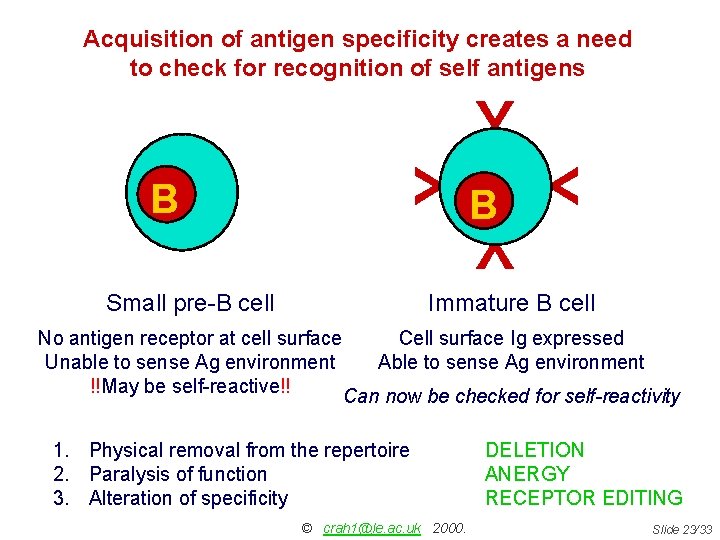
Acquisition of antigen specificity creates a need to check for recognition of self antigens B Y Y Small pre-B cell Immature B cell No antigen receptor at cell surface Cell surface Ig expressed Unable to sense Ag environment Able to sense Ag environment !!May be self-reactive!! Can now be checked for self-reactivity 1. Physical removal from the repertoire 2. Paralysis of function 3. Alteration of specificity © crah 1@le. ac. uk 2000. DELETION ANERGY RECEPTOR EDITING Slide 23/33
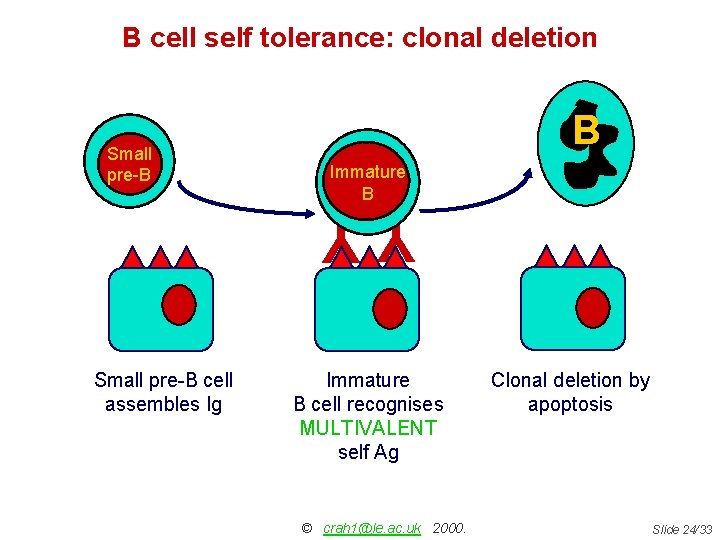
B cell self tolerance: clonal deletion Small pre-B B B Immature B B YY Small pre-B cell assembles Ig Immature B cell recognises MULTIVALENT self Ag © crah 1@le. ac. uk 2000. Clonal deletion by apoptosis Slide 24/33
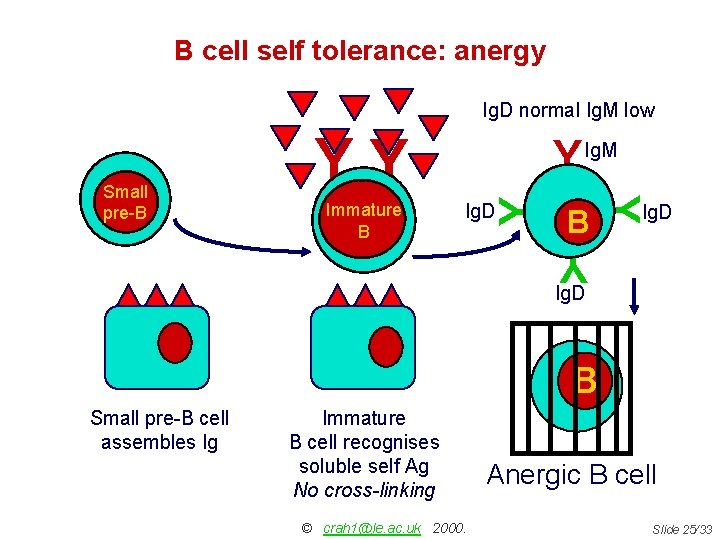
B cell self tolerance: anergy Ig. D normal Ig. M low B Y Immature B Ig. D Y B Y Small pre-B YY Y Ig. M Ig. D B Small pre-B cell assembles Ig Immature B cell recognises soluble self Ag No cross-linking © crah 1@le. ac. uk 2000. Anergic B cell Slide 25/33
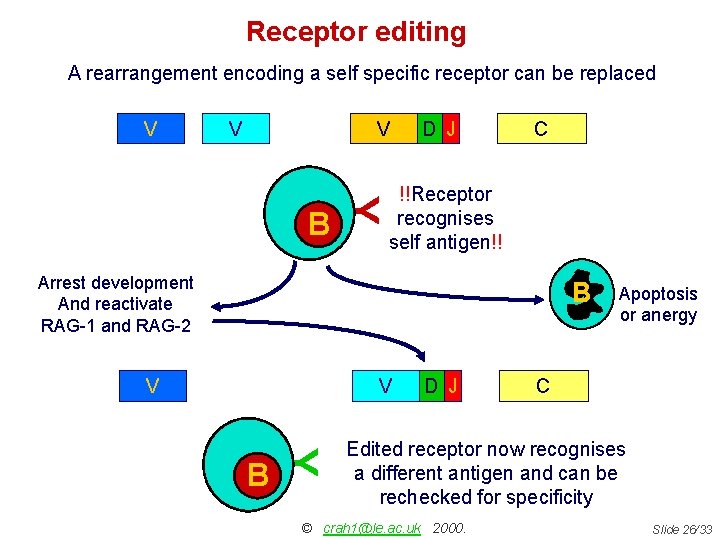
Receptor editing A rearrangement encoding a self specific receptor can be replaced V V V Y B V D J C !!Receptor recognises self antigen!! Arrest development And reactivate RAG-1 and RAG-2 V B V V Y B D J Apoptosis or anergy C Edited receptor now recognises a different antigen and can be rechecked for specificity © crah 1@le. ac. uk 2000. Slide 26/33
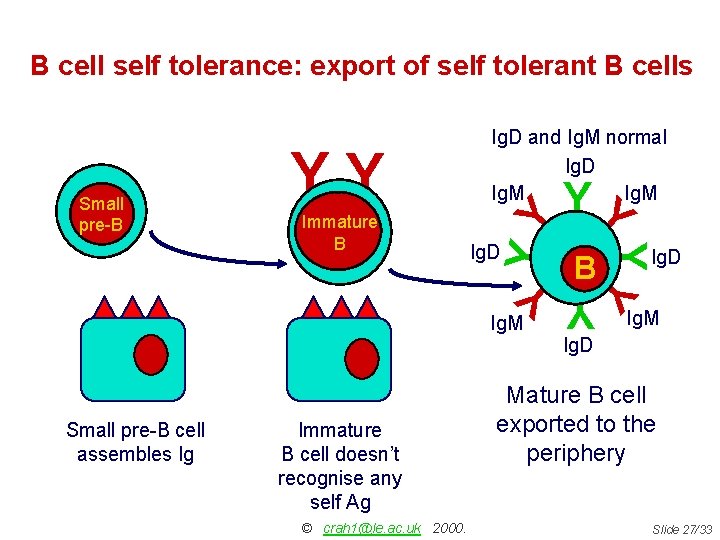
B cell self tolerance: export of self tolerant B cells B YY Immature B Ig. D Ig. M Small pre-B cell assembles Ig Immature B cell doesn’t recognise any self Ag © crah 1@le. ac. uk 2000. B YY YY Small pre-B YY Ig. D and Ig. M normal Ig. D Ig. M Ig. D Mature B cell exported to the periphery Slide 27/33
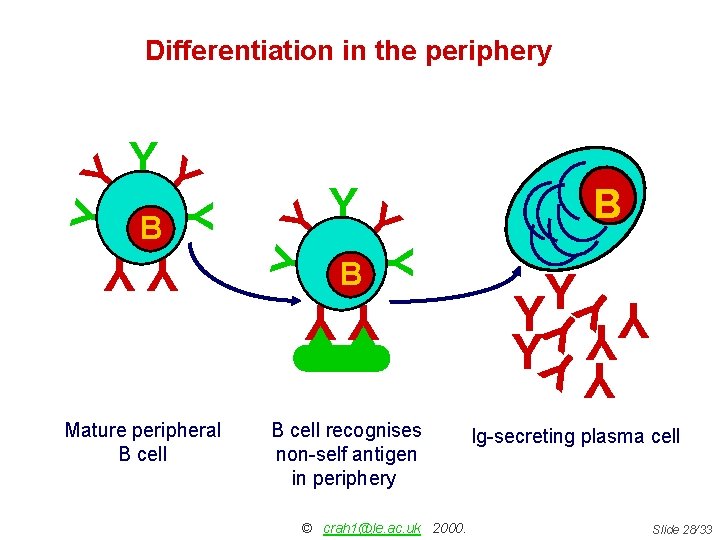
YY Y YY Mature peripheral B cell B YY B cell recognises non-self antigen in periphery © crah 1@le. ac. uk 2000. B Y YY YY Differentiation in the periphery Ig-secreting plasma cell Slide 28/33
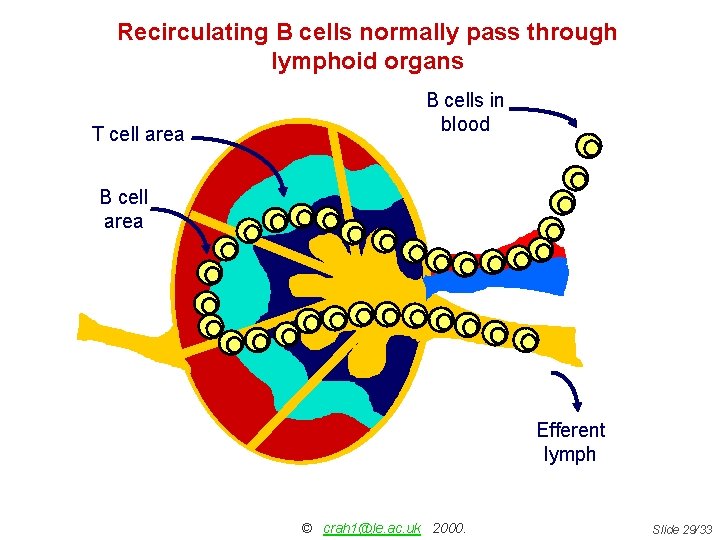
Recirculating B cells normally pass through lymphoid organs T cell area B cells in blood B cell area Efferent lymph © crah 1@le. ac. uk 2000. Slide 29/33
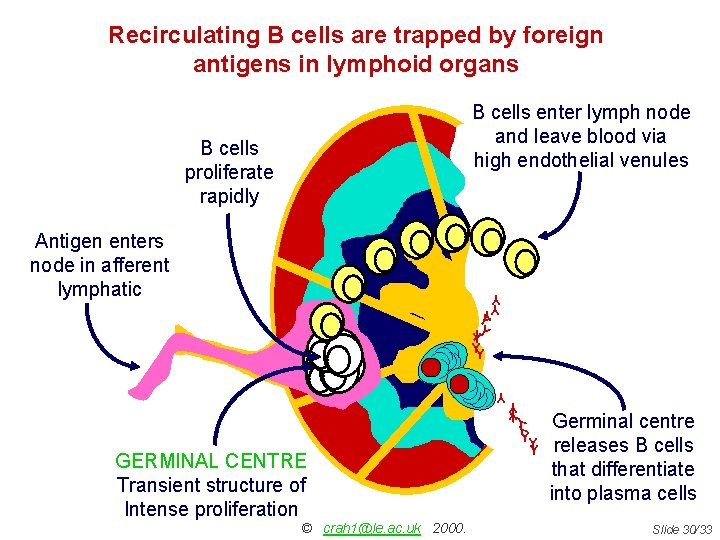
Recirculating B cells are trapped by foreign antigens in lymphoid organs B cells enter lymph node and leave blood via high endothelial venules B cells proliferate rapidly Antigen enters node in afferent lymphatic YY YY Y © crah 1@le. ac. uk 2000. Y YYY Y GERMINAL CENTRE Transient structure of Intense proliferation YY Y Germinal centre releases B cells that differentiate into plasma cells Slide 30/33
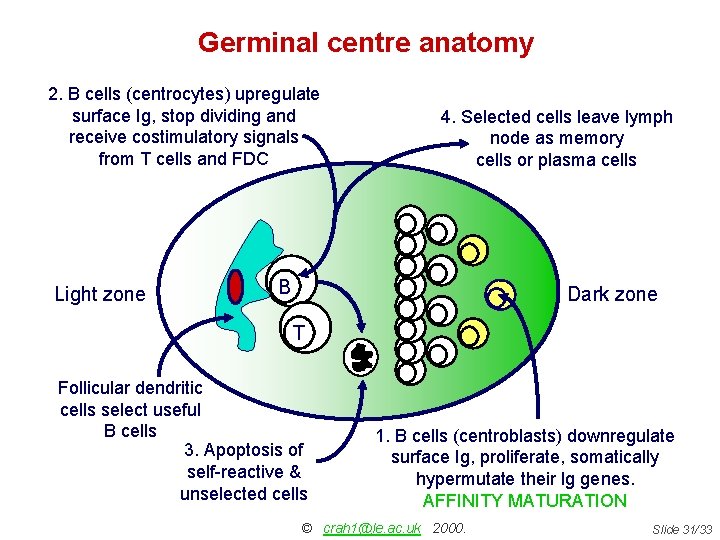
Germinal centre anatomy 2. B cells (centrocytes) upregulate surface Ig, stop dividing and receive costimulatory signals from T cells and FDC Light zone 4. Selected cells leave lymph node as memory cells or plasma cells B Dark zone T Follicular dendritic cells select useful B cells 3. Apoptosis of self-reactive & unselected cells 1. B cells (centroblasts) downregulate surface Ig, proliferate, somatically hypermutate their Ig genes. AFFINITY MATURATION © crah 1@le. ac. uk 2000. Slide 31/33
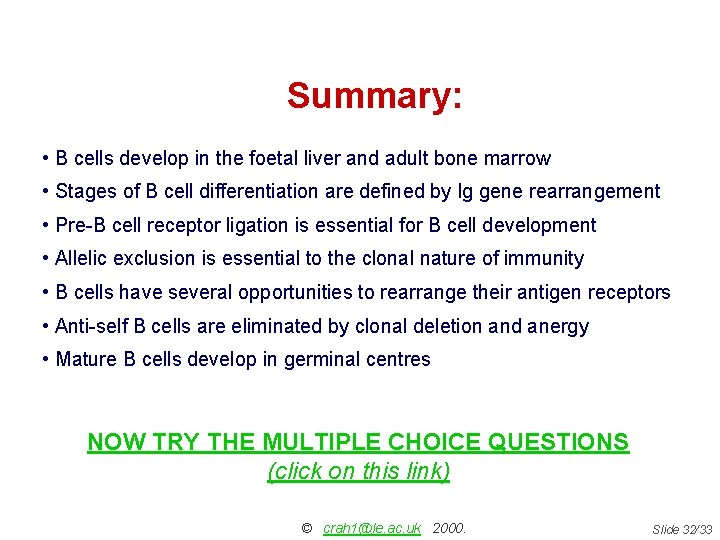
Summary: • B cells develop in the foetal liver and adult bone marrow • Stages of B cell differentiation are defined by Ig gene rearrangement • Pre-B cell receptor ligation is essential for B cell development • Allelic exclusion is essential to the clonal nature of immunity • B cells have several opportunities to rearrange their antigen receptors • Anti-self B cells are eliminated by clonal deletion and anergy • Mature B cells develop in germinal centres NOW TRY THE MULTIPLE CHOICE QUESTIONS (click on this link) © crah 1@le. ac. uk 2000. Slide 32/33
Further Reading: B cells and B cell Development N. B. You are not expected to read all of these references, but they should point you to specific areas that are covered in the lecture that you need more information on. • Goodenow, CC. et al. , Self tolerance checkpoints in B cell development Adv. Immunol. 1995 59: 279 -368 • Kelsoe G. In situ studies of the germinal centre reaction Adv. Immunol. 1995 60: 267 -288 • Winkler T. and Rolnik, AG. Roles of Ig H-chain and L-chain and of surrogate Hchain and L-chain in the development of cells of the B lymphocyte lineage. Ann. Rev. Immunol. 1994 12: 209 -225 • Schatz, DG. et al. , V(D)J recombination - molecular biology and regulation. Ann. Rev. Immunol. 10: 359 -383 • Hartley, SB. et al. , Elimination of self-reactive B lymphocytes proceeds in two stages – arrested development and cell death. Cell. 1993 72: 325 -335 • Jacob J. et al. , Intraclonal generation of antibody mutants in germinal centres. Nature. 1991 354: 389 -392 • Maclennan ICM. Germinal Centres. Ann. Rev. Immunol. 1994 12: 117 -139 • Chen C. et al. , The site and stage of anti-DNA B cell deletion. Nature. 1995 373: 252 -255 © crah 1@le. ac. uk 2000. Slide 33/33
- Slides: 33