
B cell Targeting Agents Mechanisms of Action in
B cell Targeting Agents: Mechanisms of Action in MS 20 minute presentation + 5 minute Q&A 1: 35 pm - 2 pm on Thursday ACTRIMS 2018, San Diego
Disclosures for Anne Cross Served as a consultant for: Abbvie, Bayer, Biogen, EMD Serono, Genentech/Roche, Genzyme, Novartis Received research funding from Genentech/Roche
Learning Objectives • To evaluate the data in support of using the CD 20+ cell depleting medications for Relapsing MS • To evaluate the data in support of using the CD 20+ cell depleting medications for Primary Progressive PPMS • To evaluate potential mechanisms of action of anti-CD 20+ monoclonal antibodies in MS
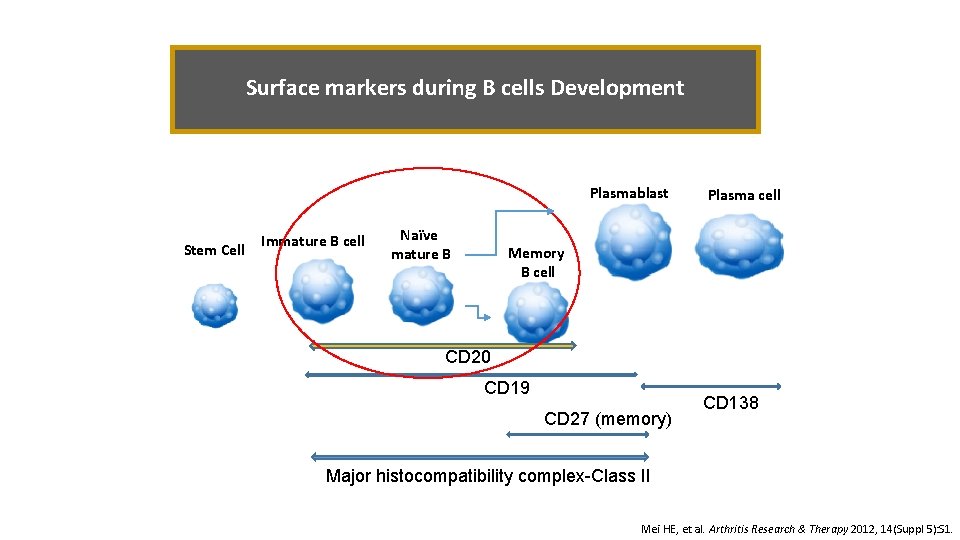
Surface markers during B cells Development Plasmablast Stem Cell Immature B cell Naïve mature B Plasma cell Memory B cell CD 20 CD 19 CD 27 (memory) CD 138 Major histocompatibility complex-Class II Mei HE, et al. Arthritis Research & Therapy 2012, 14(Suppl 5): S 1.
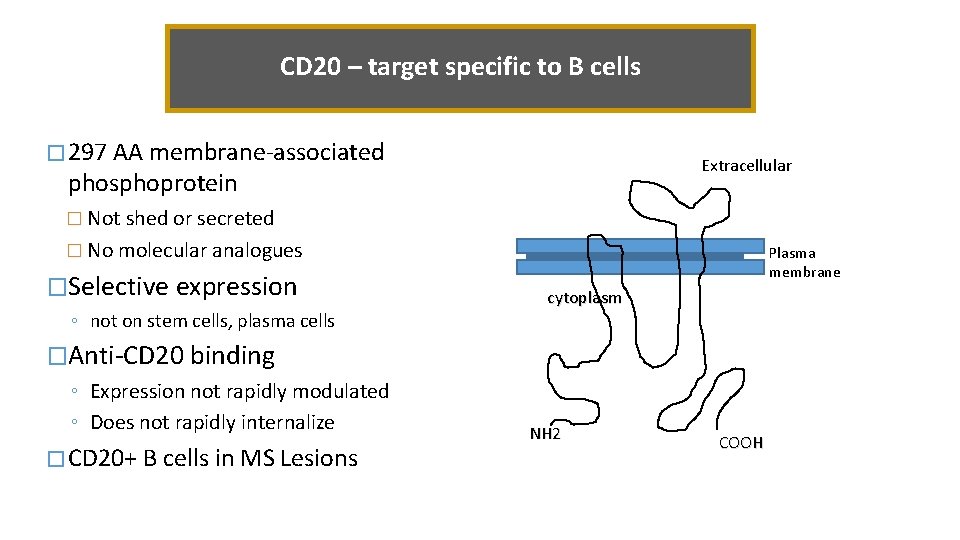
CD 20 – target specific to B cells � 297 AA membrane-associated Extracellular phosphoprotein � Not shed or secreted � No molecular analogues �Selective expression ◦ not on stem cells, plasma cells �Anti-CD 20 binding ◦ Expression not rapidly modulated ◦ Does not rapidly internalize � CD 20+ B cells in MS Lesions Plasma membrane cytoplasm NH 2 COOH

Anti-CD 20 monoclonal antibodies • Rituximab* – the prototype • Ocrelizumab – approved 2017 for RMS and PPMS • Ofatumumab* – Phase 3 studies underway • Ublituximab* - Phase 2 reduced MRI activity *- not approved for use in MS
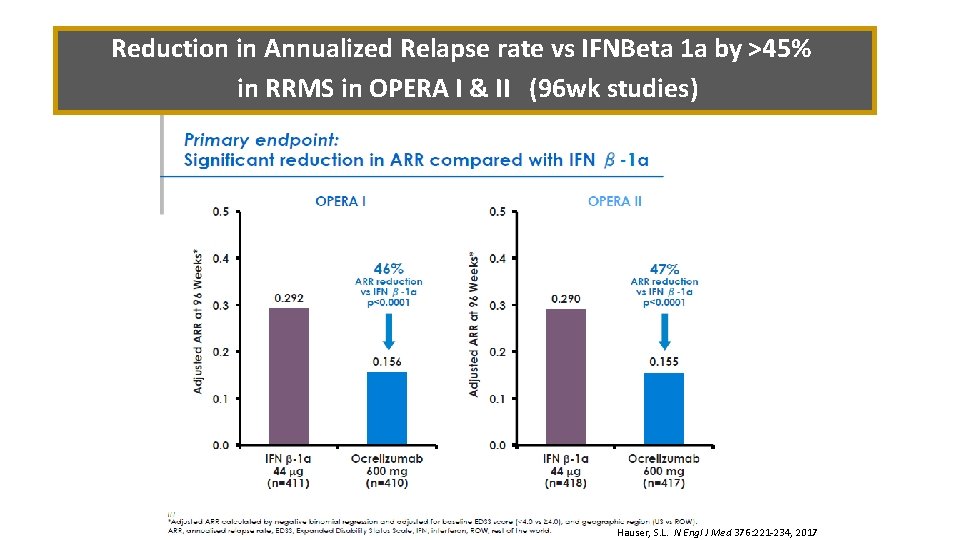
Reduction in Annualized Relapse rate vs IFNBeta 1 a by >45% in RRMS in OPERA I & II (96 wk studies) Hauser, S. L. N Engl J Med 376: 221 -234, 2017
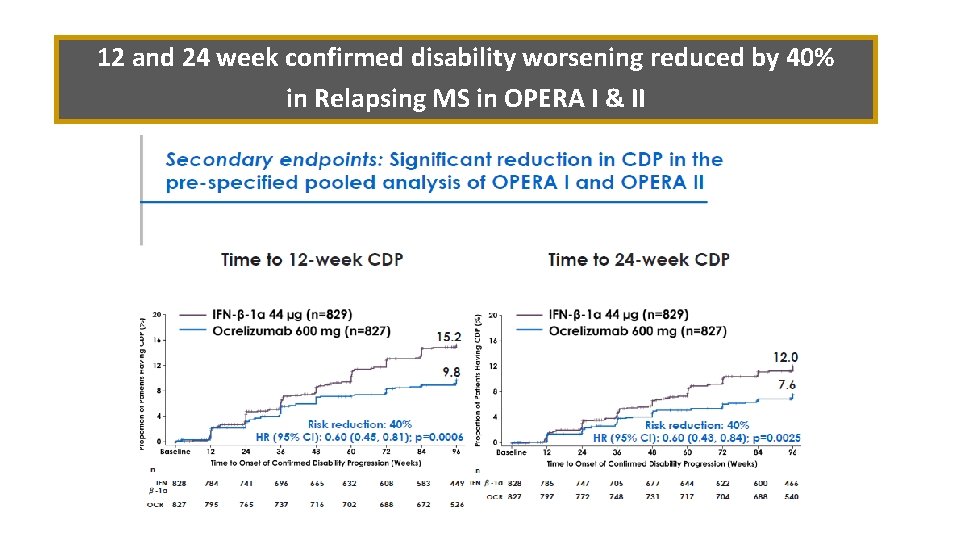
12 and 24 week confirmed disability worsening reduced by 40% in Relapsing MS in OPERA I & II
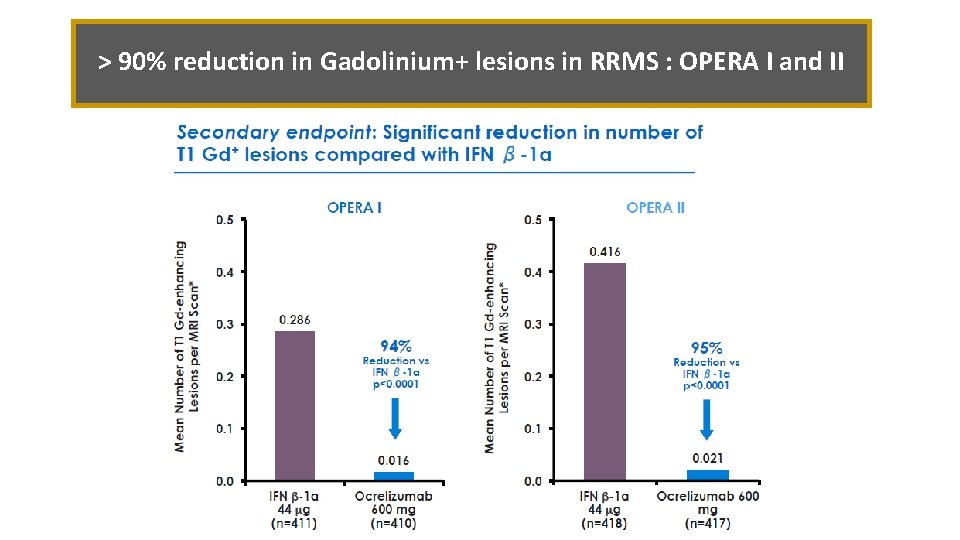
> 90% reduction in Gadolinium+ lesions in RRMS : OPERA I and II
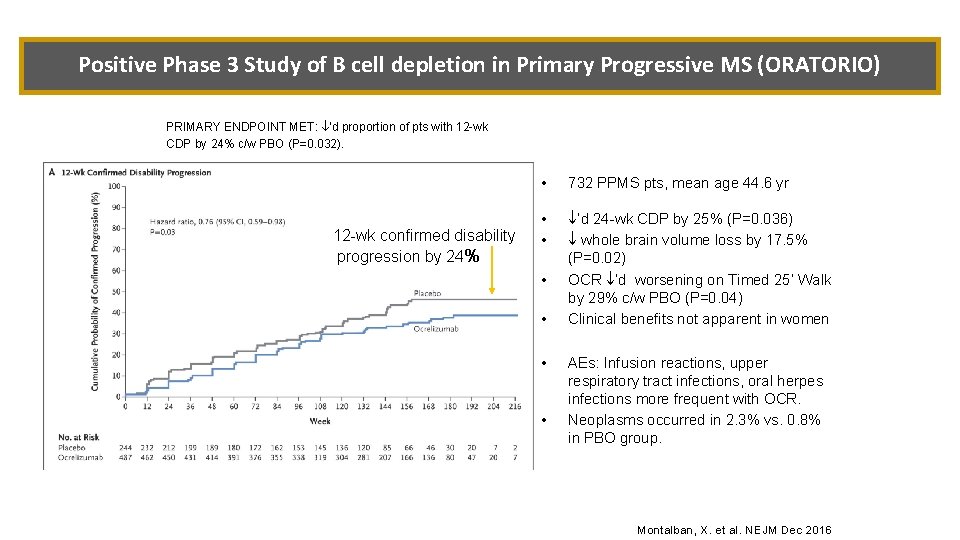
Positive Phase 3 Study of B cell depletion in Primary Progressive MS (ORATORIO) PRIMARY ENDPOINT MET: ’d proportion of pts with 12 -wk CDP by 24% c/w PBO (P=0. 032). 12 -wk confirmed disability progression by 24% • 732 PPMS pts, mean age 44. 6 yr • • ’d 24 -wk CDP by 25% (P=0. 036) whole brain volume loss by 17. 5% (P=0. 02) OCR ’d worsening on Timed 25’ Walk by 29% c/w PBO (P=0. 04) Clinical benefits not apparent in women • • AEs: Infusion reactions, upper respiratory tract infections, oral herpes infections more frequent with OCR. Neoplasms occurred in 2. 3% vs. 0. 8% in PBO group. Montalban, X. et al. NEJM Dec 2016
The data from clinical trials prove a role for B cells in MS pathogenesis, but how?
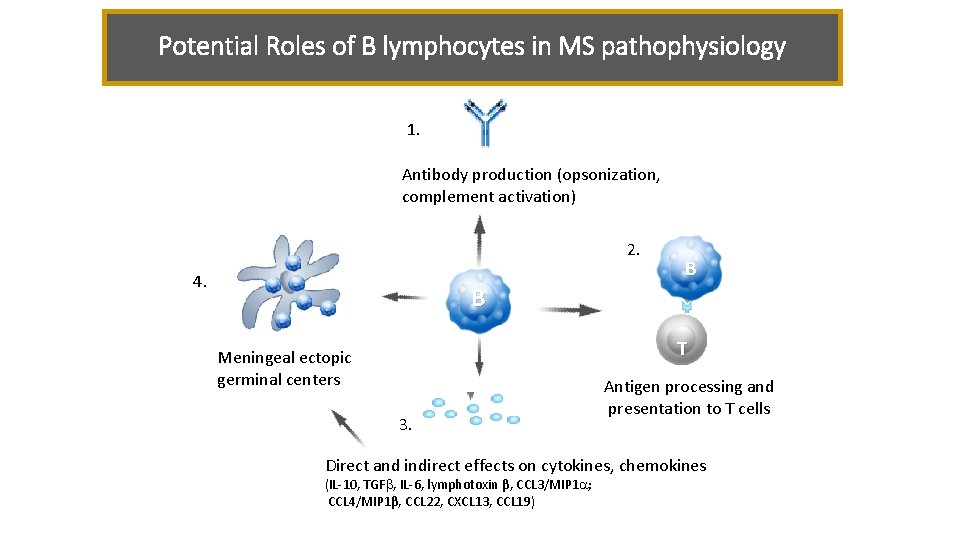
Potential Roles of B lymphocytes in MS pathophysiology 1. Antibody production (opsonization, complement activation) 2. 4. B BB T Meningeal ectopic germinal centers 3. Antigen processing and presentation to T cells Direct and indirect effects on cytokines, chemokines (IL-10, TGF , IL-6, lymphotoxin β, CCL 3/MIP 1 ; CCL 4/MIP 1β, CCL 22, CXCL 13, CCL 19)
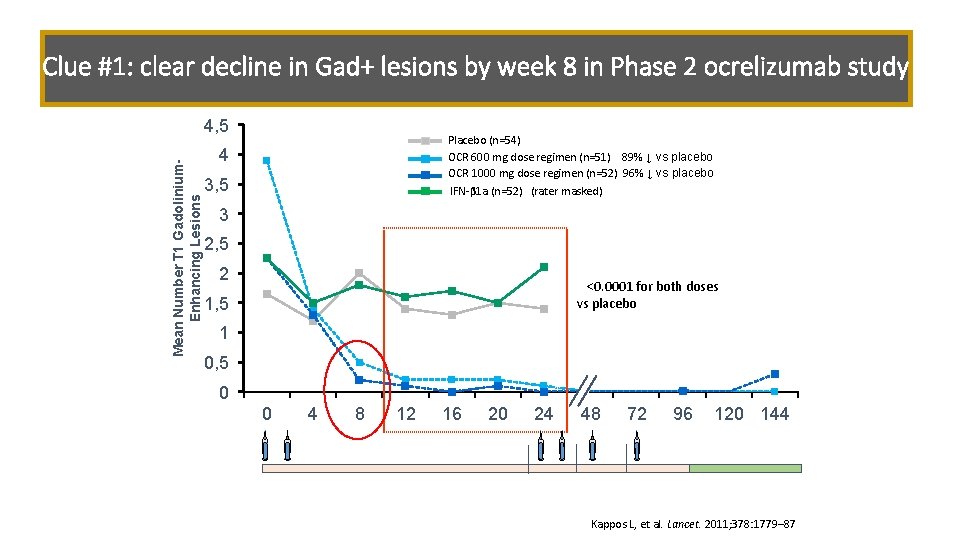
Clue #1: clear decline in Gad+ lesions by week 8 in Phase 2 ocrelizumab study Mean Number T 1 Gadolinium. Enhancing Lesions 4, 5 Placebo (n=54) OCR 600 mg dose regimen (n=51) 89% ↓ vs placebo OCR 1000 mg dose regimen (n=52) 96% ↓ vs placebo 4 3, 5 IFN-β 1 a (n=52) (rater masked) 3 Primary endpoint: OCR vs Placebo 1 2, 5 2 P <0. 0001 for both doses vs placebo 1, 5 1 0, 5 0 0 4 8 12 16 20 ** 24 48 72 96 120 144 weeks Core Study Follow-Up Kappos L, et al. Lancet. 2011; 378: 1779– 87
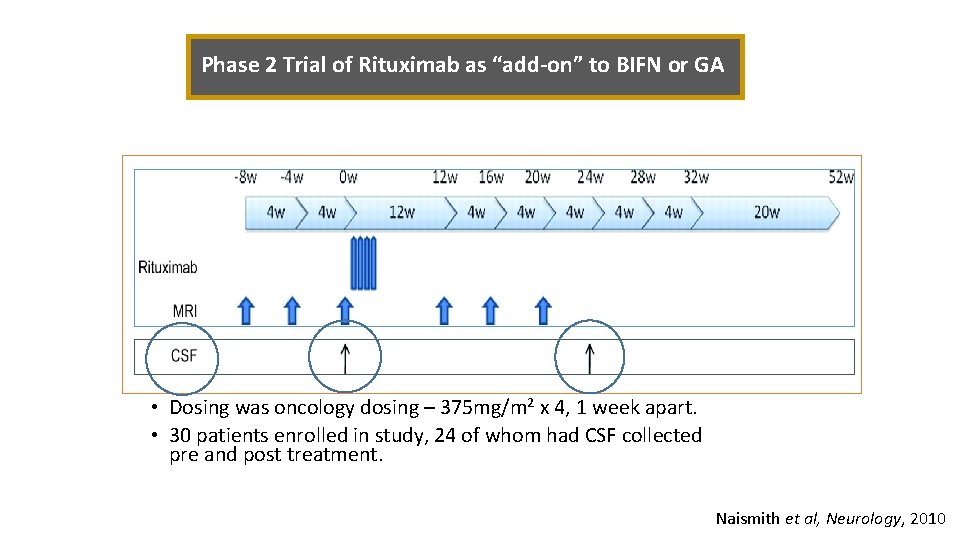
Phase 2 Trial of Rituximab as “add-on” to BIFN or GA • Dosing was oncology dosing – 375 mg/m 2 x 4, 1 week apart. • 30 patients enrolled in study, 24 of whom had CSF collected pre and post treatment. Naismith et al, Neurology, 2010
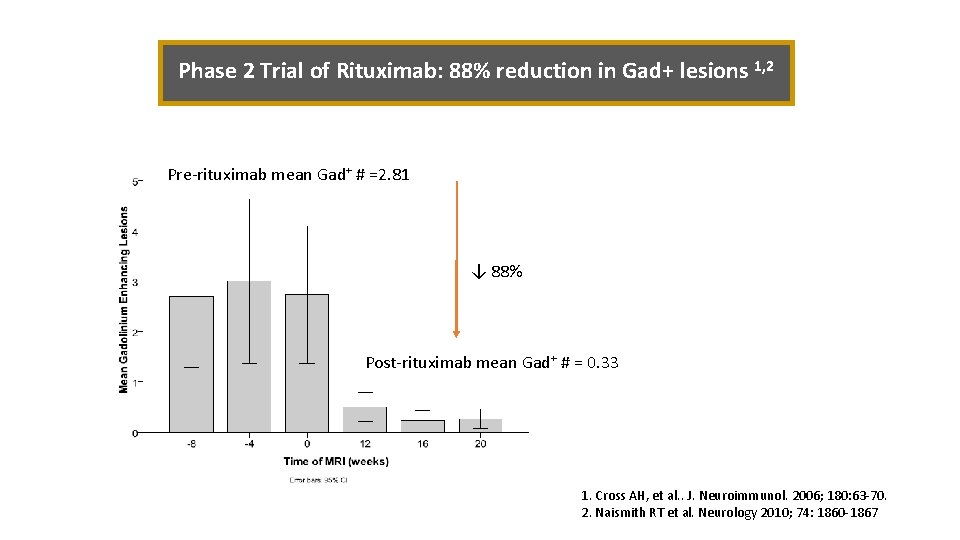
Phase 2 Trial of Rituximab: 88% reduction in Gad+ lesions 1, 2 Pre-rituximab mean Gad+ # =2. 81 ↓ 88% Post-rituximab mean Gad+ # = 0. 33 1. Cross AH, et al. . J. Neuroimmunol. 2006; 180: 63 -70. 2. Naismith RT et al. Neurology 2010; 74: 1860 -1867
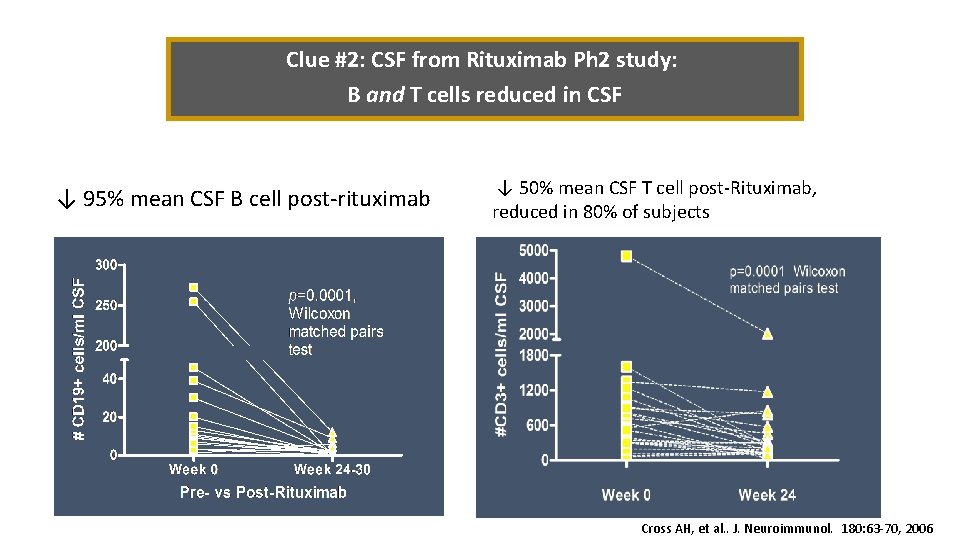
Clue #2: CSF from Rituximab Ph 2 study: B and T cells reduced in CSF ↓ 95% mean CSF B cell post-rituximab ↓ 50% mean CSF T cell post-Rituximab, reduced in 80% of subjects Cross AH, et al. . J. Neuroimmunol. 180: 63 -70, 2006
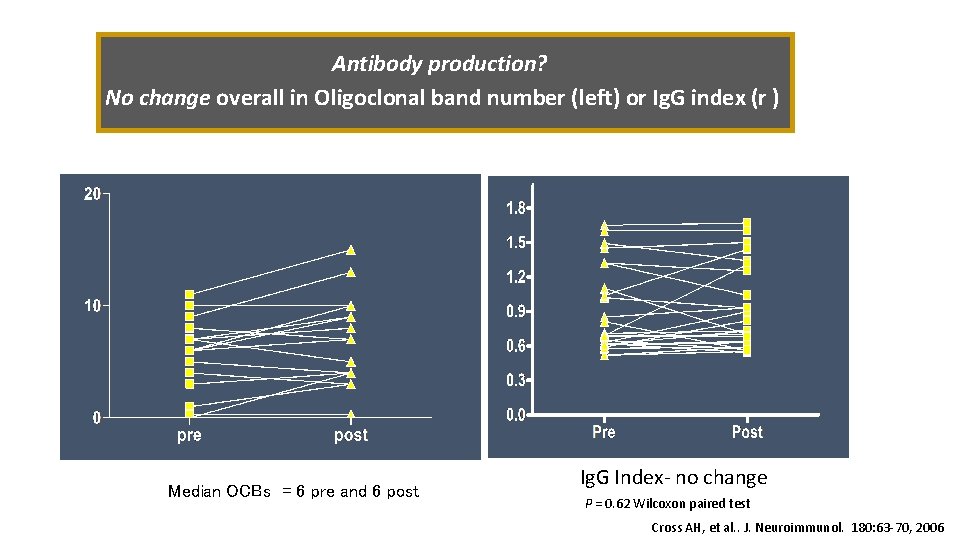
Antibody production? No change overall in Oligoclonal band number (left) or Ig. G index (r ) Median OCBs = 6 pre and 6 post Ig. G Index- no change P = 0. 62 Wilcoxon paired test Cross AH, et al. . J. Neuroimmunol. 180: 63 -70, 2006
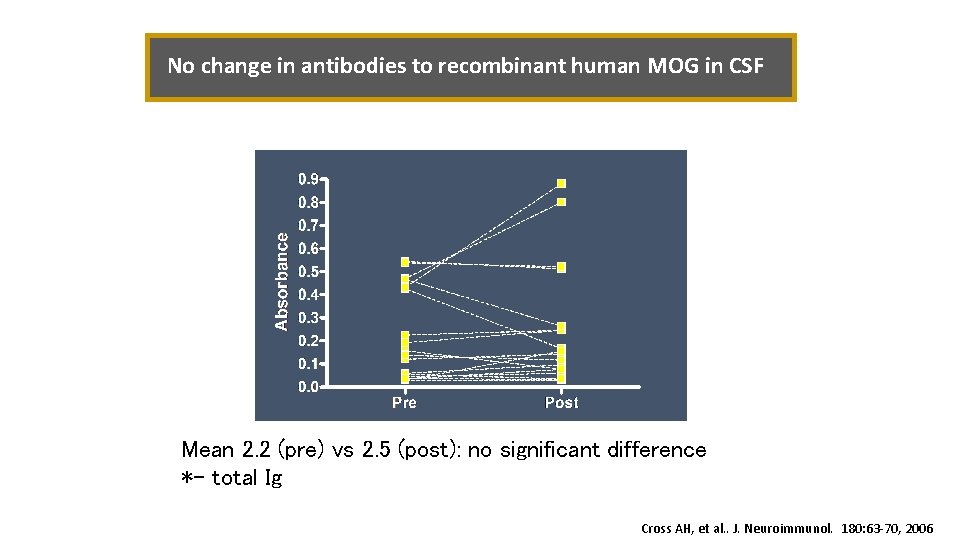
No change in antibodies to recombinant human MOG in CSF Mean 2. 2 (pre) vs 2. 5 (post): no significant difference *- total Ig Cross AH, et al. . J. Neuroimmunol. 180: 63 -70, 2006
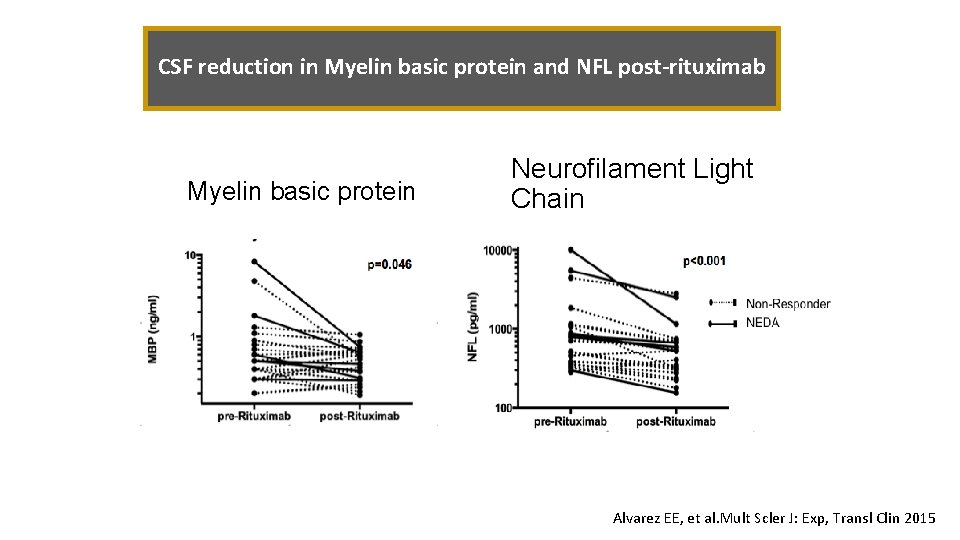
CSF reduction in Myelin basic protein and NFL post-rituximab Myelin basic protein Neurofilament Light Chain Alvarez EE, et al. Mult Scler J: Exp, Transl Clin 2015
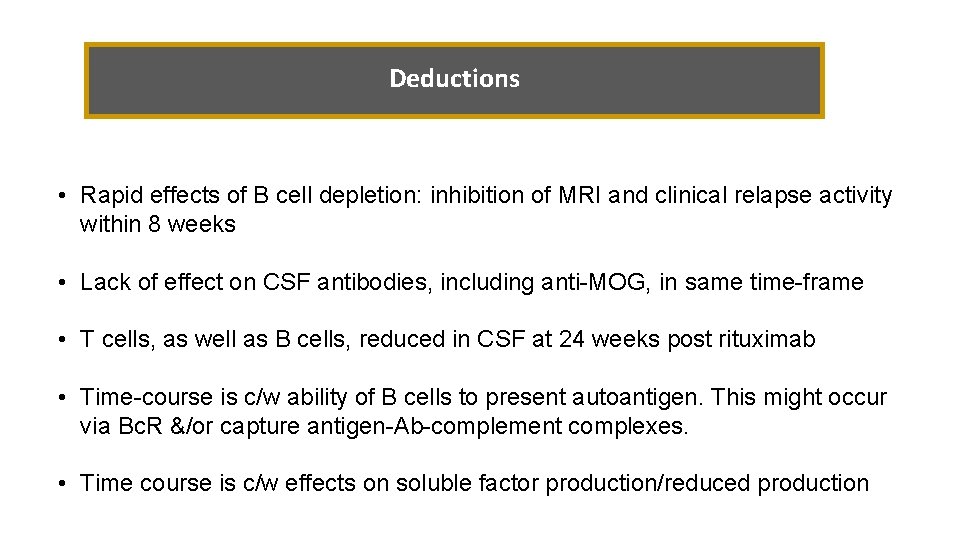
Deductions • Rapid effects of B cell depletion: inhibition of MRI and clinical relapse activity within 8 weeks • Lack of effect on CSF antibodies, including anti-MOG, in same time-frame • T cells, as well as B cells, reduced in CSF at 24 weeks post rituximab • Time-course is c/w ability of B cells to present autoantigen. This might occur via Bc. R &/or capture antigen-Ab-complement complexes. • Time course is c/w effects on soluble factor production/reduced production
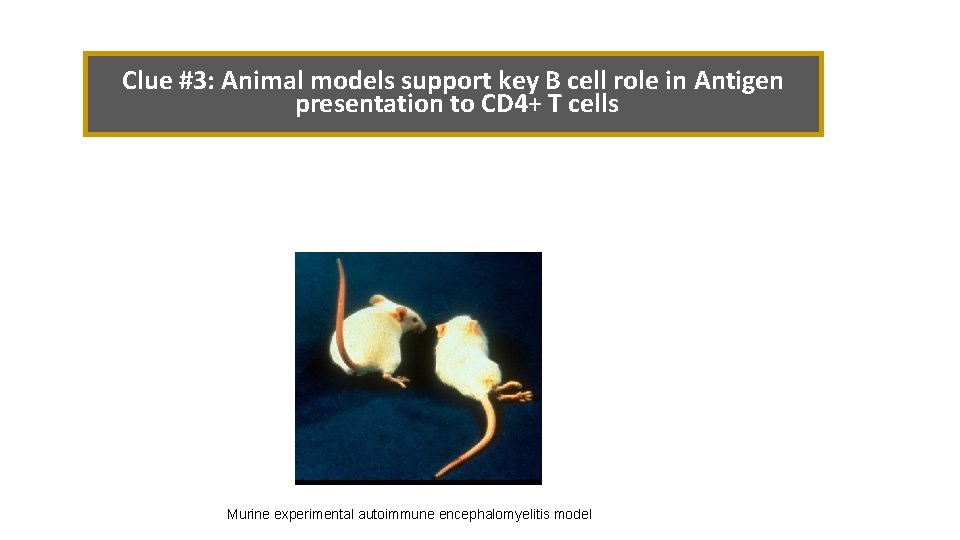
Clue #3: Animal models support key B cell role in Antigen presentation to CD 4+ T cells Murine experimental autoimmune encephalomyelitis model
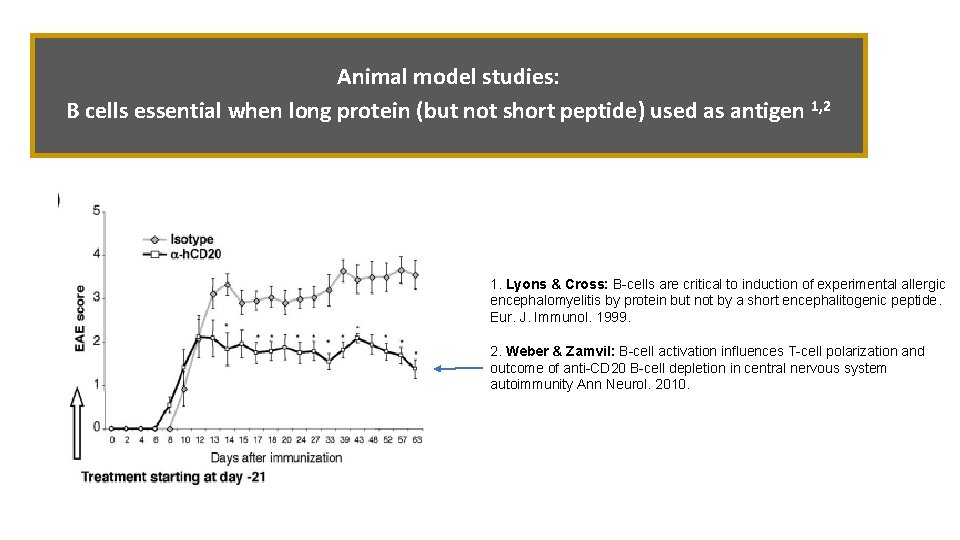
Animal model studies: B cells essential when long protein (but not short peptide) used as antigen 1, 2 1. Lyons & Cross: B-cells are critical to induction of experimental allergic encephalomyelitis by protein but not by a short encephalitogenic peptide. Eur. J. Immunol. 1999. 2. Weber & Zamvil: B-cell activation influences T-cell polarization and outcome of anti-CD 20 B-cell depletion in central nervous system autoimmunity Ann Neurol. 2010.
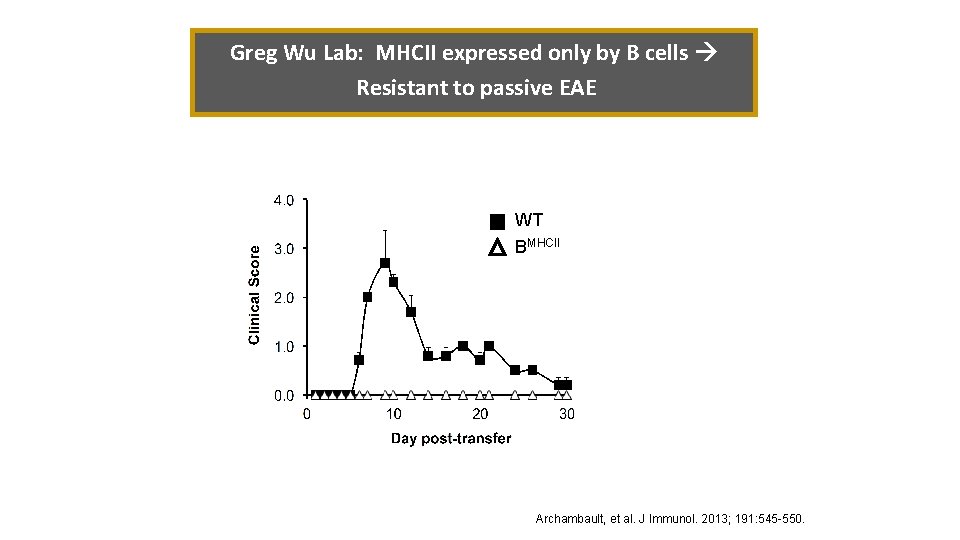
Greg Wu Lab: MHCII expressed only by B cells Resistant to passive EAE WT BMHCII Archambault, et al. J Immunol. 2013; 191: 545 -550.
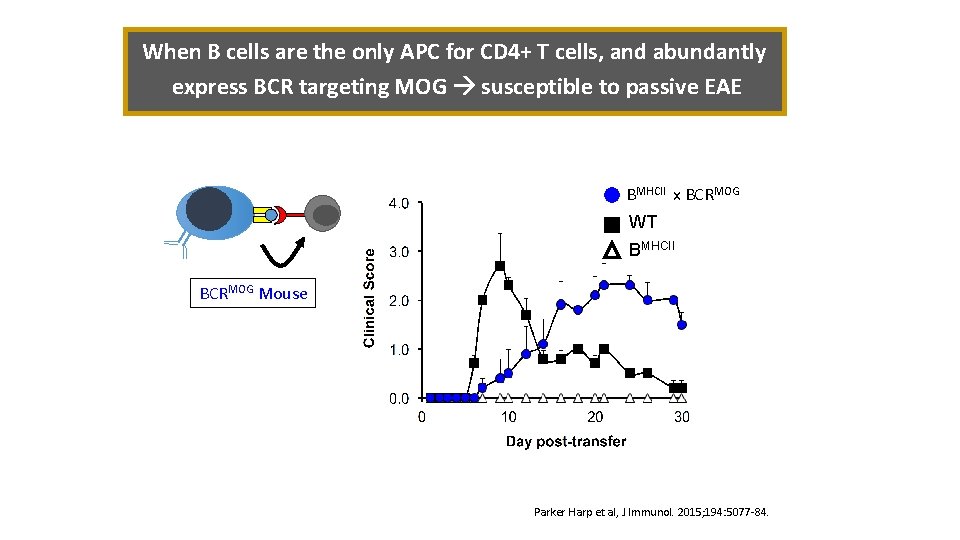
When B cells are the only APC for CD 4+ T cells, and abundantly express BCR targeting MOG susceptible to passive EAE BMHCII x BCRMOG WT BMHCII x BCRMOG Mouse Parker Harp et al, J Immunol. 2015; 194: 5077 -84.
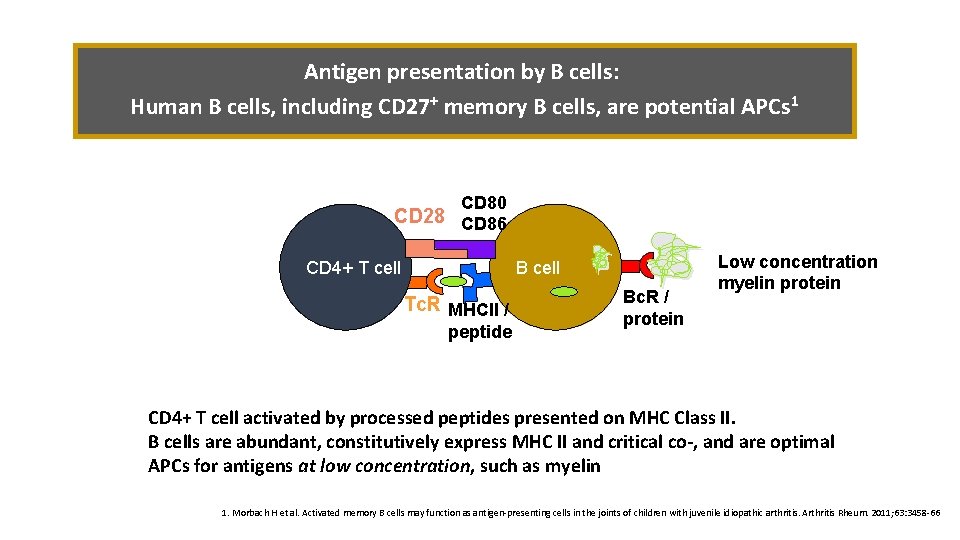
Antigen presentation by B cells: Human B cells, including CD 27+ memory B cells, are potential APCs 1 CD 80 CD 28 CD 86 CD 4+ T cell B cell Tc. R MHCII / peptide Bc. R / protein Low concentration myelin protein CD 4+ T cell activated by processed peptides presented on MHC Class II. B cells are abundant, constitutively express MHC II and critical co-, and are optimal APCs for antigens at low concentration, such as myelin 1. Morbach H et al. Activated memory B cells may function as antigen-presenting cells in the joints of children with juvenile idiopathic arthritis. Arthritis Rheum. 2011; 63: 3458 -66
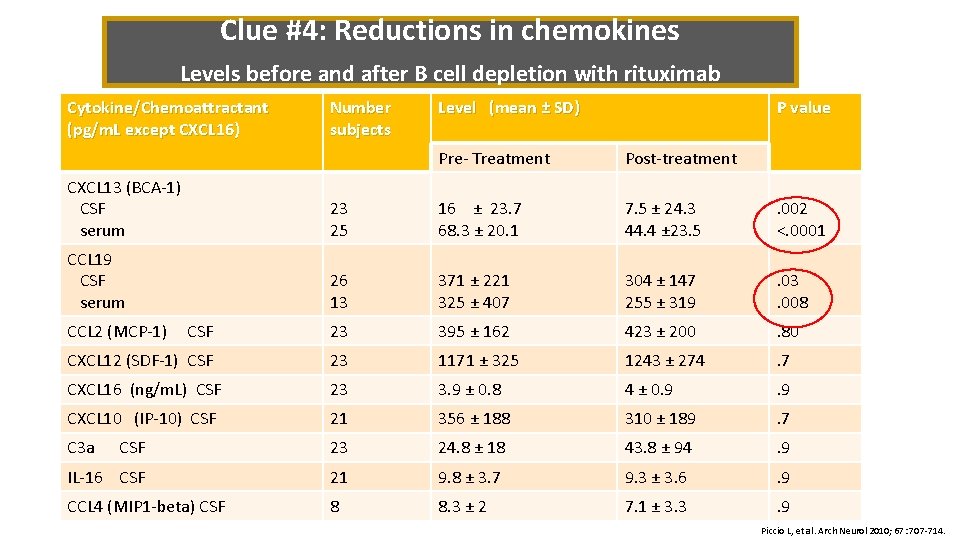
Clue #4: Reductions in chemokines Levels before and after B cell depletion with rituximab Cytokine/Chemoattractant (pg/m. L except CXCL 16) Number subjects Level (mean ± SD) P value Pre- Treatment Post-treatment CXCL 13 (BCA-1) CSF serum 23 25 16 ± 23. 7 68. 3 ± 20. 1 7. 5 ± 24. 3 44. 4 ± 23. 5 . 002 <. 0001 CCL 19 CSF serum 26 13 371 ± 221 325 ± 407 304 ± 147 255 ± 319 . 03. 008 CSF 23 395 ± 162 423 ± 200 . 80 CXCL 12 (SDF-1) CSF 23 1171 ± 325 1243 ± 274 . 7 CXCL 16 (ng/m. L) CSF 23 3. 9 ± 0. 8 4 ± 0. 9 CXCL 10 (IP-10) CSF 21 356 ± 188 310 ± 189 . 7 C 3 a CSF 23 24. 8 ± 18 43. 8 ± 94 . 9 IL-16 CSF 21 9. 8 ± 3. 7 9. 3 ± 3. 6 . 9 CCL 4 (MIP 1 -beta) CSF 8 8. 3 ± 2 7. 1 ± 3. 3 . 9 CCL 2 (MCP-1) Piccio L, et al. Arch Neurol 2010; 67: 707 -714.
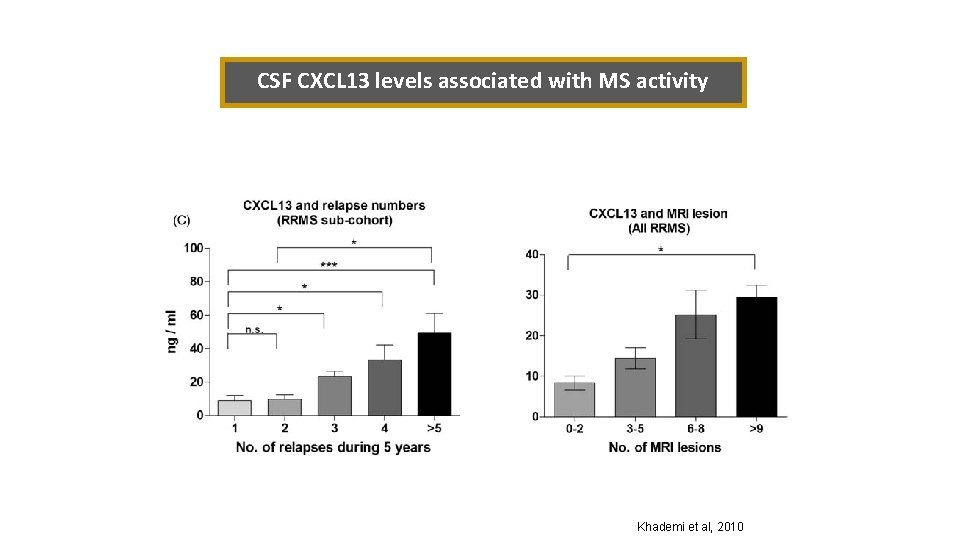
CSF CXCL 13 levels associated with MS activity Khademi et al, 2010
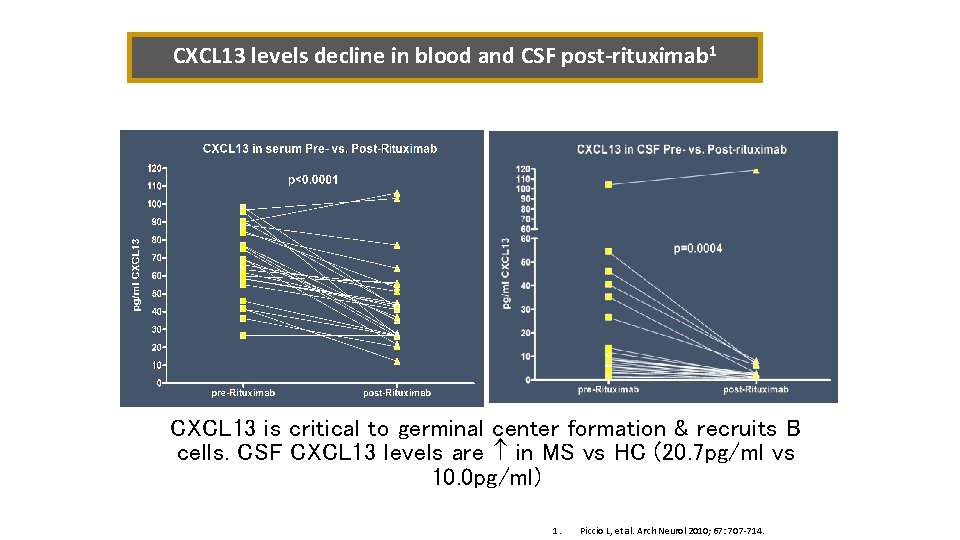
CXCL 13 levels decline in blood and CSF post-rituximab 1 CXCL 13 is critical to germinal center formation & recruits B cells. CSF CXCL 13 levels are in MS vs HC (20. 7 pg/ml vs 10. 0 pg/ml) 1. Piccio L, et al. Arch Neurol 2010; 67: 707 -714.
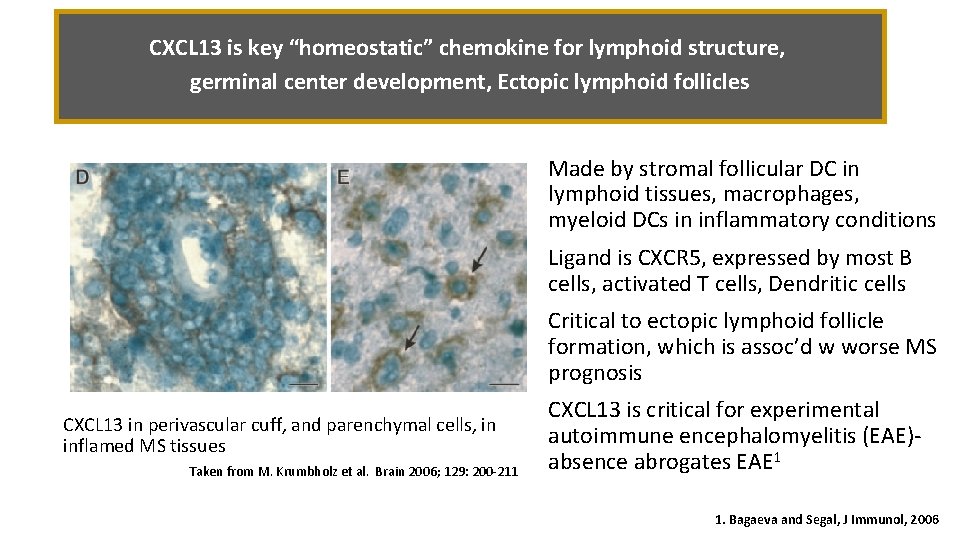
CXCL 13 is key “homeostatic” chemokine for lymphoid structure, germinal center development, Ectopic lymphoid follicles Made by stromal follicular DC in lymphoid tissues, macrophages, myeloid DCs in inflammatory conditions Ligand is CXCR 5, expressed by most B cells, activated T cells, Dendritic cells Critical to ectopic lymphoid follicle formation, which is assoc’d w worse MS prognosis CXCL 13 in perivascular cuff, and parenchymal cells, in inflamed MS tissues Taken from M. Krumbholz et al. Brain 2006; 129: 200 -211 CXCL 13 is critical for experimental autoimmune encephalomyelitis (EAE)absence abrogates EAE 1 1. Bagaeva and Segal, J Immunol, 2006
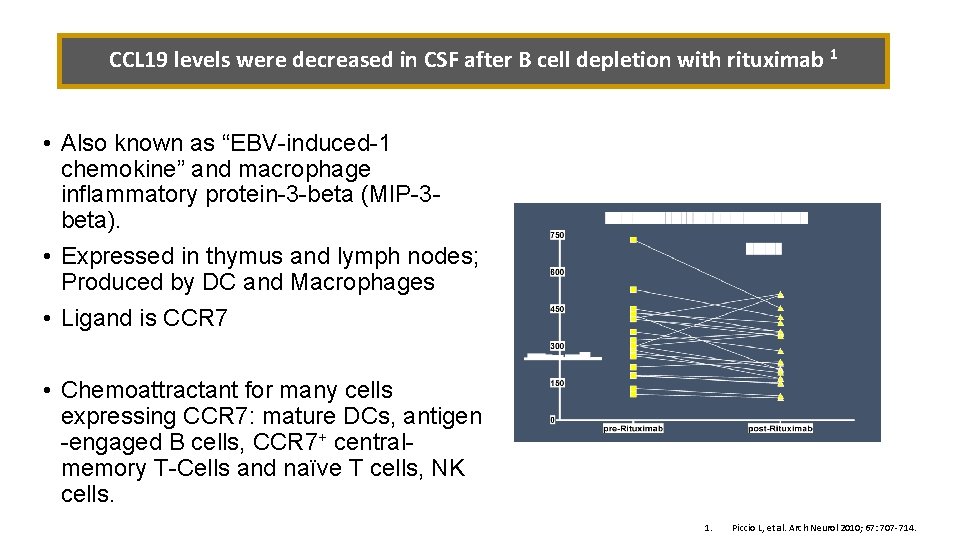
CCL 19 levels were decreased in CSF after B cell depletion with rituximab 1 • Also known as “EBV-induced-1 chemokine” and macrophage inflammatory protein-3 -beta (MIP-3 beta). • Expressed in thymus and lymph nodes; Produced by DC and Macrophages • Ligand is CCR 7 • Chemoattractant for many cells expressing CCR 7: mature DCs, antigen -engaged B cells, CCR 7+ centralmemory T-Cells and naïve T cells, NK cells. 1. Piccio L, et al. Arch Neurol 2010; 67: 707 -714.
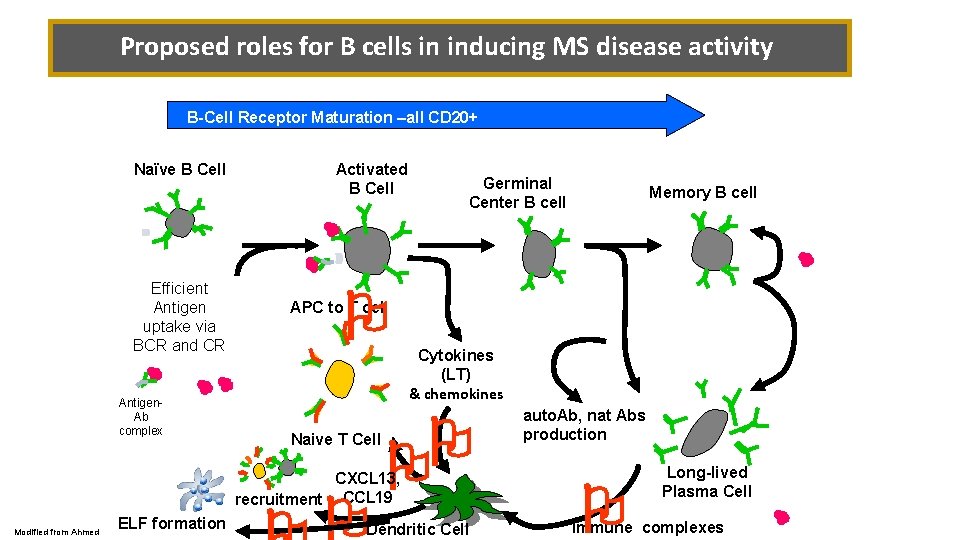
Proposed roles for B cells in inducing MS disease activity B-Cell Receptor Maturation –all CD 20+ Naïve B Cell Efficient Antigen uptake via BCR and CR Antigen. Ab complex Activated B Cell Germinal Center B cell Antigen APC to T cell Cytokines (LT) & chemokines Naive T Cell CXCL 13, recruitment CCL 19 Modified from Ahmed ELF formation Memory B cell Dendritic Cell auto. Ab, nat Abs production Long-lived Plasma Cell Immune complexes
Summary / Conclusions • Depletion of circulating B cells using anti-CD 20 agents leads to rapid reduction in MRI activity and clinical relapses • Happens in absence of blood or CSF reduction in antibodies • MOA multifactorial, involving antigen presentation to T cells (supported by animal studies), and recruitment of cells including T cells into CNS • Longer term, possibly impacts the formation of ectopic lymphoid follicles and immunoglobulins within CNS • Future clinical trials should specifically target memory B cells
Acknowledgements • Washington University: • Laura Piccio, MD Ph. D • Rob Naismith MD • Gregory F Wu MD Ph. D • Enrique Alvarez MD Ph. D (Univ Colorado) • Erin Longbrake MD Ph. D (Yale) • Becky Parks MD (Biogen) • Jeri A. Lyons Ph. D (U WI-Milwaukee) • Eric Klawiter, MD (MGH) • National MS Society - Sylvia Lawry Fellowship(EA) - Harry Weaver Scholar Award (LP) • Funding: • National Ctr for Research Resources UL 1 TR 000448 • National MS Society USA • Barnes-Jewish Hospital Foundation.
- Slides: 33