
B Cell Response The basic process of humoral
B Cell Response
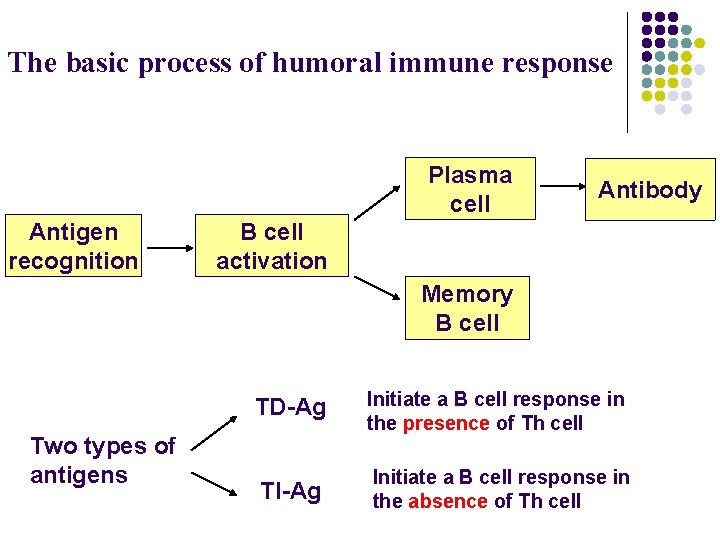
The basic process of humoral immune response Plasma cell Antigen recognition Antibody B cell activation Memory B cell Two types of antigens TD-Ag Initiate a B cell response in the presence of Th cell TI-Ag Initiate a B cell response in the absence of Th cell
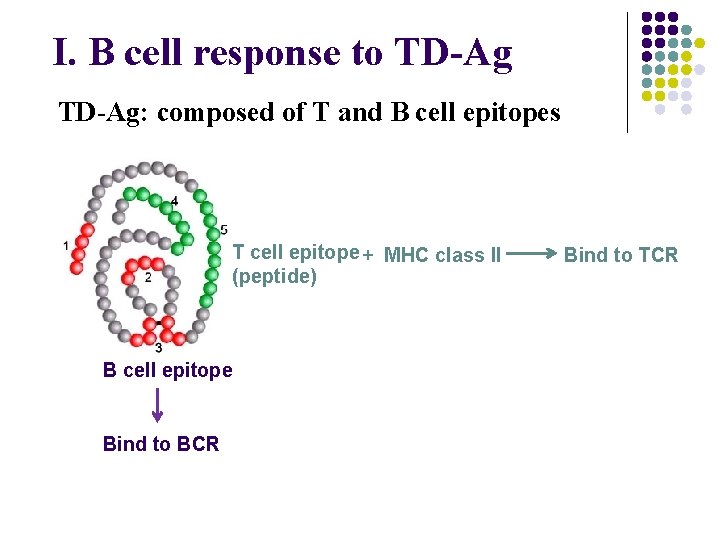
I. B cell response to TD-Ag: composed of T and B cell epitopes T cell epitope + MHC class II (peptide) B cell epitope Bind to BCR Bind to TCR

Antigen Recognition by BCR Antigens recognized by BCR can be proteins, polysaccharides, nucleic acids, lipids, or small compounds. BCR recognizes both linear and conformational epitopes. They do not need not to be processed by APCs.

Signal Transduction following BCR Engagement

Signal Transduction following BCR Engagement
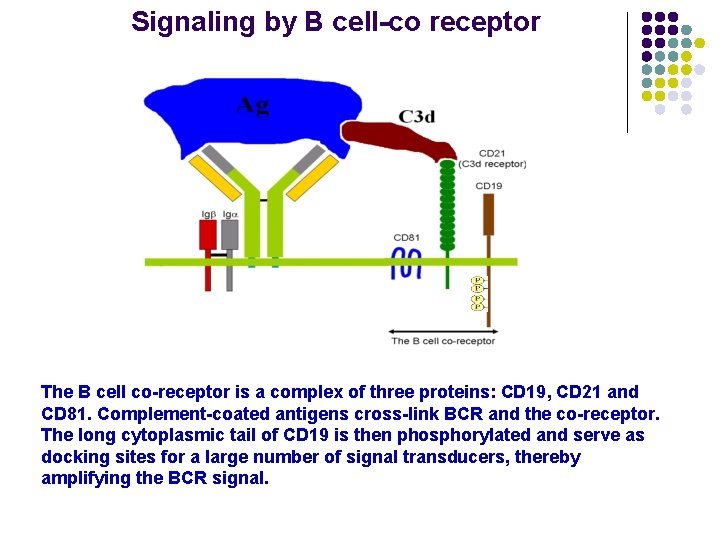
Signaling by B cell-co receptor The B cell co-receptor is a complex of three proteins: CD 19, CD 21 and CD 81. Complement-coated antigens cross-link BCR and the co-receptor. The long cytoplasmic tail of CD 19 is then phosphorylated and serve as docking sites for a large number of signal transducers, thereby amplifying the BCR signal.
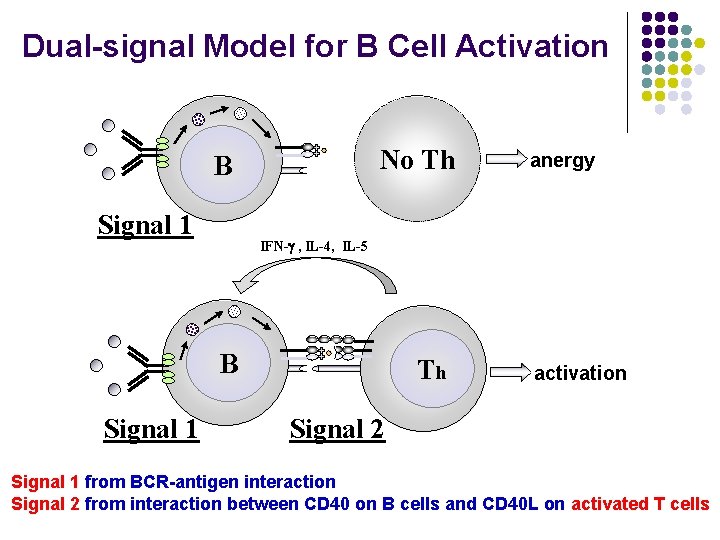
Dual-signal Model for B Cell Activation No Th B Signal 1 IFN-g , IL-4, IL-5 B Signal 1 anergy Th activation Signal 2 Signal 1 from BCR-antigen interaction Signal 2 from interaction between CD 40 on B cells and CD 40 L on activated T cells

Interaction of T-B Cells in B Cell Responses Antigen crosslinks m. Ig generate signal ① increased expression of MHC II and B 7 activate Th cell begins to express CD 40 L-CD 40 interactions provide signal ② Th cell secreted cytokines
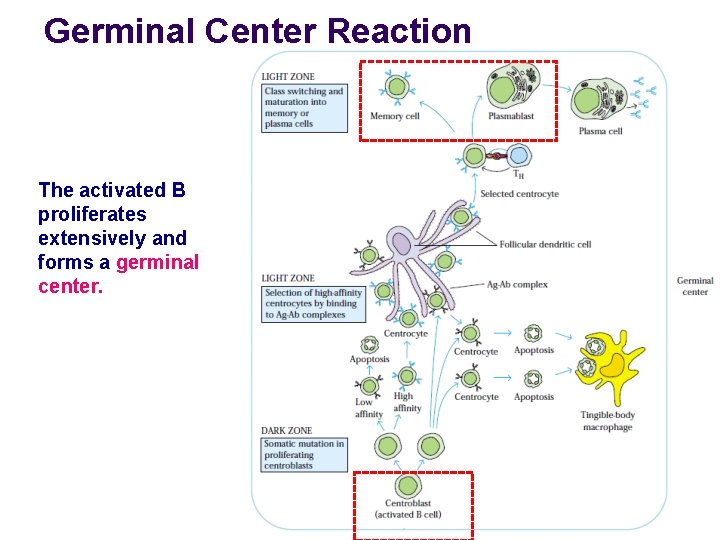
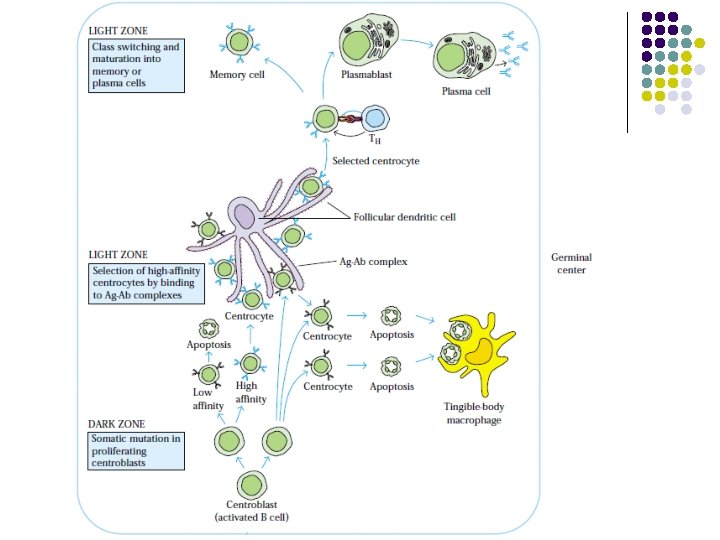
Germinal Center Reaction The activated B proliferates extensively and forms a germinal center.
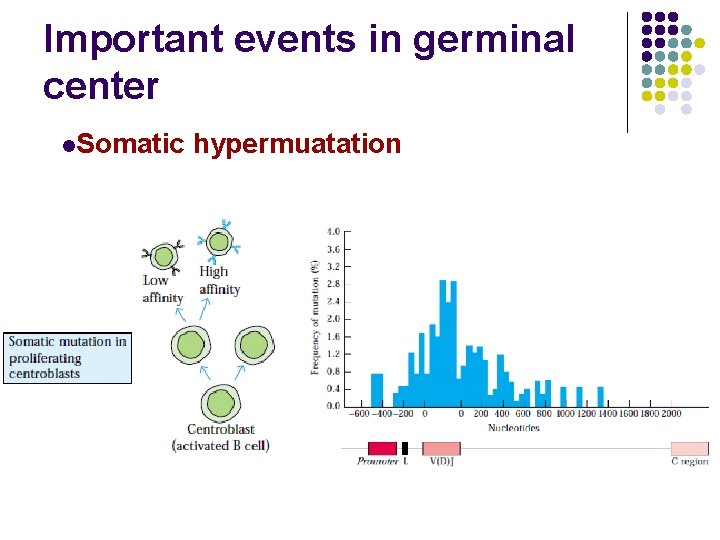
Important events in germinal center l. Somatic hypermuatation
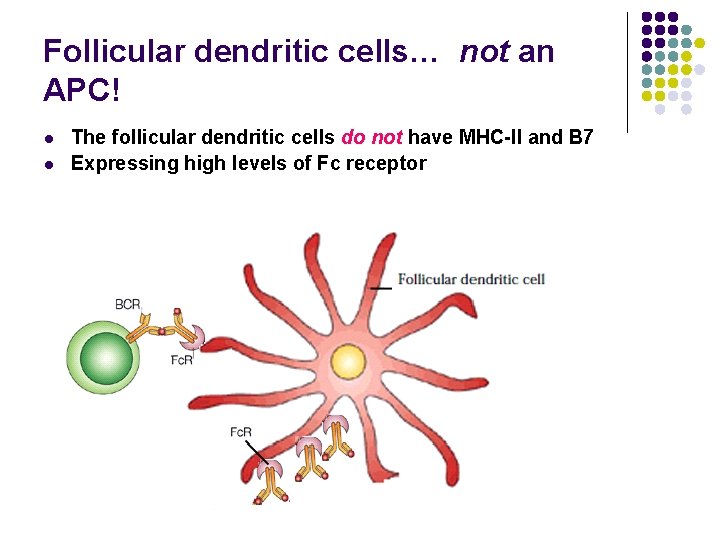
Follicular dendritic cells… not an APC! l l The follicular dendritic cells do not have MHC-II and B 7 Expressing high levels of Fc receptor
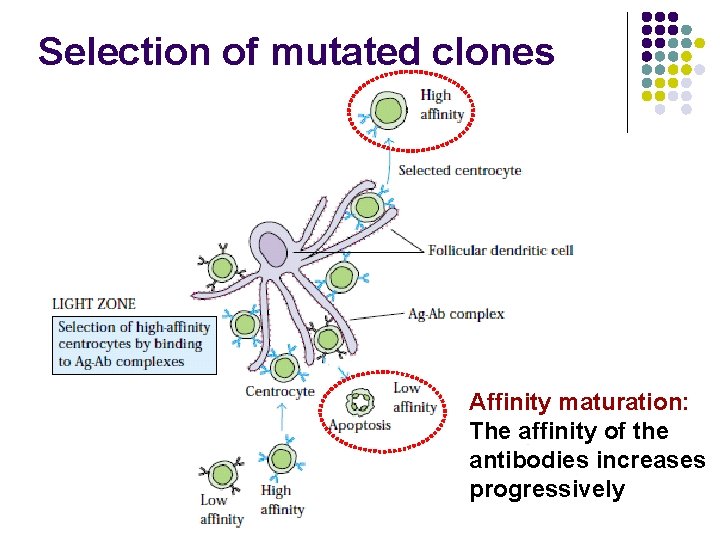
Selection of mutated clones Affinity maturation: The affinity of the antibodies increases progressively
Important events in germinal center l. Antibody class switching The antibodies produced in primary response are mainly Ig. M. But they switch to other classes (Ig. G, Ig. A and Ig. E) late in the response or in secondary response.
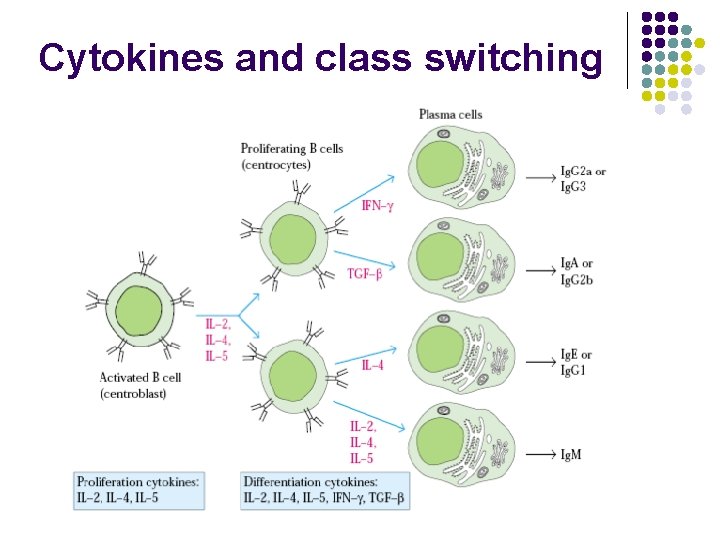
Cytokines and class switching
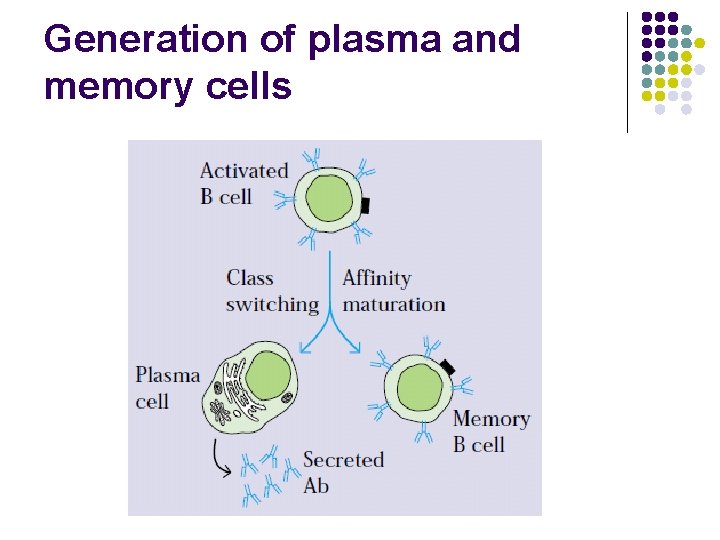
Generation of plasma and memory cells
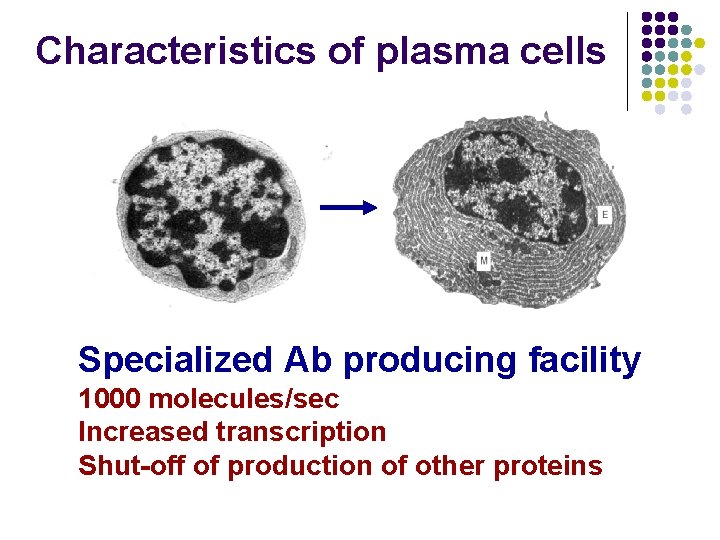
Characteristics of plasma cells Specialized Ab producing facility 1000 molecules/sec Increased transcription Shut-off of production of other proteins
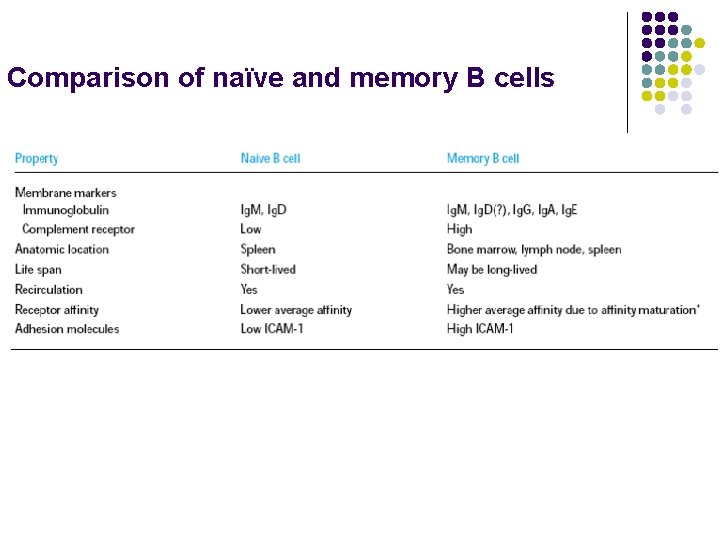
Comparison of naïve and memory B cells
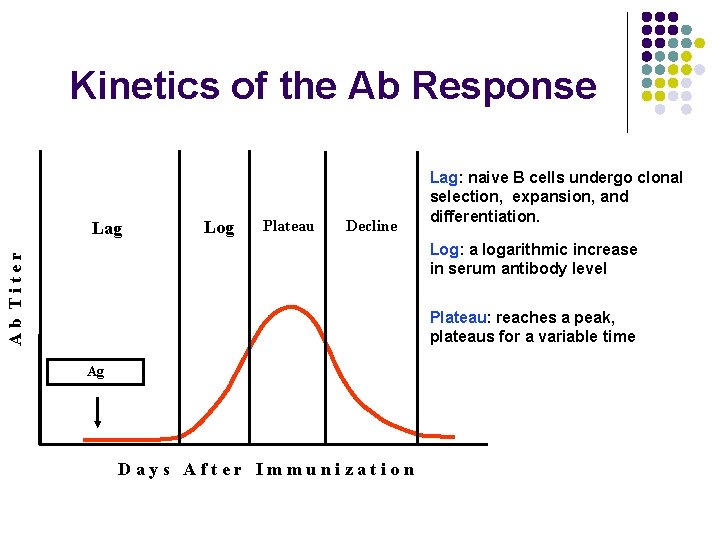
Kinetics of the Ab Response Lag Log Plateau Decline Lag: naive B cells undergo clonal selection, expansion, and differentiation. Ab Titer Log: a logarithmic increase in serum antibody level Plateau: reaches a peak, plateaus for a variable time Ag Days After Immunization
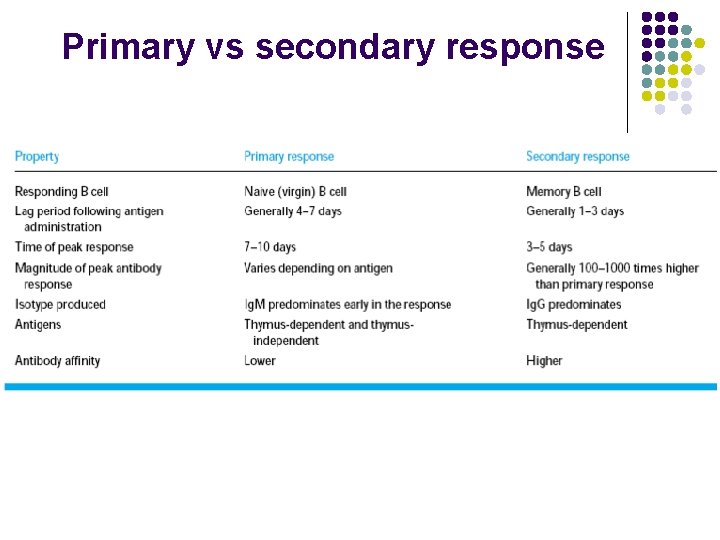
The secondary response l. Activation of memory cells by antigen results in a secondary antibody response that can be distinguished from the primary response in several ways.
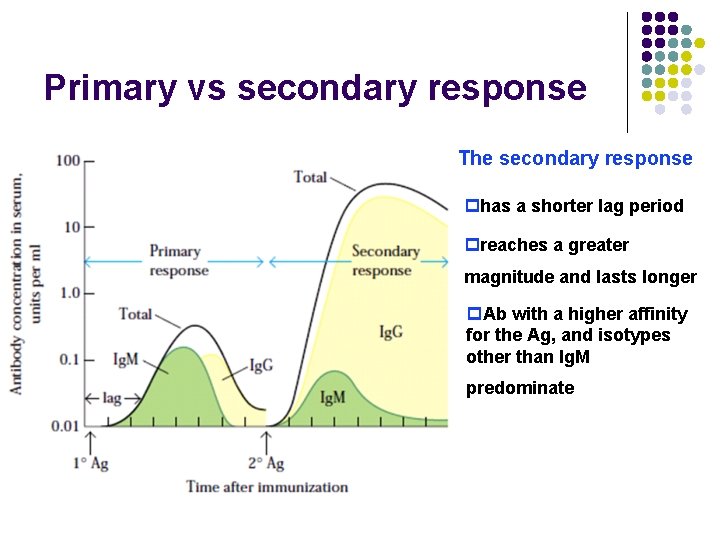
Primary vs secondary response The secondary response phas a shorter lag period preaches a greater magnitude and lasts longer p. Ab with a higher affinity for the Ag, and isotypes other than Ig. M predominate
Primary vs secondary response
II. B cell response to TI-Ag Two types of TI-Ag: TI-1 antigen and TI-2 antigen l different mechanistic properties l B cells response are different
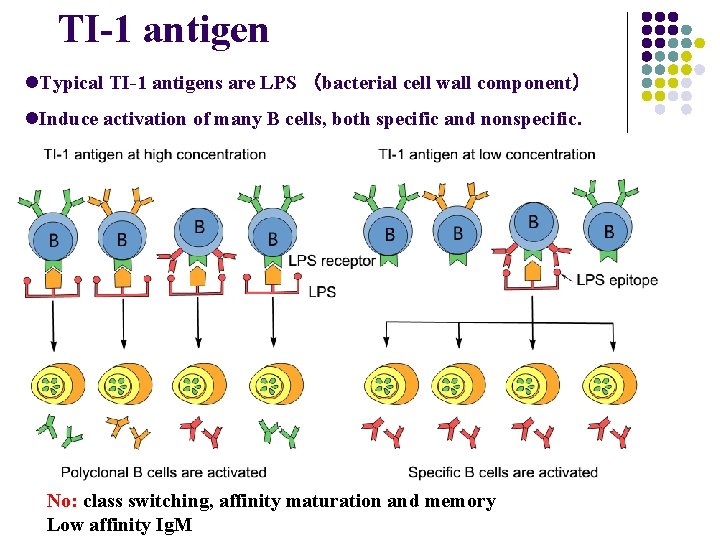
TI-1 antigen l. Typical TI-1 antigens are LPS (bacterial cell wall component) l. Induce activation of many B cells, both specific and nonspecific. No: class switching, affinity maturation and memory Low affinity Ig. M
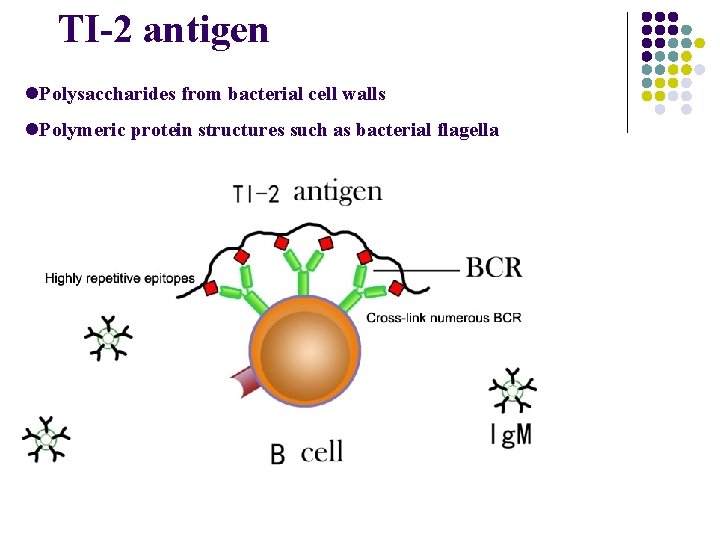
TI-2 antigen l. Polysaccharides from bacterial cell walls l. Polymeric protein structures such as bacterial flagella
What to remember p. Primary vs secondary responses p. T cell help for B cell response p. Critical events in GC
- Slides: 27