
B 7 Variation and Evolution Paper 2 Revision
B 7 Variation and Evolution. Paper 2 Revision Key Concepts
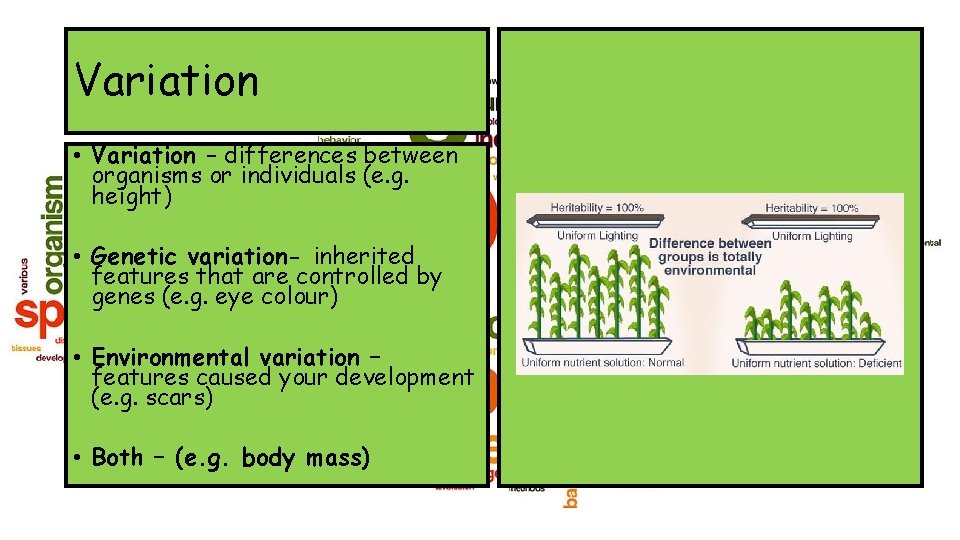
Variation • Variation – differences between organisms or individuals (e. g. height) • Genetic variation- inherited features that are controlled by genes (e. g. eye colour) • Environmental variation – features caused your development (e. g. scars) • Both – (e. g. body mass)
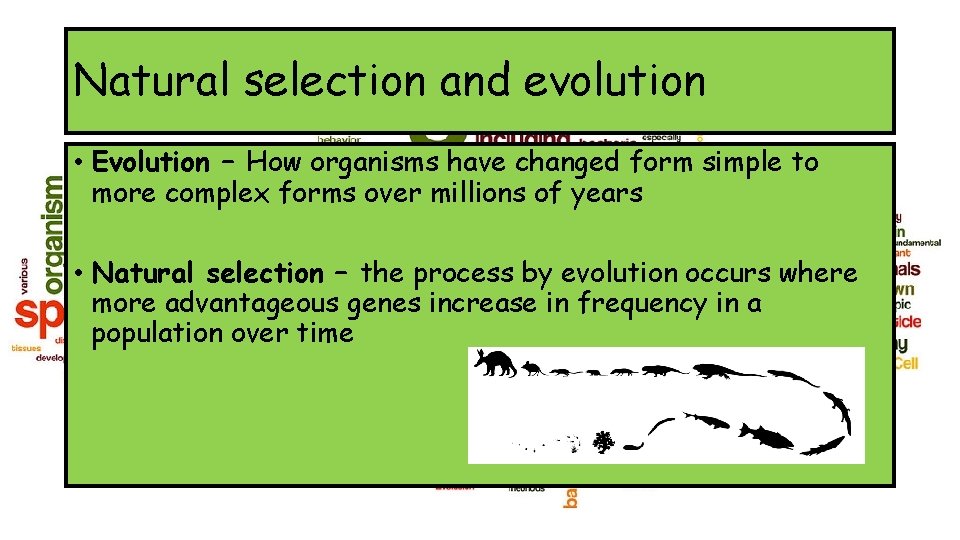
Natural selection and evolution • Evolution – How organisms have changed form simple to more complex forms over millions of years • Natural selection – the process by evolution occurs where more advantageous genes increase in frequency in a population over time

Natural selection Disadvantageous genes Mutation Selection pressure Advantageous genes increase in frequency in the population Die Survive + Reproduce Pass on genes to offspring
Evidence for evolution and natural selection • Fossils – show organisms have changed from simple to more complex forms over millions of years • Peppered moths – show natural selection as dark forms were selected for during the industrial revolution • Antibiotic resistant bacteria – show that bacteria have rapidly evolved resistance to the misuse of antibiotics through natural selection • DNA evidence – Shows that all organisms are related and are part of the ‘tree of life’.

Selective breeding 1. Select individuals with required trait and breed them (e. g. more muscle) 2. Select offspring with required trait (e. g. more muscle) and breed them. 3. Repeat over many generations until all individuals have the desired trait (e. g. more muscle)
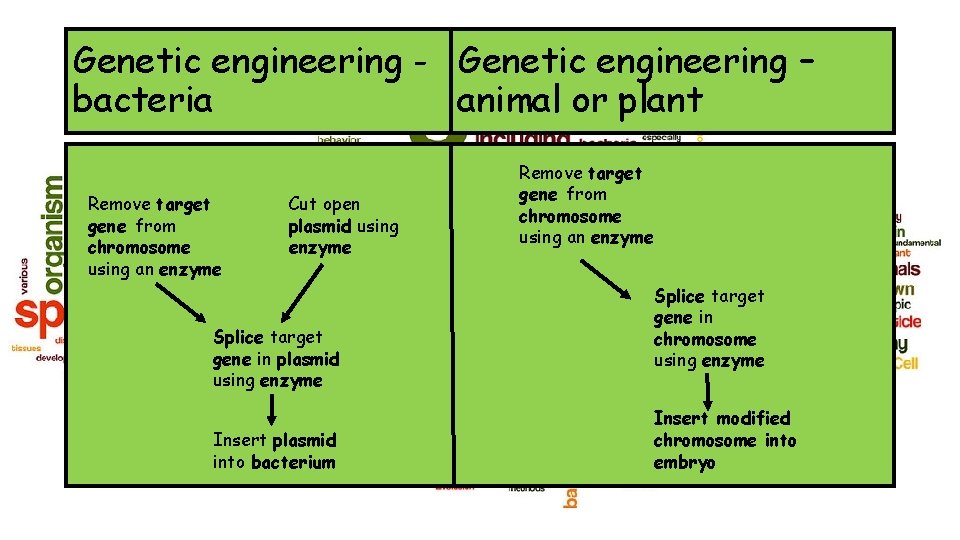
Genetic engineering - Genetic engineering – bacteria animal or plant Remove target gene from chromosome using an enzyme Cut open plasmid using enzyme Splice target gene in plasmid using enzyme Insert plasmid into bacterium Remove target gene from chromosome using an enzyme Splice target gene in chromosome using enzyme Insert modified chromosome into embryo
- Slides: 7