
B 6 higher tier revision Simple reflex Draw
B 6 higher tier revision
Simple reflex • Draw a flow chart summarising the steps in a simple reflex • Explain how the pathway speed up the response
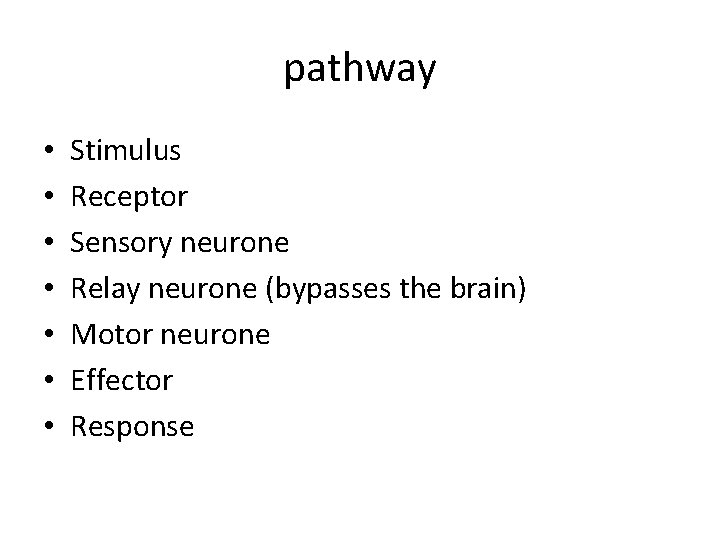
pathway • • Stimulus Receptor Sensory neurone Relay neurone (bypasses the brain) Motor neurone Effector Response
Why is it fast? • As the brain isn’t involved the response is automatic and rapid (pathway is also fixed)
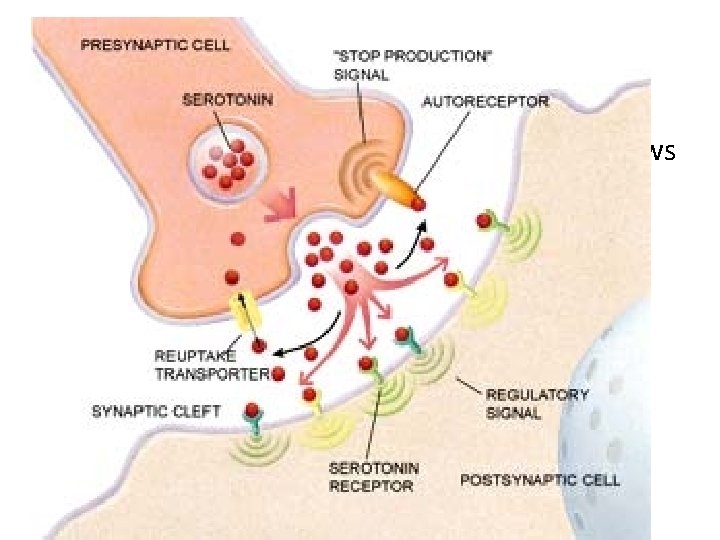
Synapse • Draw a diagram showing how serotonin allows an impulse to pass across a synapse
Prozac • Give two medical reasons why a person may suffer from depression • Not enough serotonin chemical produced • Serotonin receptors do not work/blocked
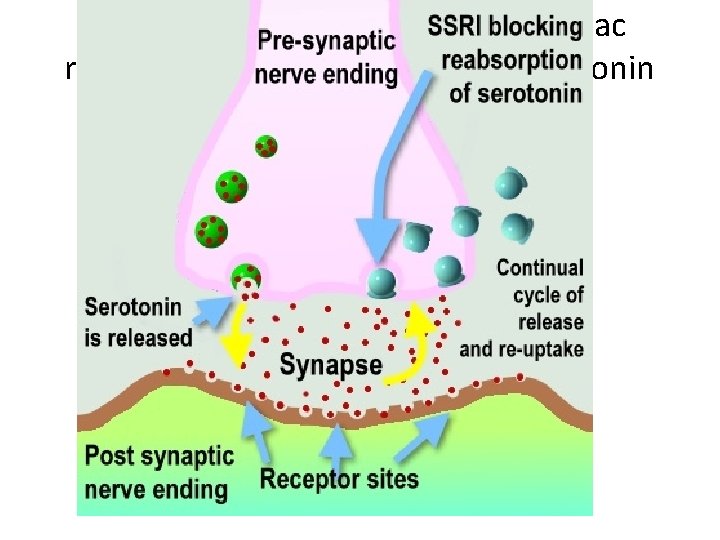
Draw a diagram to show prozac reverses the problem with the serotonin synapse
Explain how ecstasy (MDMA) affects serotonin channels • • • Serotonin Concentration Block Reuptake channel Increased impulses
Conditioned reflex • Explain Pavlov’s experiment using the following terms and giving examples of these: • Primary stimulus • Reflex response - unconditioned • Secondary stimulus • Repeat • Conditioned response
• Why learn a new reflex response? • How can a reflex response be modified? • Increase chances of survival • Brain is involved, impulse goes to brain and allows you to override the reflex response
• Why is it that an animal can adapt to new situations, learn new skills? • How are skills learnt? • What is memory? • Write a flow chart describing how information can become long term memory • What evidence is there to show that certain skills e. g. Speech can only be learnt at an early age • Potential of brain to develop lots of different neural pathways • Repetition • Storage and retrieval of information • Feral children cannot/struggle to learn these skills at an older age • Stimulus (sensory memory), short term memory, repetition, storage in long term memory, retrieval, lack of use = forgetting
Multi store model • Stimulus (sensory memory), short term memory, repetition, storage in long term memory, retrieval, lack of use = forgetting • Why is this model limited? • Doesn’t fully explain why memory is lost
- Slides: 12