
B 5 Growth Development All living things are
B 5 Growth & Development
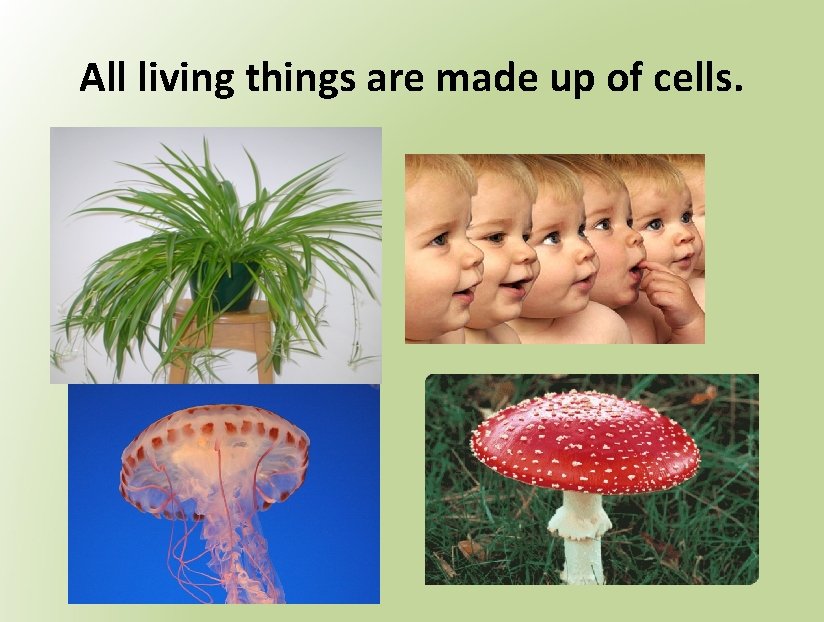
All living things are made up of cells.
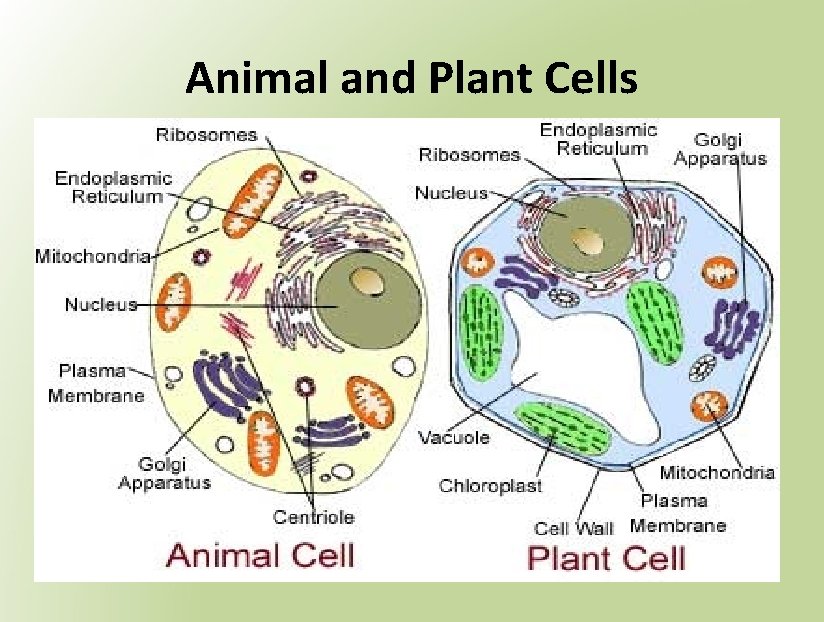
Animal and Plant Cells
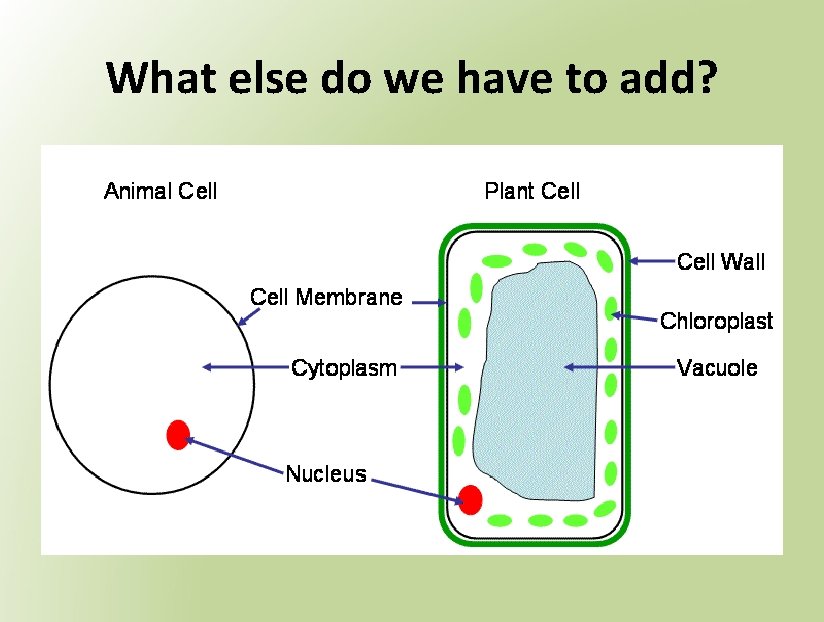
What else do we have to add?
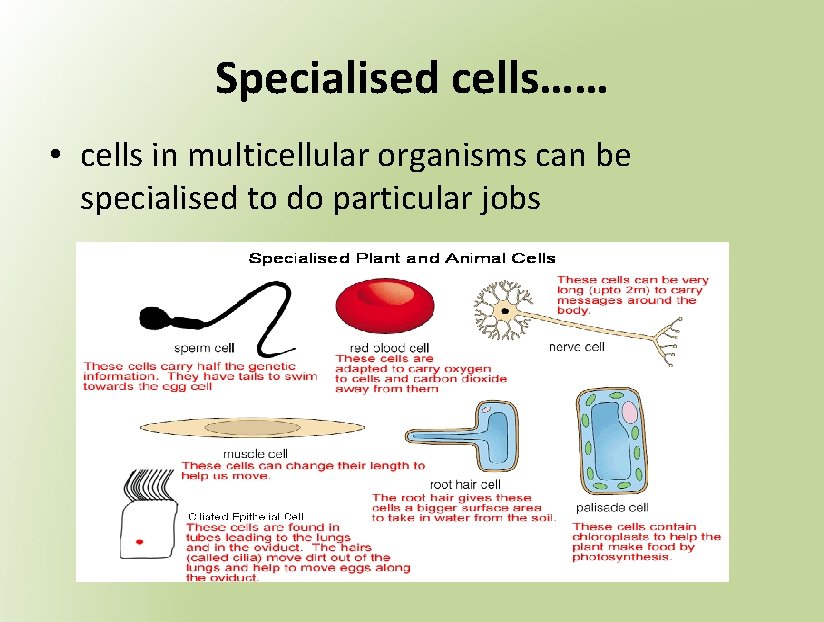
Specialised cells…… • cells in multicellular organisms can be specialised to do particular jobs
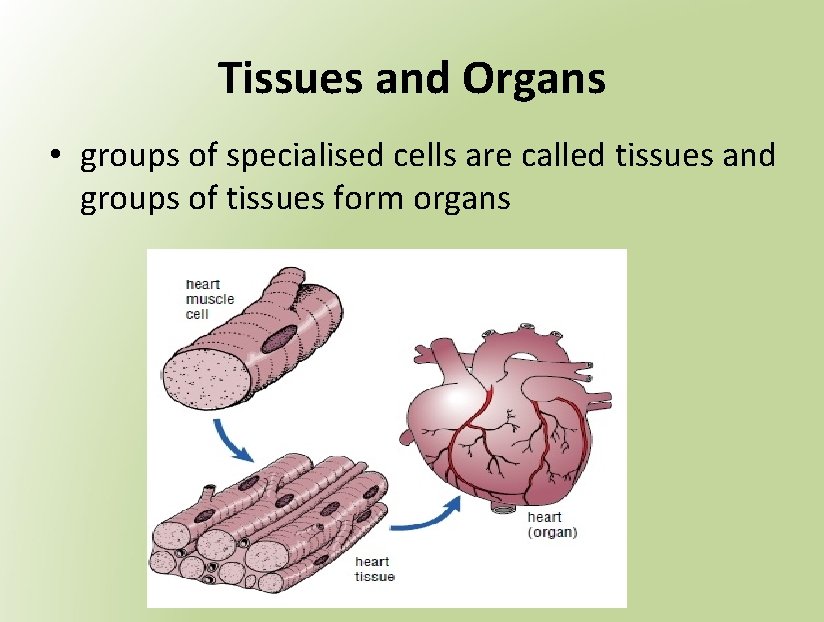
Tissues and Organs • groups of specialised cells are called tissues and groups of tissues form organs
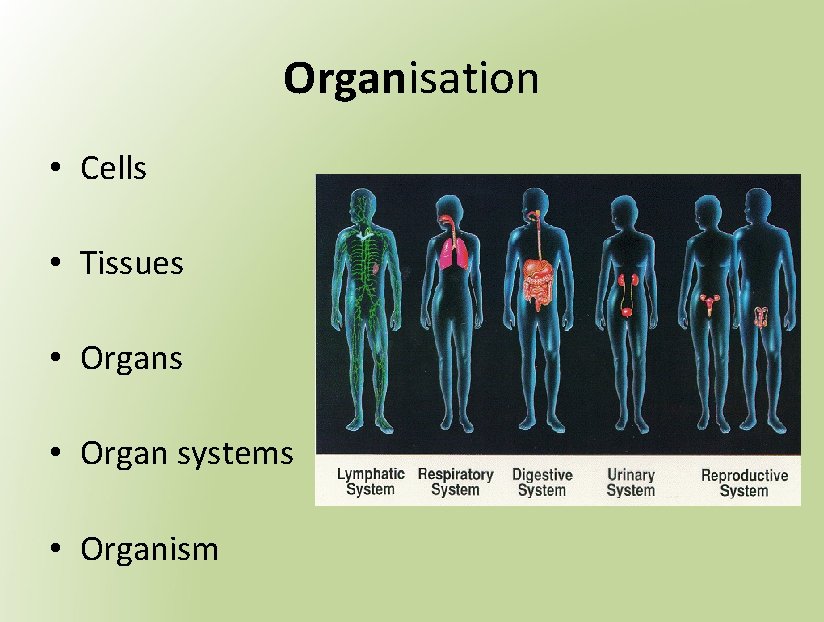
Organisation • Cells • Tissues • Organ systems • Organism
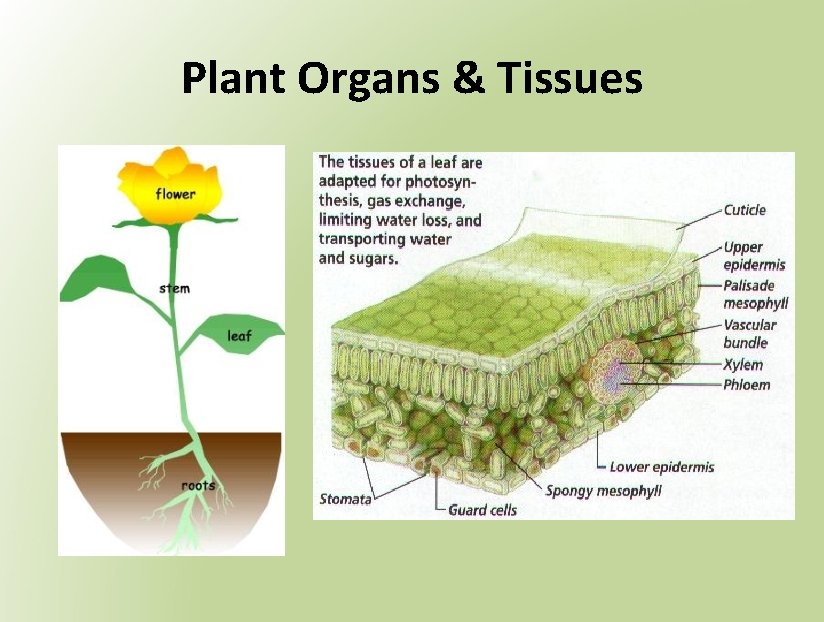
Plant Organs & Tissues
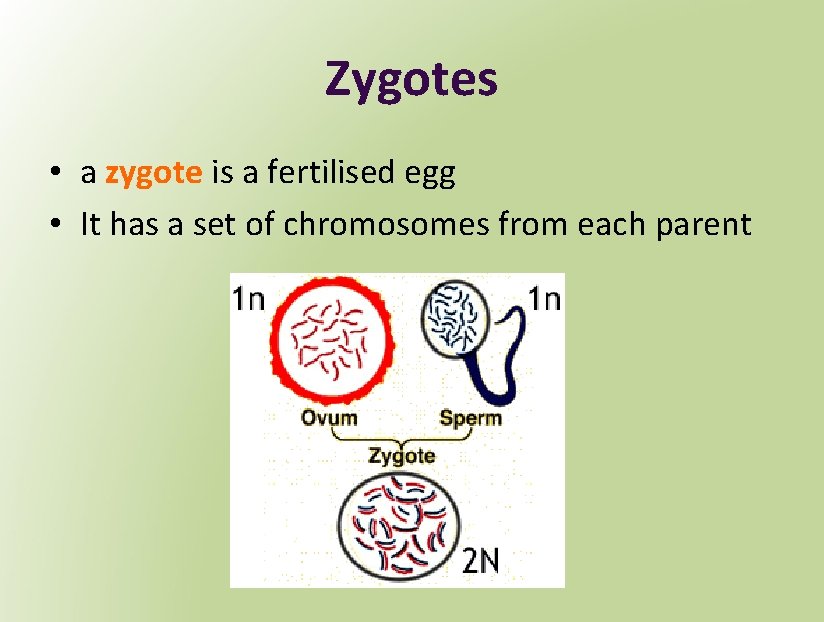
Zygotes • a zygote is a fertilised egg • It has a set of chromosomes from each parent
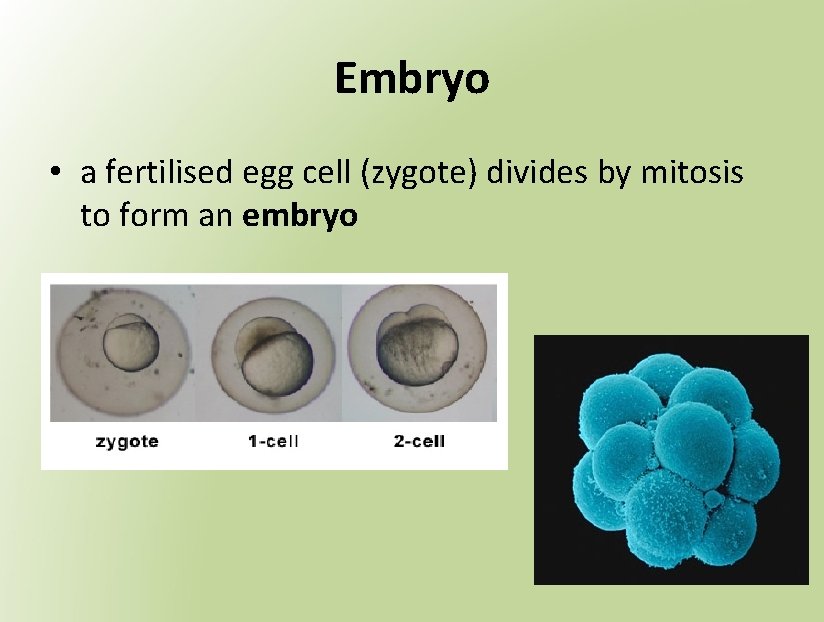
Embryo • a fertilised egg cell (zygote) divides by mitosis to form an embryo
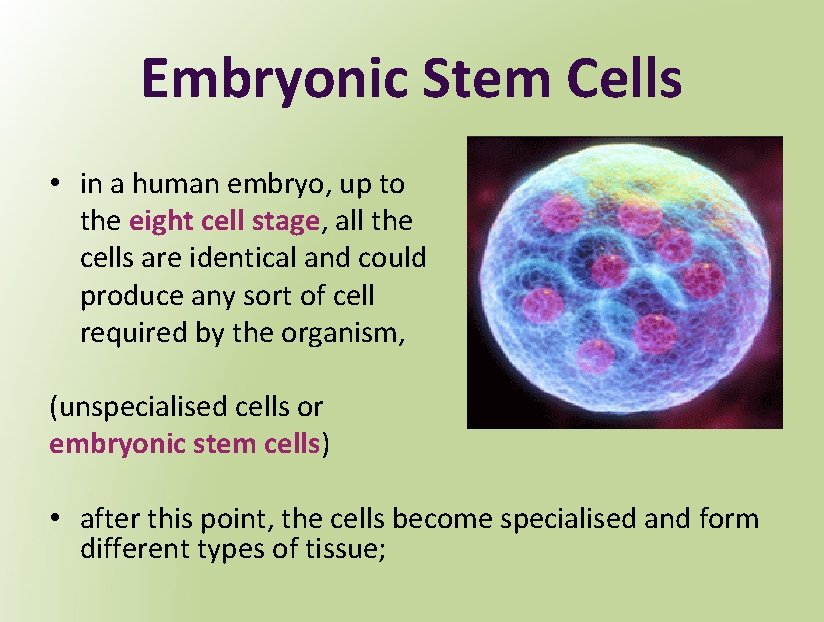
Embryonic Stem Cells • in a human embryo, up to the eight cell stage, all the cells are identical and could produce any sort of cell required by the organism, (unspecialised cells or embryonic stem cells) • after this point, the cells become specialised and form different types of tissue;
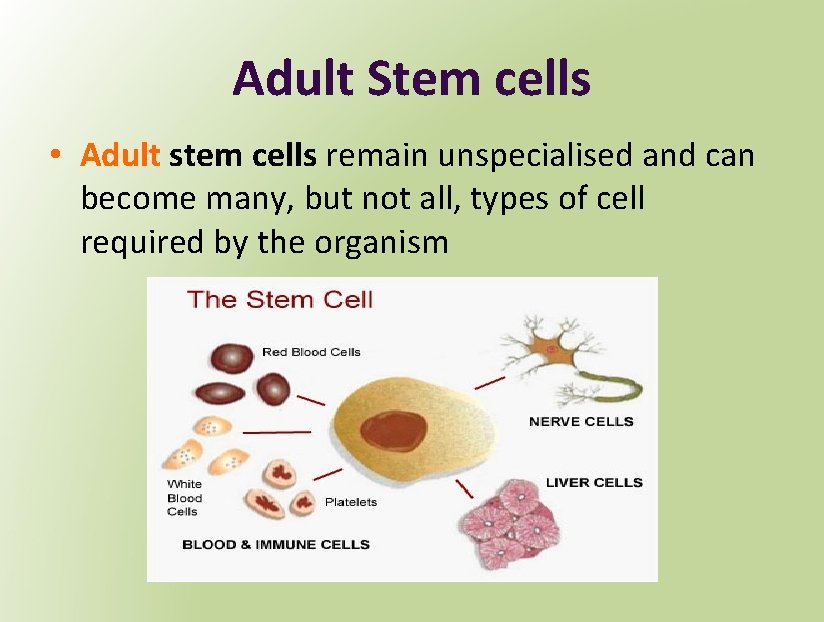
Adult Stem cells • Adult stem cells remain unspecialised and can become many, but not all, types of cell required by the organism
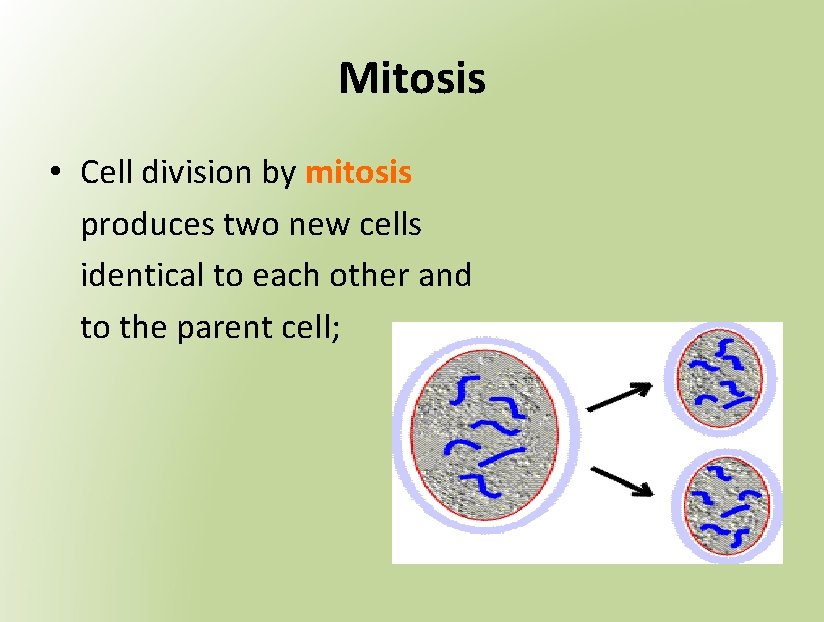
Mitosis • Cell division by mitosis produces two new cells identical to each other and to the parent cell;
DNA
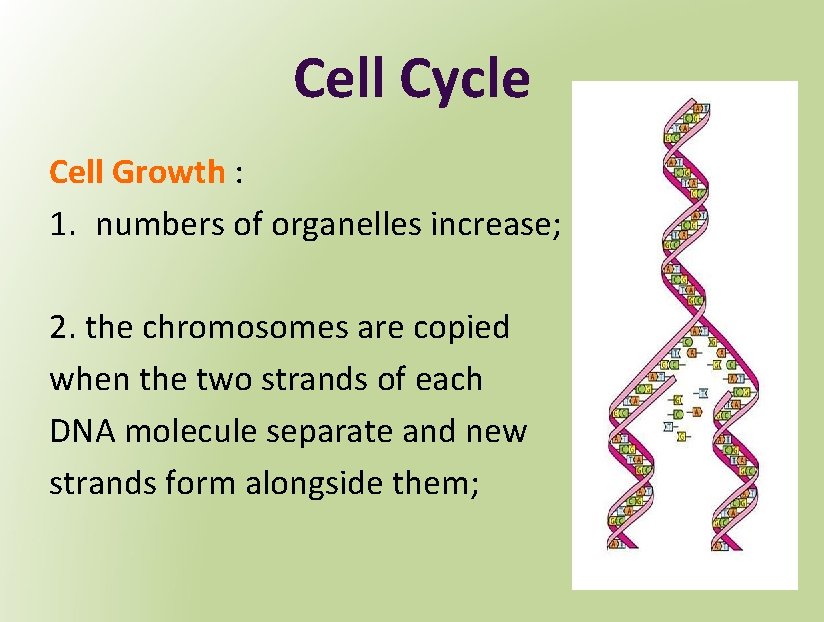
Cell Cycle Cell Growth : 1. numbers of organelles increase; 2. the chromosomes are copied when the two strands of each DNA molecule separate and new strands form alongside them;
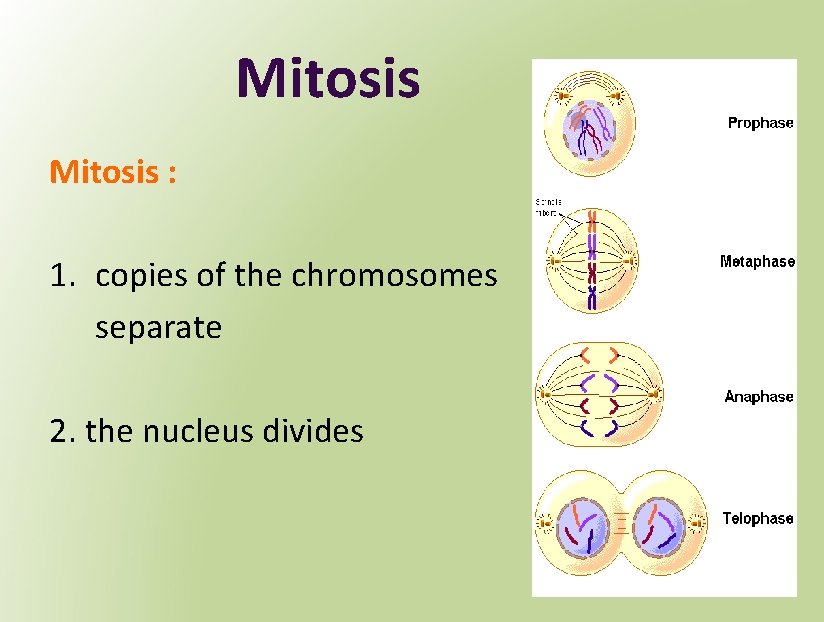
Mitosis : 1. copies of the chromosomes separate 2. the nucleus divides
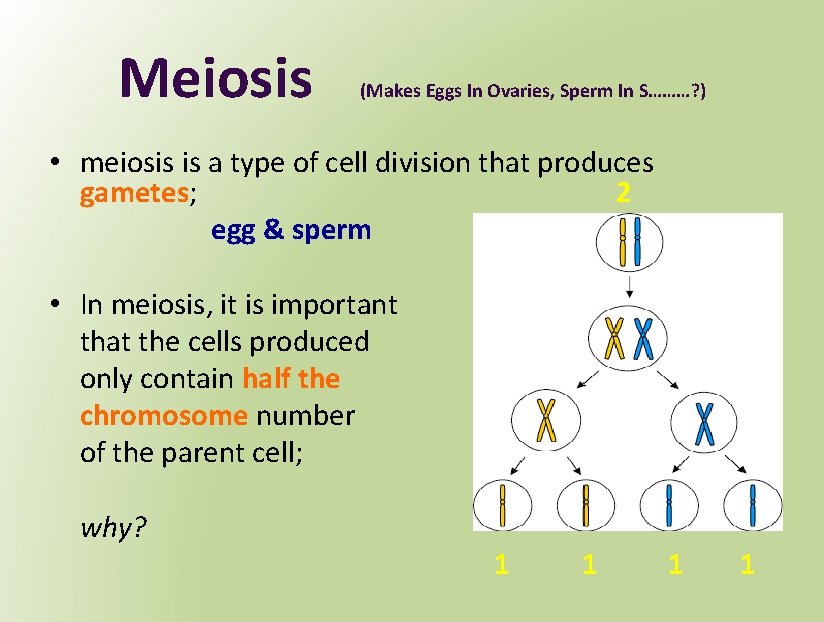
Meiosis (Makes Eggs In Ovaries, Sperm In S………? ) • meiosis is a type of cell division that produces gametes; 2 egg & sperm • In meiosis, it is important that the cells produced only contain half the chromosome number of the parent cell; why? 1 1
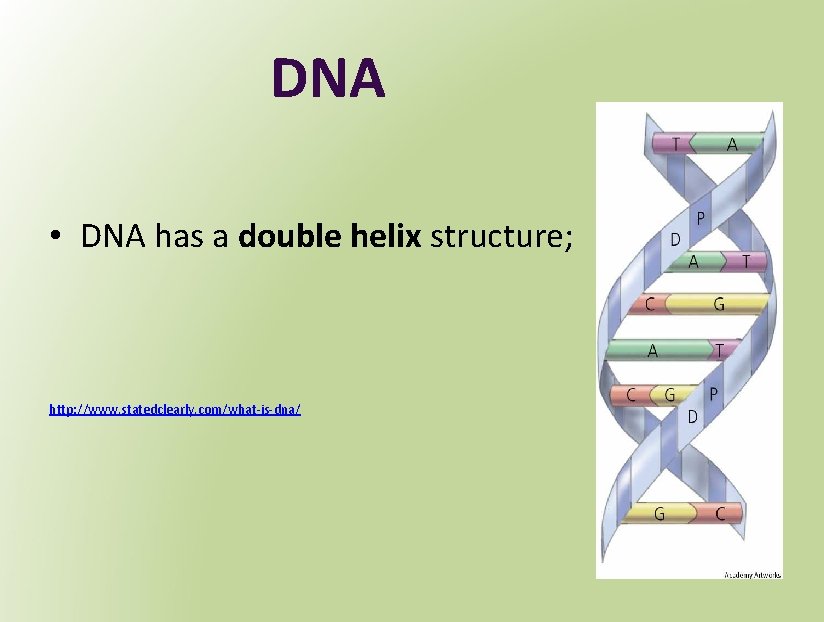
DNA • DNA has a double helix structure; http: //www. statedclearly. com/what-is-dna/
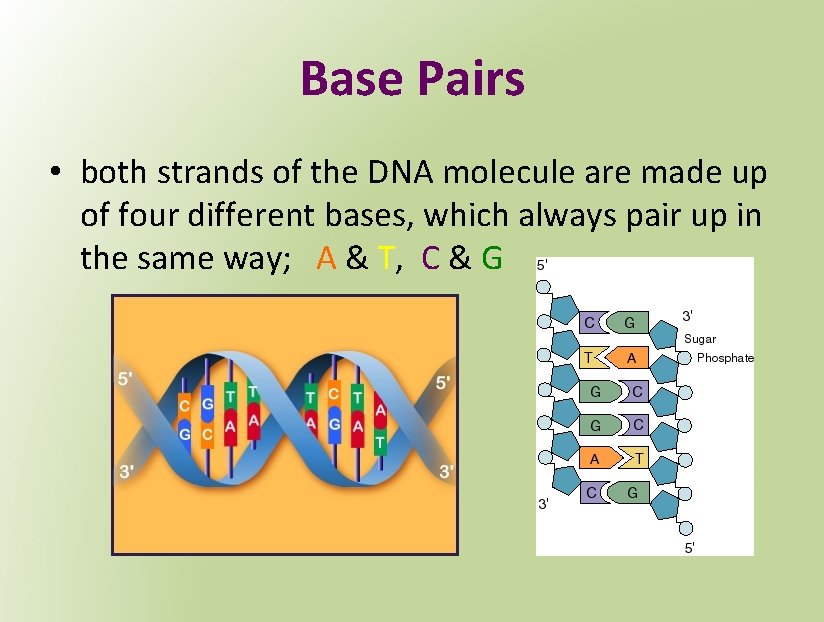
Base Pairs • both strands of the DNA molecule are made up of four different bases, which always pair up in the same way; A & T, C & G
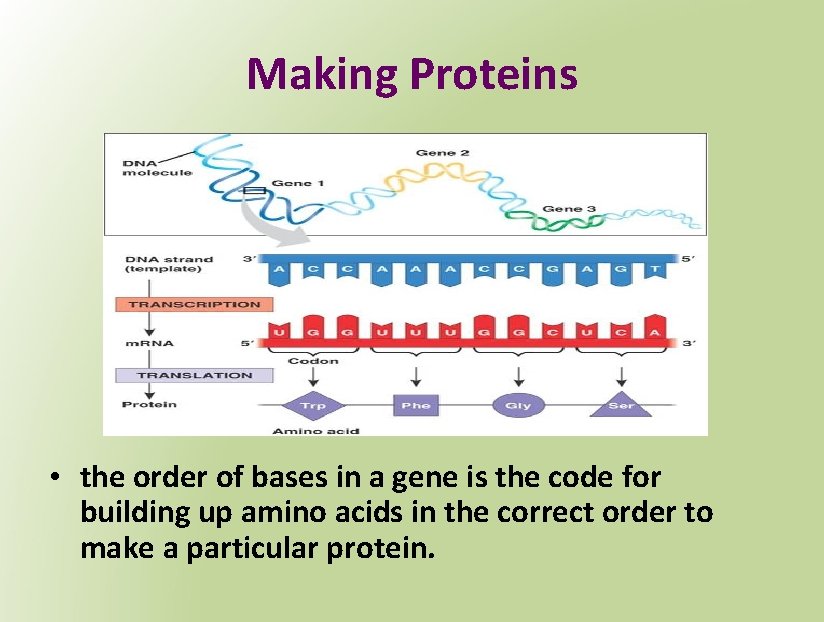
Making Proteins • the order of bases in a gene is the code for building up amino acids in the correct order to make a particular protein.
Genes code for Proteins • The genetic code is in the nucleus but proteins are produced in the cell cytoplasm • The genes (DNA) cannot leave the nucleus So how does it happen?
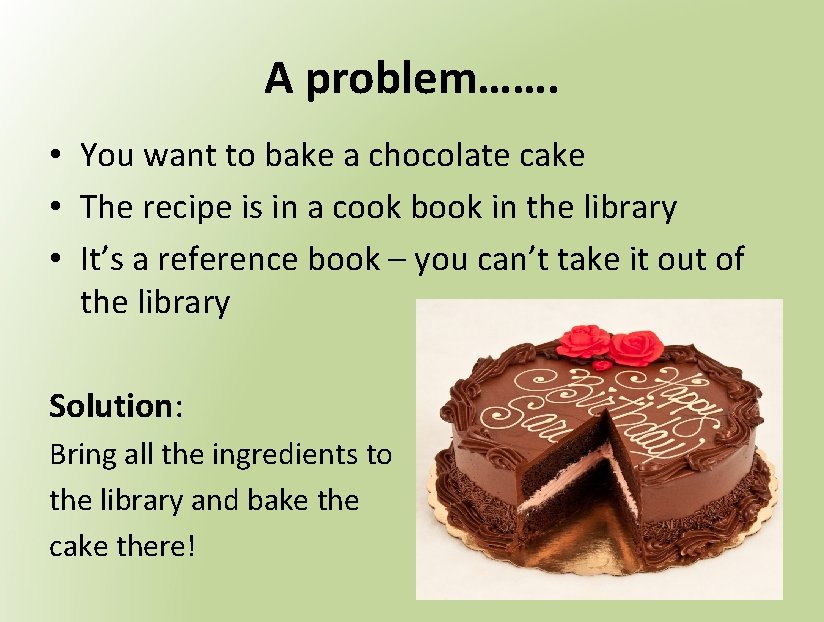
A problem……. • You want to bake a chocolate cake • The recipe is in a cook book in the library • It’s a reference book – you can’t take it out of the library Solution: Bring all the ingredients to the library and bake the cake there!
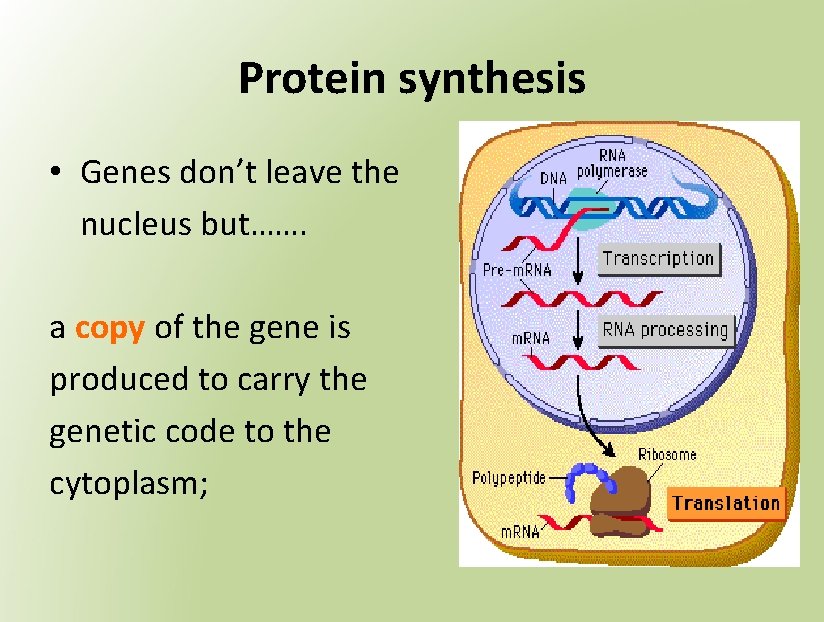
Protein synthesis • Genes don’t leave the nucleus but……. a copy of the gene is produced to carry the genetic code to the cytoplasm;
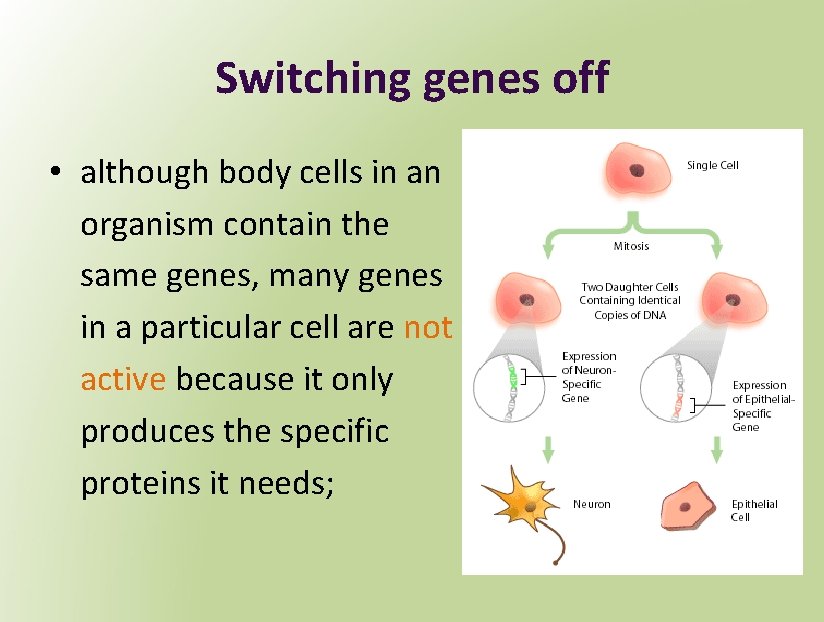
Switching genes off • although body cells in an organism contain the same genes, many genes in a particular cell are not active because it only produces the specific proteins it needs;
Stem cells • adult stem cells and embryonic stem cells have the potential to produce cells needed to replace damaged tissues
Ethics • ethical decisions need to be taken when using embryonic stem cells • this work is subject to Government regulation
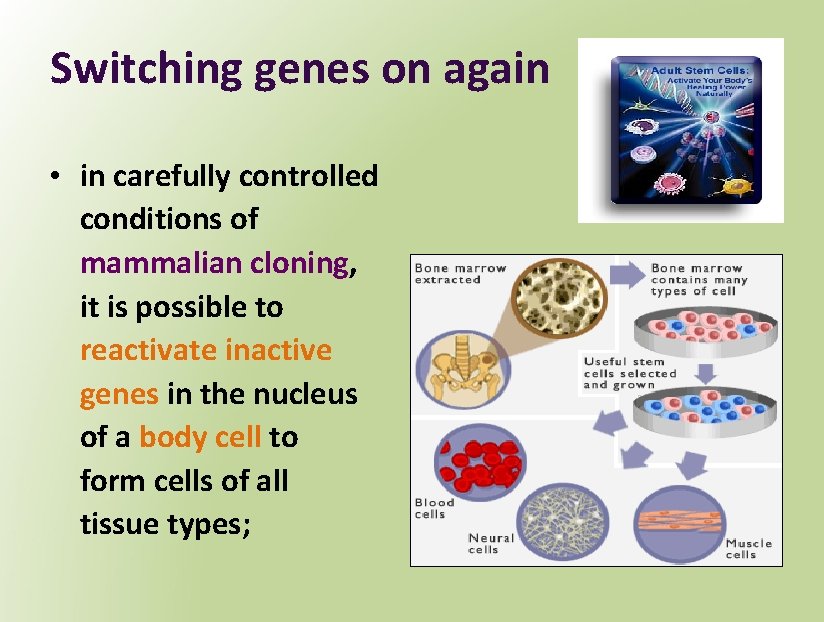
Switching genes on again • in carefully controlled conditions of mammalian cloning, it is possible to reactivate inactive genes in the nucleus of a body cell to form cells of all tissue types;
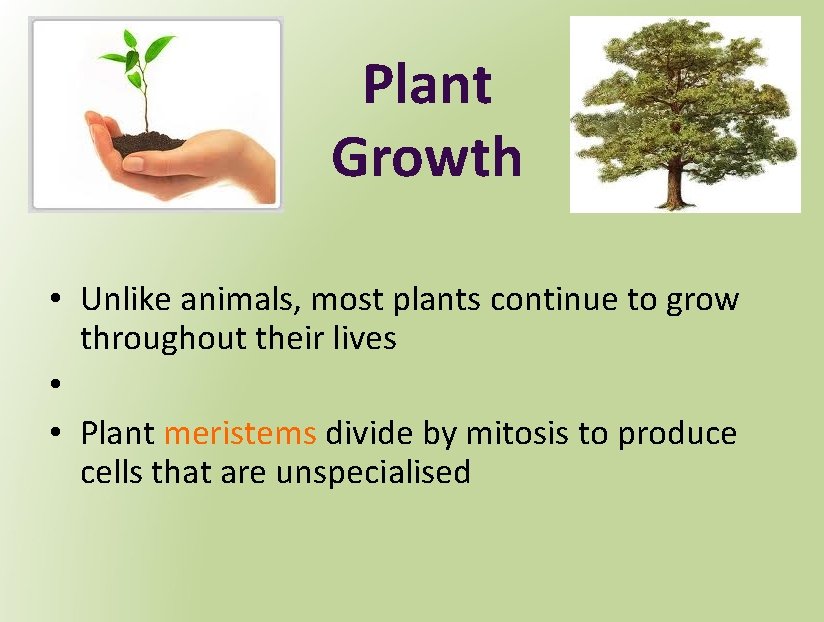
Plant Growth • Unlike animals, most plants continue to grow throughout their lives • • Plant meristems divide by mitosis to produce cells that are unspecialised
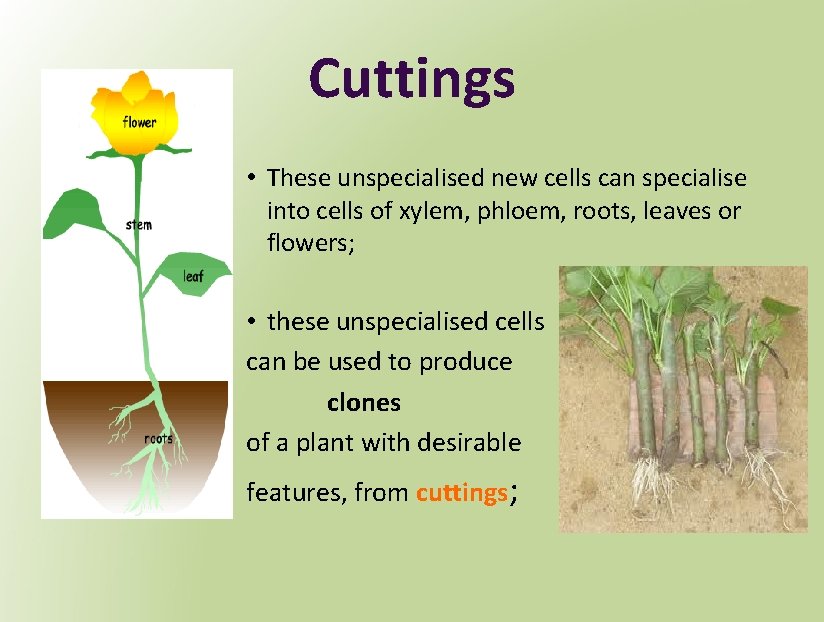
Cuttings • These unspecialised new cells can specialise into cells of xylem, phloem, roots, leaves or flowers; • these unspecialised cells can be used to produce clones of a plant with desirable features, from cuttings;
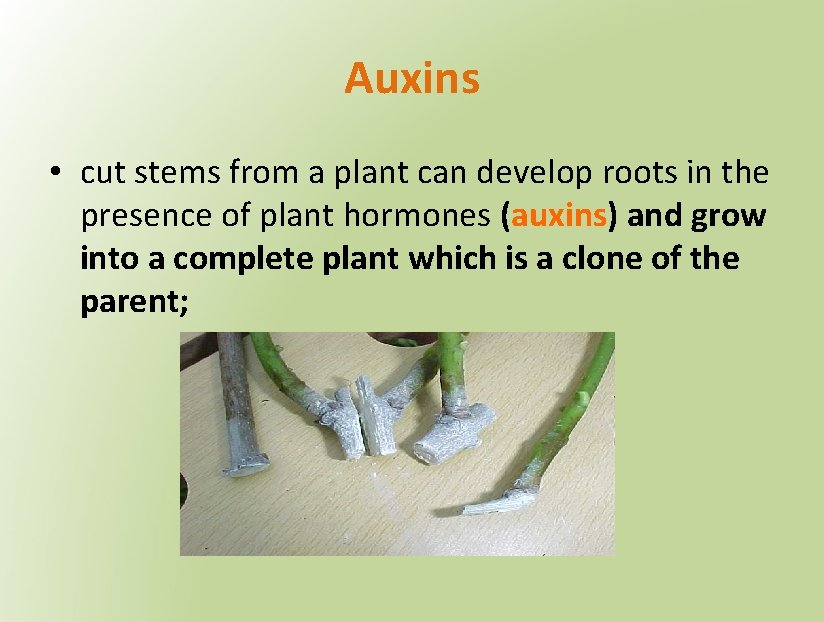
Auxins • cut stems from a plant can develop roots in the presence of plant hormones (auxins) and grow into a complete plant which is a clone of the parent;
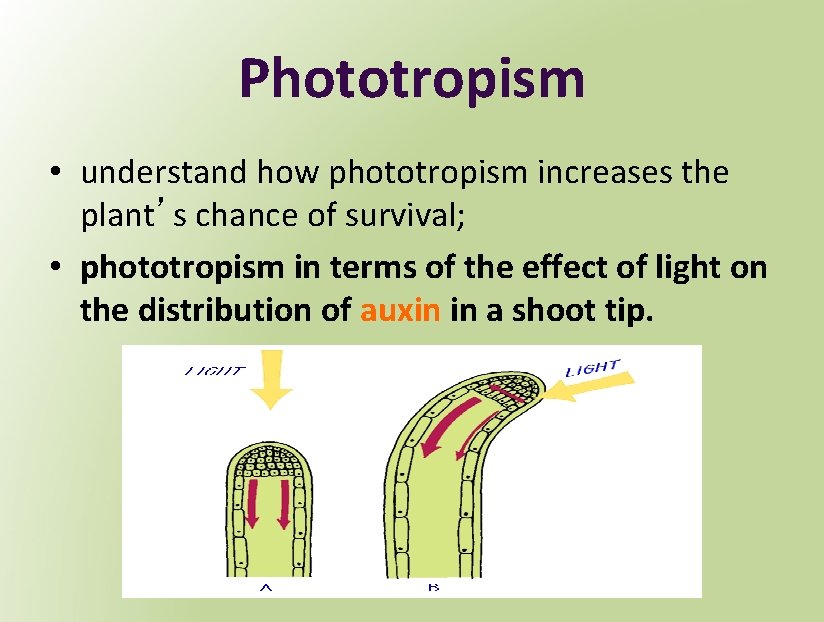
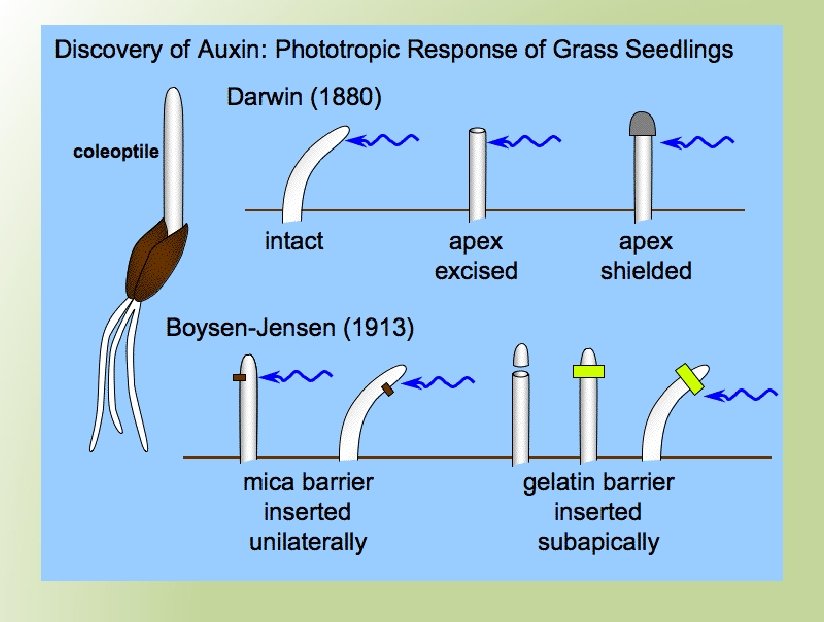
Phototropism • understand how phototropism increases the plant’s chance of survival; • phototropism in terms of the effect of light on the distribution of auxin in a shoot tip.
- Slides: 32