
B 5 content Homeostasis and Response Paper 2
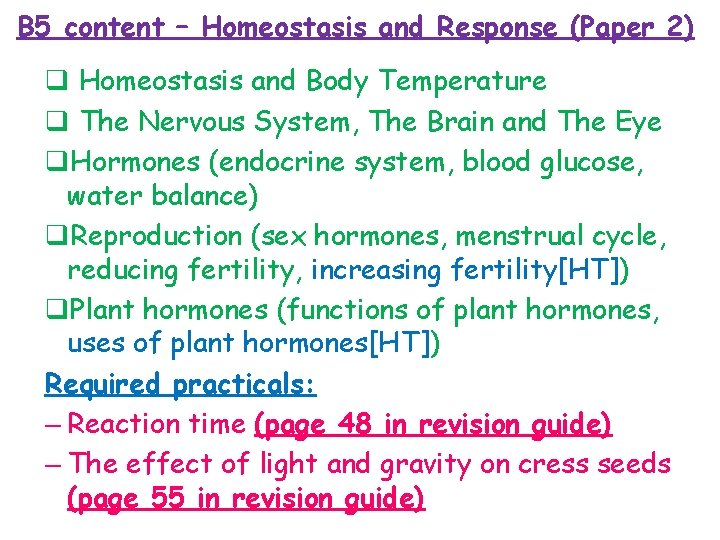
B 5 content – Homeostasis and Response (Paper 2) q Homeostasis and Body Temperature q The Nervous System, The Brain and The Eye q. Hormones (endocrine system, blood glucose, water balance) q. Reproduction (sex hormones, menstrual cycle, reducing fertility, increasing fertility[HT]) q. Plant hormones (functions of plant hormones, uses of plant hormones[HT]) Required practicals: – Reaction time (page 48 in revision guide) – The effect of light and gravity on cress seeds (page 55 in revision guide)
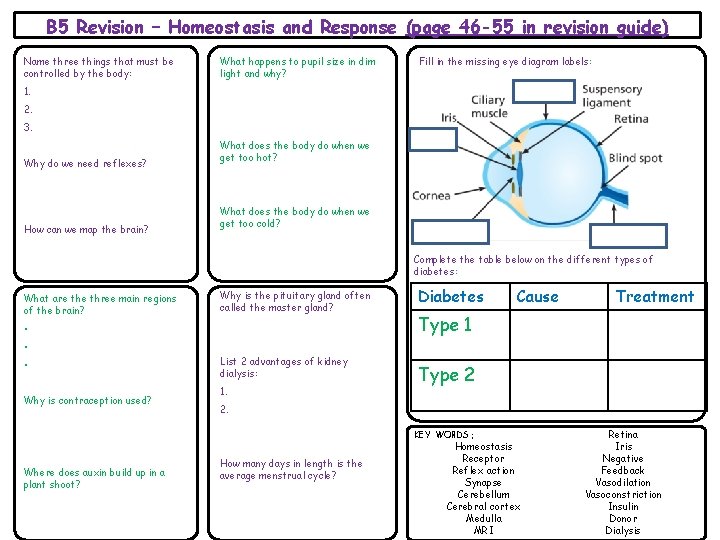
B 5 Revision – Homeostasis and Response (page 46 -55 in revision guide) Name three things that must be controlled by the body: What happens to pupil size in dim light and why? Fill in the missing eye diagram labels: 1. 2. 3. Why do we need reflexes? How can we map the brain? What does the body do when we get too hot? What does the body do when we get too cold? Complete the table below on the different types of diabetes: What are three main regions of the brain? Why is the pituitary gland often called the master gland? • Diabetes Cause Treatment Type 1 • • Why is contraception used? List 2 advantages of kidney dialysis: 1. Type 2 2. KEY WORDS: Where does auxin build up in a plant shoot? How many days in length is the average menstrual cycle? Homeostasis Receptor Reflex action Synapse Cerebellum Cerebral cortex Medulla MRI Retina Iris Negative Feedback Vasodilation Vasoconstriction Insulin Donor Dialysis
- Slides: 2