
B 115 Male Reproductive Anatomy Physiology Lesson Outline

B 115 Male Reproductive Anatomy & Physiology
Lesson Outline Male Reproductive Terms Male Reproduction Process Glands Semen Evaluation Abnormalities Fertilization
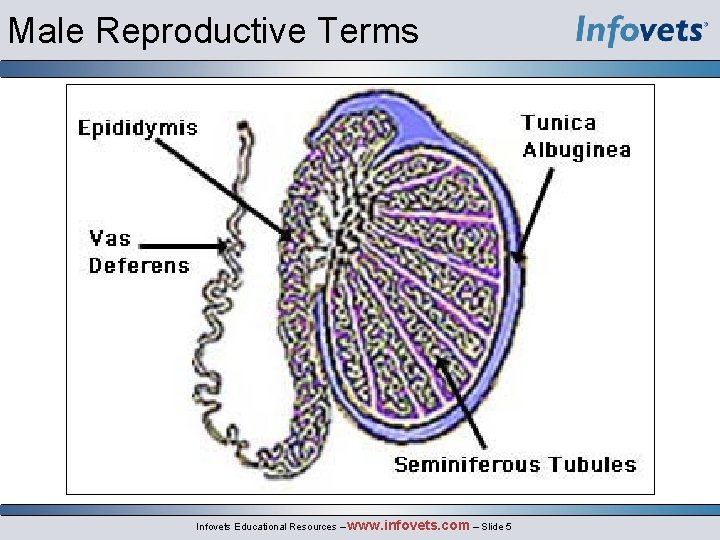
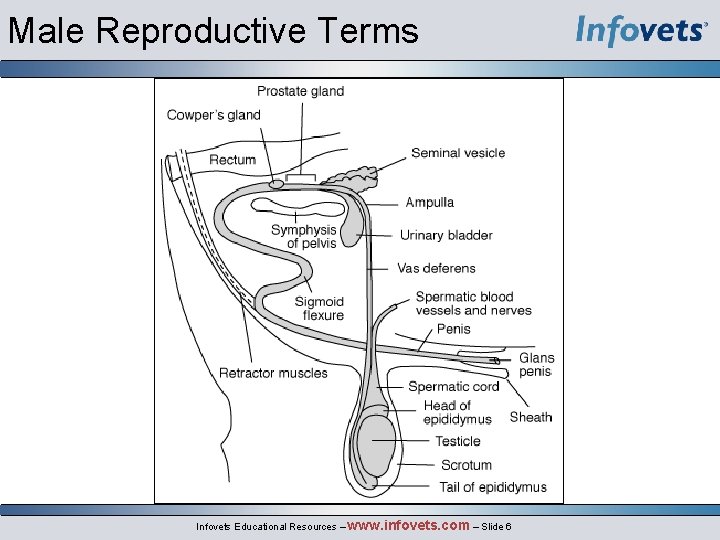
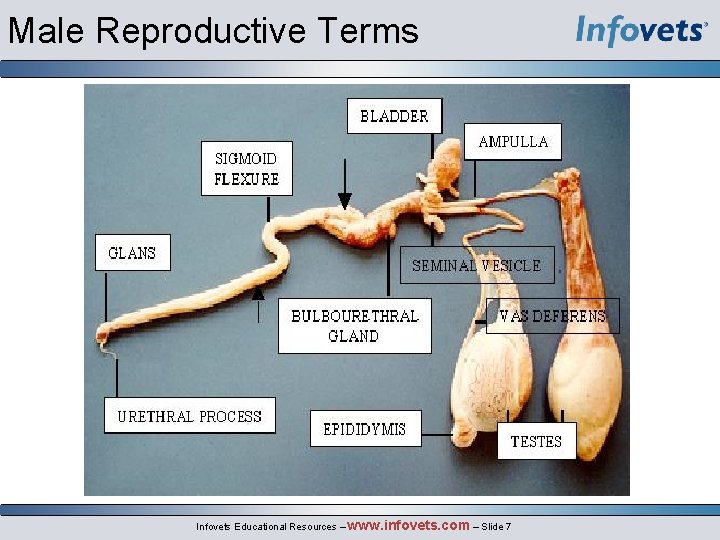
Male Reproductive Terms Testicle: The male sex gland that produces sperm. Spermatozoa: The male’s sex cell that is responsible for fertilization. Seminiferous Tubules: Small structures in the testicles that are responsible for spermatogenesis (sperm production). Semen: Sperm and additional fluids produced by several accessory glands. Infovets Educational Resources – www. infovets. com – Slide 3
Male Reproductive Terms Epididymis: Cord attached to the testicle that is responsible for sperm maturing and final development. Vas Deferens: Tube that connects the epididymis with the urethra. Sperm cells move through here to the urethra. Urethra: Tube that carries urine from the bladder Seminal Vesicles: Organs which contain fluids necessary for sperm survival. Prostate Gland: Gland that contributes seminal fluid necessary for healthy sperm. Infovets Educational Resources – www. infovets. com – Slide 4
Male Reproductive Terms Infovets Educational Resources – www. infovets. com – Slide 5
Male Reproductive Terms Infovets Educational Resources – www. infovets. com – Slide 6
Male Reproductive Terms Infovets Educational Resources – www. infovets. com – Slide 7
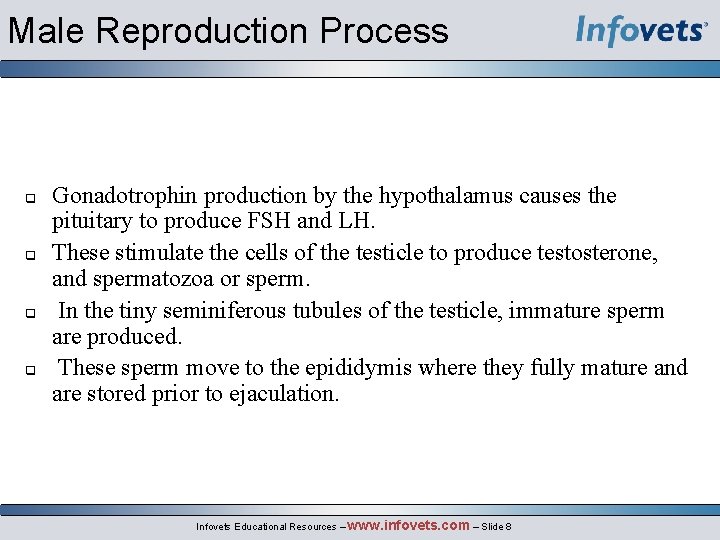
Male Reproduction Process Gonadotrophin production by the hypothalamus causes the pituitary to produce FSH and LH. These stimulate the cells of the testicle to produce testosterone, and spermatozoa or sperm. In the tiny seminiferous tubules of the testicle, immature sperm are produced. These sperm move to the epididymis where they fully mature and are stored prior to ejaculation. Infovets Educational Resources – www. infovets. com – Slide 8
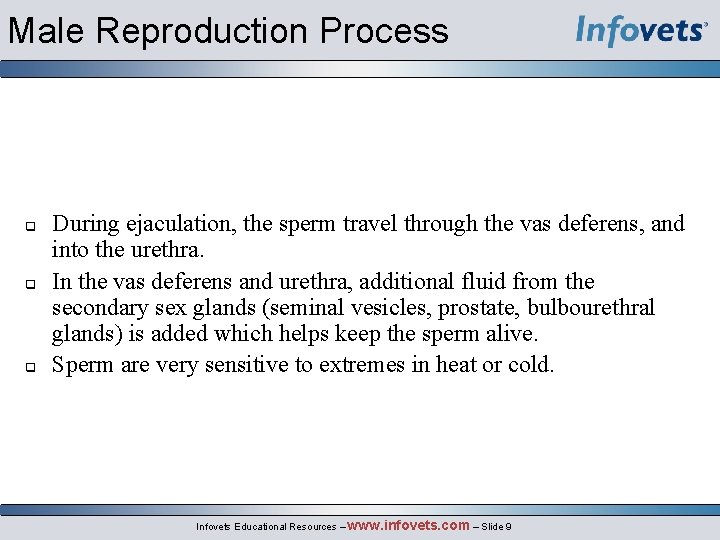
Male Reproduction Process During ejaculation, the sperm travel through the vas deferens, and into the urethra. In the vas deferens and urethra, additional fluid from the secondary sex glands (seminal vesicles, prostate, bulbourethral glands) is added which helps keep the sperm alive. Sperm are very sensitive to extremes in heat or cold. Infovets Educational Resources – www. infovets. com – Slide 9

Male Reproduction Process The scrotum is sack like structure designed to regulate the optimal temperature for sperm production by drawing the testicles closer to the body or away from the body. Animals that are sick, have a fever, or are fat (causing insulation for the sperm) often have lower numbers of healthy sperm. Severe cold, and stress, can also cause decreased numbers of normal sperm. It takes 60 days for sperm to completely mature so many reproductive problems in bulls may not show up for several months. Infovets Educational Resources – www. infovets. com – Slide 10
Male Reproductive Tract Glands Seminal Vesicles: Produce a fluid that protects and transports the sperm. Prostrate Gland: Located near the urethra and the bladder. Produces fluid that is mixed with seminal fluid. Cowper’s Gland: Produces fluid that cleans and neutralizes the urethra. Infovets Educational Resources – www. infovets. com – Slide 11
Semen Evaluation Semen is evaluated on three things: Concentration Morphology Motility Infovets Educational Resources – www. infovets. com – Slide 12
Concentration Number of sperm cells per milliliter Most important fertility Indicator Average ejaculate ranges from 4 to 6 milliliters and contains 6 to 8 billion sperm cells. Infovets Educational Resources – www. infovets. com – Slide 13
Mobility Microscope at 400 X 70% or more mobile cells at 40 degrees centigrade (104 F) Infovets Educational Resources – www. infovets. com – Slide 14
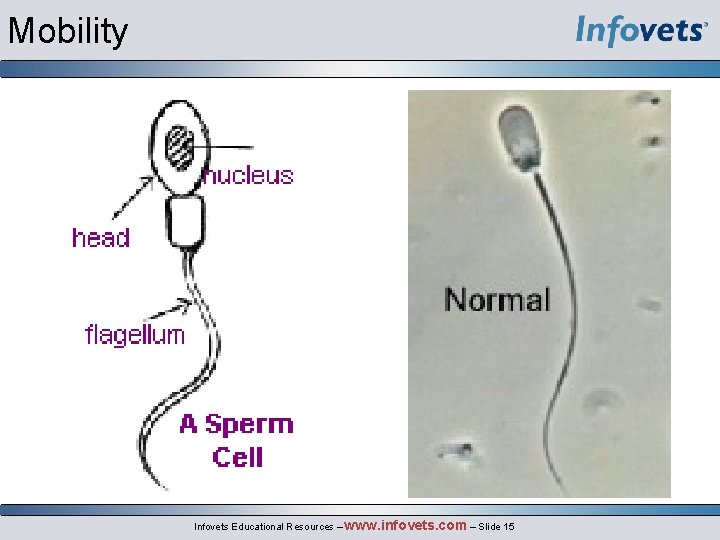
Mobility Infovets Educational Resources – www. infovets. com – Slide 15
Morphology Proportion of abnormal sperm Should not exceed 20% Most bulls produce some abnormalities Infovets Educational Resources – www. infovets. com – Slide 16
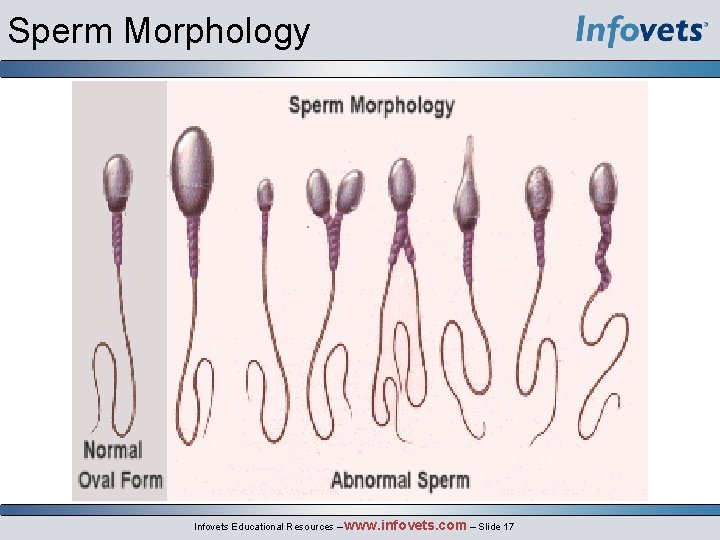
Sperm Morphology Infovets Educational Resources – www. infovets. com – Slide 17
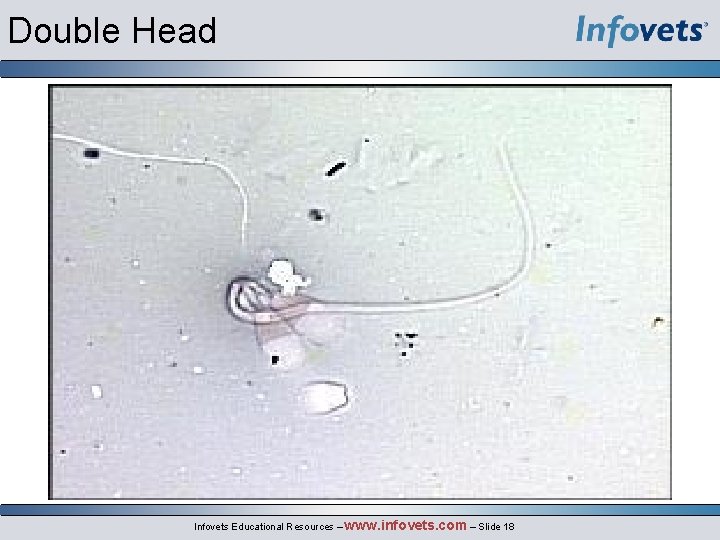
Double Head Infovets Educational Resources – www. infovets. com – Slide 18
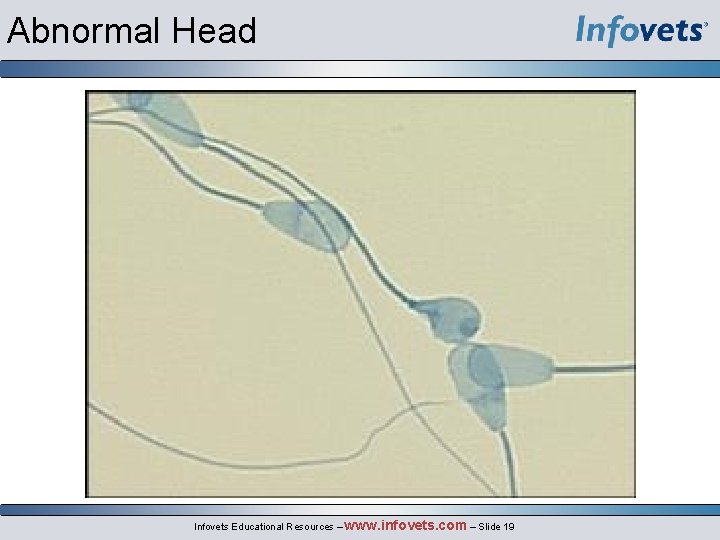
Abnormal Head Infovets Educational Resources – www. infovets. com – Slide 19
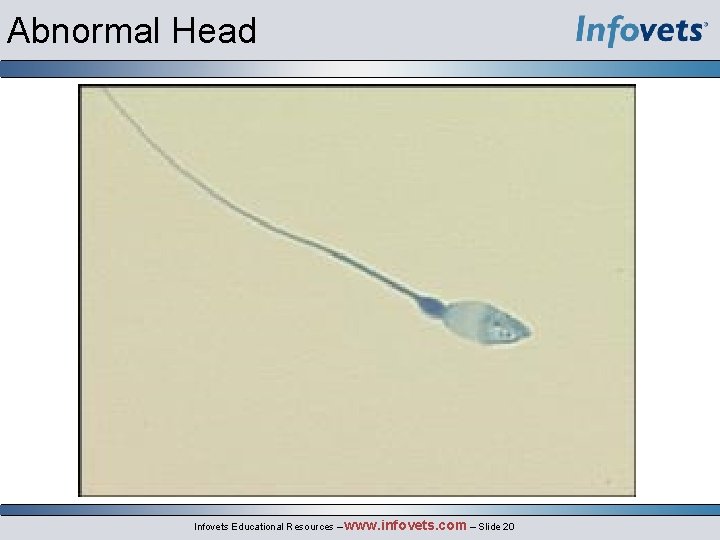
Abnormal Head Infovets Educational Resources – www. infovets. com – Slide 20
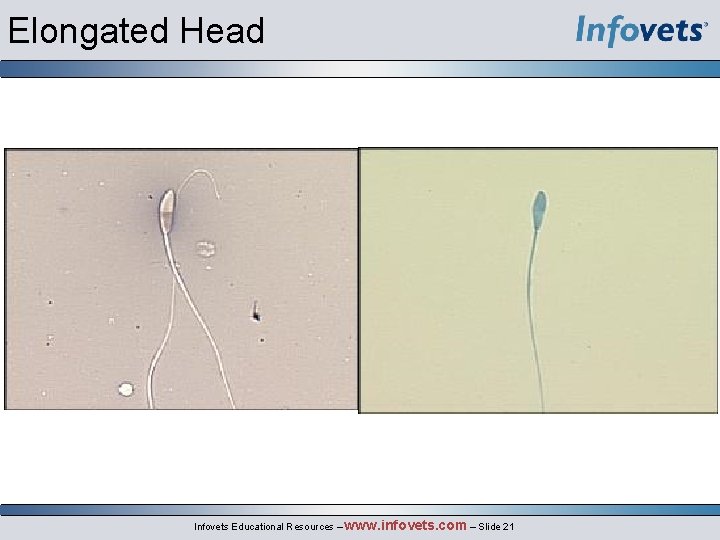
Elongated Head Infovets Educational Resources – www. infovets. com – Slide 21
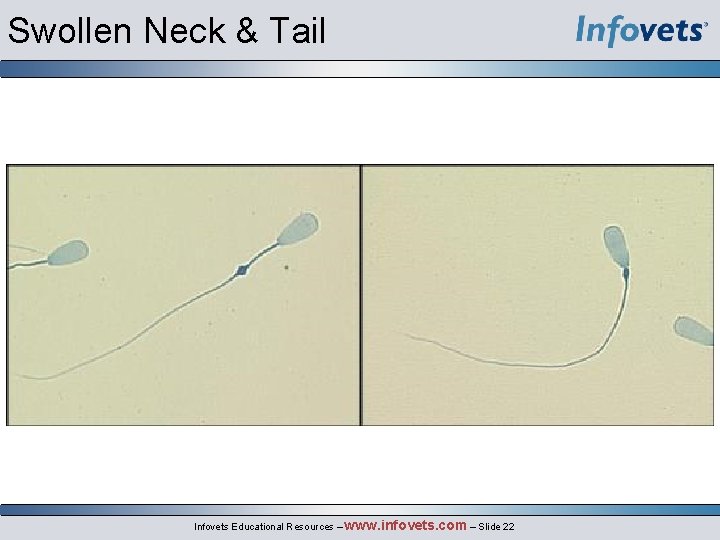
Swollen Neck & Tail Infovets Educational Resources – www. infovets. com – Slide 22
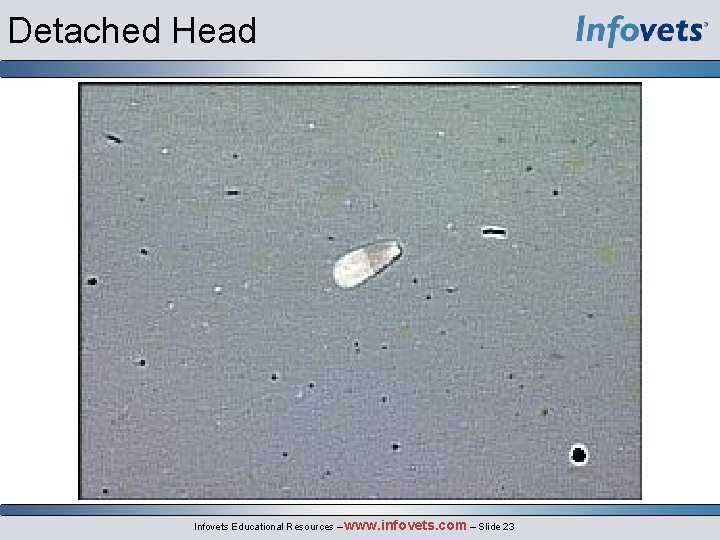
Detached Head Infovets Educational Resources – www. infovets. com – Slide 23
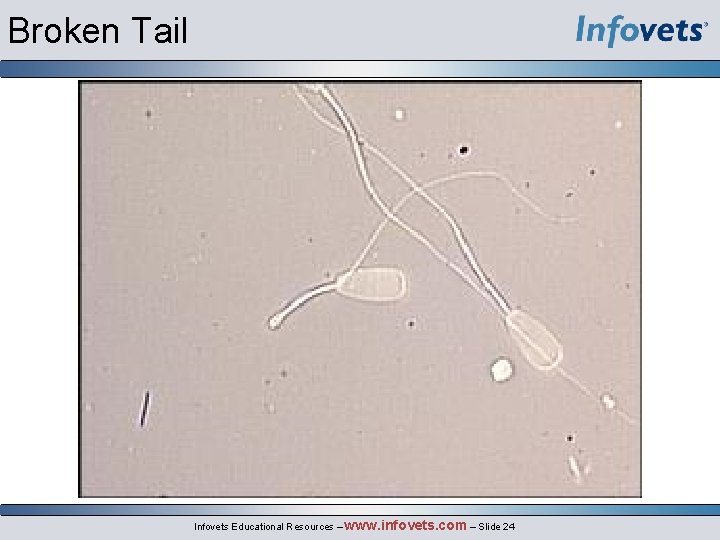
Broken Tail Infovets Educational Resources – www. infovets. com – Slide 24
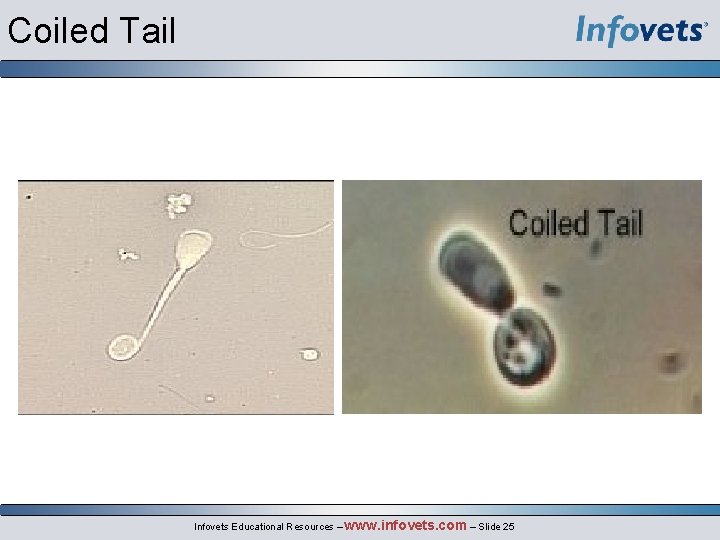
Coiled Tail Infovets Educational Resources – www. infovets. com – Slide 25
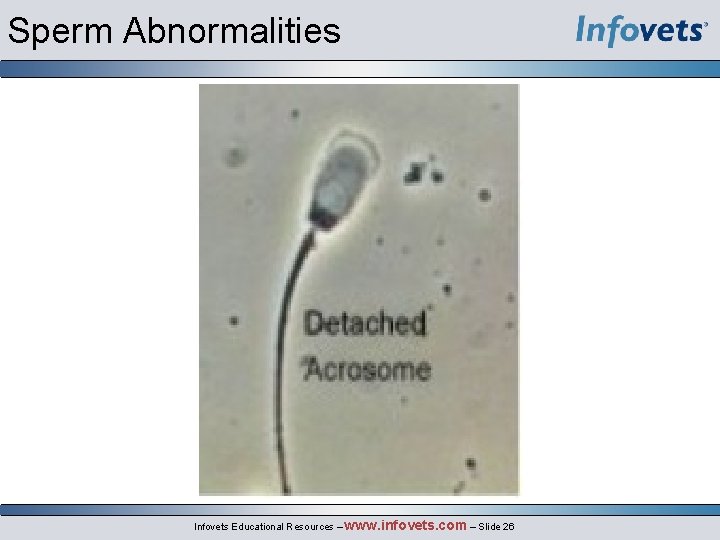
Sperm Abnormalities Infovets Educational Resources – www. infovets. com – Slide 26
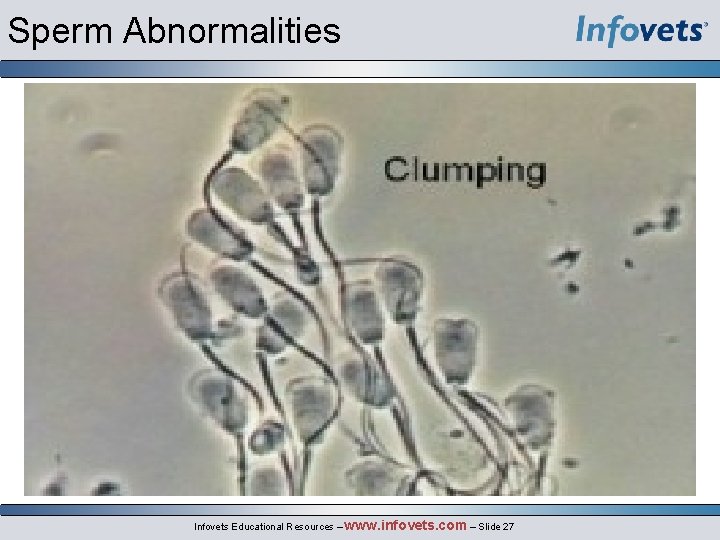
Sperm Abnormalities Infovets Educational Resources – www. infovets. com – Slide 27
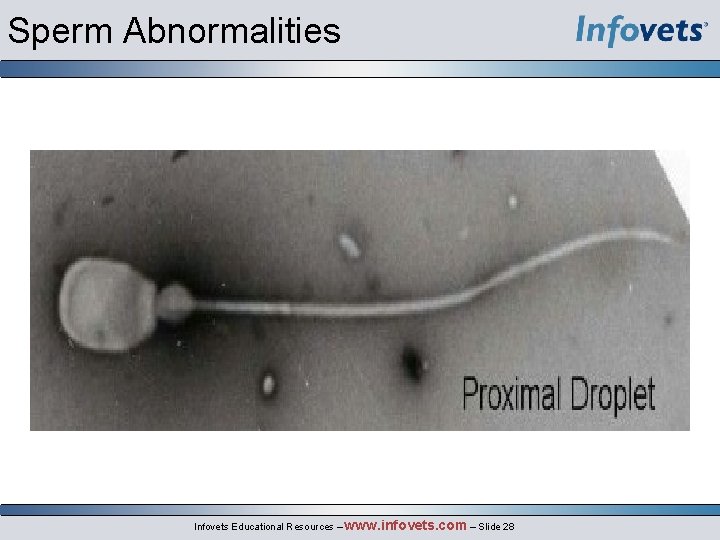
Sperm Abnormalities Infovets Educational Resources – www. infovets. com – Slide 28
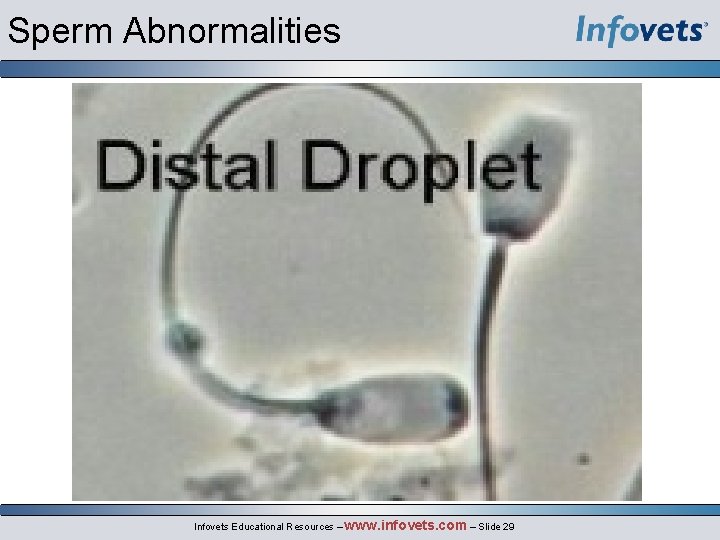
Sperm Abnormalities Infovets Educational Resources – www. infovets. com – Slide 29
Fertilization is the union of the sperm and the egg. Conditions for fertilization: Male and female compatibility Female in Heat Egg is mature Infovets Educational Resources – www. infovets. com – Slide 30
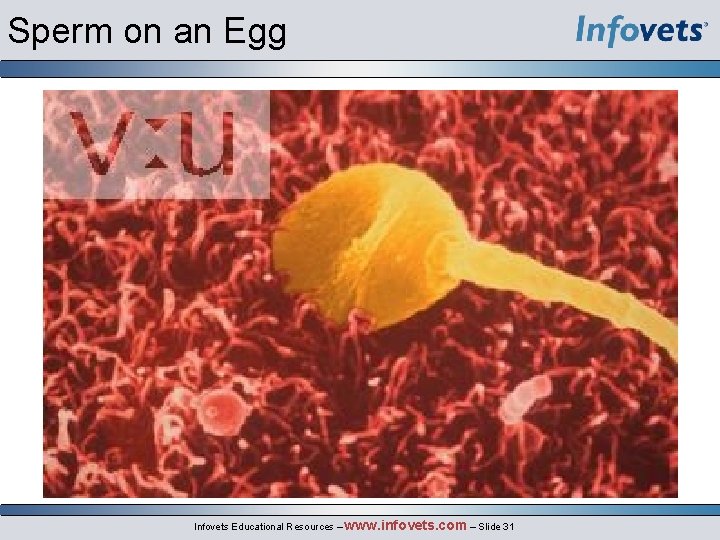
Sperm on an Egg Infovets Educational Resources – www. infovets. com – Slide 31
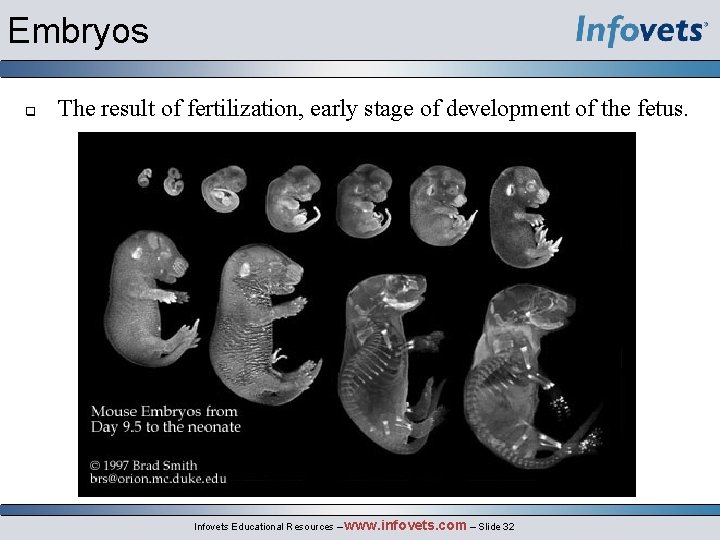
Embryos The result of fertilization, early stage of development of the fetus. Infovets Educational Resources – www. infovets. com – Slide 32
- Slides: 32