
Aztecs WHO WERE THE AZTECS The Aztecs were


- Slides: 34
Aztecs
WHO WERE THE AZTECS? The Aztecs were rich and powerful people from the valley of Mexico. They were farmers, warriors, traders, engineers, artists and sculptures. They ruled over a great empire in Central America until about five hundred years ago. At its height, the Aztec empire contained 200, 000 square kilometres of land 3 million people.
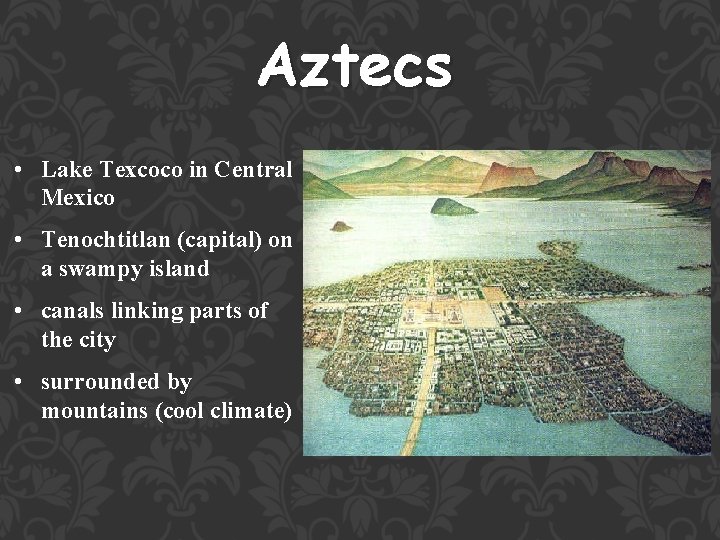
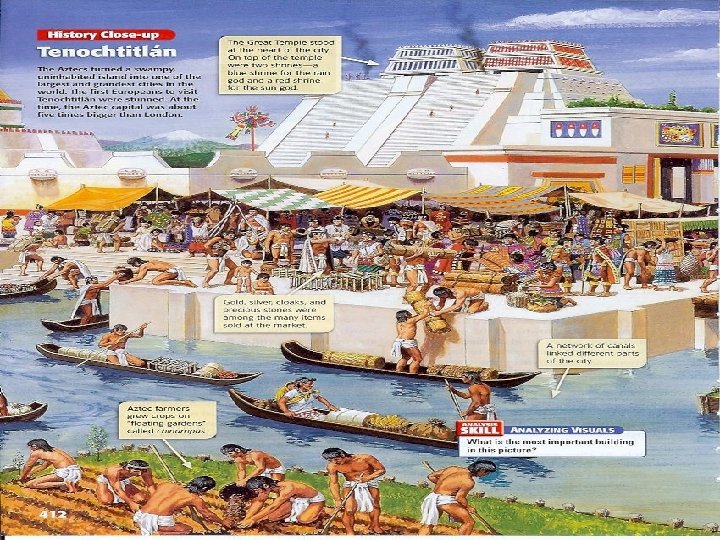
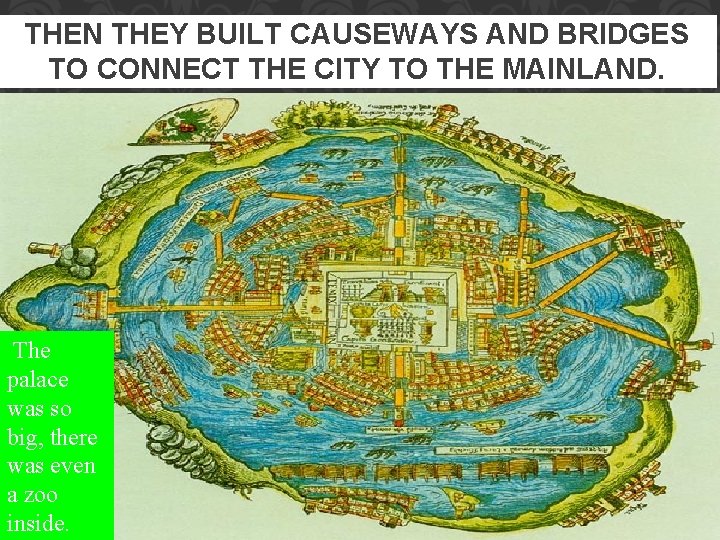
Aztecs • Lake Texcoco in Central Mexico • Tenochtitlan (capital) on a swampy island • canals linking parts of the city • surrounded by mountains (cool climate)
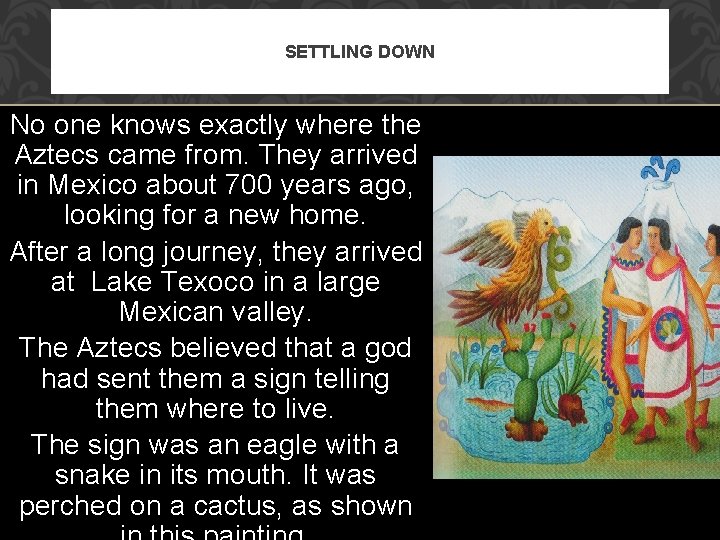
SETTLING DOWN No one knows exactly where the Aztecs came from. They arrived in Mexico about 700 years ago, looking for a new home. After a long journey, they arrived at Lake Texoco in a large Mexican valley. The Aztecs believed that a god had sent them a sign telling them where to live. The sign was an eagle with a snake in its mouth. It was perched on a cactus, as shown
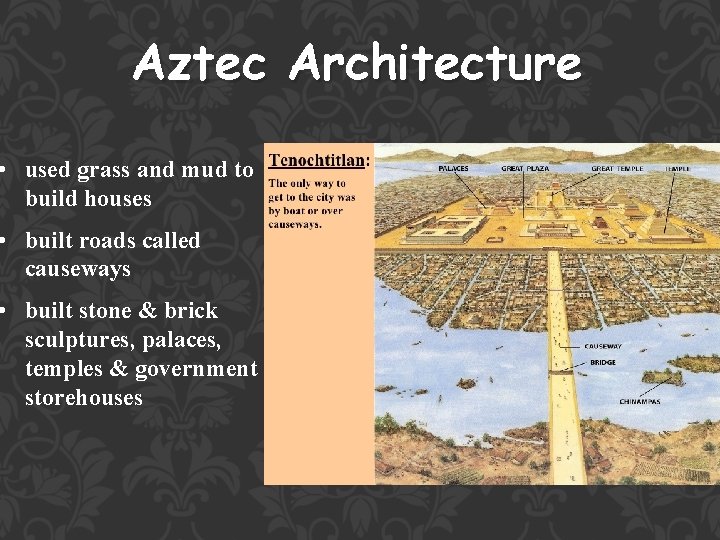
Aztec Architecture • used grass and mud to build houses • built roads called causeways • built stone & brick sculptures, palaces, temples & government storehouses
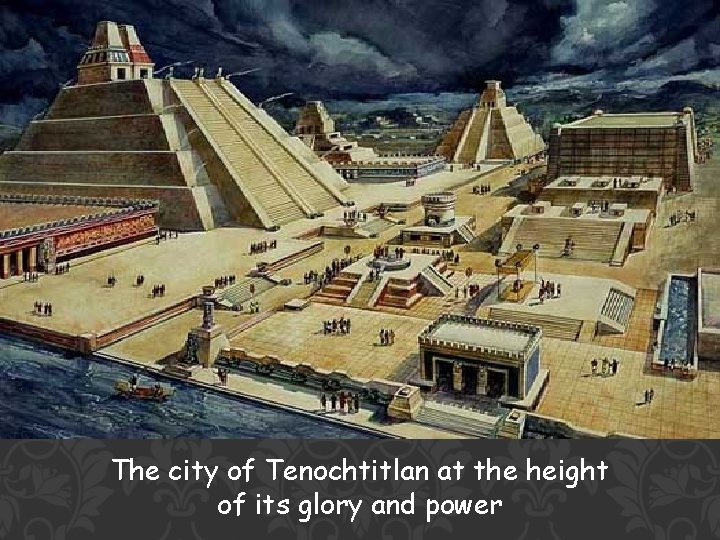
The city of Tenochtitlan at the height of its glory and power
THEN THEY BUILT CAUSEWAYS AND BRIDGES TO CONNECT THE CITY TO THE MAINLAND. The palace was so big, there was even a zoo inside.
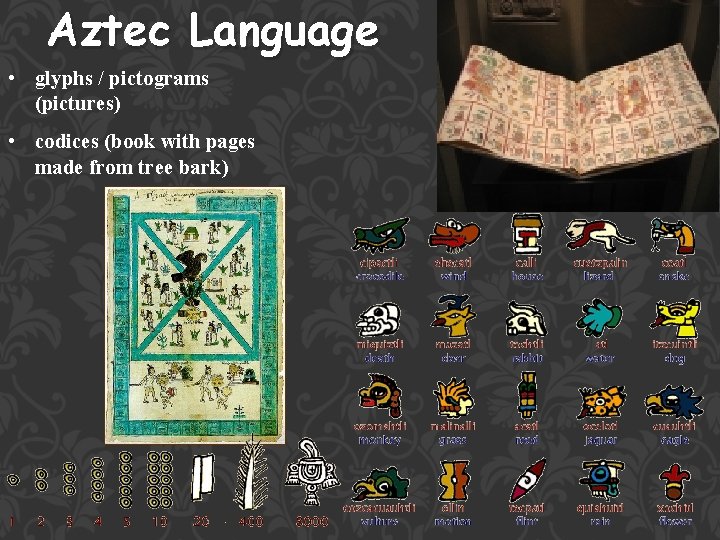
Aztec Language • glyphs / pictograms (pictures) • codices (book with pages made from tree bark)
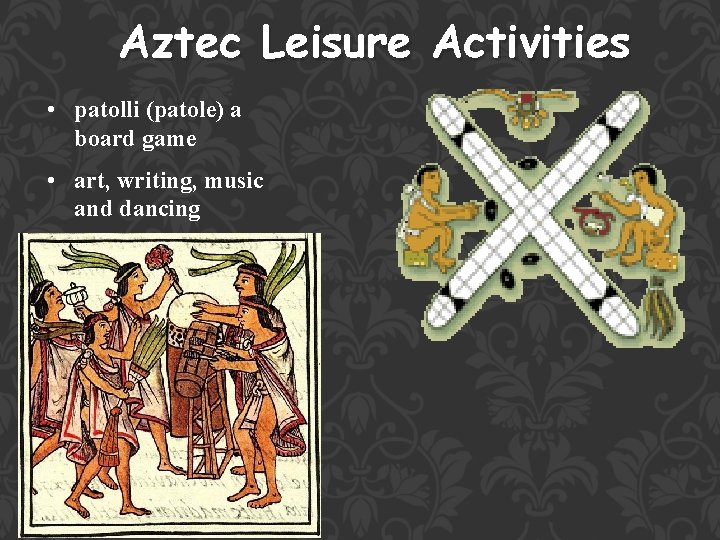
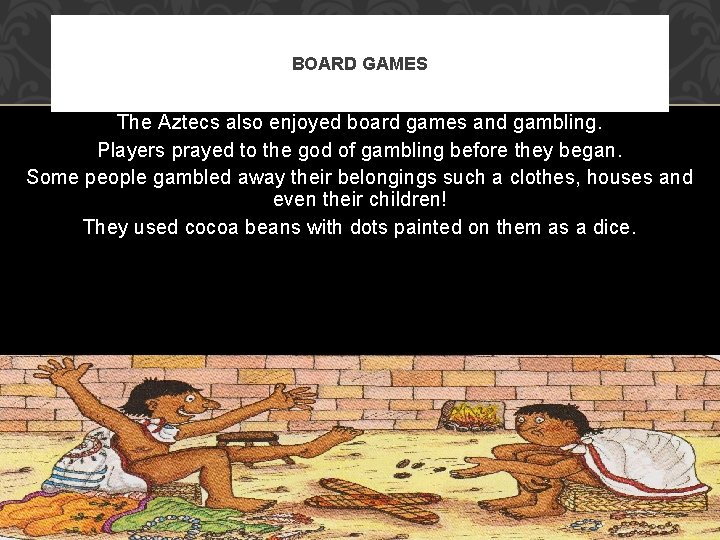
Aztec Leisure Activities • patolli (patole) a board game • art, writing, music and dancing
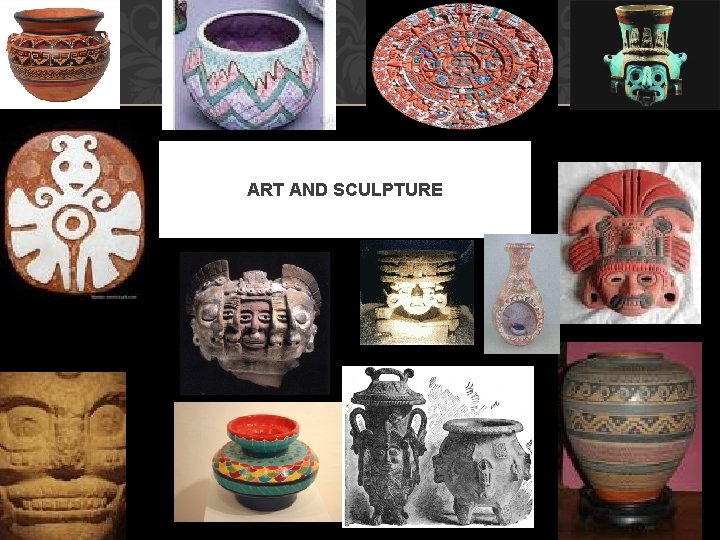
ART AND SCULPTURE
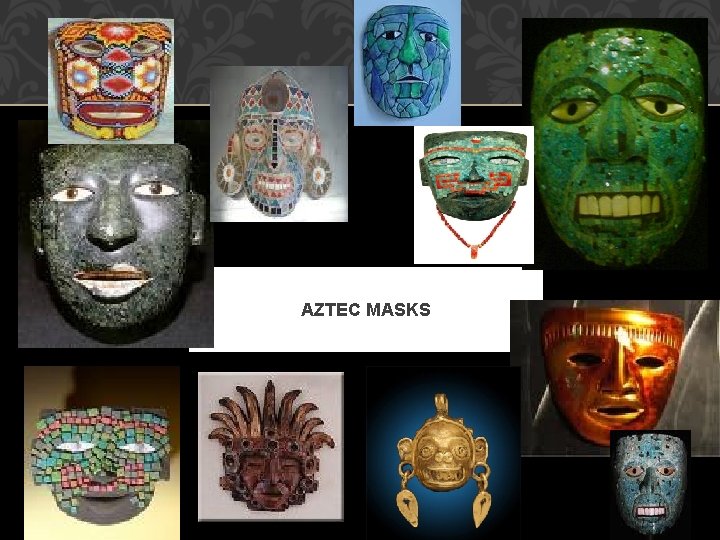
AZTEC MASKS
BOARD GAMES The Aztecs also enjoyed board games and gambling. Players prayed to the god of gambling before they began. Some people gambled away their belongings such a clothes, houses and even their children! They used cocoa beans with dots painted on them as a dice.
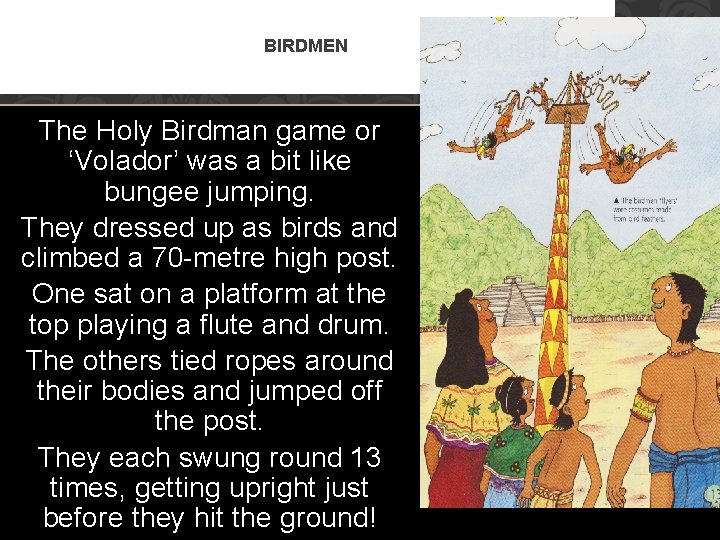
BIRDMEN The Holy Birdman game or ‘Volador’ was a bit like bungee jumping. They dressed up as birds and climbed a 70 -metre high post. One sat on a platform at the top playing a flute and drum. The others tied ropes around their bodies and jumped off the post. They each swung round 13 times, getting upright just before they hit the ground! Picture p 13 large aztec book
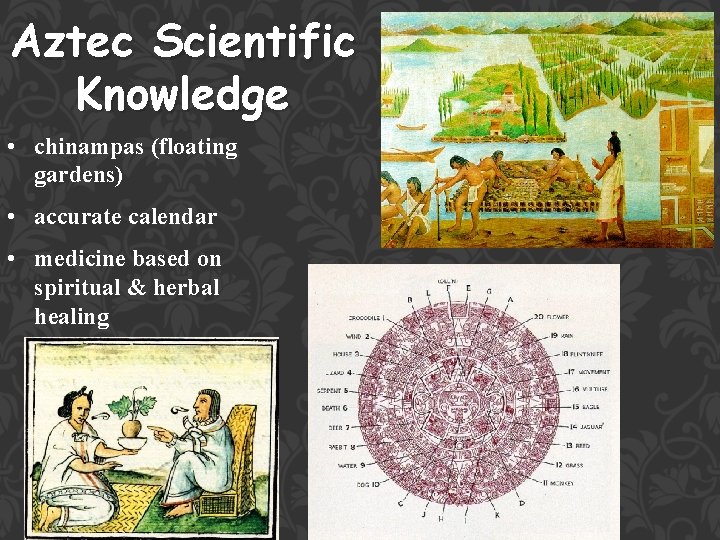
Aztec Scientific Knowledge • chinampas (floating gardens) • accurate calendar • medicine based on spiritual & herbal healing
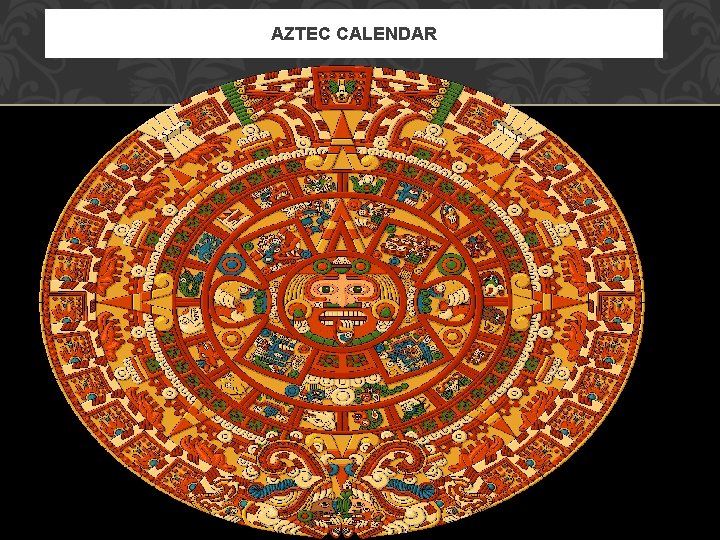
AZTEC CALENDAR
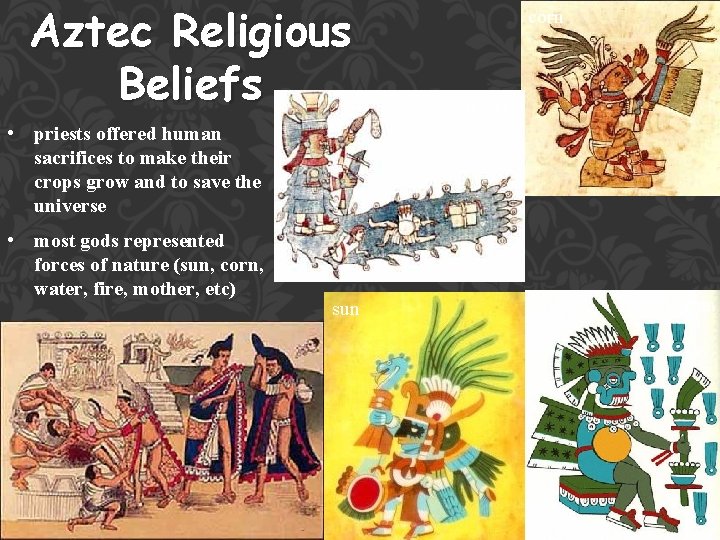
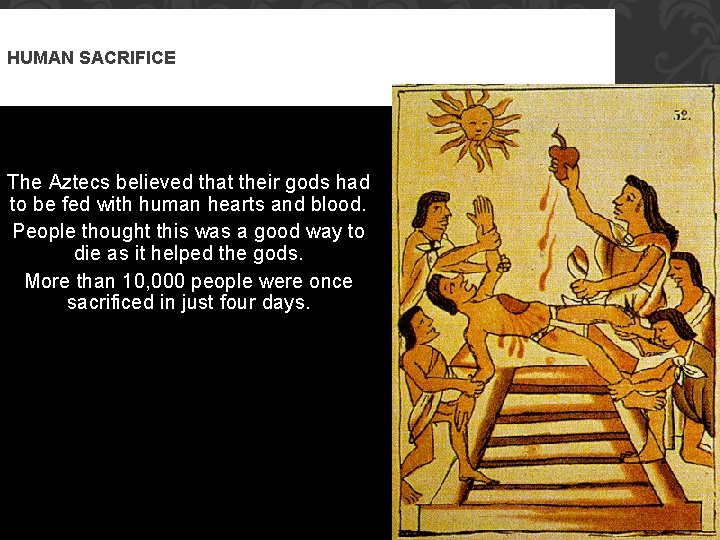
Aztec Religious Beliefs corn water • priests offered human sacrifices to make their crops grow and to save the universe • most gods represented forces of nature (sun, corn, water, fire, mother, etc) sun rain
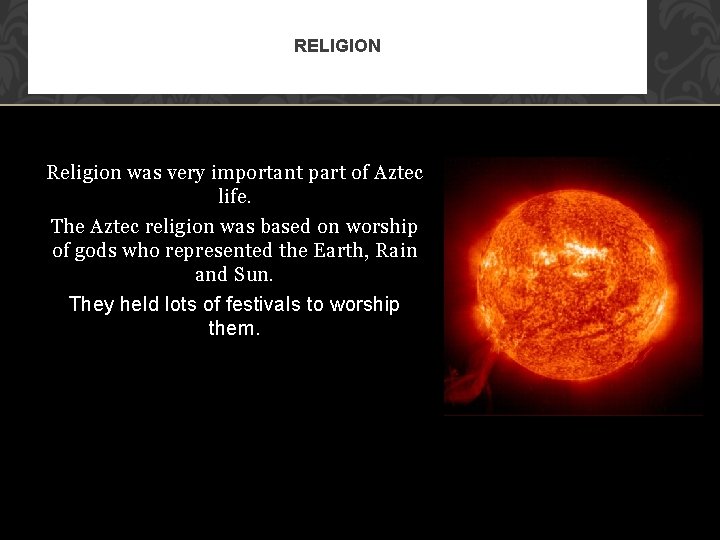
RELIGION Religion was very important part of Aztec life. The Aztec religion was based on worship of gods who represented the Earth, Rain and Sun. They held lots of festivals to worship them.
HUMAN SACRIFICE The Aztecs believed that their gods had to be fed with human hearts and blood. People thought this was a good way to die as it helped the gods. More than 10, 000 people were once sacrificed in just four days.
AZTEC GODS Chalchiuhtlicue – goddess of the lakes and streams Chantico – goddess of the hearth Chicomecoatl – goddess of maize Coatlicue – goddess for the pain of life Huehuetectim - god of fire Huitzilopochtli – god of war, sun and the nation Mictlantecuhtl – god of the dead Quetzalcoatl - god of knowledge, creation, priesthood, and wind Tezcatlipoca – god of magic, war and death Tezcatlipoca – god of speech and language Tlaloc – god of rain Tloque Nahuaque - Lord of everywhere, the one supreme force, bothmale and female Xipe Totec – god of spring and new life, god of suffering Xochipilli - prince of flowers, god of dawn, dance and love
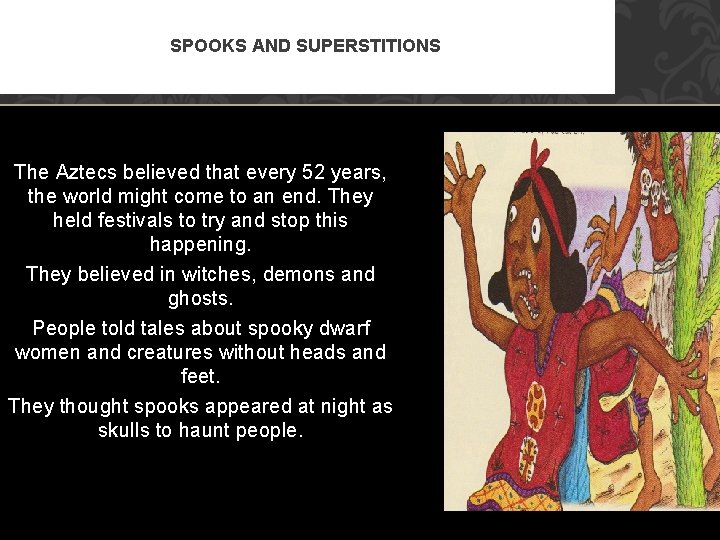
SPOOKS AND SUPERSTITIONS The Aztecs believed that every 52 years, the world might come to an end. They held festivals to try and stop this happening. They believed in witches, demons and ghosts. People told tales about spooky dwarf women and creatures without heads and feet. They thought spooks appeared at night as skulls to haunt people.
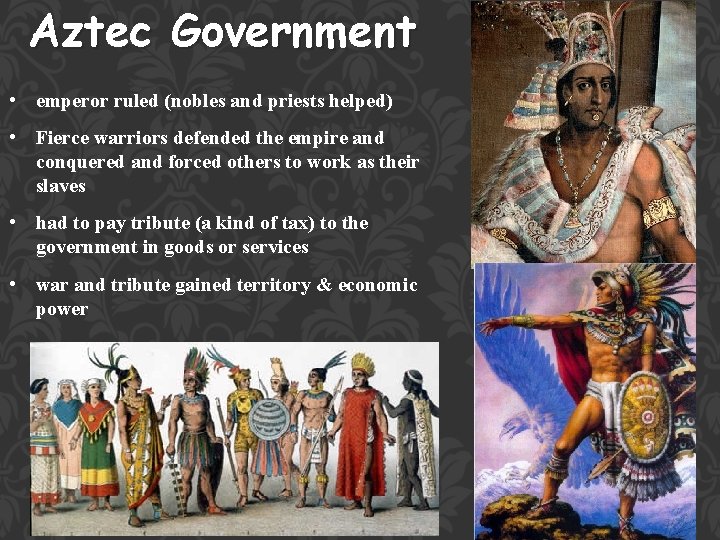
Aztec Government • emperor ruled (nobles and priests helped) • Fierce warriors defended the empire and conquered and forced others to work as their slaves • had to pay tribute (a kind of tax) to the government in goods or services • war and tribute gained territory & economic power
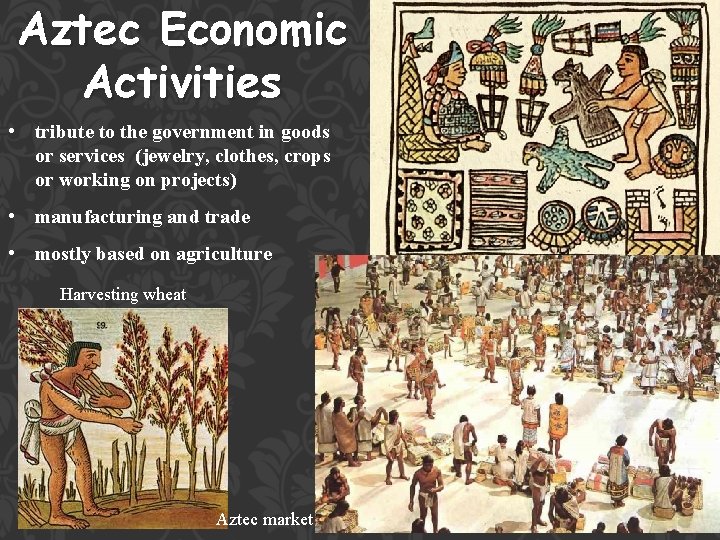
Aztec Economic Activities • tribute to the government in goods or services (jewelry, clothes, crops or working on projects) • manufacturing and trade • mostly based on agriculture Harvesting wheat Aztec market
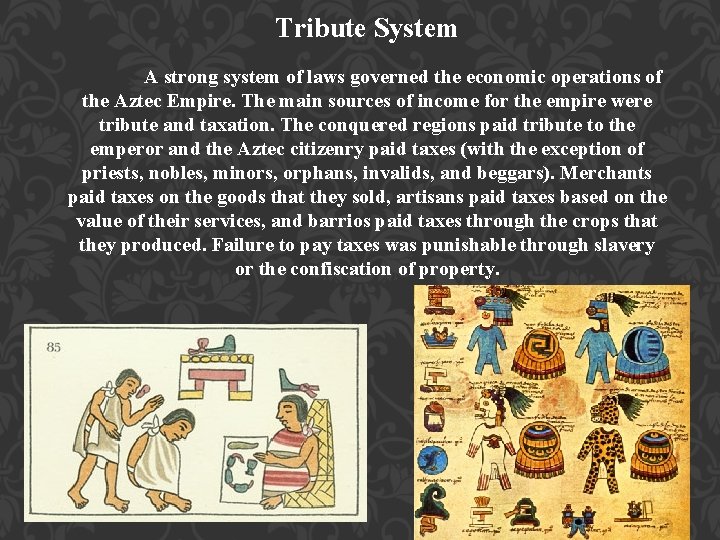
Tribute System A strong system of laws governed the economic operations of the Aztec Empire. The main sources of income for the empire were tribute and taxation. The conquered regions paid tribute to the emperor and the Aztec citizenry paid taxes (with the exception of priests, nobles, minors, orphans, invalids, and beggars). Merchants paid taxes on the goods that they sold, artisans paid taxes based on the value of their services, and barrios paid taxes through the crops that they produced. Failure to pay taxes was punishable through slavery or the confiscation of property.
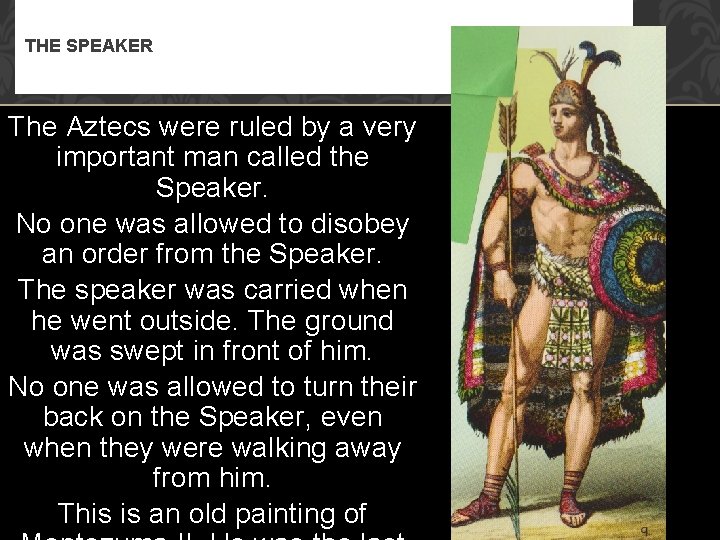
THE SPEAKER The Aztecs were ruled by a very important man called the Speaker. No one was allowed to disobey an order from the Speaker. The speaker was carried when he went outside. The ground was swept in front of him. No one was allowed to turn their back on the Speaker, even when they were walking away from him. This is an old painting of Insert picture p 9 Aztec book.
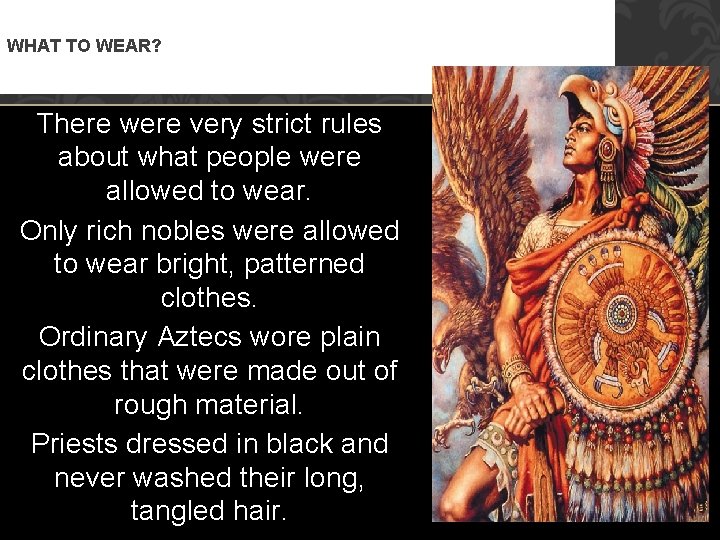
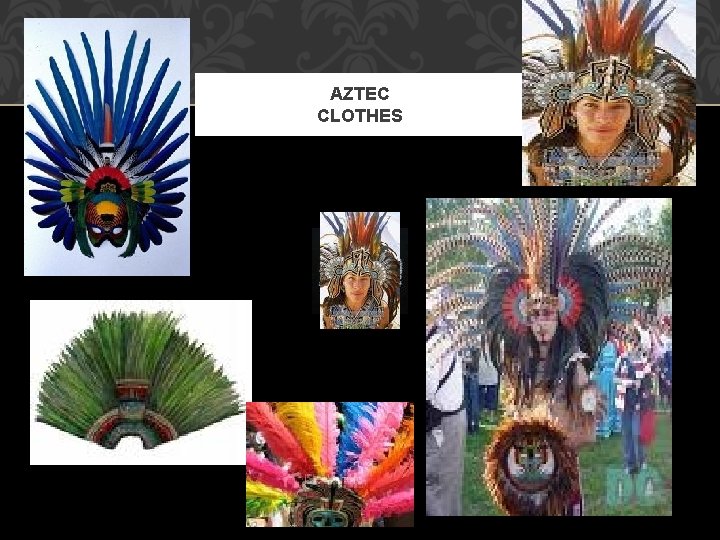
WHAT TO WEAR? There were very strict rules about what people were allowed to wear. Only rich nobles were allowed to wear bright, patterned clothes. Ordinary Aztecs wore plain clothes that were made out of rough material. Priests dressed in black and never washed their long, tangled hair. Insert p 11
AZTEC CLOTHES
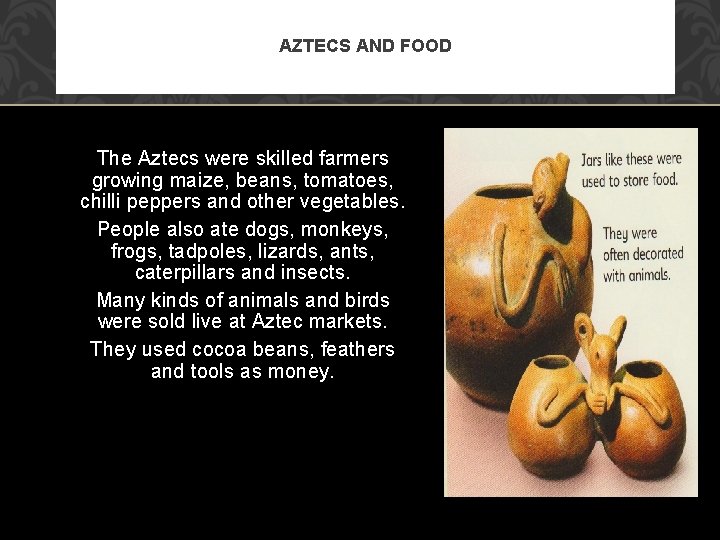
AZTECS AND FOOD The Aztecs were skilled farmers growing maize, beans, tomatoes, chilli peppers and other vegetables. People also ate dogs, monkeys, frogs, tadpoles, lizards, ants, caterpillars and insects. Many kinds of animals and birds were sold live at Aztec markets. They used cocoa beans, feathers and tools as money.
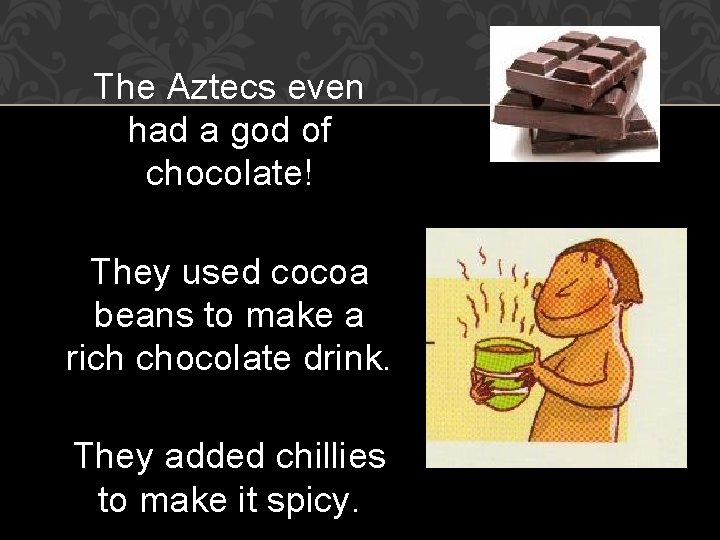
The Aztecs even had a god of chocolate! They used cocoa beans to make a rich chocolate drink. They added chillies to make it spicy.
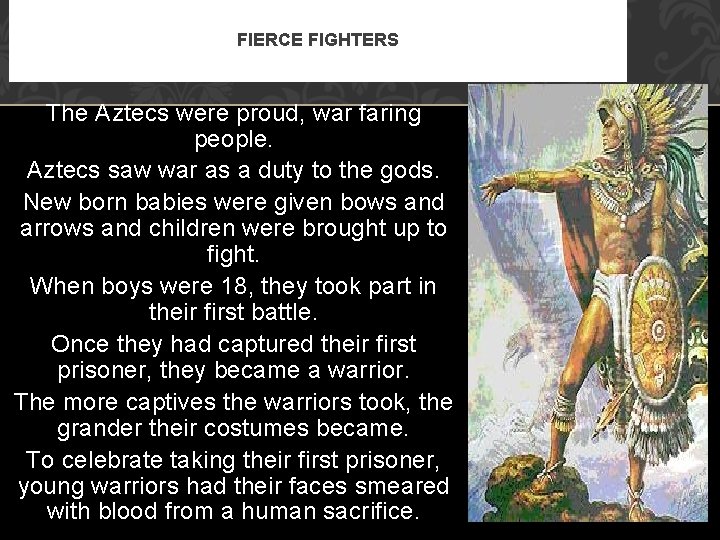
FIERCE FIGHTERS The Aztecs were proud, war faring people. Aztecs saw war as a duty to the gods. New born babies were given bows and arrows and children were brought up to fight. When boys were 18, they took part in their first battle. Once they had captured their first prisoner, they became a warrior. The more captives the warriors took, the grander their costumes became. To celebrate taking their first prisoner, young warriors had their faces smeared with blood from a human sacrifice.
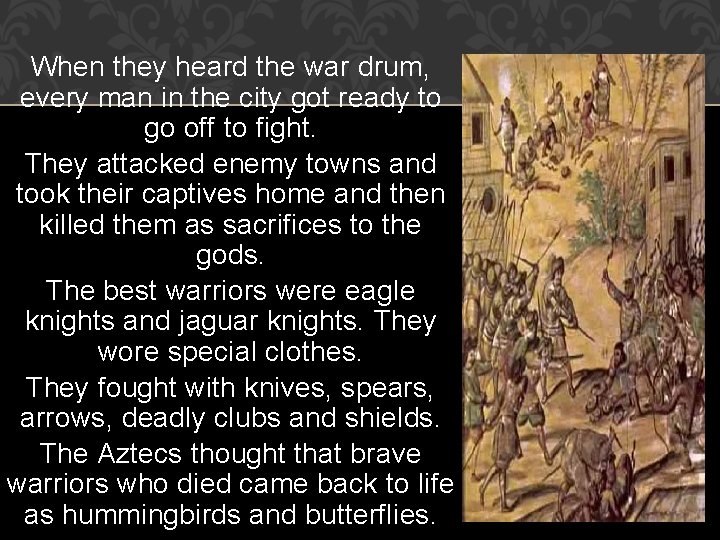
When they heard the war drum, every man in the city got ready to go off to fight. They attacked enemy towns and took their captives home and then killed them as sacrifices to the gods. The best warriors were eagle knights and jaguar knights. They wore special clothes. They fought with knives, spears, arrows, deadly clubs and shields. The Aztecs thought that brave warriors who died came back to life as hummingbirds and butterflies.
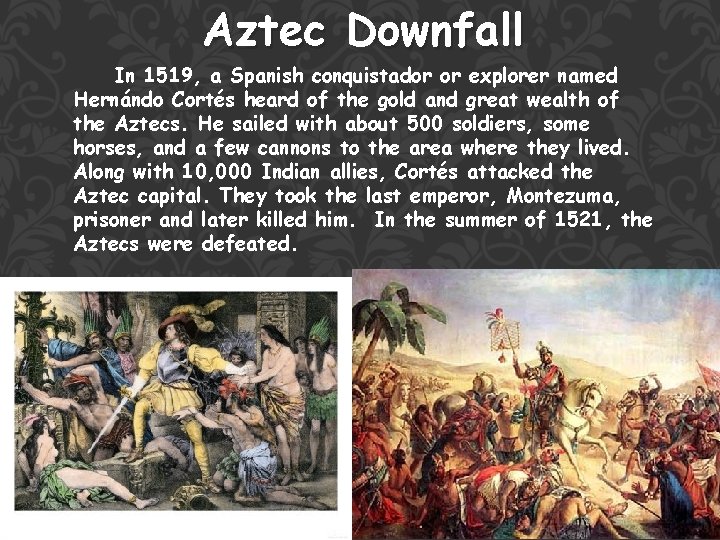
Aztec Downfall In 1519, a Spanish conquistador or explorer named Hernándo Cortés heard of the gold and great wealth of the Aztecs. He sailed with about 500 soldiers, some horses, and a few cannons to the area where they lived. Along with 10, 000 Indian allies, Cortés attacked the Aztec capital. They took the last emperor, Montezuma, prisoner and later killed him. In the summer of 1521, the Aztecs were defeated.
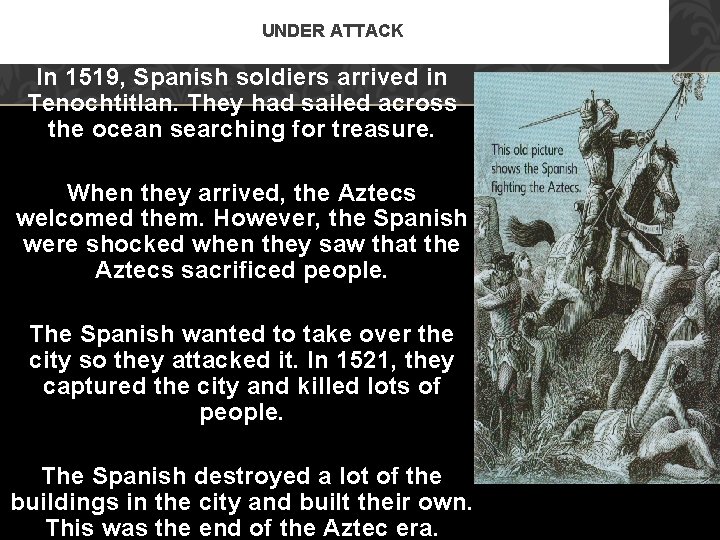
UNDER ATTACK In 1519, Spanish soldiers arrived in Tenochtitlan. They had sailed across the ocean searching for treasure. When they arrived, the Aztecs welcomed them. However, the Spanish were shocked when they saw that the Aztecs sacrificed people. The Spanish wanted to take over the city so they attacked it. In 1521, they captured the city and killed lots of people. The Spanish destroyed a lot of the buildings in the city and built their own. This was the end of the Aztec era.
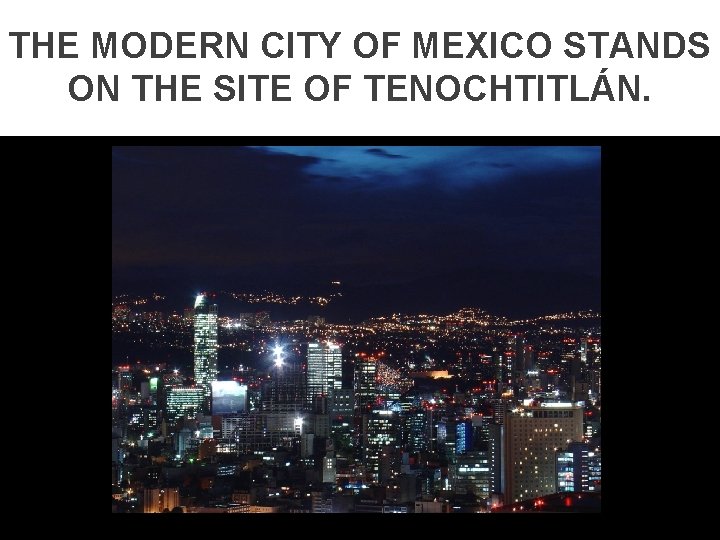
THE MODERN CITY OF MEXICO STANDS ON THE SITE OF TENOCHTITLÁN.