
Aztecs By Tamia Hancock Samantha Dewey Hannah Hardebeck
Aztecs By: Tamia Hancock, Samantha Dewey, & Hannah Hardebeck.
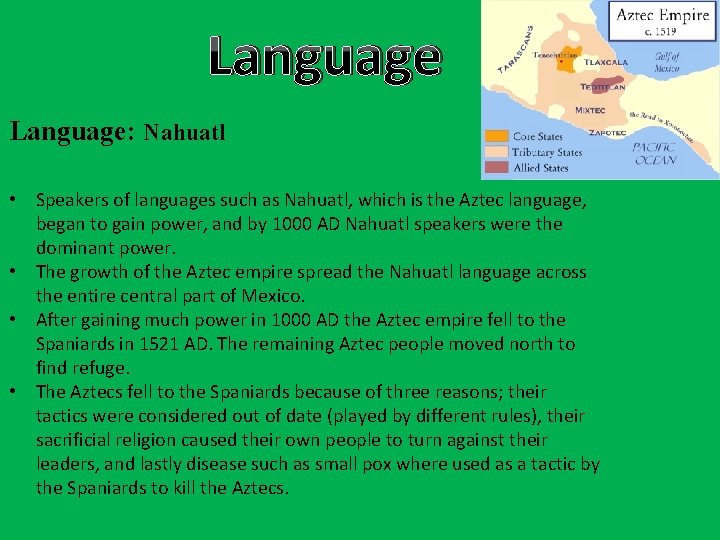
Language: Nahuatl • Speakers of languages such as Nahuatl, which is the Aztec language, began to gain power, and by 1000 AD Nahuatl speakers were the dominant power. • The growth of the Aztec empire spread the Nahuatl language across the entire central part of Mexico. • After gaining much power in 1000 AD the Aztec empire fell to the Spaniards in 1521 AD. The remaining Aztec people moved north to find refuge. • The Aztecs fell to the Spaniards because of three reasons; their tactics were considered out of date (played by different rules), their sacrificial religion caused their own people to turn against their leaders, and lastly disease such as small pox where used as a tactic by the Spaniards to kill the Aztecs.
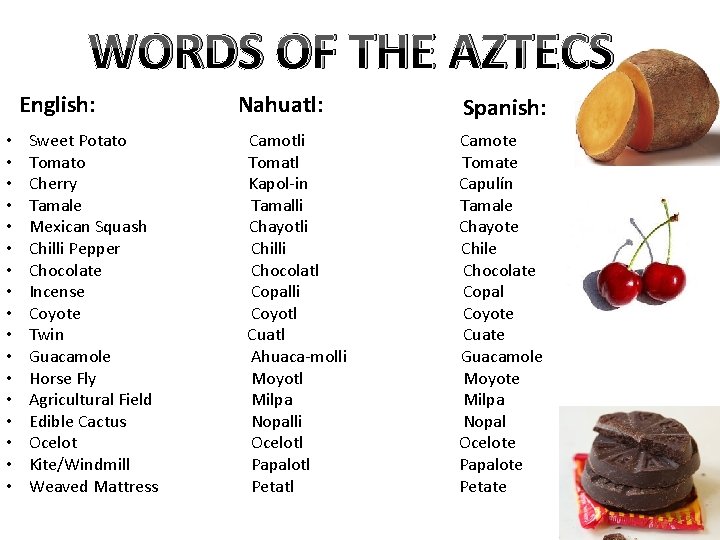
WORDS OF THE AZTECS English: • • • • • Nahuatl: Spanish: Sweet Potato Camotli Camote Tomato Tomatl Tomate Cherry Kapol-in Capulín Tamale Tamalli Tamale Mexican Squash Chayotli Chayote Chilli Pepper Chilli Chile Chocolate Chocolatl Chocolate Incense Copalli Copal Coyote Coyotl Coyote Twin Cuatl Cuate Guacamole Ahuaca-molli Guacamole Horse Fly Moyotl Moyote Agricultural Field Milpa Edible Cactus Nopalli Nopal Ocelot Ocelotl Ocelote Kite/Windmill Papalotl Papalote Weaved Mattress Petatl Petate
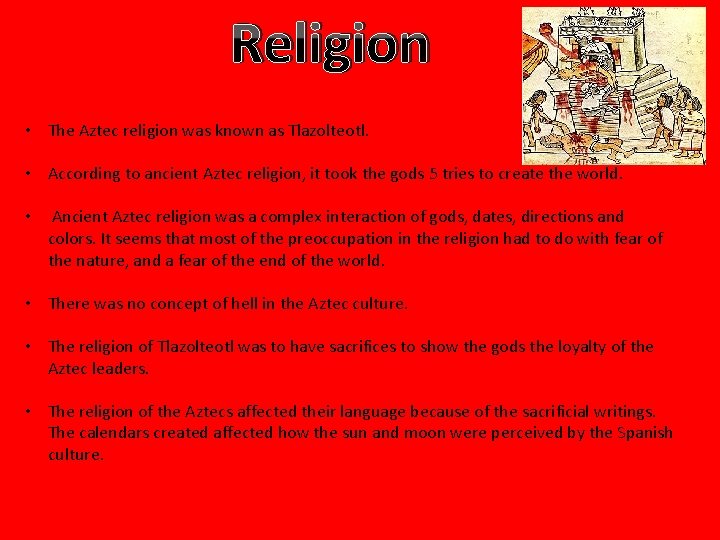
Religion • The Aztec religion was known as Tlazolteotl. • According to ancient Aztec religion, it took the gods 5 tries to create the world. • Ancient Aztec religion was a complex interaction of gods, dates, directions and colors. It seems that most of the preoccupation in the religion had to do with fear of the nature, and a fear of the end of the world. • There was no concept of hell in the Aztec culture. • The religion of Tlazolteotl was to have sacrifices to show the gods the loyalty of the Aztec leaders. • The religion of the Aztecs affected their language because of the sacrificial writings. The calendars created affected how the sun and moon were perceived by the Spanish culture.
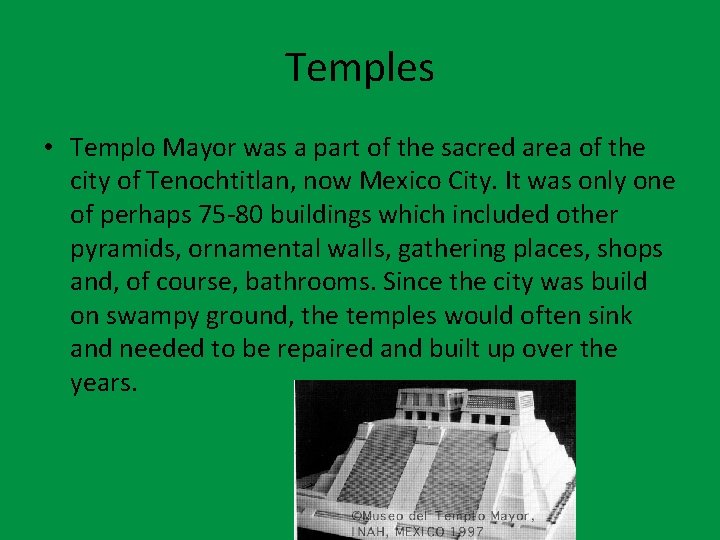
Temples • Templo Mayor was a part of the sacred area of the city of Tenochtitlan, now Mexico City. It was only one of perhaps 75 -80 buildings which included other pyramids, ornamental walls, gathering places, shops and, of course, bathrooms. Since the city was build on swampy ground, the temples would often sink and needed to be repaired and built up over the years.
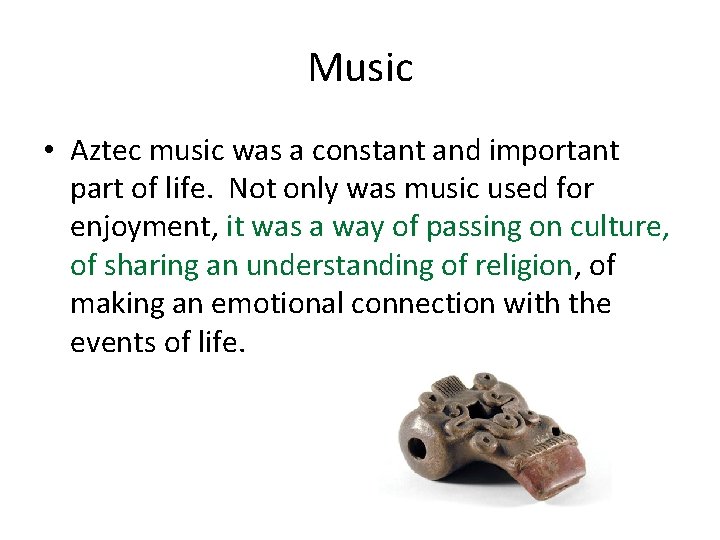
Music • Aztec music was a constant and important part of life. Not only was music used for enjoyment, it was a way of passing on culture, of sharing an understanding of religion, of making an emotional connection with the events of life.
- Slides: 6