
AZITHROMYCIN TO PREVENT POSTDISCHARGE MORBIDITY MORTALITY Global WACh
AZITHROMYCIN TO PREVENT POST-DISCHARGE MORBIDITY & MORTALITY Global WACh at the University of Washington
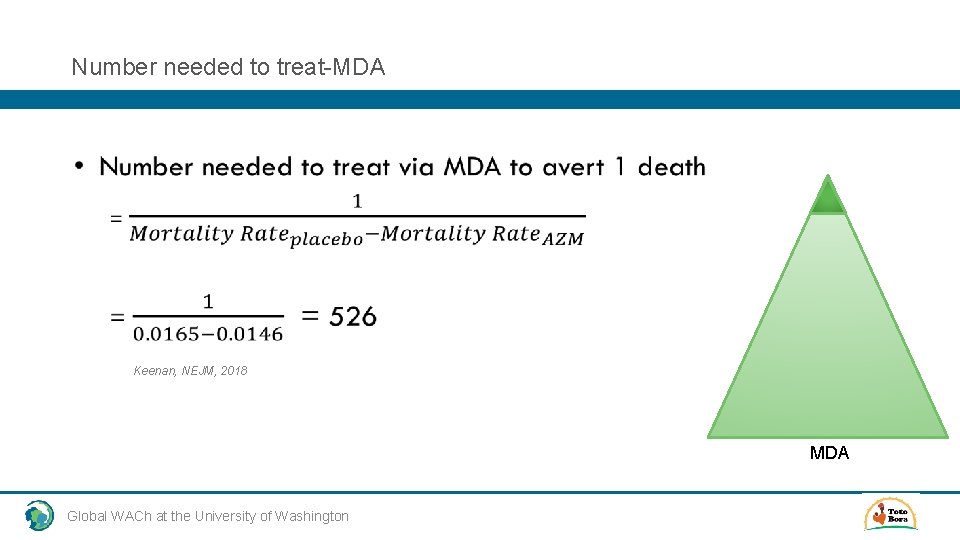
Number needed to treat-MDA Keenan, NEJM, 2018 MDA Global WACh at the University of Washington
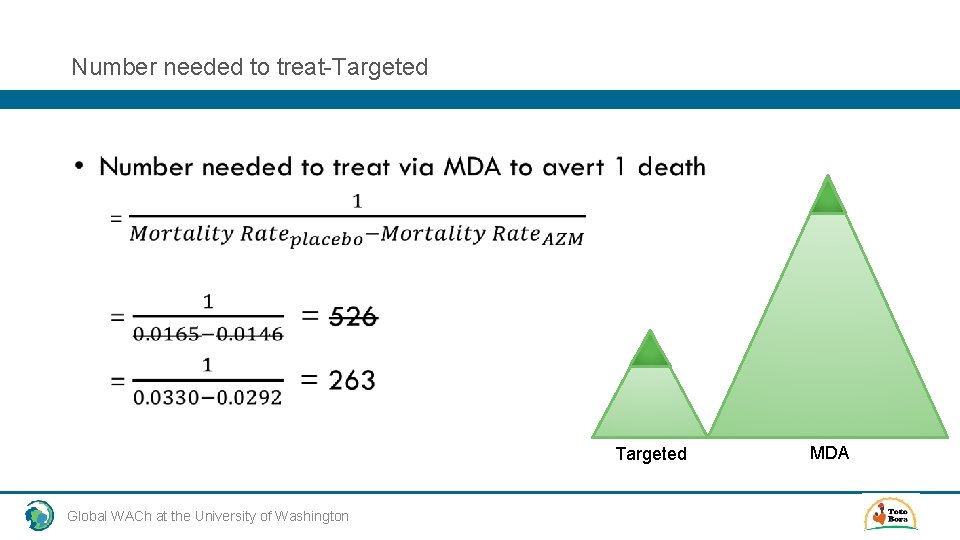
Number needed to treat-Targeted Global WACh at the University of Washington MDA
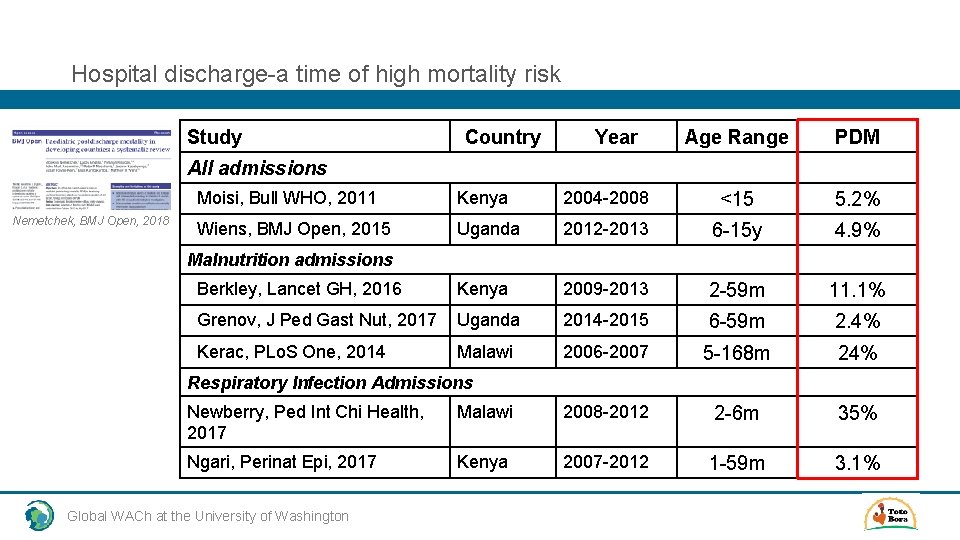
Hospital discharge-a time of high mortality risk Study Country Year Age Range PDM All admissions Nemetchek, BMJ Open, 2018 Moisi, Bull WHO, 2011 Kenya 2004 -2008 <15 5. 2% Wiens, BMJ Open, 2015 Uganda 2012 -2013 6 -15 y 4. 9% Berkley, Lancet GH, 2016 Kenya 2009 -2013 2 -59 m 11. 1% Grenov, J Ped Gast Nut, 2017 Uganda 2014 -2015 6 -59 m 2. 4% Kerac, PLo. S One, 2014 Malawi 2006 -2007 5 -168 m 24% Malnutrition admissions Respiratory Infection Admissions Newberry, Ped Int Chi Health, 2017 Malawi 2008 -2012 2 -6 m 35% Ngari, Perinat Epi, 2017 Kenya 2007 -2012 1 -59 m 3. 1% Global WACh at the University of Washington
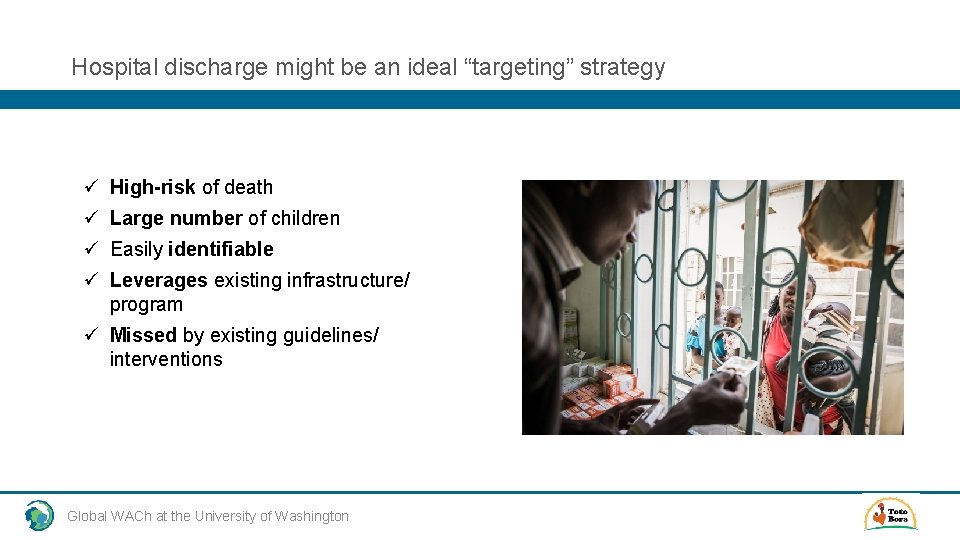
Hospital discharge might be an ideal “targeting” strategy ü High-risk of death ü Large number of children ü Easily identifiable ü Leverages existing infrastructure/ program ü Missed by existing guidelines/ interventions Global WACh at the University of Washington
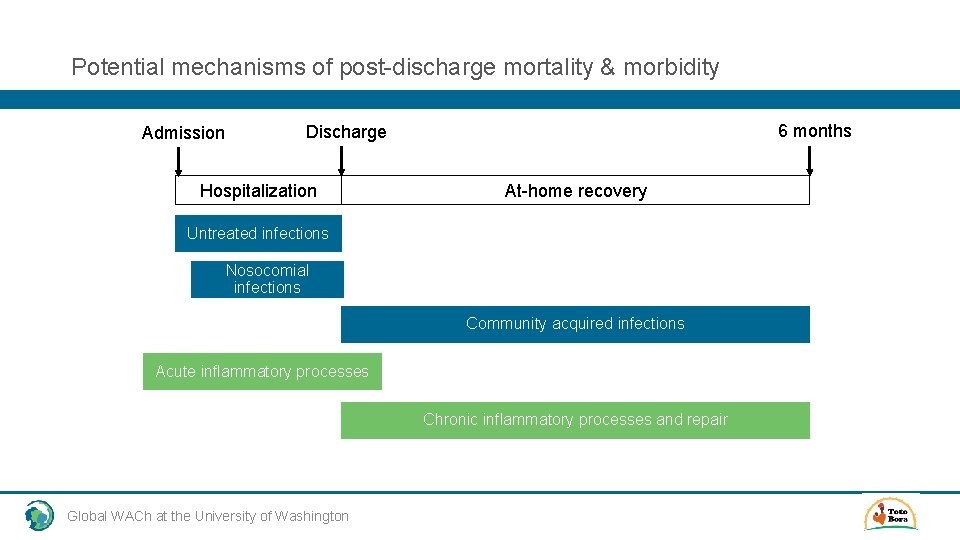
Potential mechanisms of post-discharge mortality & morbidity Admission 6 months Discharge Hospitalization At-home recovery Untreated infections Nosocomial infections Community acquired infections Acute inflammatory processes Chronic inflammatory processes and repair Global WACh at the University of Washington
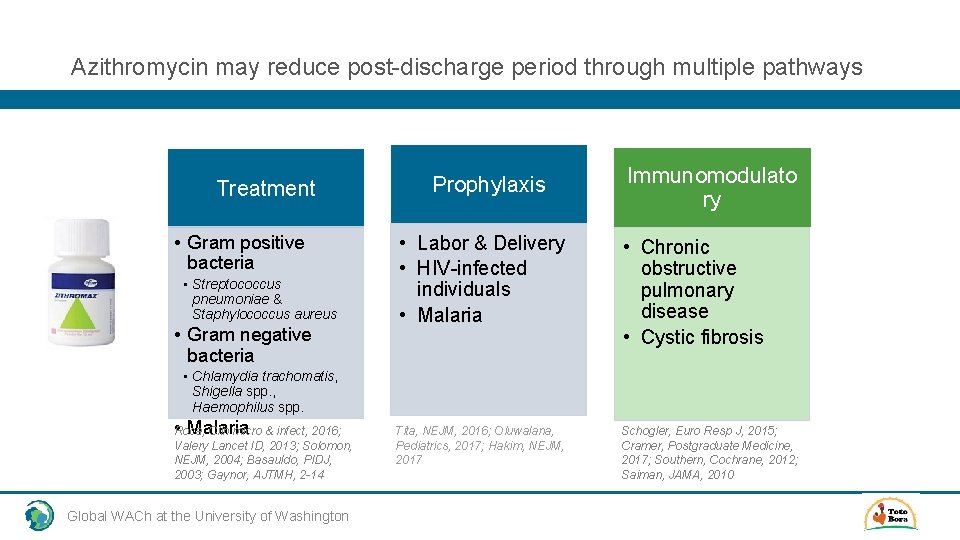
Azithromycin may reduce post-discharge period through multiple pathways Treatment • Gram positive bacteria • Streptococcus pneumoniae & Staphylococcus aureus • Gram negative bacteria Prophylaxis • Labor & Delivery • HIV-infected individuals • Malaria Immunomodulato ry • Chronic obstructive pulmonary disease • Cystic fibrosis • Chlamydia trachomatis, Shigella spp. , Haemophilus spp. • Malaria Roca, Clin micro & infect, 2016; Valery Lancet ID, 2013; Solomon, NEJM, 2004; Basauldo, PIDJ, 2003; Gaynor, AJTMH, 2 -14 Global WACh at the University of Washington Tita, NEJM, 2016; Oluwalana, Pediatrics, 2017; Hakim, NEJM, 2017 Schogler, Euro Resp J, 2015; Cramer, Postgraduate Medicine, 2017; Southern, Cochrane, 2012; Saiman, JAMA, 2010
Toto Bora Objective To determine the benefit and risk of azithromycin use in children age 1 to 59 months discharged from hospital in western Kenya Global WACh at the University of Washington
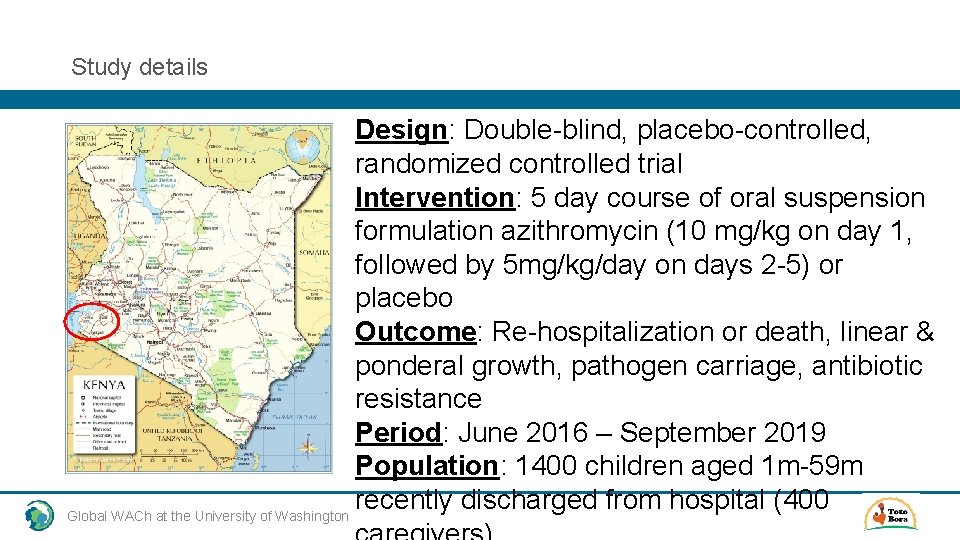
Study details Design: Double-blind, placebo-controlled, randomized controlled trial Intervention: 5 day course of oral suspension formulation azithromycin (10 mg/kg on day 1, followed by 5 mg/kg/day on days 2 -5) or placebo Outcome: Re-hospitalization or death, linear & ponderal growth, pathogen carriage, antibiotic resistance Period: June 2016 – September 2019 Population: 1400 children aged 1 m-59 m recently discharged from hospital (400 Global WACh at the University of Washington
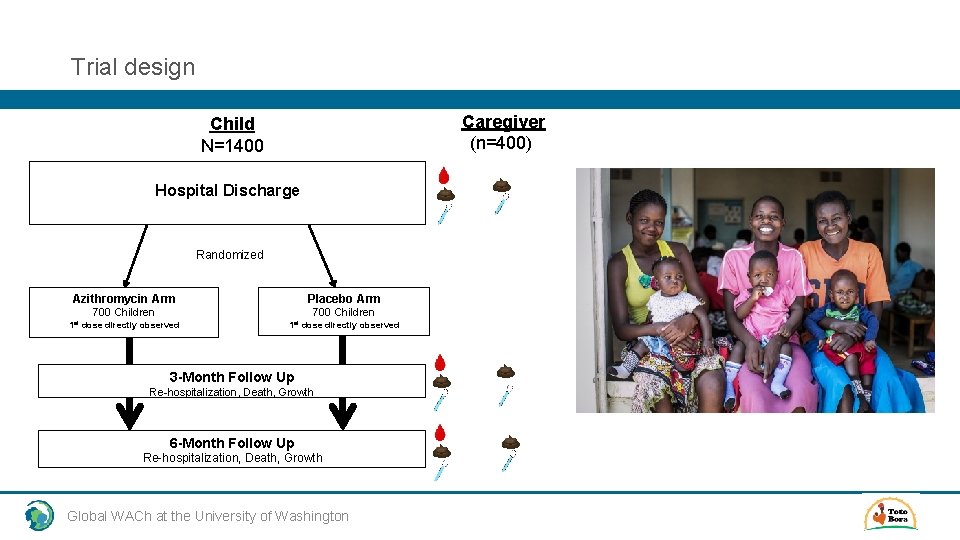
Trial design Caregiver (n=400) Child N=1400 Hospital Discharge Randomized Azithromycin Arm Placebo Arm 700 Children 1 st dose directly observed 3 -Month Follow Up Re-hospitalization, Death, Growth 6 -Month Follow Up Re-hospitalization, Death, Growth Global WACh at the University of Washington
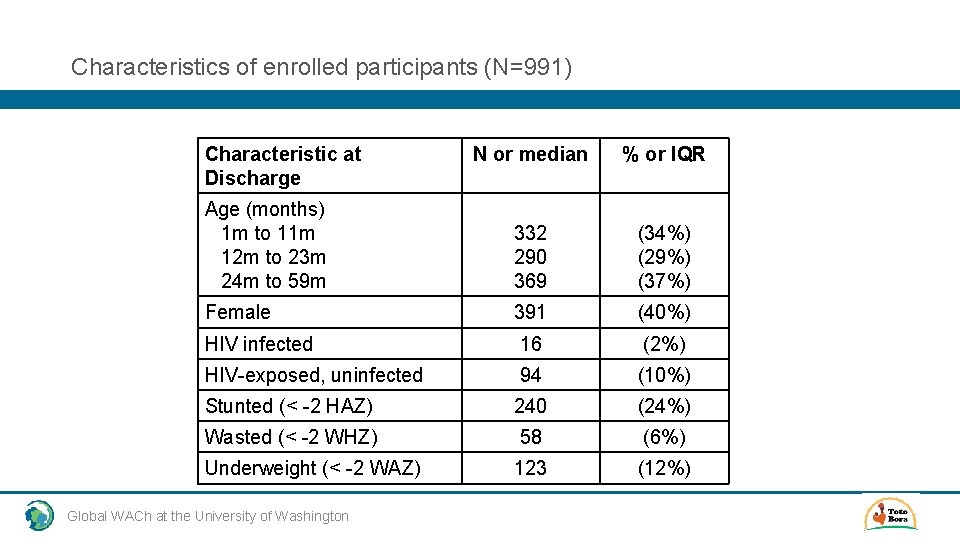
Characteristics of enrolled participants (N=991) Characteristic at Discharge N or median % or IQR Age (months) 1 m to 11 m 12 m to 23 m 24 m to 59 m 332 290 369 (34%) (29%) (37%) Female 391 (40%) HIV infected 16 (2%) HIV-exposed, uninfected 94 (10%) Stunted (< -2 HAZ) 240 (24%) Wasted (< -2 WHZ) 58 (6%) Underweight (< -2 WAZ) 123 (12%) Global WACh at the University of Washington
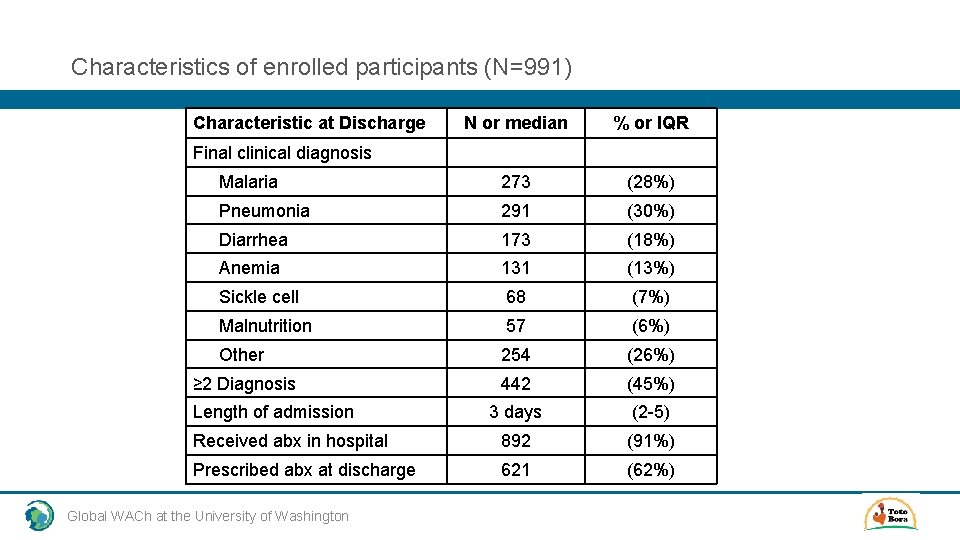
Characteristics of enrolled participants (N=991) Characteristic at Discharge N or median % or IQR Malaria 273 (28%) Pneumonia 291 (30%) Diarrhea 173 (18%) Anemia 131 (13%) Sickle cell 68 (7%) Malnutrition 57 (6%) Other 254 (26%) ≥ 2 Diagnosis 442 (45%) 3 days (2 -5) Received abx in hospital 892 (91%) Prescribed abx at discharge 621 (62%) Final clinical diagnosis Length of admission Global WACh at the University of Washington
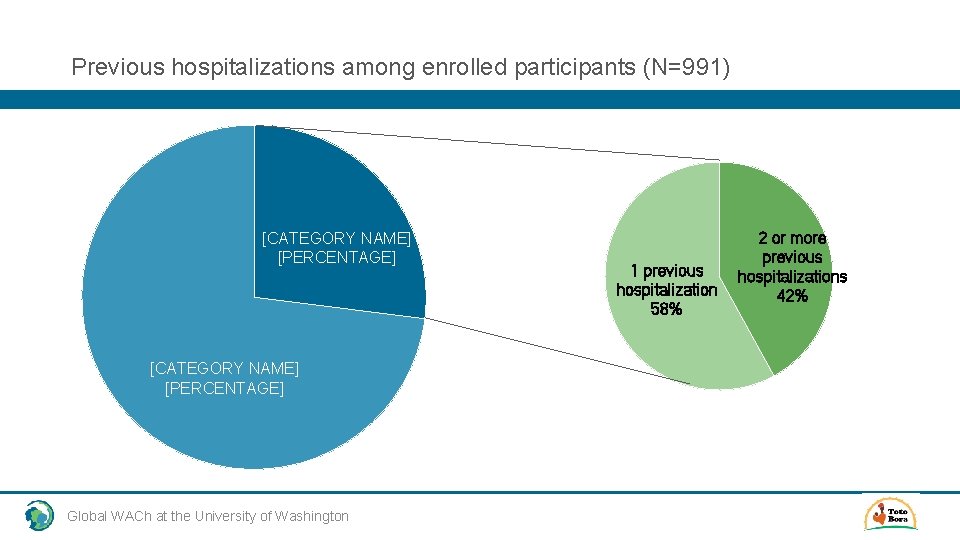
Previous hospitalizations among enrolled participants (N=991) [CATEGORY NAME] [PERCENTAGE] Global WACh at the University of Washington 1 previous hospitalization 58% 2 or more previous hospitalizations 42%
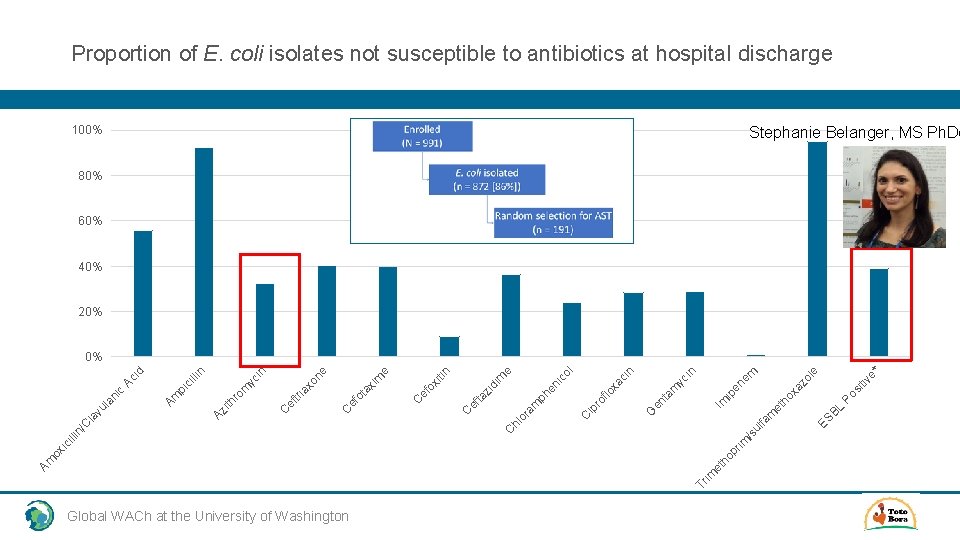
Global WACh at the University of Washington e* os iti v BL P ES az ol e m en e in 100% ho x et m lfa /s u ip Im yc m en ta G n ci xa of lo ip r C l co e m id i en i ph m or a hl C ta z ef C ox iti n ef C e m xi ot a ef C e on ia x ef tr in yc m ith ro C Az id llin ci pi Am ic A c la n vu la /C ic illi n pr im et ho im Tr ox Am Proportion of E. coli isolates not susceptible to antibiotics at hospital discharge Stephanie Belanger, MS Ph. Dc 80% 60% 40% 20% 0%
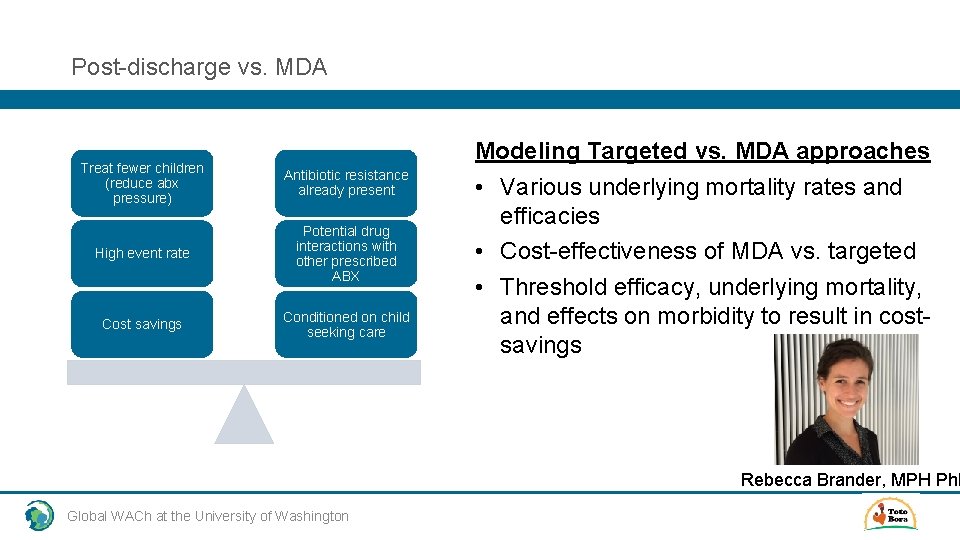
Post-discharge vs. MDA Treat fewer children (reduce abx pressure) Antibiotic resistance already present High event rate Potential drug interactions with other prescribed ABX Cost savings Conditioned on child seeking care Modeling Targeted vs. MDA approaches • Various underlying mortality rates and efficacies • Cost-effectiveness of MDA vs. targeted • Threshold efficacy, underlying mortality, and effects on morbidity to result in costsavings Rebecca Brander, MPH Ph. D Global WACh at the University of Washington
More to come…. March 2020 Global WACh at the University of Washington
Acknowledgements Investigative Team • • • Judd Walson (PI) Benson Singa Grace John-Stewart Barbra Richardson Joseph Babigumira Ruth Nduati Samuel Kariuki Rebecca Brander Christine Mc. Grath Kirkby Tickell Hannah Atlas Stephanie Belanger Implementing Team • Mary Amondi • Doreen Rwigi • Liru Meshack • George Bogonko • Michael Mugo • Lynnete Kitheka • Kevin Kariuki • Elizabeth Mutuku • Kisii Site Staff • Homa Bay Staff Global WACh at the University of Washington Other Support Funding • National Institutes of Health Eunice Kennedy Shriver National Institute of Child Health & Human Development (R 01 HD 079695) Donations • Drug donation by Pfizer IIR #WI 201906 • Flocked rectal swabs & Cary-Blair media donated by Copan Diagnostics Inc. • Kenya Medical Research Institute • Childhood Acute Illness Network • Kenya Research & Training Center • Global WACh KEMRI CDC • Richard Omore • Alex Awuor • Caleb Okonji KEMRI/Wellcome • • • Jay Berkley Anthony Scott Joseph Waichungo Angela Karani Donald Akech Horace Gumba
Additional slides Global WACh at the University of Washington
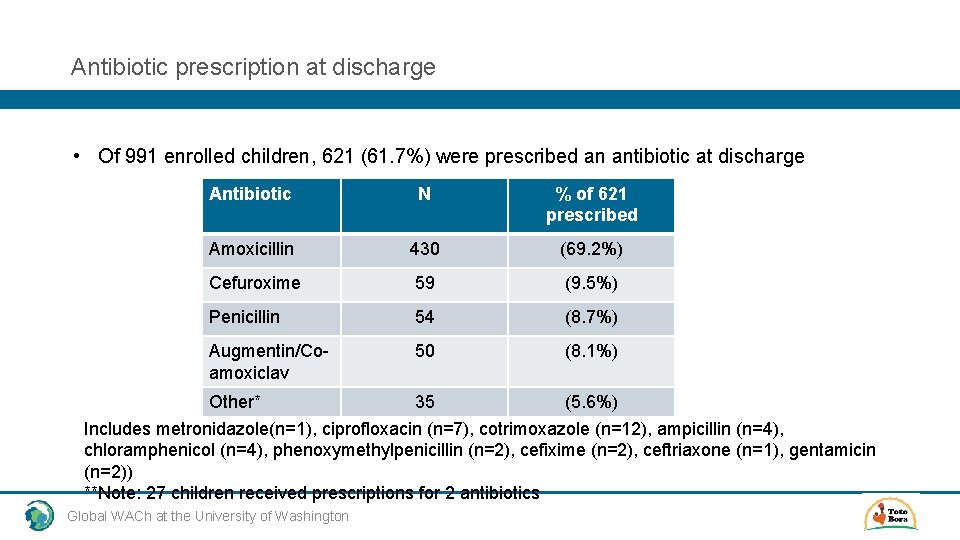
Antibiotic prescription at discharge • Of 991 enrolled children, 621 (61. 7%) were prescribed an antibiotic at discharge Antibiotic N % of 621 prescribed Amoxicillin 430 (69. 2%) Cefuroxime 59 (9. 5%) Penicillin 54 (8. 7%) Augmentin/Coamoxiclav 50 (8. 1%) Other* 35 (5. 6%) Includes metronidazole(n=1), ciprofloxacin (n=7), cotrimoxazole (n=12), ampicillin (n=4), chloramphenicol (n=4), phenoxymethylpenicillin (n=2), cefixime (n=2), ceftriaxone (n=1), gentamicin (n=2)) **Note: 27 children received prescriptions for 2 antibiotics Global WACh at the University of Washington
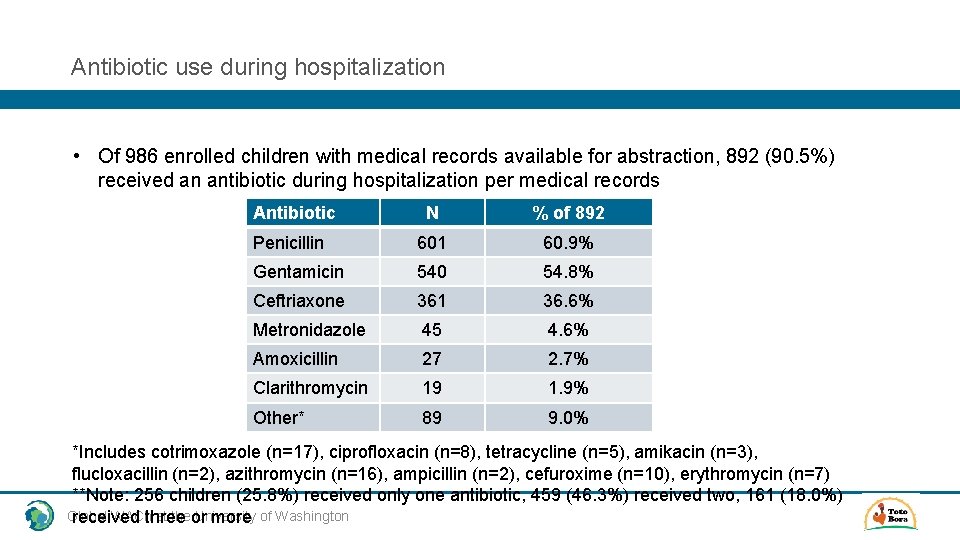
Antibiotic use during hospitalization • Of 986 enrolled children with medical records available for abstraction, 892 (90. 5%) received an antibiotic during hospitalization per medical records Antibiotic N % of 892 Penicillin 601 60. 9% Gentamicin 540 54. 8% Ceftriaxone 361 36. 6% Metronidazole 45 4. 6% Amoxicillin 27 2. 7% Clarithromycin 19 1. 9% Other* 89 9. 0% *Includes cotrimoxazole (n=17), ciprofloxacin (n=8), tetracycline (n=5), amikacin (n=3), flucloxacillin (n=2), azithromycin (n=16), ampicillin (n=2), cefuroxime (n=10), erythromycin (n=7) **Note: 256 children (25. 8%) received only one antibiotic, 459 (46. 3%) received two, 161 (18. 0%) Global WACh at the University of Washington received three or more
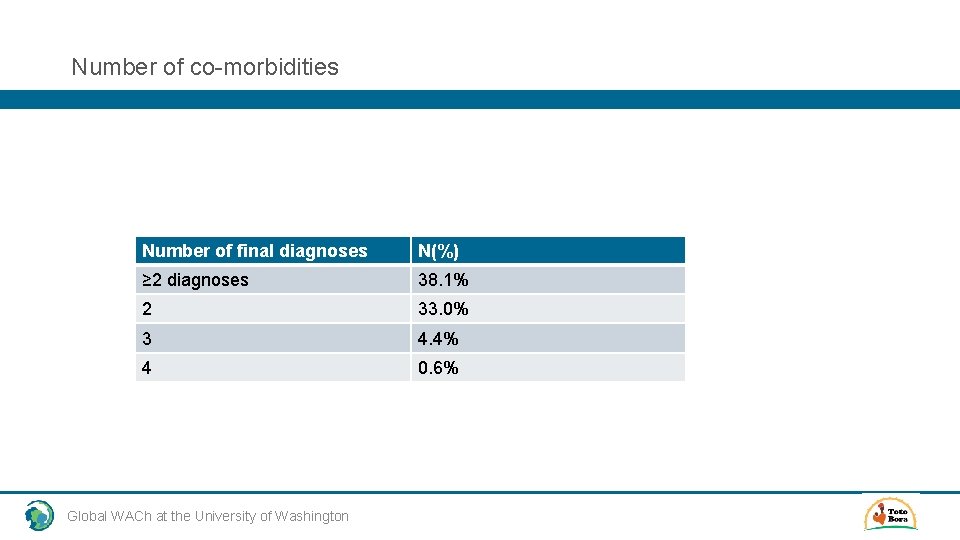
Number of co-morbidities Number of final diagnoses N(%) ≥ 2 diagnoses 38. 1% 2 33. 0% 3 4. 4% 4 0. 6% Global WACh at the University of Washington
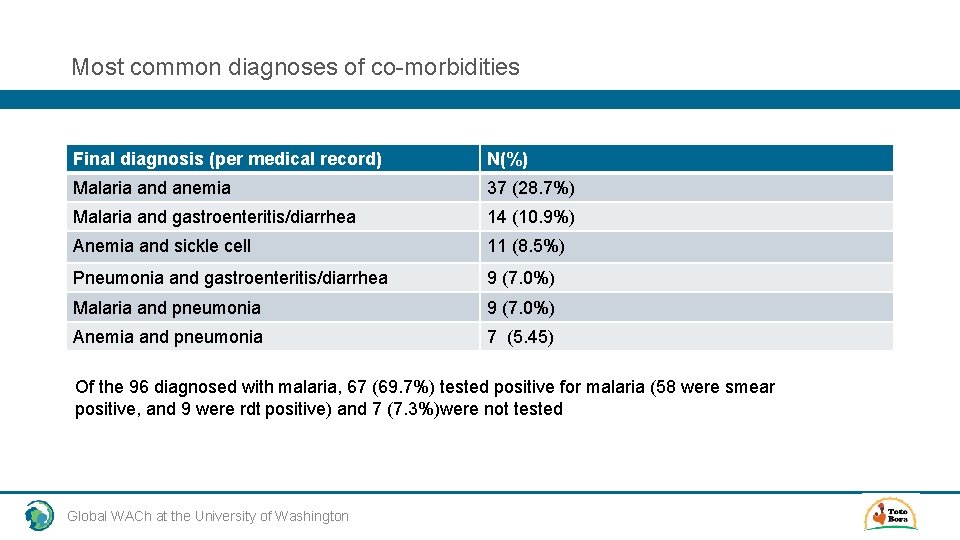
Most common diagnoses of co-morbidities Final diagnosis (per medical record) N(%) Malaria and anemia 37 (28. 7%) Malaria and gastroenteritis/diarrhea 14 (10. 9%) Anemia and sickle cell 11 (8. 5%) Pneumonia and gastroenteritis/diarrhea 9 (7. 0%) Malaria and pneumonia 9 (7. 0%) Anemia and pneumonia 7 (5. 45) Of the 96 diagnosed with malaria, 67 (69. 7%) tested positive for malaria (58 were smear positive, and 9 were rdt positive) and 7 (7. 3%)were not tested Global WACh at the University of Washington
- Slides: 22