
AY 3 Introduction to Astronomy The Solar System
- Slides: 23
AY 3: Introduction to Astronomy: The Solar System general info: corsica 3. ucsc. edu/~lin/AY 3
Textbook: The Cosmic Perspective. The Solar System Bennett, Donahue, Schneider, Voit, Addison-Wesley Clicker: will be used in every class. Available in Baytree bookstore or with iphone. Need to register. Instructor: Doug LIN (lin@ucolick. org, 831 -459 -2732) Office hours: 3 -4 pm Mondays, 11 -12 pm Thursdays 337 Interdisciplinary Science building TA 1: Lin JIN (ljin 7@ucsc. edu, 831 -419 -1512) Office hours: 4: 50 -5: 50 pm Tue. , 12: 50 -1: 50 pm Thursda Baskin Engineering 224 TA 2: Jinbo ZHU (jinbo@soe. ucsc. edu, 831 -332 -6253) Office hours: 1 -2 pm Tuesdays, 3 -4 pm Wednesdays Engineering 2 - 386
Learning Support Service Tutor: Brandon L Day (blday@ucsc. edu, 818 -319 -5975) LSS, account registration and sign up required. Mon 3: 45 -4: 45, Tue 4: 15 -5: 15 pm, Thur 4: 15 -5: 15 pm Class times: 6 -7: 45 pm Tuesdays and Thursdays Class location: Thieman 3 Section time: 2 -3: 10 pm Thursdays, Lin JIN Engineering 2 -194 4: 00 -5: 10 pm Thursday, Lin JIN Oaks 106 9: 30 -10: 40 am Wed Jinbo ZHU, Nat. Sci. Annex 101 11 am-12: 10 pm Wed Jinbo ZHU, Nat. Sci. Annex 101 Homeworks: Assigned on Thursday, due a week later
Midterm exam: 6 -7: 45 pm Thursday Feb 4 th, Thieman 3 Final exam: 4 -7 pm Monday March 14 th, Thieman 3 Accumulative Evalution: Homework (15%), quiz (15%), midterm exam (30%), final exam (40%) Participation in BOTH exams is necessary to pass. Mathematical analysis is required for this course. Study guide, useful formulae, past exams are online. Review sections will be held before the exams.
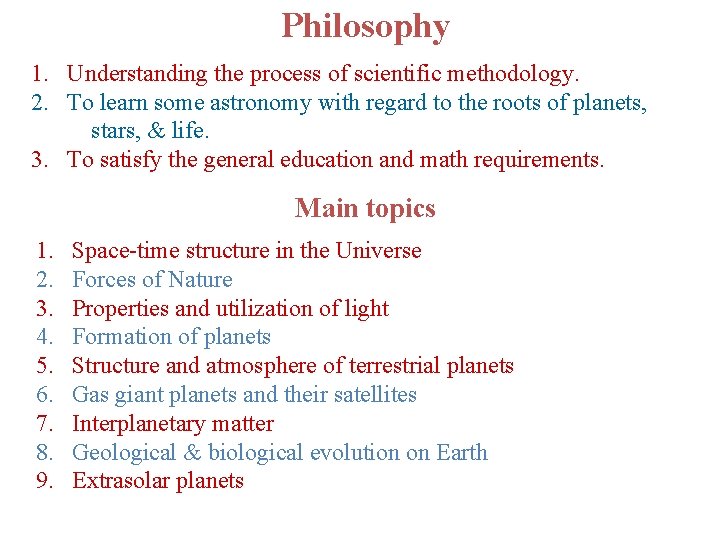
Philosophy 1. Understanding the process of scientific methodology. 2. To learn some astronomy with regard to the roots of planets, stars, & life. 3. To satisfy the general education and math requirements. Main topics 1. 2. 3. 4. 5. 6. 7. 8. 9. Space-time structure in the Universe Forces of Nature Properties and utilization of light Formation of planets Structure and atmosphere of terrestrial planets Gas giant planets and their satellites Interplanetary matter Geological & biological evolution on Earth Extrasolar planets
Lecture 1: an overview Our place in the Universe
Home sweet home: the Earth
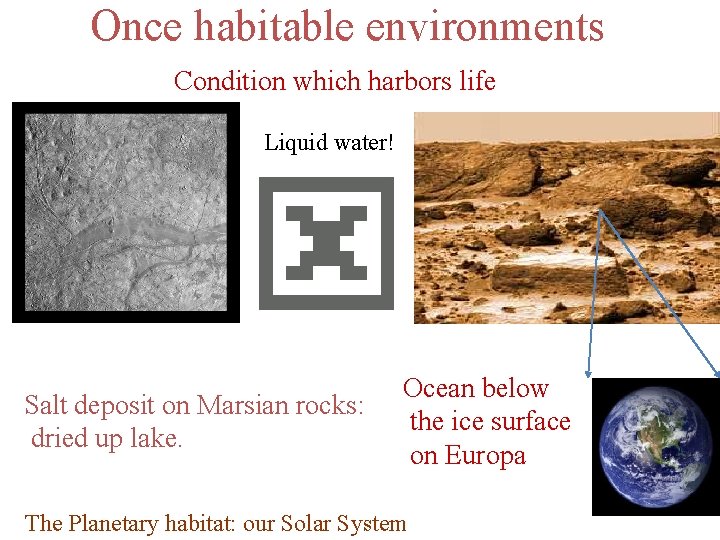
Once habitable environments Condition which harbors life Liquid water! Salt deposit on Marsian rocks: dried up lake. Ocean below the ice surface on Europa The Planetary habitat: our Solar System
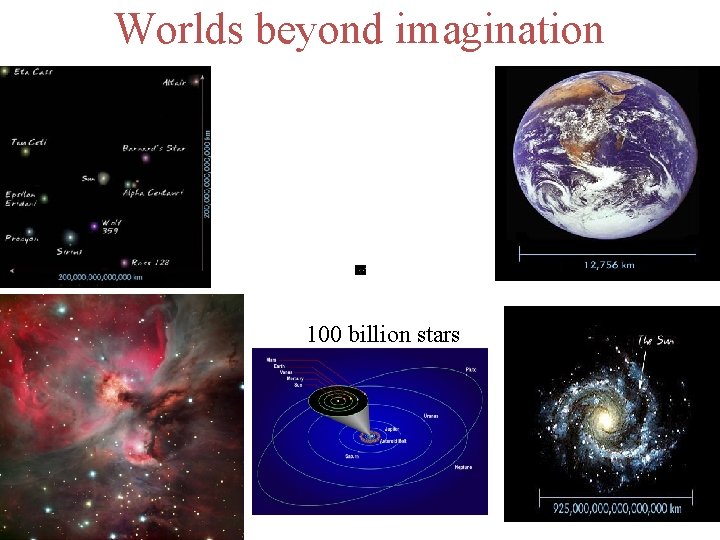
Worlds beyond imagination 100 billion stars
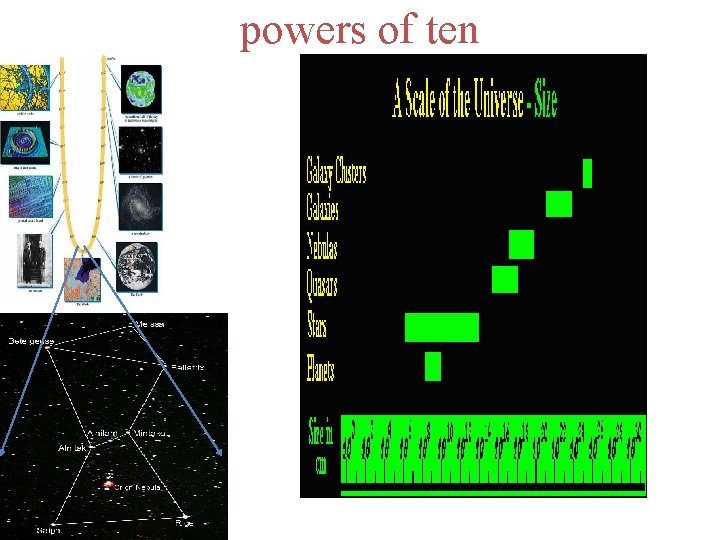
powers of ten
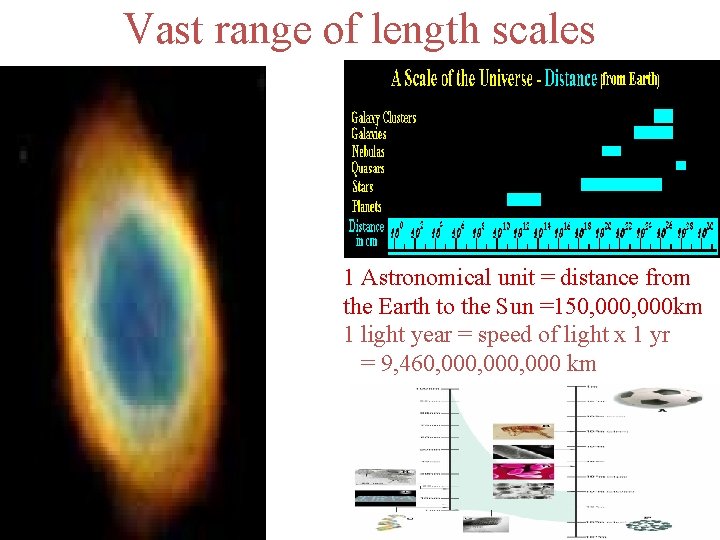
Vast range of length scales 1 Astronomical unit = distance from the Earth to the Sun =150, 000 km 1 light year = speed of light x 1 yr = 9, 460, 000, 000 km
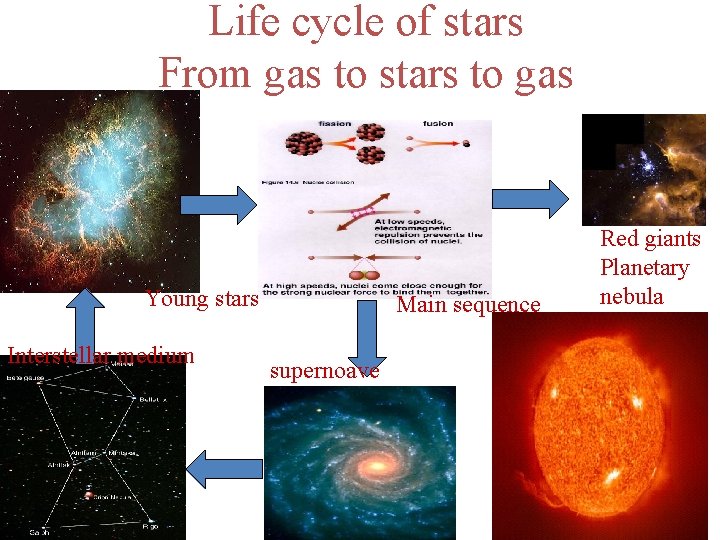
Life cycle of stars From gas to stars to gas Young stars Interstellar medium Main sequence supernoave Red giants Planetary nebula
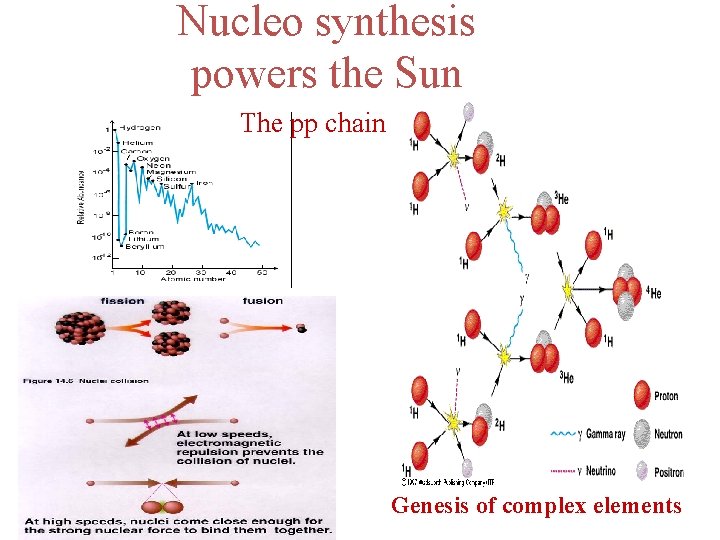
Nucleo synthesis powers the Sun The pp chain Genesis of complex elements
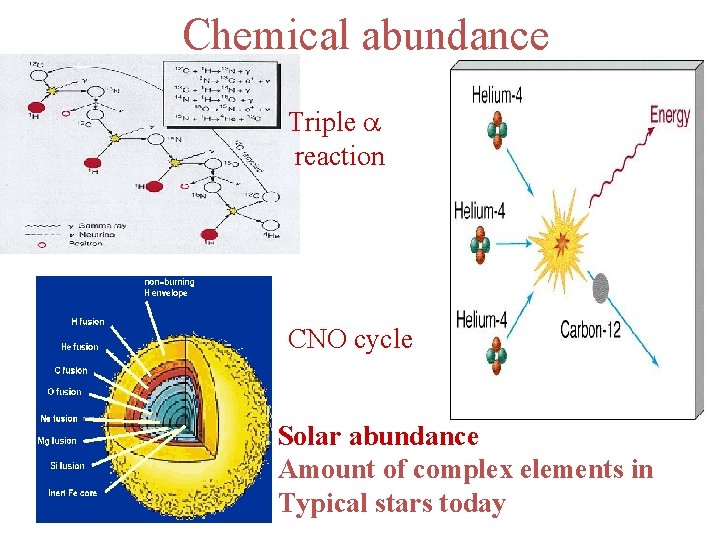
Chemical abundance Triple a reaction CNO cycle Solar abundance Amount of complex elements in Typical stars today
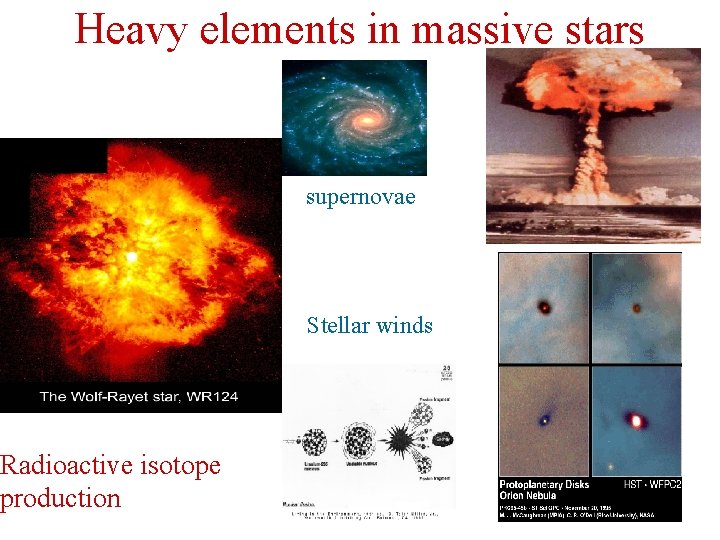
Heavy elements in massive stars Radioactive isotope production supernovae Stellar winds
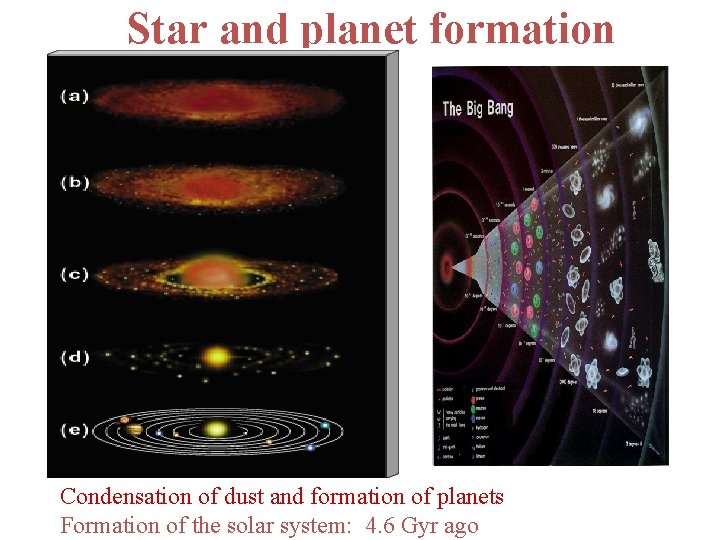
Star and planet formation Condensation of dust and formation of planets Formation of the solar system: 4. 6 Gyr ago
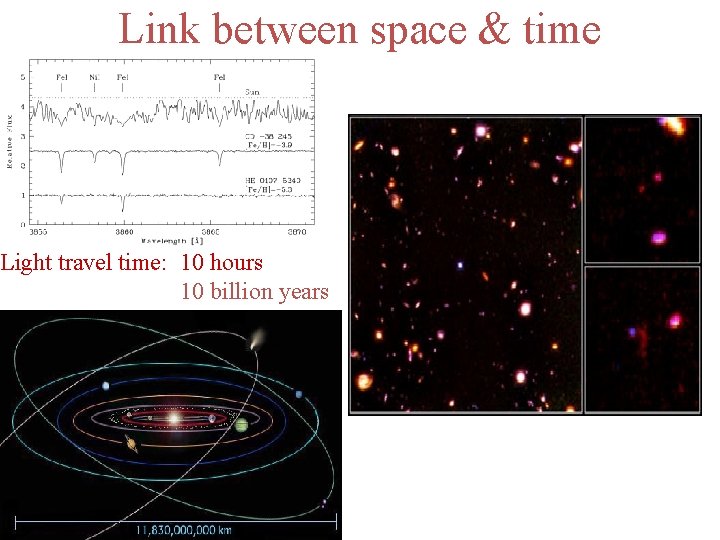
Link between space & time Light travel time: 10 hours 10 billion years
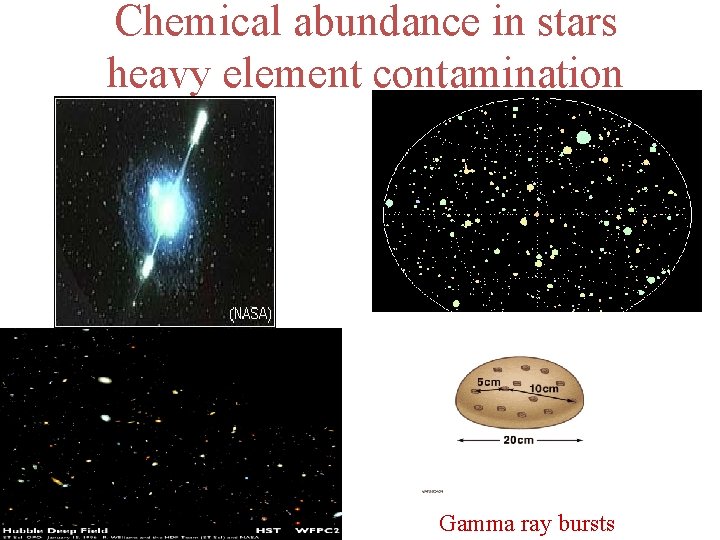
Chemical abundance in stars heavy element contamination Gamma ray bursts
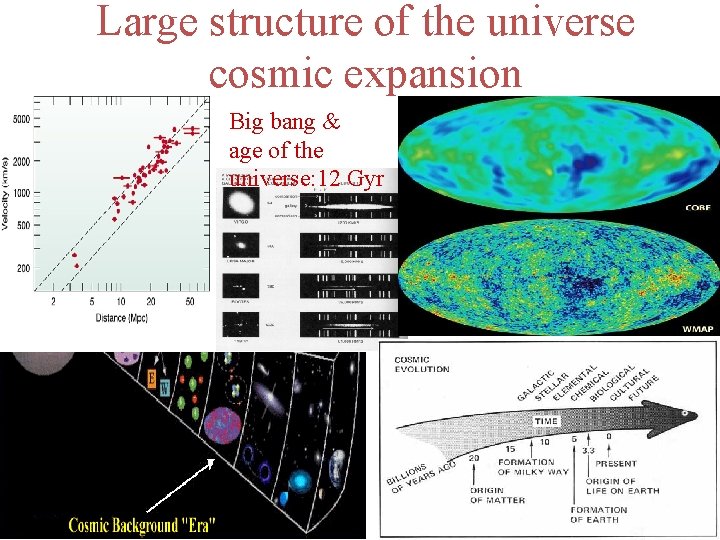
Large structure of the universe cosmic expansion Big bang & age of the universe: 12 Gyr
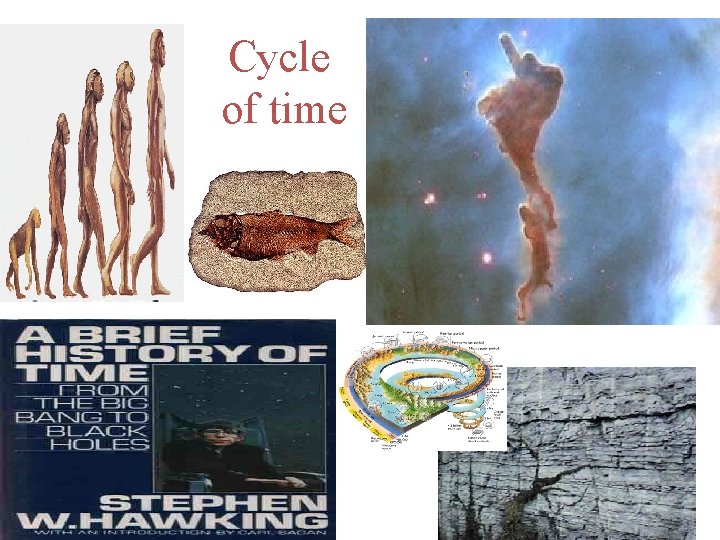
Cycle of time
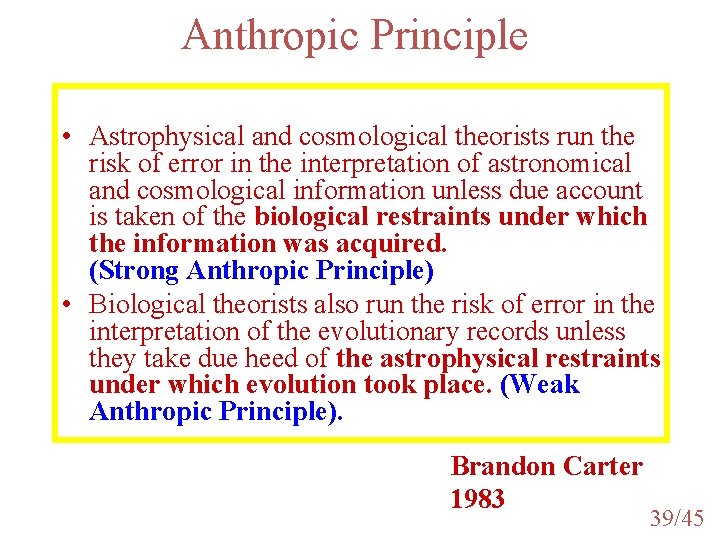
Anthropic Principle • Astrophysical and cosmological theorists run the risk of error in the interpretation of astronomical and cosmological information unless due account is taken of the biological restraints under which the information was acquired. (Strong Anthropic Principle) • Biological theorists also run the risk of error in the interpretation of the evolutionary records unless they take due heed of the astrophysical restraints under which evolution took place. (Weak Anthropic Principle). Brandon Carter 1983 39/45
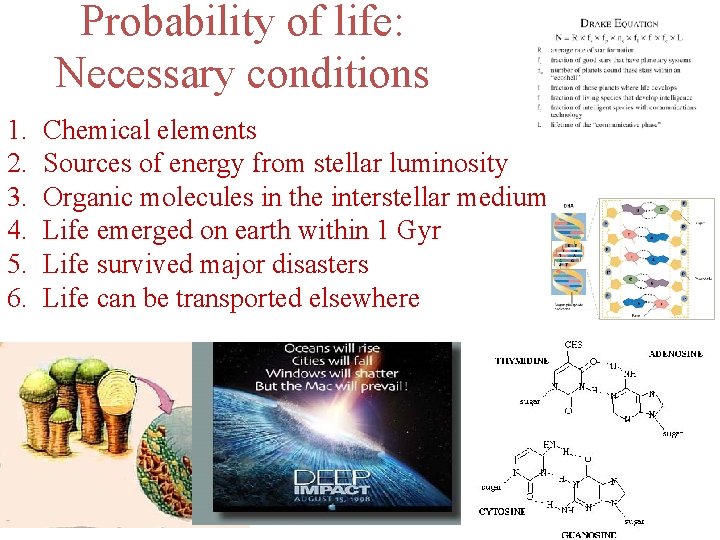
Probability of life: Necessary conditions 1. 2. 3. 4. 5. 6. Chemical elements Sources of energy from stellar luminosity Organic molecules in the interstellar medium Life emerged on earth within 1 Gyr Life survived major disasters Life can be transported elsewhere
Quest: to search for the origin and proliferation of life in the Universe