
Axial and Appendicular Skeletons Ag Fact Most peaches
- Slides: 25
Axial and Appendicular Skeletons Ag Fact- Most peaches that are imported to the United States during winter months come from Chile. Objective- Students will be able to compare and contrast the axial and appendicular skeletons.
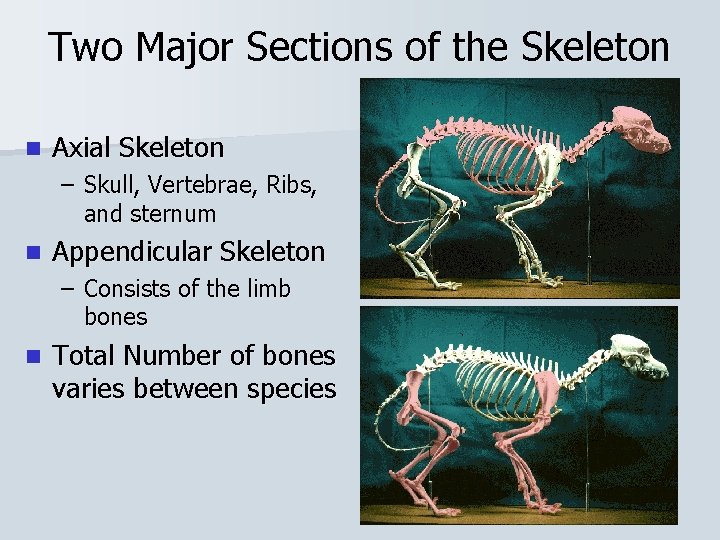
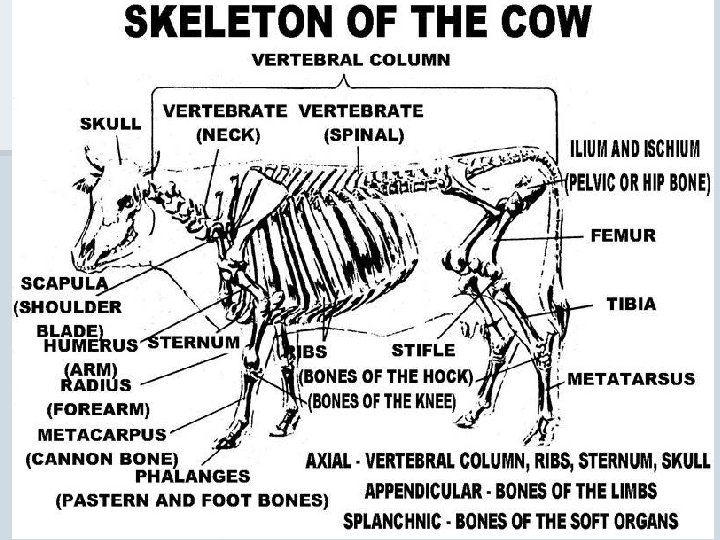
Two Major Sections of the Skeleton n Axial Skeleton – Skull, Vertebrae, Ribs, and sternum n Appendicular Skeleton – Consists of the limb bones n Total Number of bones varies between species
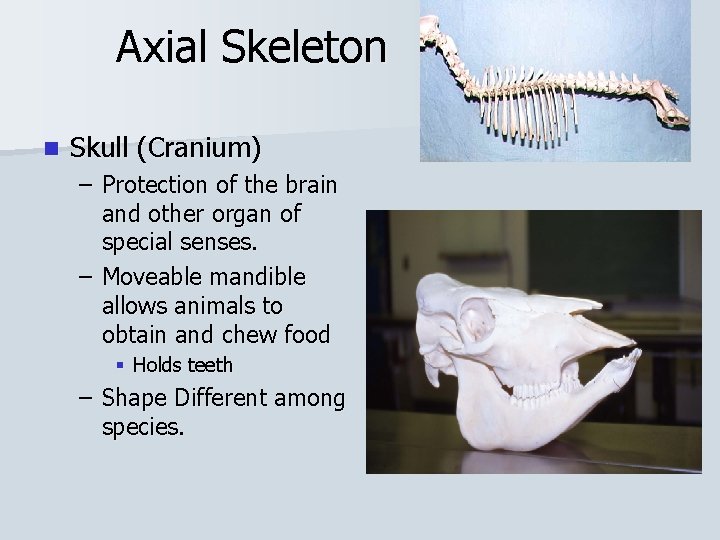
Axial Skeleton n Skull (Cranium) – Protection of the brain and other organ of special senses. – Moveable mandible allows animals to obtain and chew food § Holds teeth – Shape Different among species.
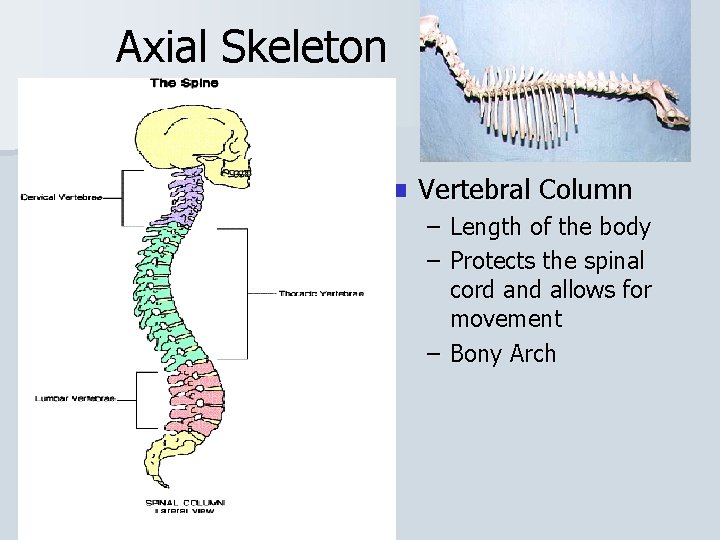
Axial Skeleton n Vertebral Column – Length of the body – Protects the spinal cord and allows for movement – Bony Arch
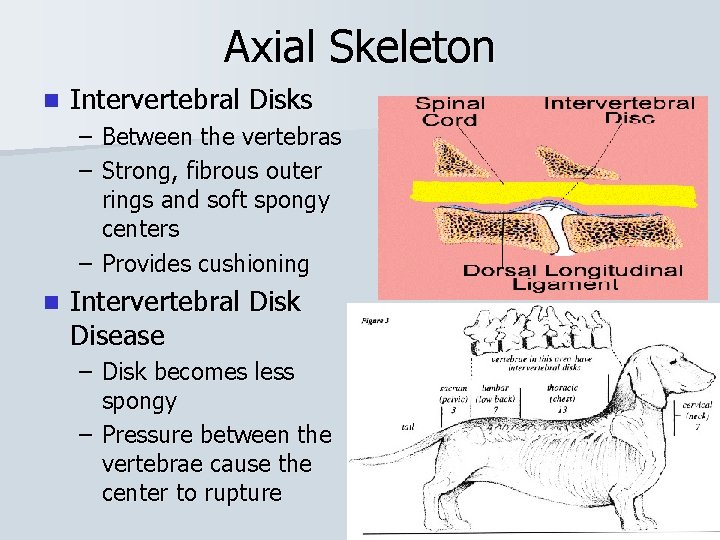
Axial Skeleton n Intervertebral Disks – Between the vertebras – Strong, fibrous outer rings and soft spongy centers – Provides cushioning n Intervertebral Disk Disease – Disk becomes less spongy – Pressure between the vertebrae cause the center to rupture
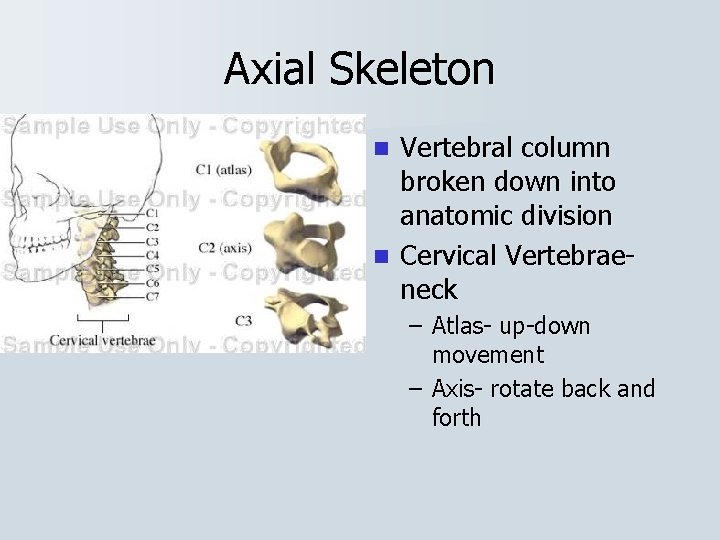
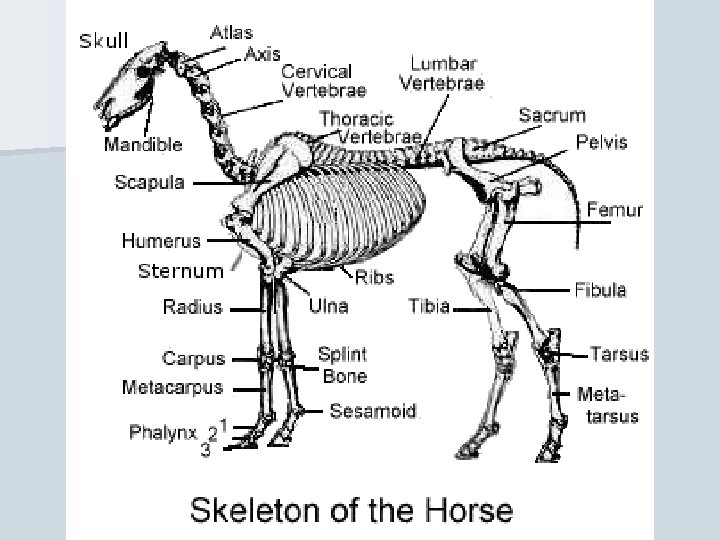
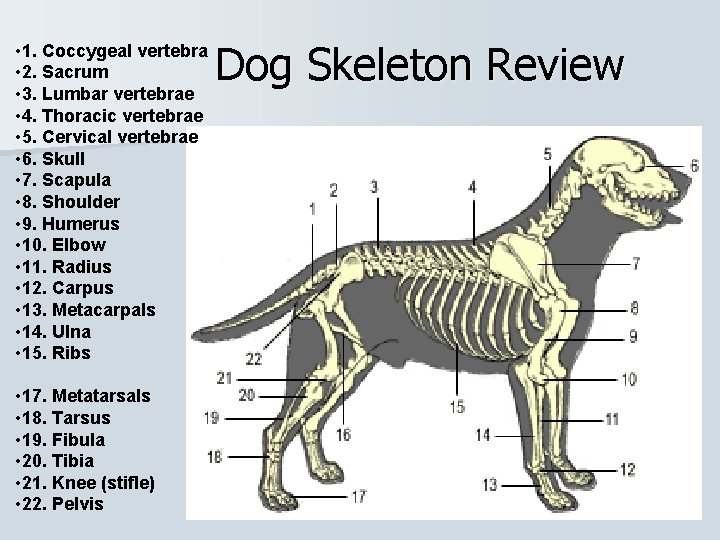
Axial Skeleton Vertebral column broken down into anatomic division n Cervical Vertebraeneck n – Atlas- up-down movement – Axis- rotate back and forth
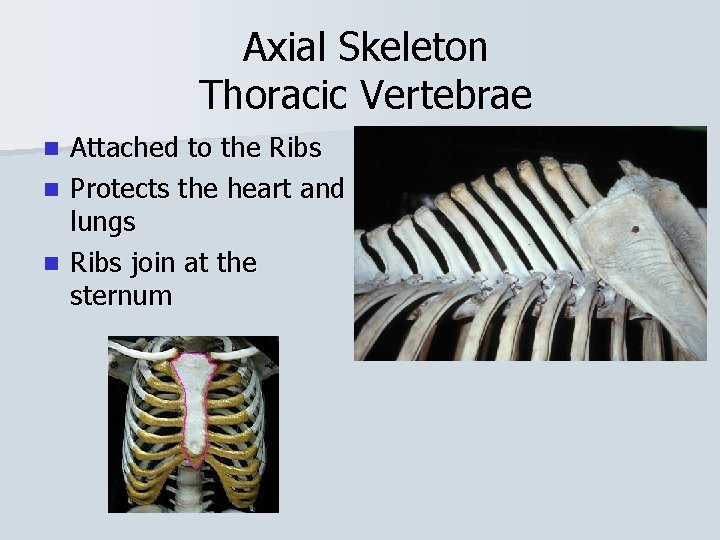
Axial Skeleton Thoracic Vertebrae Attached to the Ribs n Protects the heart and lungs n Ribs join at the sternum n
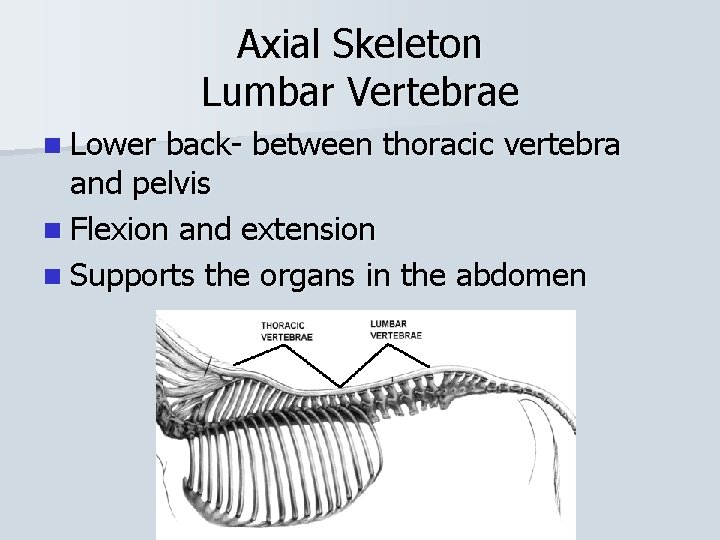
Axial Skeleton Lumbar Vertebrae n Lower back- between thoracic vertebra and pelvis n Flexion and extension n Supports the organs in the abdomen
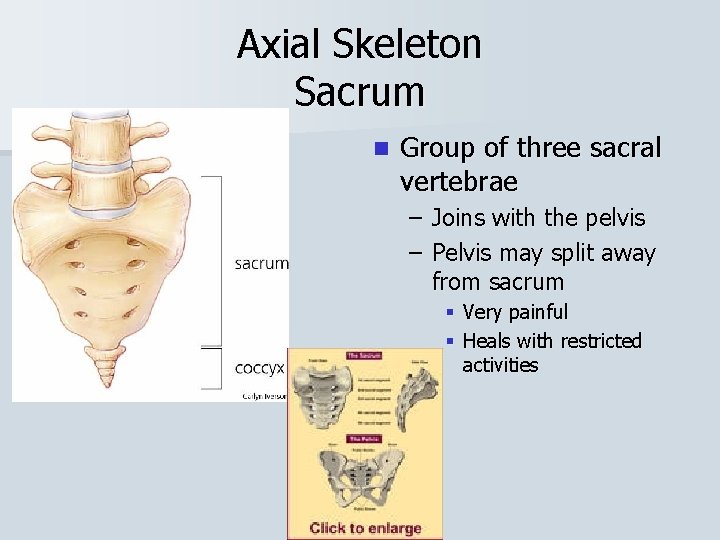
Axial Skeleton Sacrum n Group of three sacral vertebrae – Joins with the pelvis – Pelvis may split away from sacrum § Very painful § Heals with restricted activities
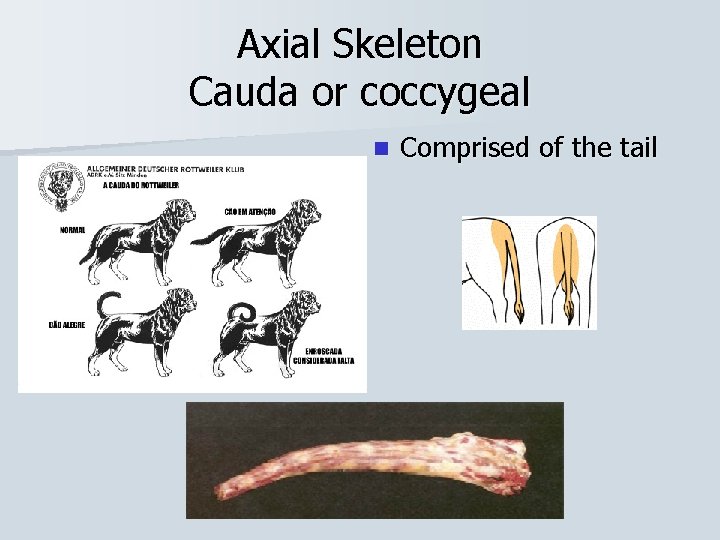
Axial Skeleton Cauda or coccygeal n Comprised of the tail
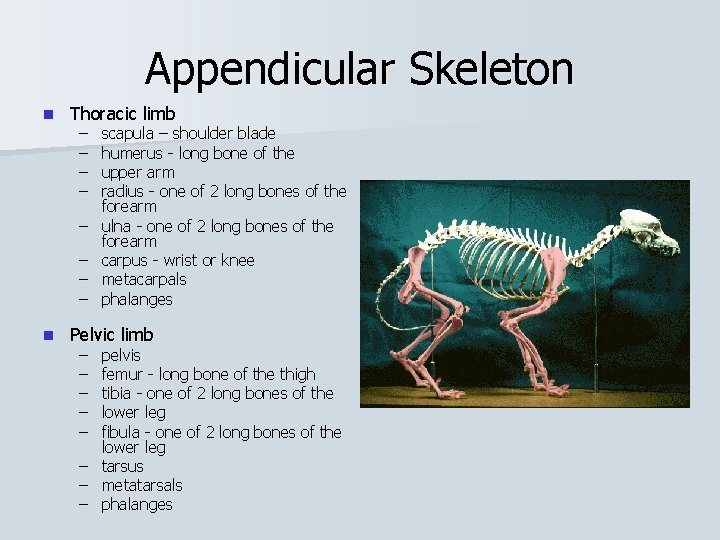
Appendicular Skeleton n Thoracic limb – – – – n scapula – shoulder blade humerus - long bone of the upper arm radius - one of 2 long bones of the forearm ulna - one of 2 long bones of the forearm carpus - wrist or knee metacarpals phalanges Pelvic limb – – – pelvis femur - long bone of the thigh tibia - one of 2 long bones of the lower leg fibula - one of 2 long bones of the lower leg – tarsus – metatarsals – phalanges
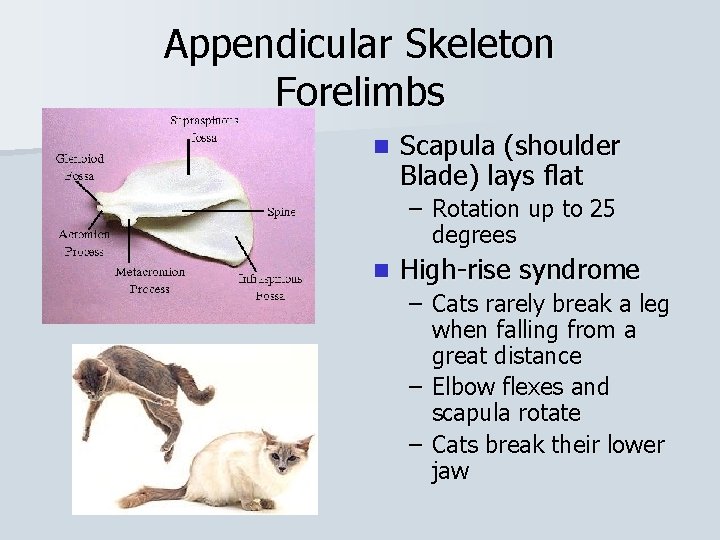
Appendicular Skeleton Forelimbs n Scapula (shoulder Blade) lays flat – Rotation up to 25 degrees n High-rise syndrome – Cats rarely break a leg when falling from a great distance – Elbow flexes and scapula rotate – Cats break their lower jaw
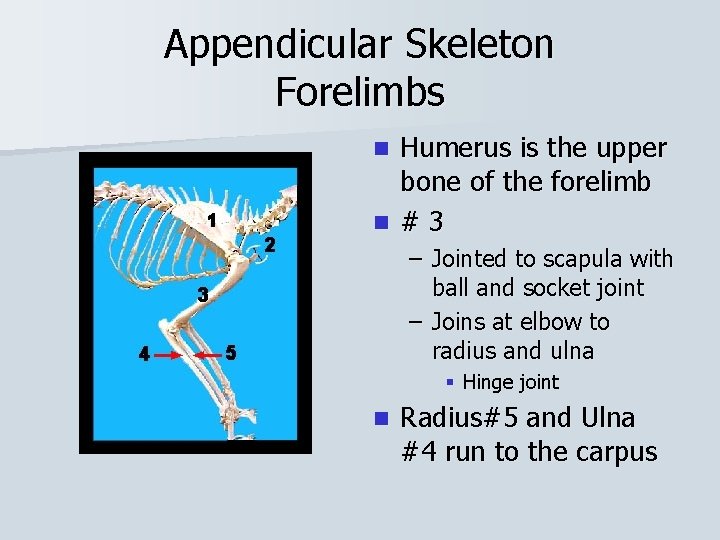
Appendicular Skeleton Forelimbs Humerus is the upper bone of the forelimb n #3 n – Jointed to scapula with ball and socket joint – Joins at elbow to radius and ulna § Hinge joint n Radius#5 and Ulna #4 run to the carpus
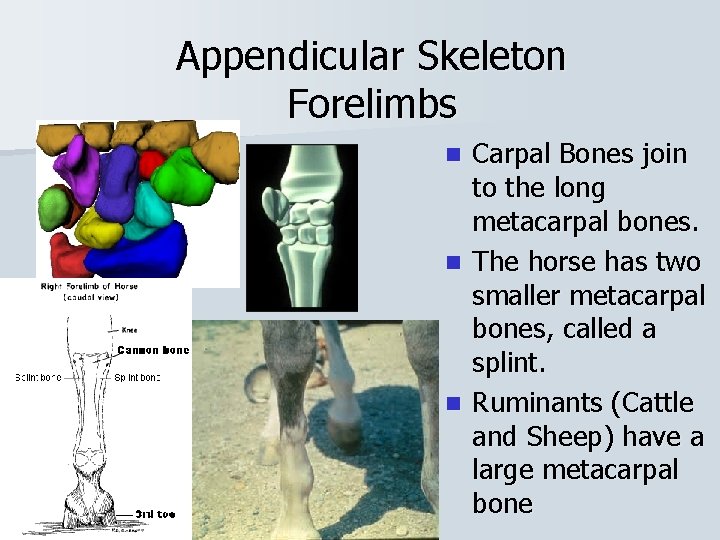
Appendicular Skeleton Forelimbs Carpal Bones join to the long metacarpal bones. n The horse has two smaller metacarpal bones, called a splint. n Ruminants (Cattle and Sheep) have a large metacarpal bone n
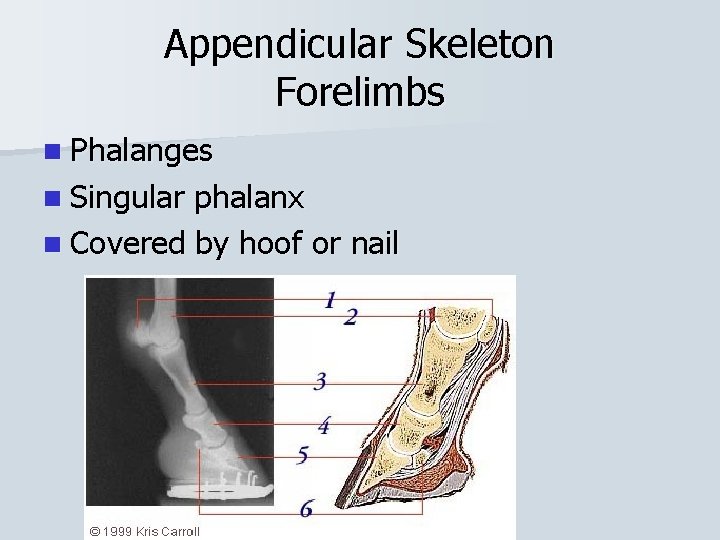
Appendicular Skeleton Forelimbs n Phalanges n Singular phalanx n Covered by hoof or nail
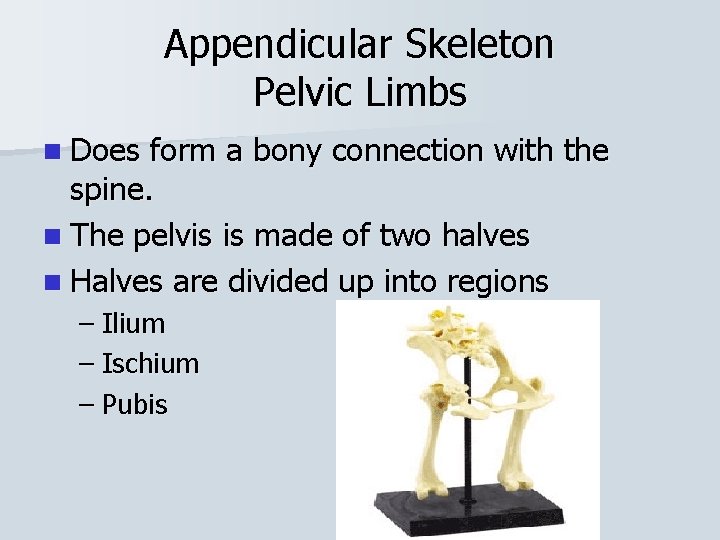
Appendicular Skeleton Pelvic Limbs n Does form a bony connection with the spine. n The pelvis is made of two halves n Halves are divided up into regions – Ilium – Ischium – Pubis
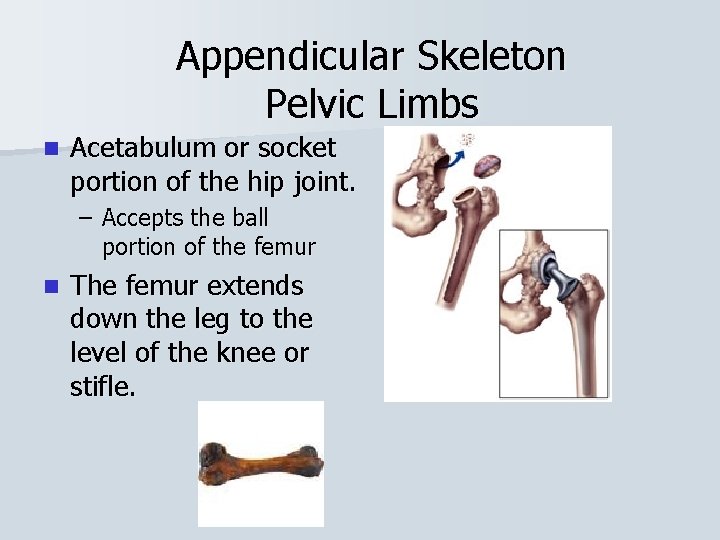
Appendicular Skeleton Pelvic Limbs n Acetabulum or socket portion of the hip joint. – Accepts the ball portion of the femur n The femur extends down the leg to the level of the knee or stifle.
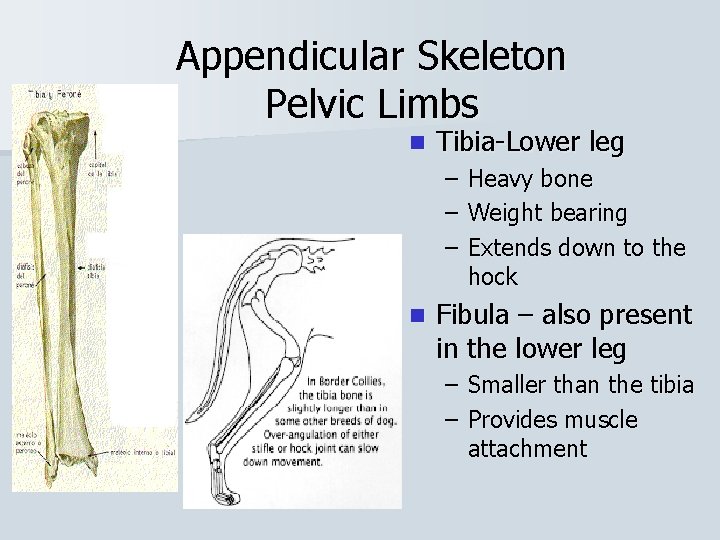
Appendicular Skeleton Pelvic Limbs n Tibia-Lower leg – – – n Heavy bone Weight bearing Extends down to the hock Fibula – also present in the lower leg – Smaller than the tibia – Provides muscle attachment
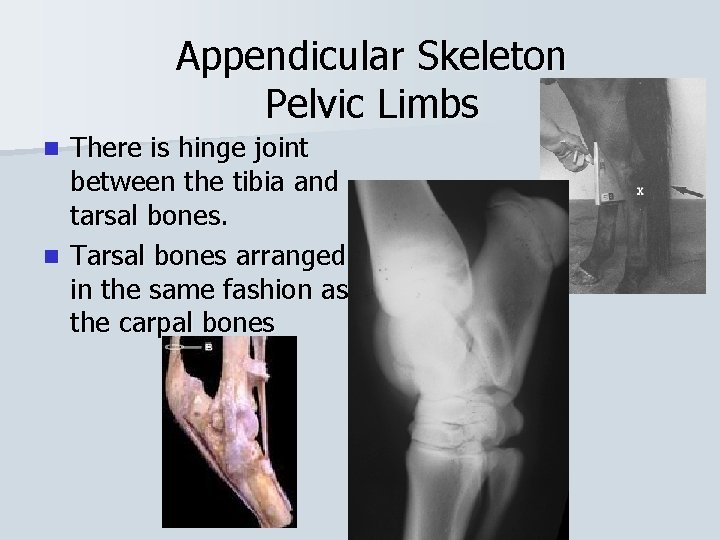
Appendicular Skeleton Pelvic Limbs There is hinge joint between the tibia and tarsal bones. n Tarsal bones arranged in the same fashion as the carpal bones n
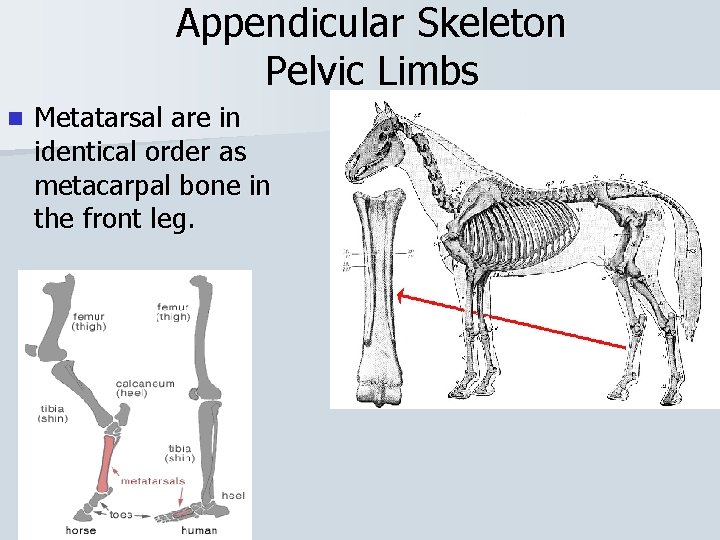
Appendicular Skeleton Pelvic Limbs n Metatarsal are in identical order as metacarpal bone in the front leg.
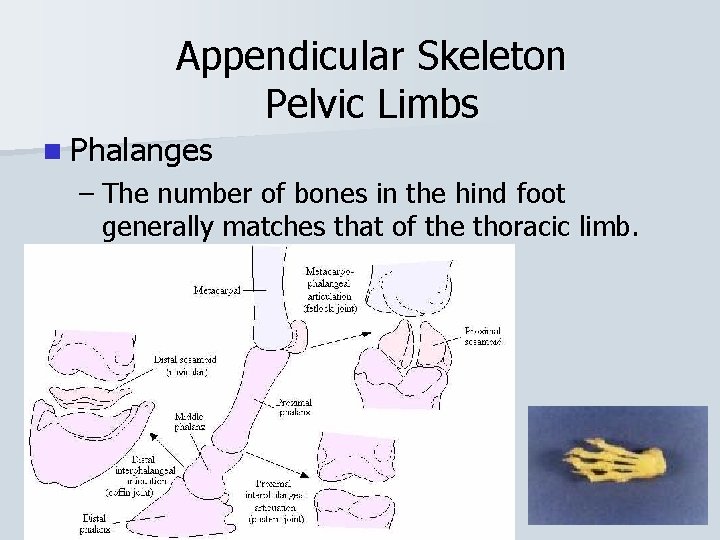
Appendicular Skeleton Pelvic Limbs n Phalanges – The number of bones in the hind foot generally matches that of the thoracic limb.
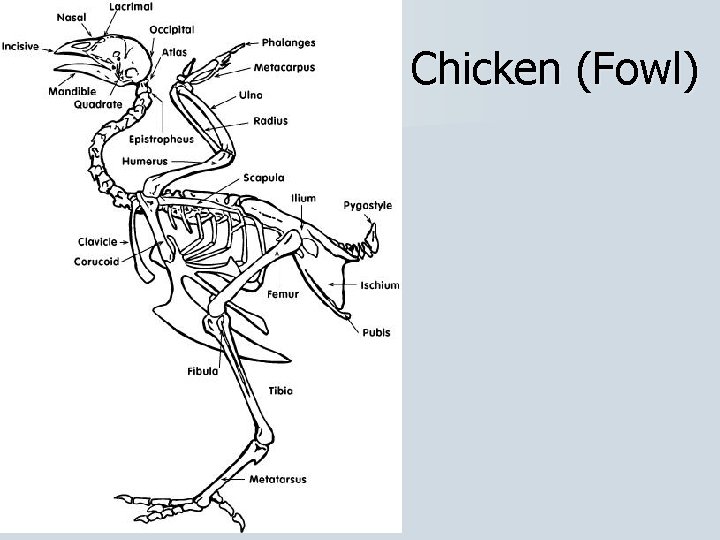
Chicken (Fowl)
Dog Skeleton Review • 1. Coccygeal vertebra • 2. Sacrum • 3. Lumbar vertebrae • 4. Thoracic vertebrae • 5. Cervical vertebrae • 6. Skull • 7. Scapula • 8. Shoulder • 9. Humerus • 10. Elbow • 11. Radius • 12. Carpus • 13. Metacarpals • 14. Ulna • 15. Ribs • 17. Metatarsals • 18. Tarsus • 19. Fibula • 20. Tibia • 21. Knee (stifle) • 22. Pelvis