
Awareness of Low SelfControl Theory and Evidence from
- Slides: 19
Awareness of Low Self-Control: Theory and Evidence from a Homeless Shelter Elif Incekara-Hafalir (Carnegie Mellon University) Sera Linardi (University of Pittsburgh) 2016 CFPB Research Conference
Survey measures of self-control: How informative are they? • Self-control, the ability to follow one’s ideal plan depite of temptations, is a central concept in behavioral science (Laibson (1997), Gul and Pesendorfer (2001)). – Important in financial decision making (Bryan et al. 2010) • Measuring self-control accurately is crucial – Incentivized experiments – Surveys
Survey measures of self-control: Are they measuring awareness in addition to self-control? • Self Control Scale (Tangney, et al. 2004) – “I’m good at resisting temptation” • Expected Deviation (Ameriks et al 2007) – Ideal behavior: “How much would you ideally like to save? ” – Predicted behavior: “How much do you think you would save if you were to give into your temptation? ” – Ideal=$100, Predicted=$99 – Expected Deviation (ED)=$1
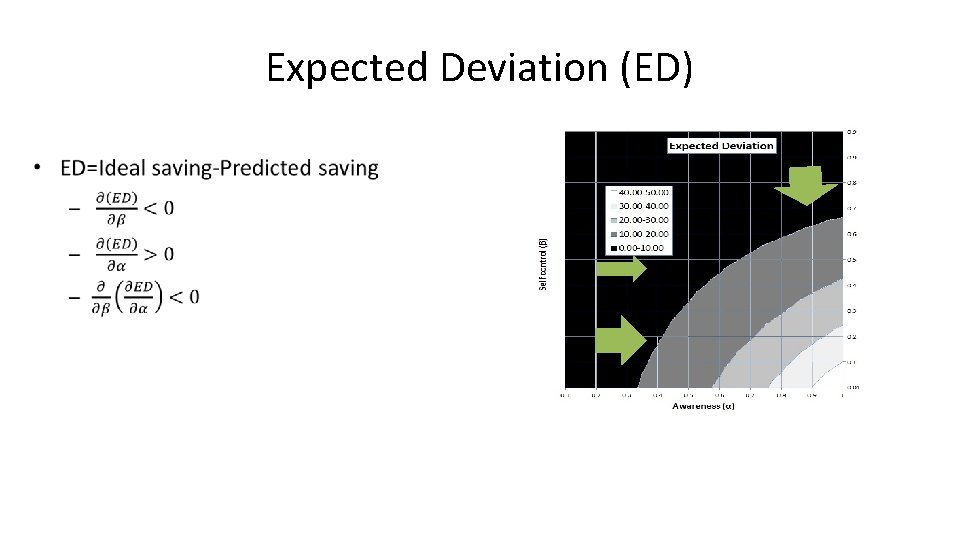
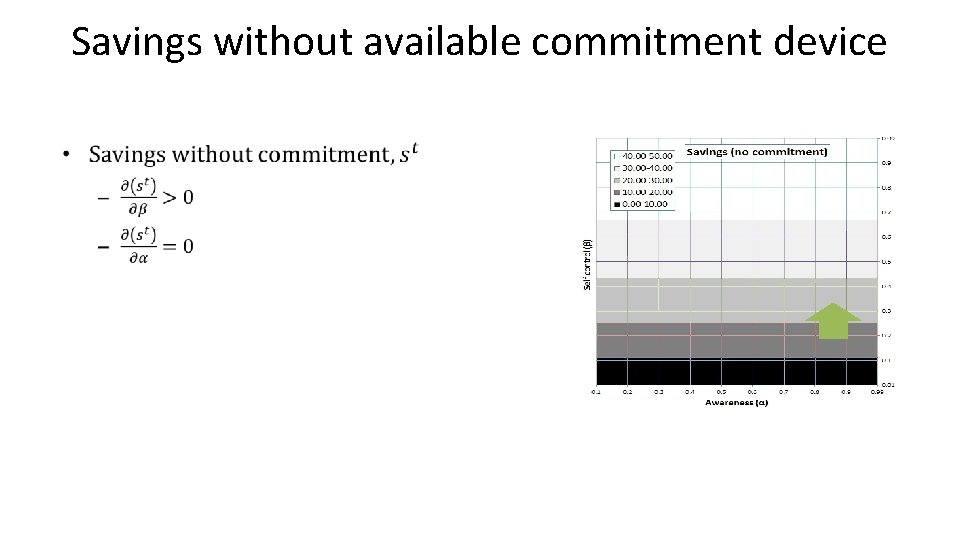
We investigate a specific survey measure of self-control: Expected Deviation (ED) • Expected Deviation (ED)= ideal behavior-predicted behavior • Evidence on ED so far: – ED is negatively correlated with desirable outcome (such as savings) – This is consistent with this survey measure capturing self-control problem • What if ED captures awareness of self-control as well? • Theoretically explore how – Expected Deviation (ED) and savings change with self-control and awareness – Correlation between ED and savings depends on the study population • Empirically explore a setting where awareness is likely to matter – The commitment savings of homeless shelter residents – ED is positively correlated with savings • Not consistent with the idea that ED captures self-control alone • But, meaningful if ED captures awareness in addition to self-control
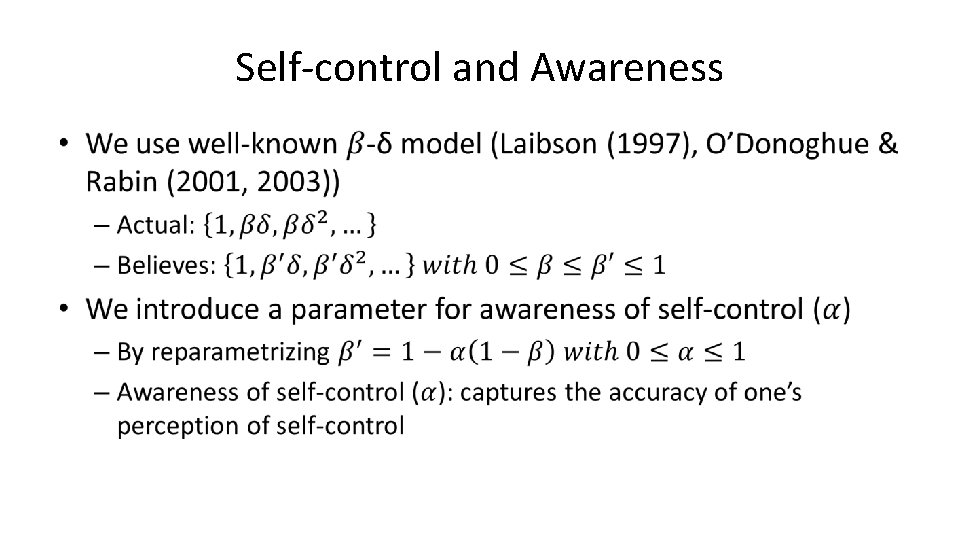
Self-control and Awareness •
Expected Deviation (ED) •
Savings without available commitment device
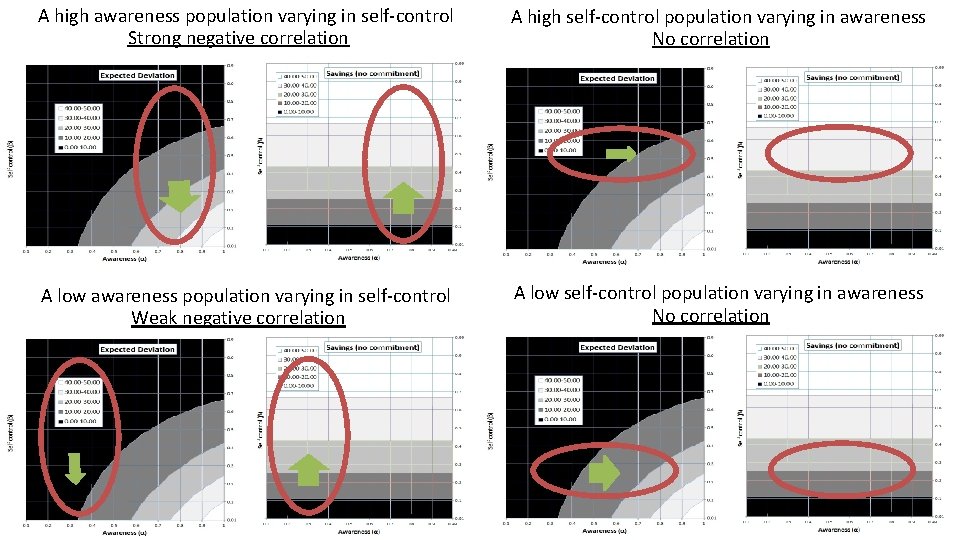
A high awareness population varying in self-control Strong negative correlation A high self-control population varying in awareness No correlation A low awareness population varying in self-control Weak negative correlation A low self-control population varying in awareness No correlation
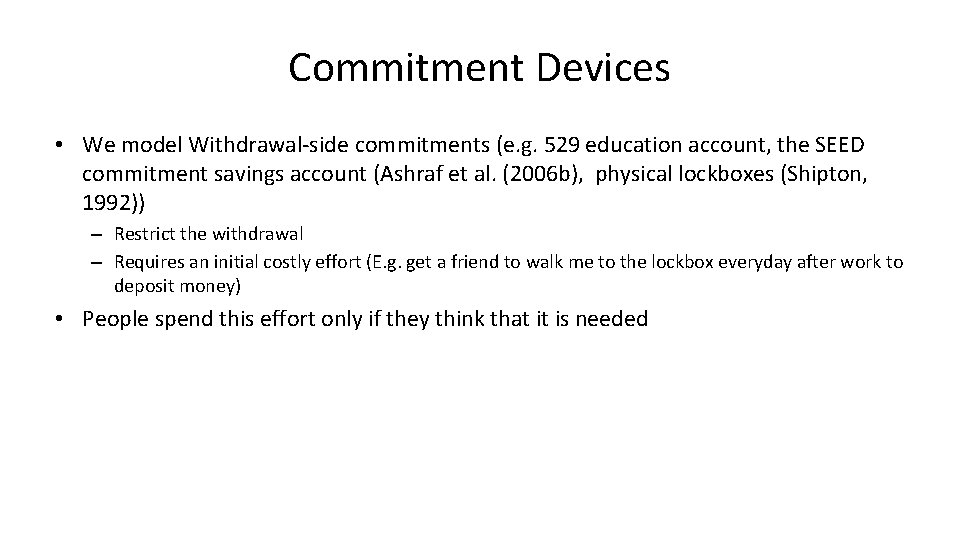
Commitment Devices • We model Withdrawal-side commitments (e. g. 529 education account, the SEED commitment savings account (Ashraf et al. (2006 b), physical lockboxes (Shipton, 1992)) – Restrict the withdrawal – Requires an initial costly effort (E. g. get a friend to walk me to the lockbox everyday after work to deposit money) • People spend this effort only if they think that it is needed
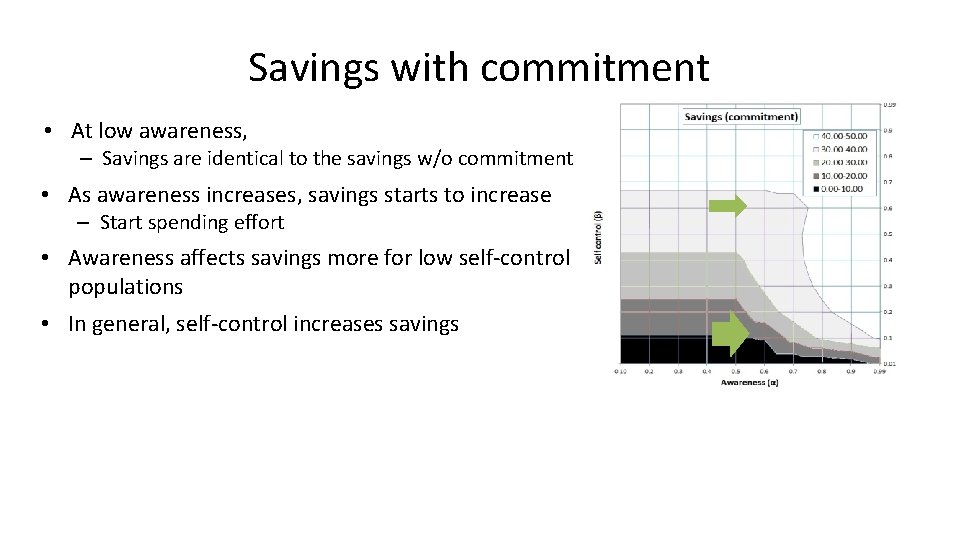
Savings with commitment • At low awareness, – Savings are identical to the savings w/o commitment • As awareness increases, savings starts to increase – Start spending effort • Awareness affects savings more for low self-control populations • In general, self-control increases savings
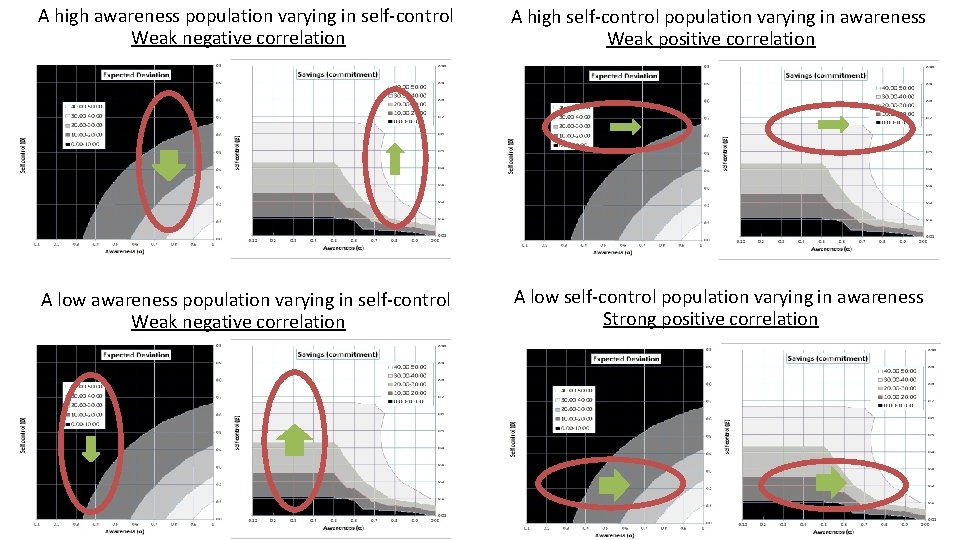
A high awareness population varying in self-control Weak negative correlation A high self-control population varying in awareness Weak positive correlation A low awareness population varying in self-control Weak negative correlation A low self-control population varying in awareness Strong positive correlation
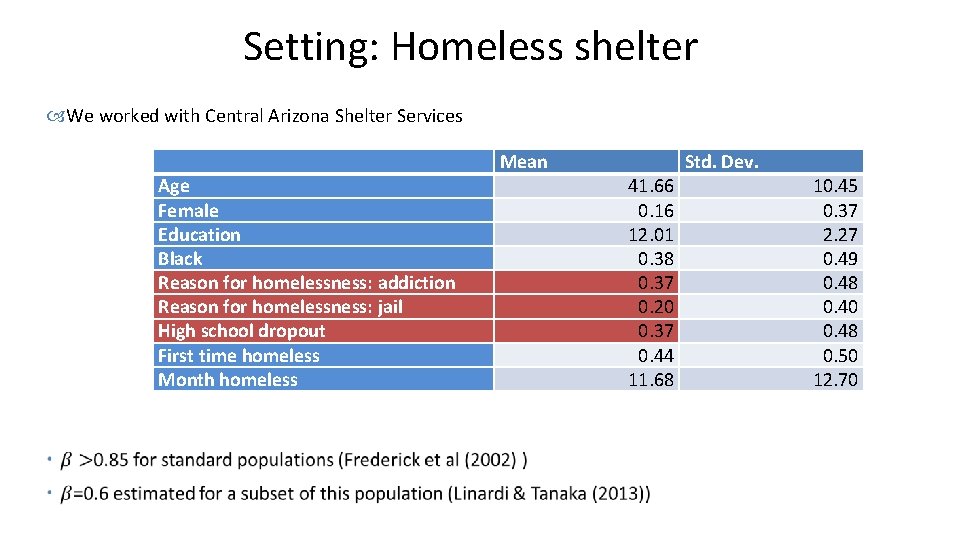
Setting: Homeless shelter We worked with Central Arizona Shelter Services Age Female Education Black Reason for homelessness: addiction Reason for homelessness: jail High school dropout First time homeless Month homeless Mean 41. 66 0. 16 12. 01 0. 38 0. 37 0. 20 0. 37 0. 44 11. 68 Std. Dev. 10. 45 0. 37 2. 27 0. 49 0. 48 0. 40 0. 48 0. 50 12. 70
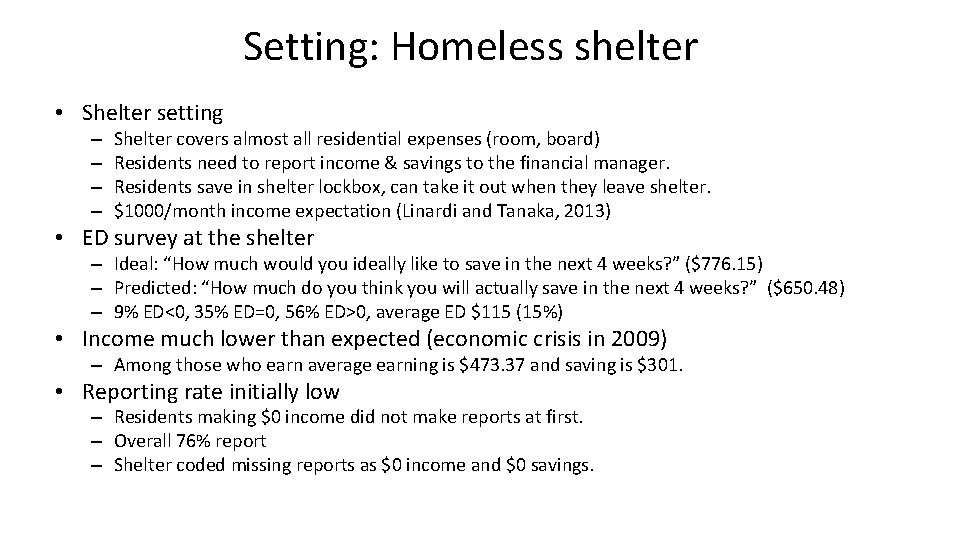
Setting: Homeless shelter • Shelter setting – – Shelter covers almost all residential expenses (room, board) Residents need to report income & savings to the financial manager. Residents save in shelter lockbox, can take it out when they leave shelter. $1000/month income expectation (Linardi and Tanaka, 2013) • ED survey at the shelter – Ideal: “How much would you ideally like to save in the next 4 weeks? ” ($776. 15) – Predicted: “How much do you think you will actually save in the next 4 weeks? ” ($650. 48) – 9% ED<0, 35% ED=0, 56% ED>0, average ED $115 (15%) • Income much lower than expected (economic crisis in 2009) – Among those who earn average earning is $473. 37 and saving is $301. • Reporting rate initially low – Residents making $0 income did not make reports at first. – Overall 76% report – Shelter coded missing reports as $0 income and $0 savings.
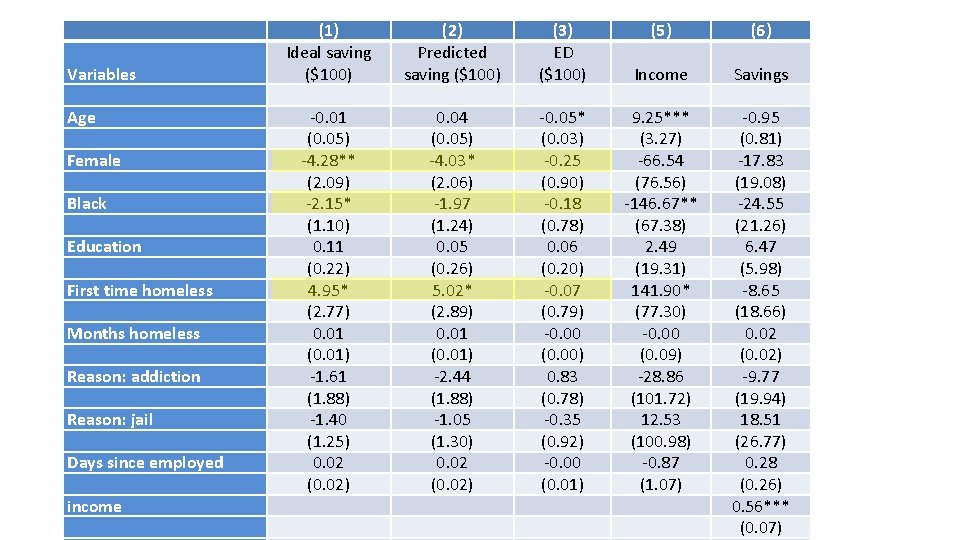
Variables Age Female Black Education First time homeless Months homeless Reason: addiction Reason: jail Days since employed income (1) Ideal saving ($100) -0. 01 (0. 05) -4. 28** (2. 09) -2. 15* (1. 10) 0. 11 (0. 22) 4. 95* (2. 77) 0. 01 (0. 01) -1. 61 (1. 88) -1. 40 (1. 25) 0. 02 (0. 02) (2) Predicted saving ($100) 0. 04 (0. 05) -4. 03* (2. 06) -1. 97 (1. 24) 0. 05 (0. 26) 5. 02* (2. 89) 0. 01 (0. 01) -2. 44 (1. 88) -1. 05 (1. 30) 0. 02 (0. 02) (3) ED ($100) -0. 05* (0. 03) -0. 25 (0. 90) -0. 18 (0. 78) 0. 06 (0. 20) -0. 07 (0. 79) -0. 00 (0. 00) 0. 83 (0. 78) -0. 35 (0. 92) -0. 00 (0. 01) (5) (6) Income 9. 25*** (3. 27) -66. 54 (76. 56) -146. 67** (67. 38) 2. 49 (19. 31) 141. 90* (77. 30) -0. 00 (0. 09) -28. 86 (101. 72) 12. 53 (100. 98) -0. 87 (1. 07) Savings -0. 95 (0. 81) -17. 83 (19. 08) -24. 55 (21. 26) 6. 47 (5. 98) -8. 65 (18. 66) 0. 02 (0. 02) -9. 77 (19. 94) 18. 51 (26. 77) 0. 28 (0. 26) 0. 56*** (0. 07)
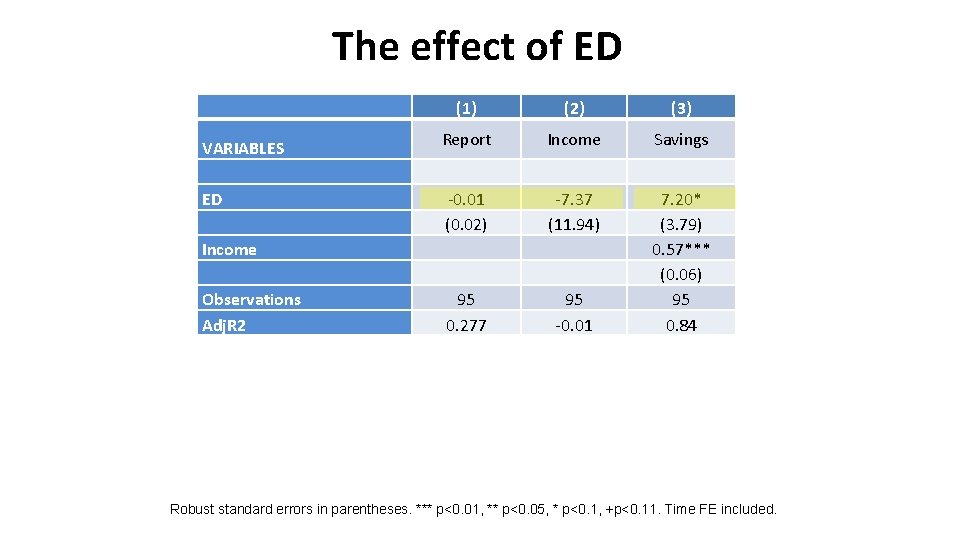
The effect of ED VARIABLES ED (1) (2) (3) Report Income Savings -0. 01 (0. 02) -7. 37 (11. 94) 95 0. 277 95 -0. 01 7. 20* (3. 79) 0. 57*** (0. 06) 95 0. 84 Income Observations Adj. R 2 Robust standard errors in parentheses. *** p<0. 01, ** p<0. 05, * p<0. 1, +p<0. 11. Time FE included.
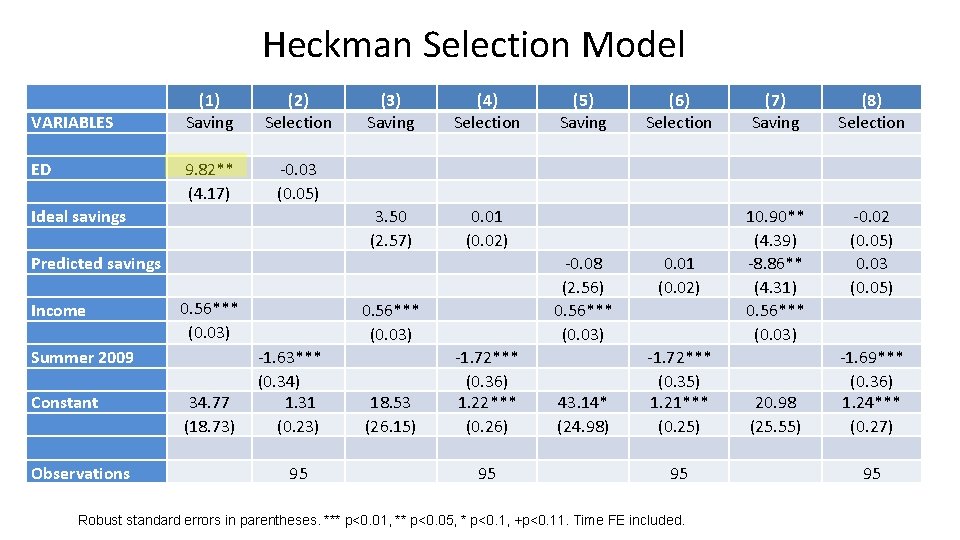
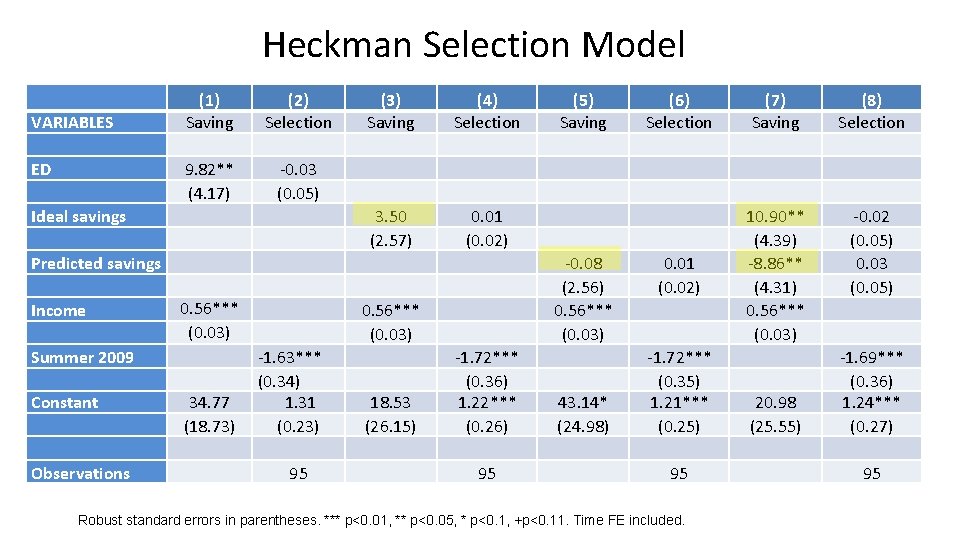
Heckman Selection Model VARIABLES ED (1) Saving (2) Selection 9. 82** (4. 17) -0. 03 (0. 05) Ideal savings (3) Saving (4) Selection 3. 50 (2. 57) 0. 01 (0. 02) Predicted savings Income 0. 56*** (0. 03) Summer 2009 Constant Observations 34. 77 (18. 73) -0. 08 (2. 56) 0. 56*** (0. 03) -1. 63*** (0. 34) 1. 31 (0. 23) 95 18. 53 (26. 15) (5) Saving -1. 72*** (0. 36) 1. 22*** (0. 26) 95 43. 14* (24. 98) (6) Selection (7) Saving (8) Selection 0. 01 (0. 02) 10. 90** (4. 39) -8. 86** (4. 31) 0. 56*** (0. 03) -0. 02 (0. 05) 0. 03 (0. 05) -1. 72*** (0. 35) 1. 21*** (0. 25) 95 Robust standard errors in parentheses. *** p<0. 01, ** p<0. 05, * p<0. 1, +p<0. 11. Time FE included. 20. 98 (25. 55) -1. 69*** (0. 36) 1. 24*** (0. 27) 95
Heckman Selection Model VARIABLES ED (1) Saving (2) Selection 9. 82** (4. 17) -0. 03 (0. 05) Ideal savings (3) Saving (4) Selection 3. 50 (2. 57) 0. 01 (0. 02) Predicted savings Income 0. 56*** (0. 03) Summer 2009 Constant Observations 34. 77 (18. 73) -0. 08 (2. 56) 0. 56*** (0. 03) -1. 63*** (0. 34) 1. 31 (0. 23) 95 18. 53 (26. 15) (5) Saving -1. 72*** (0. 36) 1. 22*** (0. 26) 95 43. 14* (24. 98) (6) Selection (7) Saving (8) Selection 0. 01 (0. 02) 10. 90** (4. 39) -8. 86** (4. 31) 0. 56*** (0. 03) -0. 02 (0. 05) 0. 03 (0. 05) -1. 72*** (0. 35) 1. 21*** (0. 25) 95 Robust standard errors in parentheses. *** p<0. 01, ** p<0. 05, * p<0. 1, +p<0. 11. Time FE included. 20. 98 (25. 55) -1. 69*** (0. 36) 1. 24*** (0. 27) 95
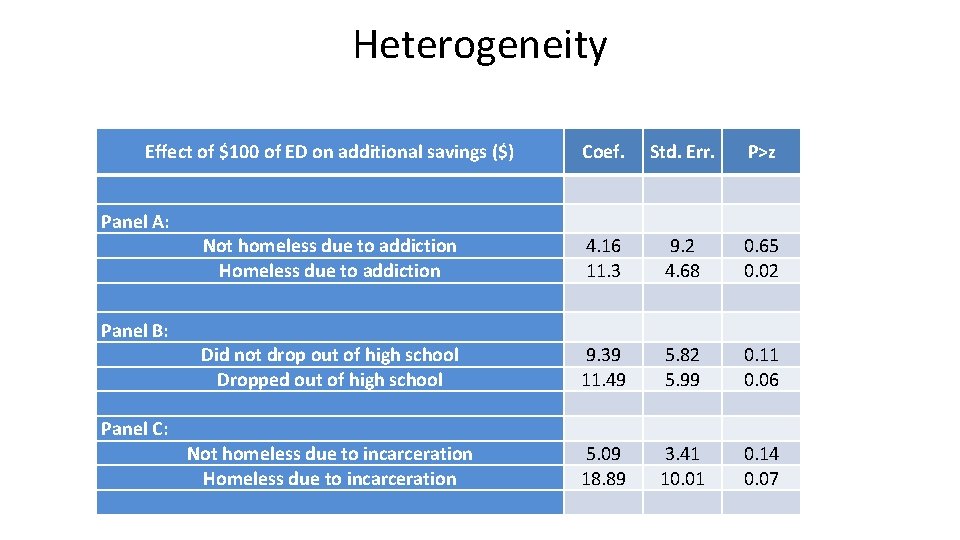
Heterogeneity Effect of $100 of ED on additional savings ($) Panel A: Panel B: Coef. Std. Err. P>z Not homeless due to addiction Homeless due to addiction 4. 16 11. 3 9. 2 4. 68 0. 65 0. 02 Did not drop out of high school Dropped out of high school 9. 39 11. 49 5. 82 5. 99 0. 11 0. 06 Not homeless due to incarceration Homeless due to incarceration 5. 09 18. 89 3. 41 10. 01 0. 14 0. 07 Panel C:
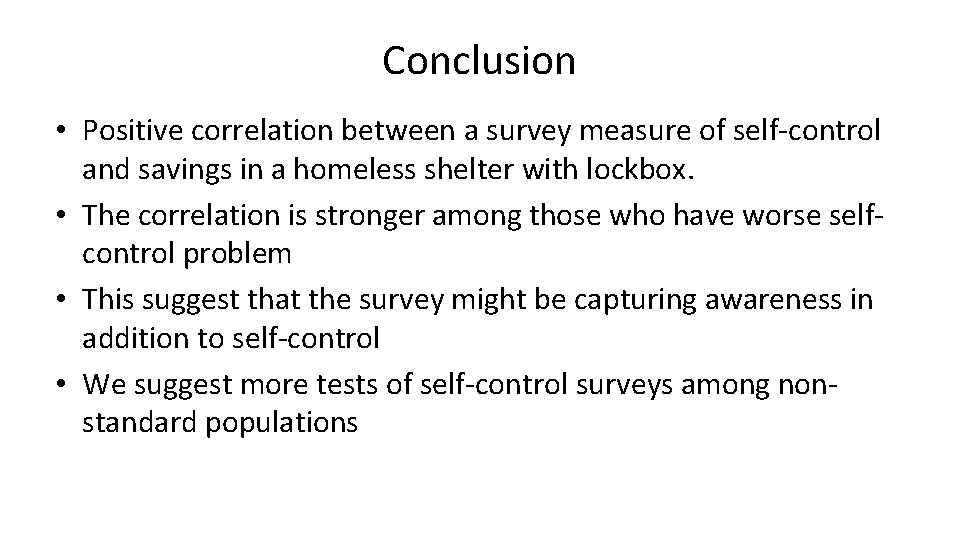
Conclusion • Positive correlation between a survey measure of self-control and savings in a homeless shelter with lockbox. • The correlation is stronger among those who have worse selfcontrol problem • This suggest that the survey might be capturing awareness in addition to self-control • We suggest more tests of self-control surveys among nonstandard populations