
Avoidance Ch 15 Avoidance Contingency Before Behavior After
Avoidance Ch 15
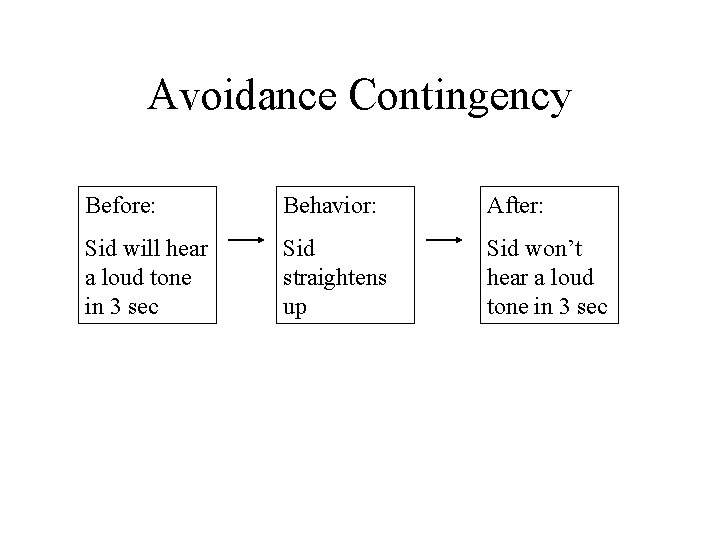
Avoidance Contingency Before: Behavior: After: Sid will hear a loud tone in 3 sec Sid straightens up Sid won’t hear a loud tone in 3 sec
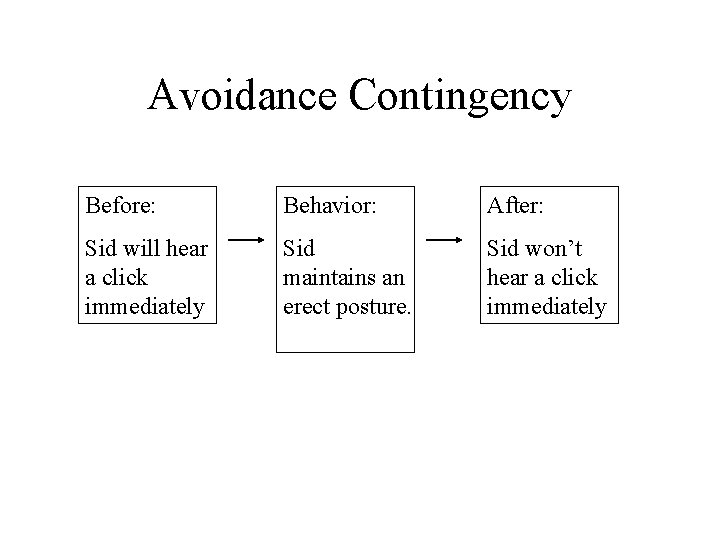
Avoidance Contingency Before: Behavior: After: Sid will hear a click immediately Sid maintains an erect posture. Sid won’t hear a click immediately
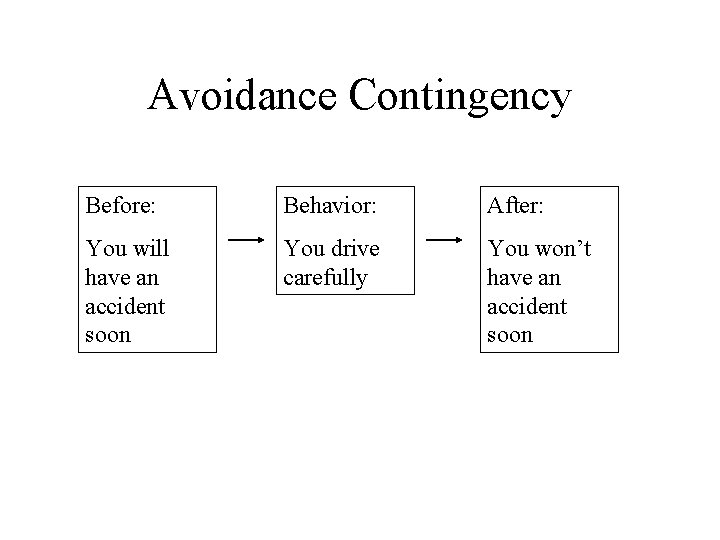
Avoidance Contingency Before: Behavior: After: You will have an accident soon You drive carefully You won’t have an accident soon
Avoidance Contingency • The immediate, response-contingent prevention of an aversive condition resulting in an increased frequency of that response
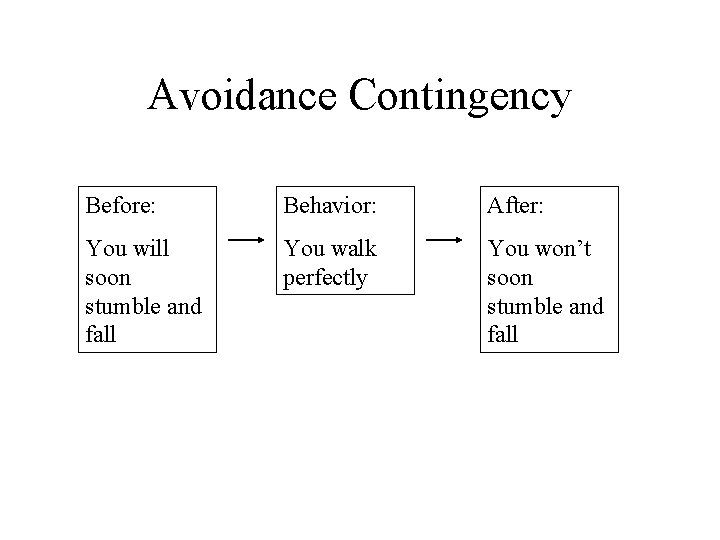
Avoidance Contingency Before: Behavior: After: You will soon stumble and fall You walk perfectly You won’t soon stumble and fall
Avoidance of an Aversive Event • Example: overcorrection following training on eye contact… • Try using reinforcers first • Meet ethical standards
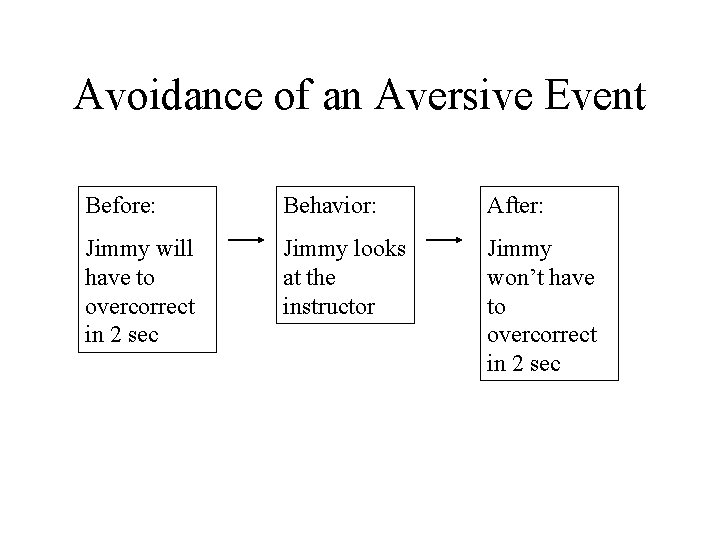
Avoidance of an Aversive Event Before: Behavior: After: Jimmy will have to overcorrect in 2 sec Jimmy looks at the instructor Jimmy won’t have to overcorrect in 2 sec
Avoidance of Loss Contingency • The immediate, response-contingent prevention of loss of a reinforcer resulting in an increased frequency of that response.
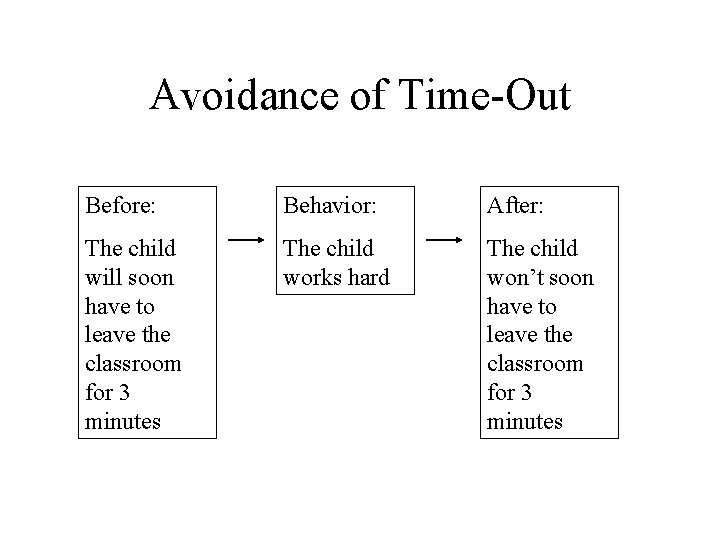
Avoidance of Time-Out Before: Behavior: After: The child will soon have to leave the classroom for 3 minutes The child works hard The child won’t soon have to leave the classroom for 3 minutes
Avoidance of Reprimands • Reprimands are specific • BE careful about the dead man… • Interpretation of contingencies
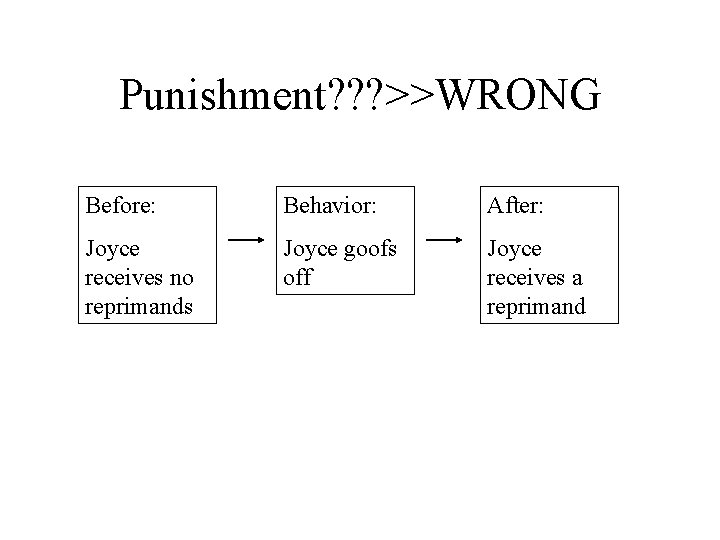
Punishment? ? ? >>WRONG Before: Behavior: After: Joyce receives no reprimands Joyce goofs off Joyce receives a reprimand
Goofs off • Large response class • Does not pass dead man’s test
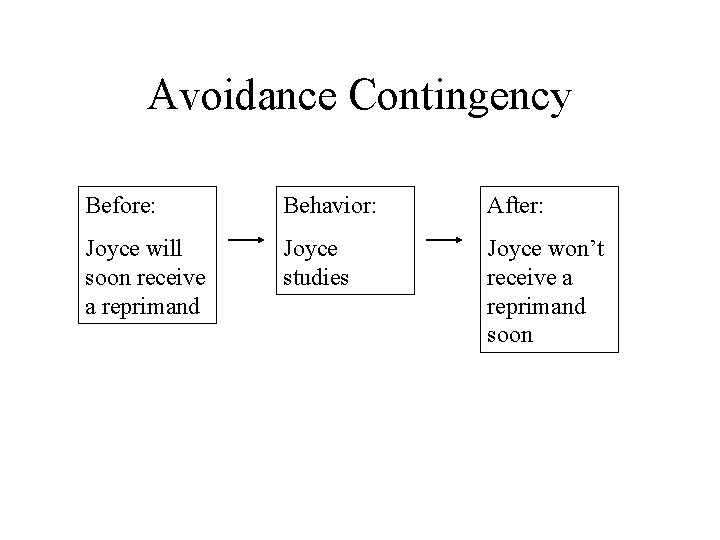
Avoidance Contingency Before: Behavior: After: Joyce will soon receive a reprimand Joyce studies Joyce won’t receive a reprimand soon
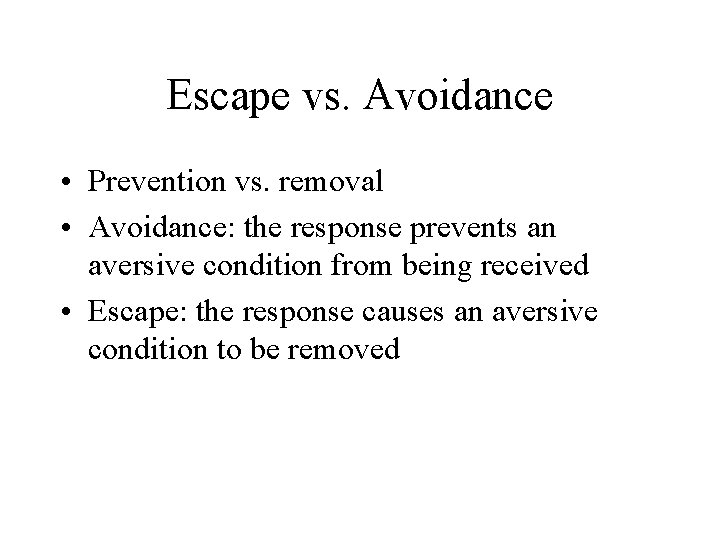
Escape vs. Avoidance • Prevention vs. removal • Avoidance: the response prevents an aversive condition from being received • Escape: the response causes an aversive condition to be removed
Where does avoidance come from? • What happens first?
Why is avoidance behavior resistant to change?
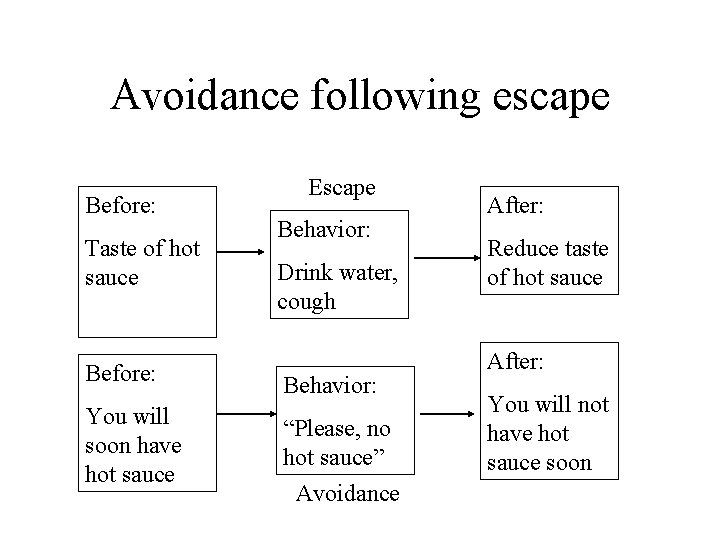
Avoidance following escape Before: Taste of hot sauce Before: You will soon have hot sauce Escape Behavior: Drink water, cough Behavior: “Please, no hot sauce” Avoidance After: Reduce taste of hot sauce After: You will not have hot sauce soon
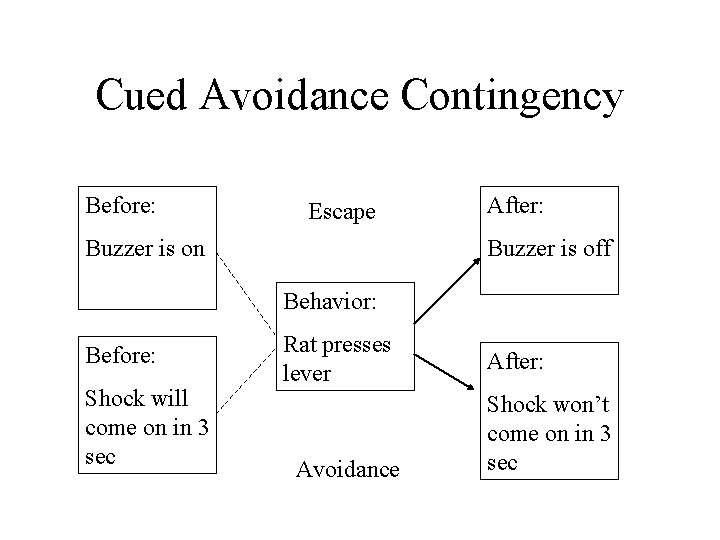
Cued Avoidance Contingency Before: Escape Buzzer is on After: Buzzer is off Behavior: Before: Shock will come on in 3 sec Rat presses lever Avoidance After: Shock won’t come on in 3 sec
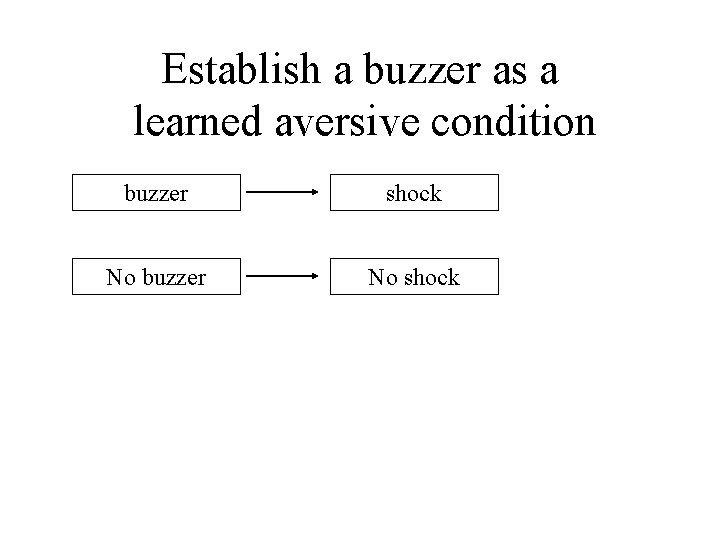
Establish a buzzer as a learned aversive condition buzzer shock No buzzer No shock
Buzzer • The neutral buzzer becomes a warning stimulus through use of the pairing procedure • The pairing procedure brings into play the value altering principle
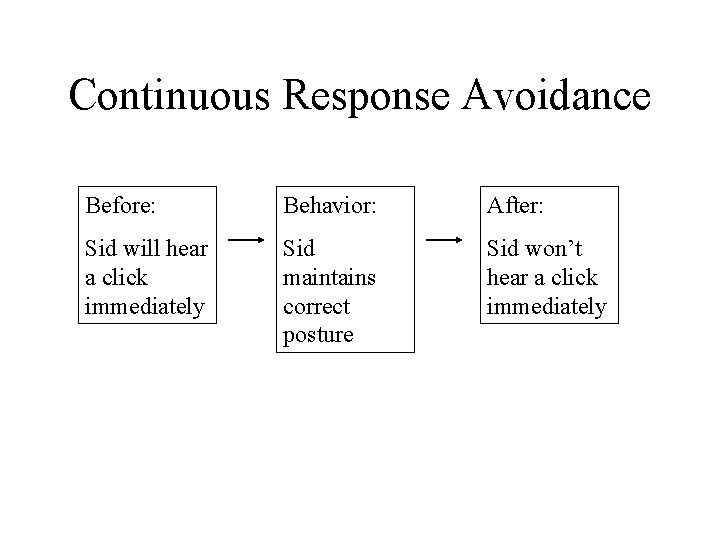
Continuous Response Avoidance Before: Behavior: After: Sid will hear a click immediately Sid maintains correct posture Sid won’t hear a click immediately
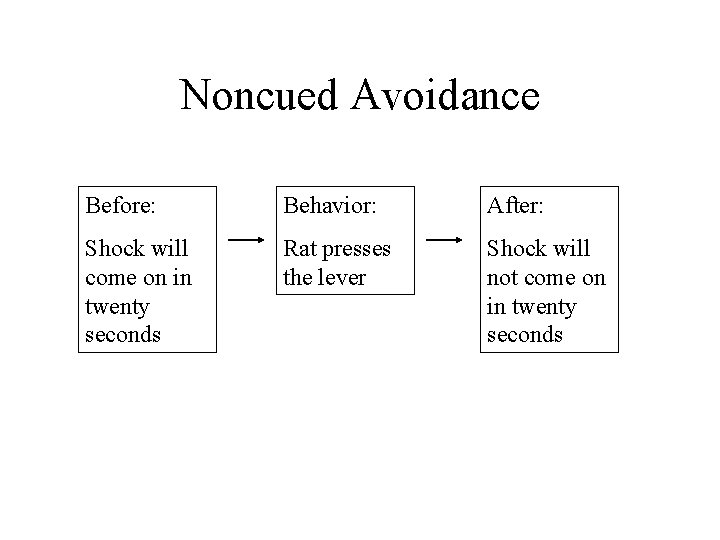
Noncued Avoidance Before: Behavior: After: Shock will come on in twenty seconds Rat presses the lever Shock will not come on in twenty seconds
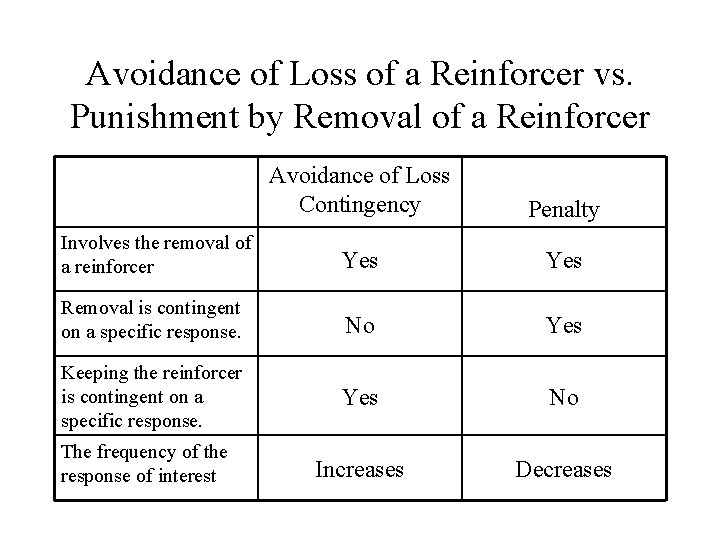
Avoidance of Loss of a Reinforcer vs. Punishment by Removal of a Reinforcer Avoidance of Loss Contingency Penalty Involves the removal of a reinforcer Yes Removal is contingent on a specific response. No Yes Keeping the reinforcer is contingent on a specific response. Yes No Increases Decreases The frequency of the response of interest
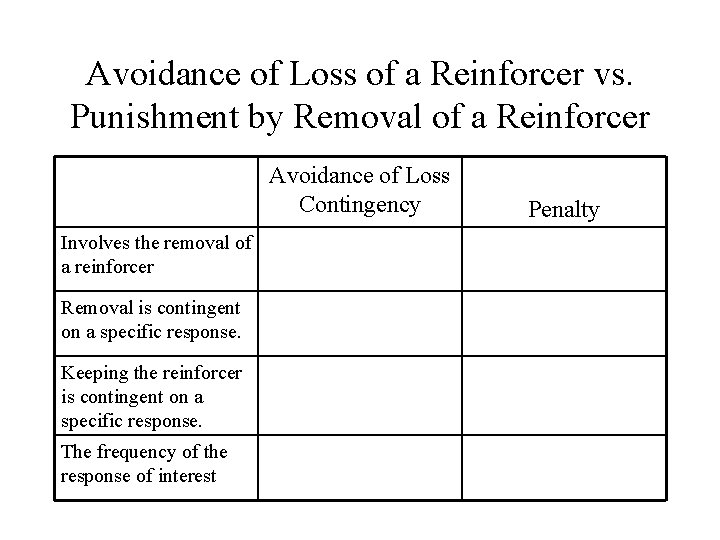
Avoidance of Loss of a Reinforcer vs. Punishment by Removal of a Reinforcer Avoidance of Loss Contingency Involves the removal of a reinforcer Removal is contingent on a specific response. Keeping the reinforcer is contingent on a specific response. The frequency of the response of interest Penalty
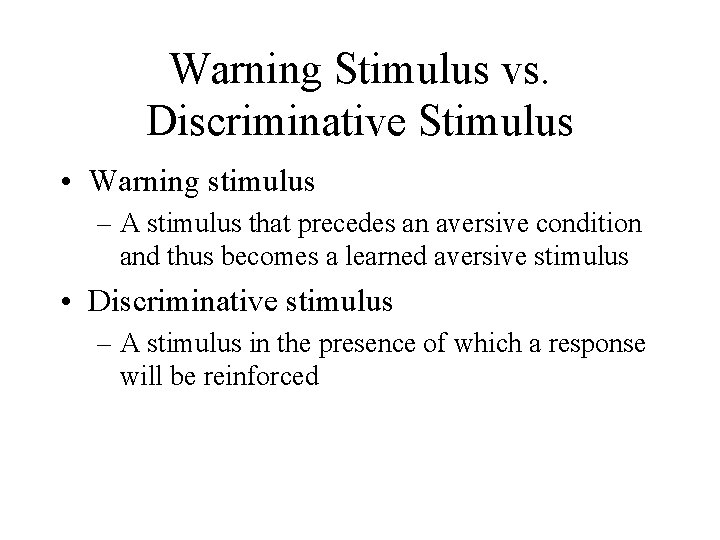
Warning Stimulus vs. Discriminative Stimulus • Warning stimulus – A stimulus that precedes an aversive condition and thus becomes a learned aversive stimulus • Discriminative stimulus – A stimulus in the presence of which a response will be reinforced
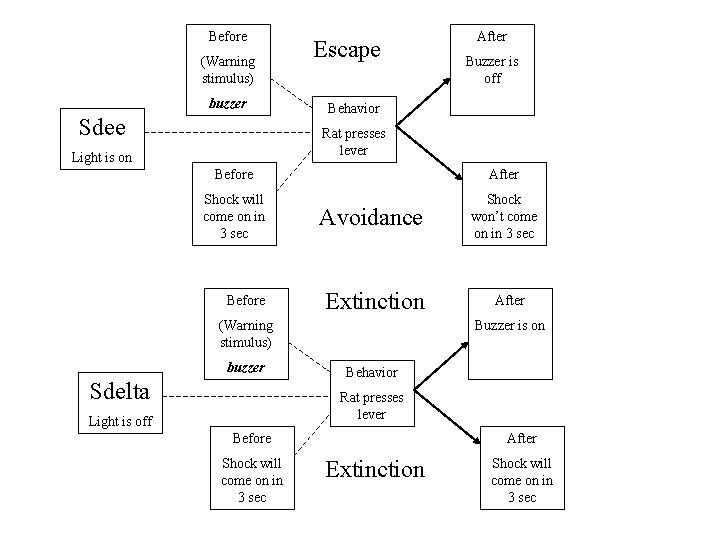
Before (Warning stimulus) buzzer Sdee Escape After Buzzer is off Behavior Rat presses lever Light is on Before After Shock will come on in 3 sec Avoidance Shock won’t come on in 3 sec Before Extinction (Warning stimulus) buzzer Sdelta After Buzzer is on Behavior Rat presses lever Light is off Before Shock will come on in 3 sec After Extinction Shock will come on in 3 sec
- Slides: 27