
AVID Professional Learning Socratic Seminar Slide 1 Todays


- Slides: 27
AVID Professional Learning Socratic Seminar Slide 1
Today’s Objectives 1. 2. 3. 4. Slide 2 Overview of Training Gage Level of Experience Elements of a Socratic Seminar Practice
Level of Experience With a partner discuss: 1. What form of classroom conversation do you currently use? 2. What level of experience do you have with Socratic Seminars? Slide 3
What’s Your Why? ▪ Better active engagement of students. ▪ Empowers students to take ownership of their learning. ▪ Provides structure and personal accountability. ▪ Challenges and affirms students knowledge and skills. ▪ Student driven, minimal management. ▪ Easily implemented and repeated. Slide 4
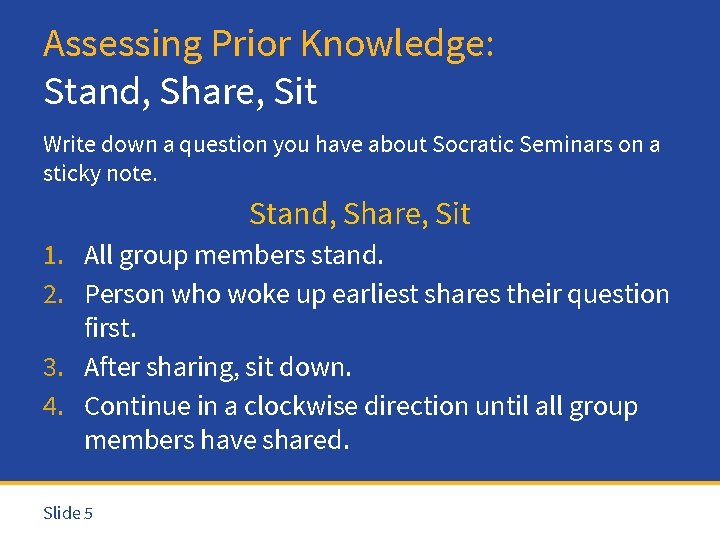
Assessing Prior Knowledge: Stand, Share, Sit Write down a question you have about Socratic Seminars on a sticky note. Stand, Share, Sit 1. All group members stand. 2. Person who woke up earliest shares their question first. 3. After sharing, sit down. 4. Continue in a clockwise direction until all group members have shared. Slide 5
Resources and Follow Up • All resources used or discussed today can be found on Aaron Mathews teacher website. • If you have any questions please do not hesitate to email either of us. ▪ Aaron Mathews – amathews@grantspass. k 12. or. us ▪ Scott Wakefield – swakefield@grantspass. k 12. or. us Slide 6
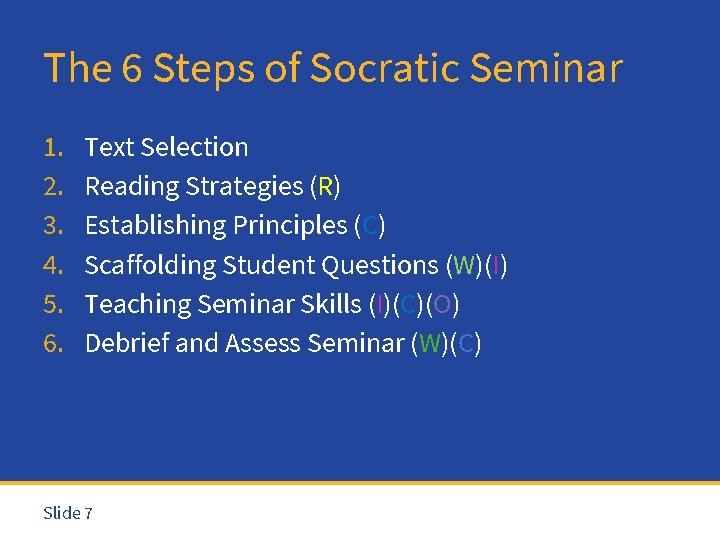
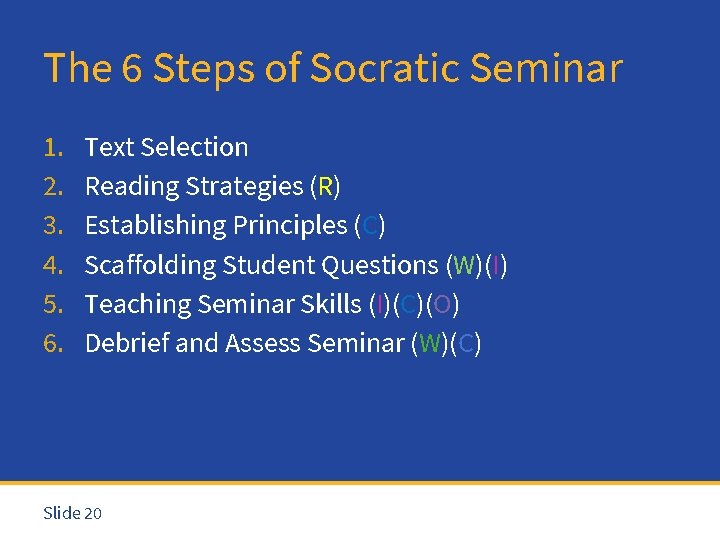
The 6 Steps of Socratic Seminar 1. 2. 3. 4. 5. 6. Text Selection Reading Strategies (R) Establishing Principles (C) Scaffolding Student Questions (W)(I) Teaching Seminar Skills (I)(C)(O) Debrief and Assess Seminar (W)(C) Slide 7
Step 1 – Text/Media Selection The definition of text can be very broad and is not limited to printed text in Socratic Seminars. What kinds of texts could be used in Socratic Seminar from a variety of disciplines? Popcorn out your answers. Slide 8
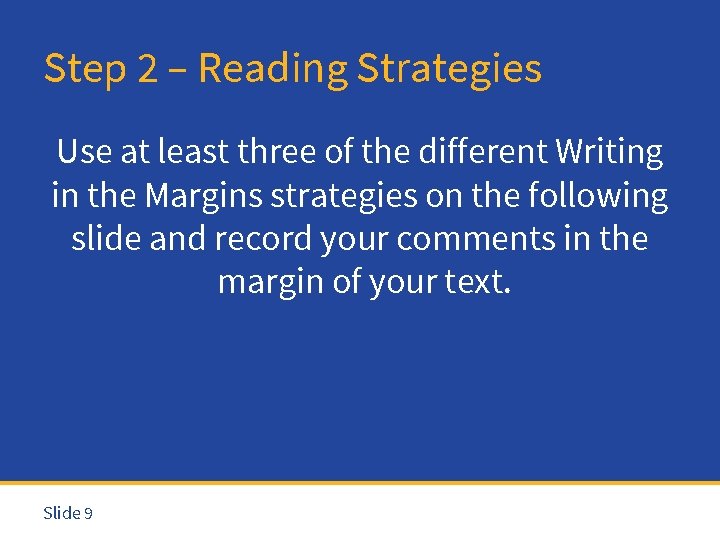
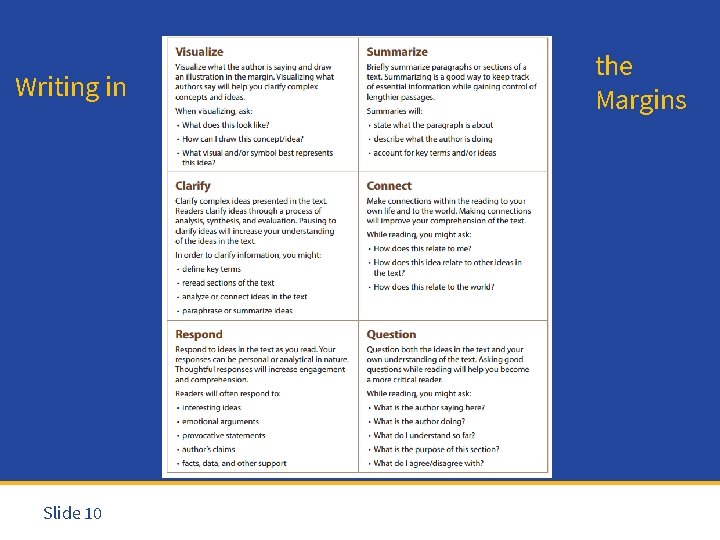
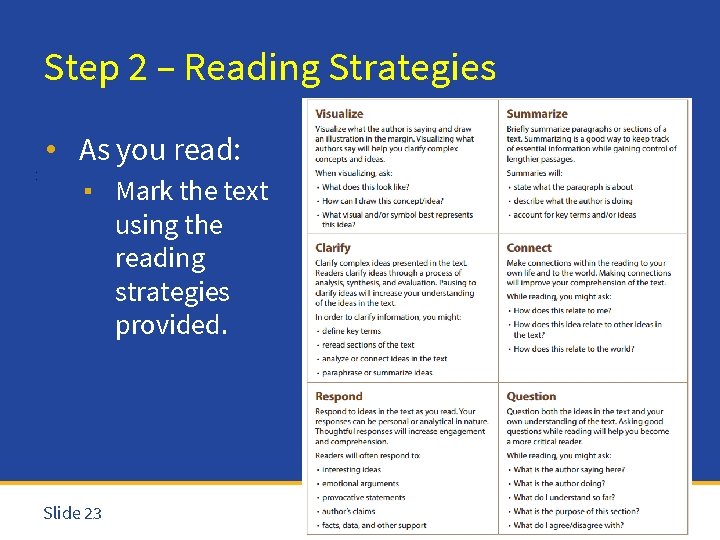
Step 2 – Reading Strategies Use at least three of the different Writing in the Margins strategies on the following slide and record your comments in the margin of your text. Slide 9
Writing in Slide 10 the Margins
Step 3 – Establishing Classroom Norms With a partner discuss: 1. What are your classroom norms for group discussion? 2. What are some fears that you have about student behavior during discussion? Slide 11
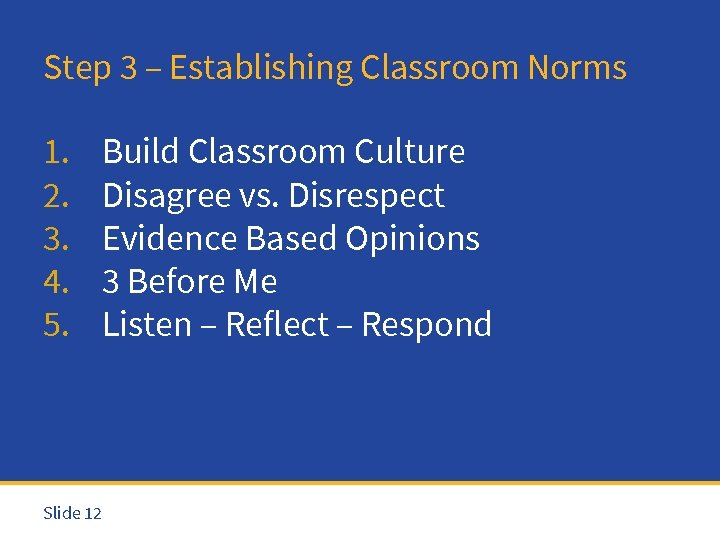
Step 3 – Establishing Classroom Norms 1. 2. 3. 4. 5. Build Classroom Culture Disagree vs. Disrespect Evidence Based Opinions 3 Before Me Listen – Reflect – Respond Slide 12
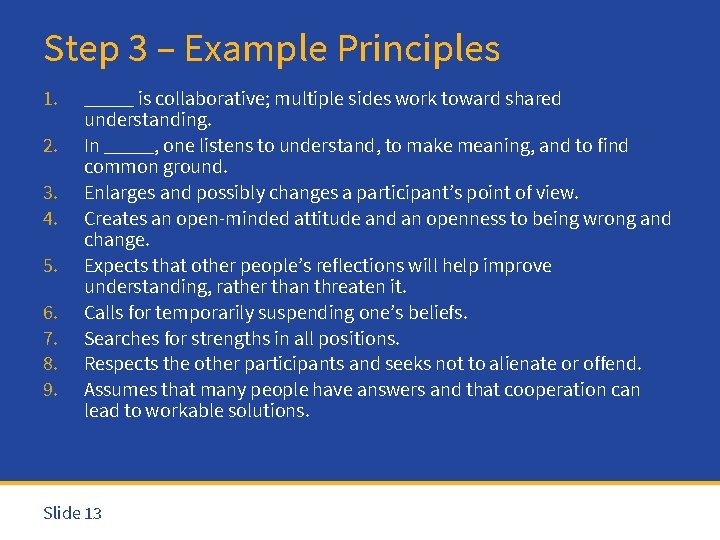
Step 3 – Example Principles 1. 2. 3. 4. 5. 6. 7. 8. 9. _____ is collaborative; multiple sides work toward shared understanding. In _____, one listens to understand, to make meaning, and to find common ground. Enlarges and possibly changes a participant’s point of view. Creates an open-minded attitude and an openness to being wrong and change. Expects that other people’s reflections will help improve understanding, rather than threaten it. Calls for temporarily suspending one’s beliefs. Searches for strengths in all positions. Respects the other participants and seeks not to alienate or offend. Assumes that many people have answers and that cooperation can lead to workable solutions. Slide 13
Step 4 – Student Questions • Allow time for students to develop meaningful questions based on content provided. • High quality questions lead to high quality discussion and minimal lapses in conversation. Slide 14
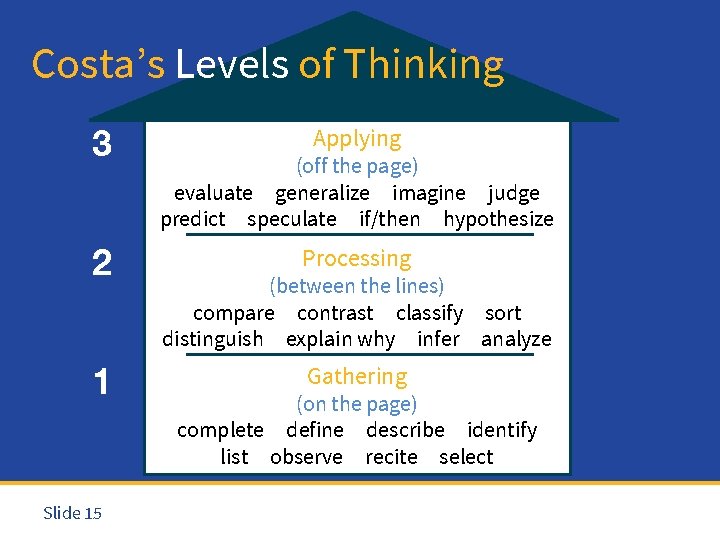
Costa’s Levels of Thinking 3 2 1 Slide 15 Applying (off the page) evaluate generalize imagine judge predict speculate if/then hypothesize Processing (between the lines) compare contrast classify sort distinguish explain why infer analyze Gathering (on the page) complete define describe identify list observe recite select
Step 5 – Teaching Socratic Seminar Skills Guidelines 1. Listen No one can speak while someone else is speaking. 2. Build Speakers must try to build on what others say, not debate their views. 3. Refer to the text Speakers must refer directly to the section of the text from which their ideas come rather than making general comments or observations. Slide 16
Step 6 – Debrief and Discuss Reflection • Allow a few minutes to review their notes and write a summary that answers the Essential Question. ▪ This could also be done as a warm up the following day. Slide 17
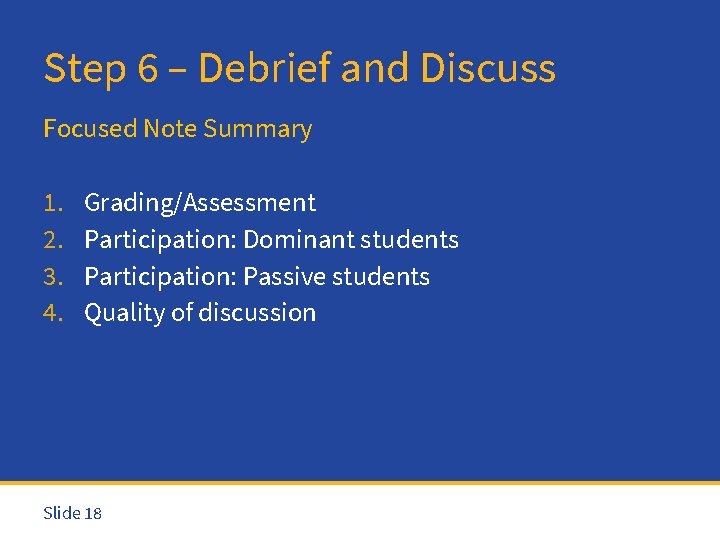
Step 6 – Debrief and Discuss Focused Note Summary 1. 2. 3. 4. Grading/Assessment Participation: Dominant students Participation: Passive students Quality of discussion Slide 18
Practice Time! Slide 19
The 6 Steps of Socratic Seminar 1. 2. 3. 4. 5. 6. Text Selection Reading Strategies (R) Establishing Principles (C) Scaffolding Student Questions (W)(I) Teaching Seminar Skills (I)(C)(O) Debrief and Assess Seminar (W)(C) Slide 20
Essential Question • Washington Huskies; dirty team or the dirtiest team of all time? Slide 21
Essential Question • To what degree should athletes and athletic companies share their political beliefs with their fans/consumers? Slide 22
Step 2 – Reading Strategies : • As you read: ▪ Mark the text using the reading strategies provided. Slide 23
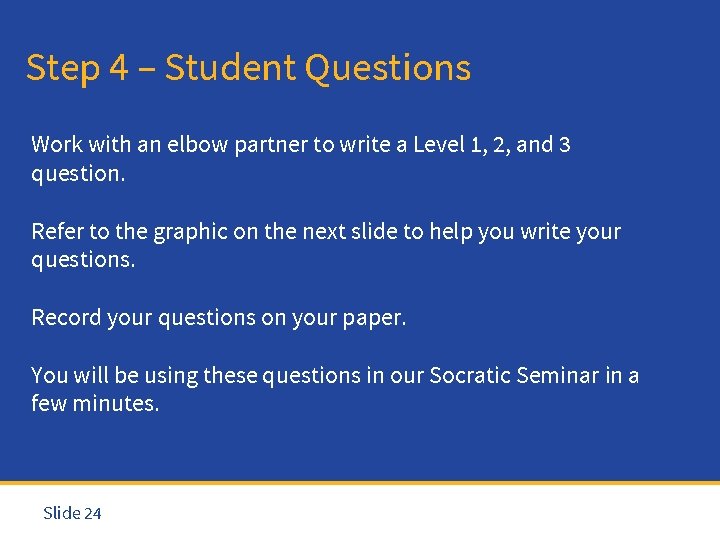
Step 4 – Student Questions Work with an elbow partner to write a Level 1, 2, and 3 question. Refer to the graphic on the next slide to help you write your questions. Record your questions on your paper. You will be using these questions in our Socratic Seminar in a few minutes. Slide 24
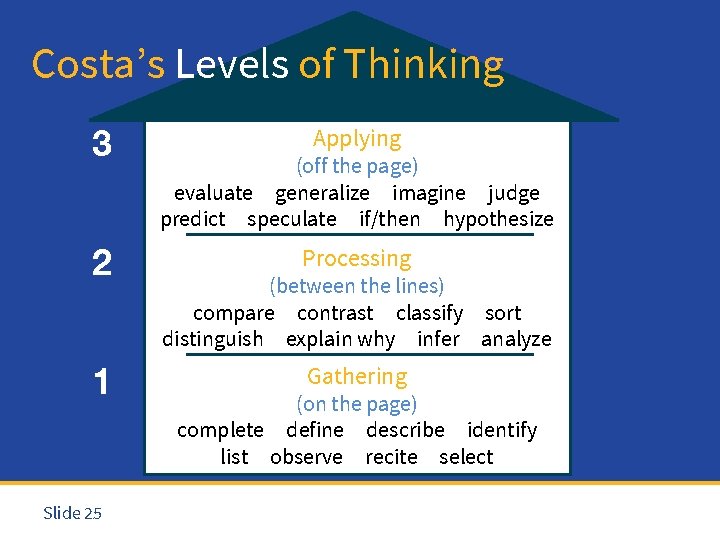
Costa’s Levels of Thinking 3 2 1 Slide 25 Applying (off the page) evaluate generalize imagine judge predict speculate if/then hypothesize Processing (between the lines) compare contrast classify sort distinguish explain why infer analyze Gathering (on the page) complete define describe identify list observe recite select
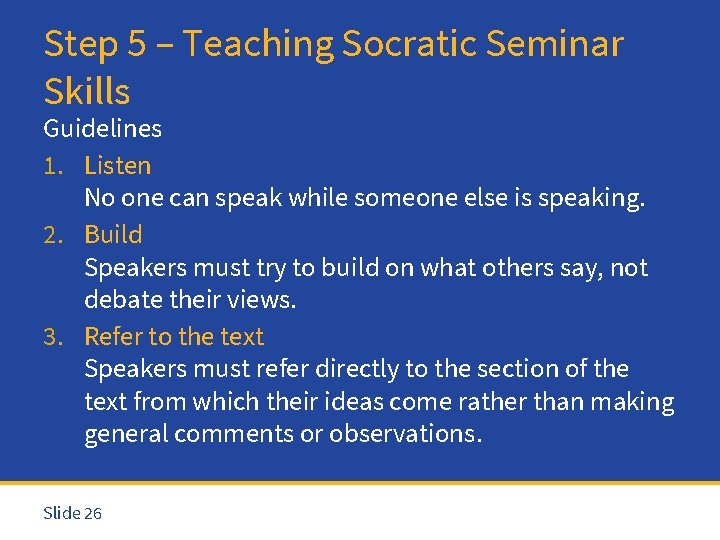
Step 5 – Teaching Socratic Seminar Skills Guidelines 1. Listen No one can speak while someone else is speaking. 2. Build Speakers must try to build on what others say, not debate their views. 3. Refer to the text Speakers must refer directly to the section of the text from which their ideas come rather than making general comments or observations. Slide 26
Step 6 – Debrief and Discuss Reflection • Allow a few minutes to review their notes and write a summary that answers the Essential Question. ▪ This could also be done as a warm up the following day. Slide 27