
Aviation Weather Center Update Friends and Partners of
- Slides: 15
Aviation Weather Center Update Friends and Partners of Aviation Weather Jack May, Director Aviation Weather Center All Hands October 13, 2004
Rapid Fire Update on Many Fronts • • Graphical Forecast for Aviation Timeline of AWRP products Verification of IFR accuracy. Report Flight Plan Freezing Level for ADDS GFA on ADDS AWC Web Based Pireps NWS Polygon Warnings Investigation Working Together to Save Lives
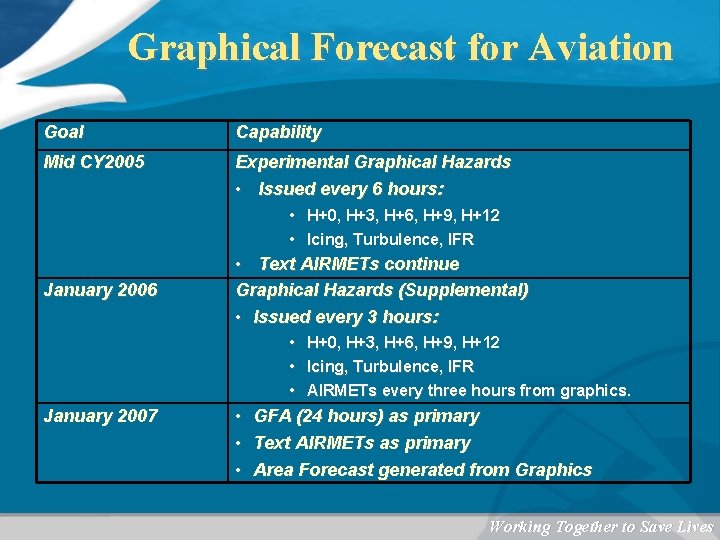
Graphical Forecast for Aviation Goal Capability Mid CY 2005 Experimental Graphical Hazards • Issued every 6 hours: • H+0, H+3, H+6, H+9, H+12 • Icing, Turbulence, IFR January 2006 • Text AIRMETs continue Graphical Hazards (Supplemental) • Issued every 3 hours: • H+0, H+3, H+6, H+9, H+12 • Icing, Turbulence, IFR • AIRMETs every three hours from graphics. January 2007 • • • GFA (24 hours) as primary Text AIRMETs as primary Area Forecast generated from Graphics Working Together to Save Lives
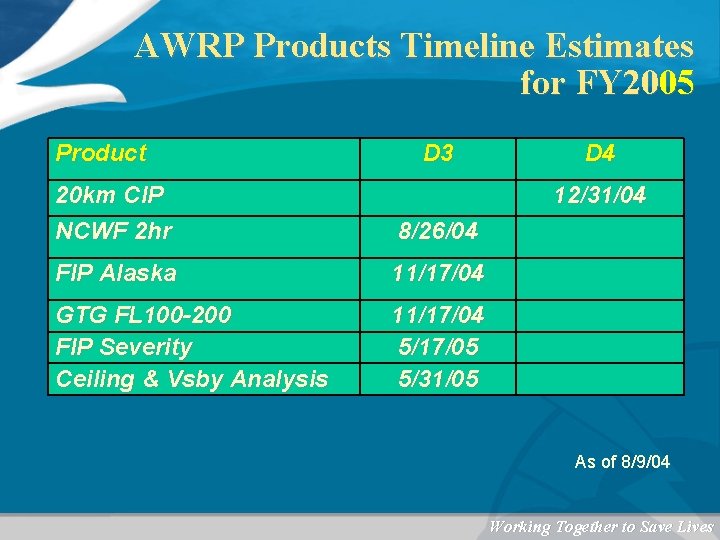
AWRP Products Timeline Estimates for FY 2005 Product D 3 20 km CIP NCWF 2 hr 8/26/04 FIP Alaska 11/17/04 GTG FL 100 -200 FIP Severity Ceiling & Vsby Analysis 11/17/04 5/17/05 5/31/05 D 4 12/31/04 As of 8/9/04 Working Together to Save Lives
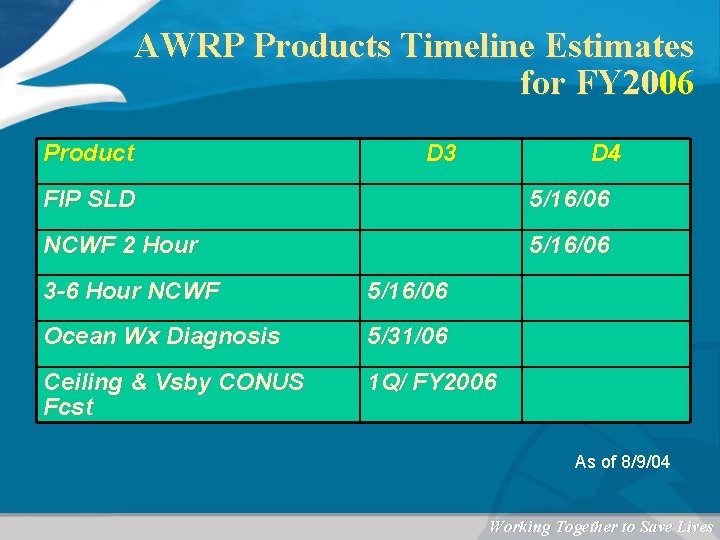
AWRP Products Timeline Estimates for FY 2006 Product D 3 D 4 FIP SLD 5/16/06 NCWF 2 Hour 5/16/06 3 -6 Hour NCWF 5/16/06 Ocean Wx Diagnosis 5/31/06 Ceiling & Vsby CONUS Fcst 1 Q/ FY 2006 As of 8/9/04 Working Together to Save Lives
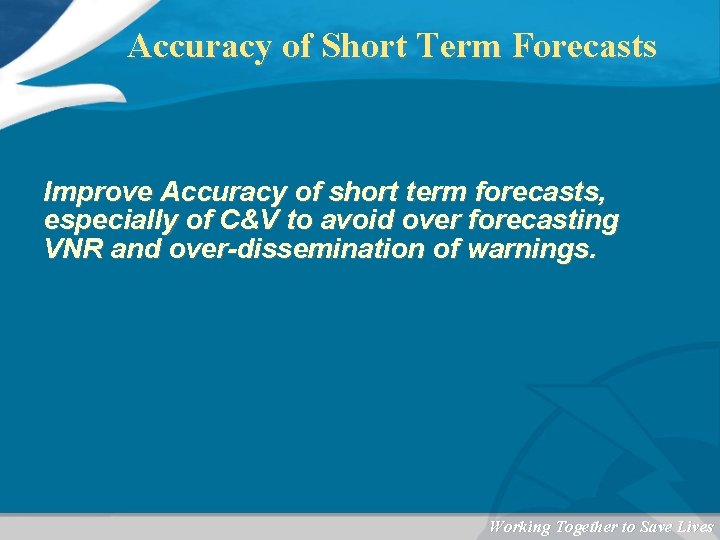
Accuracy of Short Term Forecasts Improve Accuracy of short term forecasts, especially of C&V to avoid over forecasting VNR and over-dissemination of warnings. Working Together to Save Lives
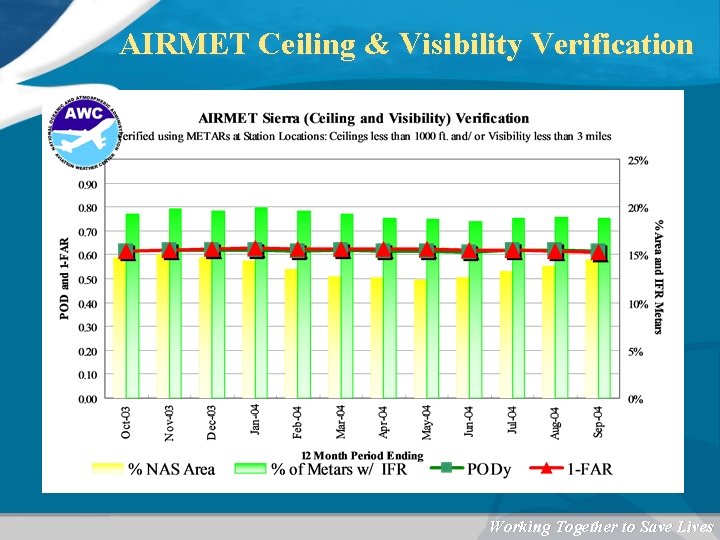
AIRMET Ceiling & Visibility Verification Working Together to Save Lives
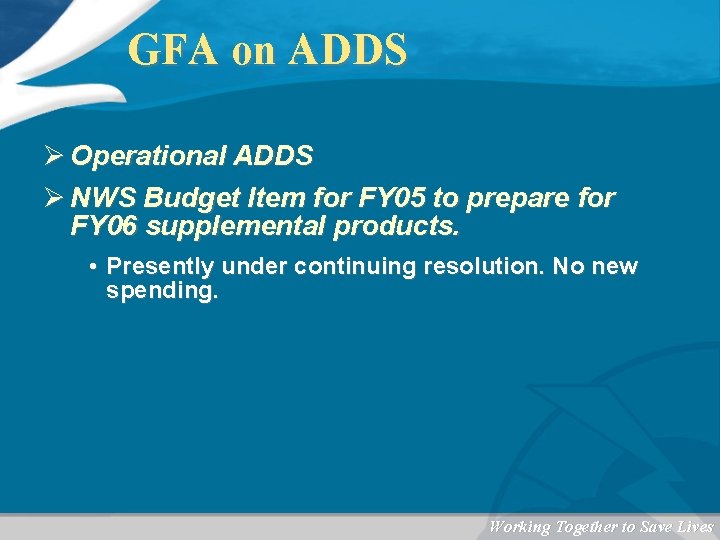
GFA on ADDS Ø Operational ADDS Ø NWS Budget Item for FY 05 to prepare for FY 06 supplemental products. • Presently under continuing resolution. No new spending. Working Together to Save Lives
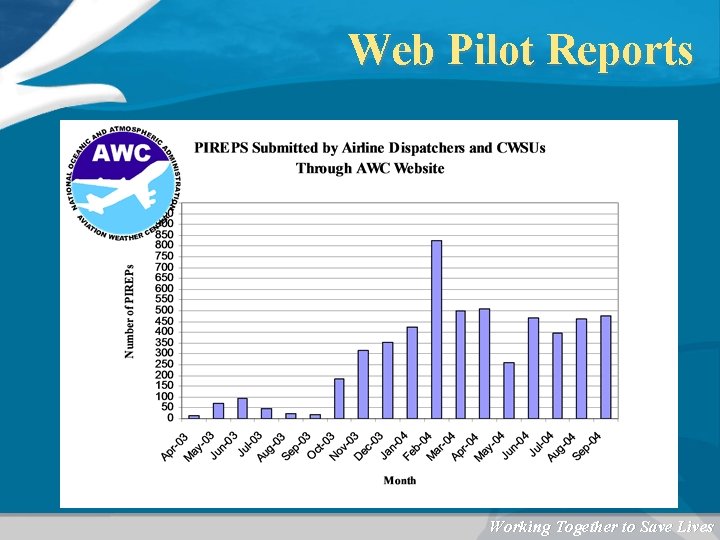
Web Pilot Reports Working Together to Save Lives
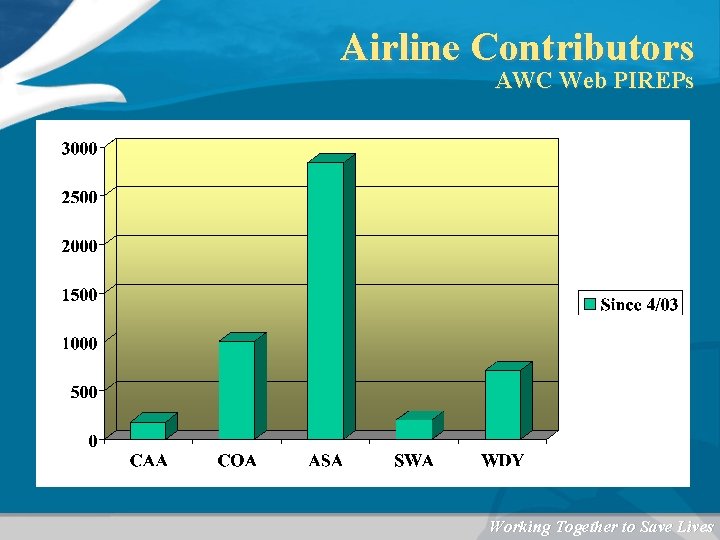
Airline Contributors AWC Web PIREPs Working Together to Save Lives
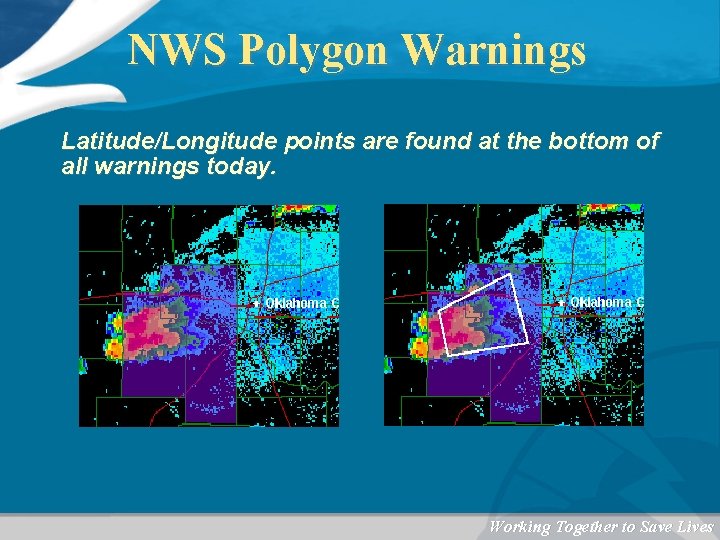
NWS Polygon Warnings Latitude/Longitude points are found at the bottom of all warnings today. Working Together to Save Lives
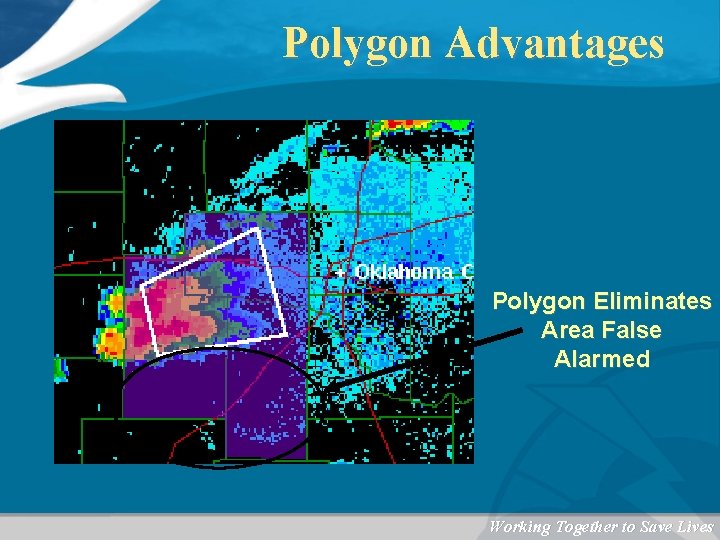
Polygon Advantages Polygon Eliminates Area False Alarmed Working Together to Save Lives
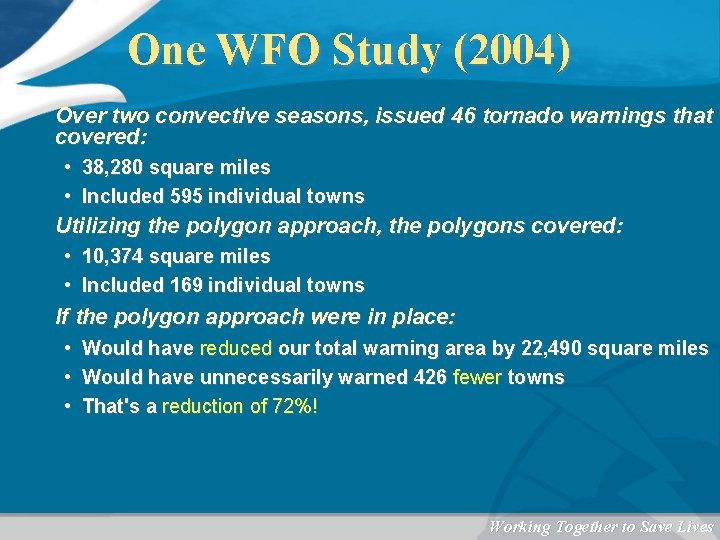
One WFO Study (2004) Over two convective seasons, issued 46 tornado warnings that covered: • 38, 280 square miles • Included 595 individual towns Utilizing the polygon approach, the polygons covered: • 10, 374 square miles • Included 169 individual towns If the polygon approach were in place: • • • Would have reduced our total warning area by 22, 490 square miles Would have unnecessarily warned 426 fewer towns That's a reduction of 72%! Working Together to Save Lives
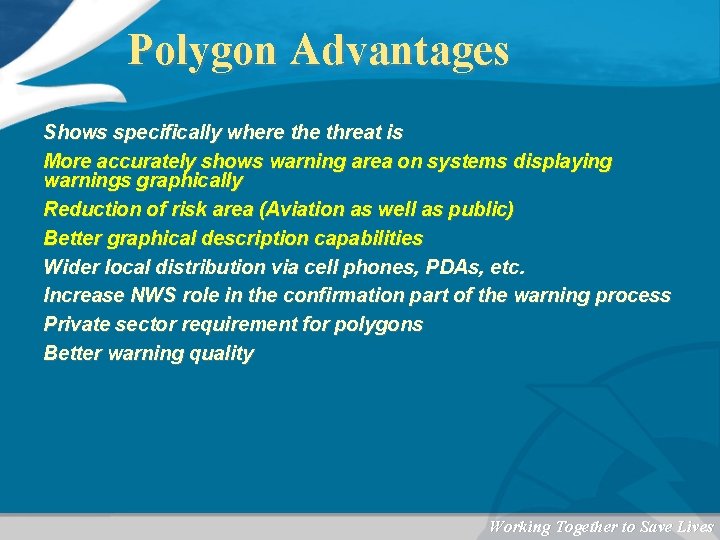
Polygon Advantages Shows specifically where threat is More accurately shows warning area on systems displaying warnings graphically Reduction of risk area (Aviation as well as public) Better graphical description capabilities Wider local distribution via cell phones, PDAs, etc. Increase NWS role in the confirmation part of the warning process Private sector requirement for polygons Better warning quality Working Together to Save Lives
Aviation Weather Center Jack May, Director Jack. May@NOAA. gov 816. 584. 7201 Working Together to Save Lives