
Aviation Power Plants BY SCOTT OLSEN Factors for
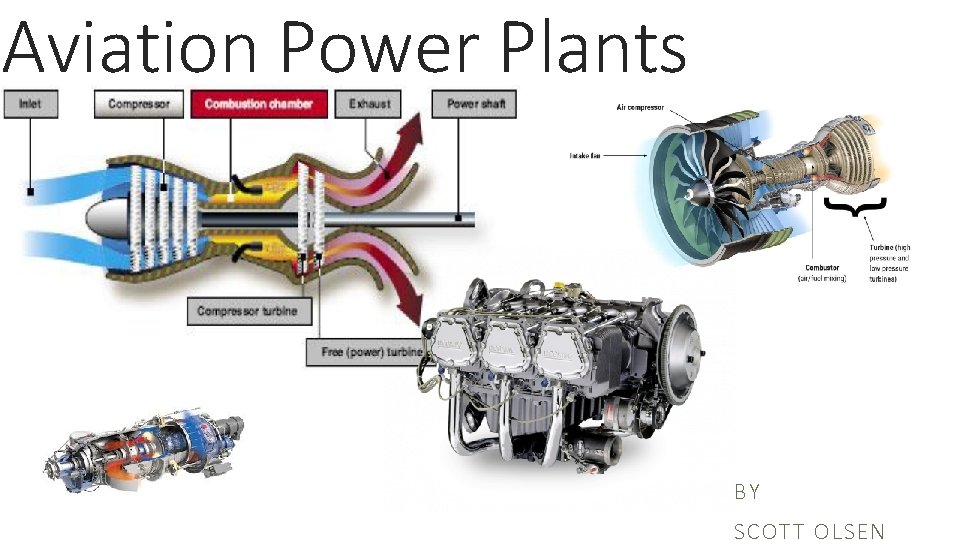
Aviation Power Plants BY SCOTT OLSEN

Factors for Operation -Fuel Economy -Operational/Maintenance costs -Manufacturing costs -Versatility -Applications
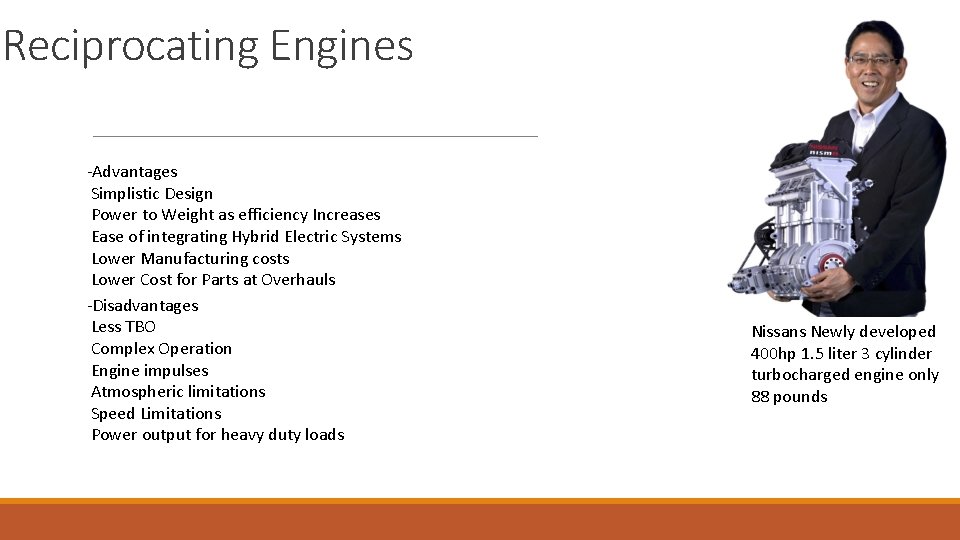
Reciprocating Engines -Advantages Simplistic Design Power to Weight as efficiency Increases Ease of integrating Hybrid Electric Systems Lower Manufacturing costs Lower Cost for Parts at Overhauls -Disadvantages Less TBO Complex Operation Engine impulses Atmospheric limitations Speed Limitations Power output for heavy duty loads Nissans Newly developed 400 hp 1. 5 liter 3 cylinder turbocharged engine only 88 pounds
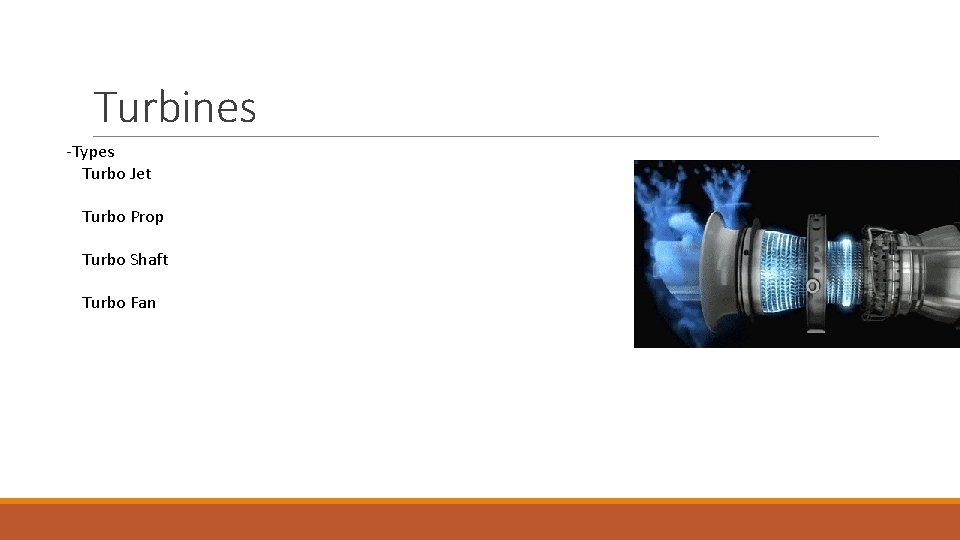
Turbines -Types Turbo Jet Turbo Prop Turbo Shaft Turbo Fan

Turbo Jet Engines Advantages Attains the highest altitudes Simplistic operation Attains the highest speeds Low Profile Disadvantages Uses way more fuel Expensive materials for high temperatures Not practical for use on large category aircraft and flight under Mach 1
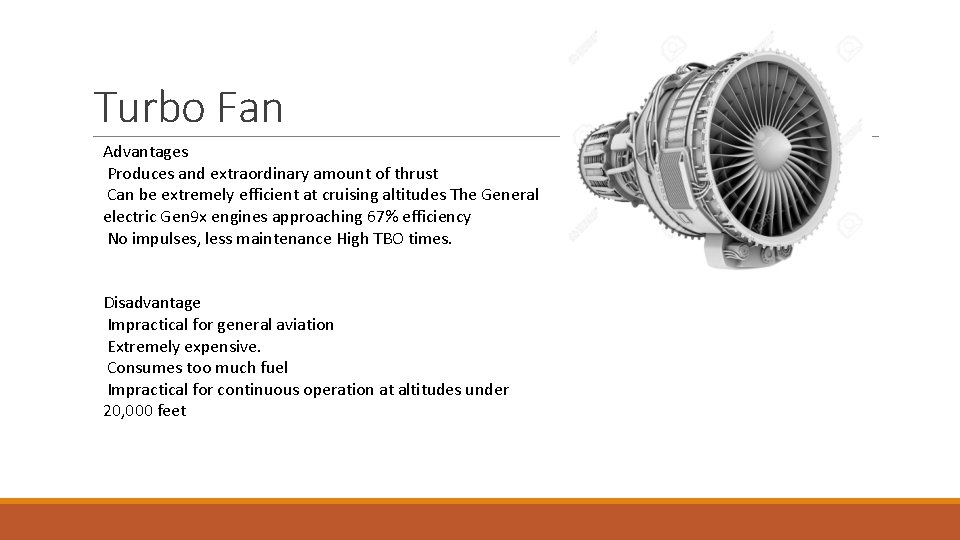
Turbo Fan Advantages Produces and extraordinary amount of thrust Can be extremely efficient at cruising altitudes The General electric Gen 9 x engines approaching 67% efficiency No impulses, less maintenance High TBO times. Disadvantage Impractical for general aviation Extremely expensive. Consumes too much fuel Impractical for continuous operation at altitudes under 20, 000 feet
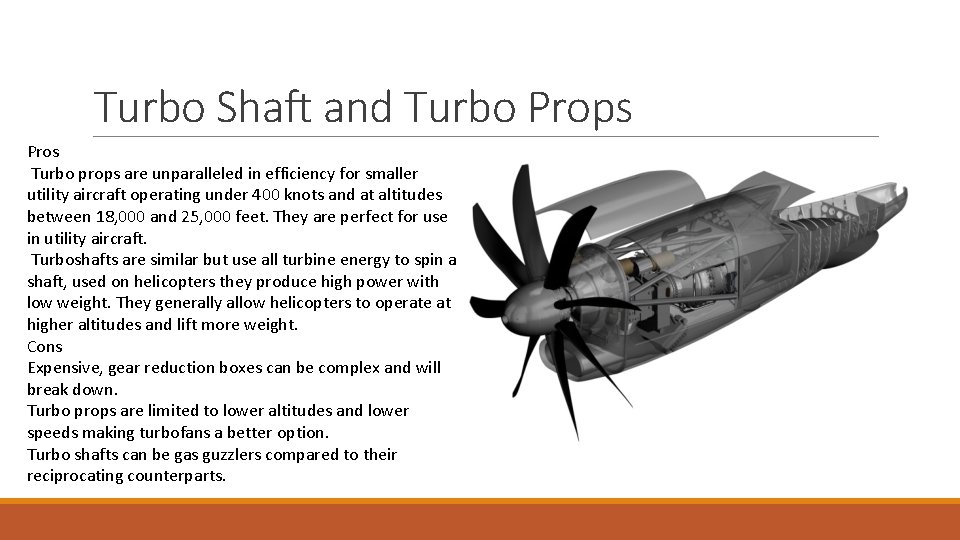
Turbo Shaft and Turbo Props Pros Turbo props are unparalleled in efficiency for smaller utility aircraft operating under 400 knots and at altitudes between 18, 000 and 25, 000 feet. They are perfect for use in utility aircraft. Turboshafts are similar but use all turbine energy to spin a shaft, used on helicopters they produce high power with low weight. They generally allow helicopters to operate at higher altitudes and lift more weight. Cons Expensive, gear reduction boxes can be complex and will break down. Turbo props are limited to lower altitudes and lower speeds making turbofans a better option. Turbo shafts can be gas guzzlers compared to their reciprocating counterparts.
- Slides: 7