
Aviation and the Kyoto Protocol ICAO Colloquium on
- Slides: 32
Aviation and the Kyoto Protocol ICAO Colloquium on Environmental Aspects of Aviation April 2001, Montreal, Canada Christine Zumkeller UNFCCC secretariat April 2001
Content 1. The science of climate change 2. Introduction to UNFCCC and Kyoto Protocol 3. Aviation within the UNFCCC and the Kyoto Protocol 4. Open issues under the Kyoto Protocol April 2001
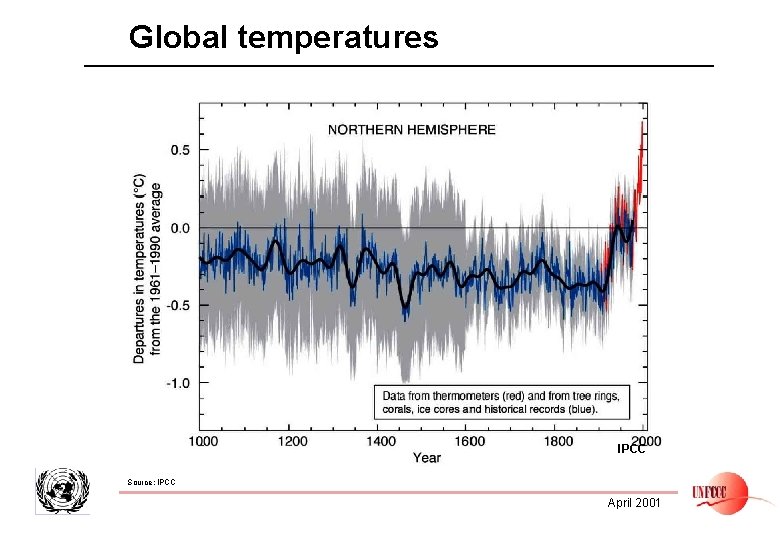
Global temperatures IPCC Source: IPCC April 2001
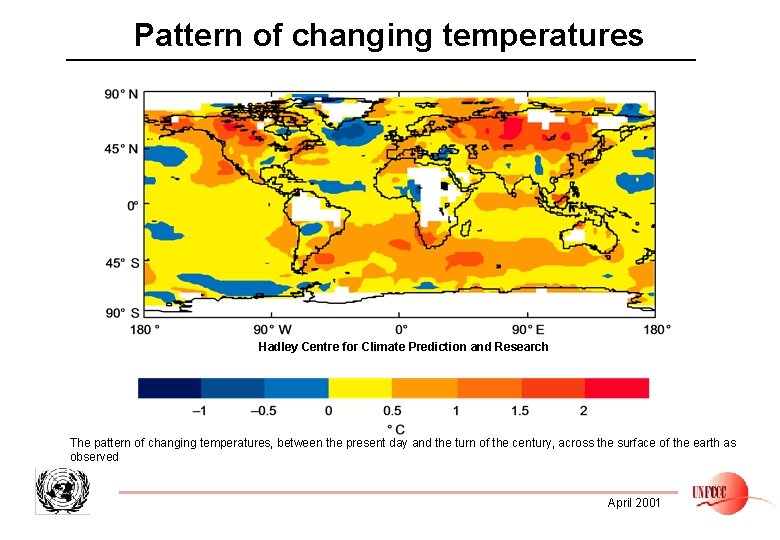
Pattern of changing temperatures Hadley Centre for Climate Prediction and Research The pattern of changing temperatures, between the present day and the turn of the century, across the surface of the earth as observed April 2001
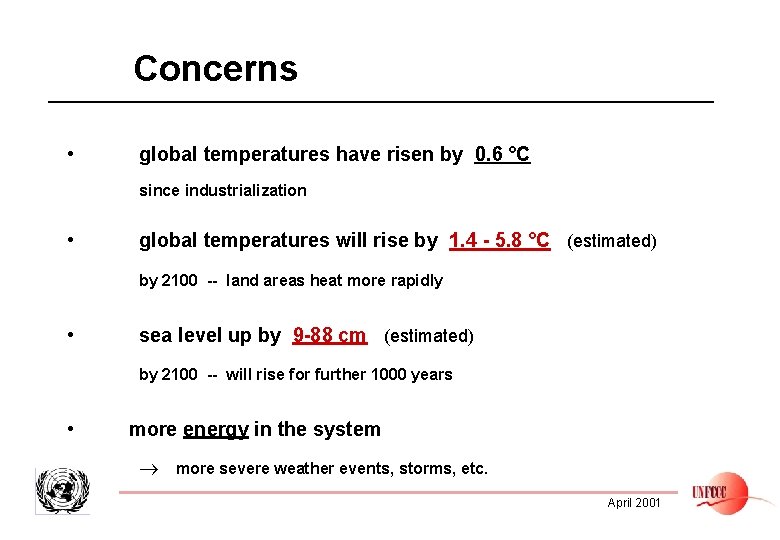
Concerns • global temperatures have risen by 0. 6 °C since industrialization • global temperatures will rise by 1. 4 - 5. 8 °C (estimated) by 2100 -- land areas heat more rapidly • sea level up by 9 -88 cm (estimated) by 2100 -- will rise for further 1000 years • more energy in the system more severe weather events, storms, etc. April 2001
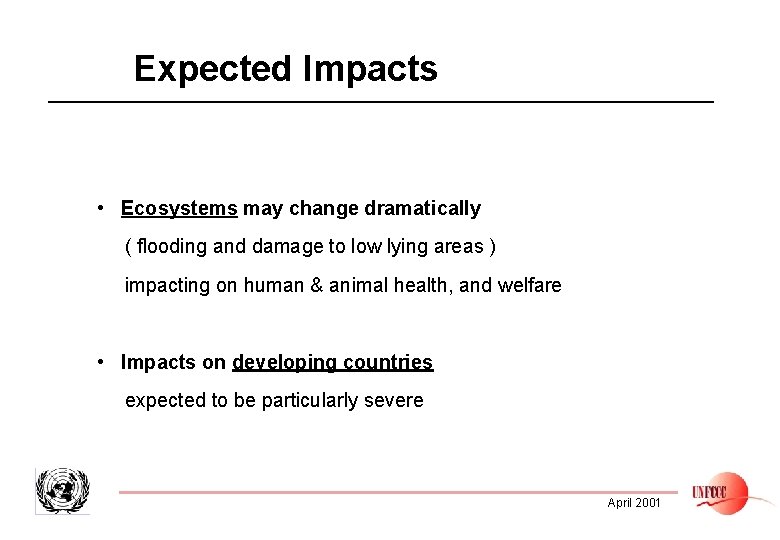
Expected Impacts • Ecosystems may change dramatically ( flooding and damage to low lying areas ) impacting on human & animal health, and welfare • Impacts on developing countries expected to be particularly severe April 2001
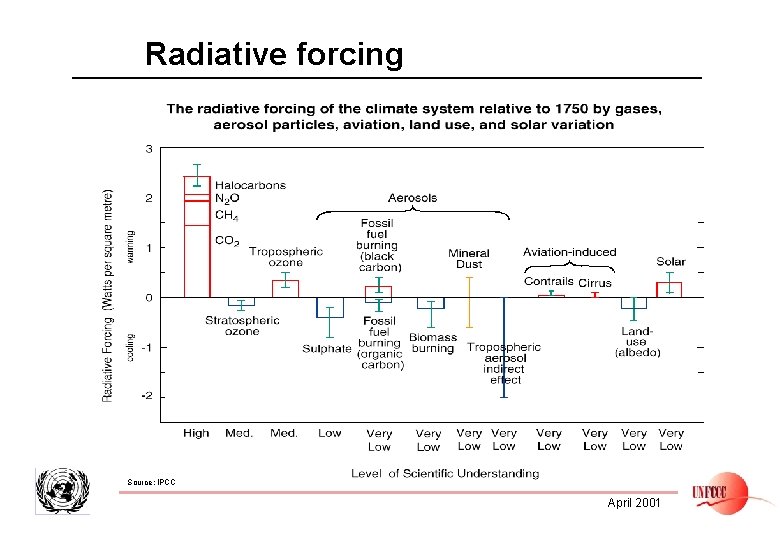
Radiative forcing Source: IPCC April 2001
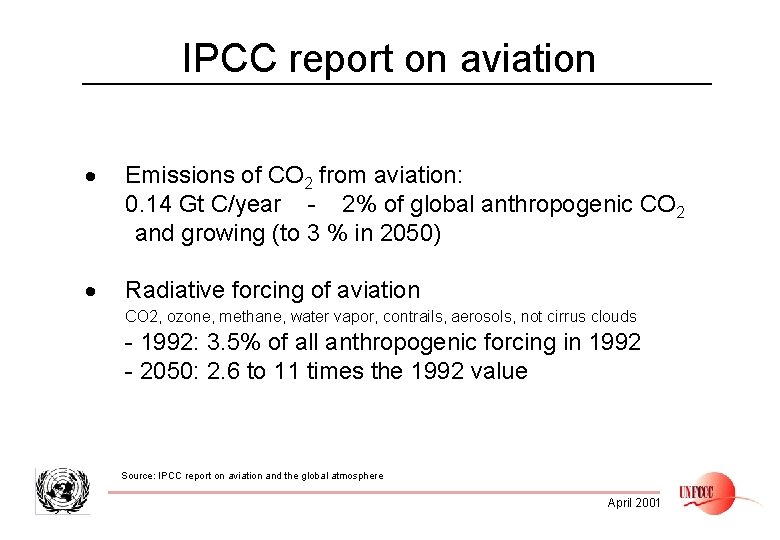
IPCC report on aviation · Emissions of CO 2 from aviation: 0. 14 Gt C/year - 2% of global anthropogenic CO 2 and growing (to 3 % in 2050) · Radiative forcing of aviation CO 2, ozone, methane, water vapor, contrails, aerosols, not cirrus clouds - 1992: 3. 5% of all anthropogenic forcing in 1992 - 2050: 2. 6 to 11 times the 1992 value Source: IPCC report on aviation and the global atmosphere April 2001
Content 1. The science of climate change 2. Introduction to UNFCCC and Kyoto Protocol 3. Aviation within the UNFCCC and the Kyoto Protocol 4. Open issues under the Kyoto Protocol April 2001
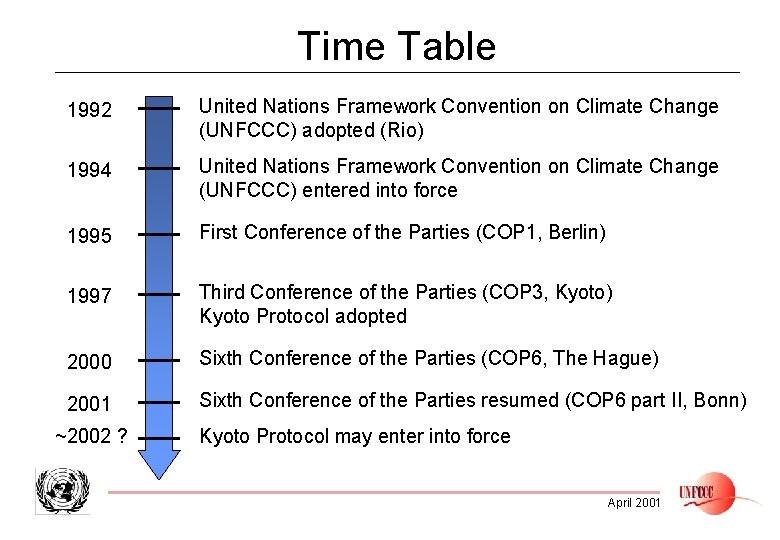
Time Table 1992 United Nations Framework Convention on Climate Change (UNFCCC) adopted (Rio) 1994 United Nations Framework Convention on Climate Change (UNFCCC) entered into force 1995 First Conference of the Parties (COP 1, Berlin) 1997 Third Conference of the Parties (COP 3, Kyoto) Kyoto Protocol adopted 2000 Sixth Conference of the Parties (COP 6, The Hague) 2001 Sixth Conference of the Parties resumed (COP 6 part II, Bonn) ~2002 ? Kyoto Protocol may enter into force April 2001
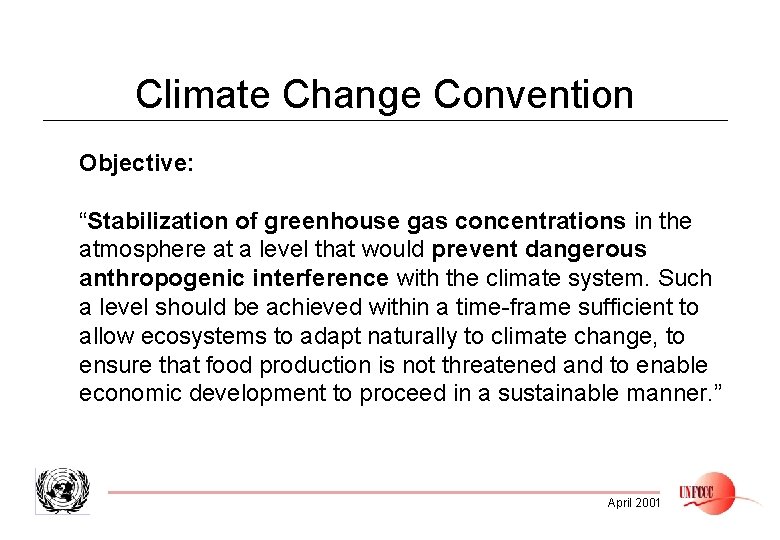
Climate Change Convention Objective: “Stabilization of greenhouse gas concentrations in the atmosphere at a level that would prevent dangerous anthropogenic interference with the climate system. Such a level should be achieved within a time-frame sufficient to allow ecosystems to adapt naturally to climate change, to ensure that food production is not threatened and to enable economic development to proceed in a sustainable manner. ” April 2001
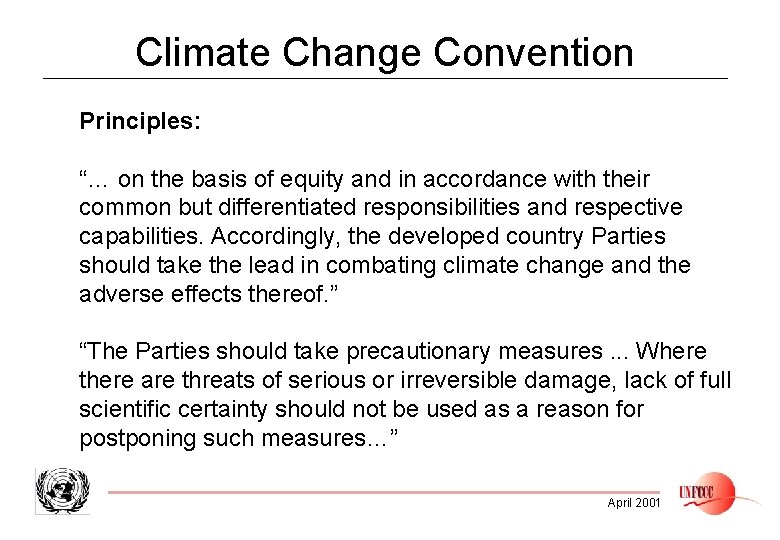
Climate Change Convention Principles: “… on the basis of equity and in accordance with their common but differentiated responsibilities and respective capabilities. Accordingly, the developed country Parties should take the lead in combating climate change and the adverse effects thereof. ” “The Parties should take precautionary measures. . . Where there are threats of serious or irreversible damage, lack of full scientific certainty should not be used as a reason for postponing such measures…” April 2001
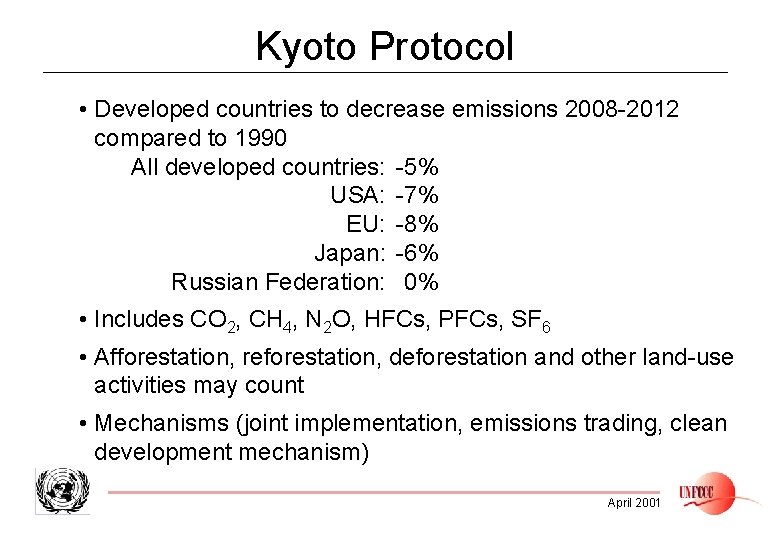
Kyoto Protocol • Developed countries to decrease emissions 2008 -2012 compared to 1990 All developed countries: -5% USA: -7% EU: -8% Japan: -6% Russian Federation: 0% • Includes CO 2, CH 4, N 2 O, HFCs, PFCs, SF 6 • Afforestation, reforestation, deforestation and other land-use activities may count • Mechanisms (joint implementation, emissions trading, clean development mechanism) April 2001
Content 1. The science of climate change 2. Introduction to UNFCCC and Kyoto Protocol 3. Aviation within the UNFCCC and the Kyoto Protocol 4. Open issues under the Kyoto Protocol April 2001
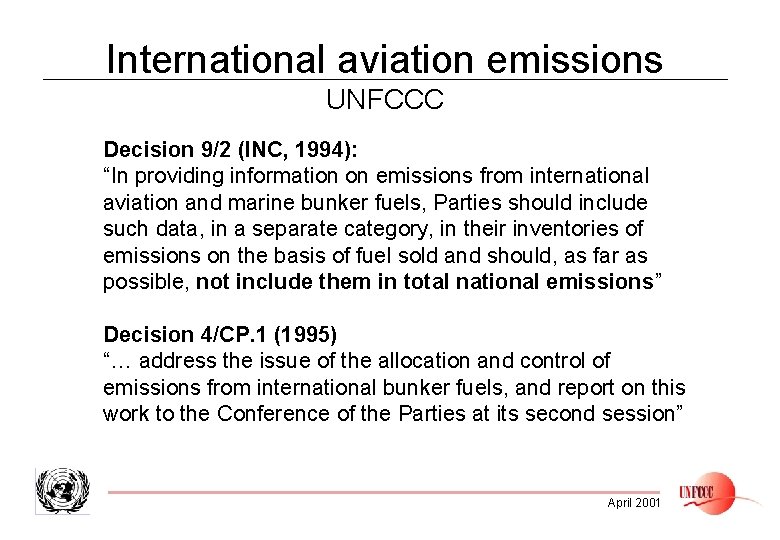
International aviation emissions UNFCCC Decision 9/2 (INC, 1994): “In providing information on emissions from international aviation and marine bunker fuels, Parties should include such data, in a separate category, in their inventories of emissions on the basis of fuel sold and should, as far as possible, not include them in total national emissions” Decision 4/CP. 1 (1995) “… address the issue of the allocation and control of emissions from international bunker fuels, and report on this work to the Conference of the Parties at its second session” April 2001
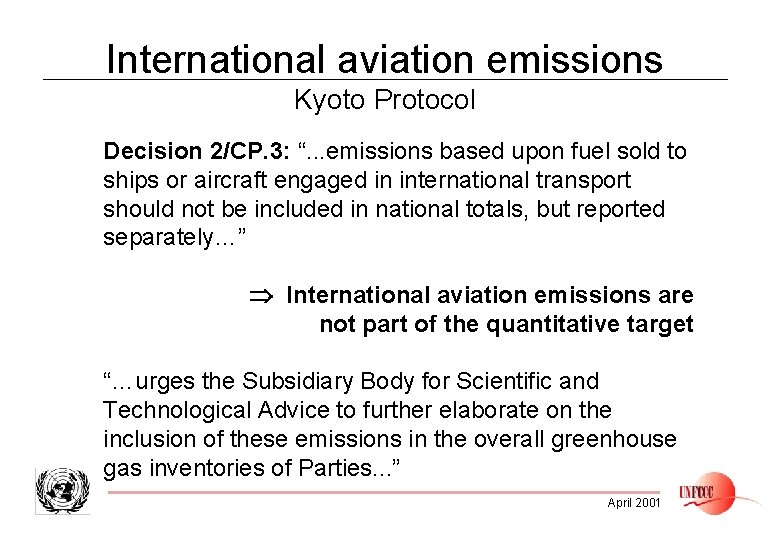
International aviation emissions Kyoto Protocol Decision 2/CP. 3: “. . . emissions based upon fuel sold to ships or aircraft engaged in international transport should not be included in national totals, but reported separately…” International aviation emissions are not part of the quantitative target “…urges the Subsidiary Body for Scientific and Technological Advice to further elaborate on the inclusion of these emissions in the overall greenhouse gas inventories of Parties. . . ” April 2001
International aviation emissions Kyoto Protocol Article 2. 2 of the Kyoto Protocol: “Annex I Parties shall pursue limitation or reduction of emissions of greenhouse gases from aviation and marine bunker fuels, working through the International Civil Aviation Organization (ICAO) and the International Maritime Organization (IMO), respectively. “ April 2001
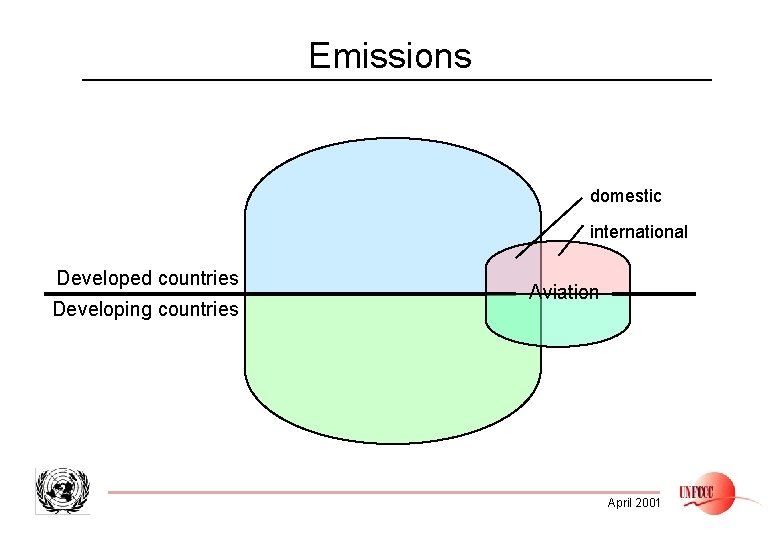
Emissions domestic international Developed countries Developing countries Aviation April 2001
International aviation emissions Since Kyoto • Invited ICAO and IMO to inform of their work plans relating to emissions based on fuel sold to ships or aircraft engaged in international transport and to provide regular progress reports • Requested to continue to develop the cooperation with ICAO and IMO and encouraged the participation of representatives of the UNFCCC process in relevant meetings of ICAO and IMO • Encouraged ICAO and IMO to complete their work on this matter as soon as possible • Noted the importance of coordination by Parties at the national level April 2001
Content 1. The science of climate change 2. Introduction to UNFCCC and Kyoto Protocol 3. Aviation within the UNFCCC and the Kyoto Protocol 4. Open issues under the Kyoto Protocol April 2001
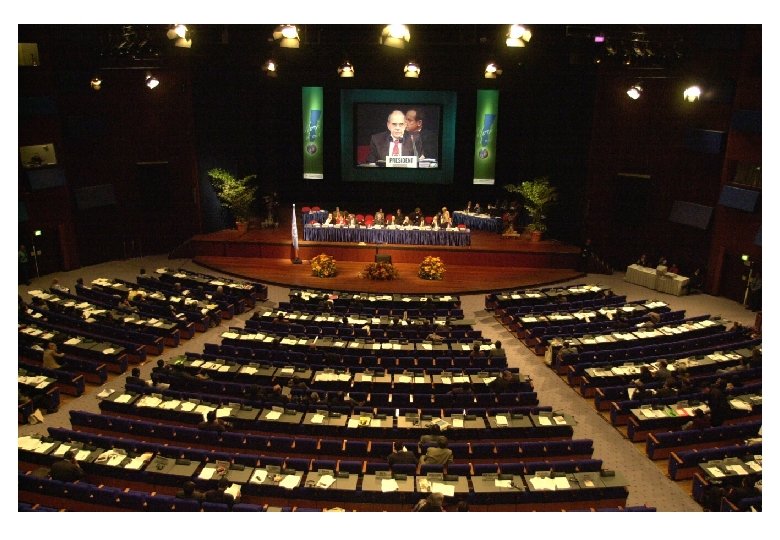
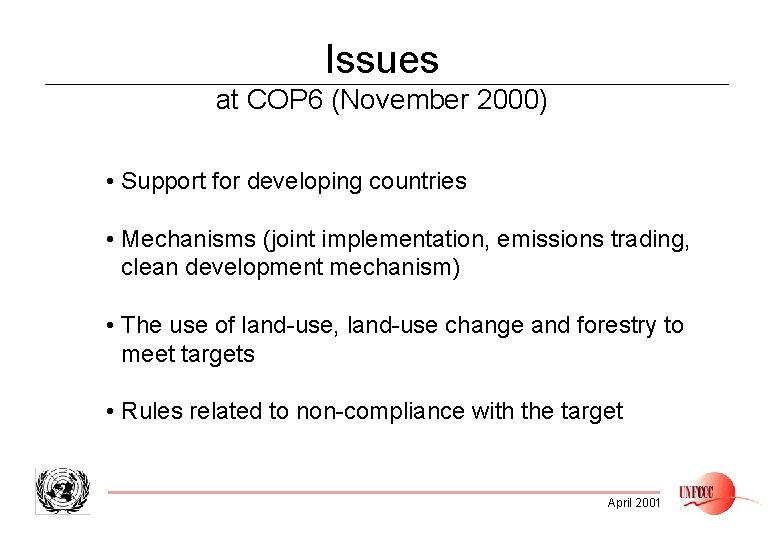
Issues at COP 6 (November 2000) • Support for developing countries • Mechanisms (joint implementation, emissions trading, clean development mechanism) • The use of land-use, land-use change and forestry to meet targets • Rules related to non-compliance with the target April 2001
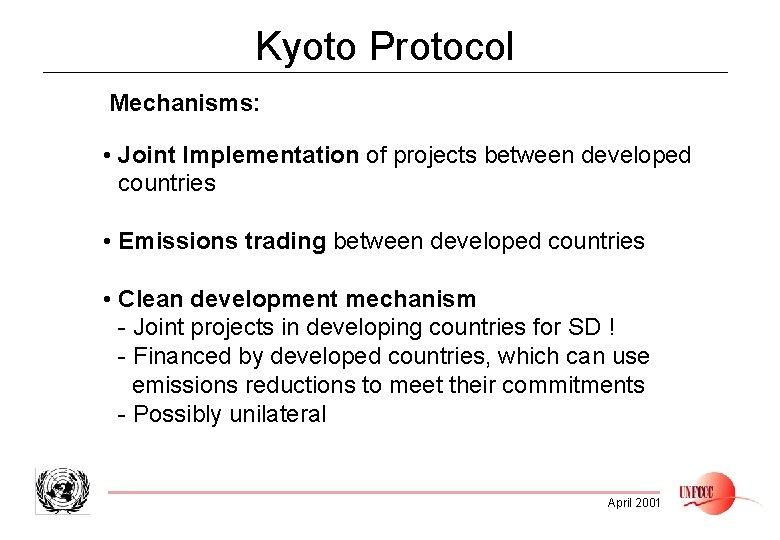
Kyoto Protocol Mechanisms: • Joint Implementation of projects between developed countries • Emissions trading between developed countries • Clean development mechanism - Joint projects in developing countries for SD ! - Financed by developed countries, which can use emissions reductions to meet their commitments - Possibly unilateral April 2001
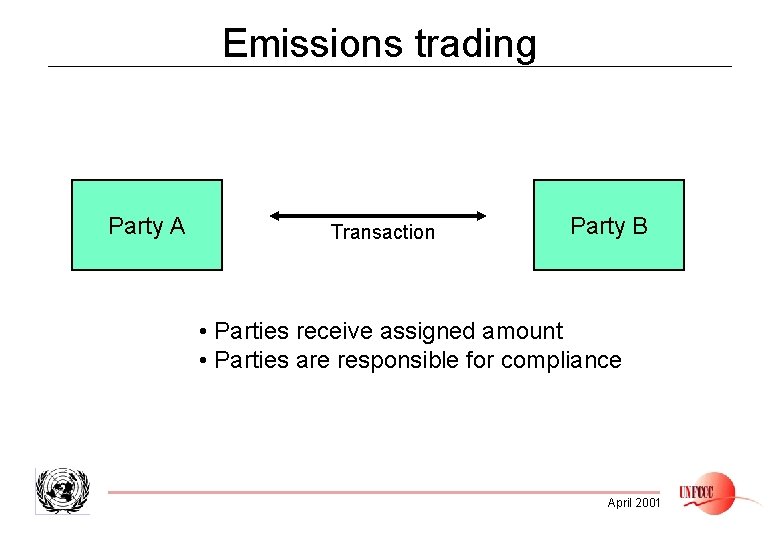
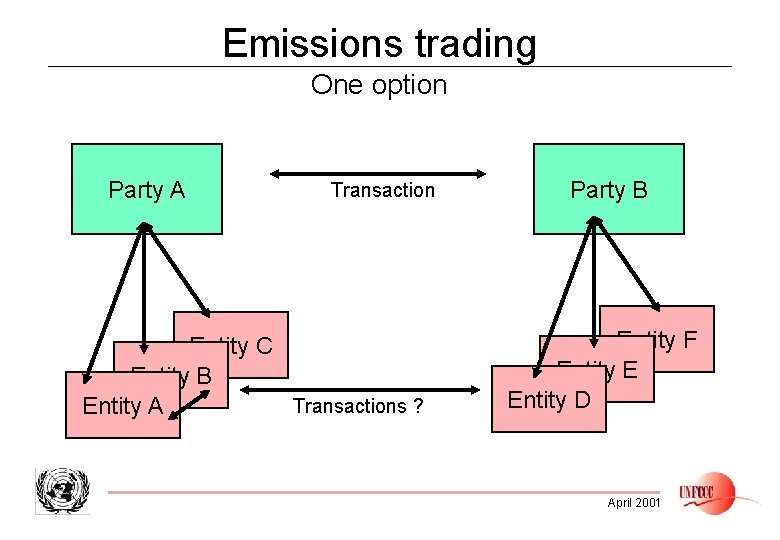
Emissions trading Party A Transaction Party B • Parties receive assigned amount • Parties are responsible for compliance April 2001
Emissions trading One option Party A Transaction Entity C Entity B Transactions ? Entity A Party B Entity F Entity E Entity D April 2001
Mechanisms • To what extent can the mechanisms be used to reach targets? • What use can be made of units acquired through one of the mechanisms? • Should there be a fee on all mechanisms to fund adaptation? e April 2001
Mechanisms • How could one prevent that more units of assigned amount were transferred than were available for transfer (“overselling”) ? • Which projects can be implemented in developing countries (CDM)? es - Nuclear? Forestry? April 2001
Land-use and forestry • What is a “forest”, “deforestation”, “afforestation”? • Which and how much of those activities may be used? April 2001
Non-compliance • What if the target is not reached? April 2001
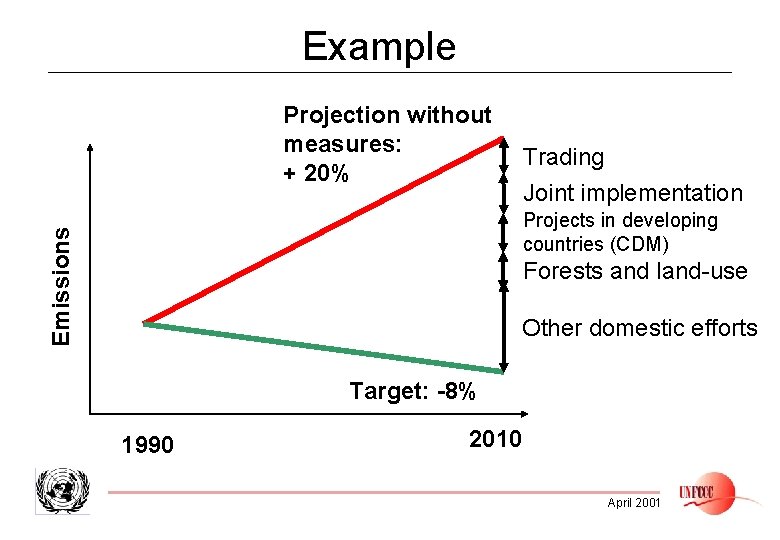
Example Projection without measures: + 20% Trading Joint implementation Emissions Projects in developing countries (CDM) Forests and land-use Other domestic efforts Target: -8% 1990 2010 April 2001
Next steps • Official outcome of COP 6: - Meeting suspended - Forward texts to next session - Explore possibilities to resume COP 6 in the first half of 2001 • COP 6 will resume 16 to 27 July 2001, Bonn, Germany April 2001
More information www. unfccc. int Christine Zumkeller czumkeller@unfccc. int April 2001