
Aves Birds Characteristics Over 9900 species Outnumber all
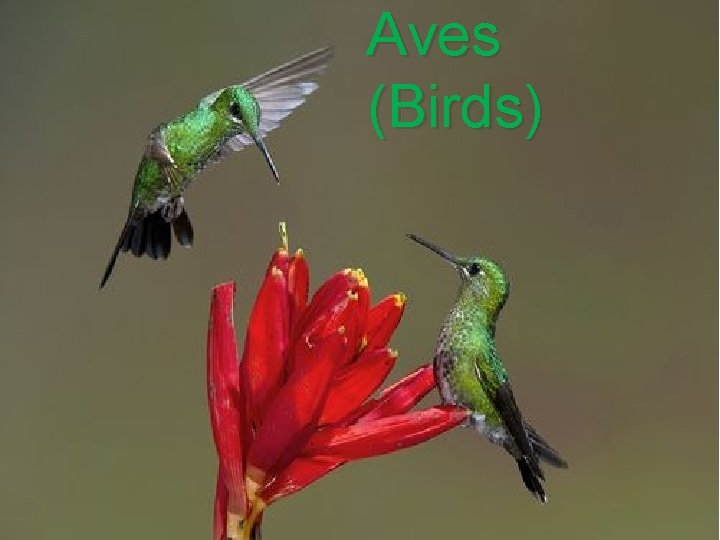
Aves (Birds)
Characteristics �Over 9900 species ◦ Outnumber all other vertebrates except fishes �Single unique feature set apart birds from other animals ◦ Feathers - If it has feathers it’s a bird �Entire ◦ ◦ ◦ anatomy is designed around flight Wings for support & propulsion Bones rigid, light, & hollow Highly efficient respiratory system High-pressure circulatory system Finely tuned nervous system
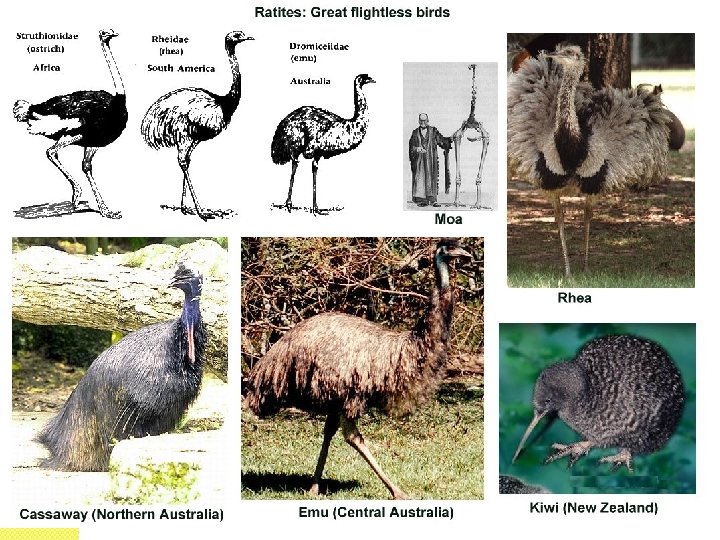
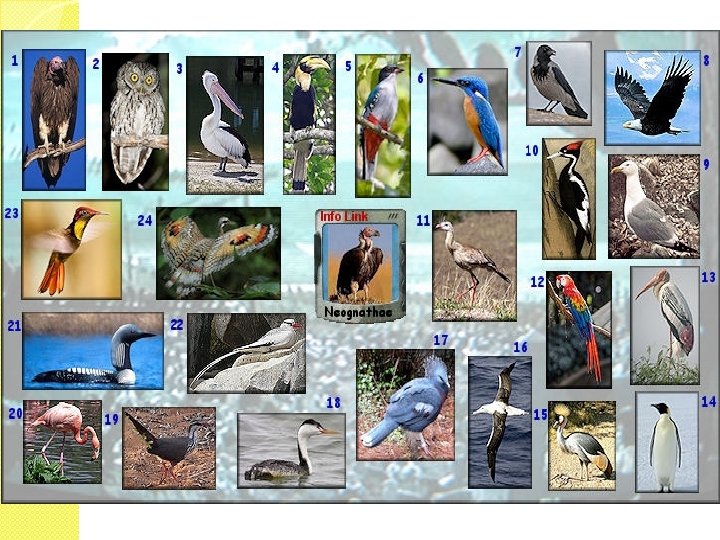
Living Birds �Two groups ◦ Palaeognathae �Large, flightless ostrich-like birds & kiwis �Flat sternum & poorly developed pectoral muscles ◦ Neognathae �Flying birds with a keeled sternum where flight muscles attach
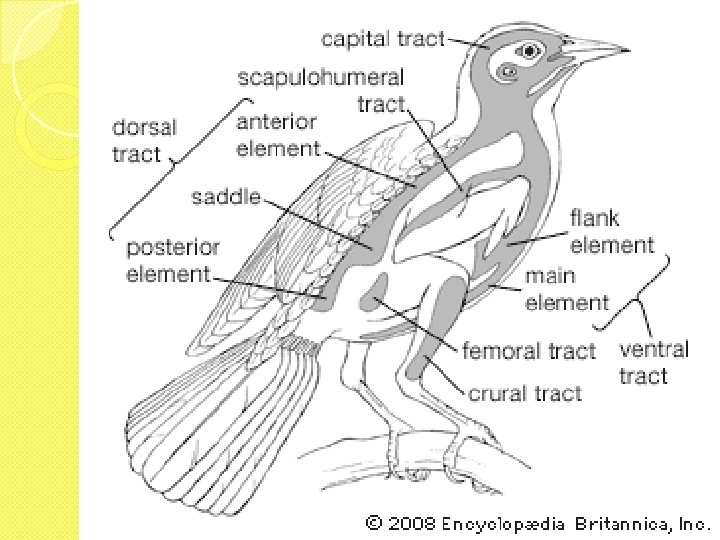
Feathers �The most distinct characteristic of birds is the presence of feathers. �Feathers have multiple purposes, including enabling flight. �Develop from follicles in the skin ◦ generally arranged in tracts (or pterylae), which are separated by patches of bare skin (the apteria). �Some species, such as penguins, lack pterylae and instead the feathers are uniformly distributed over the skin.
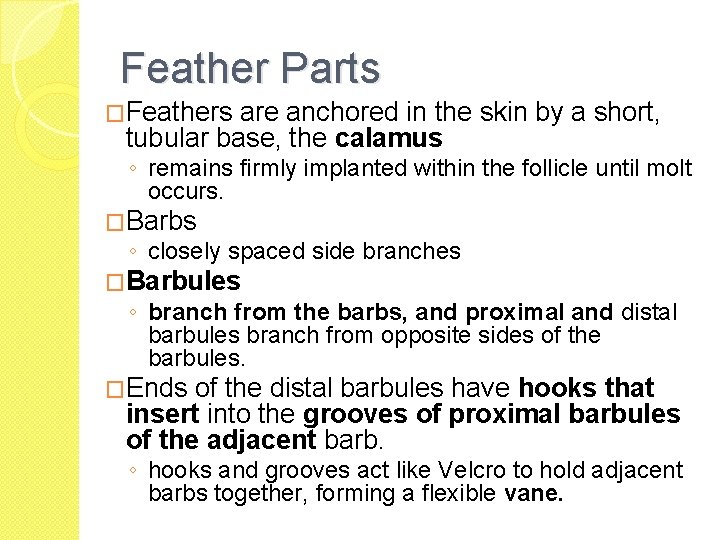
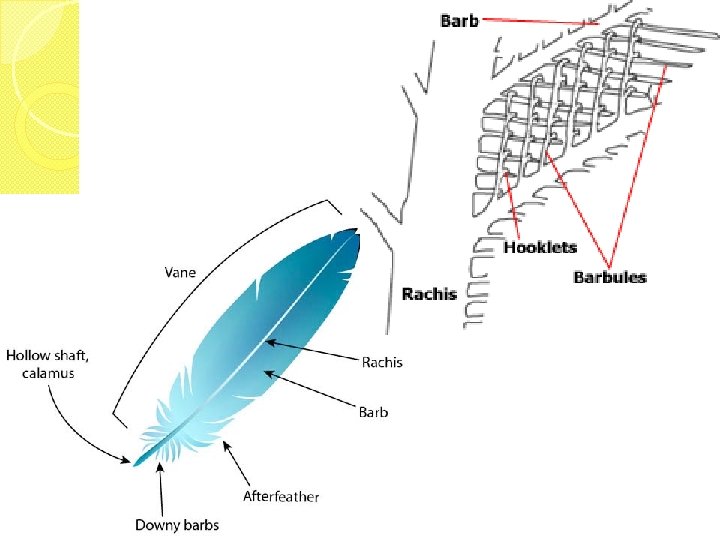
Feather Parts �Feathers are anchored in the skin by a short, tubular base, the calamus ◦ remains firmly implanted within the follicle until molt occurs. �Barbs ◦ closely spaced side branches �Barbules ◦ branch from the barbs, and proximal and distal barbules branch from opposite sides of the barbules. �Ends of the distal barbules have hooks that insert into the grooves of proximal barbules of the adjacent barb. ◦ hooks and grooves act like Velcro to hold adjacent barbs together, forming a flexible vane.
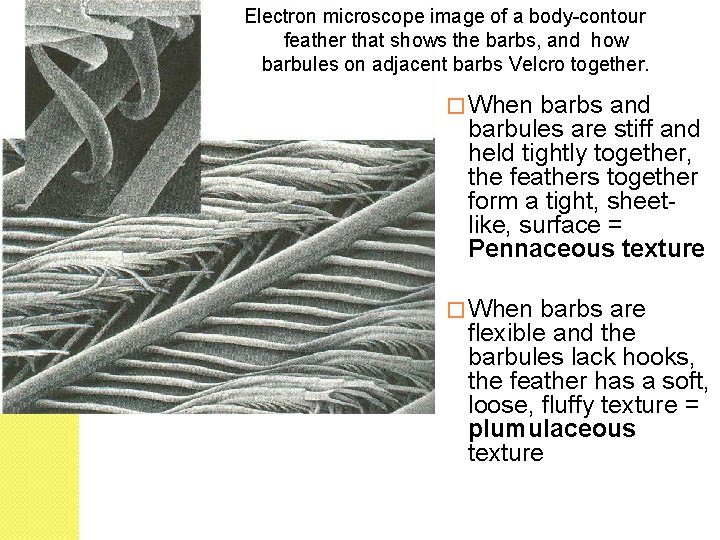
Electron microscope image of a body-contour feather that shows the barbs, and how barbules on adjacent barbs Velcro together. � When barbs and barbules are stiff and held tightly together, the feathers together form a tight, sheetlike, surface = Pennaceous texture � When barbs are flexible and the barbules lack hooks, the feather has a soft, loose, fluffy texture = plumulaceous texture
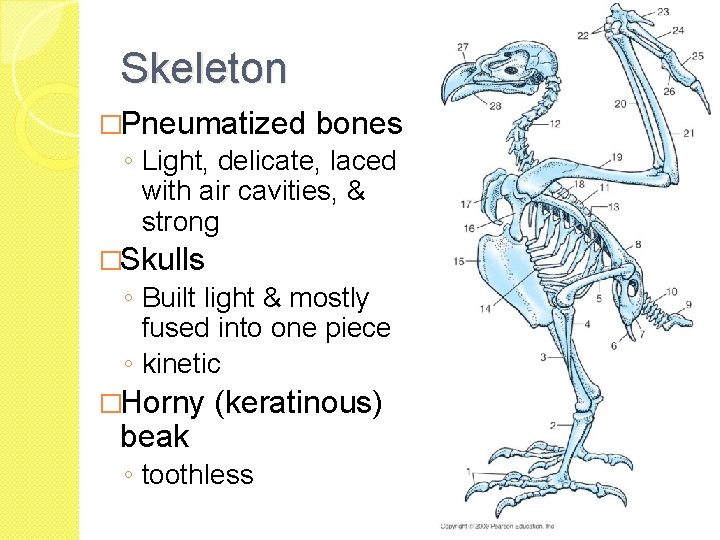
Skeleton �Pneumatized bones ◦ Light, delicate, laced with air cavities, & strong �Skulls ◦ Built light & mostly fused into one piece ◦ kinetic �Horny beak (keratinous) ◦ toothless
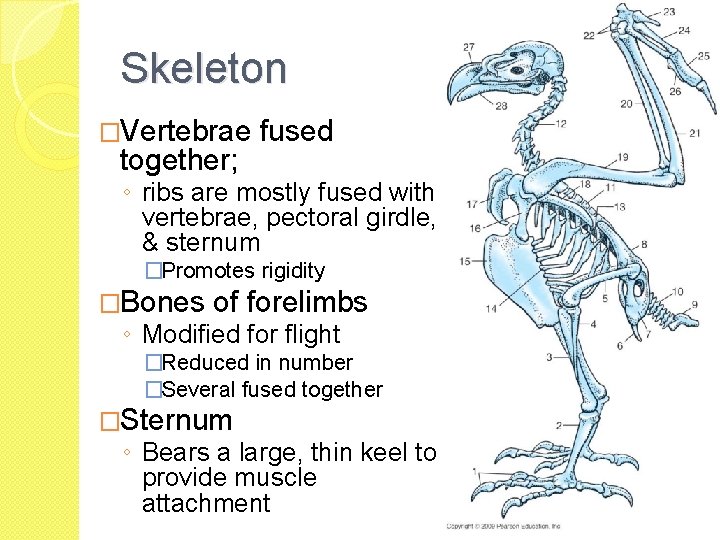
Skeleton �Vertebrae together; fused ◦ ribs are mostly fused with vertebrae, pectoral girdle, & sternum �Promotes rigidity �Bones of forelimbs ◦ Modified for flight �Reduced in number �Several fused together �Sternum ◦ Bears a large, thin keel to provide muscle attachment

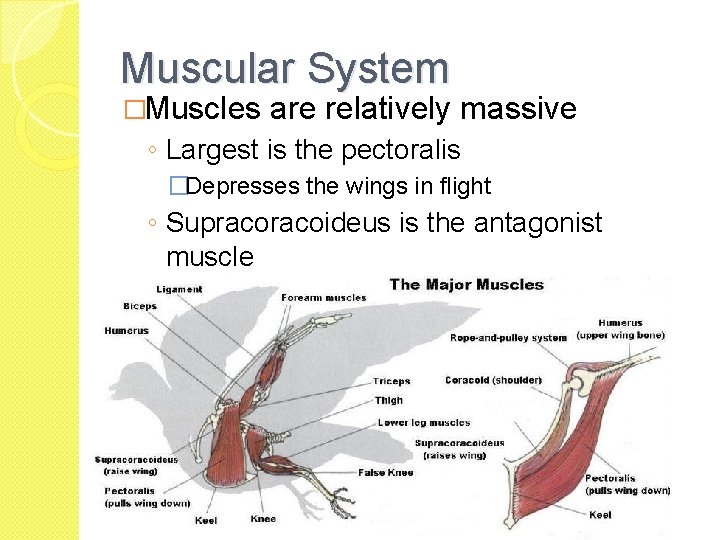
Muscular System �Muscles are relatively massive ◦ Largest is the pectoralis �Depresses the wings in flight ◦ Supracoideus is the antagonist muscle �Creates a rope-and-pulley system
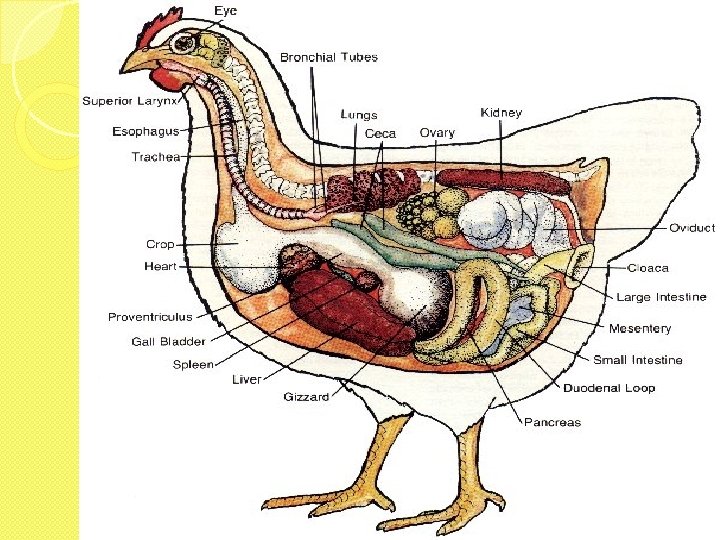
Digestive System �Insects the largest component of the �Grinding of food occur in the gizzard diet ◦ Lack teeth �Short pharynx �Long, muscular, elastic esophagus ◦ Many birds have an enlargement at the lower end (crop) that acts as a storage chamber �Stomach ◦ Proventriculus – secretes gastric juice ◦ Gizzard – grinds food �Intestines �Cloaca – terminal part ◦ Also receives genital ducts & ureters
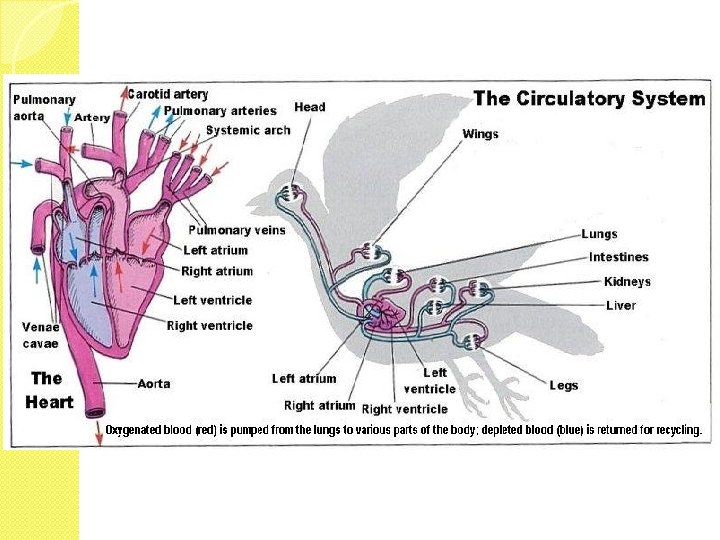
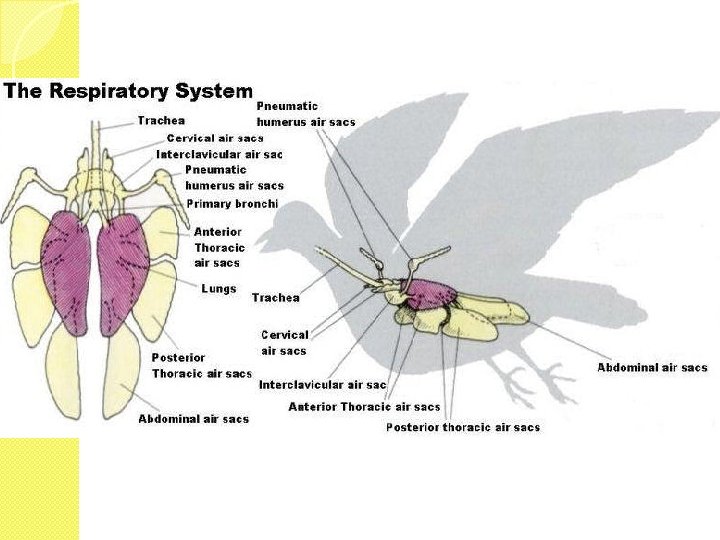
Circulatory System � 4 -chambered heart ◦ Strong ventricular walls �Heartbeat is extremely fast Respiratory System �Parabronchi �Ends of bronchi which air flows continuously �Extensive system of nine interconnecting air sacs
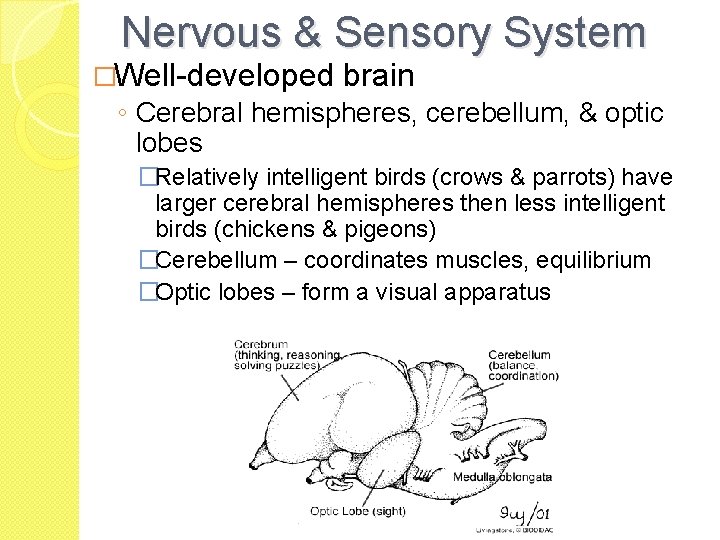
Nervous & Sensory System �Well-developed brain ◦ Cerebral hemispheres, cerebellum, & optic lobes �Relatively intelligent birds (crows & parrots) have larger cerebral hemispheres then less intelligent birds (chickens & pigeons) �Cerebellum – coordinates muscles, equilibrium �Optic lobes – form a visual apparatus
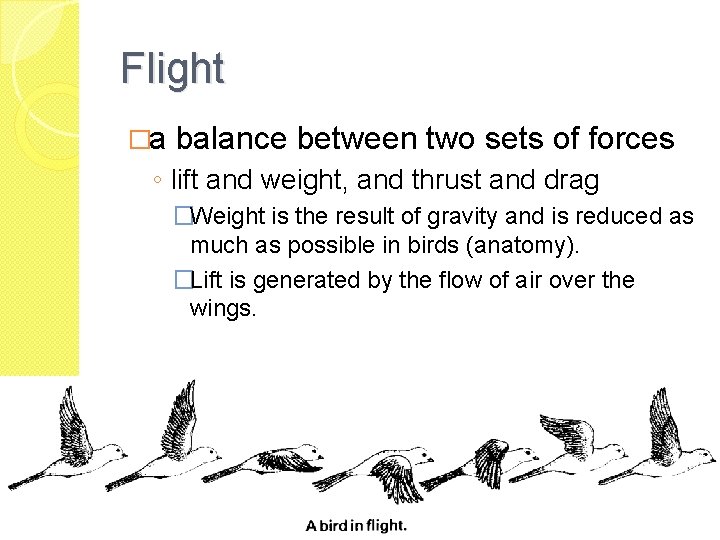
Flight �a balance between two sets of forces ◦ lift and weight, and thrust and drag �Weight is the result of gravity and is reduced as much as possible in birds (anatomy). �Lift is generated by the flow of air over the wings.
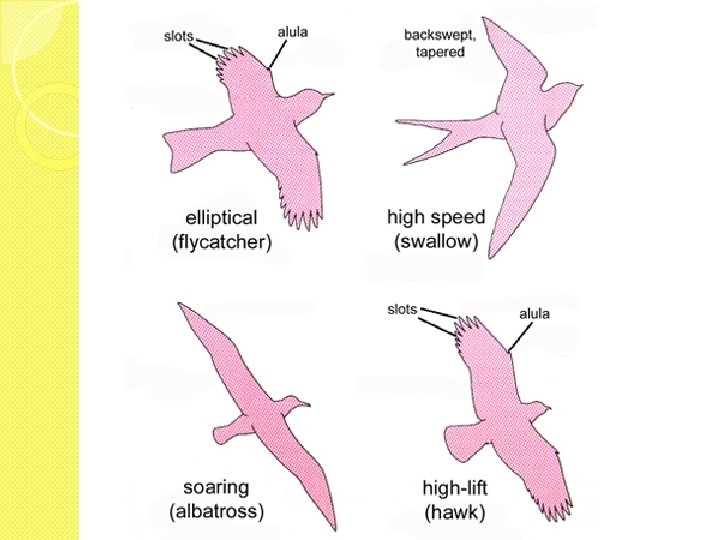
Basic Forms of Wings �Elliptical Wings ◦ most small forest and scrub-dwelling birds, such as robins and sparrows ◦ Low aspect ratio �Ratio of length to average width ◦ These wings allow a high degree of control and manoeuvrability in confined spaces ◦ minimize drag to allow rapid ascent and descent ◦ Wing beat is usually rapid ◦ highly slotted between the primary feathers �helps to prevent stalling during sharp turns, low-speed flight, and frequent landing and takeoff.
Basic Forms of Wings �High speed wings ◦ found on swallows, falcons, shore birds, and ducks ◦ Birds that feed on the wing or make long migrations. ◦ bones are relatively long, wings taper to a point to allow for high flight speed with low drag, and low energy consumption during flight. ◦ wings are also thin �must be flapped for short glides and during descent, and flaps are fairly rapid but small. ◦ aerodynamically efficient for high-speed flight �Cannot keep a bird airborne at low speeds.
Basic Forms of Wings �Long soaring wings ◦ found on terns, albatrosses, gannets, frigate birds, gulls and other sea birds. ◦ high aspect ratio resembling those of sailplanes. ◦ open spaces allow for long wings to create good lift with little energy expenditure. ◦ adapted for high speed and dynamic soaring �less manoeuvrable than the wide, slotted wings of land soarers ◦ Birds can glide easily over large expanses of water and have exploited the sea winds �birds must usually run and take off into the wind to get off the ground, and usually land easily on water.
Basic Forms of Wings �High-lift/Broad soaring wings ◦ found on vultures, condors, hawks, ospreys, pelicans and eagles ◦ wings are broad and only relatively long �takeoff and landing in fairly confined areas, high lift, low speed soaring, and slow descents. ◦ Many of these birds are land soarers �good manoeuvrability required for tactic soaring in the air currents over land.
- Slides: 26