
Aversive Control Punishment Negative Reinforcement Escape Learning Avoidance
- Slides: 23
Aversive Control • Punishment • Negative Reinforcement – Escape Learning – Avoidance
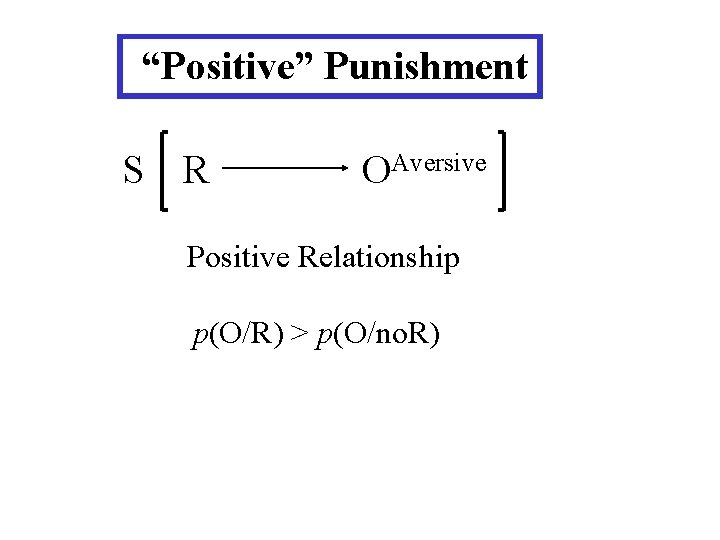
“Positive” Punishment S R OAversive Positive Relationship p(O/R) > p(O/no. R)
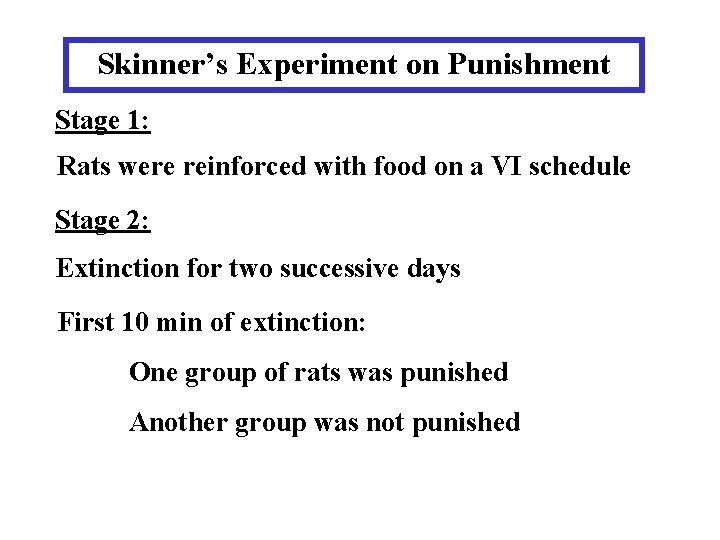
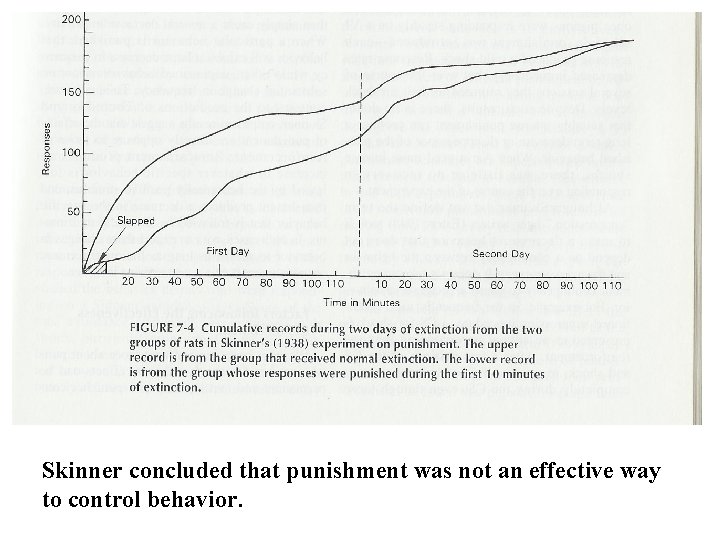
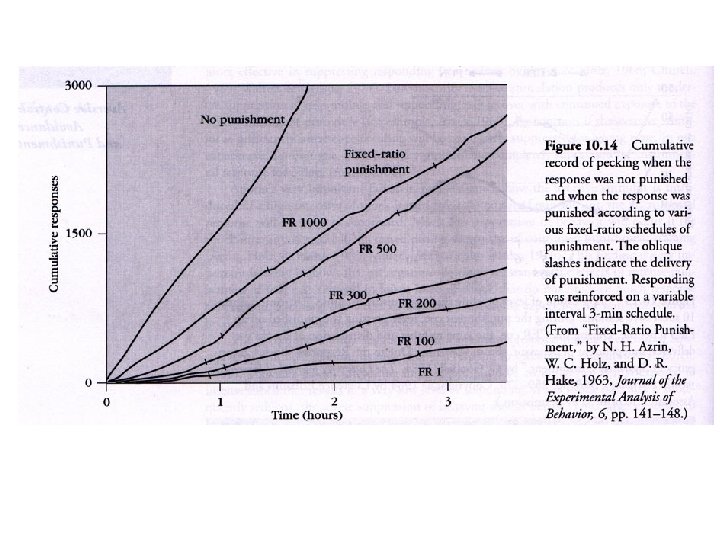
Skinner’s Experiment on Punishment Stage 1: Rats were reinforced with food on a VI schedule Stage 2: Extinction for two successive days First 10 min of extinction: One group of rats was punished Another group was not punished
Skinner concluded that punishment was not an effective way to control behavior.
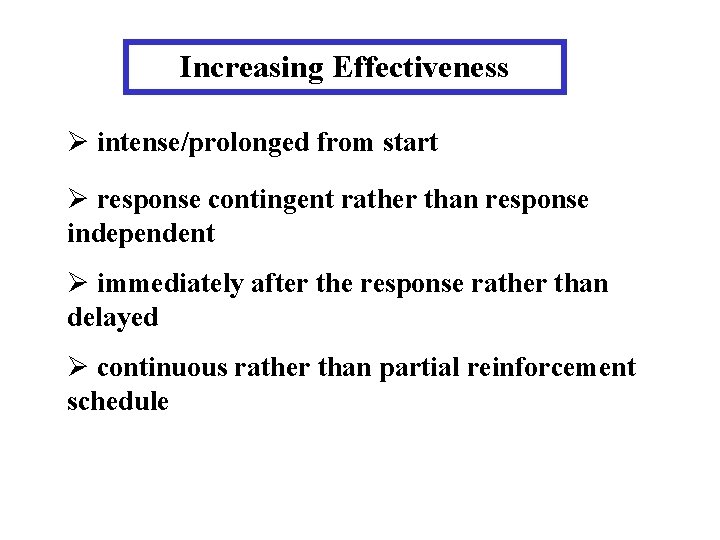
Increasing Effectiveness Ø intense/prolonged from start Ø response contingent rather than response independent Ø immediately after the response rather than delayed Ø continuous rather than partial reinforcement schedule
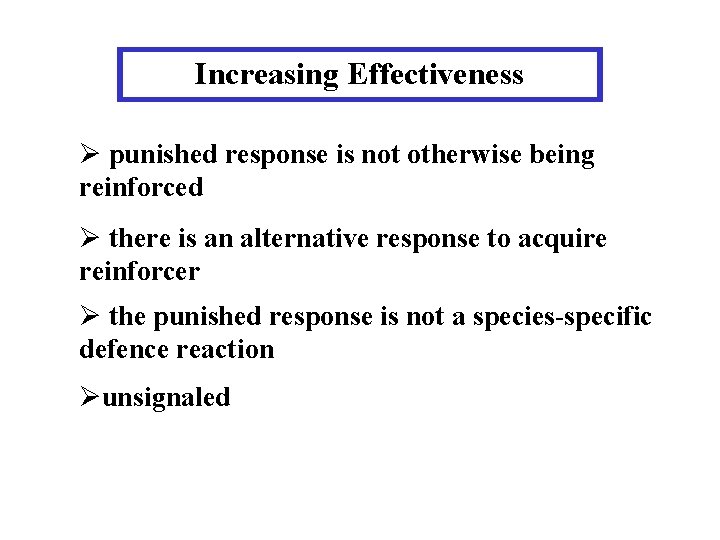
Increasing Effectiveness Ø punished response is not otherwise being reinforced Ø there is an alternative response to acquire reinforcer Ø the punished response is not a species-specific defence reaction Øunsignaled
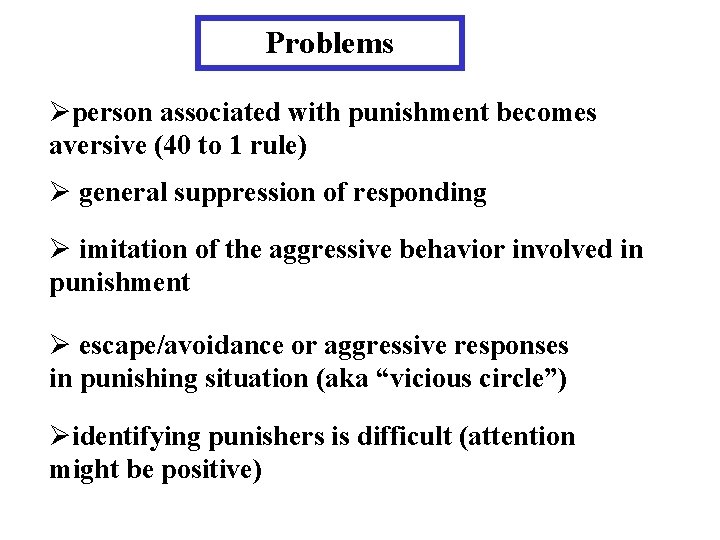
Problems Øperson associated with punishment becomes aversive (40 to 1 rule) Ø general suppression of responding Ø imitation of the aggressive behavior involved in punishment Ø escape/avoidance or aggressive responses in punishing situation (aka “vicious circle”) Øidentifying punishers is difficult (attention might be positive)
Escape/ Avoidance
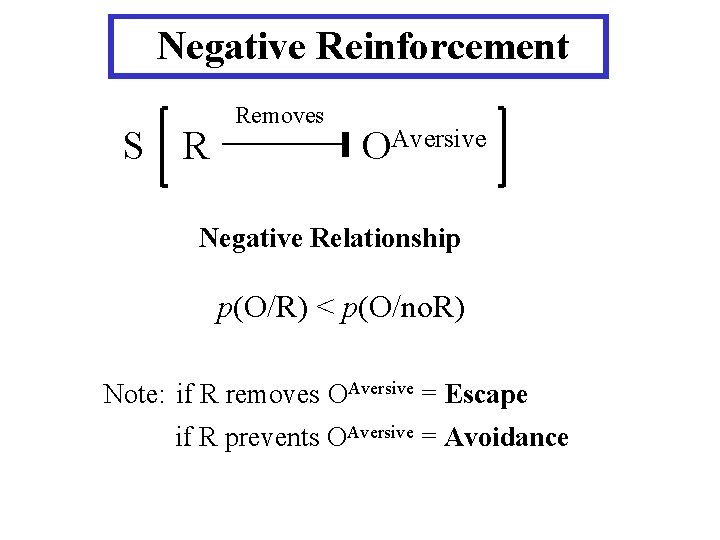
Negative Reinforcement S R Removes OAversive Negative Relationship p(O/R) < p(O/no. R) Note: if R removes OAversive = Escape if R prevents OAversive = Avoidance
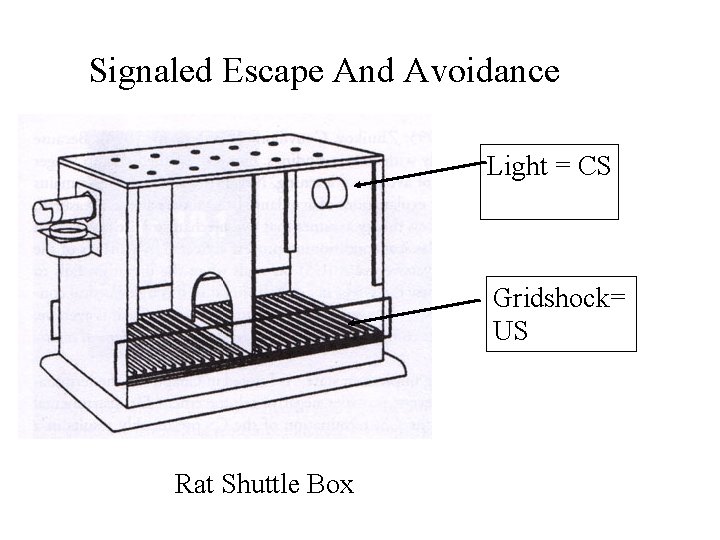
Signaled Escape And Avoidance Light = CS Gridshock= US Rat Shuttle Box
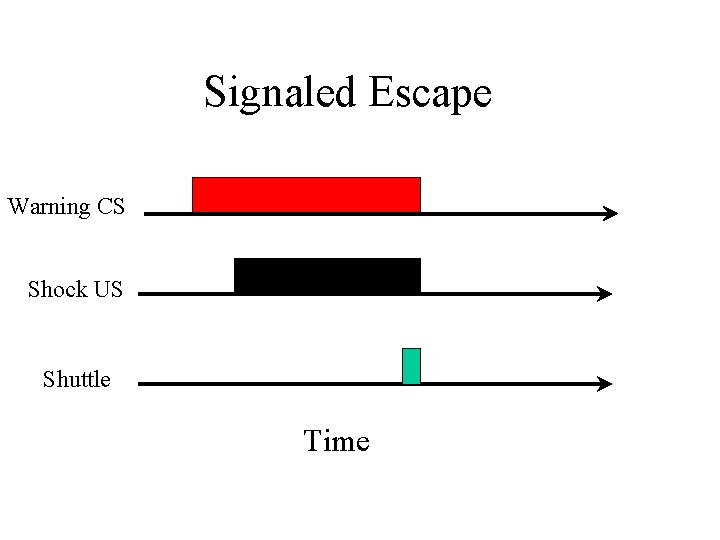
Signaled Escape Warning CS Shock US Shuttle Time
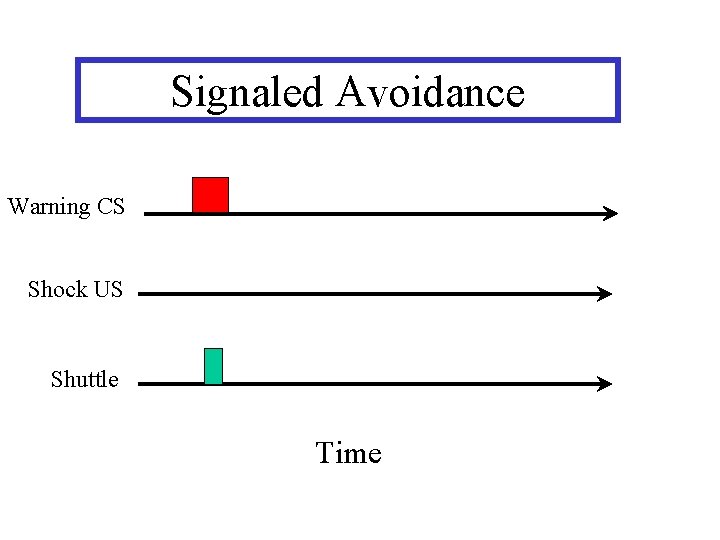
Signaled Avoidance Warning CS Shock US Shuttle Time
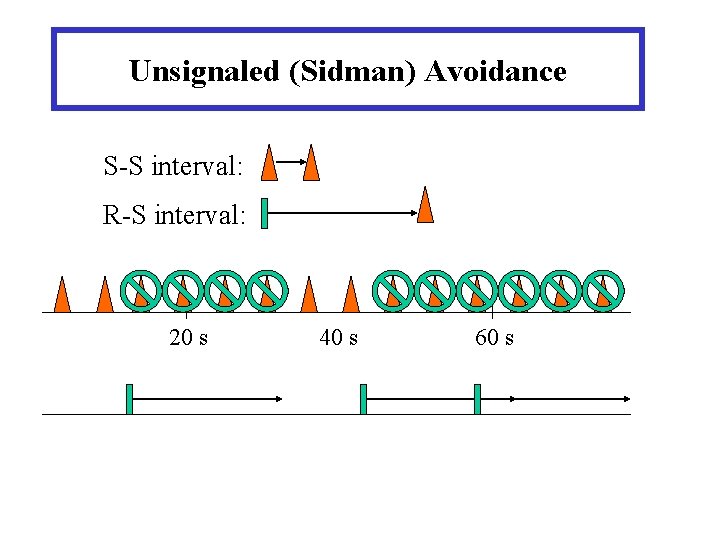
Unsignaled (Sidman) Avoidance S-S interval: R-S interval: 20 s 40 s 60 s
Avoidance Puzzle Question: How can the absence of an event act as a reinforcer? Answer: Something tangible has happened. Fear is removed inside the organism.
The Two-Process Theory of Avoidance 1. (Pavlovian): Pairings of situational CSs with an aversive US cause a fear CR to develop 2. (Instrumental): Responding causes removal of the CS, which in turn removes the fear CR Avoidance learning is escape learning; the organism learns to escape from the CS and the fear that it elicits.
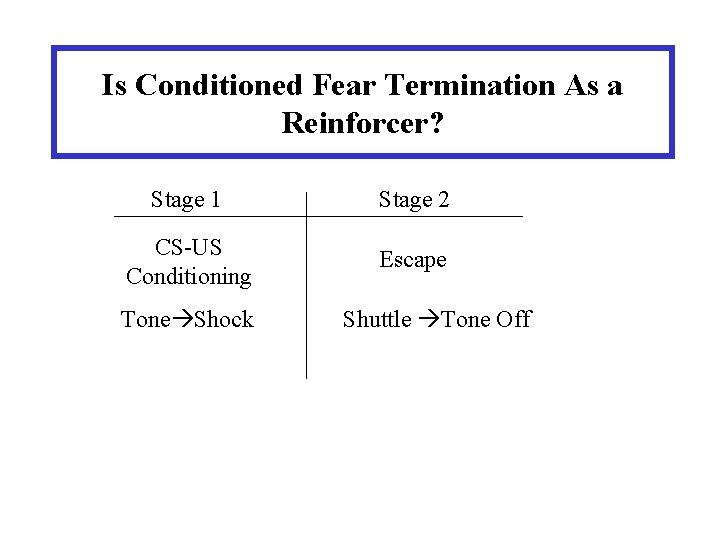
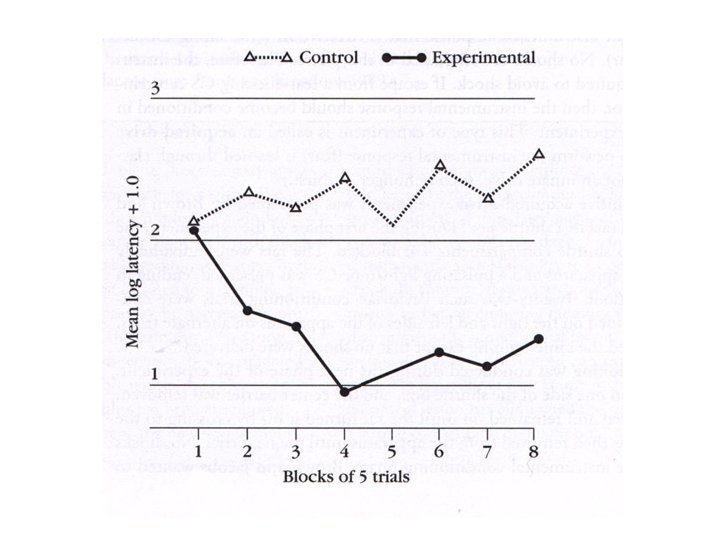
Is Conditioned Fear Termination As a Reinforcer? Stage 1 Stage 2 CS-US Conditioning Escape Tone Shock Shuttle Tone Off
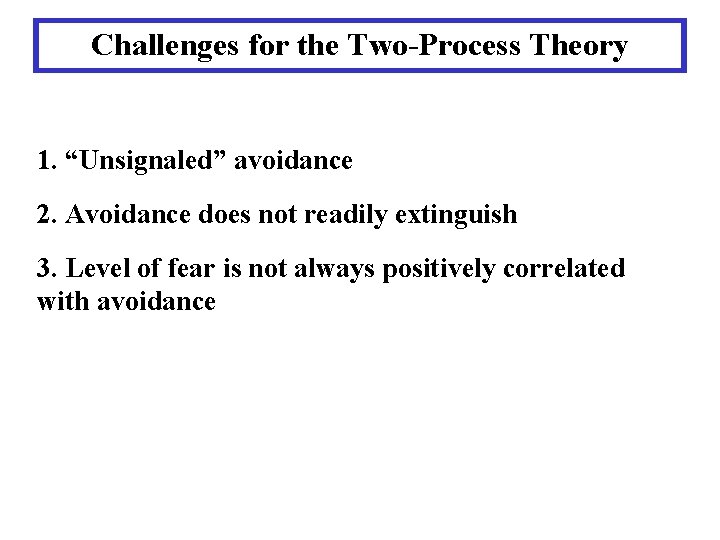
Challenges for the Two-Process Theory 1. “Unsignaled” avoidance 2. Avoidance does not readily extinguish 3. Level of fear is not always positively correlated with avoidance
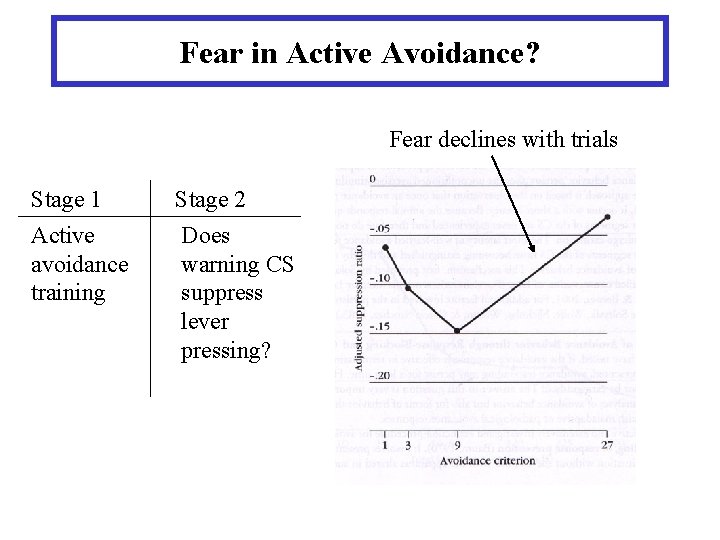
Fear in Active Avoidance? Fear declines with trials Stage 1 Active avoidance training Stage 2 Does warning CS suppress lever pressing?
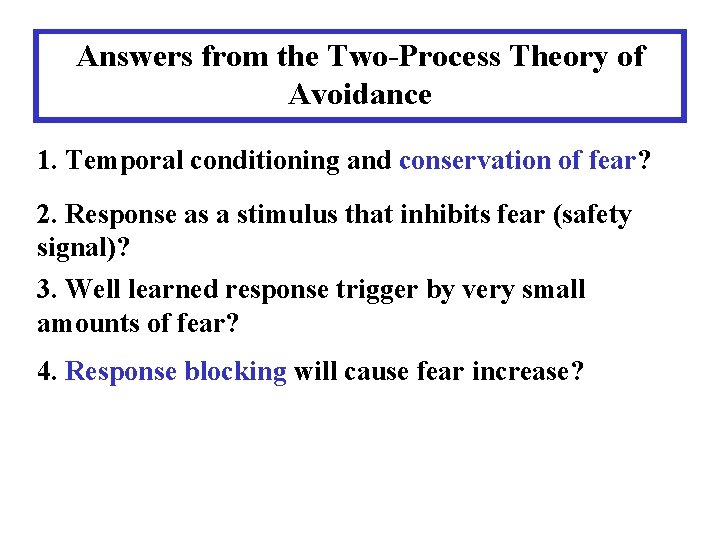
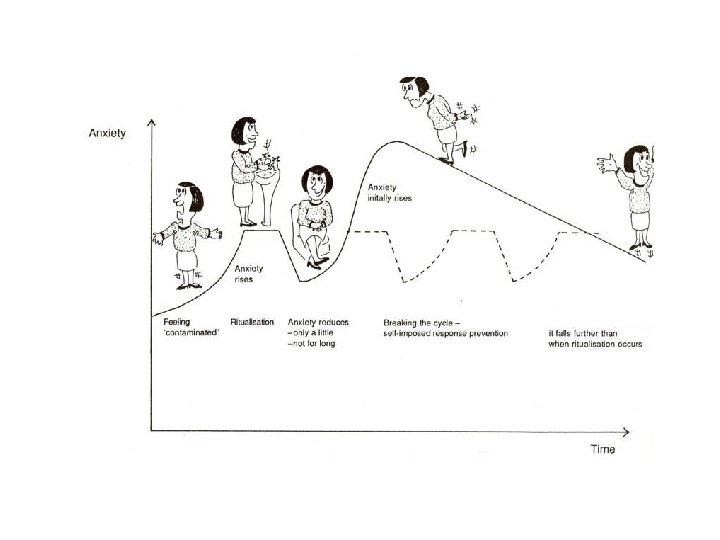
Answers from the Two-Process Theory of Avoidance 1. Temporal conditioning and conservation of fear? 2. Response as a stimulus that inhibits fear (safety signal)? 3. Well learned response trigger by very small amounts of fear? 4. Response blocking will cause fear increase?
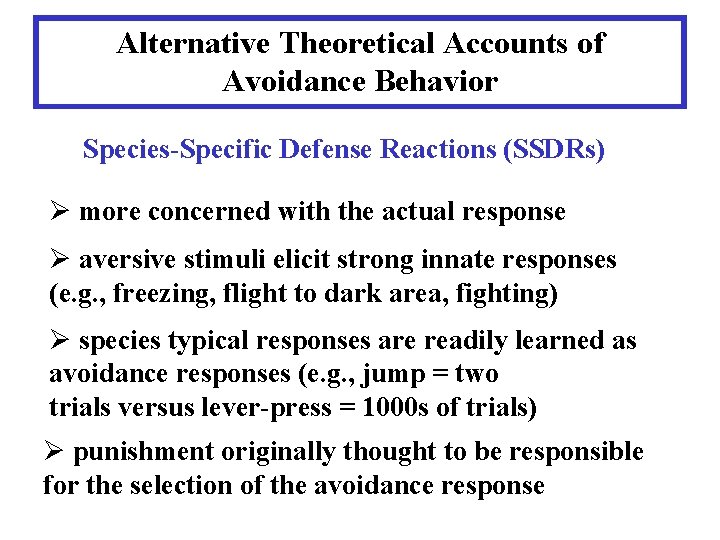
Alternative Theoretical Accounts of Avoidance Behavior Species-Specific Defense Reactions (SSDRs) Ø more concerned with the actual response Ø aversive stimuli elicit strong innate responses (e. g. , freezing, flight to dark area, fighting) Ø species typical responses are readily learned as avoidance responses (e. g. , jump = two trials versus lever-press = 1000 s of trials) Ø punishment originally thought to be responsible for the selection of the avoidance response