
AVAPS Aaron Roberts MD PPG Sleep Medicine 111618
AVAPS Aaron Roberts, MD PPG Sleep Medicine 11/16/18
What Does AVAPS Stand For? a) b) c) d) e) f) Automatic Ventilation Assured Pressure Support Automatic Ventilation And Patient Support Average Volume Assured Pressure Support Average Volume And Patient Support None of the above I have no idea
What Does AVAPS Stand For? a) b) c) d) e) f) Automatic Ventilation Assured Pressure Support Automatic Ventilation And Patient Support Average Volume Assured Pressure Support Average Volume And Patient Support None of the above I have no idea

Objectives • Overview of AVAPS • Review indications for AVAPS • Go through titration protocol • Troubleshooting • Q&A
AVAPS-AE: What Is It? Auto-titration mode of noninvasive ventilation (NIV) designed to better treat respiratory insufficiency patients in the hospital and homecare environments • Proven performance of AVAPS – Maintains targeted tidal volume • Auto EPAP – Maintains patent upper airway at comfortable pressure • Auto backup rate – Applies an auto backup rate near a patient’s resting rate
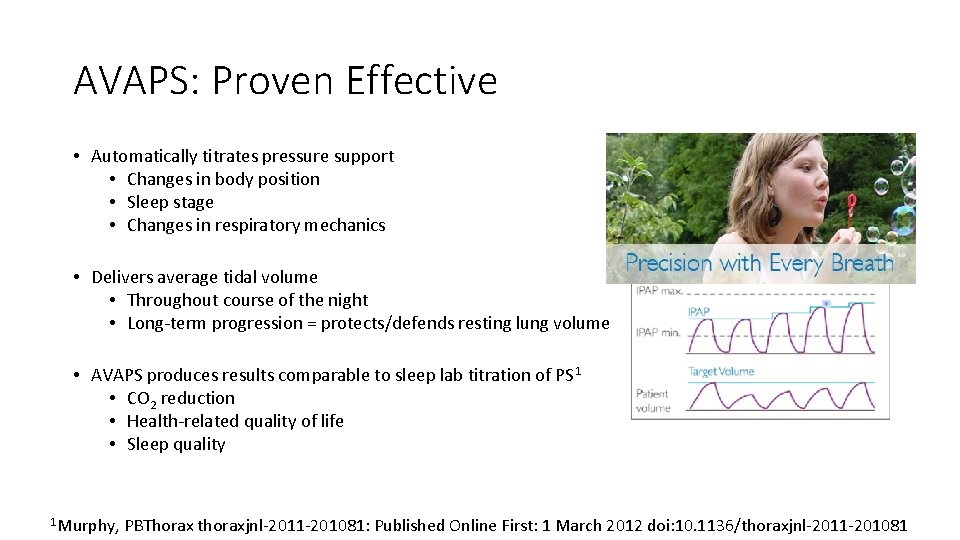
AVAPS: Proven Effective • Automatically titrates pressure support • Changes in body position • Sleep stage • Changes in respiratory mechanics • Delivers average tidal volume • Throughout course of the night • Long-term progression = protects/defends resting lung volume • AVAPS produces results comparable to sleep lab titration of PS 1 • CO 2 reduction • Health-related quality of life • Sleep quality 1 Murphy, PBThorax thoraxjnl-2011 -201081: Published Online First: 1 March 2012 doi: 10. 1136/thoraxjnl-2011 -201081
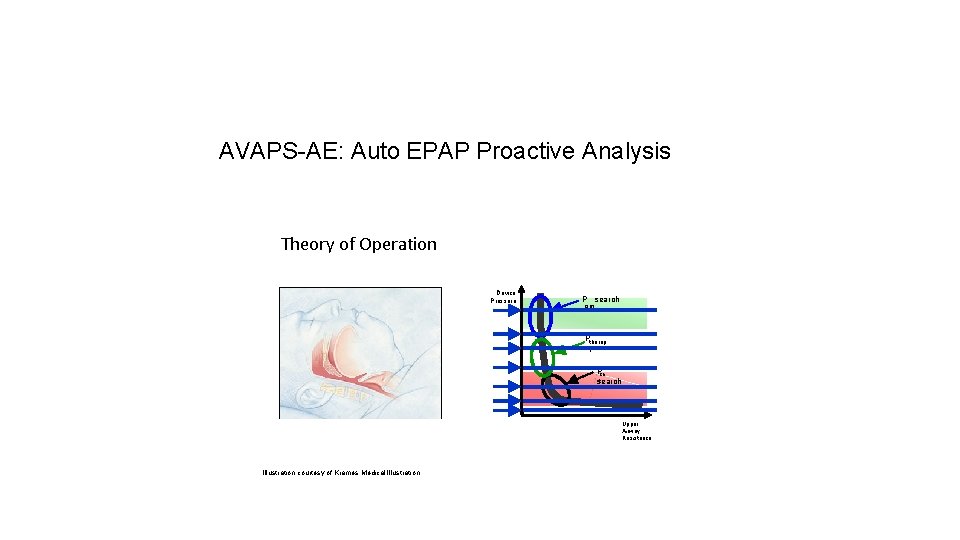
AVAPS-AE: Auto EPAP Proactive Analysis Theory of Operation Device Pressure P search opt Ptherap y Pcri t search Upper Airway Resistance Illustration courtesy of Krames Medical Illustration.
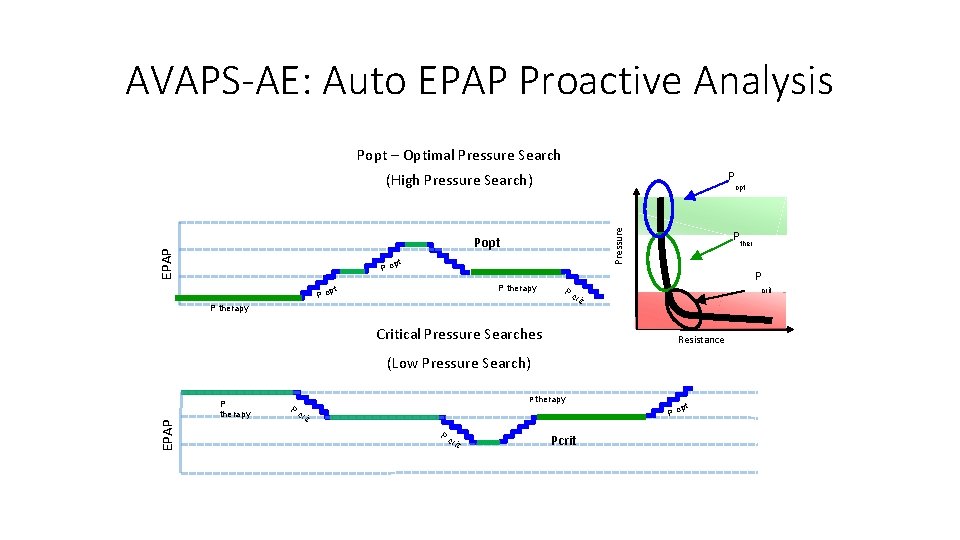
AVAPS-AE: Auto EPAP Proactive Analysis Popt – Optimal Pressure Search (High Pressure Search) P Pressure opt EPAP Popt pt Po P therapy pt Po P ther P Pc crit P therapy Critical Pressure Searches Resistance EPAP (Low Pressure Search) P therapy Pc rit pt Po Pc rit Pcrit
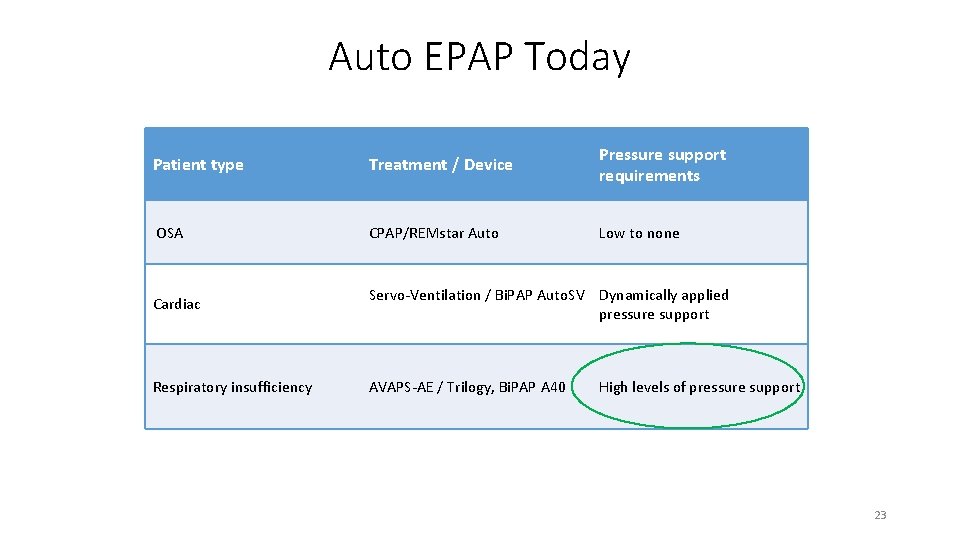
Auto EPAP Today Patient type Treatment / Device Pressure support requirements OSA CPAP/REMstar Auto Low to none Cardiac Servo-Ventilation / Bi. PAP Auto. SV Dynamically applied pressure support Respiratory insufficiency AVAPS-AE / Trilogy, Bi. PAP A 40 High levels of pressure support 23
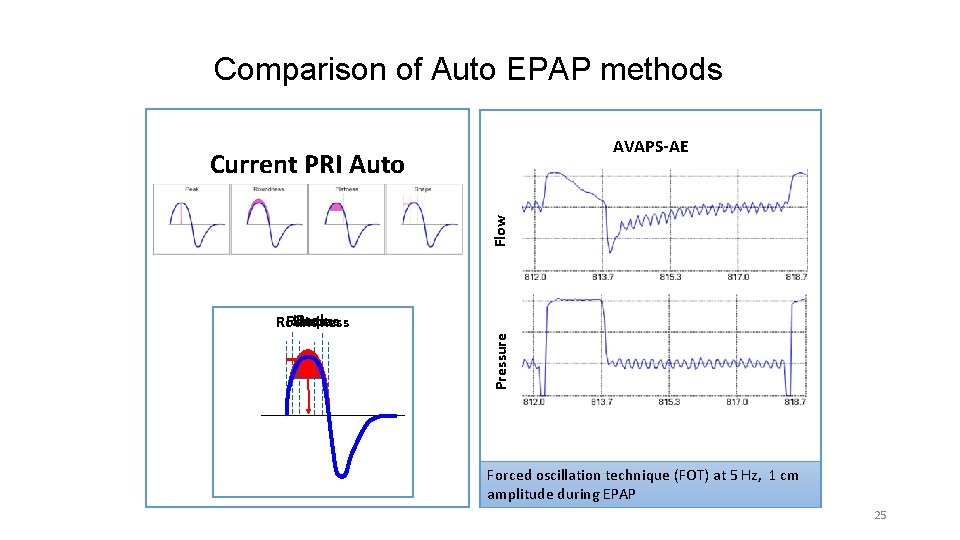
Comparison of Auto EPAP methods AVAPS-AE Flow Current PRI Auto EPAP/CPAP Pressure Peak Flatness Shape Roundness Forced oscillation technique (FOT) at 5 Hz, 1 cm amplitude during EPAP 25
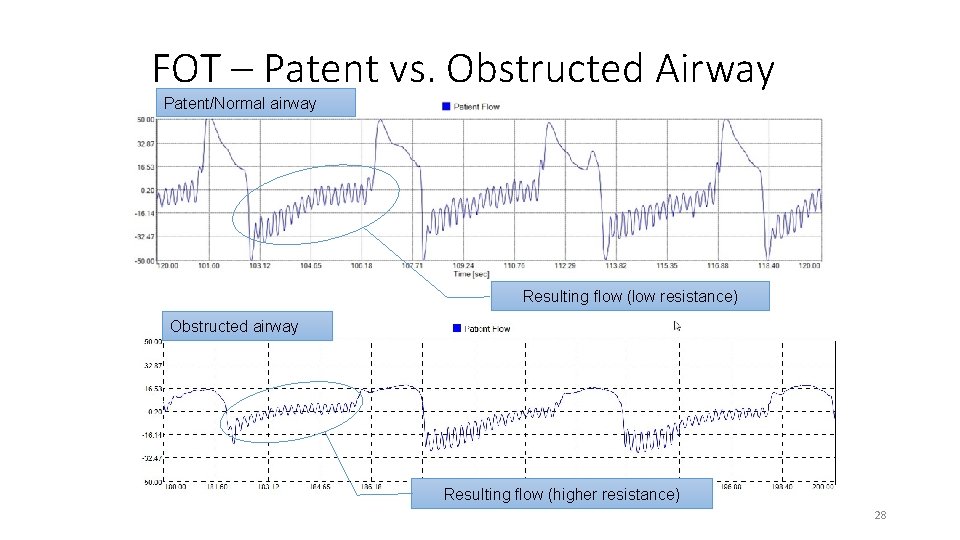
FOT – Patent vs. Obstructed Airway Patent/Normal airway Resulting flow (low resistance) Obstructed airway Resulting flow (higher resistance) 28
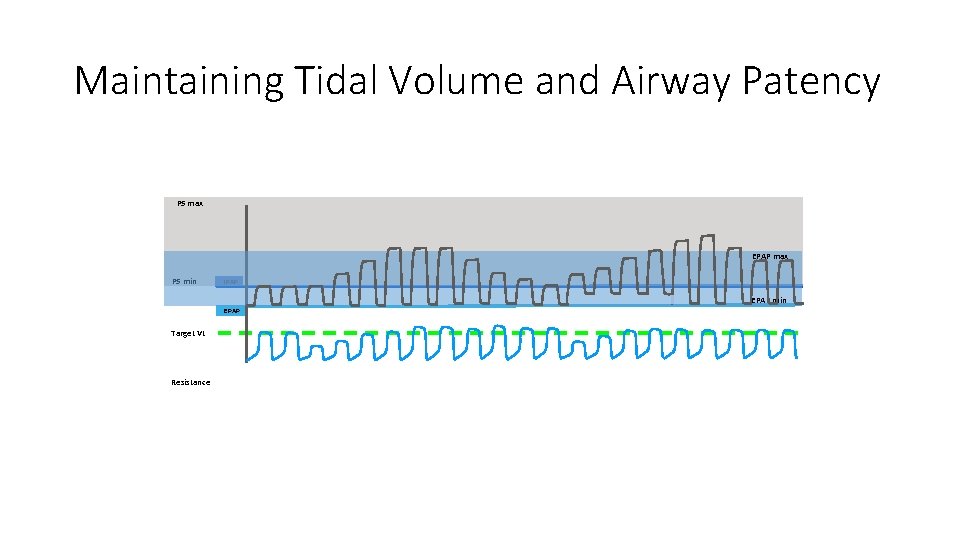
Maintaining Tidal Volume and Airway Patency PS max EPAP max PS min IPAP EPAP min EPAP Target Vt Resistance
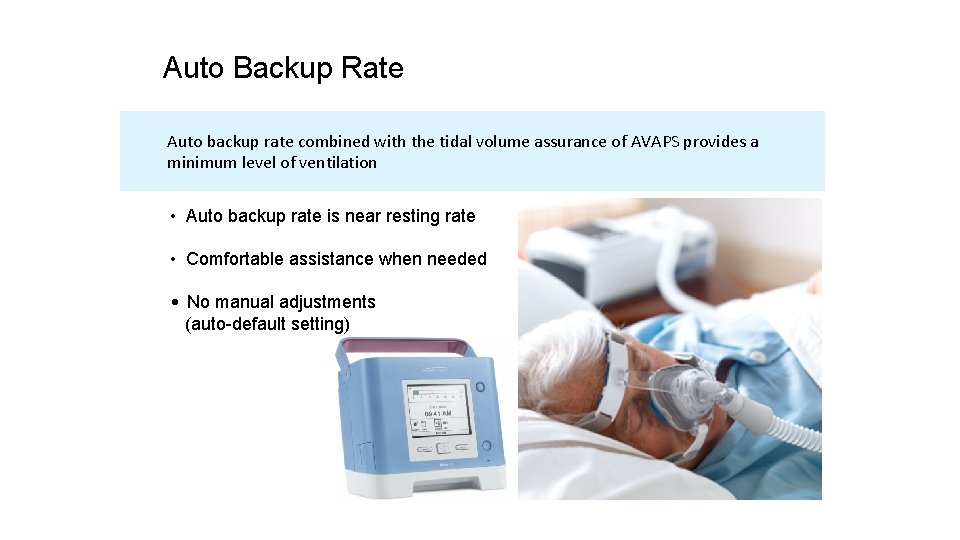
Auto Backup Raterate Auto Back-up Auto backup rate combined with the tidal volume assurance of AVAPS provides a minimum level of ventilation • Auto backup rate is near resting rate • Comfortable assistance when needed • No manual adjustments (auto-default setting)
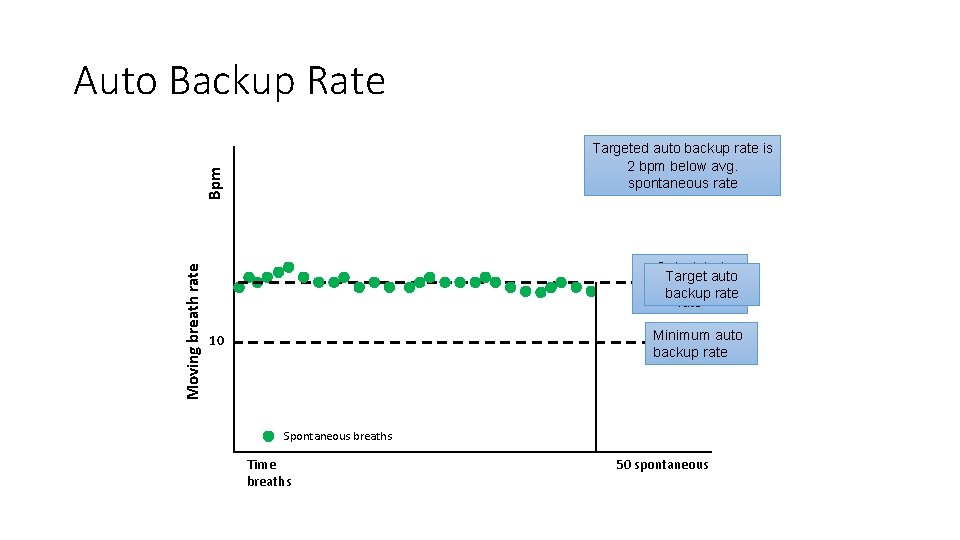
Auto Backup Rate Moving breath rate Bpm Targeted auto backup rate is 2 bpm below avg. spontaneous rate Calculated Target auto spontaneous backup rate Minimum auto backup rate 10 Spontaneous breaths Time breaths 50 spontaneous
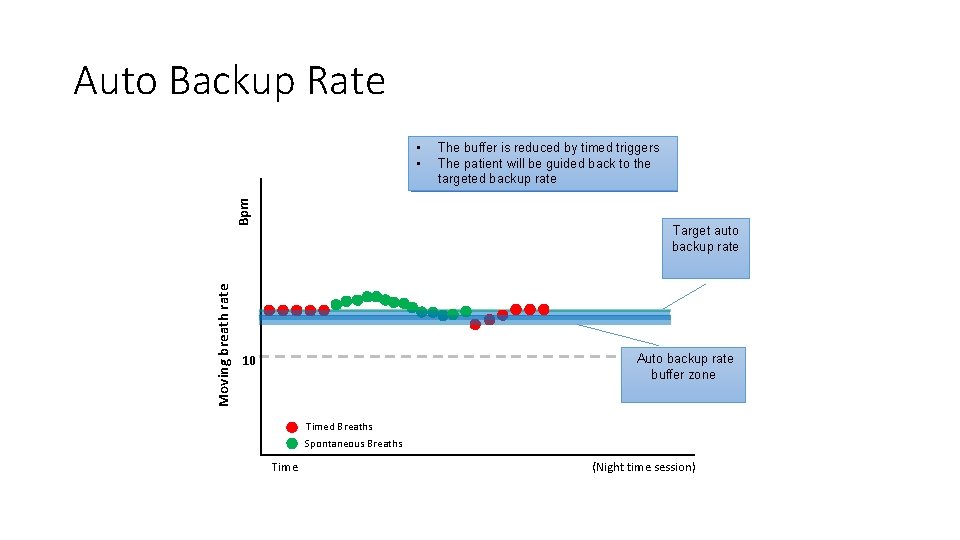
Auto Backup Rate Moving breath rate Bpm • The is reduced triggers Thebuffer auto backup rateby is timed buffered by • spontaneous The patienttriggers will be to guided back to the promote synchrony targeted backup rate with the device Target auto backup rate 10 Auto backup rate buffer zone Timed Breaths Spontaneous Breaths Time (Night time session)
Auto Backup Rate: Patient Comfort Features • Comfort feature intent: Minimizes patient/device asynchrony • Rate will not exceed patient’s initial resting spontaneous rate • Machine breath delayed if patient is still exhaling • AVAPS-AE allows patient to terminate a machine delivered breath 33
Indications for AVAPS
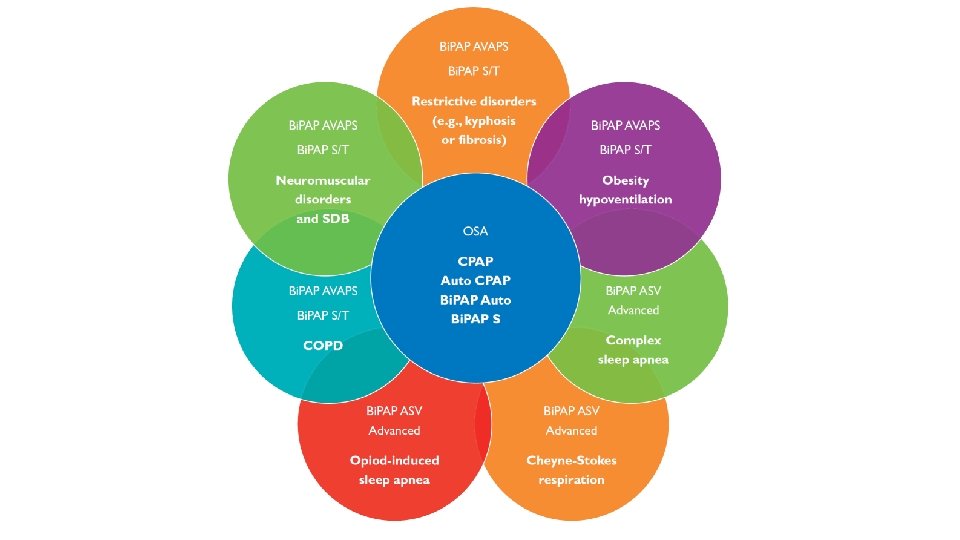
Which Patients Are Suitable For AVAPS? a) b) c) d) e) f) g) h) Obesity hypoventilation syndrome (OHS) Restrictive disorders (kyphosis or pulmonary fibrosis) Neuromuscular disorders and SDB Severe COPD with chronic respiratory failure Opioid-induced central sleep apnea Periodic breathing (Cheyne-Stokes) A, B, C, and D All of the above
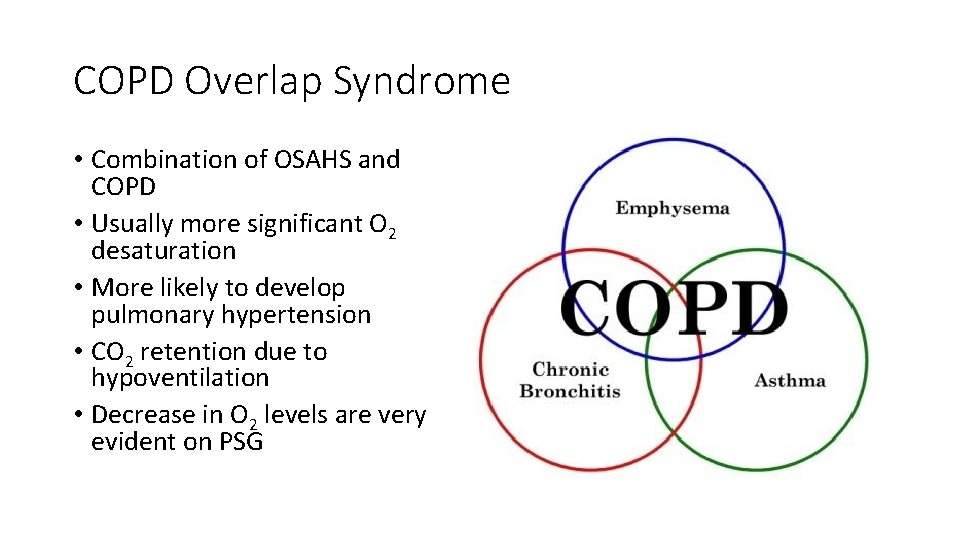
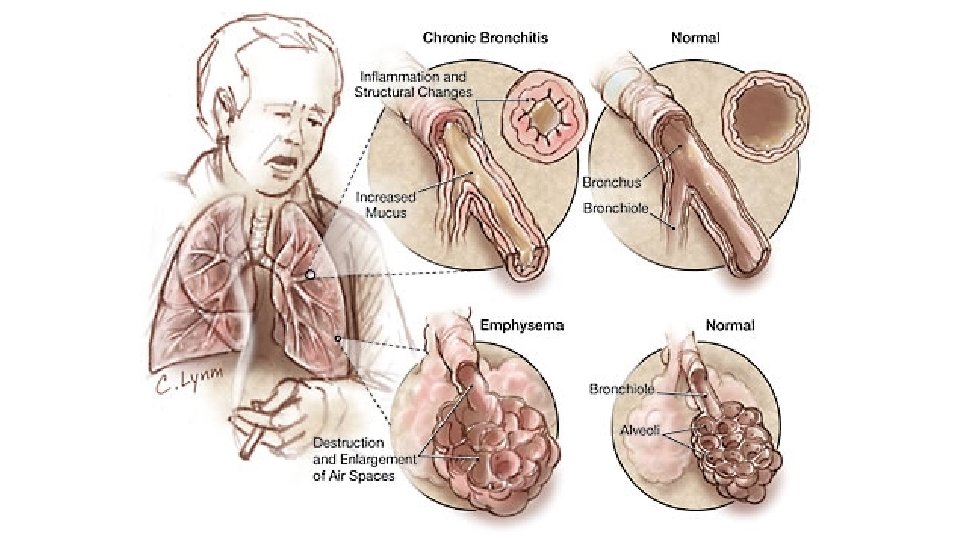
COPD Overlap Syndrome • Combination of OSAHS and COPD • Usually more significant O 2 desaturation • More likely to develop pulmonary hypertension • CO 2 retention due to hypoventilation • Decrease in O 2 levels are very evident on PSG
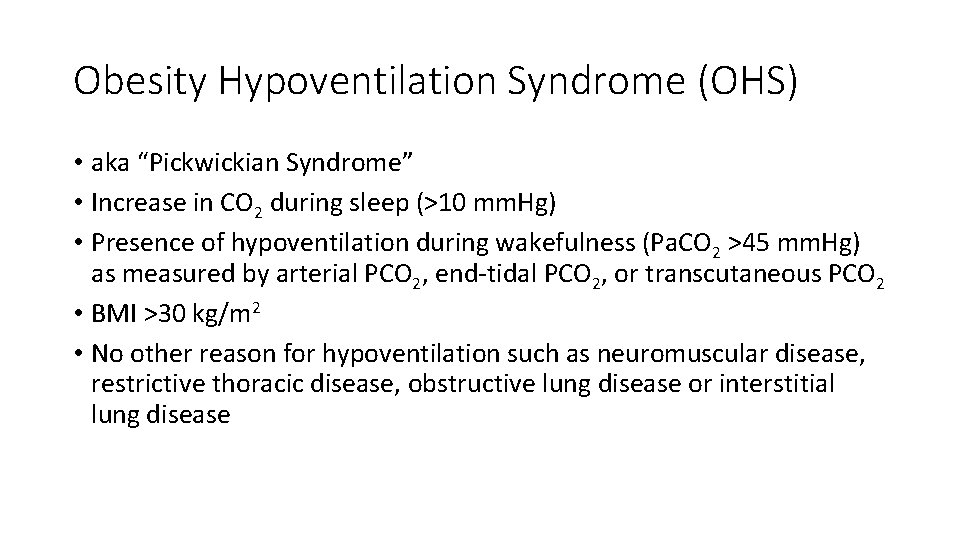
Obesity Hypoventilation Syndrome (OHS) • aka “Pickwickian Syndrome” • Increase in CO 2 during sleep (>10 mm. Hg) • Presence of hypoventilation during wakefulness (Pa. CO 2 >45 mm. Hg) as measured by arterial PCO 2, end-tidal PCO 2, or transcutaneous PCO 2 • BMI >30 kg/m 2 • No other reason for hypoventilation such as neuromuscular disease, restrictive thoracic disease, obstructive lung disease or interstitial lung disease

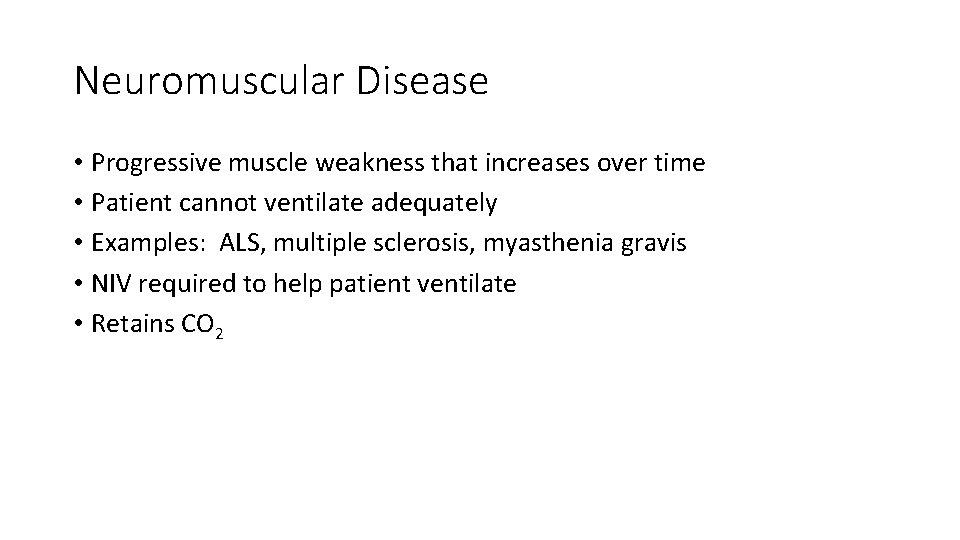
Neuromuscular Disease • Progressive muscle weakness that increases over time • Patient cannot ventilate adequately • Examples: ALS, multiple sclerosis, myasthenia gravis • NIV required to help patient ventilate • Retains CO 2

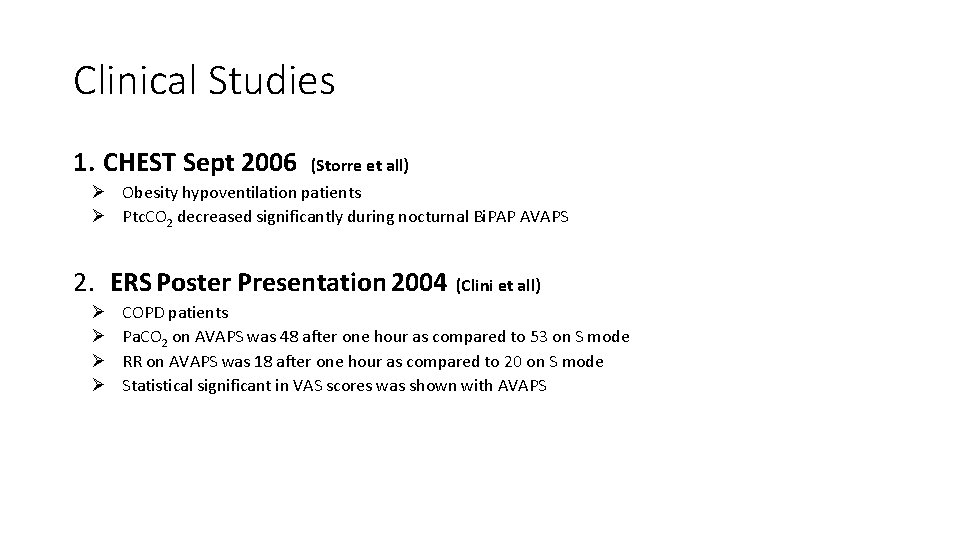
Clinical Studies 1. CHEST Sept 2006 (Storre et all) Ø Obesity hypoventilation patients Ø Ptc. CO 2 decreased significantly during nocturnal Bi. PAP AVAPS 2. ERS Poster Presentation 2004 (Clini et all) Ø Ø COPD patients Pa. CO 2 on AVAPS was 48 after one hour as compared to 53 on S mode RR on AVAPS was 18 after one hour as compared to 20 on S mode Statistical significant in VAS scores was shown with AVAPS
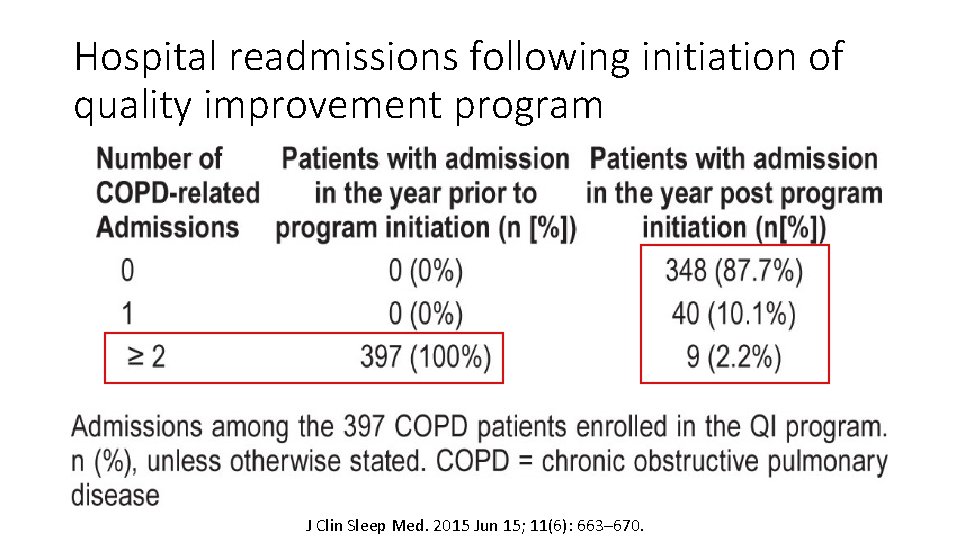
Hospital readmissions following initiation of quality improvement program J Clin Sleep Med. 2015 Jun 15; 11(6): 663– 670.
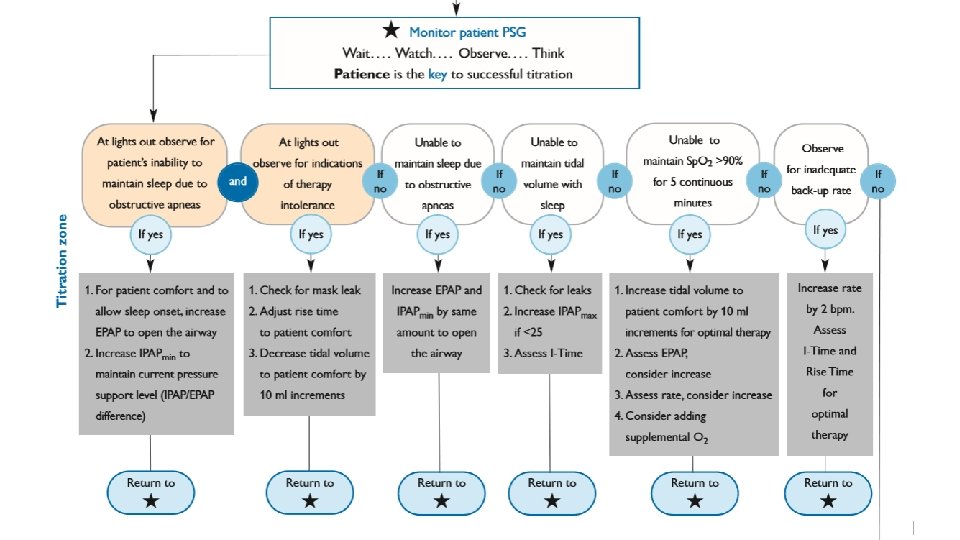
Titration Protocol
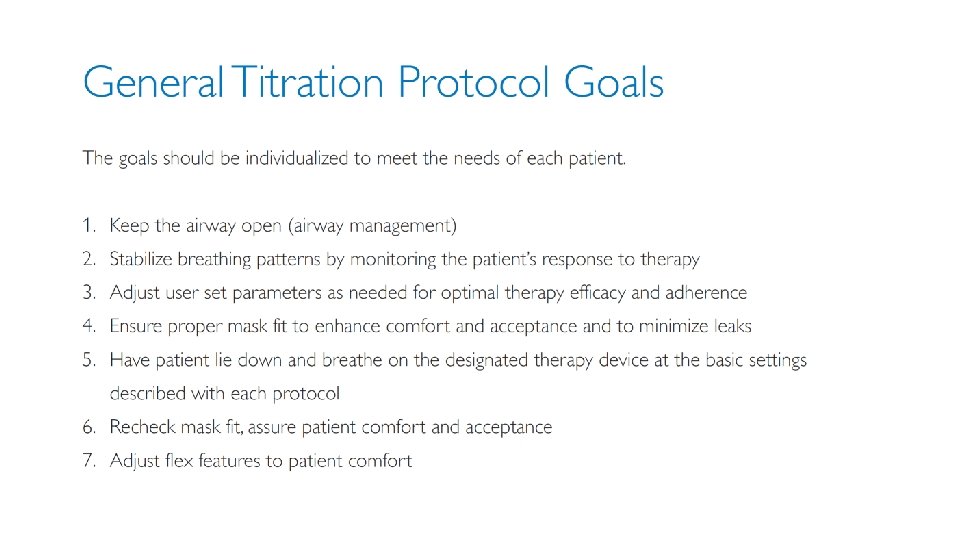
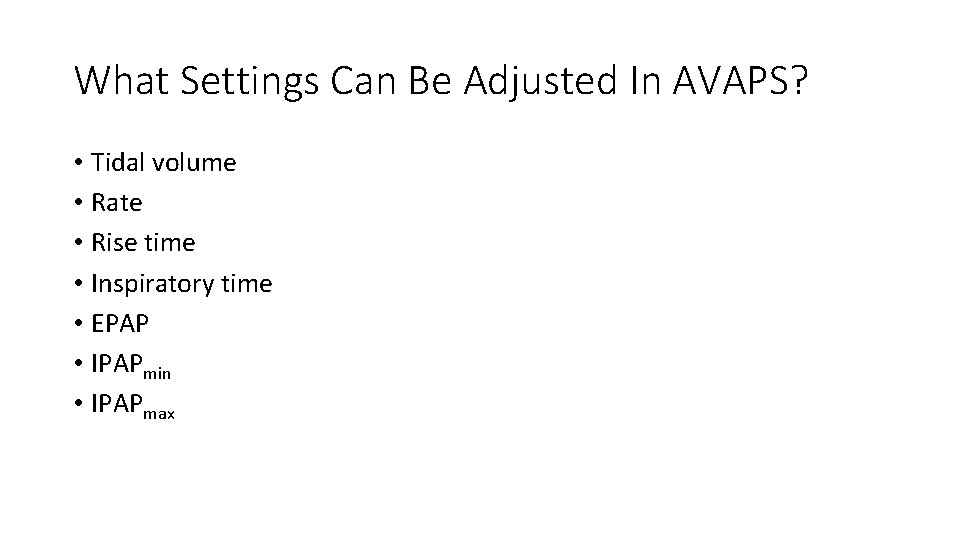
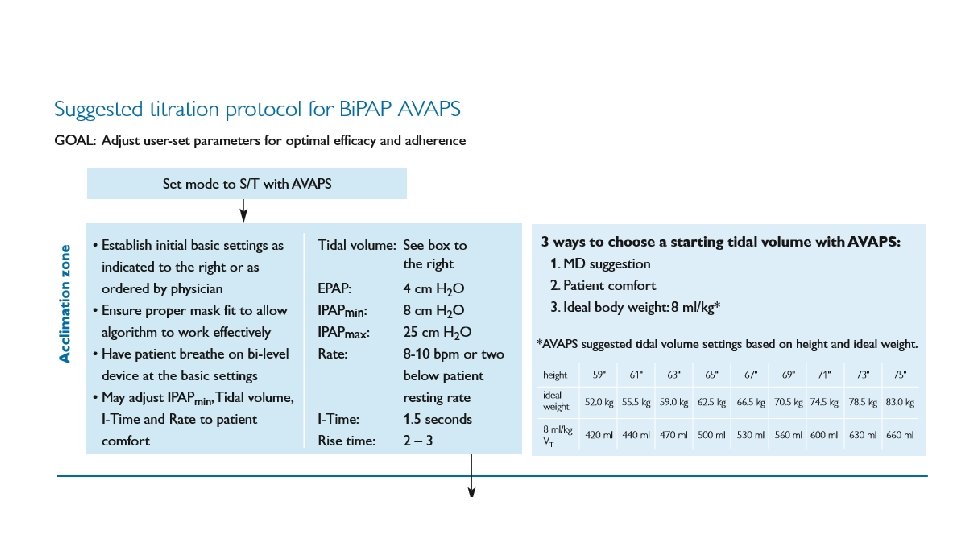
What Settings Can Be Adjusted In AVAPS? • Tidal volume • Rate • Rise time • Inspiratory time • EPAP • IPAPmin • IPAPmax
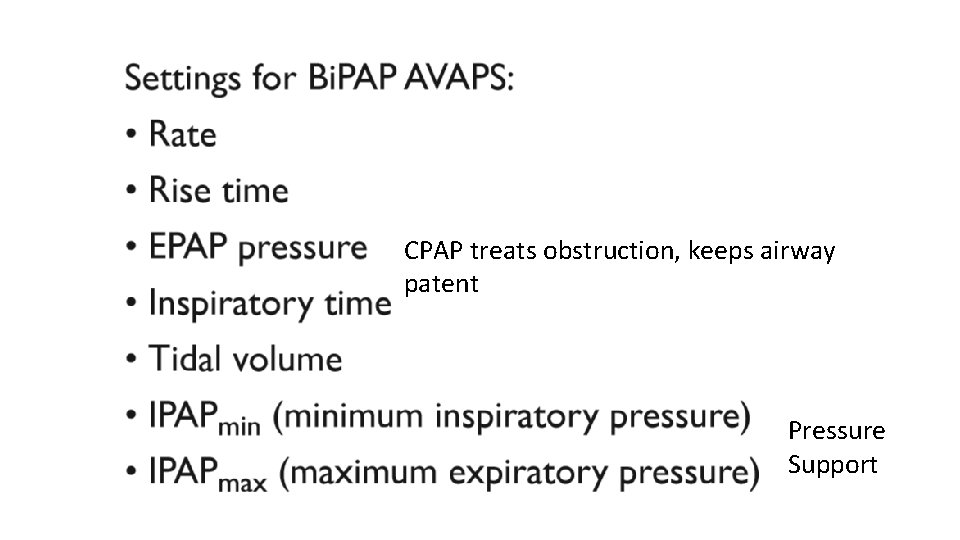
CPAP treats obstruction, keeps airway patent Pressure Support
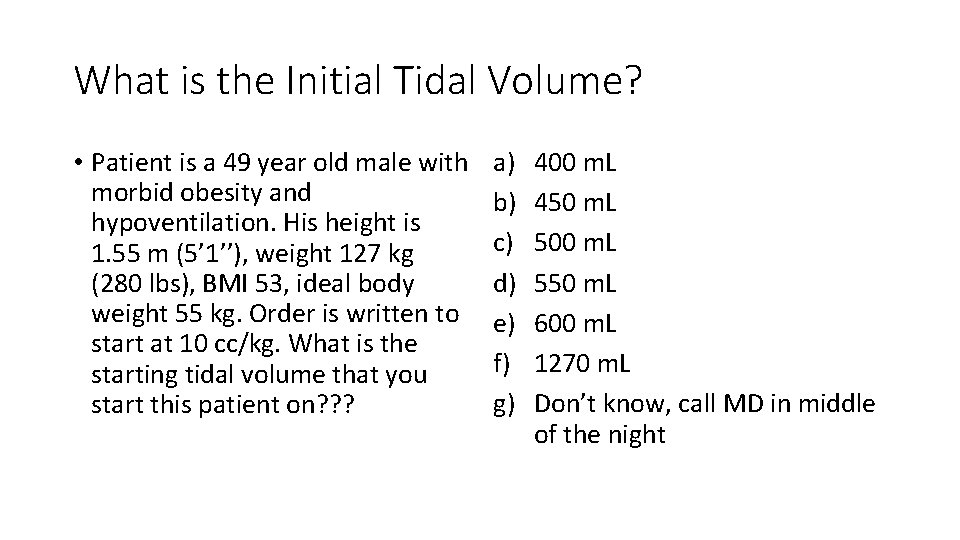
What is the Initial Tidal Volume? • Patient is a 49 year old male with morbid obesity and hypoventilation. His height is 1. 55 m (5’ 1’’), weight 127 kg (280 lbs), BMI 53, ideal body weight 55 kg. Order is written to start at 10 cc/kg. What is the starting tidal volume that you start this patient on? ? ? a) b) c) d) e) f) g) 400 m. L 450 m. L 500 m. L 550 m. L 600 m. L 1270 m. L Don’t know, call MD in middle of the night

Troubleshooting
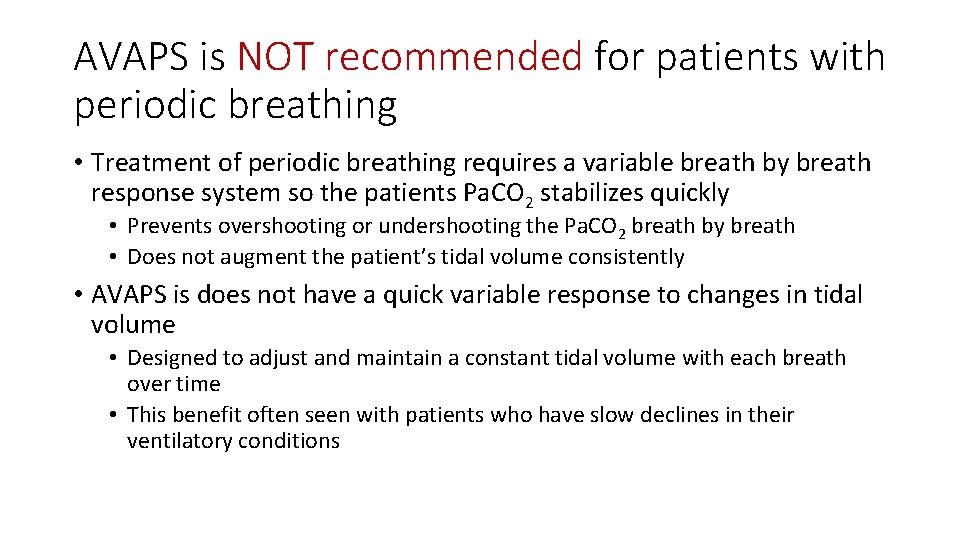
AVAPS is NOT recommended for patients with periodic breathing • Treatment of periodic breathing requires a variable breath by breath response system so the patients Pa. CO 2 stabilizes quickly • Prevents overshooting or undershooting the Pa. CO 2 breath by breath • Does not augment the patient’s tidal volume consistently • AVAPS is does not have a quick variable response to changes in tidal volume • Designed to adjust and maintain a constant tidal volume with each breath over time • This benefit often seen with patients who have slow declines in their ventilatory conditions
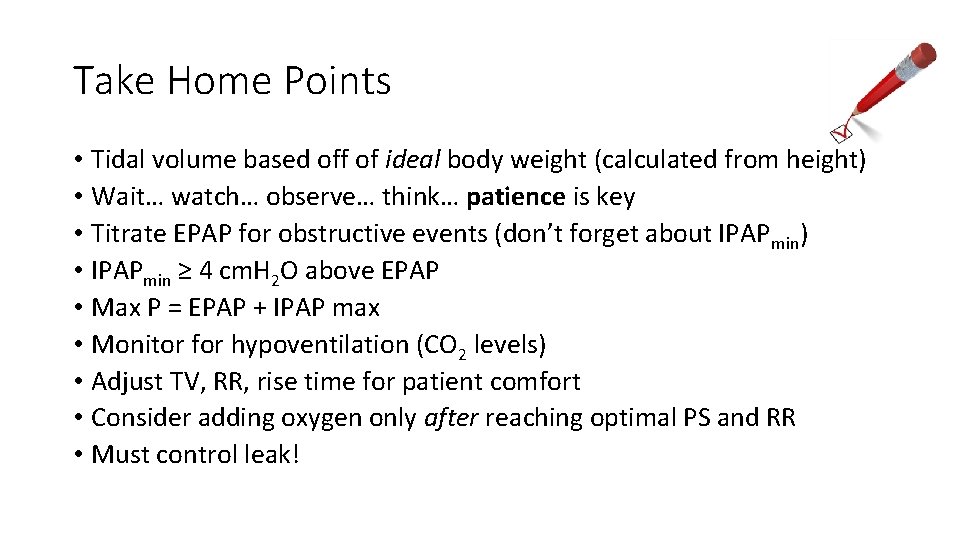
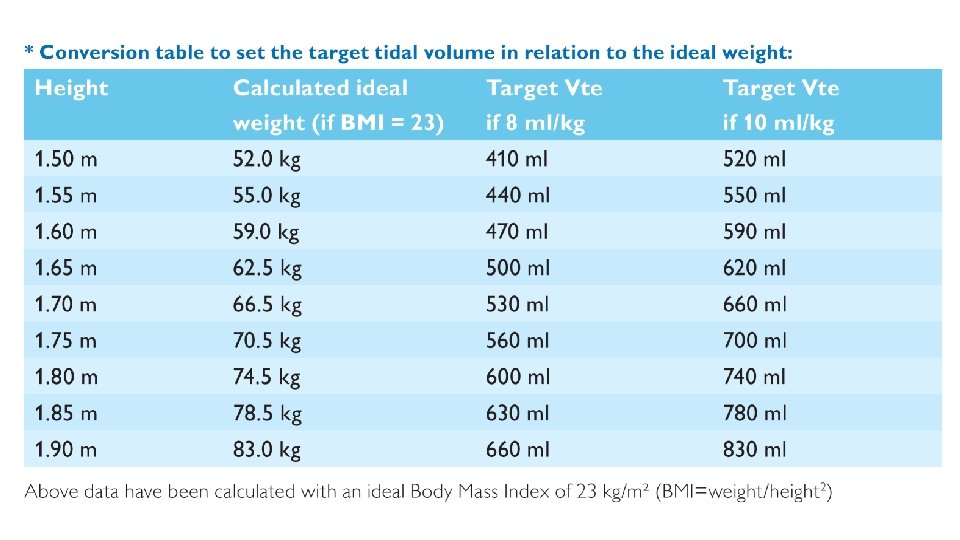
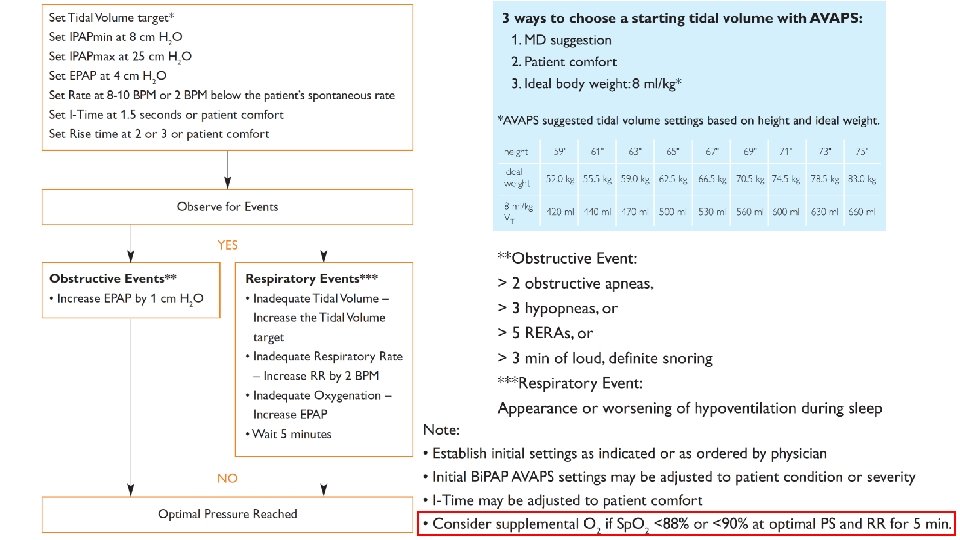
Take Home Points • Tidal volume based off of ideal body weight (calculated from height) • Wait… watch… observe… think… patience is key • Titrate EPAP for obstructive events (don’t forget about IPAPmin) • IPAPmin ≥ 4 cm. H 2 O above EPAP • Max P = EPAP + IPAP max • Monitor for hypoventilation (CO 2 levels) • Adjust TV, RR, rise time for patient comfort • Consider adding oxygen only after reaching optimal PS and RR • Must control leak!

Acknowledgements • Philips Respironics for slide content • Jodi Kahlenbeck

Questions? ? ?
- Slides: 41