
Available Potential Energy in the ocean what is

Available Potential Energy in the ocean – what is it good for? Rainer Bleck Los Alamos National Laboratory Shan Sun Goddard Institute for Space Studies
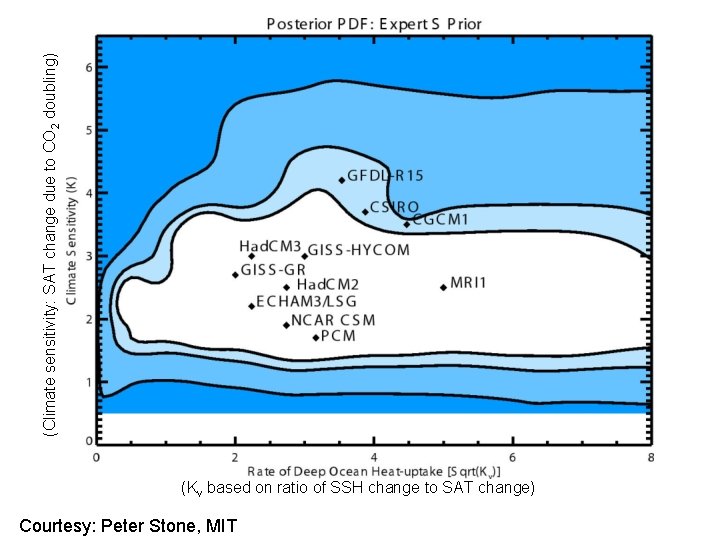
(Climate sensitivity: SAT change due to CO 2 doubling) (Kv based on ratio of SSH change to SAT change) Courtesy: Peter Stone, MIT
Applications… • Is APE a useful indicator of model drift? • Which processes contribute to the generation and destruction of APE? • Do processes like vertical regridding in HYCOM distort the APE balance? (Turn page for derivation of APE…. )
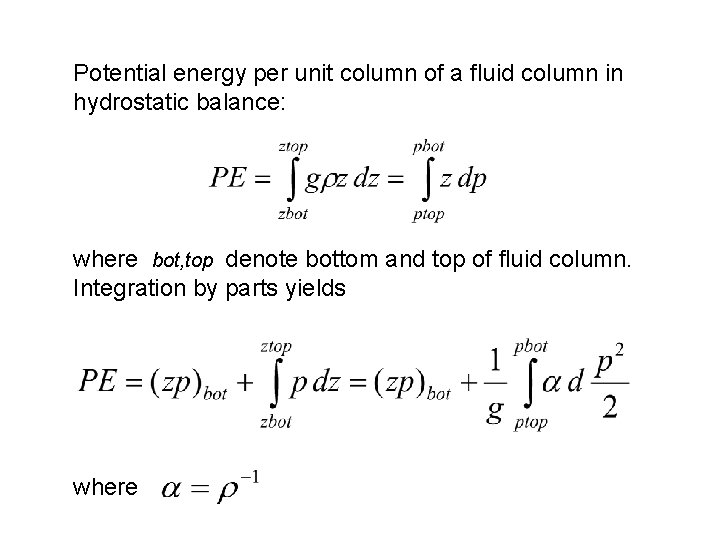
Potential energy per unit column of a fluid column in hydrostatic balance: where bot, top denote bottom and top of fluid column. Integration by parts yields where
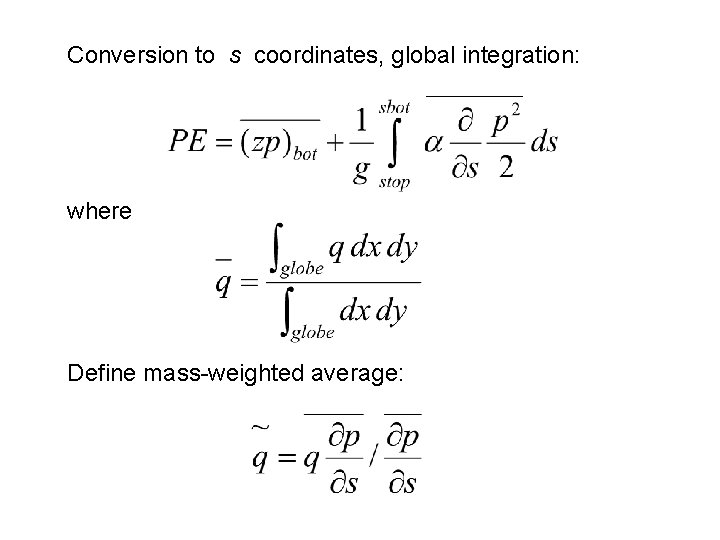
Conversion to s coordinates, global integration: where Define mass-weighted average:
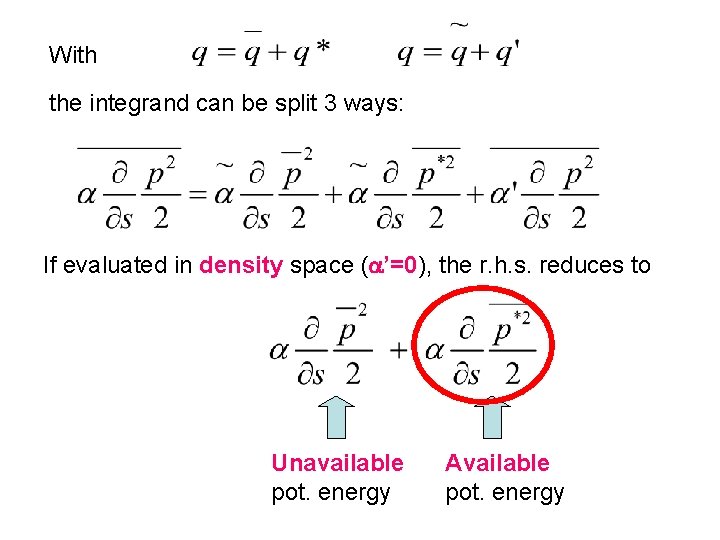
With the integrand can be split 3 ways: If evaluated in density space (a’=0), the r. h. s. reduces to Unavailable pot. energy Available pot. energy
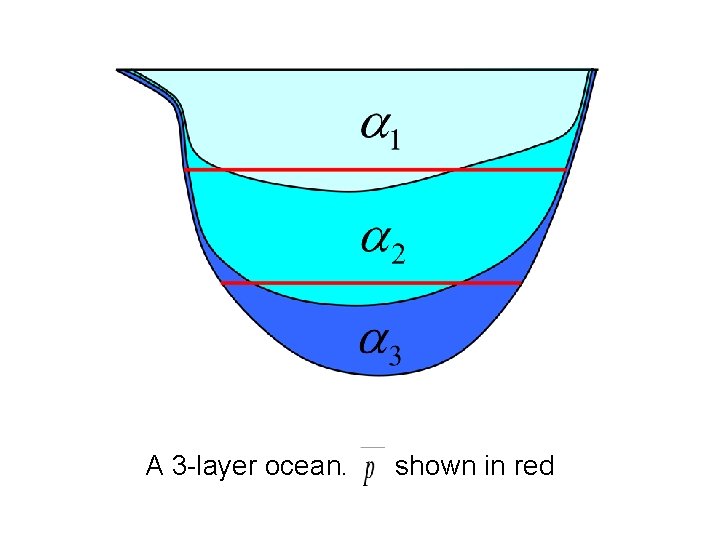
A 3 -layer ocean. shown in red
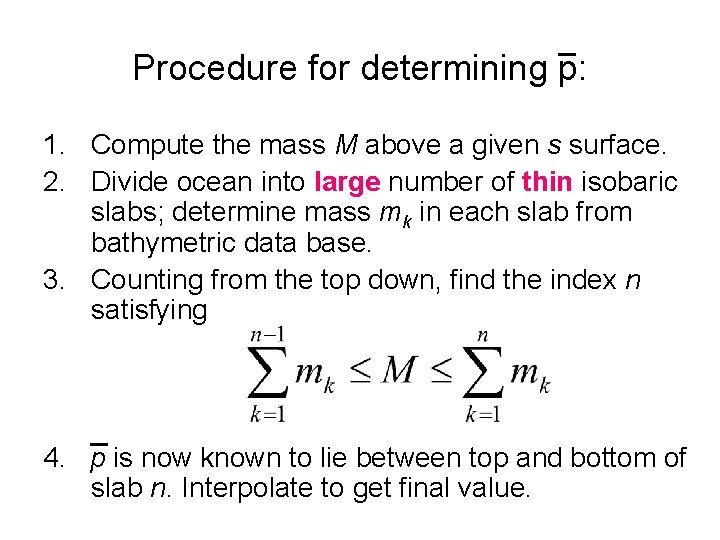
Procedure for determining p: 1. Compute the mass M above a given s surface. 2. Divide ocean into large number of thin isobaric slabs; determine mass mk in each slab from bathymetric data base. 3. Counting from the top down, find the index n satisfying 4. p is now known to lie between top and bottom of slab n. Interpolate to get final value.
Sample application: • HYCOM Grid Generator
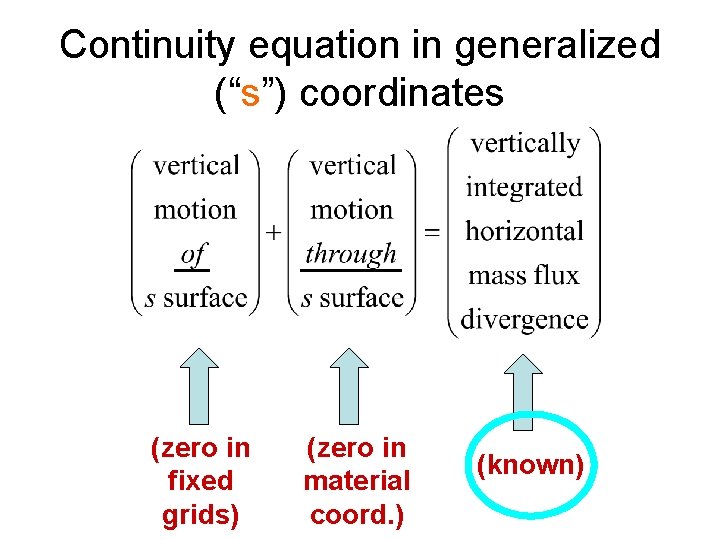
Continuity equation in generalized (“s”) coordinates (zero in fixed grids) (zero in material coord. ) (known)
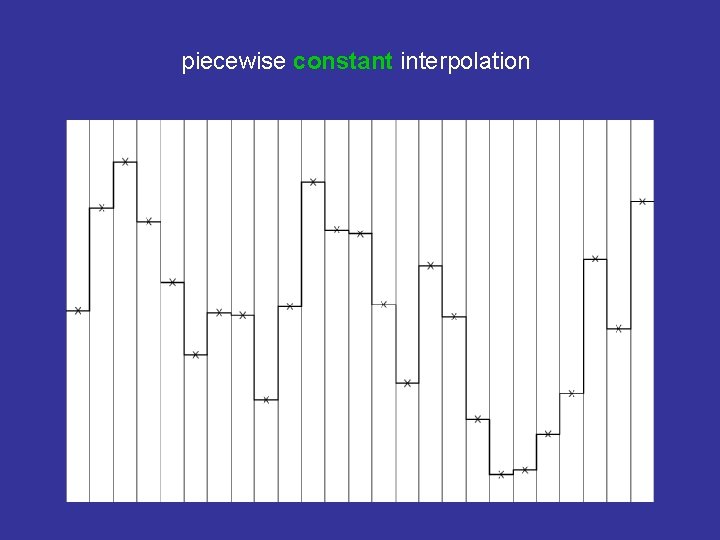
piecewise constant interpolation

piecewise linear interpolation
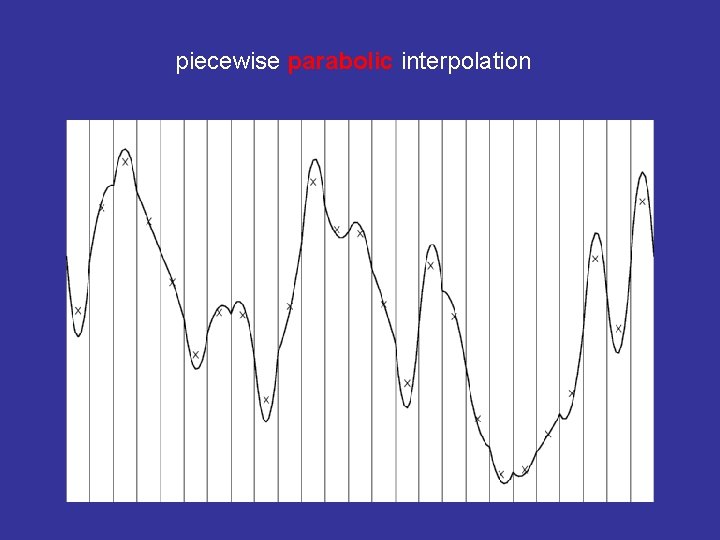
piecewise parabolic interpolation
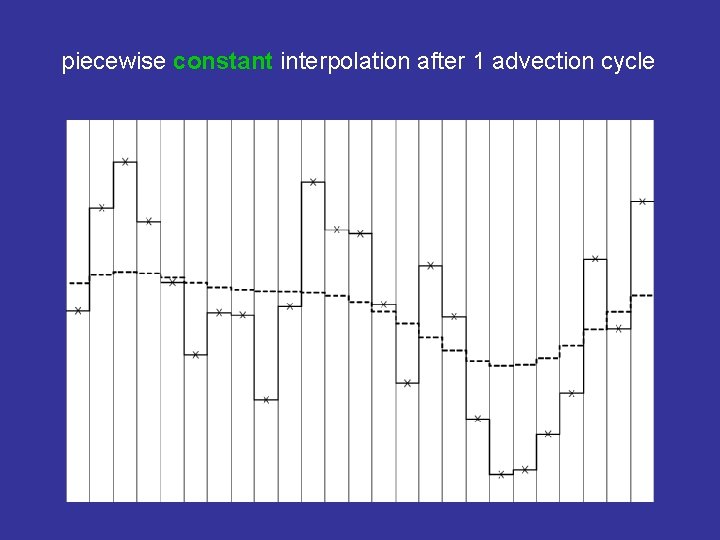
piecewise constant interpolation after 1 advection cycle
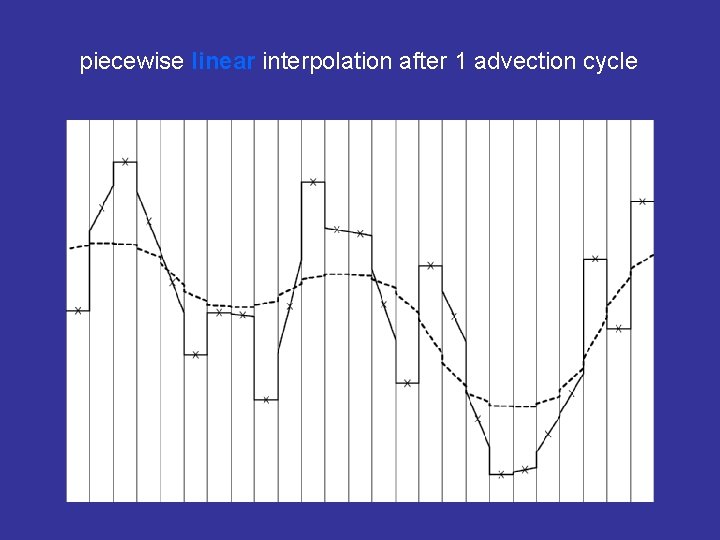
piecewise linear interpolation after 1 advection cycle
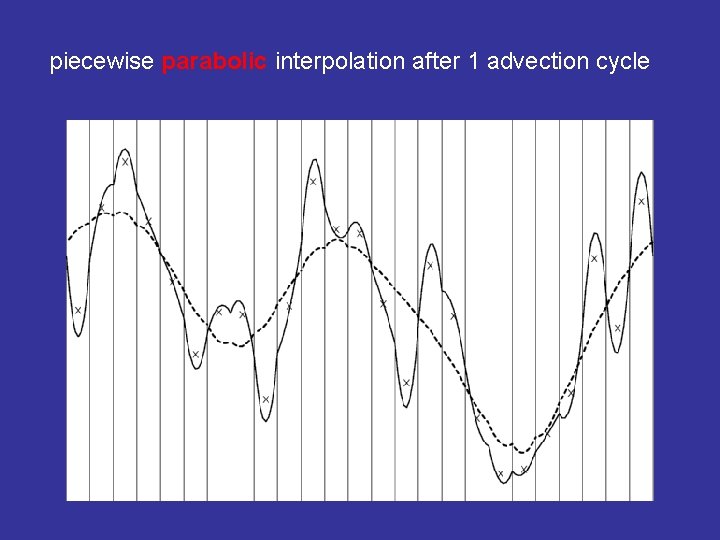
piecewise parabolic interpolation after 1 advection cycle
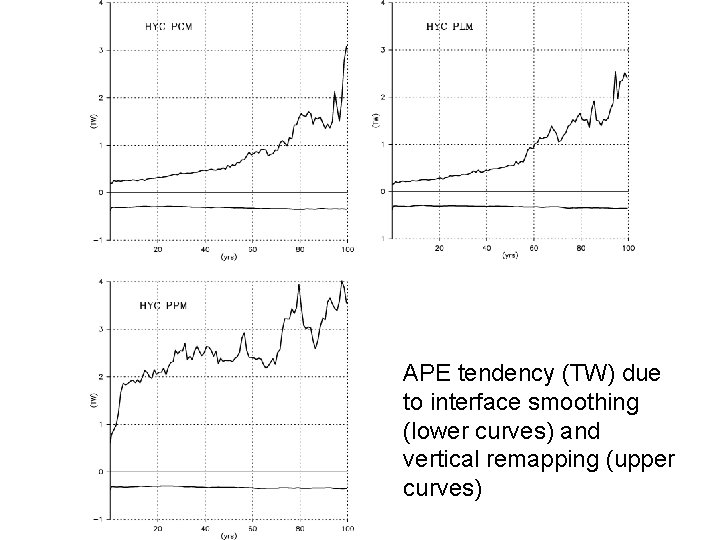
APE tendency (TW) due to interface smoothing (lower curves) and vertical remapping (upper curves)
Conclusions: • Of the 3 schemes tested -- PCM, PLM, PPM -- PLM appears to be superior to the other two.
- Slides: 18