
Autosomal Recessive Polycystic Kidney Disease ARPKD Ra Da
- Slides: 1
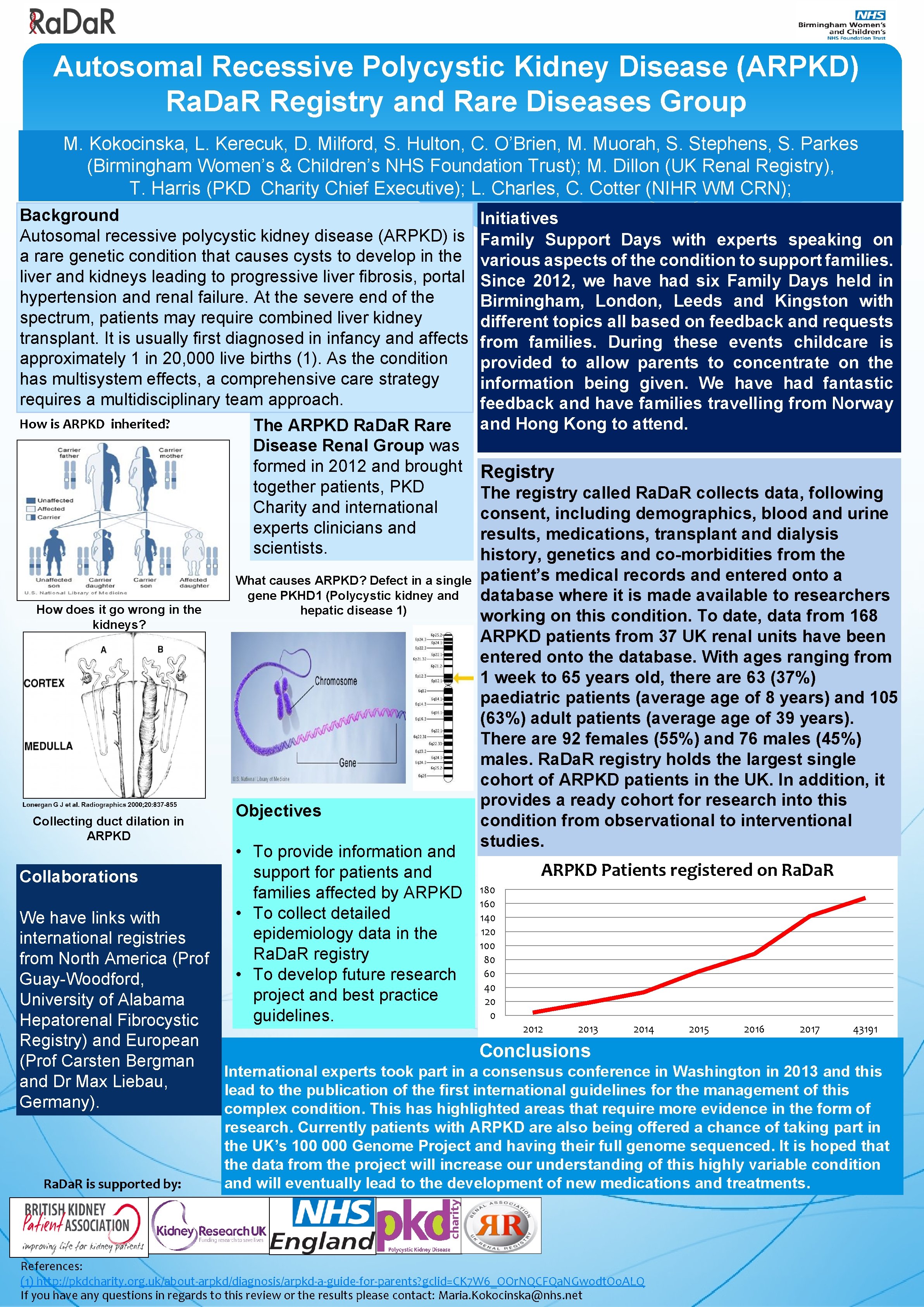
Autosomal Recessive Polycystic Kidney Disease (ARPKD) Ra. Da. R Registry and Rare Diseases Group M. Kokocinska, L. Kerecuk, D. Milford, S. Hulton, C. O’Brien, M. Muorah, S. Stephens, S. Parkes (Birmingham Women’s & Children’s NHS Foundation Trust); M. Dillon (UK Renal Registry), T. Harris (PKD Charity Chief Executive); L. Charles, C. Cotter (NIHR WM CRN); Background Autosomal recessive polycystic kidney disease (ARPKD) is a rare genetic condition that causes cysts to develop in the liver and kidneys leading to progressive liver fibrosis, portal hypertension and renal failure. At the severe end of the spectrum, patients may require combined liver kidney transplant. It is usually first diagnosed in infancy and affects approximately 1 in 20, 000 live births (1). As the condition has multisystem effects, a comprehensive care strategy requires a multidisciplinary team approach. How is ARPKD inherited? How does it go wrong in the kidneys? Collecting duct dilation in ARPKD Collaborations The ARPKD Ra. Da. R Rare Disease Renal Group was formed in 2012 and brought together patients, PKD Charity and international experts clinicians and scientists. What causes ARPKD? Defect in a single gene PKHD 1 (Polycystic kidney and hepatic disease 1) Objectives • To provide information and support for patients and families affected by ARPKD • To collect detailed epidemiology data in the Ra. Da. R registry • To develop future research project and best practice guidelines. Initiatives Family Support Days with experts speaking on various aspects of the condition to support families. Since 2012, we have had six Family Days held in Birmingham, London, Leeds and Kingston with different topics all based on feedback and requests from families. During these events childcare is provided to allow parents to concentrate on the information being given. We have had fantastic feedback and have families travelling from Norway and Hong Kong to attend. Registry The registry called Ra. Da. R collects data, following consent, including demographics, blood and urine results, medications, transplant and dialysis history, genetics and co-morbidities from the patient’s medical records and entered onto a database where it is made available to researchers working on this condition. To date, data from 168 ARPKD patients from 37 UK renal units have been entered onto the database. With ages ranging from 1 week to 65 years old, there are 63 (37%) paediatric patients (average of 8 years) and 105 (63%) adult patients (average of 39 years). There are 92 females (55%) and 76 males (45%) males. Ra. Da. R registry holds the largest single cohort of ARPKD patients in the UK. In addition, it provides a ready cohort for research into this condition from observational to interventional studies. ARPKD Patients registered on Ra. Da. R 180 160 140 120 100 80 60 40 20 0 We have links with international registries from North America (Prof Guay-Woodford, University of Alabama Hepatorenal Fibrocystic 2012 2013 2014 2015 2016 2017 43191 Registry) and European Conclusions (Prof Carsten Bergman International experts took part in a consensus conference in Washington in 2013 and this and Dr Max Liebau, lead to the publication of the first international guidelines for the management of this Germany). complex condition. This has highlighted areas that require more evidence in the form of Ra. Da. R is supported by: research. Currently patients with ARPKD are also being offered a chance of taking part in the UK’s 100 000 Genome Project and having their full genome sequenced. It is hoped that the data from the project will increase our understanding of this highly variable condition and will eventually lead to the development of new medications and treatments. References: (1) http: //pkdcharity. org. uk/about-arpkd/diagnosis/arpkd-a-guide-for-parents? gclid=CK 7 W 6_OOr. NQCFQa. NGwodt. Oo. ALQ If you have any questions in regards to this review or the results please contact: Maria. Kokocinska@nhs. net