
AUTOPSY What Can They Tell Us Definition and
- Slides: 17
AUTOPSY What Can They Tell Us?
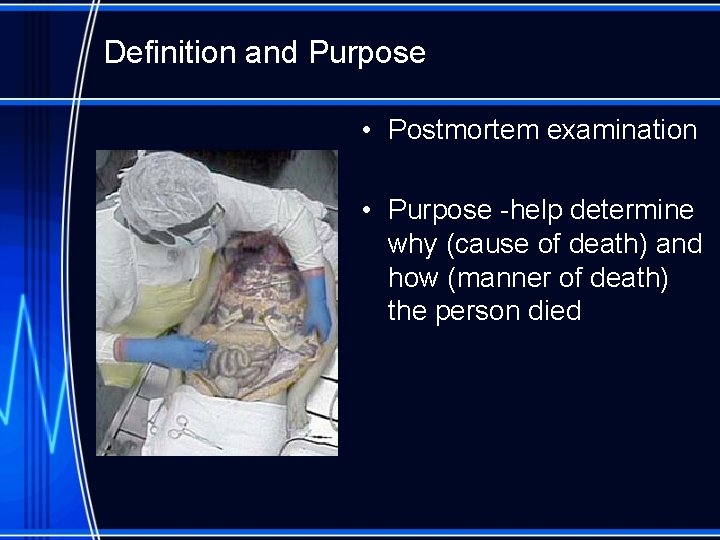
Definition and Purpose • Postmortem examination • Purpose -help determine why (cause of death) and how (manner of death) the person died
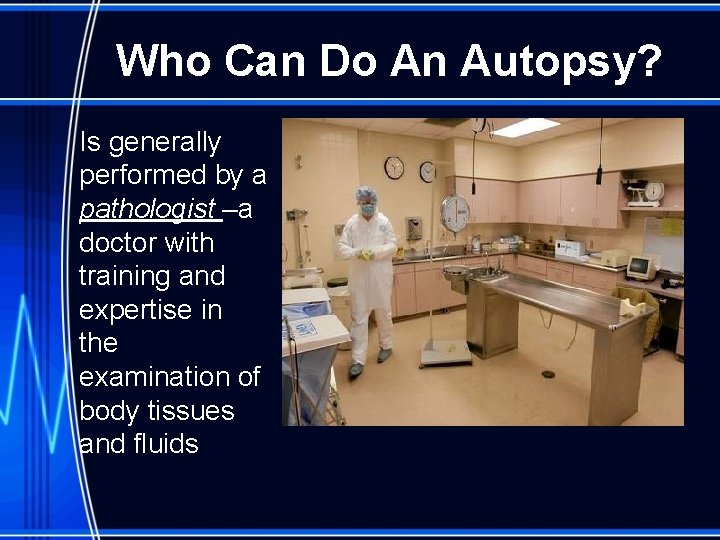
Who Can Do An Autopsy? Is generally performed by a pathologist –a doctor with training and expertise in the examination of body tissues and fluids
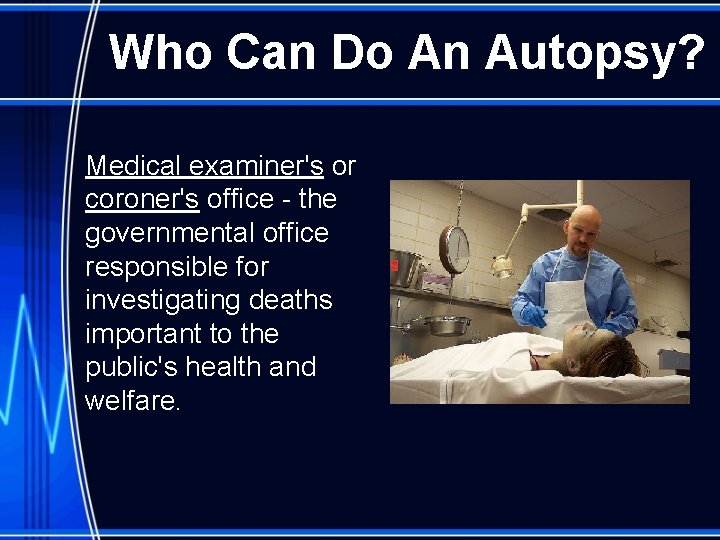
Who Can Do An Autopsy? Medical examiner's or coroner's office - the governmental office responsible for investigating deaths important to the public's health and welfare.
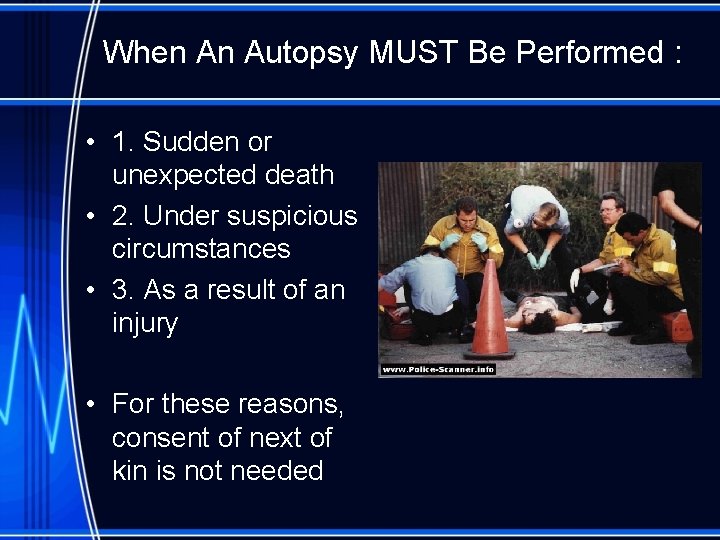
When An Autopsy MUST Be Performed : • 1. Sudden or unexpected death • 2. Under suspicious circumstances • 3. As a result of an injury • For these reasons, consent of next of kin is not needed
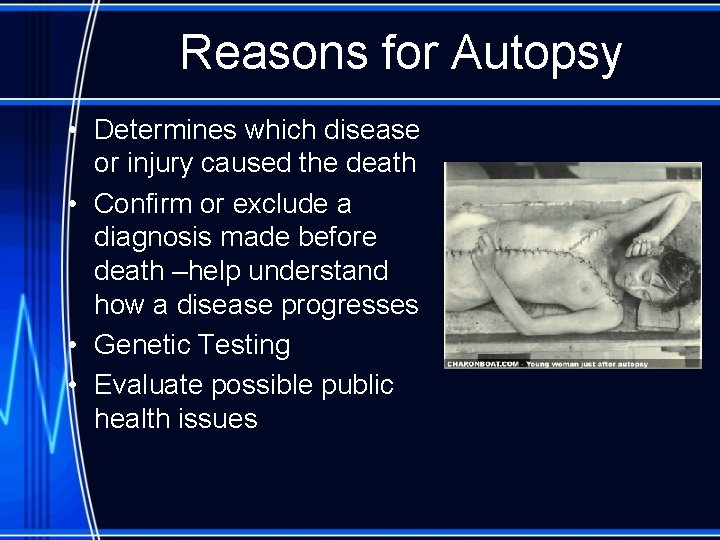
Reasons for Autopsy • Determines which disease or injury caused the death • Confirm or exclude a diagnosis made before death –help understand how a disease progresses • Genetic Testing • Evaluate possible public health issues
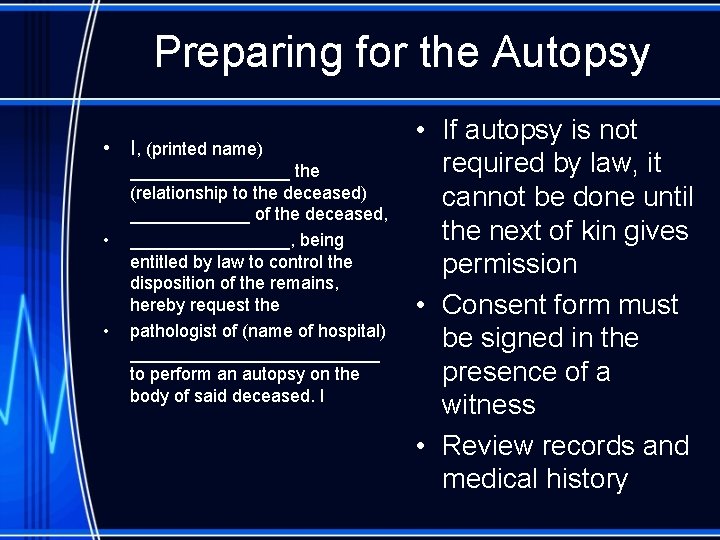
Preparing for the Autopsy • I, (printed name) • • ________ the (relationship to the deceased) ______ of the deceased, ________, being entitled by law to control the disposition of the remains, hereby request the pathologist of (name of hospital) _____________ to perform an autopsy on the body of said deceased. I • If autopsy is not required by law, it cannot be done until the next of kin gives permission • Consent form must be signed in the presence of a witness • Review records and medical history
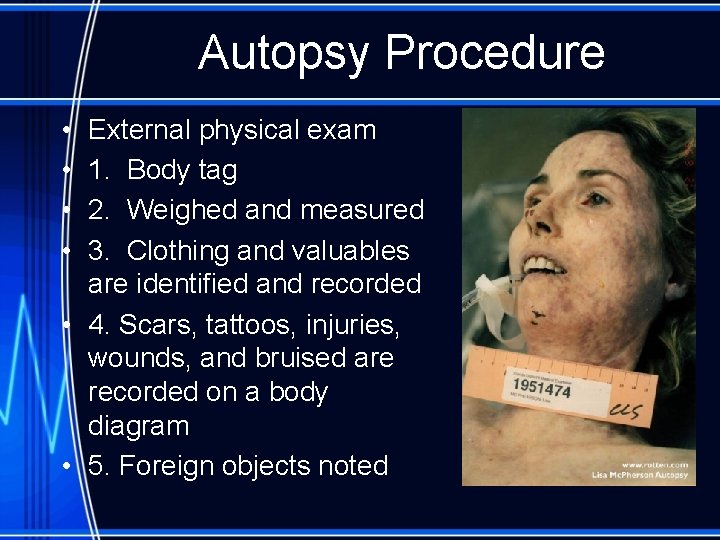
Autopsy Procedure • • External physical exam 1. Body tag 2. Weighed and measured 3. Clothing and valuables are identified and recorded • 4. Scars, tattoos, injuries, wounds, and bruised are recorded on a body diagram • 5. Foreign objects noted
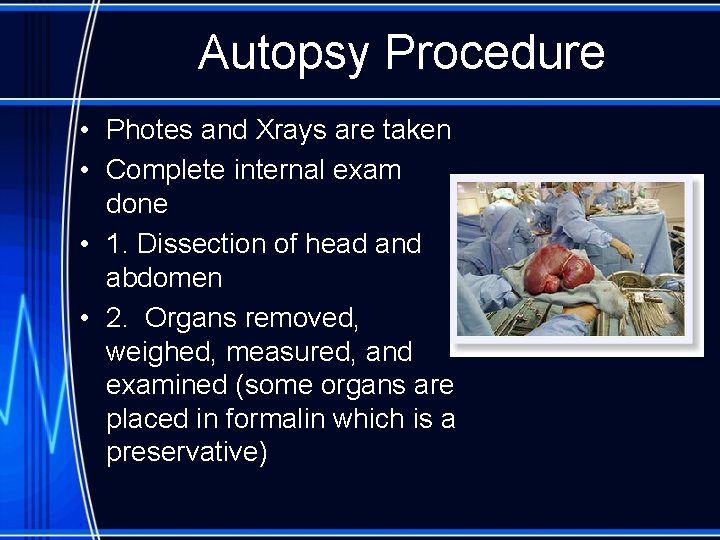
Autopsy Procedure • Photes and Xrays are taken • Complete internal exam done • 1. Dissection of head and abdomen • 2. Organs removed, weighed, measured, and examined (some organs are placed in formalin which is a preservative)
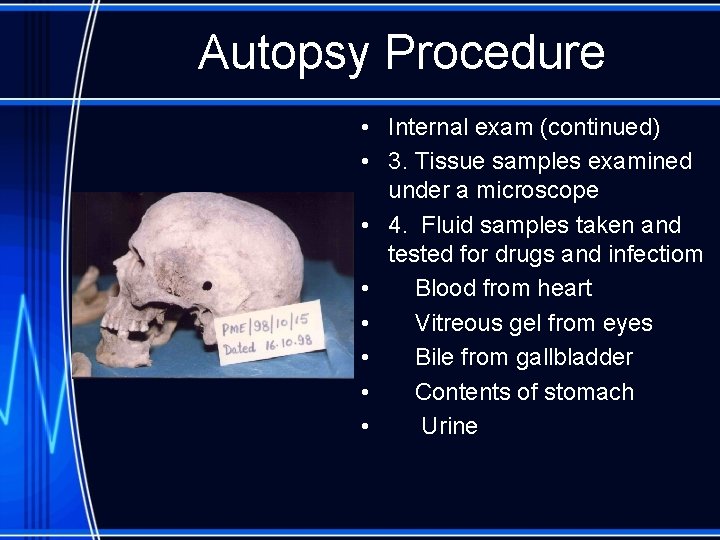
Autopsy Procedure • Internal exam (continued) • 3. Tissue samples examined under a microscope • 4. Fluid samples taken and tested for drugs and infectiom • Blood from heart • Vitreous gel from eyes • Bile from gallbladder • Contents of stomach • Urine
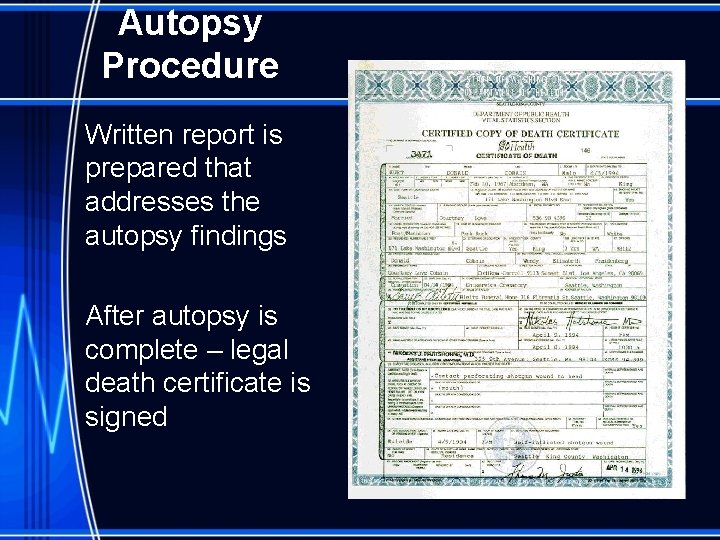
Autopsy Procedure Written report is prepared that addresses the autopsy findings After autopsy is complete – legal death certificate is signed
Autopsy Results • Final report may take weeks to months as specialized tests are completed. • Natural death – death occurred as a result of a disease or from the natural effects of old age
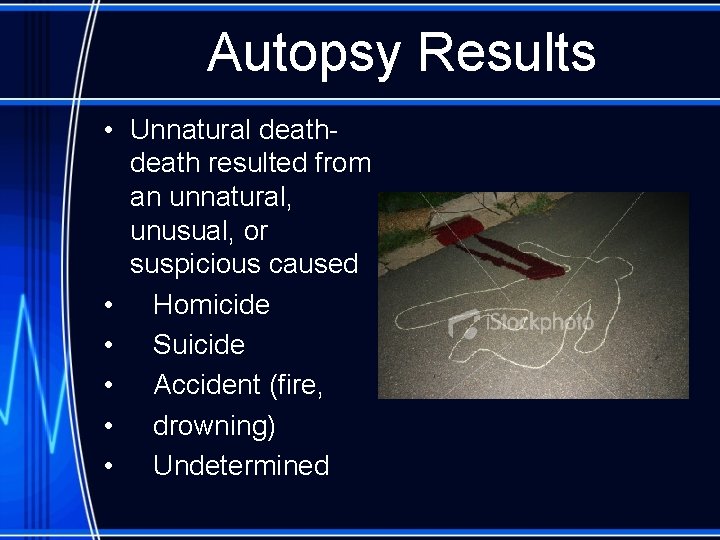
Autopsy Results • Unnatural death resulted from an unnatural, unusual, or suspicious caused • Homicide • Suicide • Accident (fire, • drowning) • Undetermined
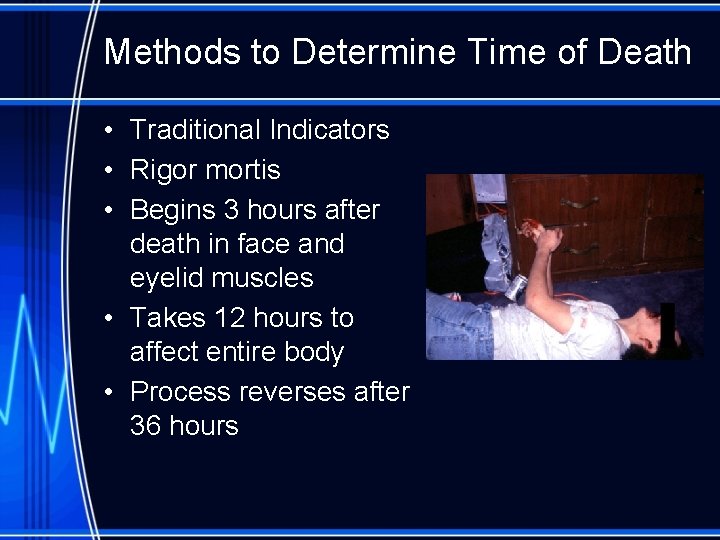
Methods to Determine Time of Death • Traditional Indicators • Rigor mortis • Begins 3 hours after death in face and eyelid muscles • Takes 12 hours to affect entire body • Process reverses after 36 hours
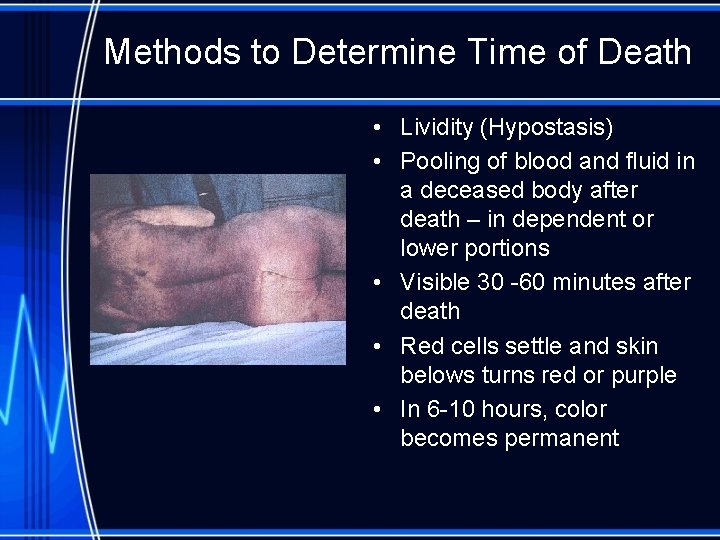
Methods to Determine Time of Death • Lividity (Hypostasis) • Pooling of blood and fluid in a deceased body after death – in dependent or lower portions • Visible 30 -60 minutes after death • Red cells settle and skin belows turns red or purple • In 6 -10 hours, color becomes permanent
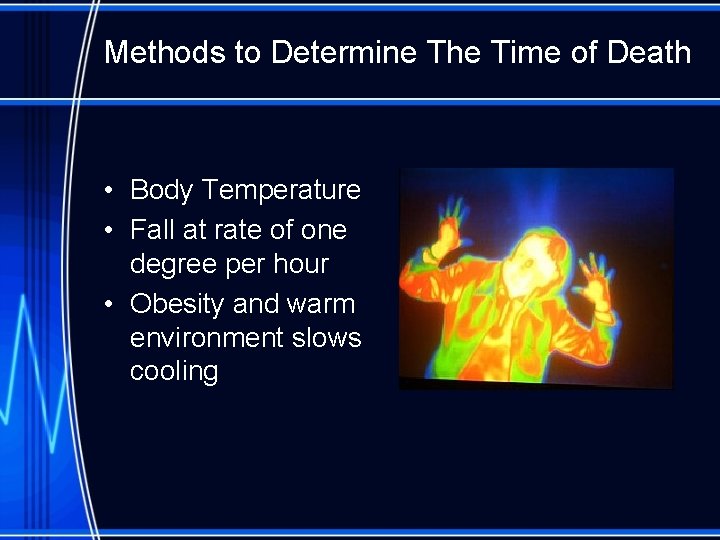
Methods to Determine The Time of Death • Body Temperature • Fall at rate of one degree per hour • Obesity and warm environment slows cooling
The End