
Autonomous systems railway regulation and standards In the

- Slides: 20
Autonomous systems, railway regulation and standards – In the pursuit of good questions? Presented by Vaibhav Puri Head of Standards Policy Feb 2016
About RSSB is an expert body that delivers programmes of work on behalf of the rail industry across technical functions that cross rail interfaces in the areas of: Health and Safety Research Standards Sustainability Through research, the understanding of risk, and analysis, we provide an evidence base to support industry decisions and collaboration. RSSB’s membership includes infrastructure companies, train/freight operators, rolling stock owners and suppliers. It is non-profit-making and independent of any single interest.
Contents 1. The key principles of legal framework 2. The scope of legislation 3. The role of standards 4. Challenges for autonomous systems
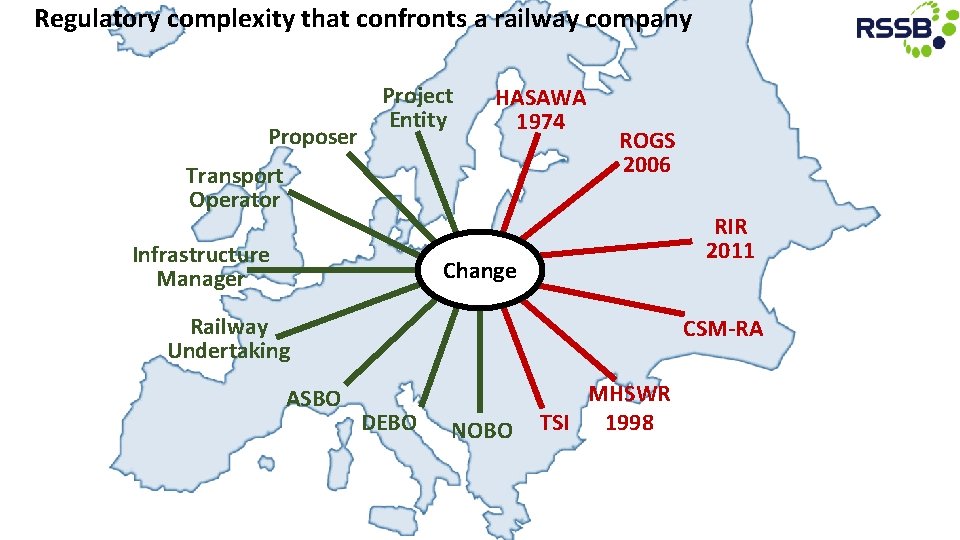
Regulatory complexity that confronts a railway company Proposer Project Entity HASAWA 1974 Transport Operator Infrastructure Manager ROGS 2006 RIR 2011 Change Railway Undertaking ASBO CSM-RA DEBO NOBO MHSWR TSI 1998
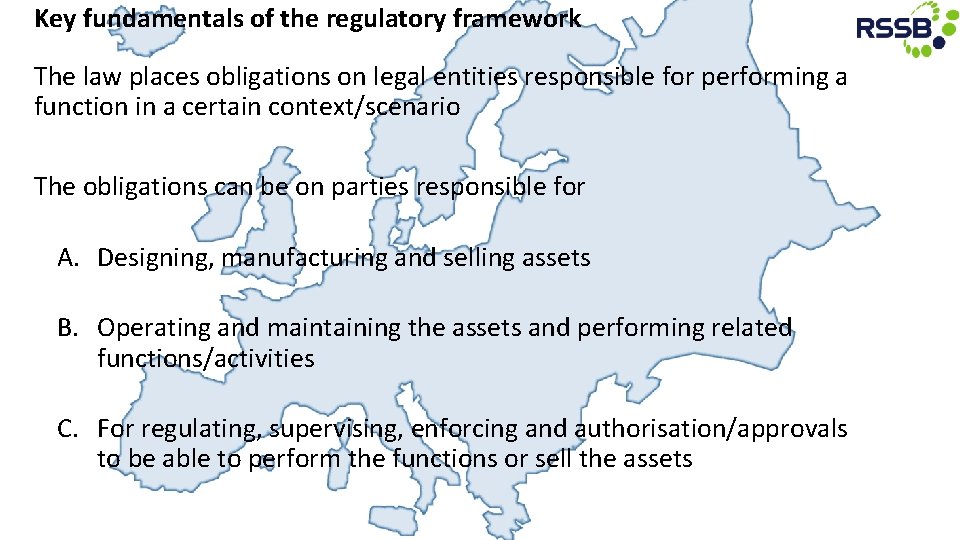
Key fundamentals of the regulatory framework The law places obligations on legal entities responsible for performing a function in a certain context/scenario The obligations can be on parties responsible for A. Designing, manufacturing and selling assets B. Operating and maintaining the assets and performing related functions/activities C. For regulating, supervising, enforcing and authorisation/approvals to be able to perform the functions or sell the assets
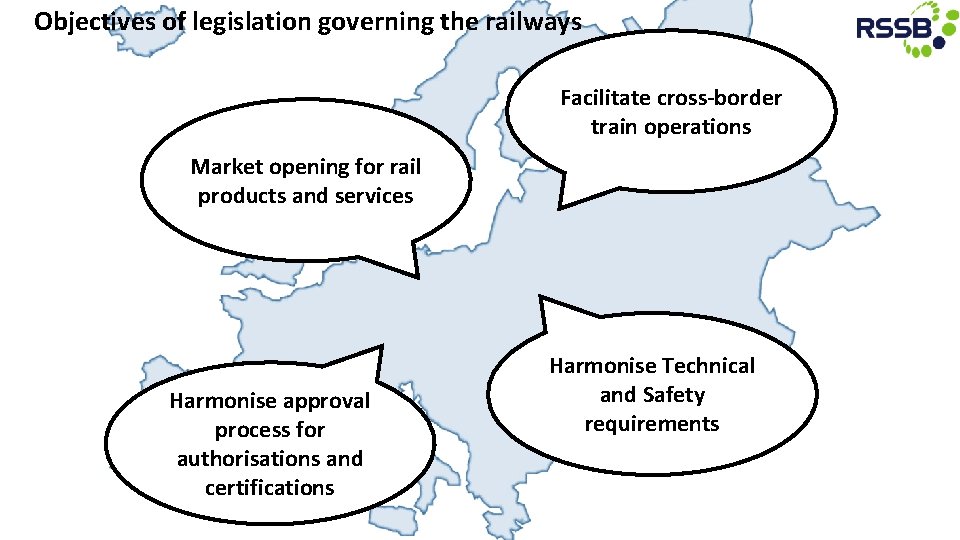
Objectives of legislation governing the railways Facilitate cross-border train operations Market opening for rail products and services Harmonise approval process for authorisations and certifications Harmonise Technical and Safety requirements
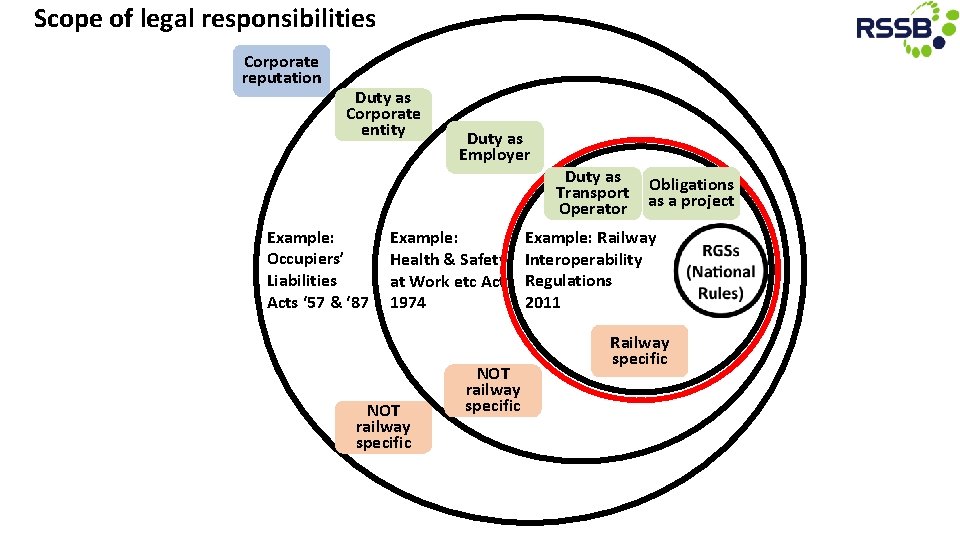
Scope of legal responsibilities Corporate reputation Duty as Corporate entity Duty as Employer Duty as Transport Operator Example: Occupiers’ Liabilities Acts ‘ 57 & ‘ 87 Example: Health & Safety at Work etc Act 1974 NOT railway specific Obligations as a project Example: Railway Interoperability Regulations 2011 Railway specific
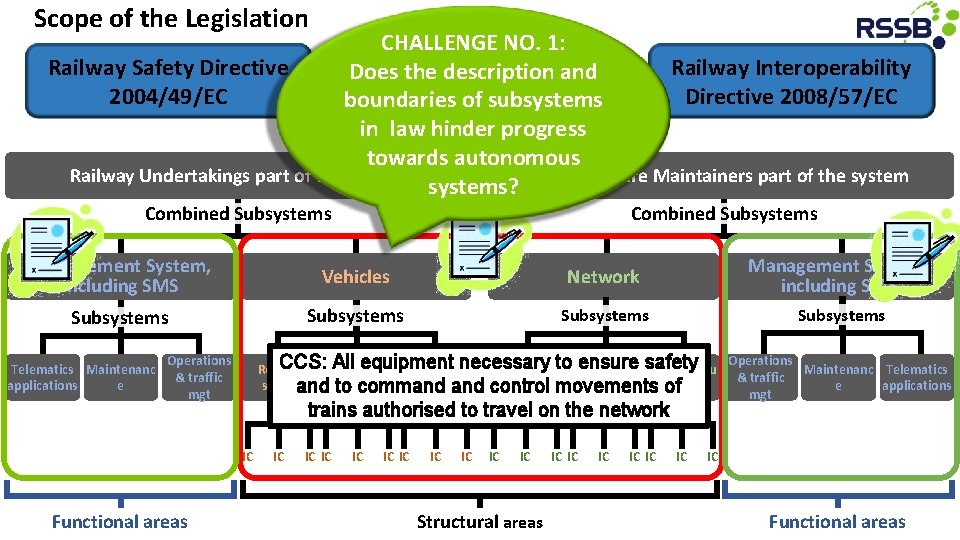
Scope of the Legislation CHALLENGE NO. 1: Railway Safety Directive Railway Interoperability Does Railway the description and system 2004/49/EC Directive 2008/57/EC boundaries of subsystems in law hinder progress towards autonomous Railway Undertakings part of the systems? Infrastructure Maintainers part of the system Combined Subsystems Management System, including SMS Vehicles Network Management System, including SMS Subsystems Telematics Maintenanc applications e CCS: On-board All equipment ensure safety Rolling On-boardnecessary Trackside to Trackside Infrastructu stock and to CCS energyand control Energy movements CCS command ofre Operations & traffic mgt trains authorised to travel on the network IC Functional areas IC IC IC Structural areas IC IC IC Operations Maintenanc Telematics & traffic e applications mgt IC Functional areas
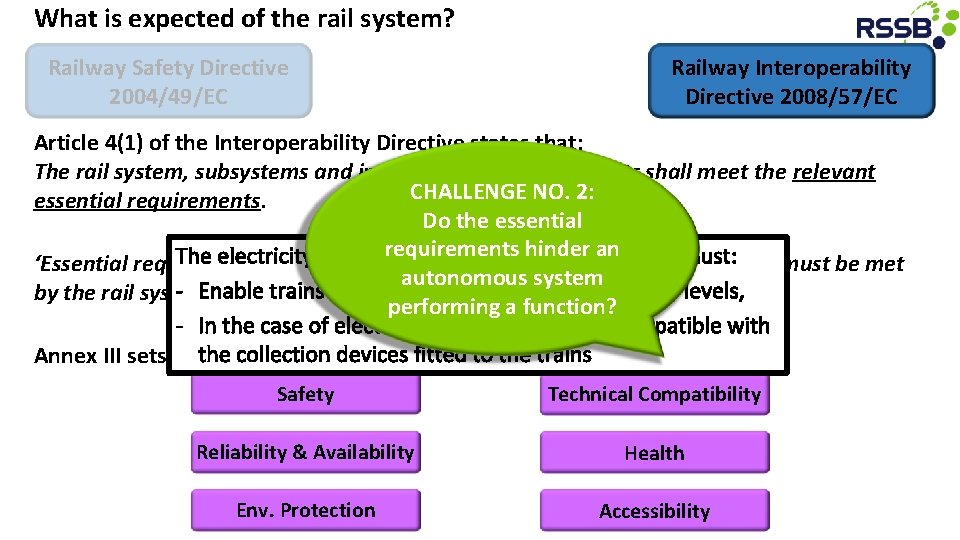
What is expected of the rail system? Railway Safety Directive 2004/49/EC Railway Interoperability Directive 2008/57/EC Article 4(1) of the Interoperability Directive states that: The rail system, subsystems and interoperability constituents shall meet the relevant CHALLENGE NO. 2: essential requirements. Do the essential requirements hinder an used must: The electricity/thermal supply ‘Essential requirements’ means all theenergy conditions setsystems out in Annex III which must be met autonomous system - Enable trains to achieve the specific performance levels, by the rail system……. . performing a function? - In the case of electricity energy supply, be compatible with fitted to the trains Annex III sets outthe thecollection Essentialdevices Requirements: Safety Technical Compatibility Reliability & Availability Health Env. Protection Accessibility
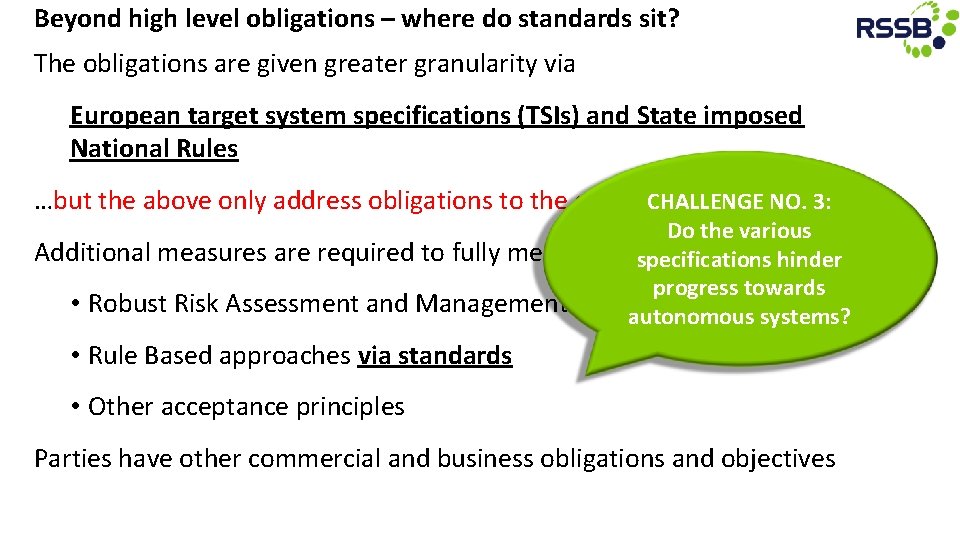
Beyond high level obligations – where do standards sit? The obligations are given greater granularity via European target system specifications (TSIs) and State imposed National Rules …but the above only address obligations to the extent. CHALLENGE necessary NO. 3: Do the various Additional measures are required to fully meet obligations: specifications hinder progress towards • Robust Risk Assessment and Management autonomous systems? • Rule Based approaches via standards • Other acceptance principles Parties have other commercial and business obligations and objectives
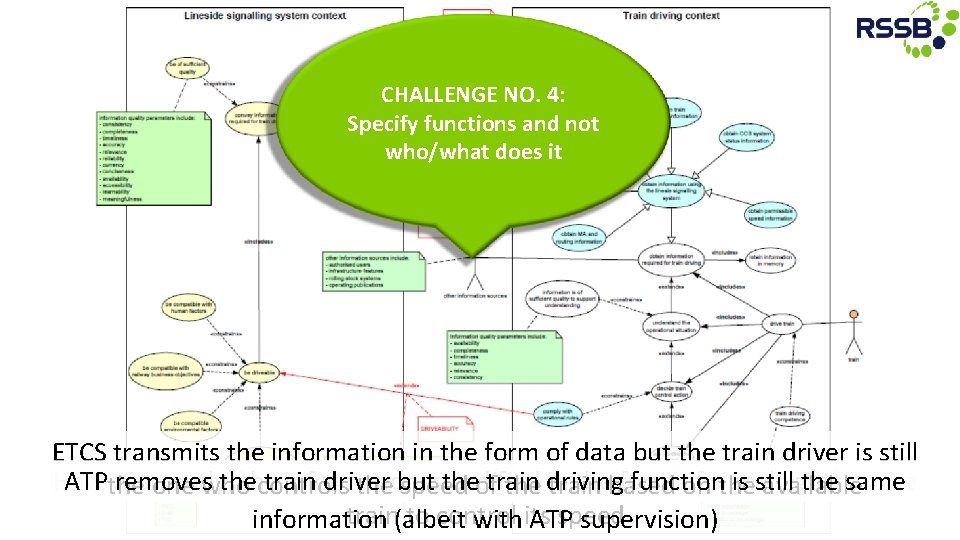
CHALLENGE NO. 4: Specify functions and not who/what does it ETCS transmits the information in the form of data but the train driver is still How ATPthe removes Currently, trackside the train CCS information system driver contributes isthe codified driving in thebased information form function of is needed still lights. the same by the one who controls the but speed oftrain theto train onsignal the available train(albeit to control speed information withits ATP supervision)
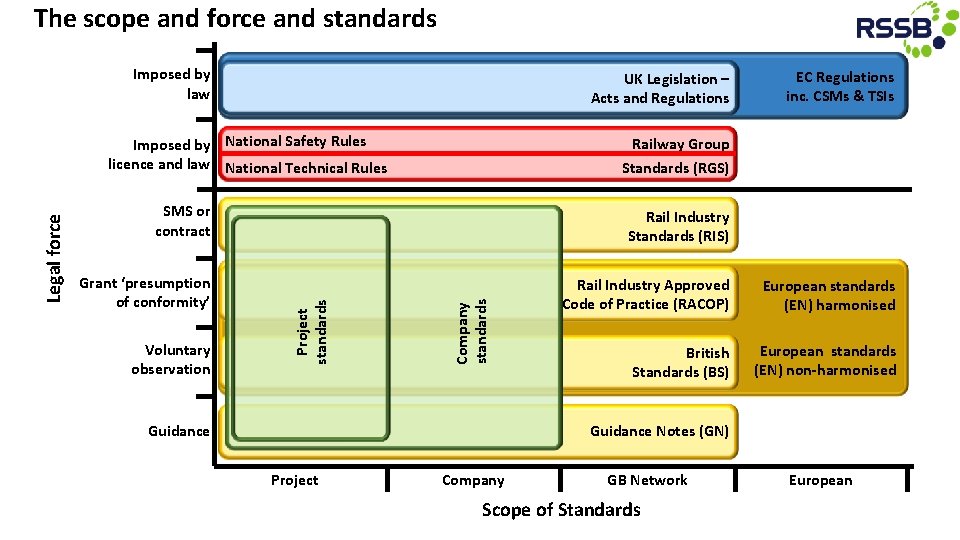
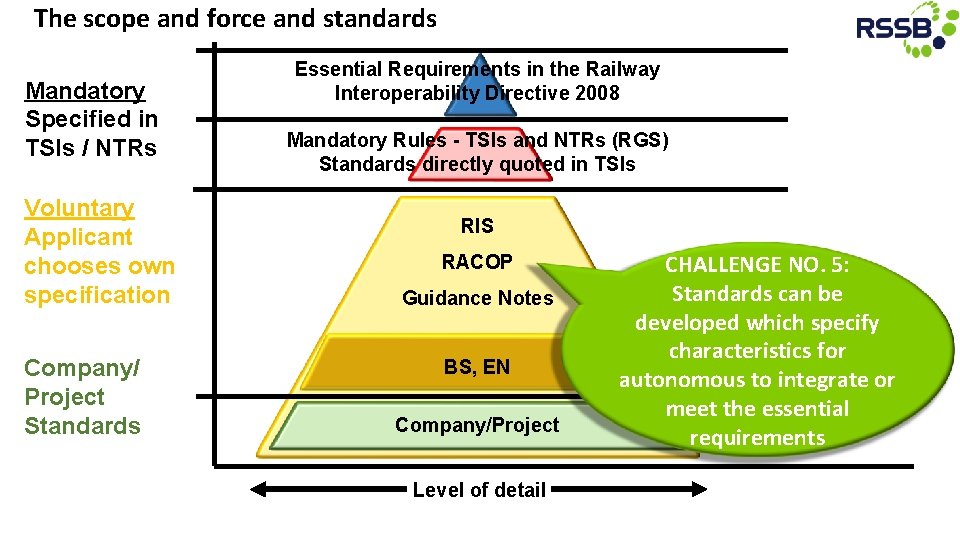
The scope and force and standards Imposed by law UK Legislation – Acts and Regulations Railway Group Standards (RGS) Rail Industry Standards (RIS) Grant ‘presumption of conformity’ Rail Industry Approved Code of Practice (RACOP) European standards (EN) harmonised British Standards (BS) European standards (EN) non-harmonised Voluntary observation Company standards SMS or contract Project standards Legal force Imposed by National Safety Rules licence and law National Technical Rules EC Regulations inc. CSMs & TSIs Guidance Notes (GN) Project Company GB Network Scope of Standards European
The scope and force and standards
The scope and force and standards Mandatory Specified in TSIs / NTRs Voluntary Applicant chooses own specification Company/ Project Standards Essential Requirements in the Railway Interoperability Directive 2008 Mandatory Rules - TSIs and NTRs (RGS) Standards directly quoted in TSIs RIS RACOP Guidance Notes BS, EN Company/Project Level of detail CHALLENGE NO. 5: Standards can be developed which specify characteristics for autonomous to integrate or meet the essential requirements
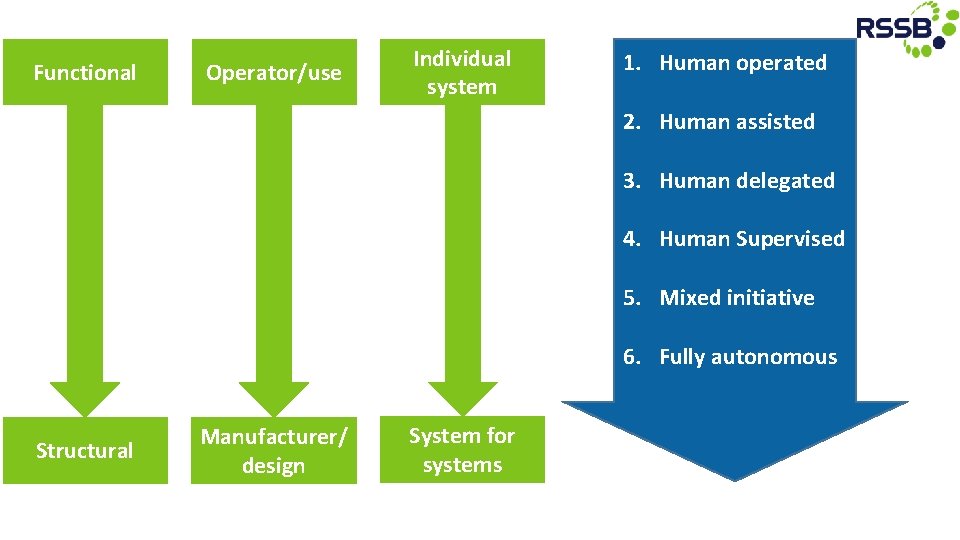
Functional Operator/use Individual system 1. Human operated 2. Human assisted 3. Human delegated 4. Human Supervised 5. Mixed initiative 6. Fully autonomous Structural Manufacturer/ design System for systems
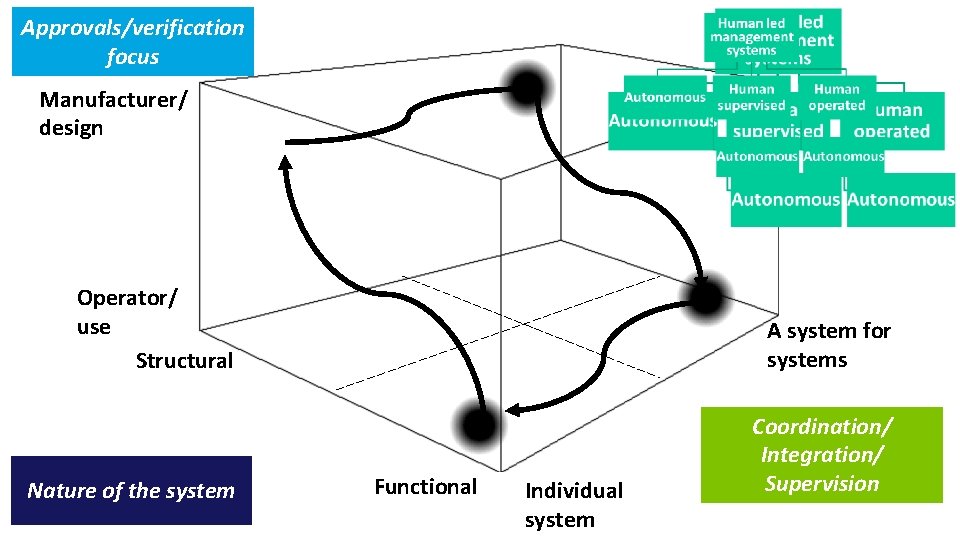
Approvals/verification focus Manufacturer/ design Operator/ use Structural A system for systems Nature of the system Coordination/ Integration/ Supervision Functional Individual system
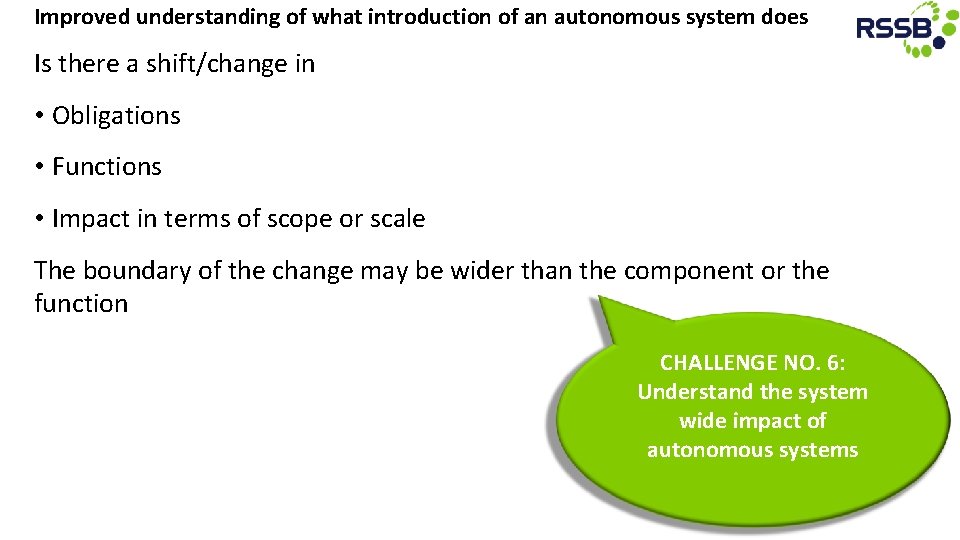
Improved understanding of what introduction of an autonomous system does Is there a shift/change in • Obligations • Functions • Impact in terms of scope or scale The boundary of the change may be wider than the component or the function CHALLENGE NO. 6: Understand the system wide impact of autonomous systems
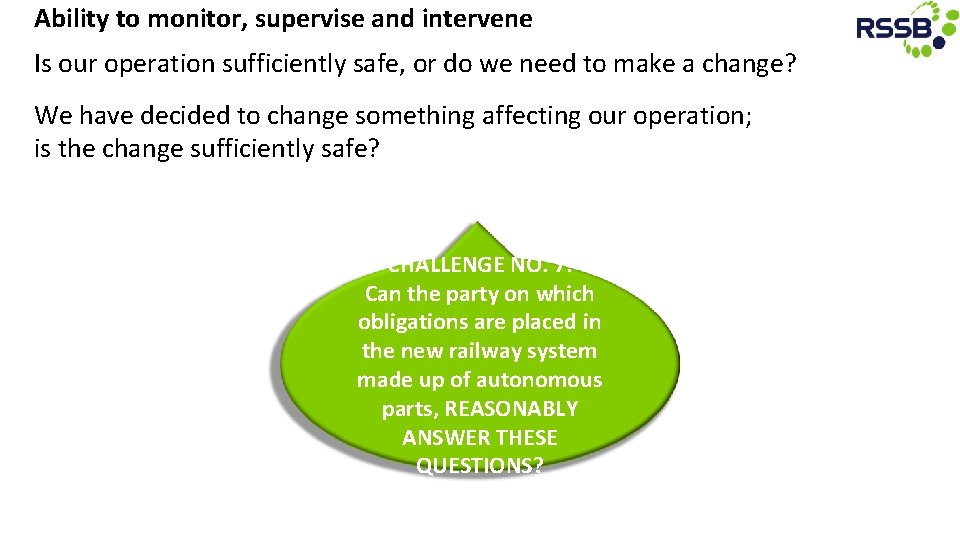
Ability to monitor, supervise and intervene Is our operation sufficiently safe, or do we need to make a change? We have decided to change something affecting our operation; is the change sufficiently safe? CHALLENGE NO. 7: Can the party on which obligations are placed in the new railway system made up of autonomous parts, REASONABLY ANSWER THESE QUESTIONS?
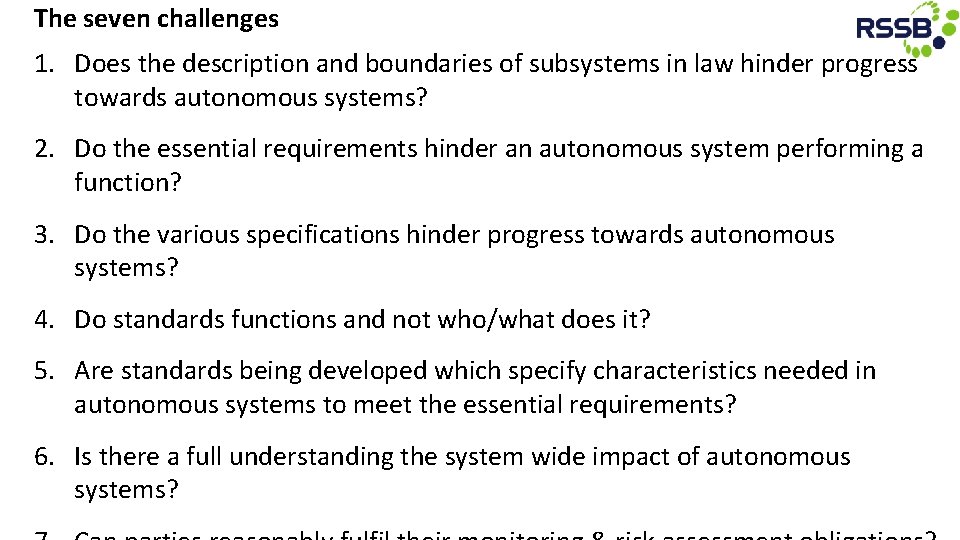
The seven challenges 1. Does the description and boundaries of subsystems in law hinder progress towards autonomous systems? 2. Do the essential requirements hinder an autonomous system performing a function? 3. Do the various specifications hinder progress towards autonomous systems? 4. Do standards functions and not who/what does it? 5. Are standards being developed which specify characteristics needed in autonomous systems to meet the essential requirements? 6. Is there a full understanding the system wide impact of autonomous systems?
Thank you