
Autonomous SelfSorting Recycling Bin Focussing on Dense Residential
Autonomous Self-Sorting Recycling Bin Focussing on Dense Residential Areas By: Team Jelly Bean Jacky Cai Dr Lydia Hayward Nathan Freitas Andrew Cheng
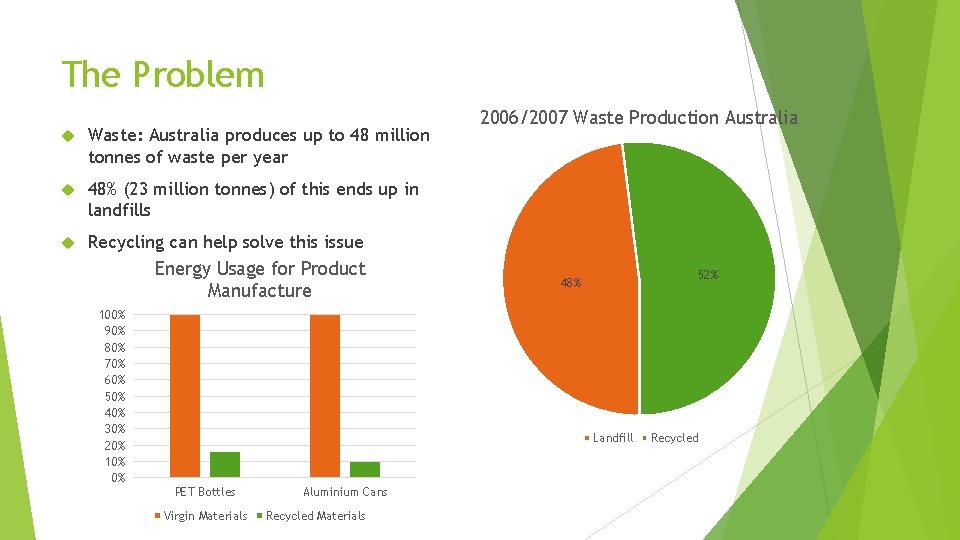
The Problem Waste: Australia produces up to 48 million tonnes of waste per year 48% (23 million tonnes) of this ends up in landfills Recycling can help solve this issue Energy Usage for Product Manufacture 100% 90% 80% 70% 60% 50% 40% 30% 20% 10% 0% 2006/2007 Waste Production Australia 52% 48% Landfill PET Bottles Virgin Materials Aluminium Cans Recycled Materials Recycled
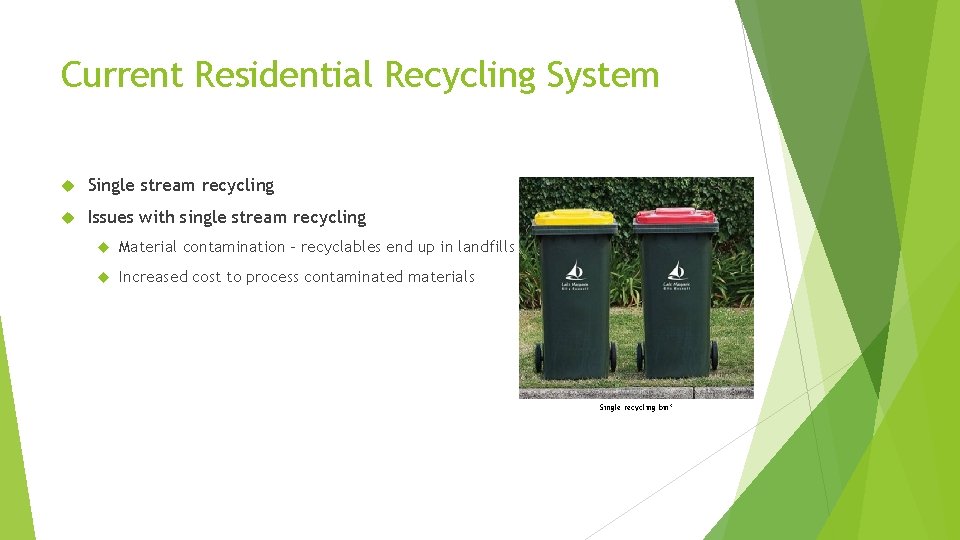
Current Residential Recycling System Single stream recycling Issues with single stream recycling Material contamination – recyclables end up in landfills Increased cost to process contaminated materials Single recycling bin*
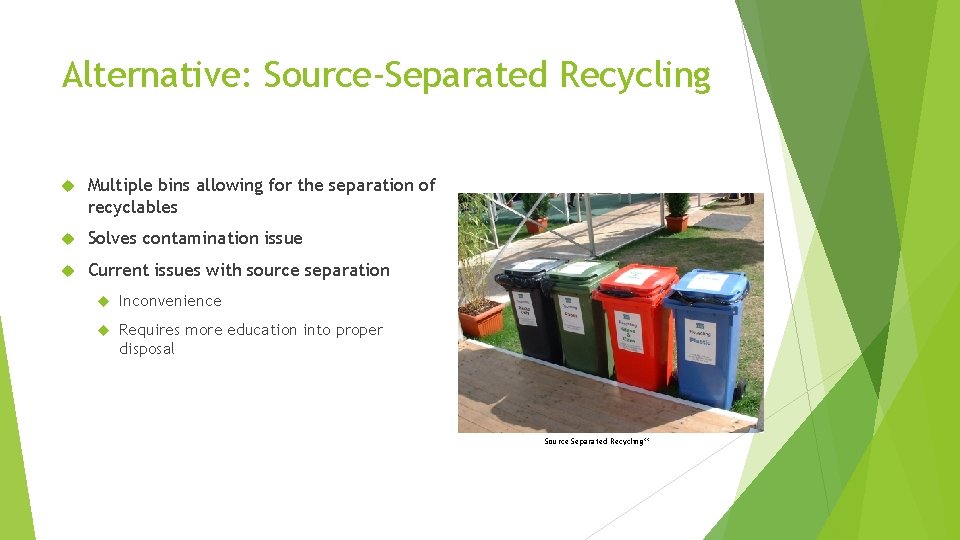
Alternative: Source-Separated Recycling Multiple bins allowing for the separation of recyclables Solves contamination issue Current issues with source separation Inconvenience Requires more education into proper disposal Source Separated Recycling**

Our Solution Autonomous self-sorting recycling bin Similar to current residential system Recycling has ability to sort into categories of: Plastic Glass Metals Paper Technology: Sensor data fusion with supervised machine learning E. g. image processing, infrared
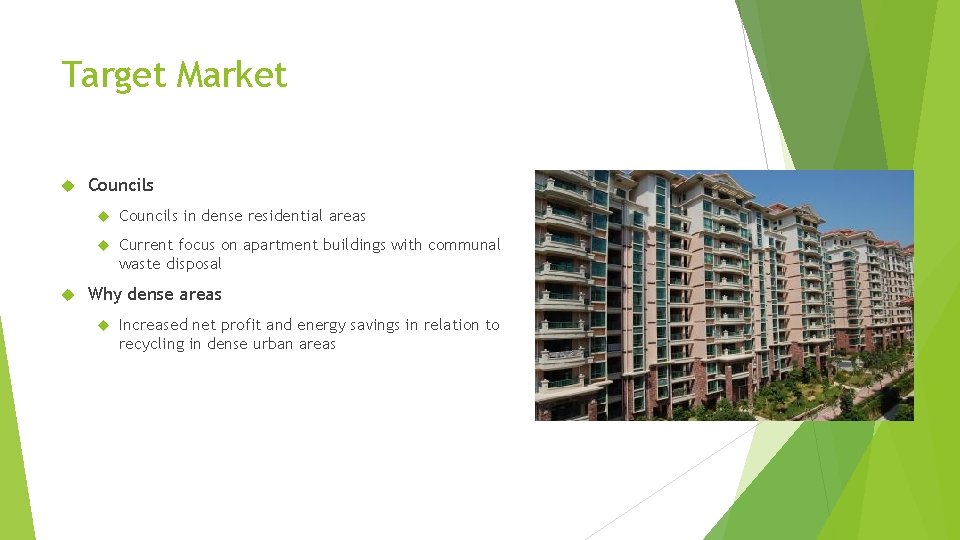
Target Market Councils in dense residential areas Current focus on apartment buildings with communal waste disposal Why dense areas Increased net profit and energy savings in relation to recycling in dense urban areas
Customer Acquisition Approach a council to implement prototype Perform case study on benefits of our system compared to existing system Branch out to other councils Example: Randwick City Council Currently sorts waste manually at sorting facility Transports sorted materials to recycling facilities Our solution would fit well with Randwick City Council Our solution can cut out the sorting facility
Revenue Streams Sale of system Maintenance of system Government grants
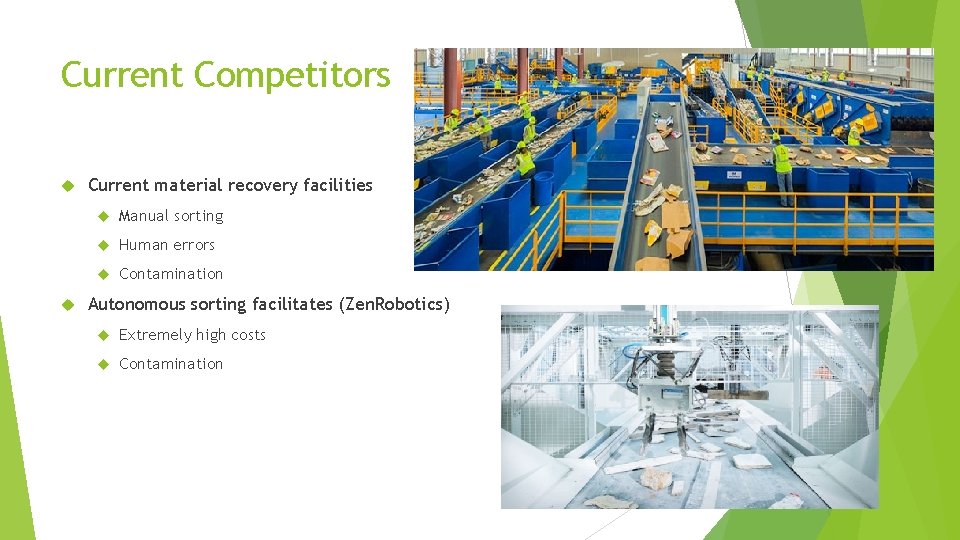
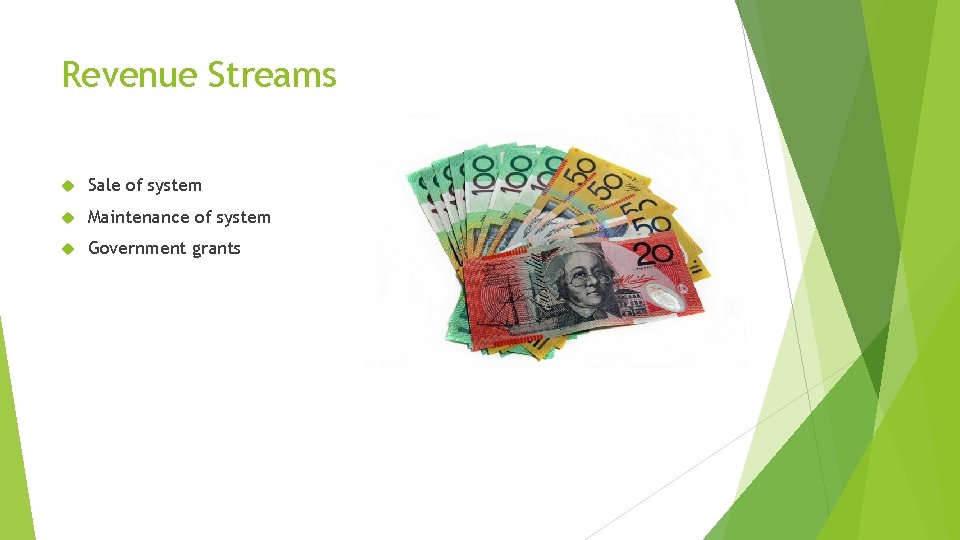
Current Competitors Current material recovery facilities Manual sorting Human errors Contamination Autonomous sorting facilitates (Zen. Robotics) Extremely high costs Contamination
Value Proposition of our Solution Reduces inconvenience of source separated model Reduces contamination risk of single stream model Meaning: Increased recycling rates and yield Improved quality of recovered materials Increased revenue from recycled material resale Better for the environment
Why us? UNSW academia contacts Research in machine learning and data fusion Existing work of solution Diverse mix of expertise New and fresh idea for waste management
Future Work Prototype design and manufacture Approach early adopters and advocates Don Burke from Burke’s Backyard (Chairman of Australian Environmental Foundation) Local MP’s – Jenny Leong (Greens, Newtown) Council contacts - Anthony Collins, manager for sustainability and waste Approach investors Team recruitment (sales, marketing, engineers)
- Slides: 12