
Autonomic nervous system Innervation of smooth muscle myocardium
- Slides: 33
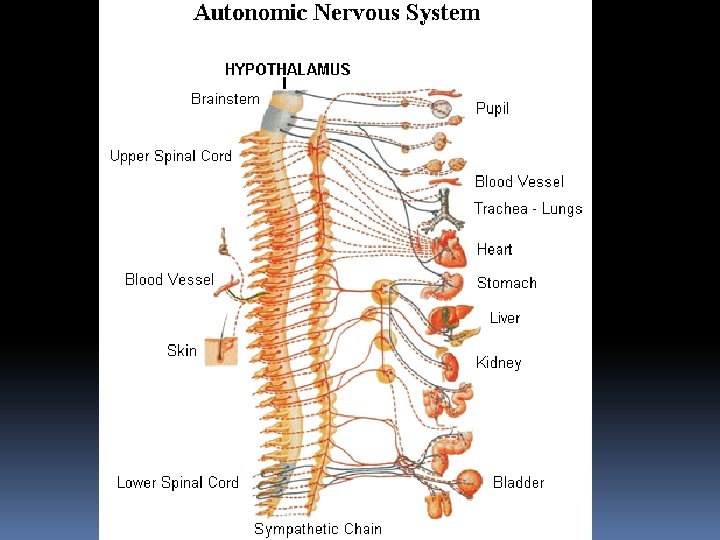
Autonomic nervous system Innervation of ■ smooth muscle ■ myocardium ■ glands
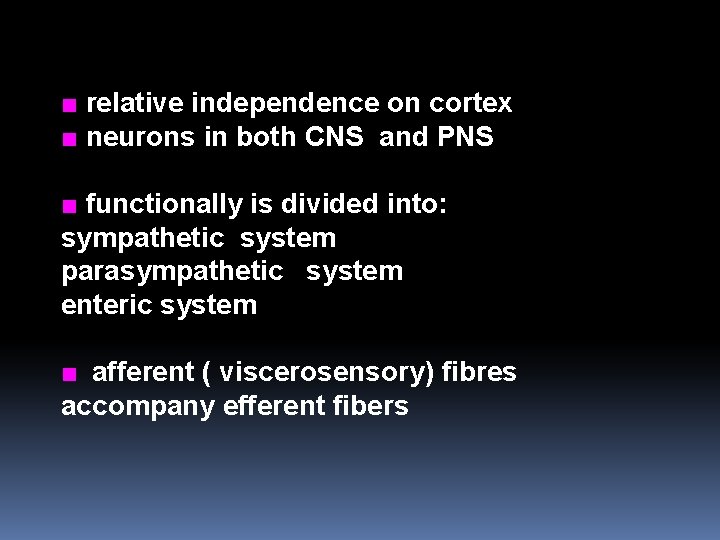
■ relative independence on cortex ■ neurons in both CNS and PNS ■ functionally is divided into: sympathetic system parasympathetic system enteric system ■ afferent ( viscerosensory) fibres accompany efferent fibers
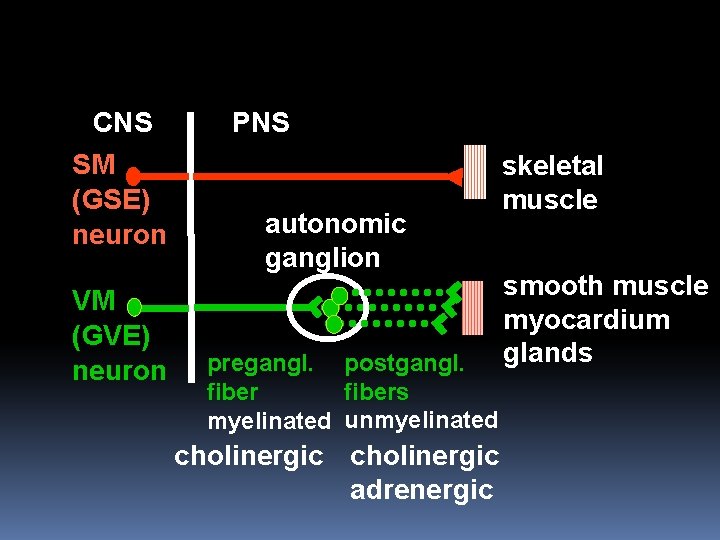
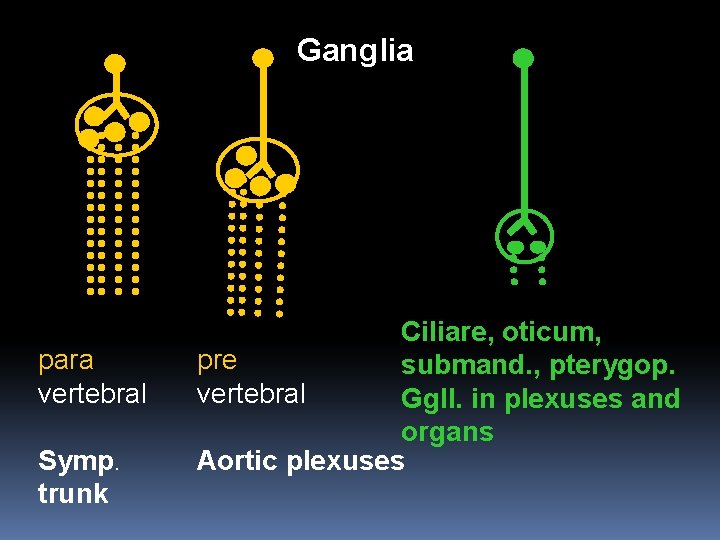
CNS SM (GSE) neuron VM (GVE) neuron PNS autonomic ganglion pregangl. postgangl. fibers fiber myelinated unmyelinated cholinergic adrenergic skeletal muscle smooth muscle myocardium glands
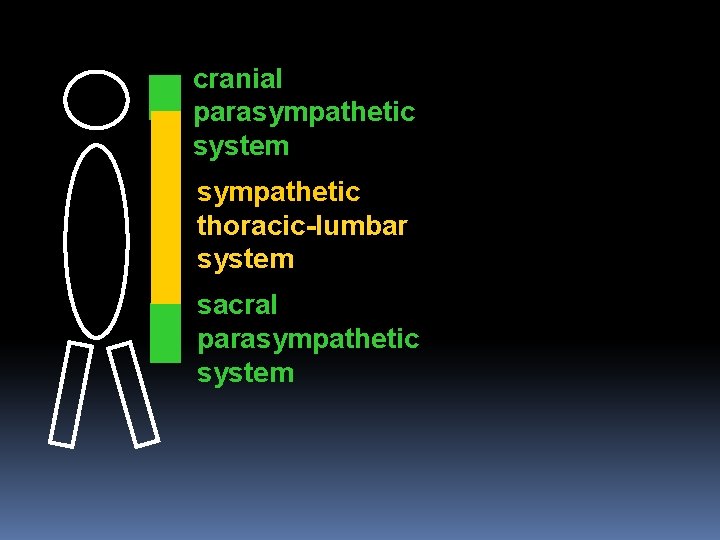
cranial parasympathetic system sympathetic thoracic-lumbar system sacral parasympathetic system
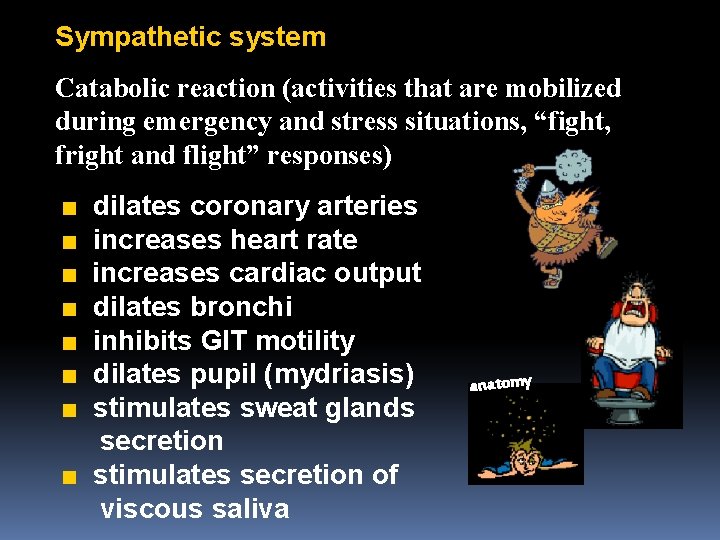
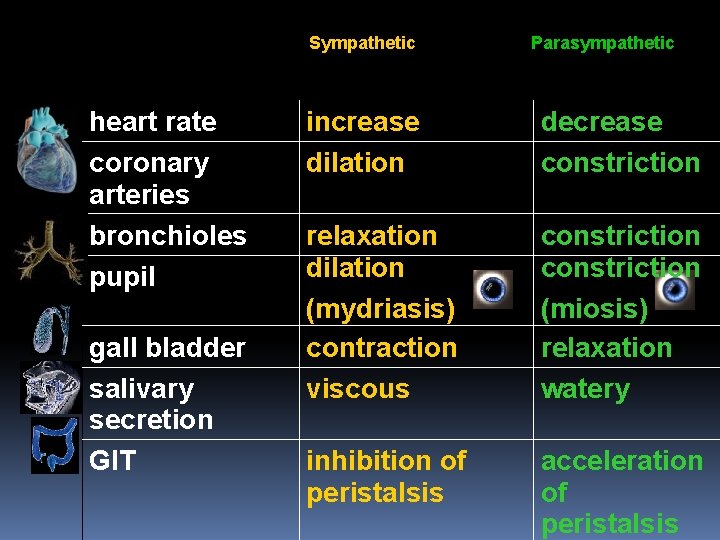
Sympathetic system Catabolic reaction (activities that are mobilized during emergency and stress situations, “fight, fright and flight” responses) ■ ■ ■ ■ dilates coronary arteries increases heart rate increases cardiac output dilates bronchi inhibits GIT motility dilates pupil (mydriasis) stimulates sweat glands secretion ■ stimulates secretion of viscous saliva anatomy
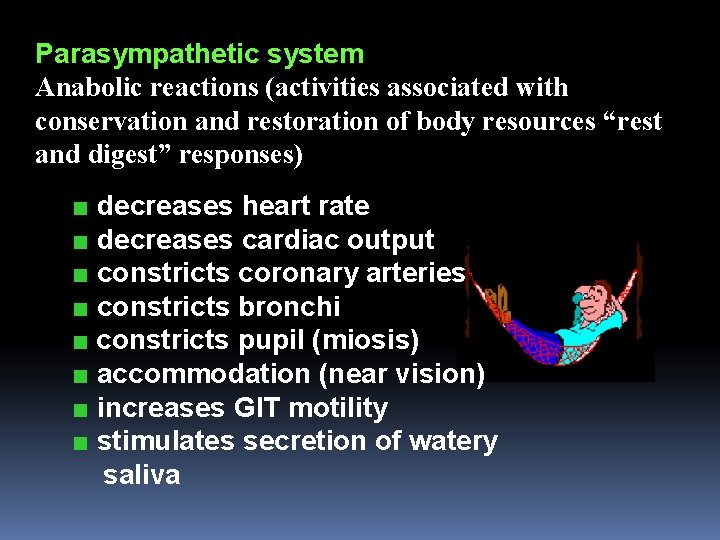
Parasympathetic system Anabolic reactions (activities associated with conservation and restoration of body resources “rest and digest” responses) ■ decreases heart rate ■ decreases cardiac output ■ constricts coronary arteries ■ constricts bronchi ■ constricts pupil (miosis) ■ accommodation (near vision) ■ increases GIT motility ■ stimulates secretion of watery saliva
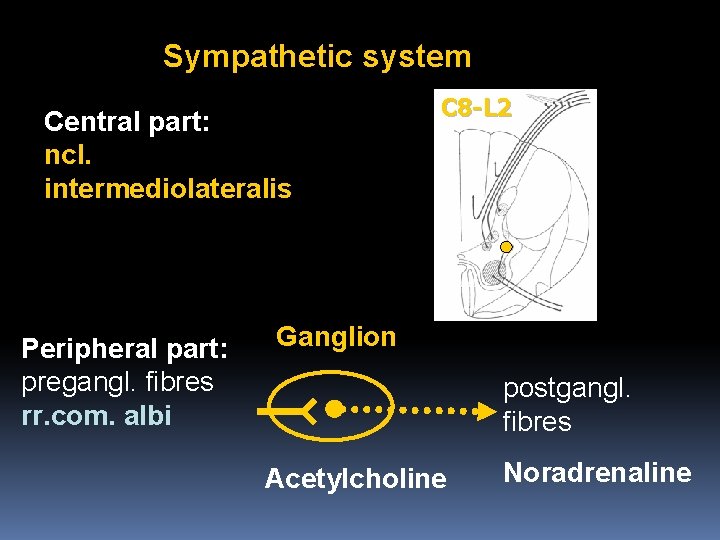
Sympathetic system Central part: ncl. intermediolateralis Peripheral part: pregangl. fibres rr. com. albi C 8 -L 2 Ganglion postgangl. fibres Acetylcholine Noradrenaline
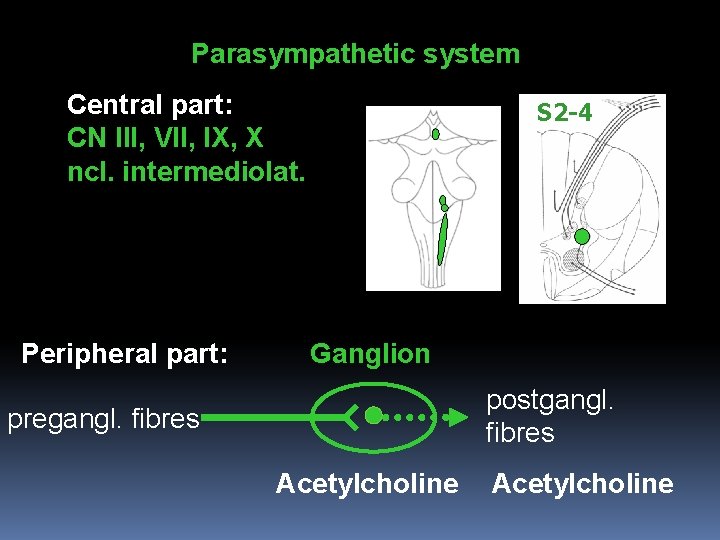
Parasympathetic system Central part: CN III, VII, IX, X ncl. intermediolat. Peripheral part: S 2 -4 Ganglion postgangl. fibres pregangl. fibres Acetylcholine
Ganglia para vertebral Symp. trunk Ciliare, oticum, pre submand. , pterygop. vertebral Ggll. in plexuses and organs Aortic plexuses
Sympathetic heart rate coronary arteries bronchioles pupil gall bladder salivary secretion GIT Parasympathetic increase dilation decrease constriction relaxation dilation (mydriasis) contraction viscous constriction (miosis) relaxation watery inhibition of peristalsis acceleration of peristalsis
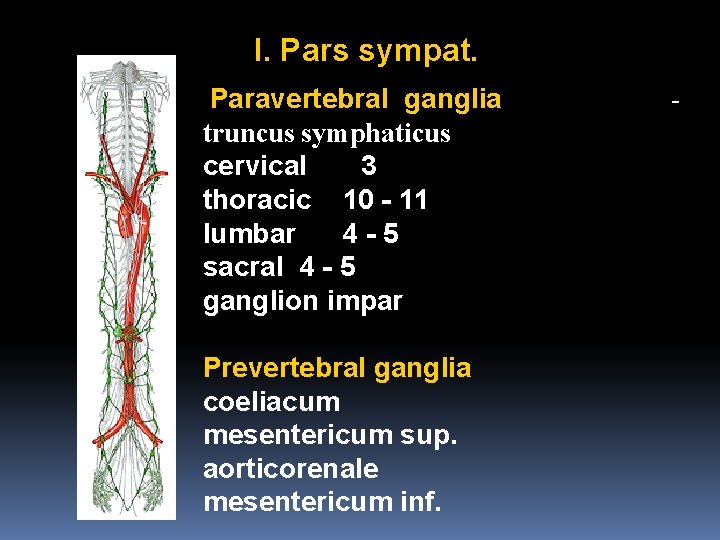
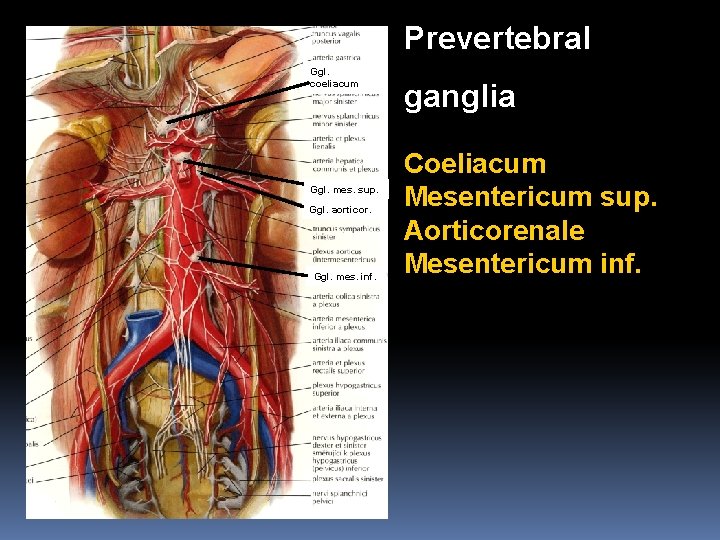
I. Pars sympat. Paravertebral ganglia truncus symphaticus cervical 3 thoracic 10 - 11 lumbar 4 -5 sacral 4 - 5 ganglion impar Prevertebral ganglia coeliacum mesentericum sup. aorticorenale mesentericum inf. -
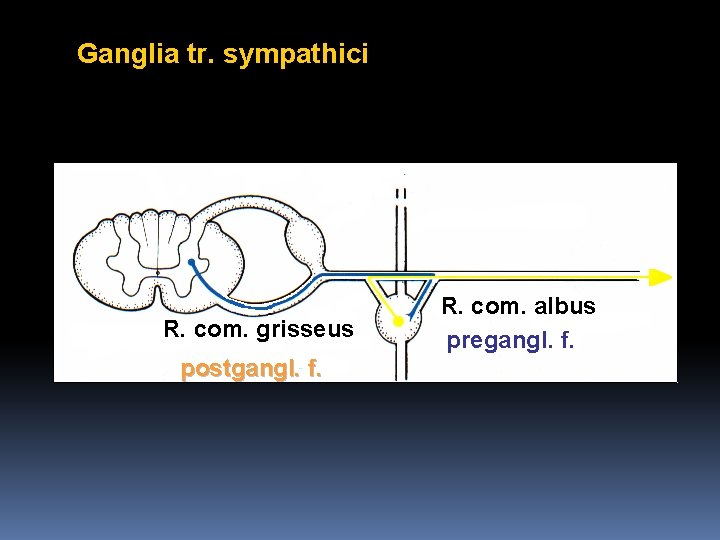
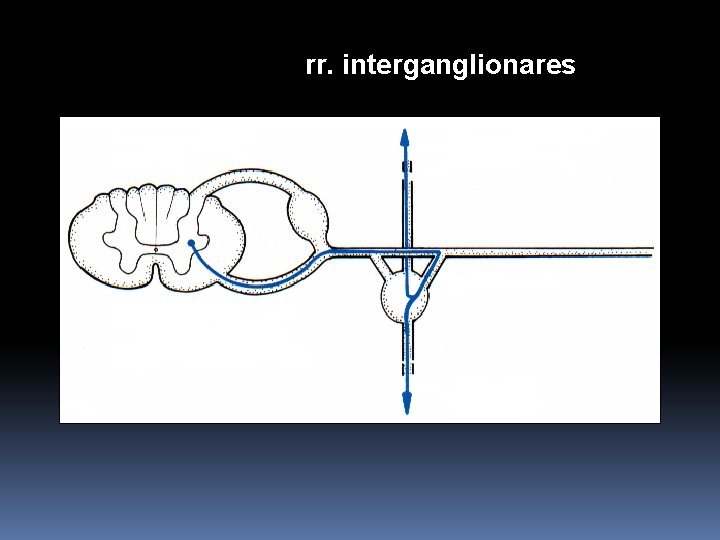
Ganglia tr. sympathici R. com. grisseus postgangl. f. R. com. albus pregangl. f.
rr. interganglionares
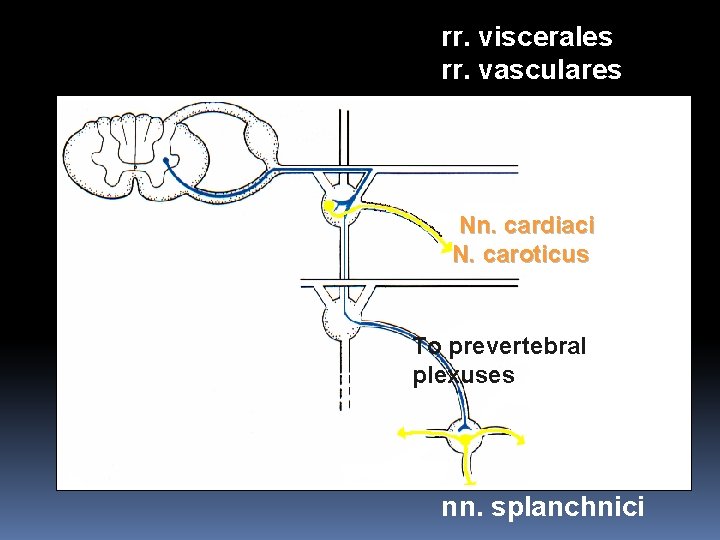
rr. viscerales rr. vasculares Nn. cardiaci N. caroticus To prevertebral plexuses nn. splanchnici
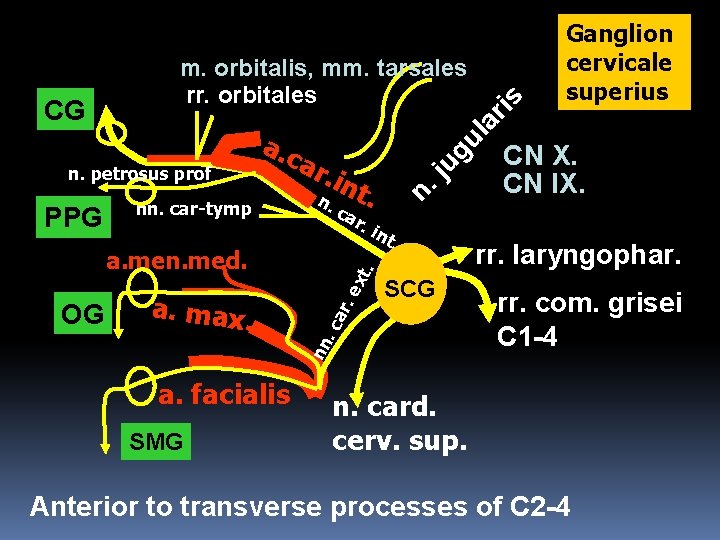
PPG nn. car-tymp int n. . c ar . in SCG . c ar. ex t. nn a. max. a. facialis SMG is la r ar. a. men. med. OG ju gu n. petrosus prof a. c n. CG m. orbitalis, mm. tarsales rr. orbitales Ganglion cervicale superius CN X. CN IX. rr. laryngophar. rr. com. grisei C 1 -4 n. card. cerv. sup. Anterior to transverse processes of C 2 -4
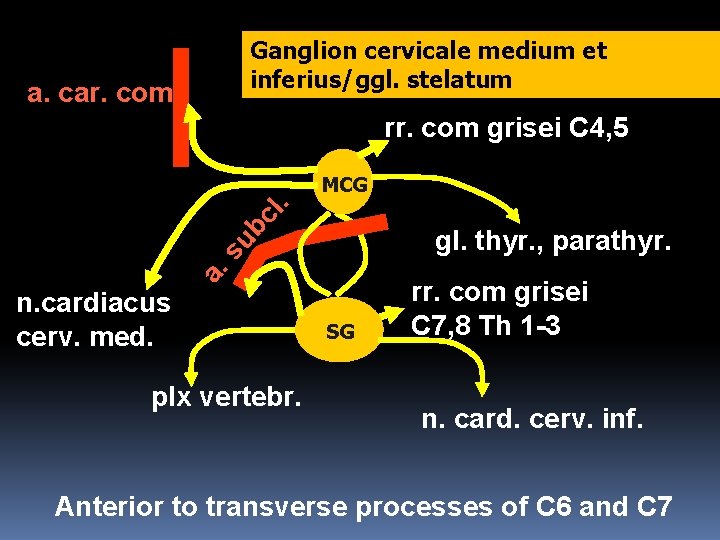
Ganglion cervicale medium et inferius/ggl. stelatum a. car. com. rr. com grisei C 4, 5 bc l. MCG a. su gl. thyr. , parathyr. n. cardiacus cerv. med. plx vertebr. SG rr. com grisei C 7, 8 Th 1 -3 n. card. cerv. inf. Anterior to transverse processes of C 6 and C 7
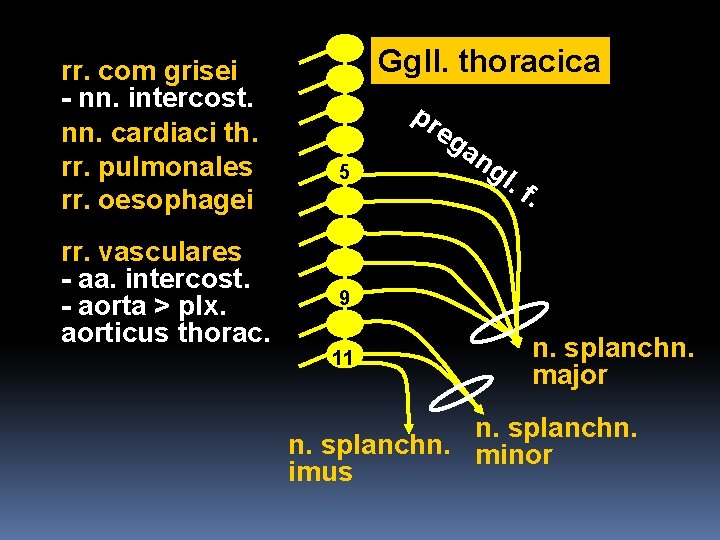
rr. com grisei - nn. intercost. nn. cardiaci th. rr. pulmonales rr. oesophagei rr. vasculares - aa. intercost. - aorta > plx. aorticus thorac. Ggll. thoracica pr e 5 ga ng l. f . 9 11 n. splanchn. major n. splanchn. minor imus
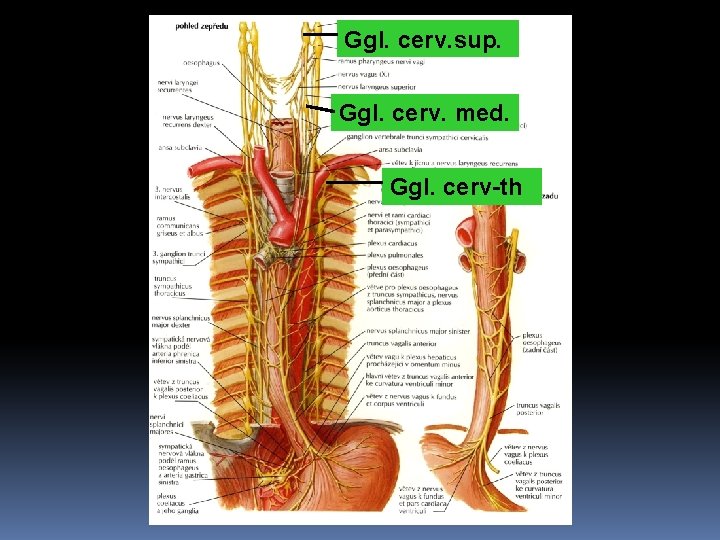
Ggl. cerv. sup. Ggl. cerv. med. Ggl. cerv-th
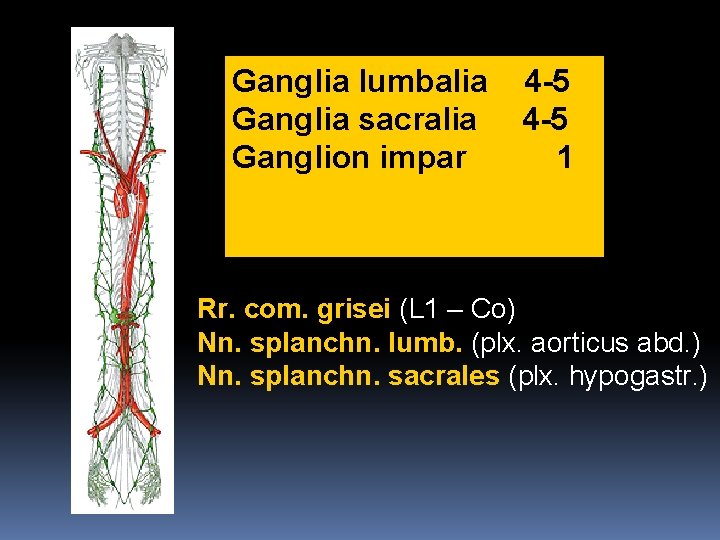
Ganglia lumbalia Ganglia sacralia Ganglion impar 4 -5 1 Rr. com. grisei (L 1 – Co) Nn. splanchn. lumb. (plx. aorticus abd. ) Nn. splanchn. sacrales (plx. hypogastr. )
Prevertebral Ggl. coeliacum Ggl. mes. sup. Ggl. aorticor. Ggl. mes. inf. ganglia Coeliacum Mesentericum sup. Aorticorenale Mesentericum inf.
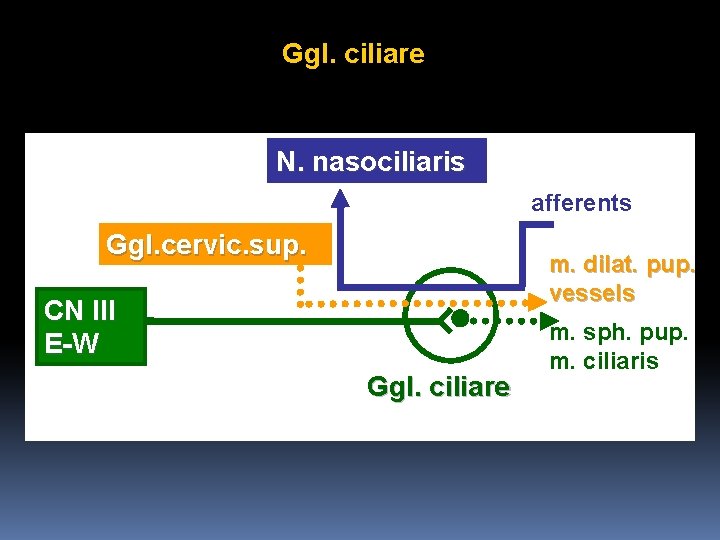
Ggl. ciliare N. nasociliaris afferents Ggl. cervic. sup. m. dilat. pup. vessels CN III E-W Ggl. ciliare m. sph. pup. m. ciliaris
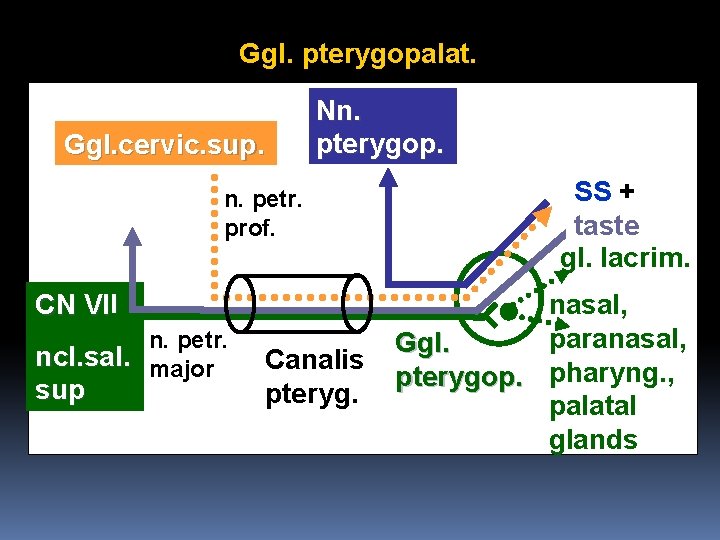
Ggl. pterygopalat. Ggl. cervic. sup. Nn. pterygop. n. petr. prof. CN VII n. petr. ncl. sal. major sup Canalis pteryg. SS + taste gl. lacrim. nasal, paranasal, Ggl. pterygop. pharyng. , palatal glands
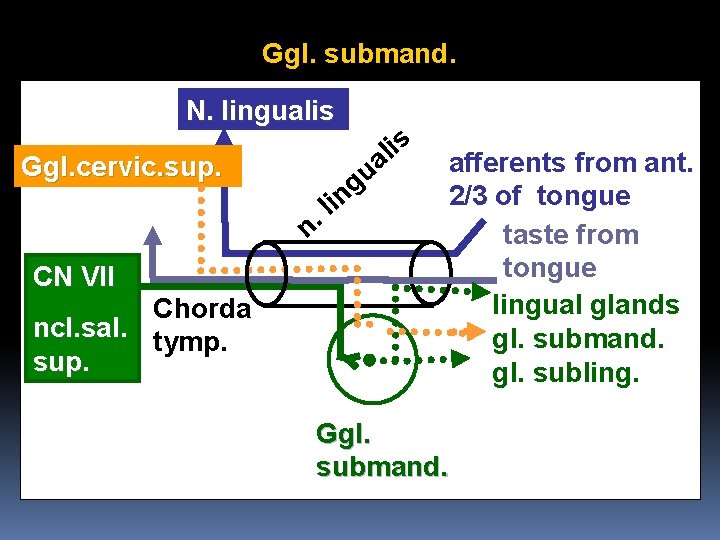
Ggl. submand. N. lingualis Ggl. cervic. sup. in l. n CN VII Chorda ncl. sal. tymp. sup. is l a u g afferents from ant. 2/3 of tongue taste from tongue lingual glands gl. submand. gl. subling. Ggl. submand.
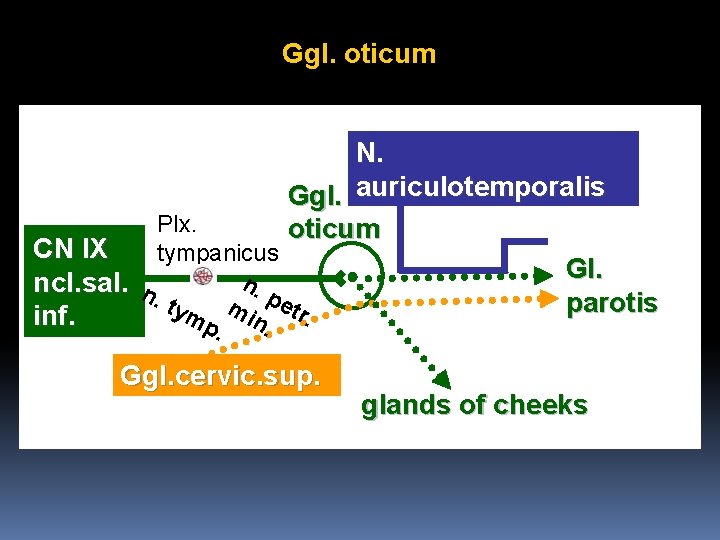
Ggl. oticum N. Ggl. auriculotemporalis Plx. oticum CN IX tympanicus Gl. n. ncl. sal. n pe. ty parotis m t r m inf. p. in. . Ggl. cervic. sup. glands of cheeks
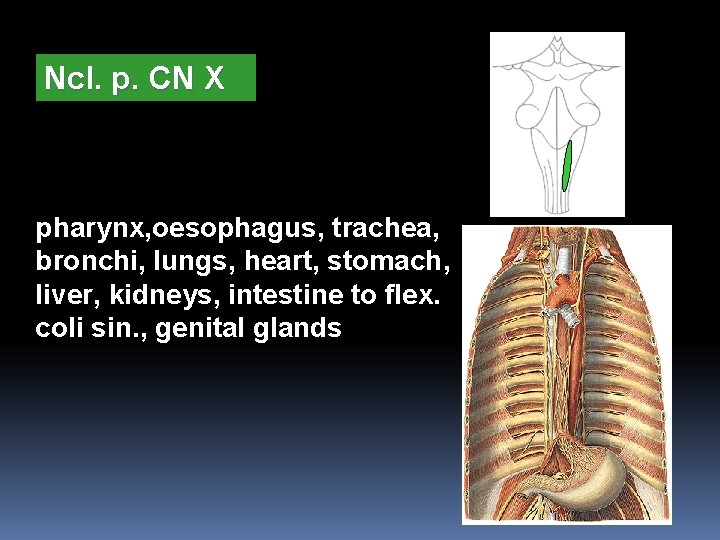
Ncl. p. CN X pharynx, oesophagus, trachea, bronchi, lungs, heart, stomach, liver, kidneys, intestine to flex. coli sin. , genital glands
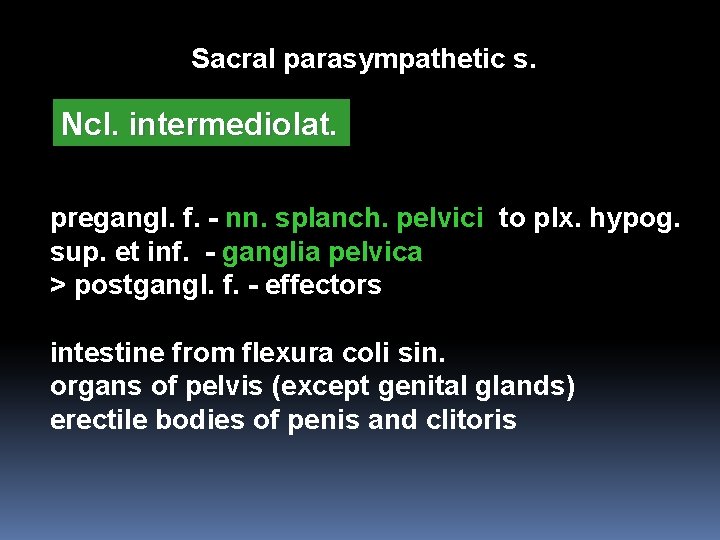
Sacral parasympathetic s. Ncl. intermediolat. pregangl. f. - nn. splanch. pelvici to plx. hypog. sup. et inf. - ganglia pelvica > postgangl. f. - effectors intestine from flexura coli sin. organs of pelvis (except genital glands) erectile bodies of penis and clitoris
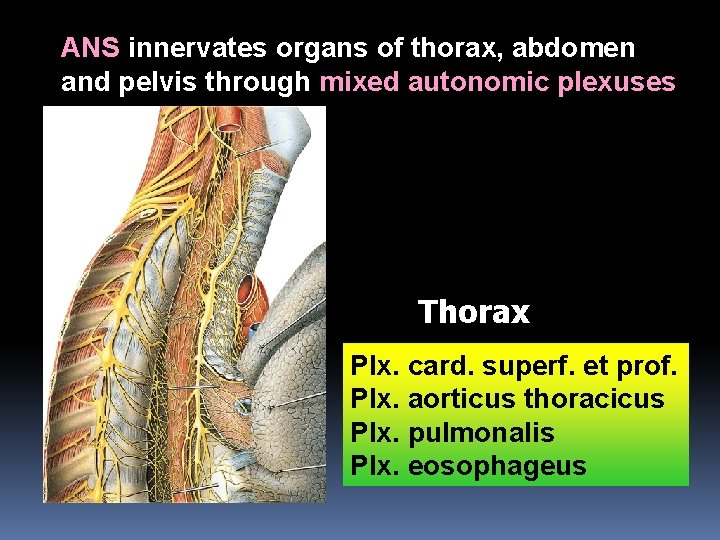
ANS innervates organs of thorax, abdomen and pelvis through mixed autonomic plexuses Thorax Plx. card. superf. et prof. Plx. aorticus thoracicus Plx. pulmonalis Plx. eosophageus
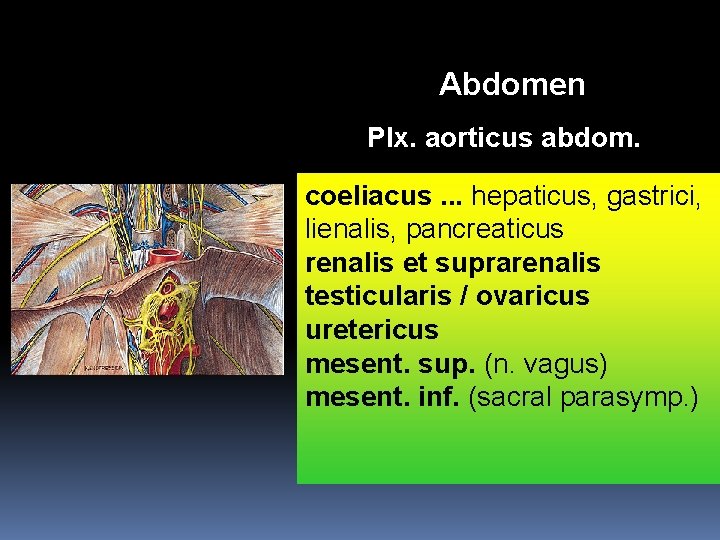
Abdomen Plx. aorticus abdom. coeliacus. . . hepaticus, gastrici, lienalis, pancreaticus renalis et suprarenalis testicularis / ovaricus uretericus mesent. sup. (n. vagus) mesent. inf. (sacral parasymp. )
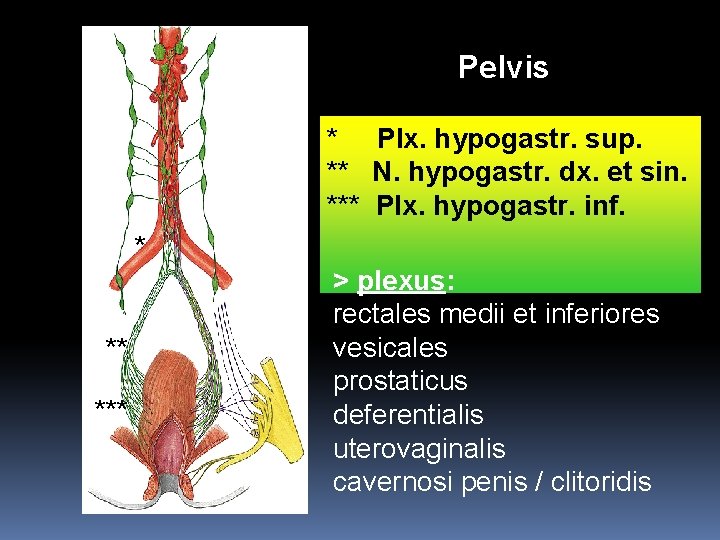
Pelvis * Plx. hypogastr. sup. ** N. hypogastr. dx. et sin. *** Plx. hypogastr. inf. * ** *** > plexus: rectales medii et inferiores vesicales prostaticus deferentialis uterovaginalis cavernosi penis / clitoridis
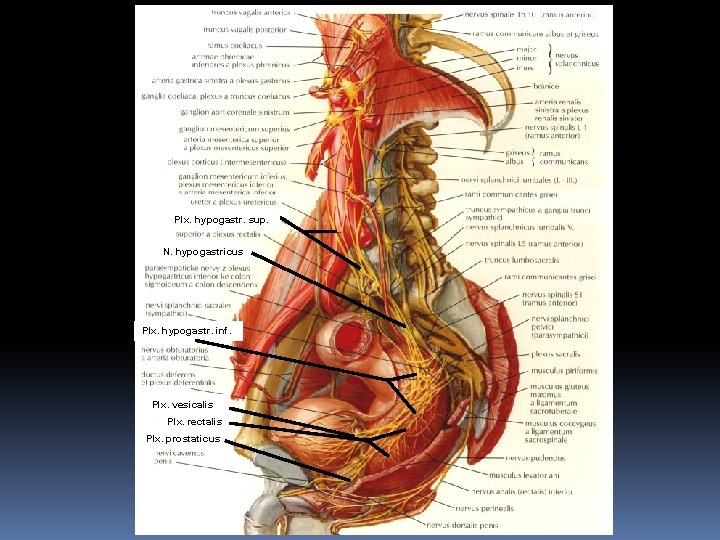
Plx. hypogastr. sup. N. hypogastricus Plx. hypogastr. inf. Plx. vesicalis Plx. rectalis Plx. prostaticus
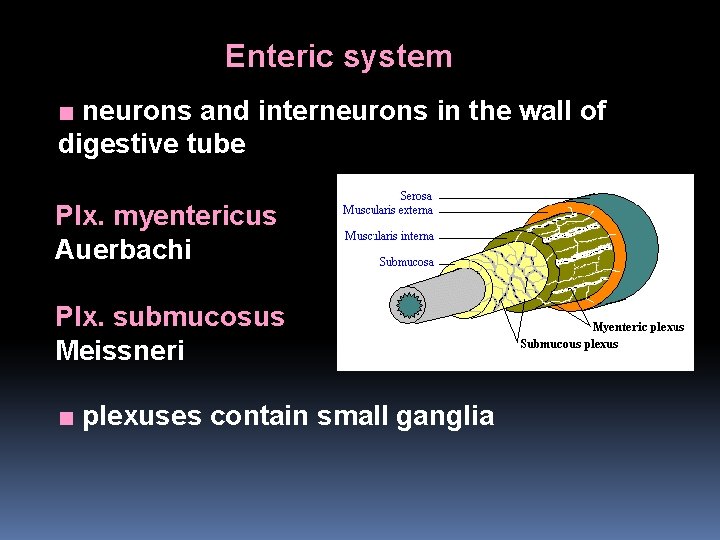
Enteric system ■ neurons and interneurons in the wall of digestive tube Plx. myentericus Auerbachi Plx. submucosus Meissneri ■ plexuses contain small ganglia
Illustrations and photographs were copied from: Atlas der Anatomie des Menschen/Sobotta. Putz, R. , und Pabst, R. 20. Auflage. München: Urban & Schwarzenberg, 1993 Netter: Interactive Atlas of Human Anatomy. Windows Version 2. 0