
Autonomic nervous system Cholinergic antagonists CHOLINOBLOCKERS Ph D
Autonomic nervous system Cholinergic antagonists (CHOLINOBLOCKERS) Ph. D. A. V. Aleksandrova www. company. com
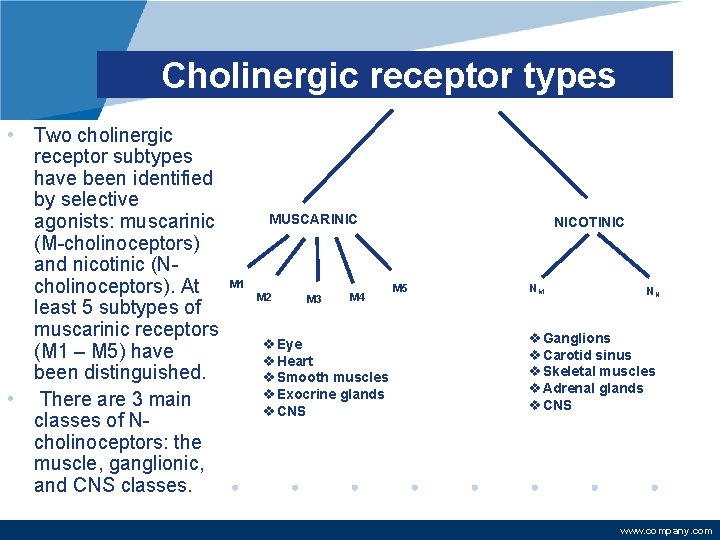
Cholinergic receptor types • Two cholinergic receptor subtypes have been identified by selective agonists: muscarinic (M-cholinoceptors) and nicotinic (Ncholinoceptors). At M 1 least 5 subtypes of muscarinic receptors (M 1 – M 5) have been distinguished. • There are 3 main classes of N- cholinoceptors: the muscle, ganglionic, and CNS classes. MUSCARINIC M 2 M 3 M 4 v Eye v Heart v Smooth muscles v Exocrine glands v CNS NICOTINIC M 5 NM NN v Ganglions v Carotid sinus v Skeletal muscles v Adrenal glands v CNS www. company. com
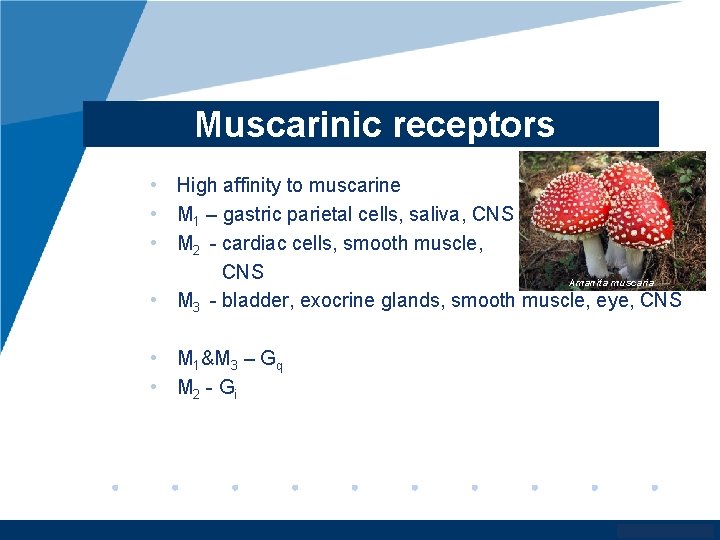
Muscarinic receptors • High affinity to muscarine • M 1 – gastric parietal cells, saliva, CNS • M 2 - cardiac cells, smooth muscle, CNS Amanita muscaria • M 3 - bladder, exocrine glands, smooth muscle, eye, CNS • M 1&M 3 – Gq • M 2 - Gi www. company. com
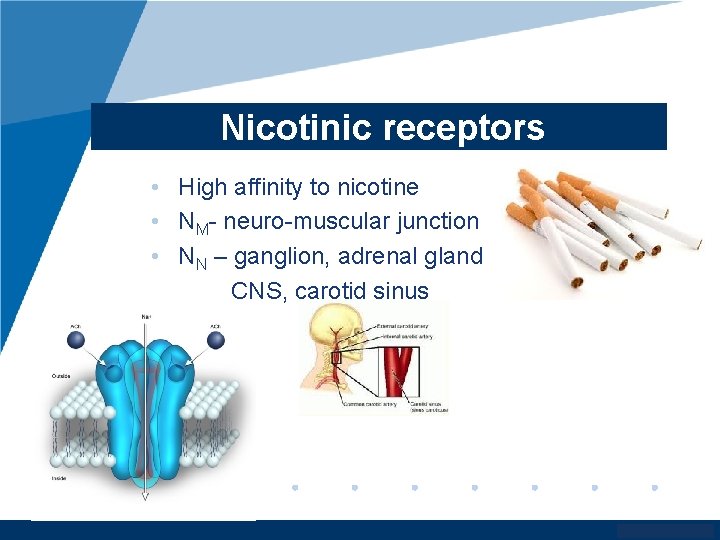
Nicotinic receptors • High affinity to nicotine • NM- neuro-muscular junction • NN – ganglion, adrenal gland CNS, carotid sinus www. company. com
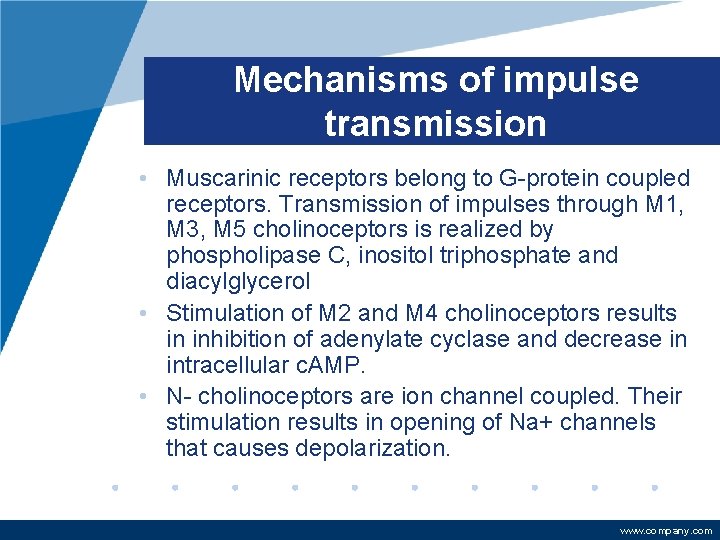
Mechanisms of impulse transmission • Muscarinic receptors belong to G-protein coupled receptors. Transmission of impulses through M 1, M 3, M 5 cholinoceptors is realized by phospholipase C, inositol triphosphate and diacylglycerol • Stimulation of M 2 and M 4 cholinoceptors results in inhibition of adenylate cyclase and decrease in intracellular c. AMP. • N- cholinoceptors are ion channel coupled. Their stimulation results in opening of Na+ channels that causes depolarization. www. company. com
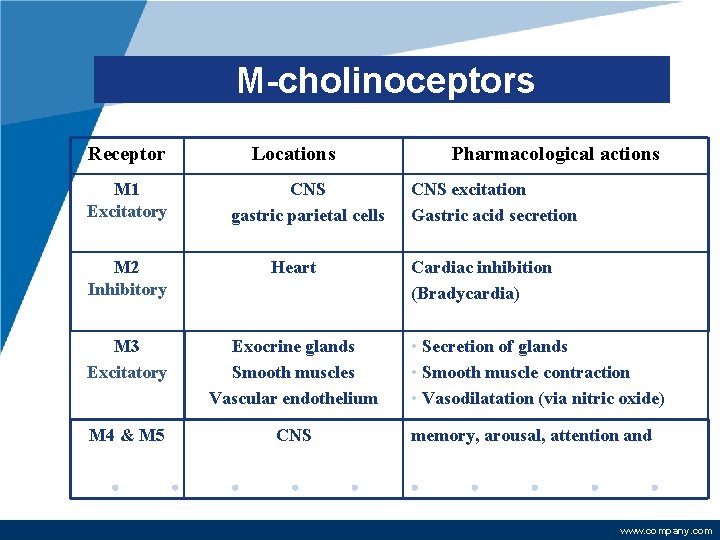
M-cholinoceptors Receptor M 1 Excitatory Locations CNS gastric parietal cells M 2 Inhibitory Heart M 3 Excitatory Exocrine glands Smooth muscles Vascular endothelium M 4 & M 5 CNS Pharmacological actions CNS excitation Gastric acid secretion Cardiac inhibition (Bradycardia) • Secretion of glands • Smooth muscle contraction • Vasodilatation (via nitric oxide) memory, arousal, attention and www. company. com
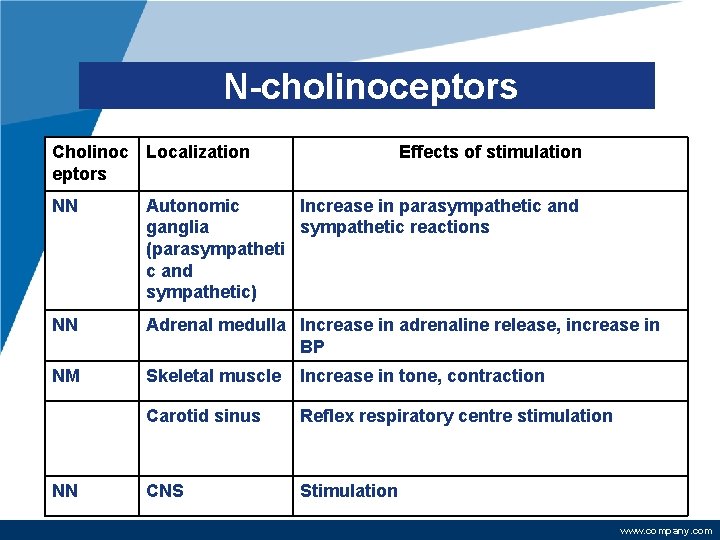
N-cholinoceptors Cholinoc Localization eptors Effects of stimulation NN Autonomic Increase in parasympathetic and ganglia sympathetic reactions (parasympatheti c and sympathetic) NN Adrenal medulla Increase in adrenaline release, increase in BP NM Skeletal muscle Increase in tone, contraction Carotid sinus Reflex respiratory centre stimulation CNS Stimulation NN www. company. com
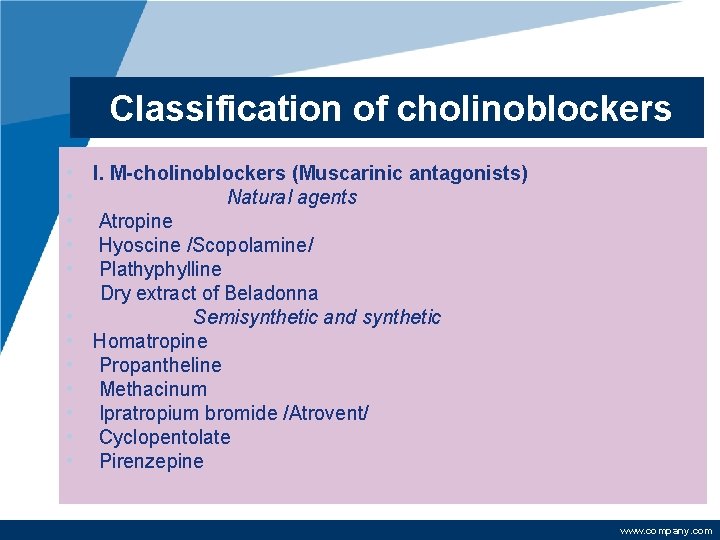
Classification of cholinoblockers • I. M-cholinoblockers (Muscarinic antagonists) • Natural agents • Atropine • Hyoscine /Scopolamine/ • Plathyphylline Dry extract of Beladonna • Semisynthetic and synthetic • Homatropine • Propantheline • Methacinum • Ipratropium bromide /Atrovent/ • Cyclopentolate • Pirenzepine www. company. com
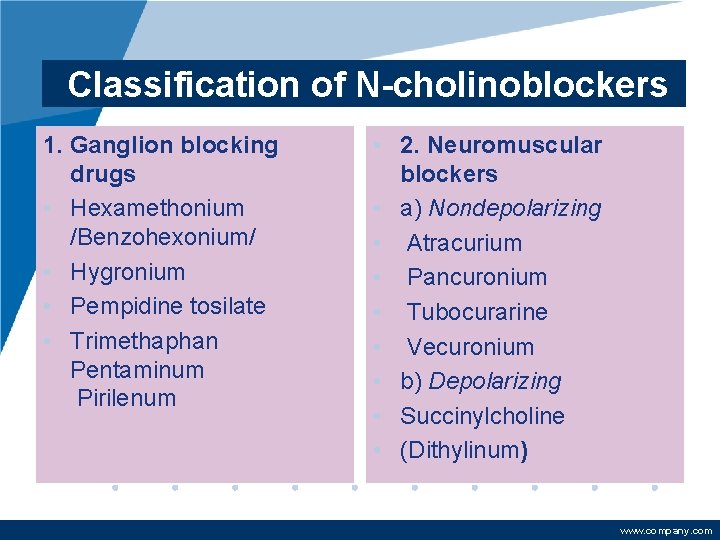
Classification of N-cholinoblockers 1. Ganglion blocking drugs • Hexamethonium /Benzohexonium/ • Hygronium • Pempidine tosilate • Trimethaphan Pentaminum Pirilenum • 2. Neuromuscular blockers • a) Nondepolarizing • Atracurium • Pancuronium • Tubocurarine • Vecuronium • b) Depolarizing • Succinylcholine • (Dithylinum) www. company. com
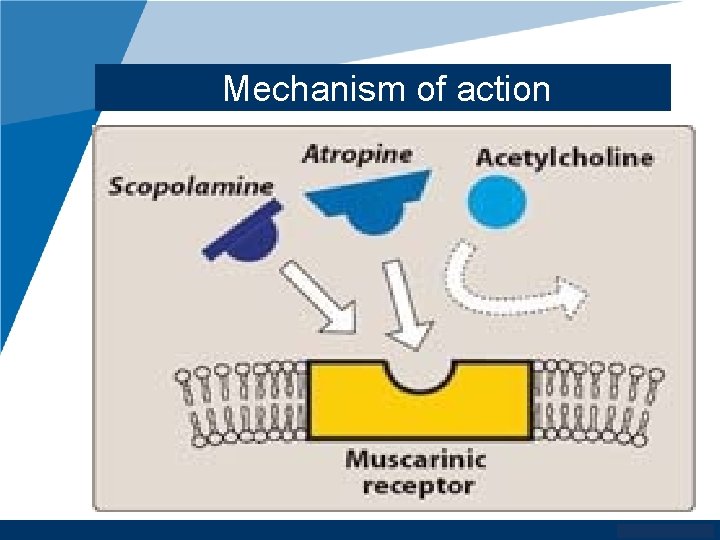
Mechanism of action www. company. com
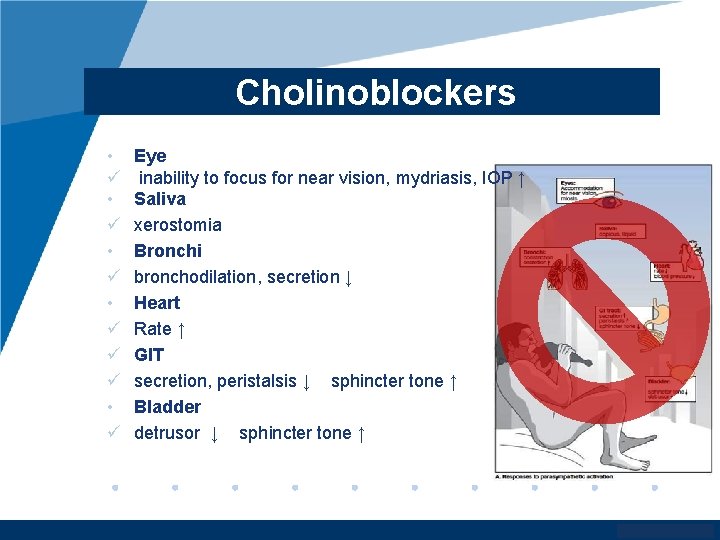
Cholinoblockers • ü • ü ü ü • ü Eye inability to focus for near vision, mydriasis, IOP ↑ Saliva xerostomia Bronchi bronchodilation, secretion ↓ Heart Rate ↑ GIT secretion, peristalsis ↓ sphincter tone ↑ Bladder detrusor ↓ sphincter tone ↑ www. company. com
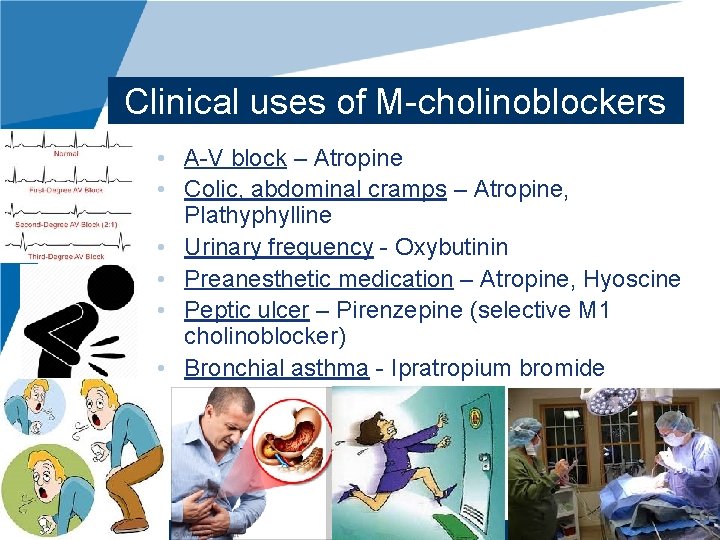
Clinical uses of M-cholinoblockers • A-V block – Atropine • Colic, abdominal cramps – Atropine, Plathyphylline • Urinary frequency - Oxybutinin • Preanesthetic medication – Atropine, Hyoscine • Peptic ulcer – Pirenzepine (selective M 1 cholinoblocker) • Bronchial asthma - Ipratropium bromide www. company. com
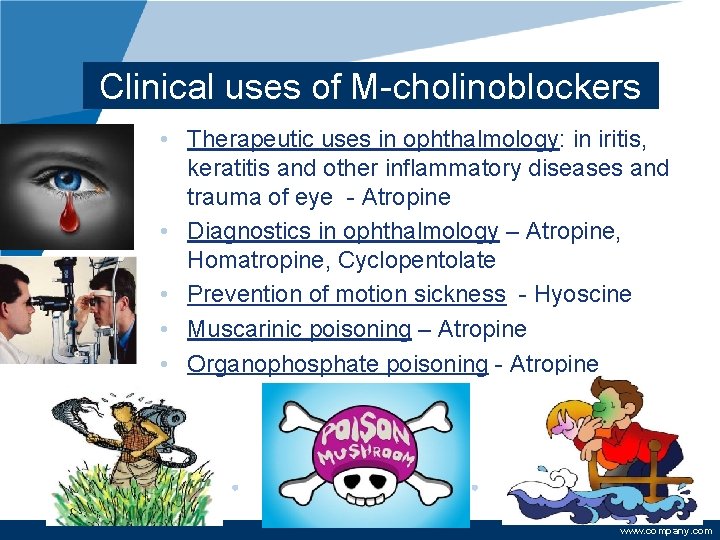
Clinical uses of M-cholinoblockers • Therapeutic uses in ophthalmology: in iritis, keratitis and other inflammatory diseases and trauma of eye - Atropine • Diagnostics in ophthalmology – Atropine, Homatropine, Cyclopentolate • Prevention of motion sickness - Hyoscine • Muscarinic poisoning – Atropine • Organophosphate poisoning - Atropine www. company. com
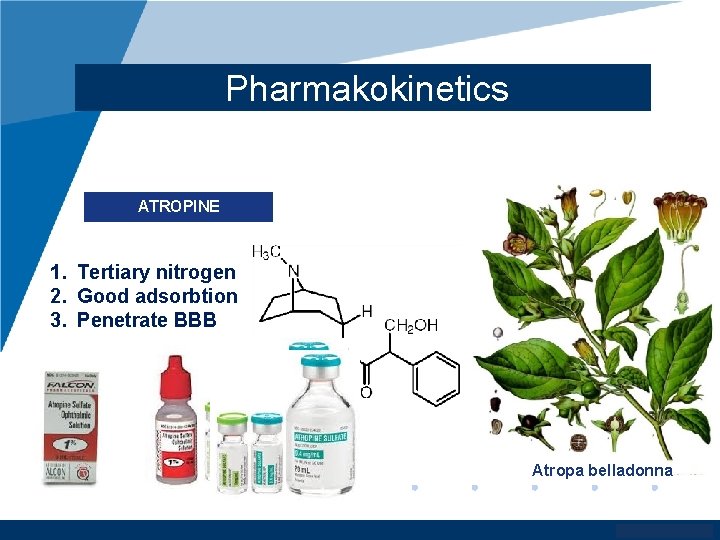
Pharmakokinetics ATROPINE 1. Tertiary nitrogen 2. Good adsorbtion 3. Penetrate BBB Atropa belladonna www. company. com
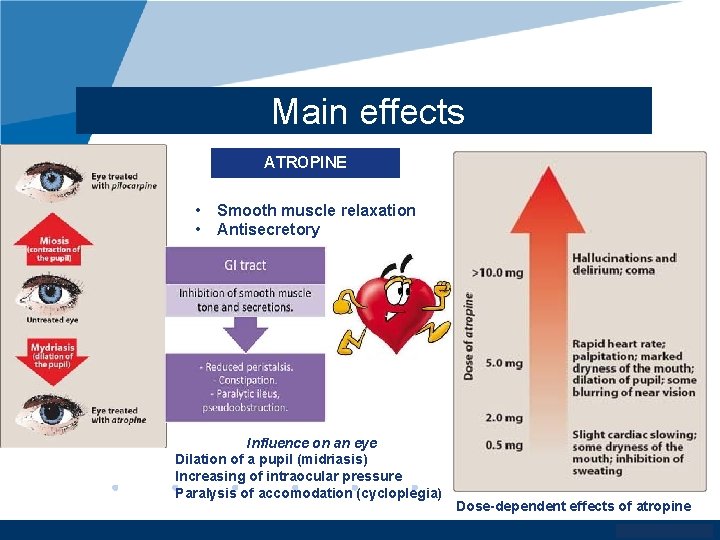
Main effects ATROPINE • • Smooth muscle relaxation Antisecretory Influence on an eye Dilation of a pupil (midriasis) Increasing of intraocular pressure Paralysis of accomodation (cycloplegia) Dose-dependent effects of atropine www. company. com
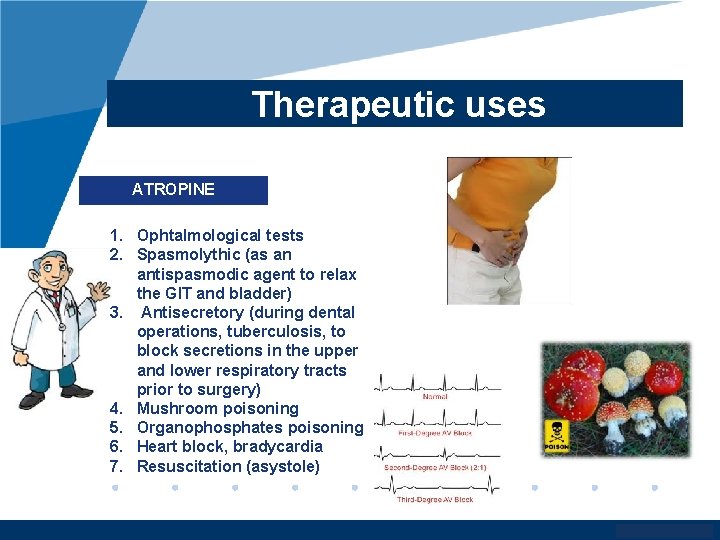
Therapeutic uses ATROPINE 1. Ophtalmological tests 2. Spasmolythic (as an antispasmodic agent to relax the GIT and bladder) 3. Antisecretory (during dental operations, tuberculosis, to block secretions in the upper and lower respiratory tracts prior to surgery) 4. Mushroom poisoning 5. Organophosphates poisoning 6. Heart block, bradycardia 7. Resuscitation (asystole) www. company. com
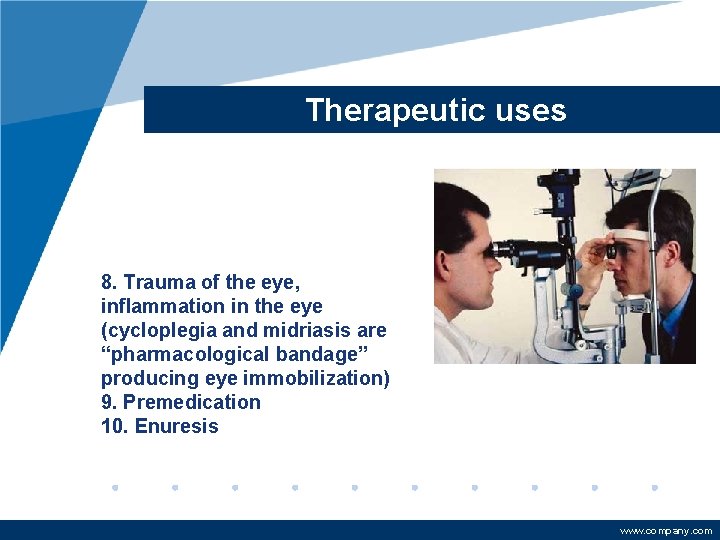
Therapeutic uses 8. Trauma of the eye, inflammation in the eye (cycloplegia and midriasis are “pharmacological bandage” producing eye immobilization) 9. Premedication 10. Enuresis www. company. com
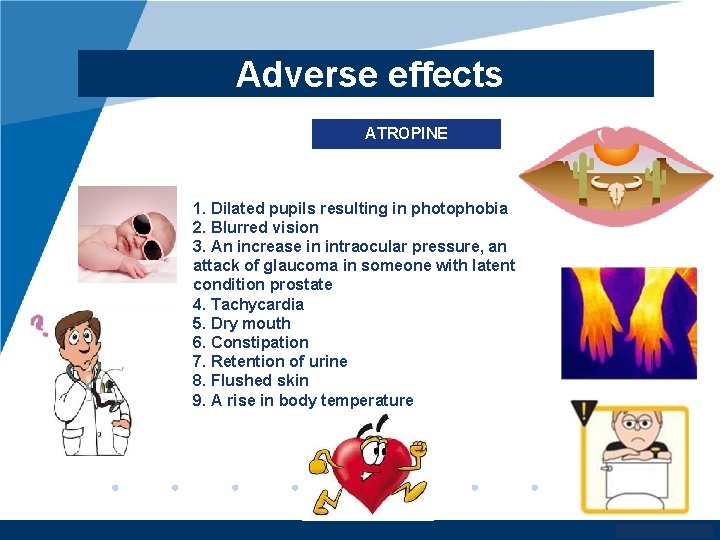
Adverse effects ATROPINE 1. Dilated pupils resulting in photophobia 2. Blurred vision 3. An increase in intraocular pressure, an attack of glaucoma in someone with latent condition prostate 4. Tachycardia 5. Dry mouth 6. Constipation 7. Retention of urine 8. Flushed skin 9. A rise in body temperature. www. company. com
Contraindications ATROPINE 1. Narrow-angle glaucoma 2. Pyloricstenosis 3. Prostatichypertrophy 4. Drivers 5. Hepatic insufficiency 6. Hyperthyroidism 7. High body temperature 8. Toxicosis of pregnancy 9. Cerebral pathology in children 10. Childhood or old age. www. company. com
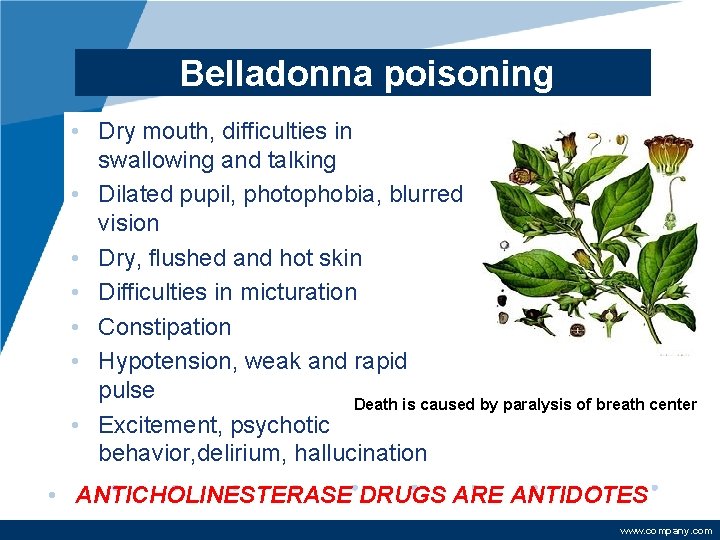
Belladonna poisoning • Dry mouth, difficulties in swallowing and talking • Dilated pupil, photophobia, blurred vision • Dry, flushed and hot skin • Difficulties in micturation • Constipation • Hypotension, weak and rapid pulse Death is caused by paralysis of breath center • Excitement, psychotic behavior, delirium, hallucination • ANTICHOLINESTERASE DRUGS ARE ANTIDOTES www. company. com
TREATMENT OF ACUTE POISONING • wash out of stomach with 0, 5 % Tannin solution, laxative agents, sorbents, forced diuresis • • • Specific antagonists – anticholinesterase drugs: repeated introduction of proserinum, galantaminum, hydrobromidum until symptoms of disappearance of M-cholinoblockers blockade removal of psychomotor excitement - aminasinum, sybazon, barbiturates removal of tachycardia – anapryline for relief of photophobia patient is transferred to a dark room for decreasing of body temperature ice-cube bottles are placed around the patient In case of considerable depressing of breathing - artificial ventilation with oxygen inhalation www. company. com
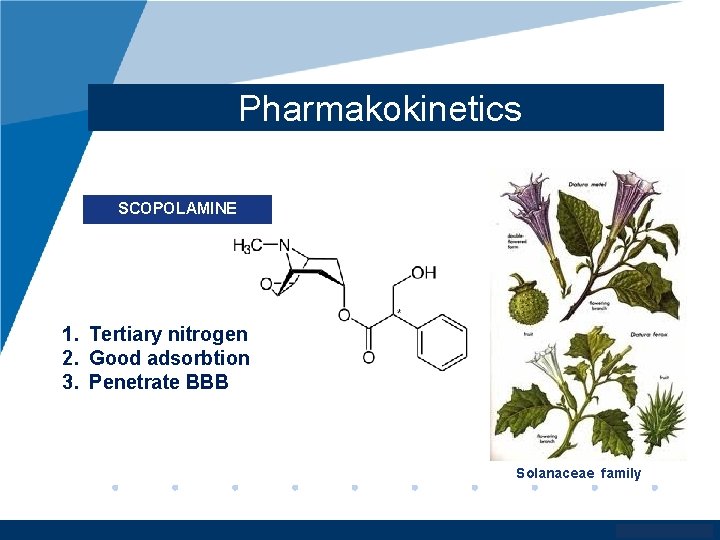
Pharmakokinetics SCOPOLAMINE 1. Tertiary nitrogen 2. Good adsorbtion 3. Penetrate BBB Solanaceae family www. company. com
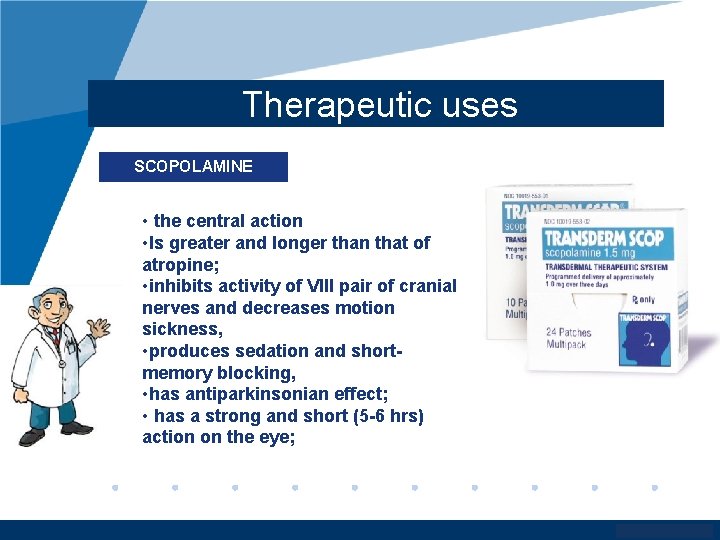
Therapeutic uses SCOPOLAMINE • the central action • Is greater and longer than that of atropine; • inhibits activity of VIII pair of cranial nerves and decreases motion sickness, • produces sedation and shortmemory blocking, • has antiparkinsonian effect; • has a strong and short (5 -6 hrs) action on the eye; www. company. com
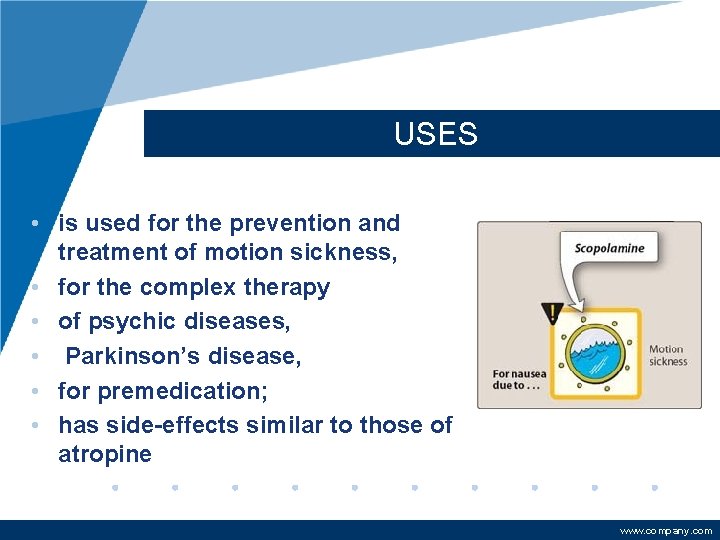
USES • is used for the prevention and treatment of motion sickness, • for the complex therapy • of psychic diseases, • Parkinson’s disease, • for premedication; • has side-effects similar to those of atropine. www. company. com
Platyphylline • is an alkaloid from Senecioplatyphylus • has the central action less than that of atropine; has a short (5 -6 hrs) action on the eye; • causes inhibition of the vasomotor center and a direct myotropic action on blood vessels, • Dilates blood vessels and lowers BP; • may be used to treat spasms of cerebral and coronary blood vessels, as well as to treat hypertension. www. company. com
Methacinum • is a synthetic preparation, non-selective M-cholinoblocker; • Is more potent than atropine in dilation of bronchi, the inhibition of gasrtric secretion, and a decrease of the uterus tone; • it does not penetrate CNS, • does not act on the eye, • has poor influence on the heart rate; is used • in bronchial asthma, • ulcer of the stomach, colic, premedication, and the danger of miscarriage. www. company. com
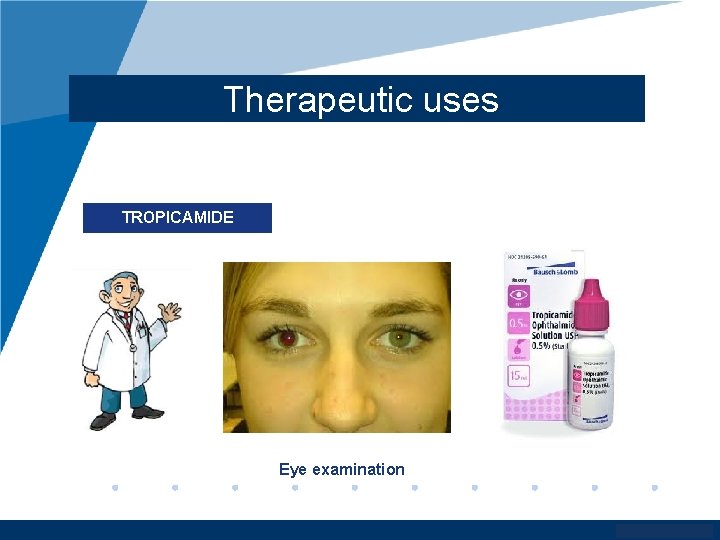
Therapeutic uses TROPICAMIDE Eye examination www. company. com
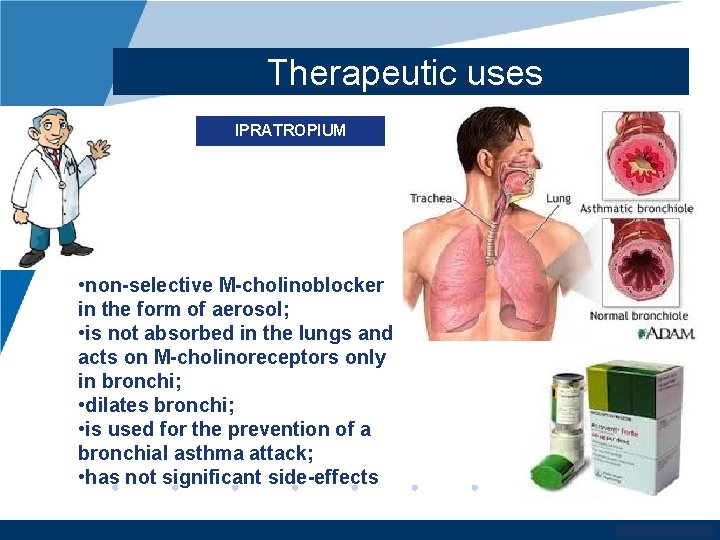
Therapeutic uses IPRATROPIUM • non-selective M-cholinoblocker in the form of aerosol; • is not absorbed in the lungs and acts on M-cholinoreceptors only in bronchi; • dilates bronchi; • is used for the prevention of a bronchial asthma attack; • has not significant side-effects www. company. com
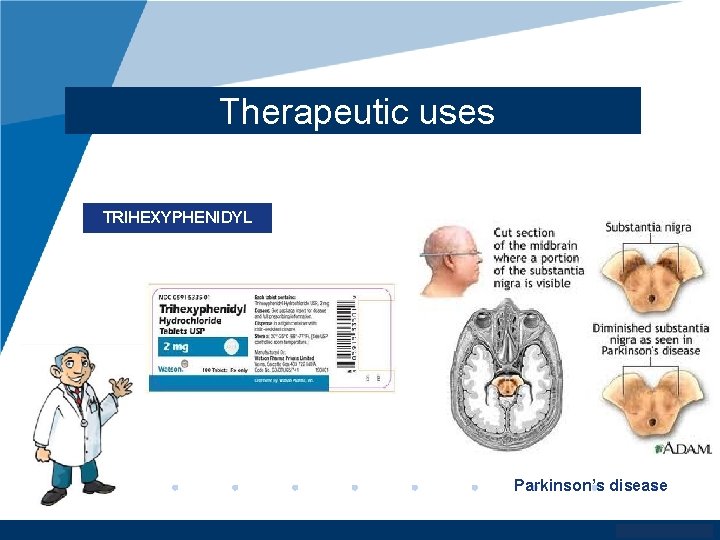
Therapeutic uses TRIHEXYPHENIDYL Parkinson’s disease www. company. com
Pirenzepine • is selective M-cholinoblocker inhibiting gastric secretion; • Is administered orally, IM, IV; produces maximal concentration in blood plasma • does not penetrate CNS and placenta; USES • is used for the treatment of ulcer of the stomach and duodenum, • Zollinger-Ellison’s syndrome, • the prevention of peptic ulcers caused by stress; • May cause dry mouth, blurred vision, retention of urine, but side-effects are minimal in comparison with atropine. www. company. com
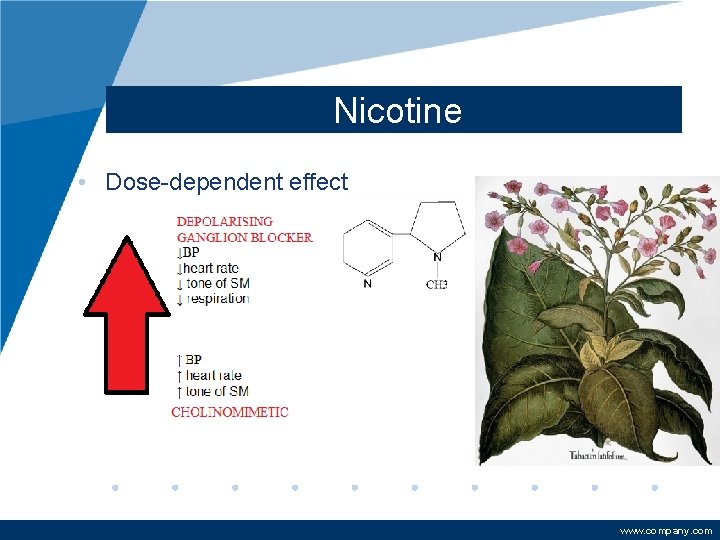
Nicotine • Dose-dependent effect www. company. com
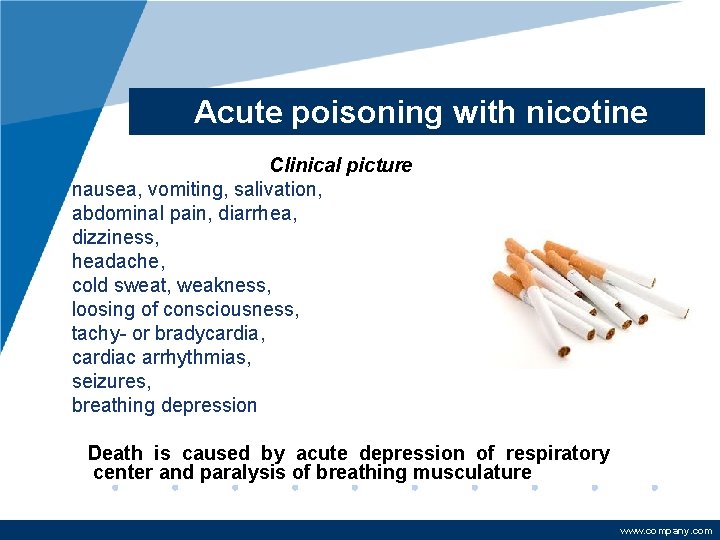
Acute poisoning with nicotine Clinical picture nausea, vomiting, salivation, abdominal pain, diarrhea, dizziness, headache, cold sweat, weakness, loosing of consciousness, tachy- or bradycardia, cardiac arrhythmias, seizures, breathing depression Death is caused by acute depression of respiratory center and paralysis of breathing musculature www. company. com
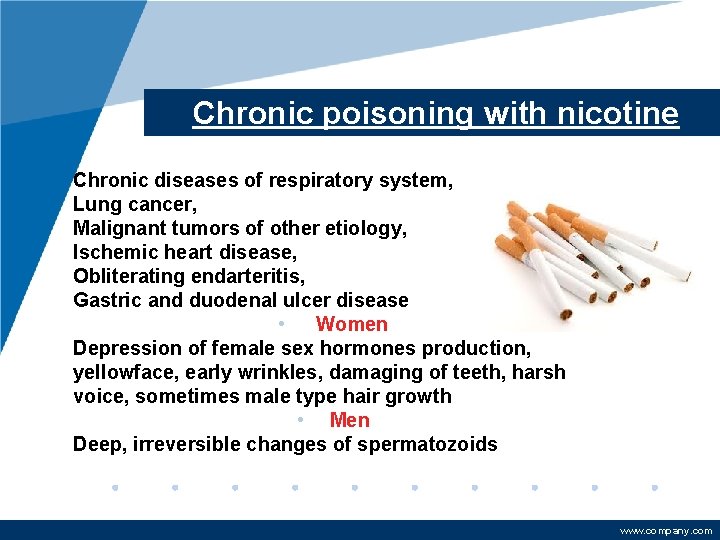
Chronic poisoning with nicotine Chronic diseases of respiratory system, Lung cancer, Malignant tumors of other etiology, Ischemic heart disease, Obliterating endarteritis, Gastric and duodenal ulcer disease • Women Depression of female sex hormones production, yellowface, early wrinkles, damaging of teeth, harsh voice, sometimes male type hair growth • Men Deep, irreversible changes of spermatozoids www. company. com
Ganglion blocking drugs • • • Benzohexonium Hygronium Mecamylamine Trimethaphan Pentaminum Pirilenum Used rarely Interfere with postsynaptic transmission of Ach Block action of Ach on nicotinic receptors severe adverse effects: Orthostatic (postural) hypotension, tachycardia, dry-mouth, GIT atony, urine retention, digestive problems, sexual dysfunction: failure of erection and ejaculation www. company. com
PHARMACODYNAMICS • Dilation of peripheral vessels • Decreasing of blood pressure • Decreasing of smooth muscle tone of inner organs (bronchi, GI tract, urinary and bile tracts) • Decreasing of gland secretion: bronchial, gastric, salivary www. company. com
Benzohexonium • The drug blocks N-cholinoreceptors in sympathetic and parasympathetic ganglia and disturbs the autonomic regulation of internal organs • It inhibits the propagation of the nervous impulses running to effector organs along both sympathetic and parasympathetic fibres. • The main result of sympathetic ganglia blockade is a decrease of BP, parasympathetic ganglia is manifested by sympatholytic and antisecretory effects. www. company. com
Benzohexonium Pharmacodynamics • the dilation of blood vessels, redistribution of blood in the body, lowering of BP • the dilation of bronchi • decrease in secretion and motility of the bowels, • spasmolytic action • a decrease in the tone of the urinary bladder and urinary pathways • an increase in the sensitivity of myometrium to oxytocin resulting in the • stimulation of uterus contractions in the labor • a decrease in'sweat secretion www. company. com
Benzohexonium Does nor penetrate through blood-brain barrier Duration of action varies from 3 to 6 hours Usage Hypertensive crisis Obliterating endarteritis Spasm of peripheral vessels Intestinal, hepatic, kidney colic Gastric ulcer Bronchial asthma, lung emphysema, lung edema www. company. com
Pentaminum Duration of action– 2 -4 hours Usage Hypertensive crisis Obliterating endarteritis Spasm of peripheral vessels Intestinal, hepatic, kidney colic Gastric ulcer Bronchial asthma, lung emphysema www. company. com
Hygronium Effect develops after 2 -3 min, and lasts for 10 -15 min after stopping of infusion Usage For controlled hypotonic For treatment of nephropathy and eclampsia For complex therapy of hypertensive crisis, brain edema, lung edema www. company. com
Pirilenum Penetrates through blood-brain barrier and blocks central N-cholinergic systems Effect is observed after 1 -2 hours and lasts for 6 -8 hours if administered orally Usage Heavy form of arterial hypertension Trophic disorders www. company. com
Side effects and complications of ganglionblockers Orthostatic collapse (postural hypotension) Dryness of mucous membranes Disturbance of accommodation General weakness Dizziness Tachycardia Atonia of urinary bladder, intestines (paralytic ileus) www. company. com
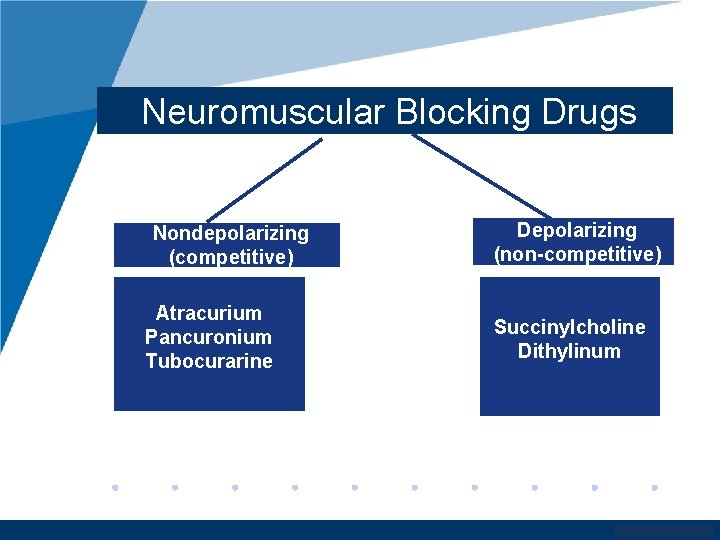
Neuromuscular Blocking Drugs Nondepolarizing (competitive) Atracurium Pancuronium Tubocurarine Depolarizing (non-competitive) Succinylcholine Dithylinum www. company. com
Skeletal muscles relax in such turn Small muscles of fingers, toes, ears, eyes, head, neck, muscles of extremities, trunk, Intercostals muscles and diaphragm Restoring of tone is performed in reversed sequence www. company. com
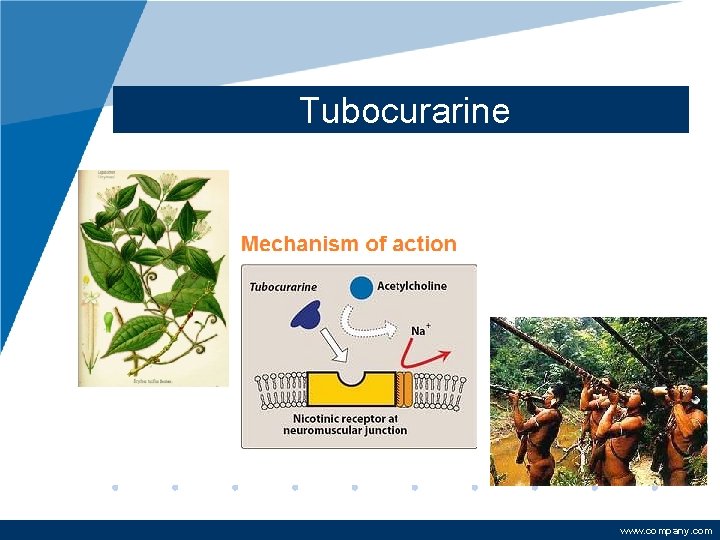
Tubocurarine www. company. com
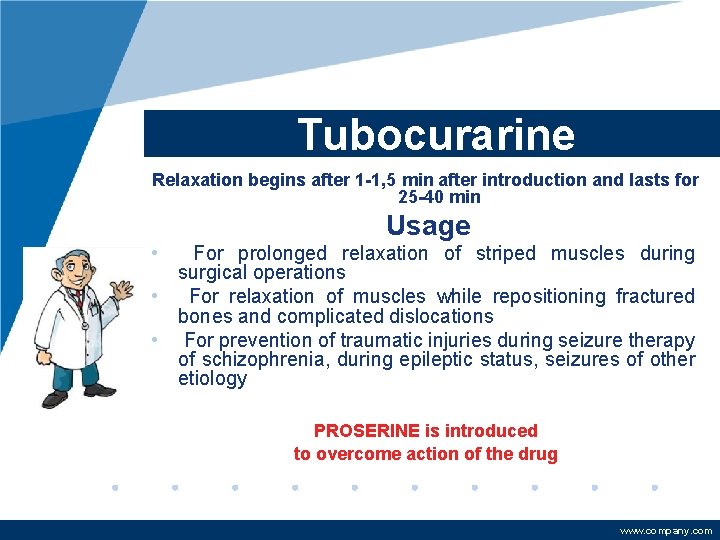
Tubocurarine Relaxation begins after 1 -1, 5 min after introduction and lasts for 25 -40 min Usage • For prolonged relaxation of striped muscles during surgical operations • For relaxation of muscles while repositioning fractured bones and complicated dislocations • For prevention of traumatic injuries during seizure therapy of schizophrenia, during epileptic status, seizures of other etiology PROSERINE is introduced to overcome action of the drug www. company. com
Decurarization • The duration of the action of d-tubocurarine can be shortened by the administration of neostigmine. Inhibition of acetylcholine esterase causes the concentration of acetylcholine released at the endplate to rise. • Competitive “displacement” by acetylcholine of tubocurarine from the receptors allows transmission to be restored. www. company. com
Side effects of nondepolarizing myorelaxants • • • Stimulation of histamine release, Hypotension, Flushing, Tachycardia Arrest of breathing. Because the appropriate dose of neuromuscular-blocking drug may paralyze muscles required for breathing (i. e. , the diaphragm), mechanical ventilation should be available to maintain adequate respiration. www. company. com
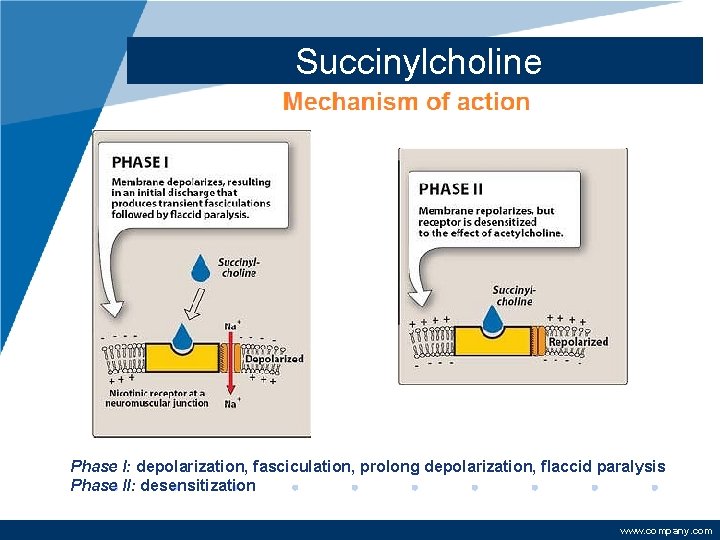
Succinylcholine Phase I: depolarization, fasciculation, prolong depolarization, flaccid paralysis Phase II: desensitization www. company. com
Phase 1 • has the principal paralytic effect. Binding of Succinylcholine to the N-Ch receptor results in opening of the receptor's monovalent cation channel; a disorganized depolarization of the motor end-plate occurs and calcium is released from the sarcoplasmic reticulum. • Calcium is removed from the muscle cell cytoplasm independent of repolarization. As the calcium is taken up by the sarcoplasmic reticulum, the muscle relaxes. This explains muscle flaccidity rather than tetany following fasciculations. • The results are membrane depolarization and transient fasciculations, followed by paralysis. www. company. com
Phase 2 • This phase is not abnormal and is a part of its mechanism of action. • It is caused by the blood concentration of Succinylcholine exceeding therapeutic window. • Desensitization occurs at the nerve terminal, and the myocyte becomes less sensitive to acetylcholine; the membrane repolarizes and cannot be depolarized again. www. company. com
Succinylcholine • It has a rapid onset (30 seconds) but very short duration of action (5– 10 minutes) because of hydrolysis by various cholinesterases (such as butyrylcholinesterase in the blood). Used before such manipulations as tracheal intubation, broncho and esophagoscopia, cystoscopia for reposition of fractures bones, dislocations It cause side effects: ü fasciculations (a sudden twitch just before paralysis occurs). ü post-operative pain www. company. com
Insufficiency of buthyrilcholinesterase (genetic pathology) In this pathology action of dithylinum can last for several hours, and all this time the patient should be connected to artificial respiration device TREATMENT • Introduction of fresh-citrate blood • Direct blood infusion from donnor • Introduction of buthyrilcholinesterase www. company. com
TOXICITY 1. RESPIRATORY PARALYSIS - neuromuscular blockers induce a respiratory paralysis. If mechanical ventilation is not provided, the patient will asphyxiate. 2. MALIGNANT HYPERTHERMIA - Malignant hyperthermia susceptibility, an autosomal dominant disorder of skeletal muscle, is one of the main causes of death due to anesthesia. Depolarizing neuromuscular blocking drugs (succinylcholine) can trigger malignant hyperthermia. Malignant hyperthermia is a result of excessive release of Ca 2+ from sarcoplasmic reticulum. • The clinical features of malignant hyperthermia are hyperthermia, metabolic acidosis, tachycardia, accelerated muscle metabolism and contructures. www. company. com

www. company. com
- Slides: 55