
AUTONOMIC NERVOUS SYSTEM BY DR A A OREMOSU
AUTONOMIC NERVOUS SYSTEM BY DR. A. A. OREMOSU DEARTMENT OF ANATOMY CMUL
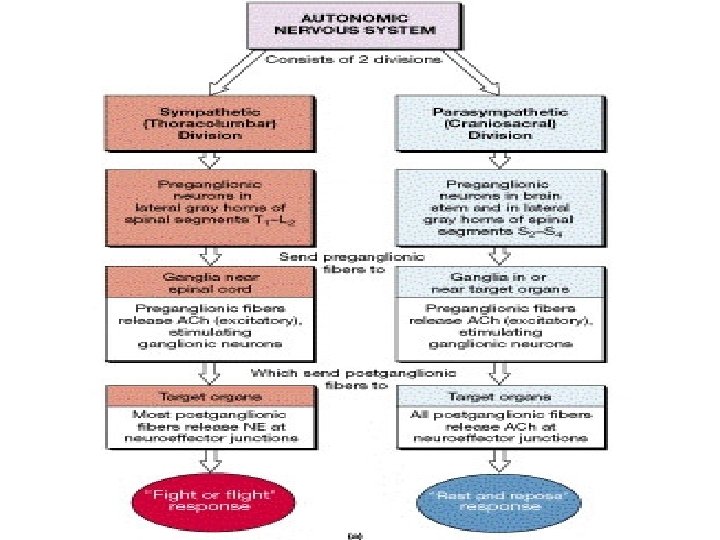
Overview of ANS Pathway for Visceral Motor Output ANS has two antagonistic divisions: 1. Sympathetic 2. Parasympathetic ANS output always involves two neurons between spinal cord (CNS) and effector.
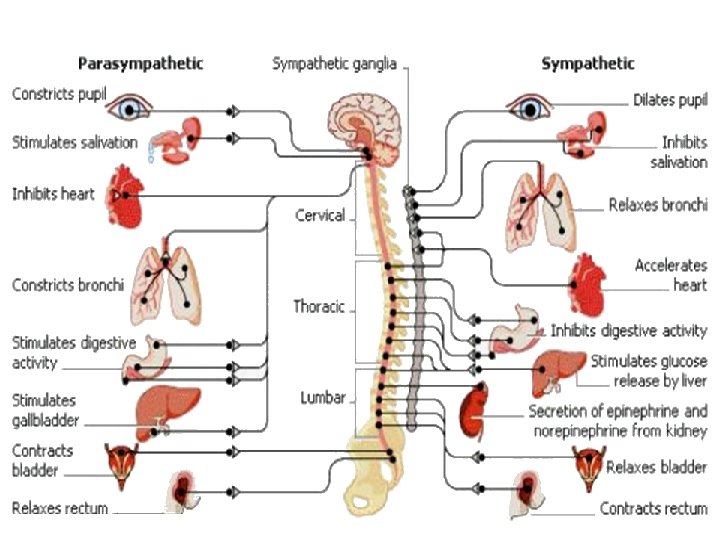
• Nerve supply of visceral structures • Sympathetic- fright or flight response • Parasympathetic- recovery from flight/fright response • CNS-gnaglion- effector organ • Sympathetic also supplies blood vessels of skin, arector pili muscles, arterioles & sweat glands
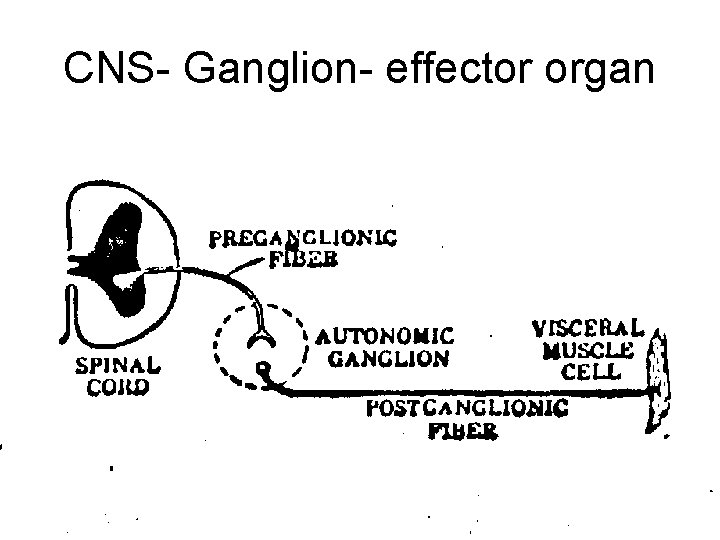
CNS- Ganglion- effector organ
Ganglia • Lie outside CNS • Sympathetic-ganglia are in (a) sympathetic chain & (b) ganglia around large arteries • Parasympathetic- ganglia present ON or IN organ which they supply • Preganlionic fibres- white rami • Postganglionic fibres- gray rami
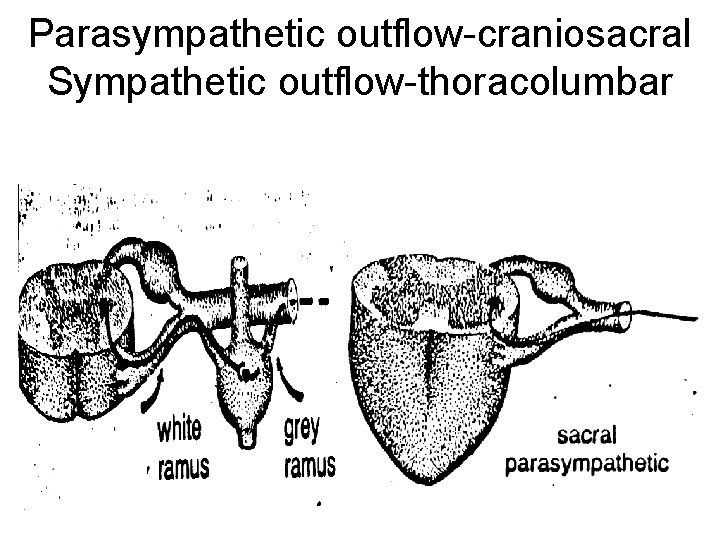
Parasympathetic outflow-craniosacral Sympathetic outflow-thoracolumbar
Thoraco lumbar out flow • T 1 - L 2(3) • Supplies almost all viscera • Sympathetic chain 3 cervical, 10 -12 thoracic, 4 lummbar, 4 -5 sacral, I coccygeal ganglia • The 2 chain unite @ ganglion impar in front of coccyx
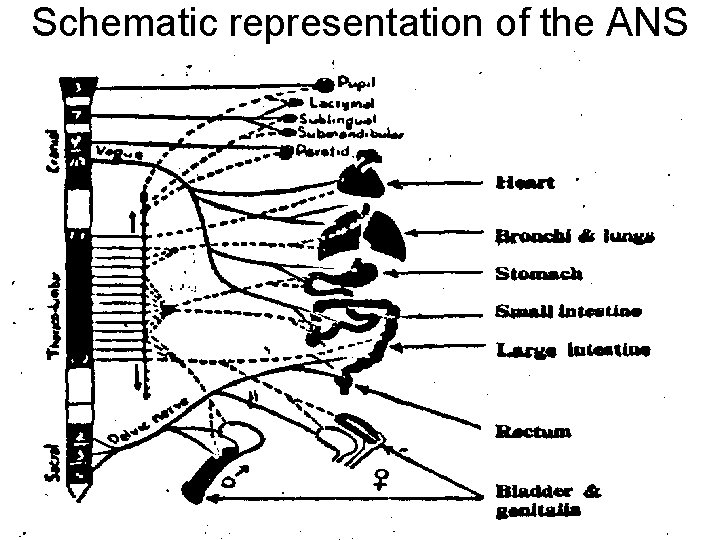
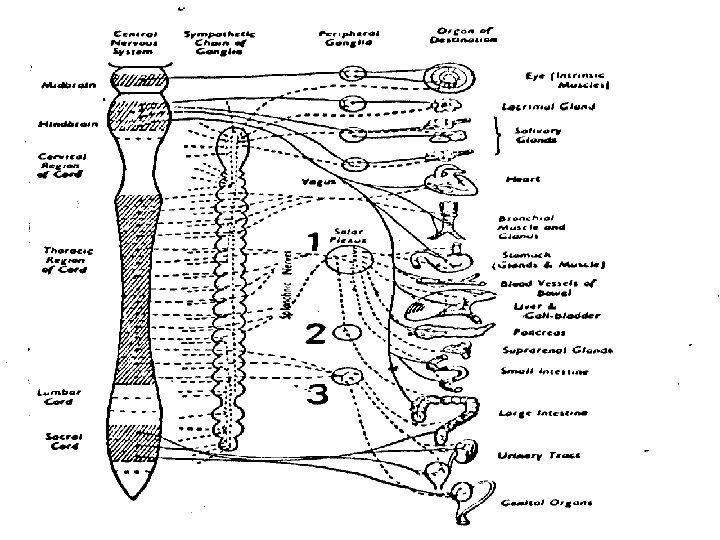
Schematic representation of the ANS
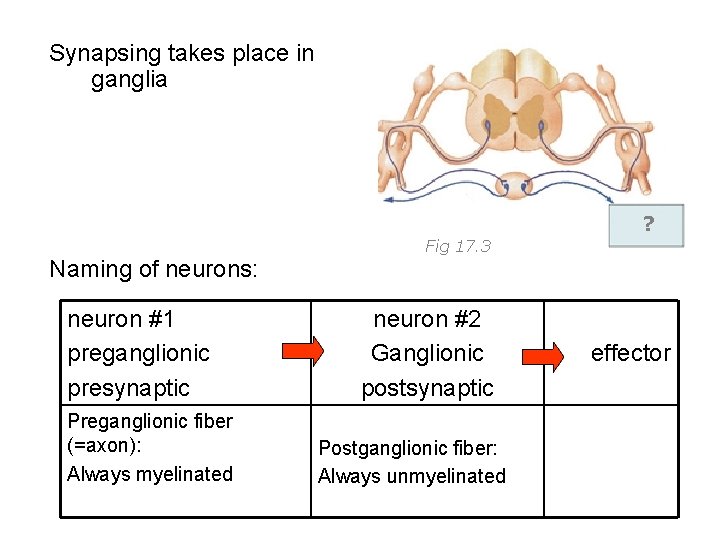
Synapsing takes place in ganglia ? Naming of neurons: neuron #1 preganglionic presynaptic Preganglionic fiber (=axon): Always myelinated Fig 17. 3 neuron #2 Ganglionic postsynaptic Postganglionic fiber: Always unmyelinated effector
Sympathetic Division Thoracolumbar division Preganglionic neurons (cell bodies) located between T 1 & L 2 of spinal cord Ganglionic neurons (cell bodies) in ganglia near vertebral column Paravertebral ganglia = sympathetic chain ganglia Prevertebral ganglia = collateral ganglia Special case: adrenal medulla Effects of Sympathetic Division?
The splanchnic nerves • Greater splanchnic(GS) T 5 -9 • Lesser splanchnic (LS) T 10 -11 • Least splanchnic (Le. S) T 12 Fibres pass through sympathetic chain without relaying End in ganglia GS-coeliac LS-superior mesenteric Le. S-may be absent-superior mesenteric
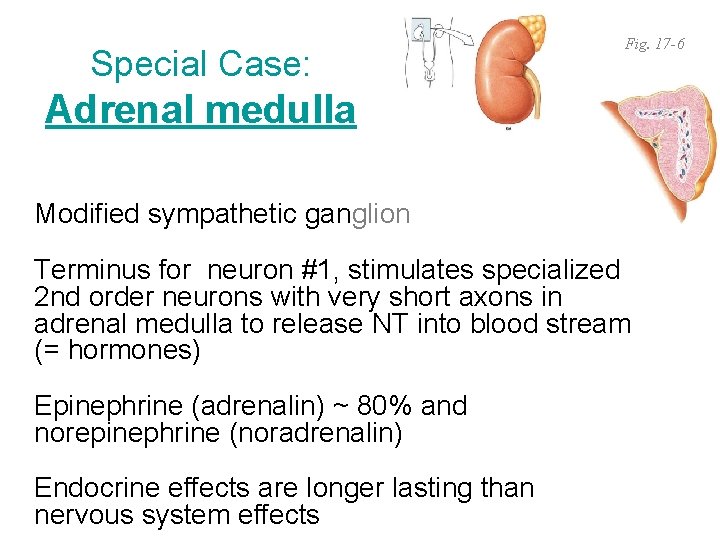
Special Case: Fig. 17 -6 Adrenal medulla Modified sympathetic ganglion Terminus for neuron #1, stimulates specialized 2 nd order neurons with very short axons in adrenal medulla to release NT into blood stream (= hormones) Epinephrine (adrenalin) ~ 80% and norepinephrine (noradrenalin) Endocrine effects are longer lasting than nervous system effects
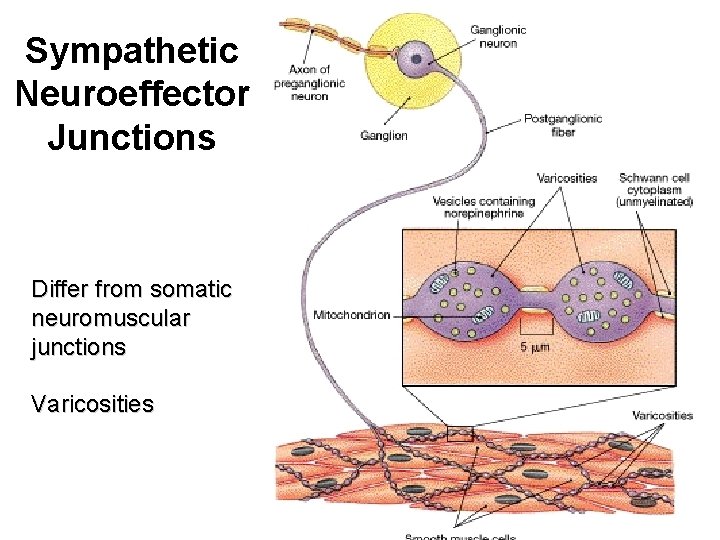
Sympathetic Neuroeffector Junctions Differ from somatic neuromuscular junctions Varicosities
Summary of Sympathetic Division A. Neuron #1 is short, neuron #2 is long B. Synapsing occurs in prevertebral chain ganglia or paravertebral collateral ganglia C. Neuron #1 releases Ach, usually neuron #2 releases NE D. Prepares for emergency action, excitatory to many organs, inhibitory to others ( digestive for example) E. Effects very widespread and somewhat persistent
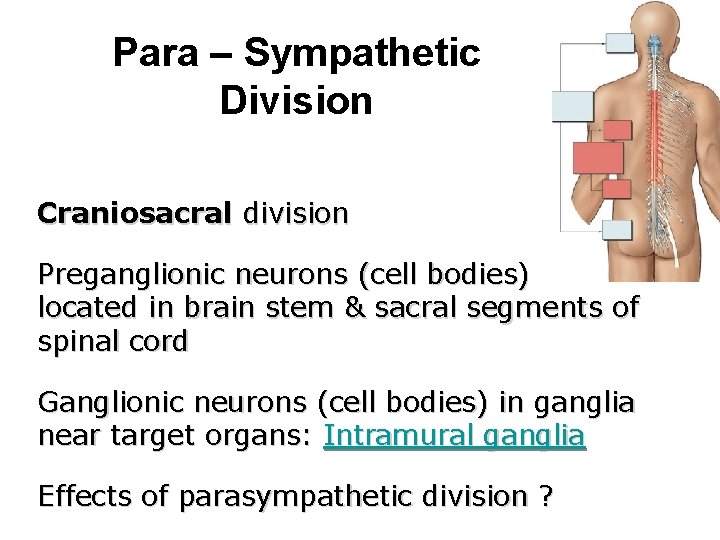
Para – Sympathetic Division Craniosacral division Preganglionic neurons (cell bodies) located in brain stem & sacral segments of spinal cord Ganglionic neurons (cell bodies) in ganglia near target organs: Intramural ganglia Effects of parasympathetic division ?
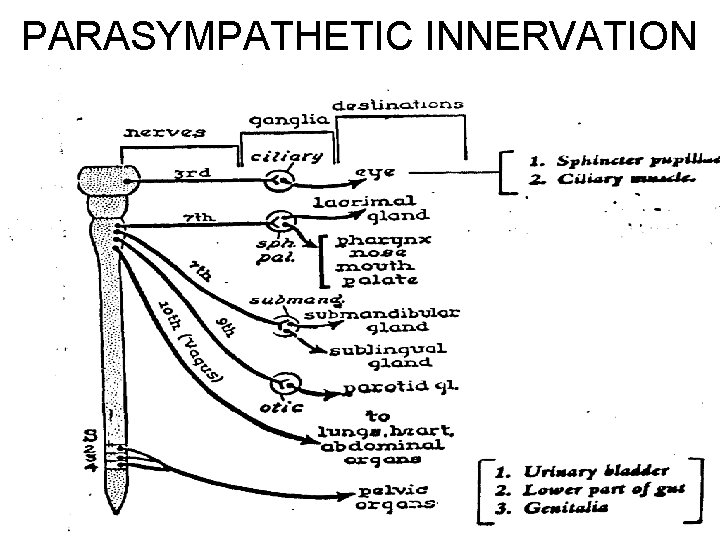
Craniosacral outflow • Cranial nerves 3, 7, 9, 10 • Nucleus, nerve, ganglion & organ supplied • Nuclei are Edinger westphal, superior salivatory, inferior salivatory, dorsal motor nucleus of vagus respectively • Ganglia ciliary-CN-III • Sphenopalatine-CN VII • Submandibular- CN VII • Otic -CN IX • Numerous(thorax, abd. )- CN X
PARASYMPATHETIC INNERVATION
• III-Supply intrinsic eye muscles • VII-Glands of nose, mouth & pharynx • VII & IX-Salivary glands • V-Organ- heart, respiratory system, abdominal viscera
Sacral part • Nervi eregentes- wandering nerves • Supplies pelvic viscera • Produces erection in males • Relaxes internal urethral sphincter • Root value S 2, 3, 4 • Stimulation empties bladder
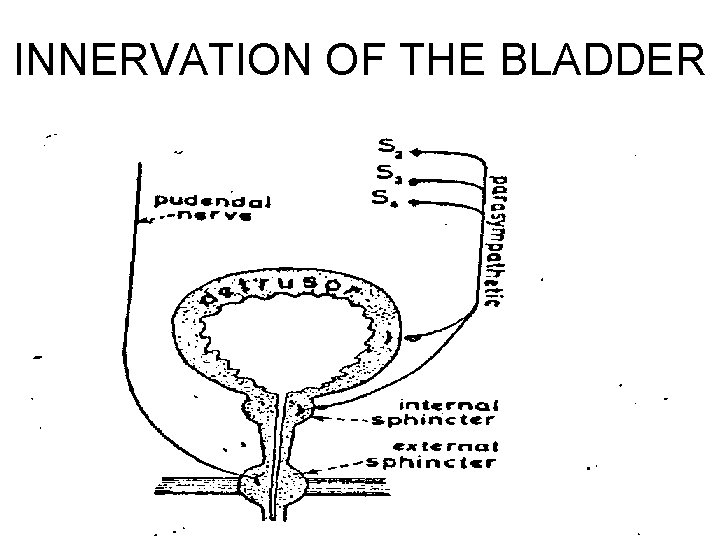
INNERVATION OF THE BLADDER
Summary of Parasympathetic Division A. Neurons #1 are long, come from the brain stem or sacral spinal cord, run with the spinal or pelvic nerves and produce ACh. B. Neurons #2 are short, produce ACh, and may be either excitory or inhibitory.
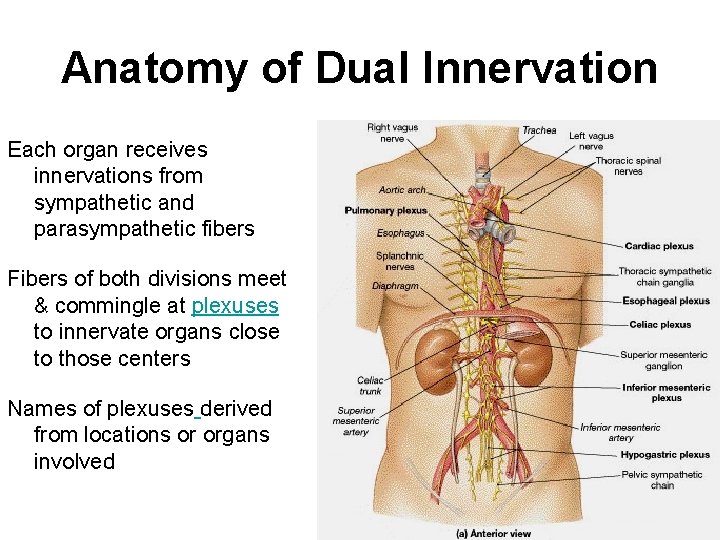
Anatomy of Dual Innervation Each organ receives innervations from sympathetic and parasympathetic fibers Fibers of both divisions meet & commingle at plexuses to innervate organs close to those centers Names of plexuses derived from locations or organs involved

Thank you, but don’t forget that networking will be for your corporate good!
- Slides: 26