
Autonomic Nervous System ANS Lec 8 9 Differences
- Slides: 23
Autonomic Nervous System (ANS) Lec 8 & 9
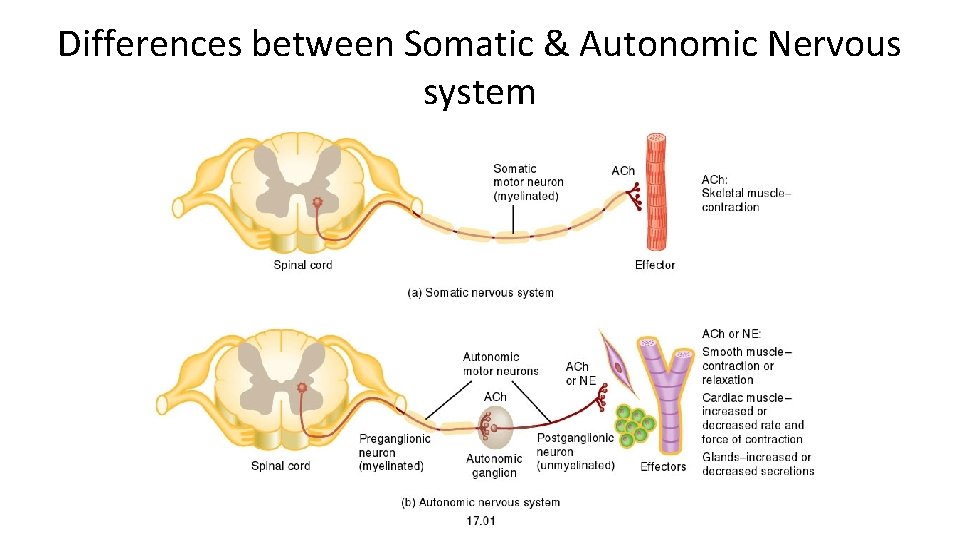
Differences between Somatic & Autonomic Nervous system
Physiology of the ANS • Autonomic tone- a balance between the sympathetic and parasympathetic activity. • Regulated by the hypothalamus. Copyright 2009, John Wiley & Sons, Inc.
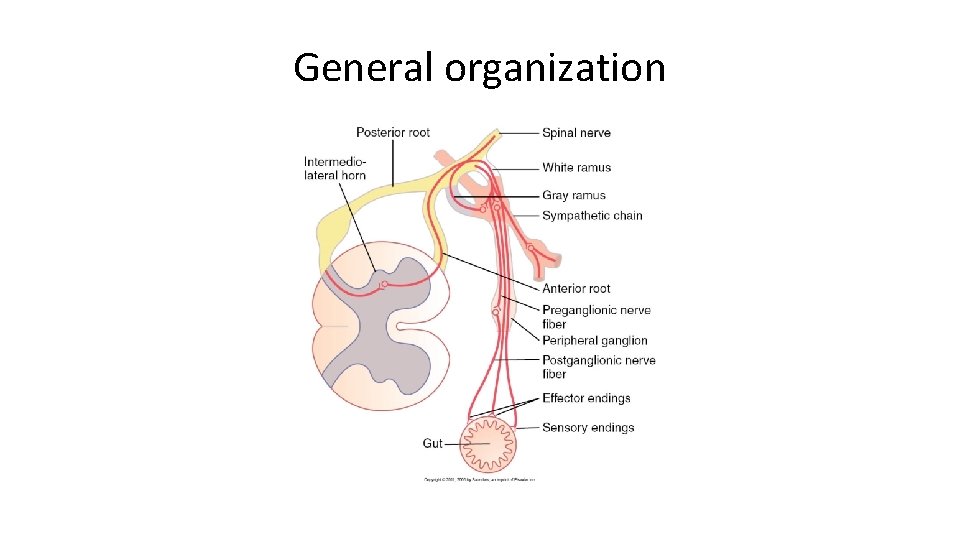
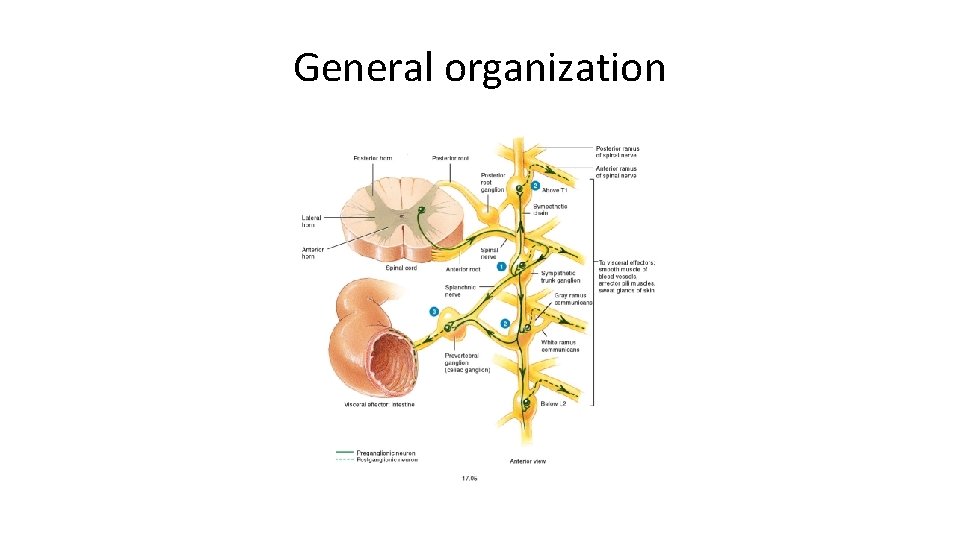
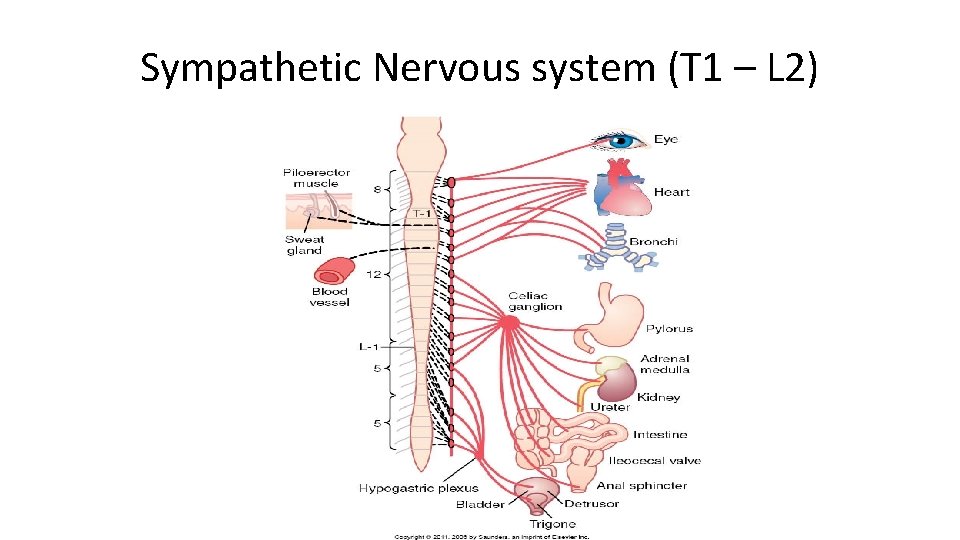
General organization Sympathetic Division • Thoracolumbar division- Preganglionic neurons originate from the thoracic and lumbar levels of the spinal cord (T 1 -L 2). • Sympathetic ganglia: Sympathetic trunk (vertebral chain) ganglia. Prevertebral (collateral) ganglia: celiac, superior mesenteric, inferior mesenteric, aorticorenal and renal. Copyright 2009, John Wiley & Sons, Inc.
General organization
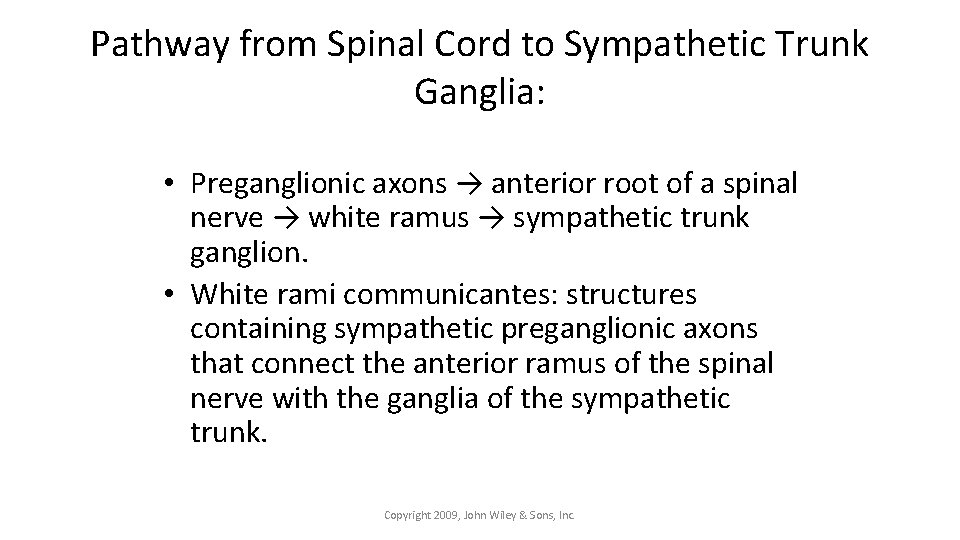
Pathway from Spinal Cord to Sympathetic Trunk Ganglia: • Preganglionic axons → anterior root of a spinal nerve → white ramus → sympathetic trunk ganglion. • White rami communicantes: structures containing sympathetic preganglionic axons that connect the anterior ramus of the spinal nerve with the ganglia of the sympathetic trunk. Copyright 2009, John Wiley & Sons, Inc.
General organization
Sympathetic Nervous system (T 1 – L 2)
Sympathetic Nervous system (T 1 – L 2)
Postganglionic Neurons in the Sympathetic Division • An axon may synapse with postganglionic neurons in the ganglion it first reaches or • Sympathetic chains or • An axon may continue, without synapsing, through the sympathetic trunk ganglion to end at a prevertebral ganglion and synapse with postganglionic neurons there or • An axon may pass through the sympathetic trunk ganglion and a prevertebral ganglion and then to the adrenal medulla. Copyright 2009, John Wiley & Sons, Inc.
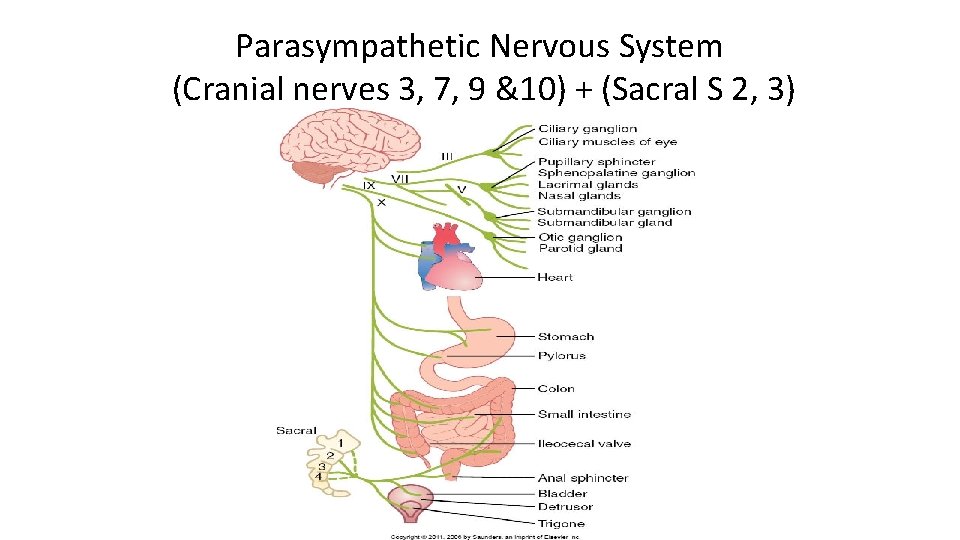
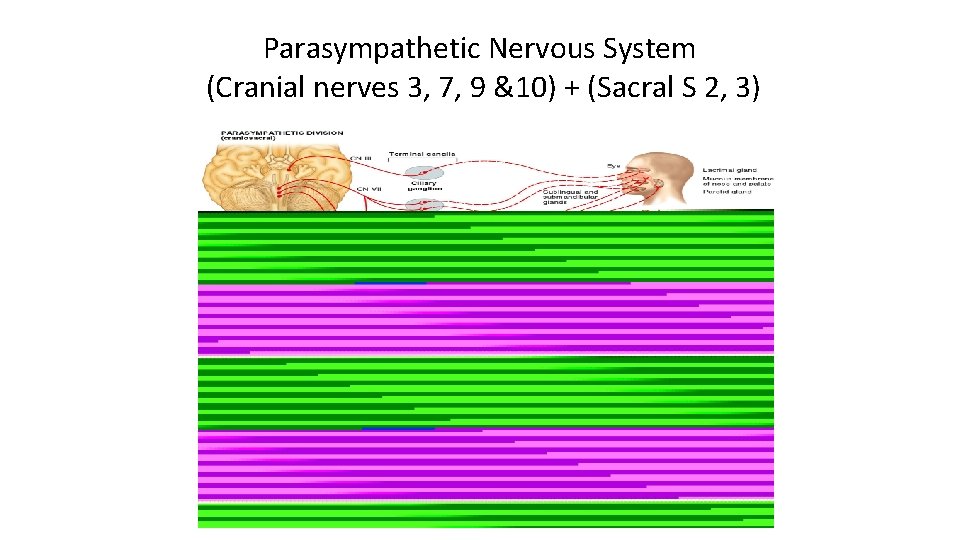
Parasympathetic Nervous System (Cranial nerves 3, 7, 9 &10) + (Sacral S 2, 3)
Parasympathetic Division • Craniosacral division: Preganglionic neurons originate from the cranial nerves III, VII, IX and sacral spinal nerves S 2 -S 4. • Parasympathetic ganglia: terminal ganglia. • Presynaptic neuron usually synapses with 4 -5 postsynaptic neurons all of which supply a single visceral effector. Copyright 2009, John Wiley & Sons, Inc.
Parasympathetic Nervous System (Cranial nerves 3, 7, 9 &10) + (Sacral S 2, 3)
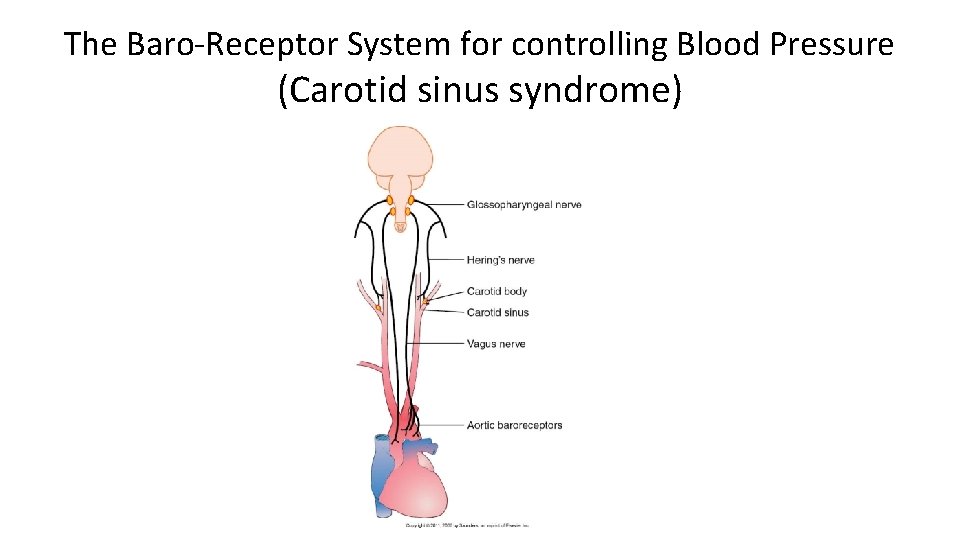
The Baro-Receptor System for controlling Blood Pressure (Carotid sinus syndrome)
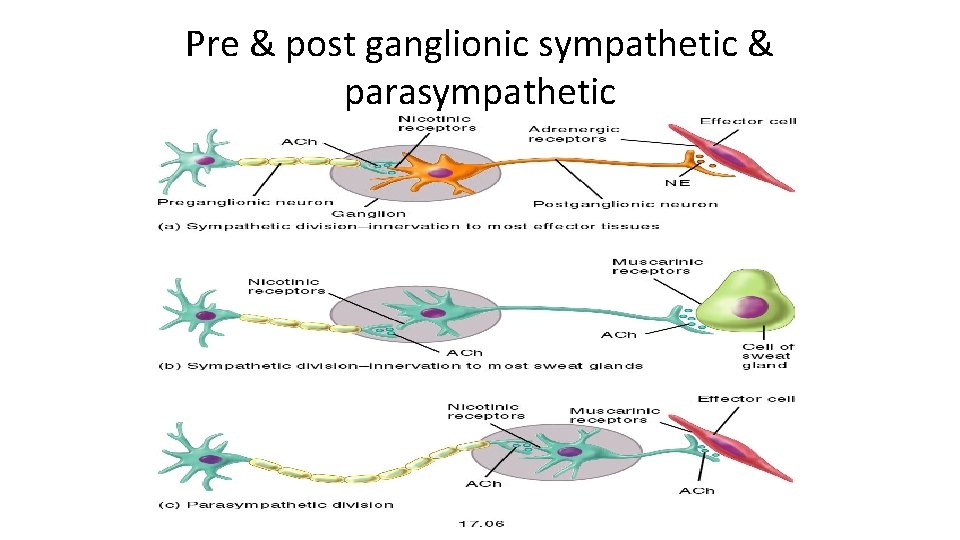
Pre & post ganglionic sympathetic & parasympathetic
Cholinergic Neurons • Cholinergic neurons → acetylcholine (ACh). • Cholinergic neurons include 1. All sympathetic and parasympathetic preganglionic neurons. 2. Sympathetic postganglionic neurons that innervate most sweat glands. 3. All parasympathetic postganglionic neurons. Copyright 2009, John Wiley & Sons, Inc.
Cholinergic Receptors Cholinergic receptors release acetylcholine. • Two types: Nicotinic receptors Muscarinic receptors Copyright 2009, John Wiley & Sons, Inc.
Adrenergic Neurons and Receptors • Release norepinephrine (noradrenalin). • Most sympathetic postganglionic neurons are adrenergic. • Two types of receptors: Alpha receptors. Beta receptors- Copyright 2009, John Wiley & Sons, Inc.
Sympathetic Responses • • • Stress ↑ sympathetic system ↑ fight-or-flight response. ↑ production of ATP. Dilation of the pupils. ↑ heart rate and blood pressure. Dilation of the airways. Constriction of blood vessels that supply the kidneys and gastrointestinal tract. Copyright 2009, John Wiley & Sons, Inc.
Sympathetic Responses continued. . • ↑ blood supply to the skeletal muscles, cardiac muscle, liver and adipose tissue • ↑ glycogenolysis ↑ blood glucose. • ↑ lipolysis. Copyright 2009, John Wiley & Sons, Inc.
Parasympathetic Responses • • Rest-and-digest response. Conserve and restore body energy. ↑ digestive and urinary function. ↓ body functions that support physical activity. Copyright 2009, John Wiley & Sons, Inc.
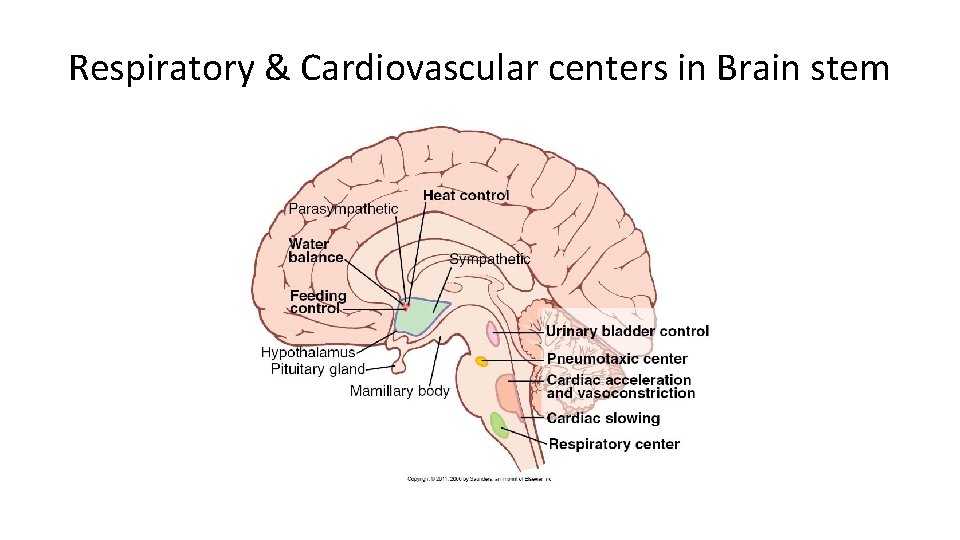
Respiratory & Cardiovascular centers in Brain stem
Integration and Control of Autonomic Functions • Direct innervation- brain stem and spinal cord. • Hypothalamus is the major control and integration center of the ANS. • It receives input from the limbic system. Copyright 2009, John Wiley & Sons, Inc.