
Autonomic Nervous System ANS Honors Anatomy Physiology for
- Slides: 28
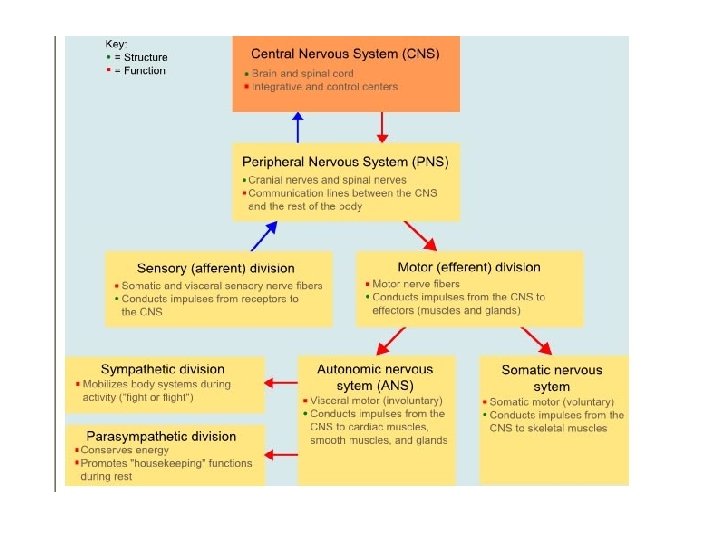
Autonomic Nervous System ANS Honors Anatomy & Physiology for copying
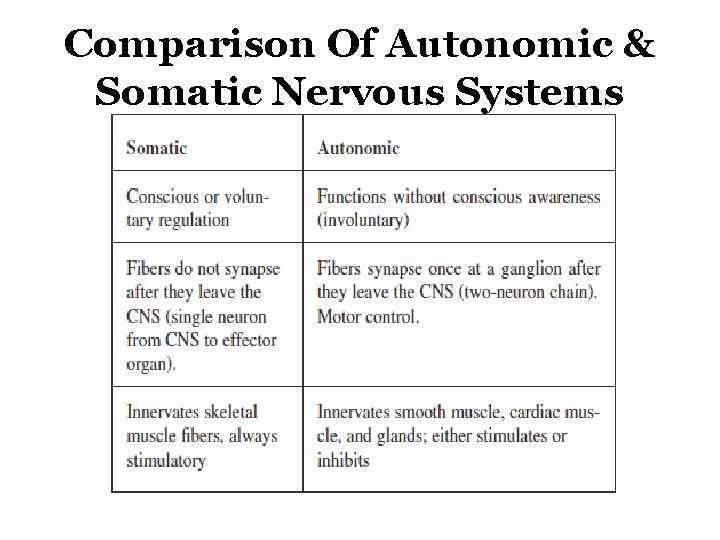
Comparison Of Autonomic & Somatic Nervous Systems
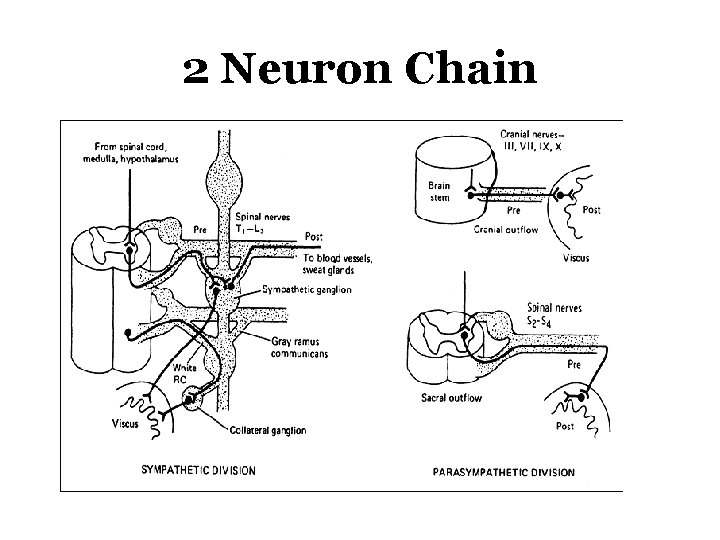
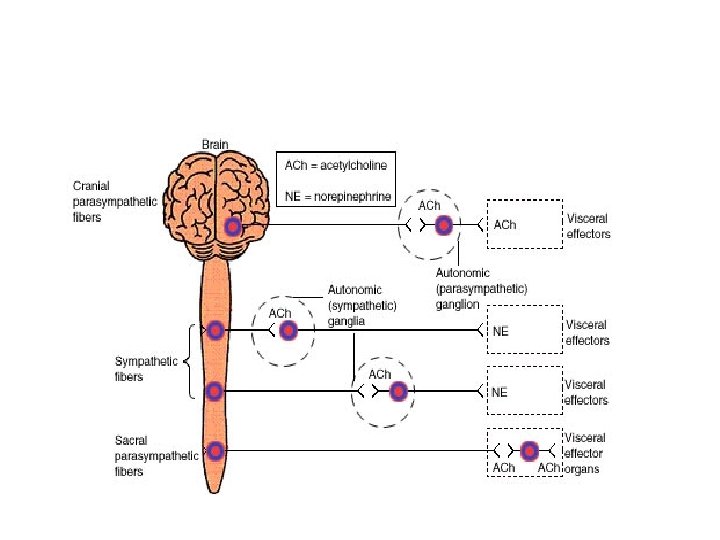
2 Neuron Chain
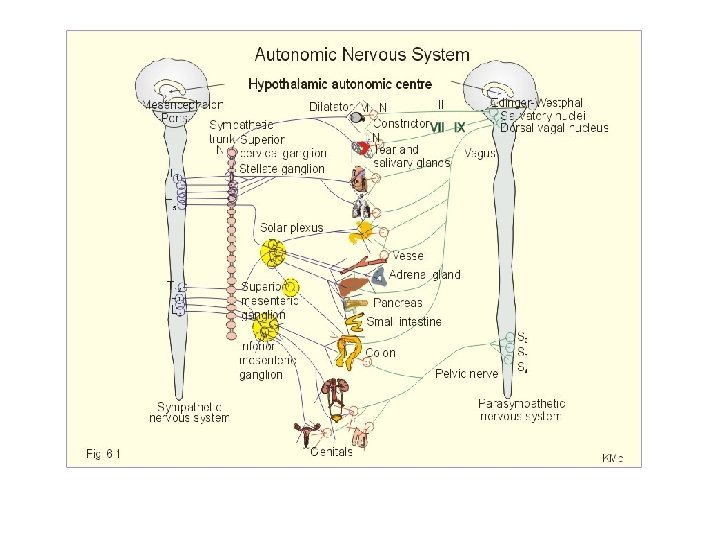
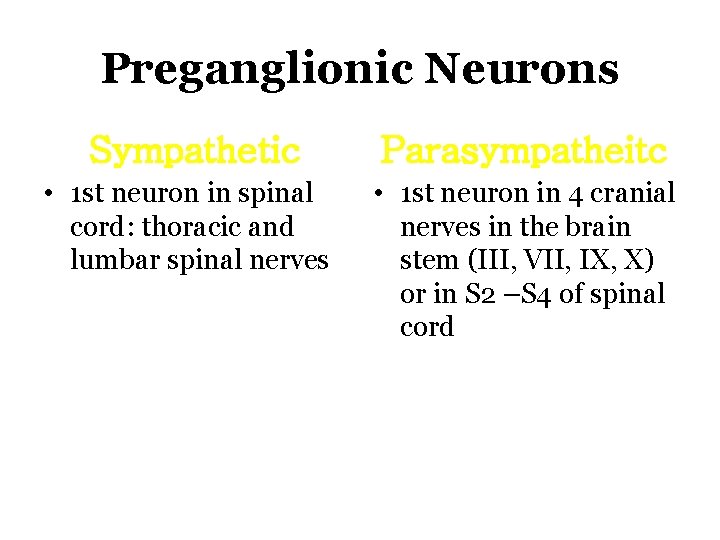
Preganglionic Neurons Sympathetic • 1 st neuron in spinal cord: thoracic and lumbar spinal nerves Parasympatheitc • 1 st neuron in 4 cranial nerves in the brain stem (III, VII, IX, X) or in S 2 –S 4 of spinal cord
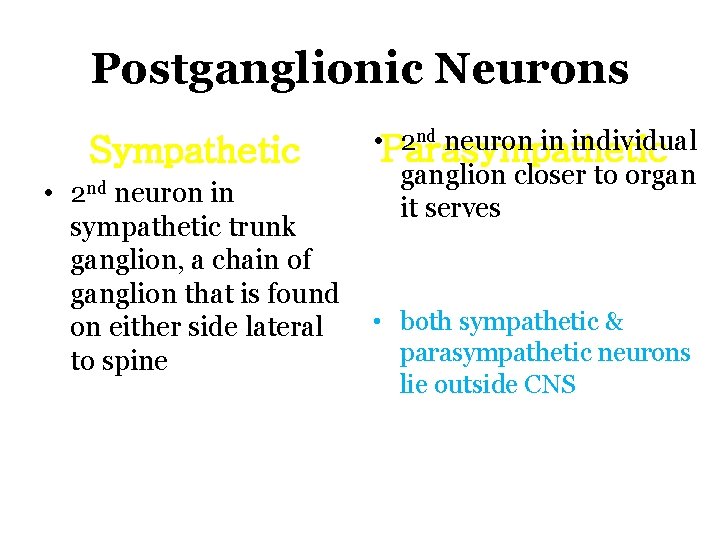
Postganglionic Neurons Sympathetic • 2 nd neuron in sympathetic trunk ganglion, a chain of ganglion that is found on either side lateral to spine • Parasympathetic 2 nd neuron in individual ganglion closer to organ it serves • both sympathetic & parasympathetic neurons lie outside CNS
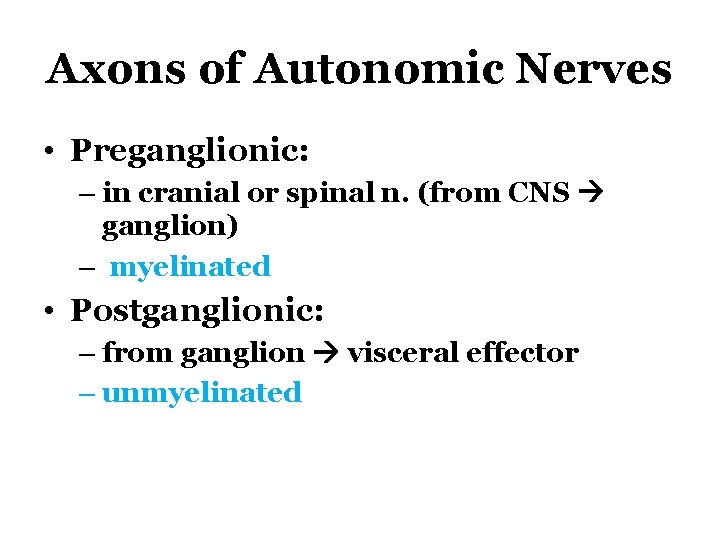
Axons of Autonomic Nerves • Preganglionic: – in cranial or spinal n. (from CNS ganglion) – myelinated • Postganglionic: – from ganglion visceral effector – unmyelinated
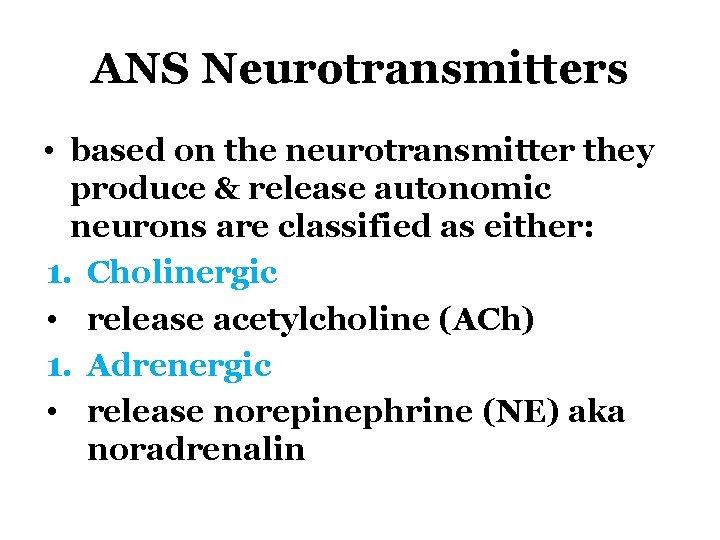
ANS Neurotransmitters • based on the neurotransmitter they produce & release autonomic neurons are classified as either: 1. Cholinergic • release acetylcholine (ACh) 1. Adrenergic • release norepinephrine (NE) aka noradrenalin
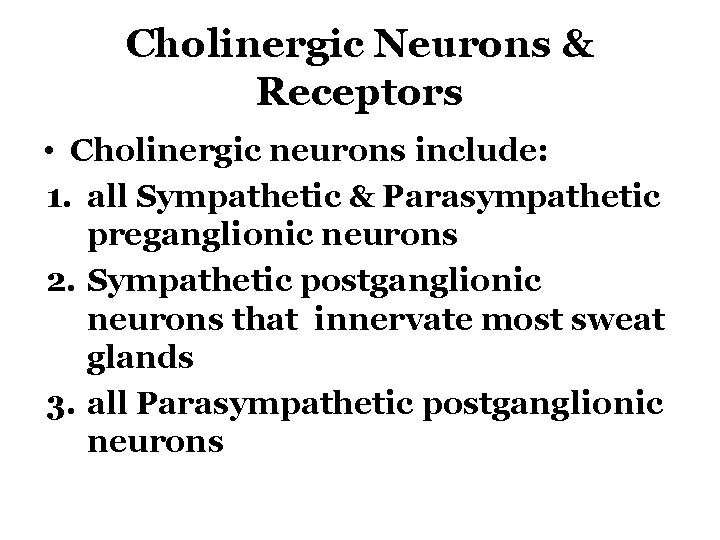
Cholinergic Neurons & Receptors • Cholinergic neurons include: 1. all Sympathetic & Parasympathetic preganglionic neurons 2. Sympathetic postganglionic neurons that innervate most sweat glands 3. all Parasympathetic postganglionic neurons
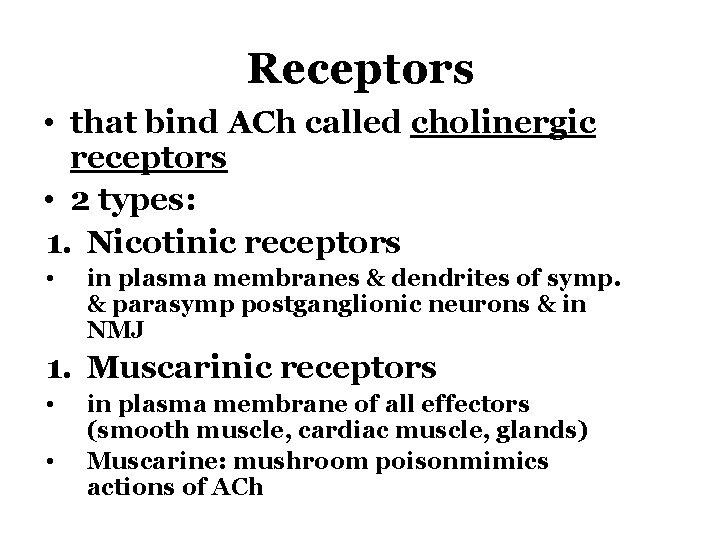
Receptors • that bind ACh called cholinergic receptors • 2 types: 1. Nicotinic receptors • in plasma membranes & dendrites of symp. & parasymp postganglionic neurons & in NMJ 1. Muscarinic receptors • • in plasma membrane of all effectors (smooth muscle, cardiac muscle, glands) Muscarine: mushroom poisonmimics actions of ACh
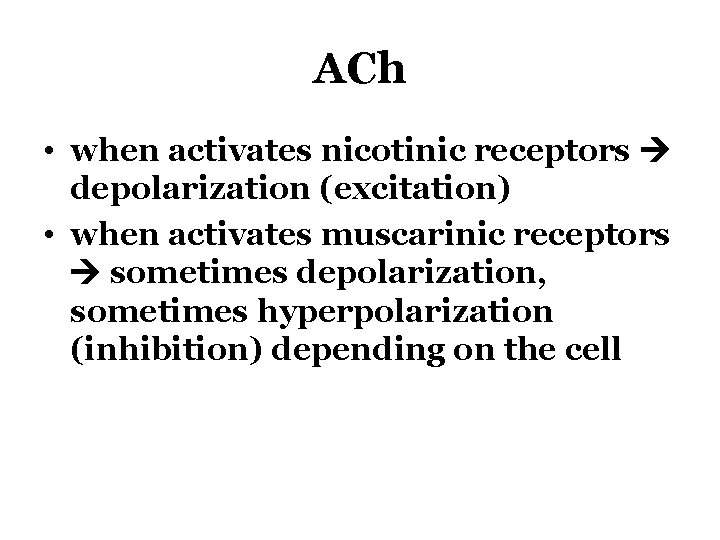
ACh • when activates nicotinic receptors depolarization (excitation) • when activates muscarinic receptors sometimes depolarization, sometimes hyperpolarization (inhibition) depending on the cell
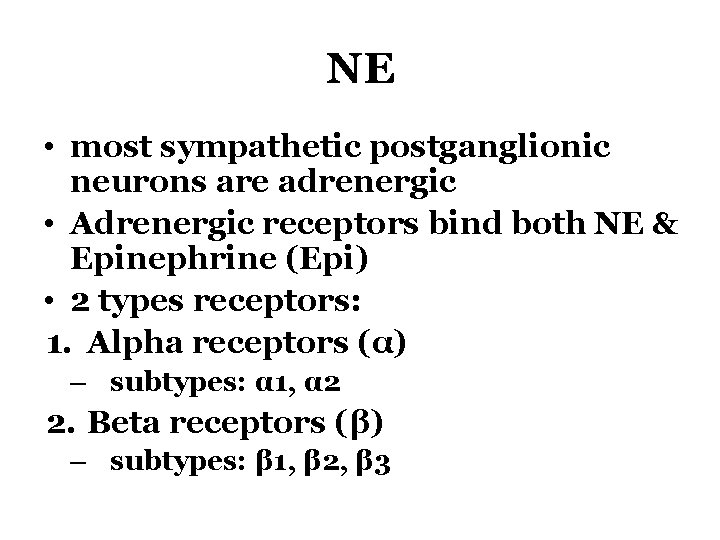
NE • most sympathetic postganglionic neurons are adrenergic • Adrenergic receptors bind both NE & Epinephrine (Epi) • 2 types receptors: 1. Alpha receptors (α) – subtypes: α 1, α 2 2. Beta receptors (β) – subtypes: β 1, β 2, β 3
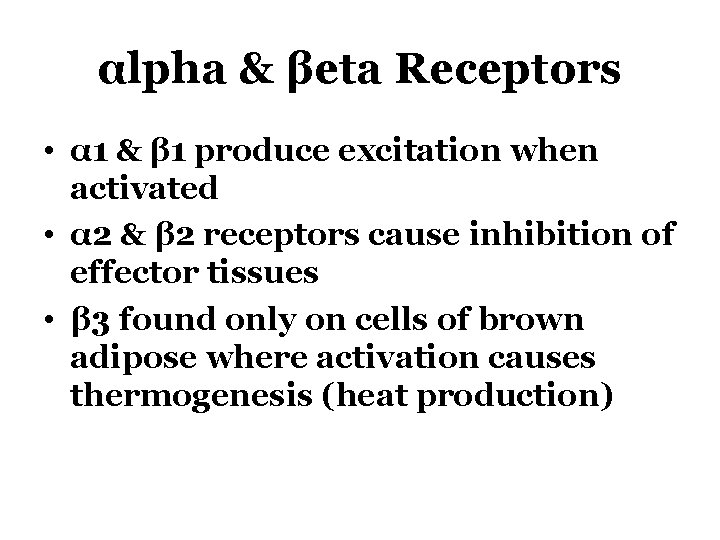
αlpha & βeta Receptors • α 1 & β 1 produce excitation when activated • α 2 & β 2 receptors cause inhibition of effector tissues • β 3 found only on cells of brown adipose where activation causes thermogenesis (heat production)
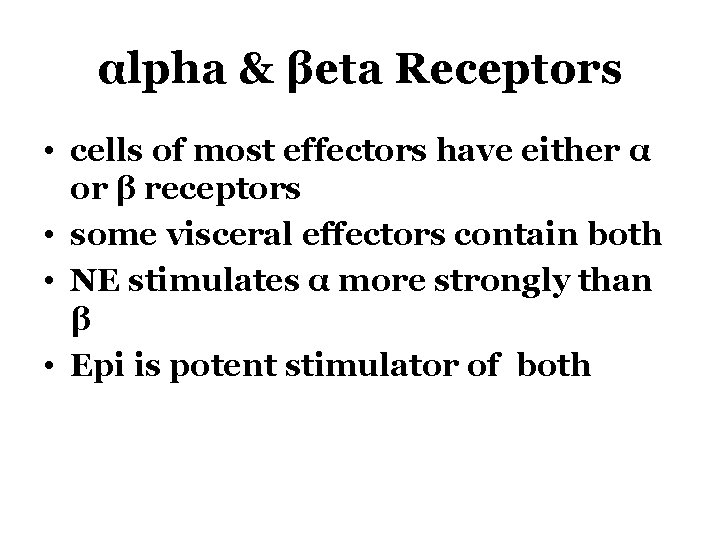
αlpha & βeta Receptors • cells of most effectors have either α or β receptors • some visceral effectors contain both • NE stimulates α more strongly than β • Epi is potent stimulator of both
MAO • Mono. Amine Oxidase: inactivates NE in synaptic cleft • group of pharmaceuticals that are MAO inhibitors so prolong effect of NE
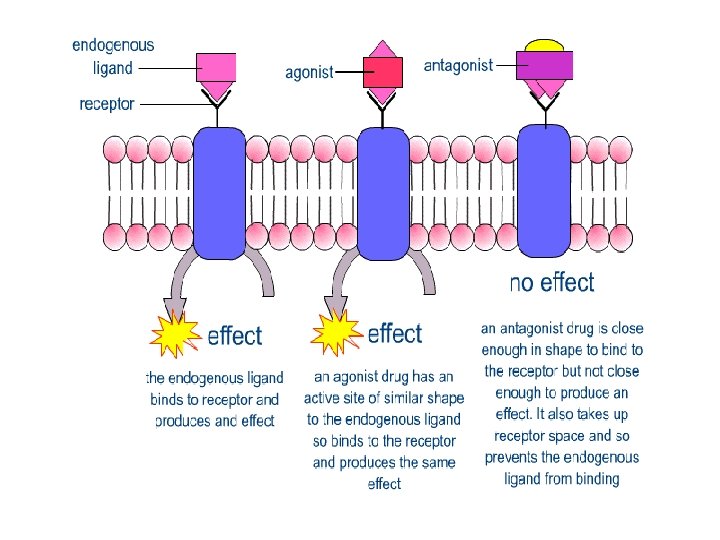
Agonists • substance that binds to & activates a receptor • in the process mimicking the effect of a natural neurotransmitter or hormone • example: phenylephrine is an adrenergic agonist @ α 1 receptors; used in cold remedies – constricts blood vessels in nasal mucosa reduces production of mucus
Antagonists • substance that blocks receptors so prevents the natural neurotransmitter or hormone from exerting its effect • example: propanolol a β 1 blocker, used to treat HTN decreases heart rate & force of contraction lowers BP – side effects: hypoglycemia, mild bronchoconstriction, decreases frequency & severity of migraines
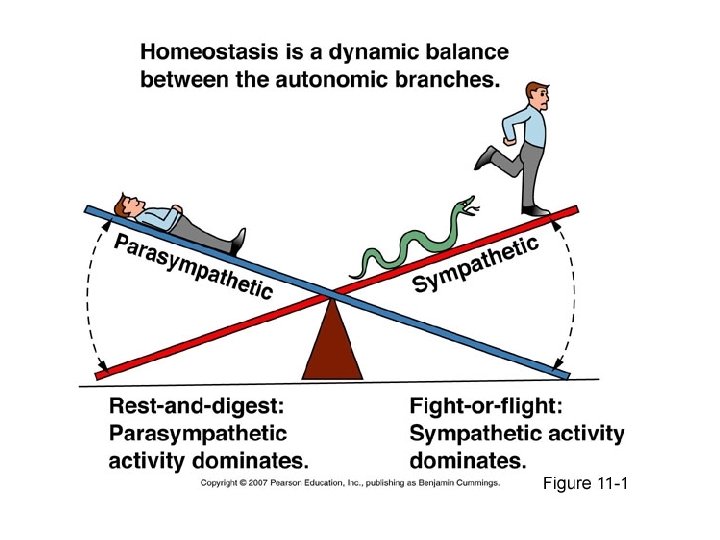
Autonomic Tone • balance between sympathetic & parasympathetic activity • regulated by hypothalamus – if turns up sympathetic tone, turns down parasympathetic tone @ same time
Sympathetic Responses • dominate during physical or emotional stress • occur during “E situations” – Exercise – Emotions – Emergency – Excitement
Sympathetic Responses • Fight or Flight Response – – pupils dilate HR, force of contraction, & BP increase airways dilate vessels to kidneys & GI tract constrict slowing down digestion & urine production – vessels muscles (skeletal & cardiac), liver, & adipose tissue dilate – hepatocytes increase glycogenolysis & adipose increase lipolysis blood glucose increases – anything nonessential slowed down
Sympathetic Stimulation • effects longer lasting than parasympathetic responses (NE lasts longer in synaptic cleft than ACh) • effects are more widespread (more tissues activated)
Parasympathetic Responses • enhance “rest & digest” activities • remeber SLUDD: – Salivation – Lacrimation – Urination – Digestion – Defecation
Disorders of the ANS • Raynaud’s phenomena: • digits become ischemic after exposure to cold or w/ emotional stress • due to excessive sympathetic stimulation of smooth muscle in arterioles in digits & increased response to stimuli that cause vasoconstriction
Raynaud’s Phenomenon • treatment options: • Ca++ channel blockers to relax smooth muscle • Prazosin: blocks α receptors which blocks smooth muscle contractions