
Autonomic Nervous System ADrenergic blocking agents Receptors Blockers
Autonomic Nervous System
ADrenergic blocking agents:
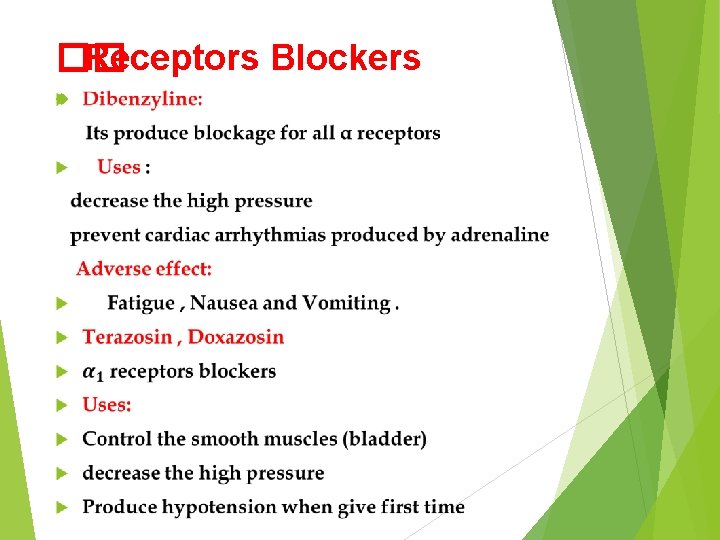
�� Receptors Blockers
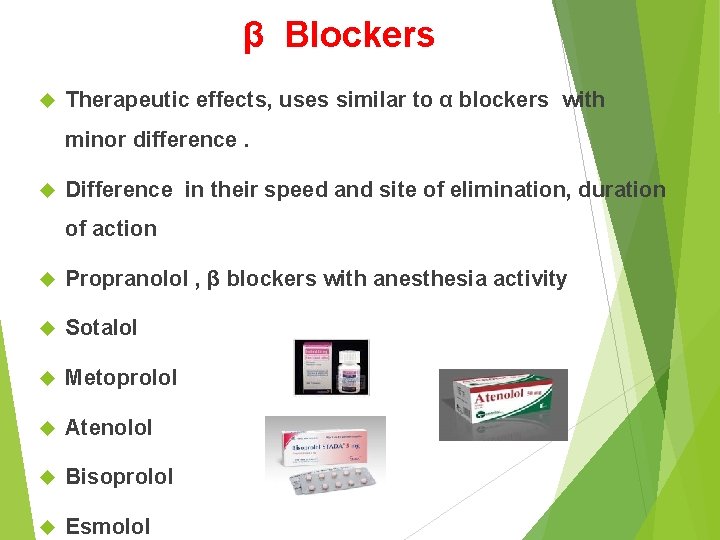
β Blockers Therapeutic effects, uses similar to α blockers with minor difference. Difference in their speed and site of elimination, duration of action Propranolol , β blockers with anesthesia activity Sotalol Metoprolol Atenolol Bisoprolol Esmolol
β Blockers actions : (Heart) it Reduce : heart rate heart out-put work done by heart Reduce Bronchospasm , especially for (asthmatic pts. ) Decrease blood pressure Prevent rise in blood sugar level by (sympathetic activity) Penetrates CNS, sedation may occur Relive symptoms of anxiety , palpitations, sweating, tremors
B adrenergic blockers side effects: Increase the heart failure Bronchospasm Vivid dreams & hallucinations Cold extremities (reduced blood flow) Mask the symptoms of hypoglycemia Some drugs may affect both receptors β and α Called (β and α)blockers Labetalol & carvedilol
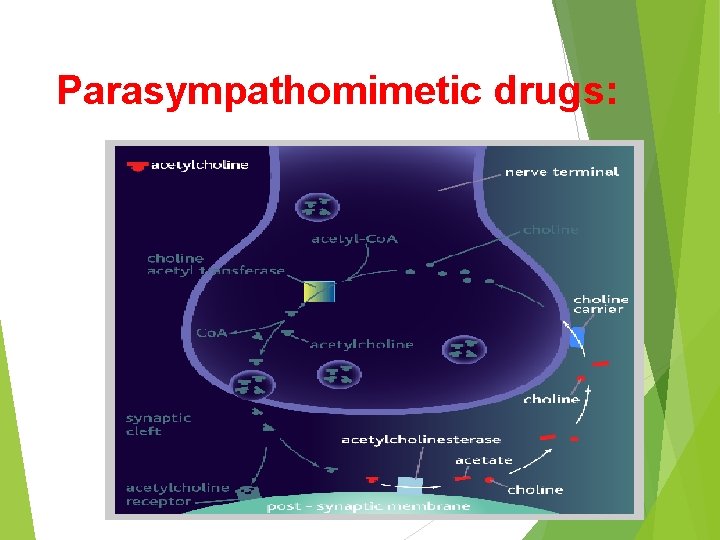
Parasympathomimetic drugs:
Para sympathomimetic drugs Acetylcholine : Affect Parasympathetic nerve ending Nerve ending in voluntary muscles (skeletal muscles). It has a short action It affect in both muscarinic and nicotinic receptors Adverse effect Very short time action It has to be given intravenously to give action Carbachol Used in: Urinary retention following surgical operation Childbirth when no obstruction Adverse reactions: Diarrhea, marked fall in blood pressure
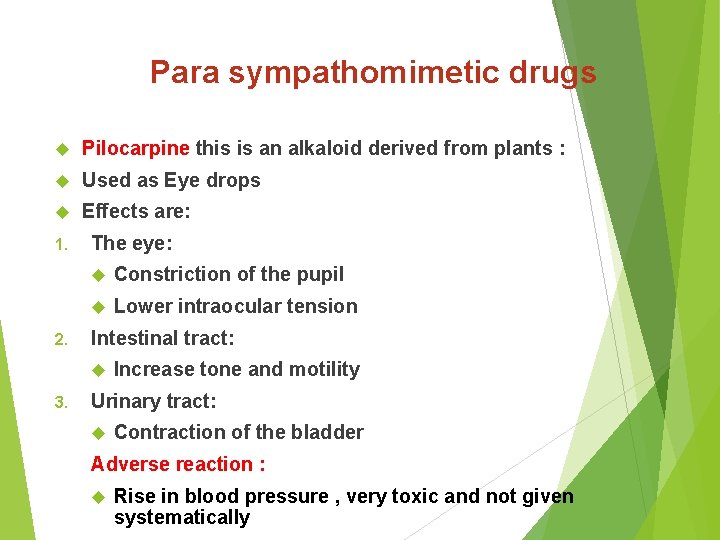
Para sympathomimetic drugs Pilocarpine this is an alkaloid derived from plants : Used as Eye drops Effects are: 1. The eye: 2. Constriction of the pupil Lower intraocular tension Intestinal tract: 3. Increase tone and motility Urinary tract: Contraction of the bladder Adverse reaction : Rise in blood pressure , very toxic and not given systematically
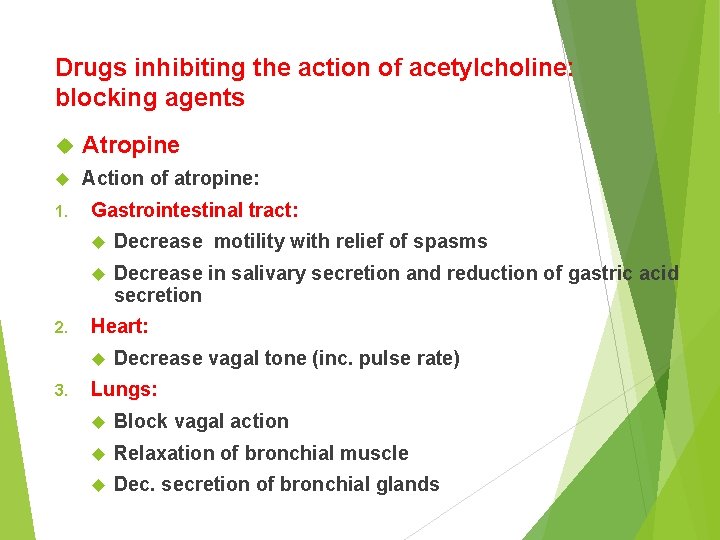
Drugs inhibiting the action of acetylcholine: blocking agents Atropine Action of atropine: 1. 2. Gastrointestinal tract: Decrease motility with relief of spasms Decrease in salivary secretion and reduction of gastric acid secretion Heart: 3. Decrease vagal tone (inc. pulse rate) Lungs: Block vagal action Relaxation of bronchial muscle Dec. secretion of bronchial glands
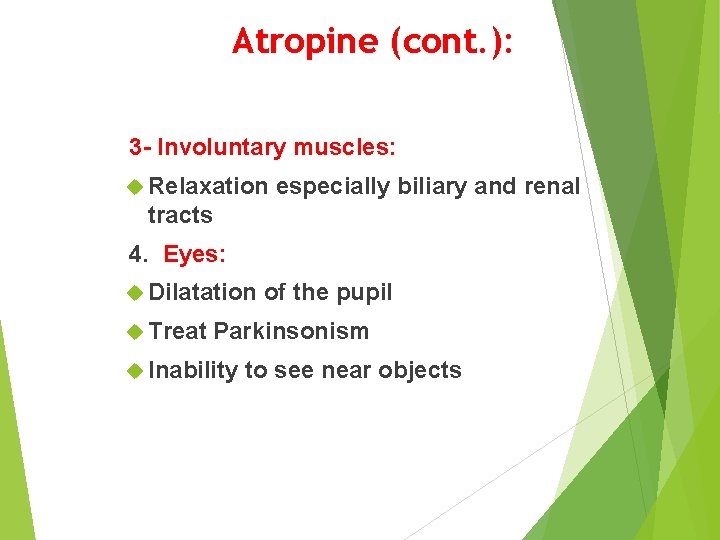
Atropine (cont. ): 3 - Involuntary muscles: Relaxation especially biliary and renal tracts 4. Eyes: Dilatation Treat of the pupil Parkinsonism Inability to see near objects
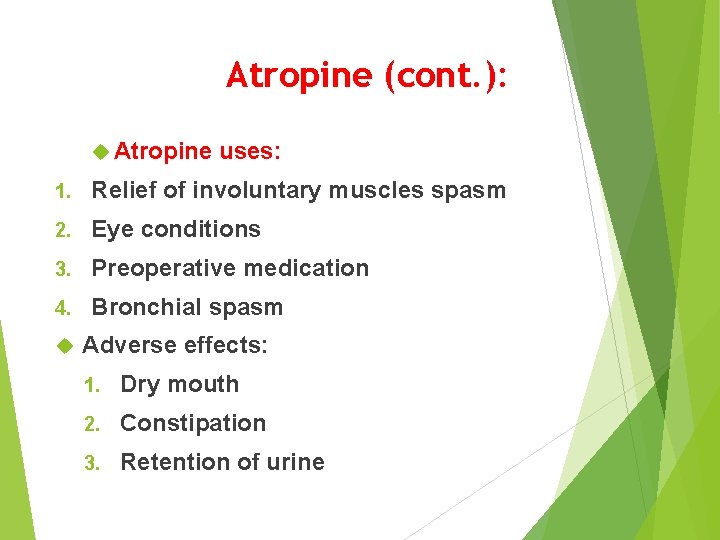
Atropine (cont. ): Atropine uses: 1. Relief of involuntary muscles spasm 2. Eye conditions 3. Preoperative medication 4. Bronchial spasm Adverse effects: 1. Dry mouth 2. Constipation 3. Retention of urine
- Slides: 12