
Automotive Technology Principles Sixth Edition Diagnosis and Service

- Slides: 46
Automotive Technology Principles, Sixth Edition Diagnosis, and Service Chapter 29 Engine Cleaning and Crack Detection Copyright © 2018, 2015, 2011 Pearson Education, Inc. All Rights Reserved Copyright © 2020, 2016, 2012 Pearson Education, Inc. All Rights Reserved
LEARNING OBJECTIVES 29. 1 Explain the mechanical cleaning procedure of engines. 29. 2 Discuss chemical cleaners. 29. 3 Compare spray and steam washing, thermal cleaning, tank and vapor cleaning, and ultrasonic and vibratory cleaning. 29. 4 Explain crack detection and crack repair. Copyright © 2020, 2016, 2012 Pearson Education, Inc. All Rights Reserved
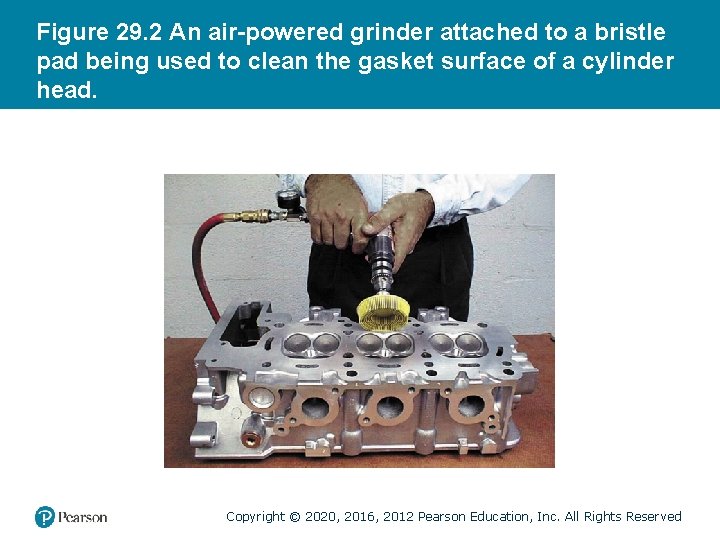
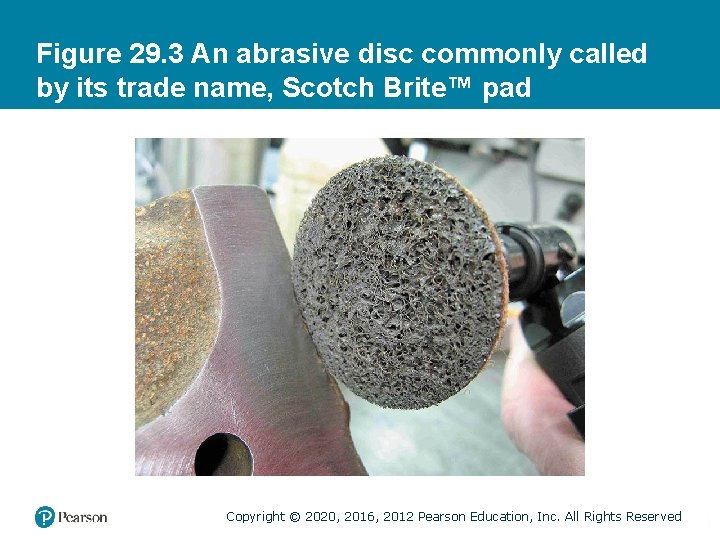
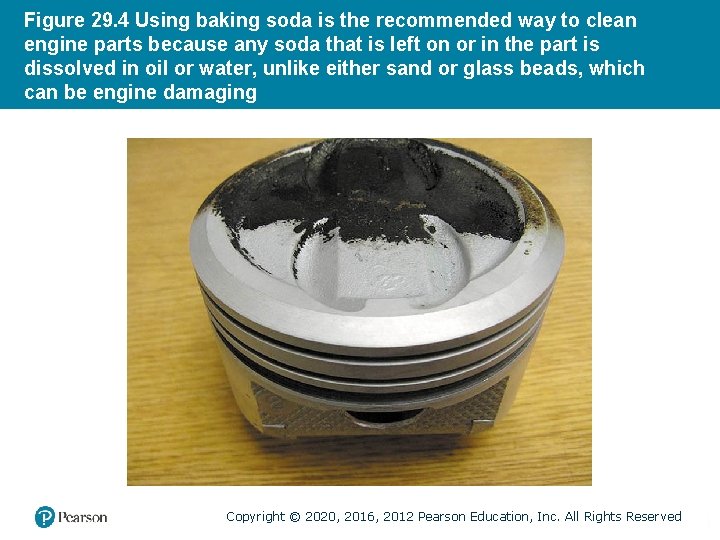
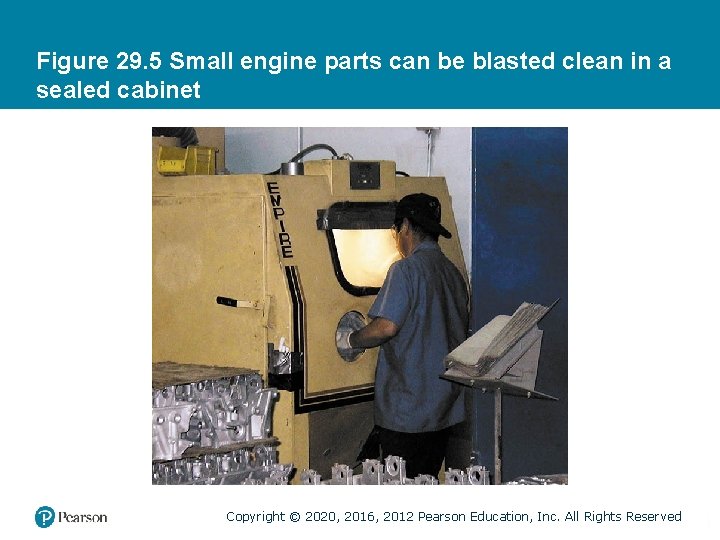
MECHANICAL CLEANING • Scraping – The scraper most frequently used is a putty knife, or a plastic card. • Abrasive Pads or Discs – White: Finest grit size – Yellow: Course Grit – Green: Cast-iron Only • Media Blasting – Media blasting with baking soda is the cleaning method of choice for most shops. Copyright © 2020, 2016, 2012 Pearson Education, Inc. All Rights Reserved
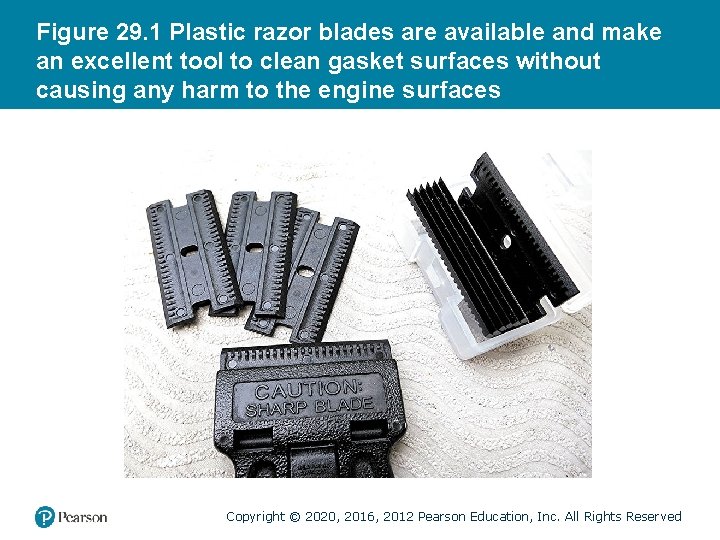
Figure 29. 1 Plastic razor blades are available and make an excellent tool to clean gasket surfaces without causing any harm to the engine surfaces Copyright © 2020, 2016, 2012 Pearson Education, Inc. All Rights Reserved
Figure 29. 2 An air-powered grinder attached to a bristle pad being used to clean the gasket surface of a cylinder head. Copyright © 2020, 2016, 2012 Pearson Education, Inc. All Rights Reserved
Figure 29. 3 An abrasive disc commonly called by its trade name, Scotch Brite™ pad Copyright © 2020, 2016, 2012 Pearson Education, Inc. All Rights Reserved
Figure 29. 4 Using baking soda is the recommended way to clean engine parts because any soda that is left on or in the part is dissolved in oil or water, unlike either sand or glass beads, which can be engine damaging Copyright © 2020, 2016, 2012 Pearson Education, Inc. All Rights Reserved
Figure 29. 5 Small engine parts can be blasted clean in a sealed cabinet Copyright © 2020, 2016, 2012 Pearson Education, Inc. All Rights Reserved
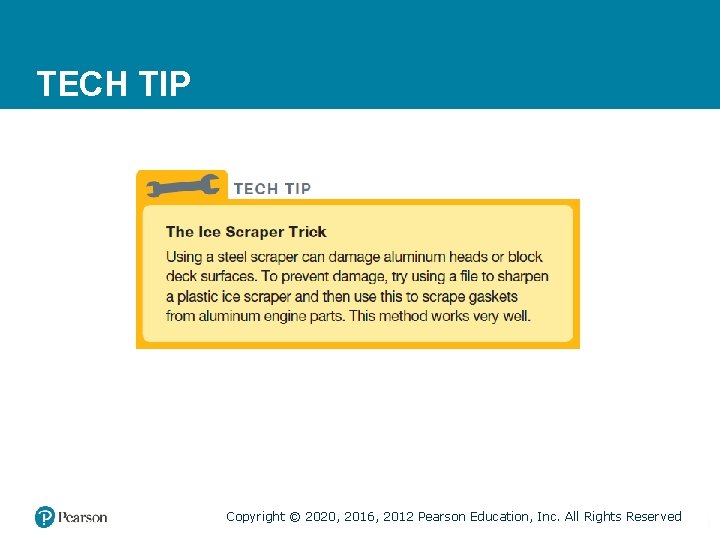
TECH TIP Copyright © 2020, 2016, 2012 Pearson Education, Inc. All Rights Reserved
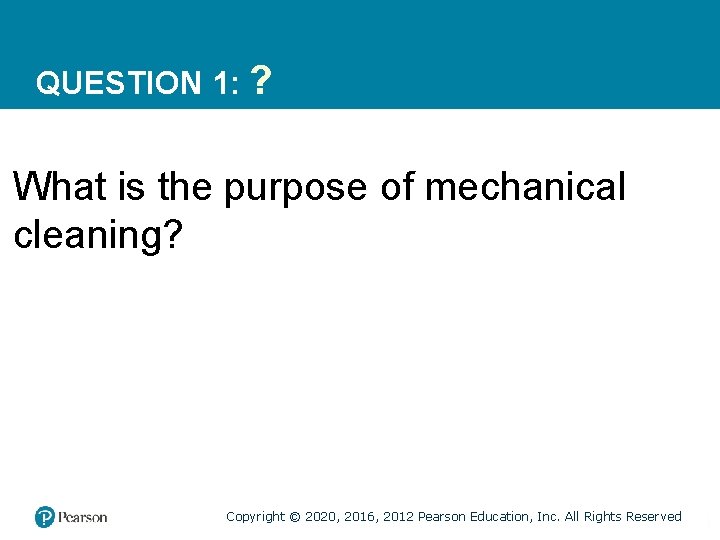
QUESTION 1: ? What is the purpose of mechanical cleaning? Copyright © 2020, 2016, 2012 Pearson Education, Inc. All Rights Reserved
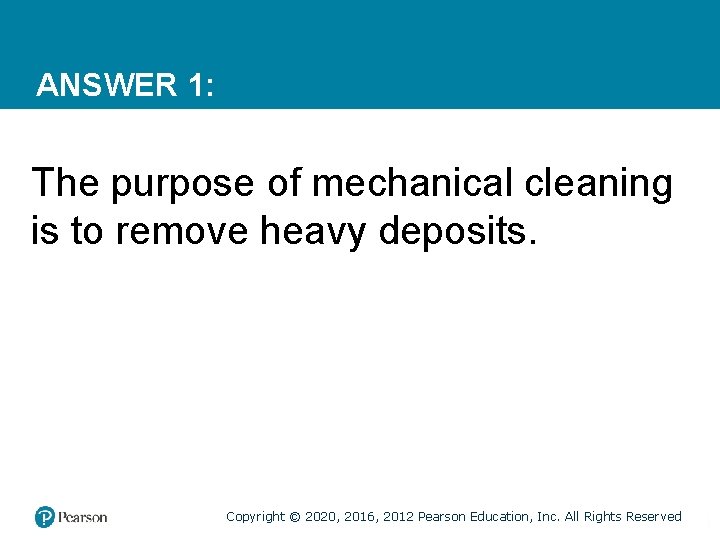
ANSWER 1: The purpose of mechanical cleaning is to remove heavy deposits. Copyright © 2020, 2016, 2012 Pearson Education, Inc. All Rights Reserved
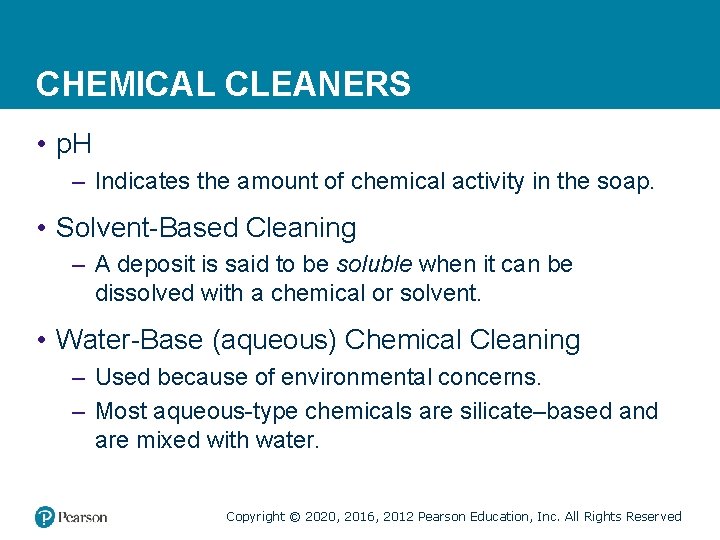
CHEMICAL CLEANERS • p. H – Indicates the amount of chemical activity in the soap. • Solvent-Based Cleaning – A deposit is said to be soluble when it can be dissolved with a chemical or solvent. • Water-Base (aqueous) Chemical Cleaning – Used because of environmental concerns. – Most aqueous-type chemicals are silicate–based and are mixed with water. Copyright © 2020, 2016, 2012 Pearson Education, Inc. All Rights Reserved
SPRAY AND STEAM WASHING • Spray Washing – A spray washer directs streams of liquid through numerous high-pressure nozzles to dislodge dirt and grime on an engine surface. • Steam Cleaning – Steam vapor is mixed with high-pressure water and sprayed on the parts. Copyright © 2020, 2016, 2012 Pearson Education, Inc. All Rights Reserved
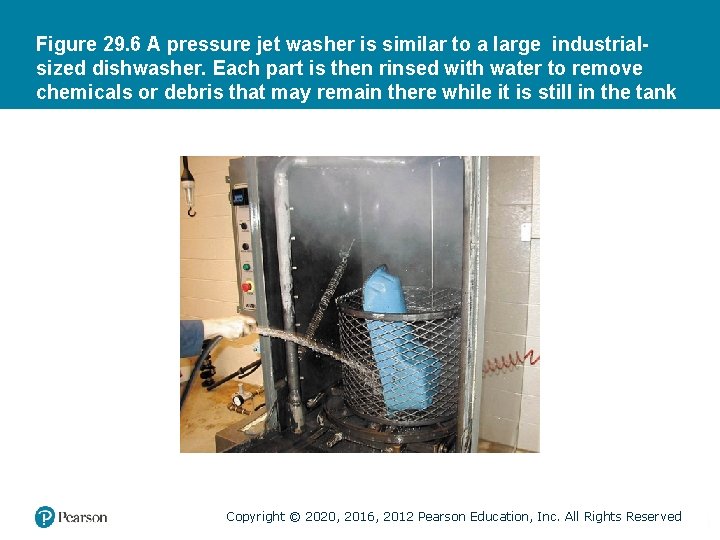
Figure 29. 6 A pressure jet washer is similar to a large industrialsized dishwasher. Each part is then rinsed with water to remove chemicals or debris that may remain there while it is still in the tank Copyright © 2020, 2016, 2012 Pearson Education, Inc. All Rights Reserved
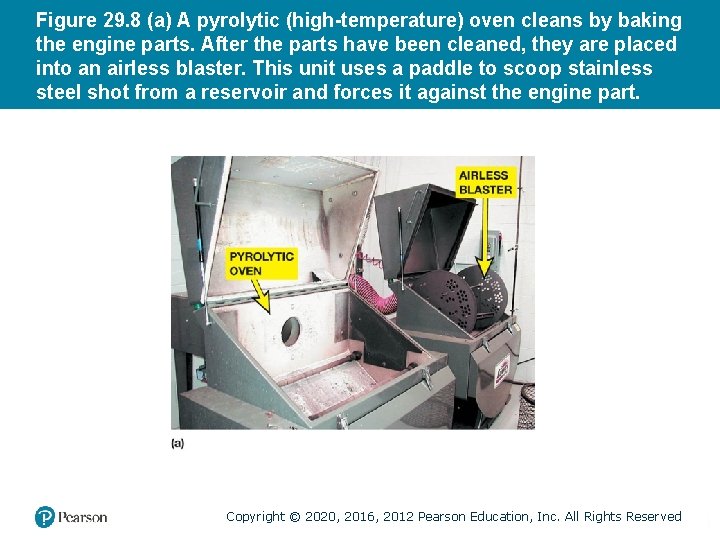
THERMAL CLEANING • Temperatures Involved: – 600°F (315°C) to 800°F (425°C) • Advantages: – Cleans the inside as well as the outside – The waste generated is nonhazardous • Microbial Cleaning: – uses microbes (living organisms [single-celled bacteria]) that literally “eat” the hydrocarbons (grease and oils) off of the parts being cleaned. • Pyrolytic Oven: – A high-temperature oven cleans engine parts by decomposing dirt, grease, and gaskets. Copyright © 2020, 2016, 2012 Pearson Education, Inc. All Rights Reserved
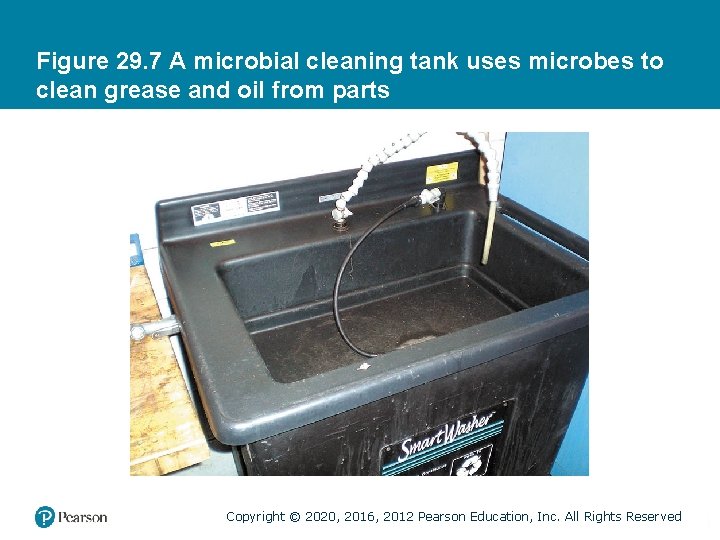
Figure 29. 7 A microbial cleaning tank uses microbes to clean grease and oil from parts Copyright © 2020, 2016, 2012 Pearson Education, Inc. All Rights Reserved
Figure 29. 8 (a) A pyrolytic (high-temperature) oven cleans by baking the engine parts. After the parts have been cleaned, they are placed into an airless blaster. This unit uses a paddle to scoop stainless steel shot from a reservoir and forces it against the engine part. Copyright © 2020, 2016, 2012 Pearson Education, Inc. All Rights Reserved
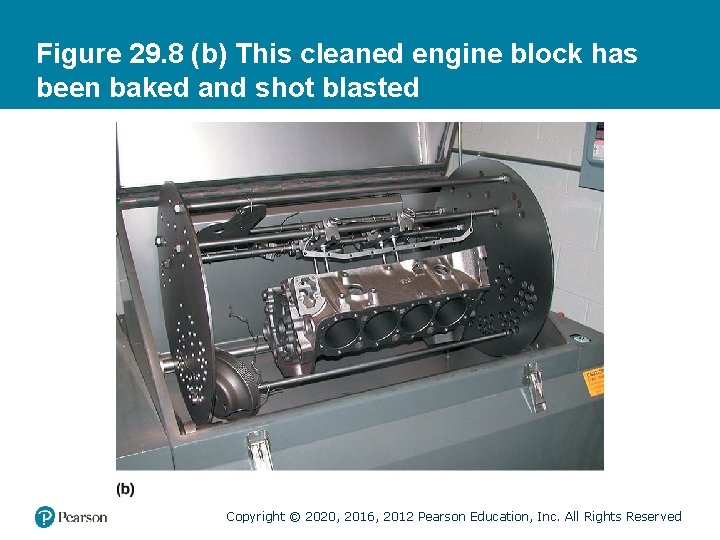
Figure 29. 8 (b) This cleaned engine block has been baked and shot blasted Copyright © 2020, 2016, 2012 Pearson Education, Inc. All Rights Reserved
TANK AND VAPOR CLEANING • Cold Tank Cleaning – The cold soak tank is used to remove grease and carbon. • Hot Tank Cleaning – The hot soak tank is used for cleaning heavy organic deposits and rust from iron and steel parts. • Vapor Cleaning – The parts to be cleaned are suspended in hot vapors above a perchloroethylene solution. Copyright © 2020, 2016, 2012 Pearson Education, Inc. All Rights Reserved
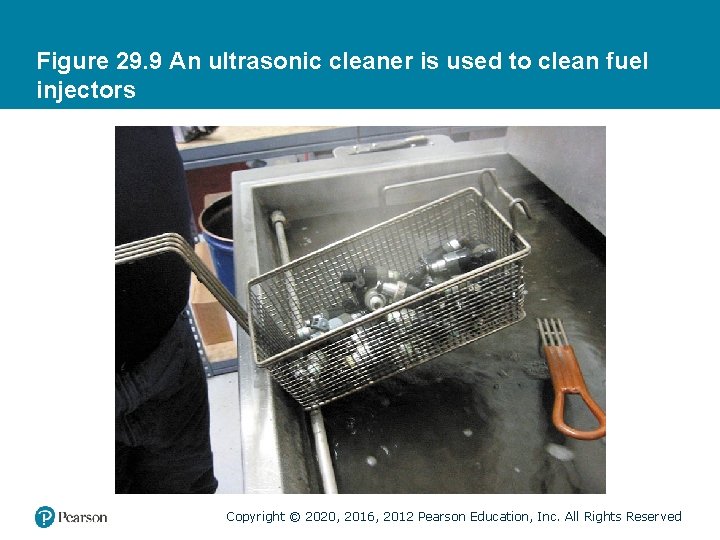
ULTRASONIC AND VIBRATORY CLEANING • Ultrasonic Cleaning – The disassembled parts are placed in a tank of cleaning solution that is then vibrated at ultrasonic speeds to loosen all the soil from the parts. • Vibratory Cleaning – A vibrating bin with small odd-shaped ceramic or steel pieces, called media, with a cleaning solution of mineral spirits or water-based detergents are used to clean the small parts. . Copyright © 2020, 2016, 2012 Pearson Education, Inc. All Rights Reserved
Figure 29. 9 An ultrasonic cleaner is used to clean fuel injectors Copyright © 2020, 2016, 2012 Pearson Education, Inc. All Rights Reserved
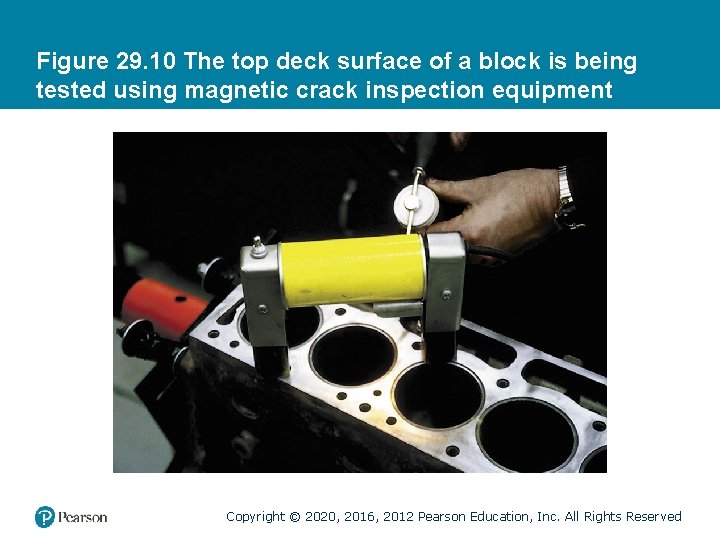
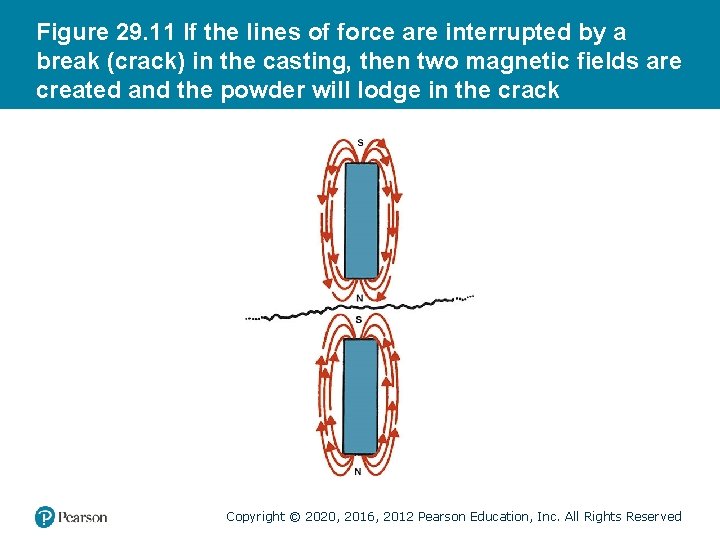
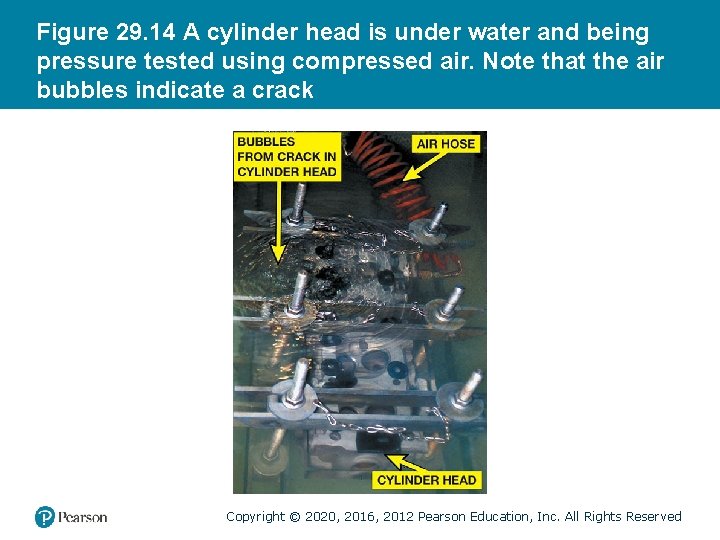
CRACK DETECTION • Visual Inspection – After cleaning, the parts are reexamined for cracks. • Magnetic Crack Detection – Uses a magnetic field that is commonly referred to by the brand name Magnafluxing. • Fluorescent-Penetrant Detection – A dark red penetrating chemical is sprayed on the component and tested with a black light. • Pressure Testing – The head or block is pressurized and then lowered into water, where air bubbles indicate a leak. Copyright © 2020, 2016, 2012 Pearson Education, Inc. All Rights Reserved
Figure 29. 10 The top deck surface of a block is being tested using magnetic crack inspection equipment Copyright © 2020, 2016, 2012 Pearson Education, Inc. All Rights Reserved
Figure 29. 11 If the lines of force are interrupted by a break (crack) in the casting, then two magnetic fields are created and the powder will lodge in the crack Copyright © 2020, 2016, 2012 Pearson Education, Inc. All Rights Reserved
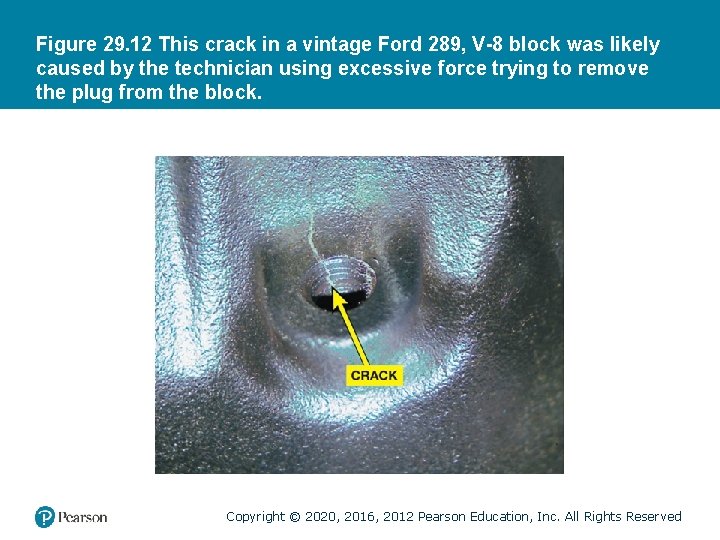
Figure 29. 12 This crack in a vintage Ford 289, V-8 block was likely caused by the technician using excessive force trying to remove the plug from the block. Copyright © 2020, 2016, 2012 Pearson Education, Inc. All Rights Reserved
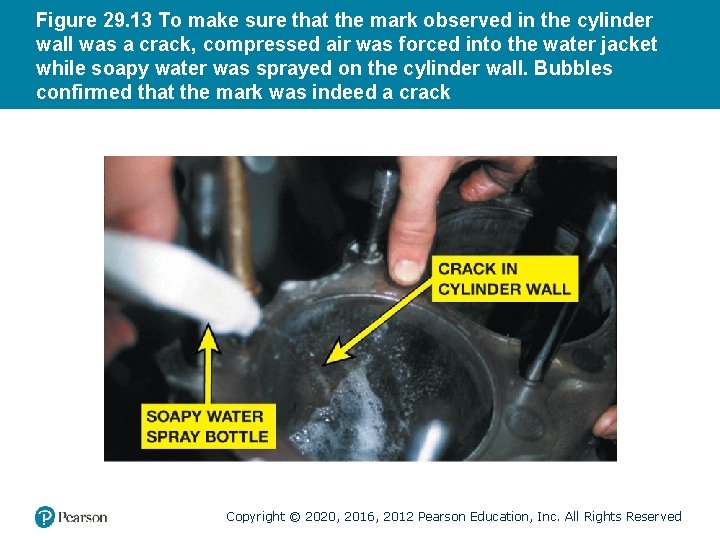
Figure 29. 13 To make sure that the mark observed in the cylinder wall was a crack, compressed air was forced into the water jacket while soapy water was sprayed on the cylinder wall. Bubbles confirmed that the mark was indeed a crack Copyright © 2020, 2016, 2012 Pearson Education, Inc. All Rights Reserved
Figure 29. 14 A cylinder head is under water and being pressure tested using compressed air. Note that the air bubbles indicate a crack Copyright © 2020, 2016, 2012 Pearson Education, Inc. All Rights Reserved
QUESTION 2: ? When id the dye-penetrant testing method most commonly used? Copyright © 2020, 2016, 2012 Pearson Education, Inc. All Rights Reserved
ANSWER 2: On parts constructed of aluminum or other nonmagnetic material. Copyright © 2020, 2016, 2012 Pearson Education, Inc. All Rights Reserved
CRACK REPAIR (1 OF 2) • Crack Concerns – Cracks in the engine block can cause coolant to flow into the oil or oil into the coolant. • Stop Drilling – A hole can be drilled at each end of the crack to keep it from extending further. • Crack-Welding Cast Iron – A highly skilled welding technique that is typically only successful when the entire cast-part is heated red-hot. Copyright © 2020, 2016, 2012 Pearson Education, Inc. All Rights Reserved
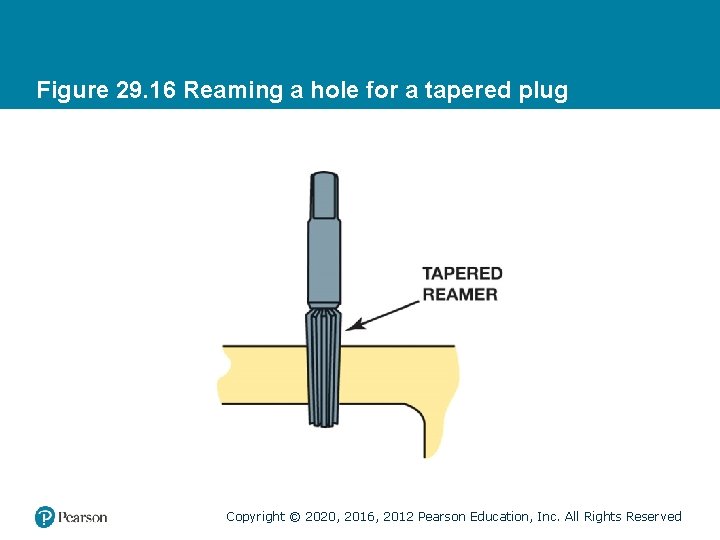
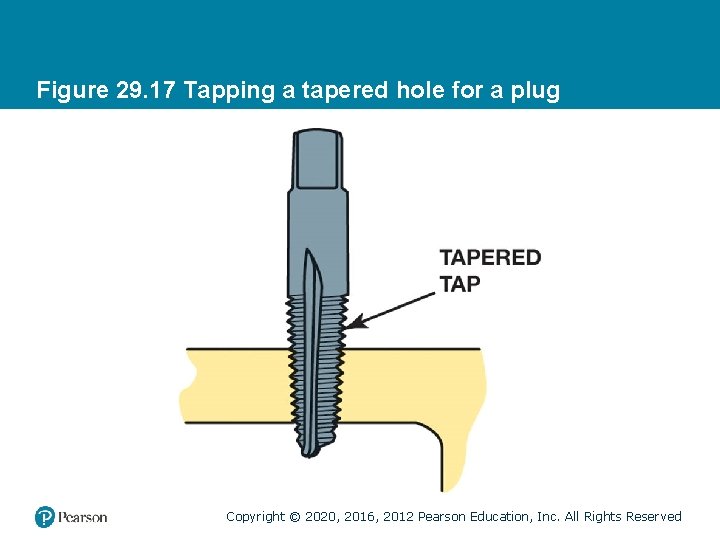
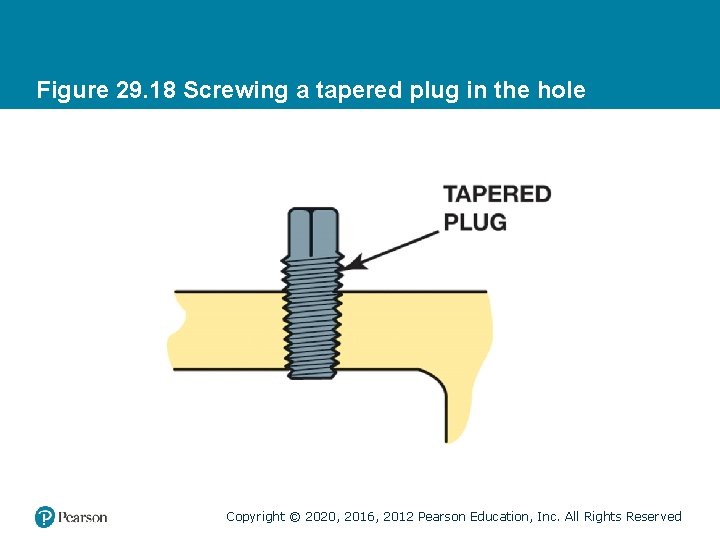
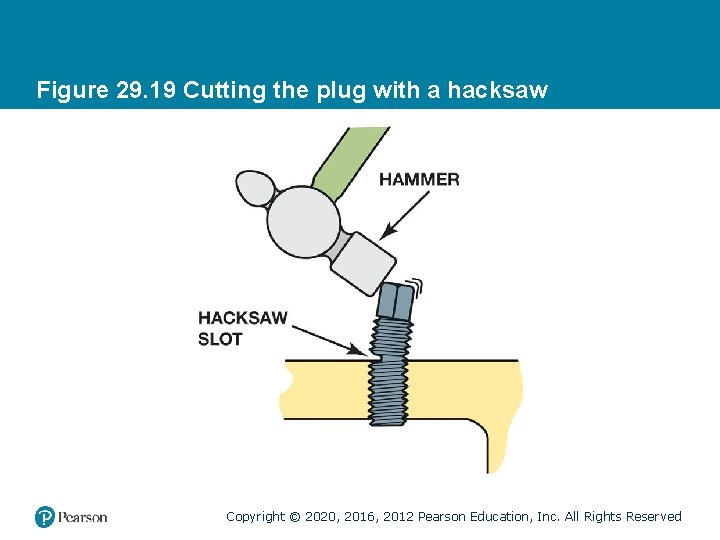
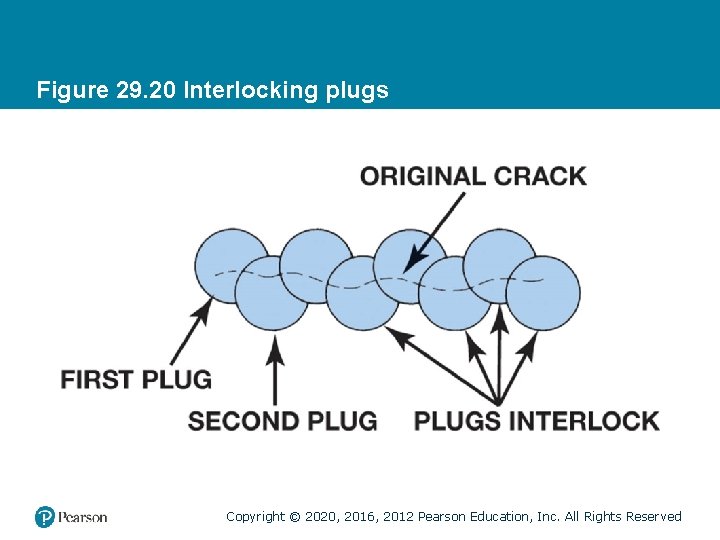
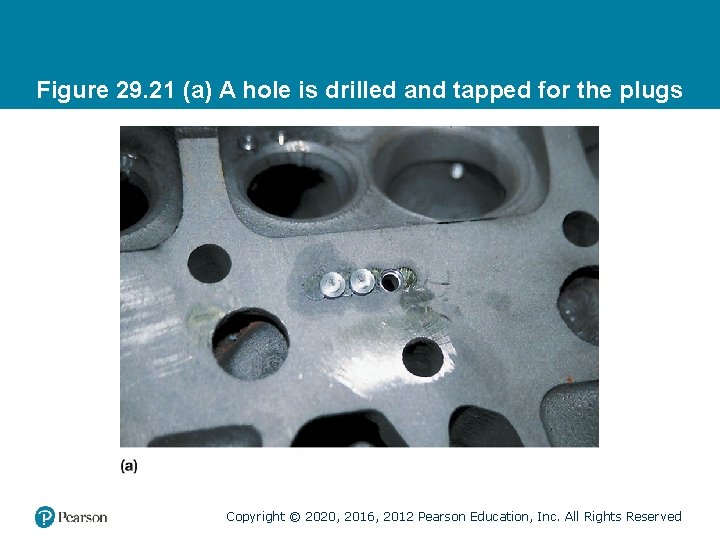
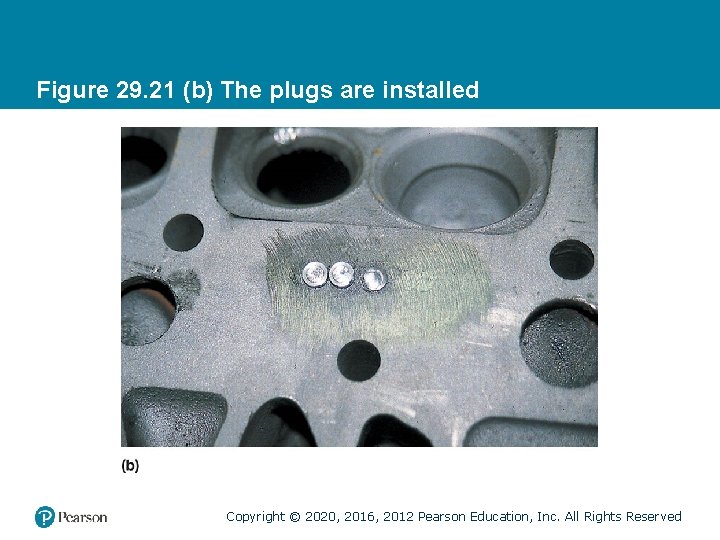
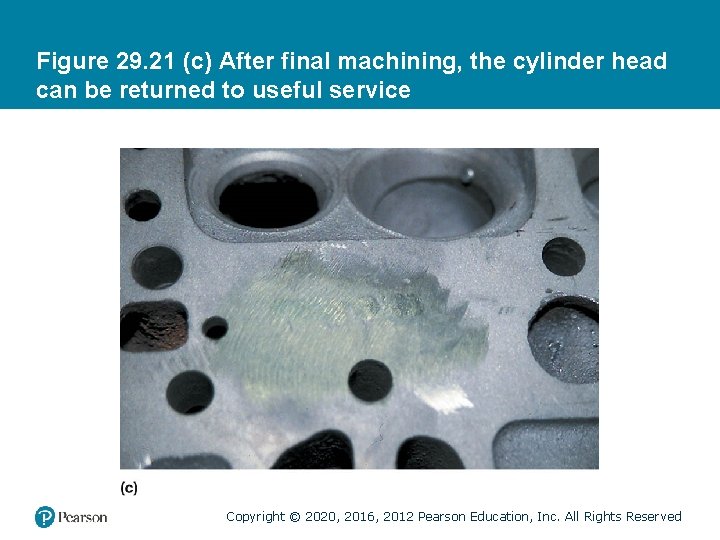
CRACK REPAIR (2 OF 2) • Crack-Welding Aluminum – Cracks in aluminum can be welded using a Heli-arc or similar welder that is specially designed to weld aluminum. ® • Crack Plugging – In the process of crack plugging, a crack is closed using interlocking tapered plugs. This process can be used on cast-iron or aluminum components. Copyright © 2020, 2016, 2012 Pearson Education, Inc. All Rights Reserved
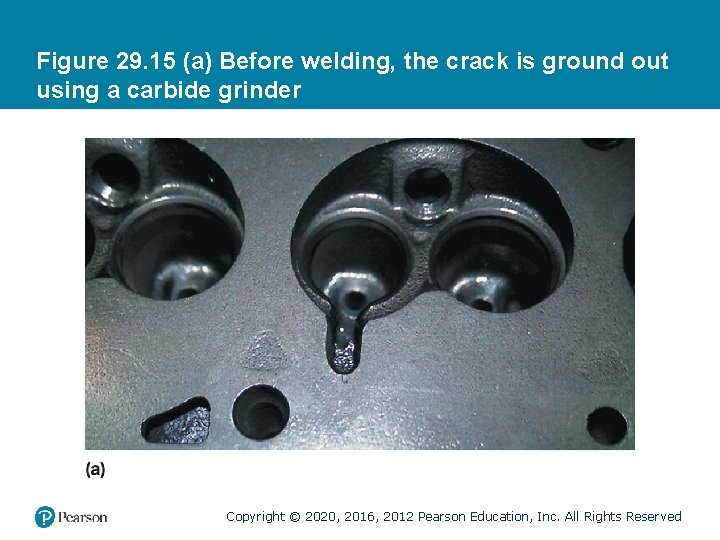
Figure 29. 15 (a) Before welding, the crack is ground out using a carbide grinder Copyright © 2020, 2016, 2012 Pearson Education, Inc. All Rights Reserved
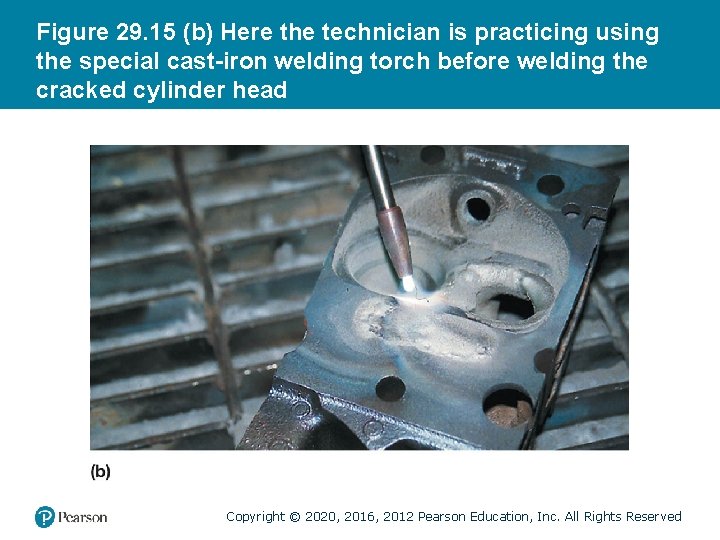
Figure 29. 15 (b) Here the technician is practicing using the special cast-iron welding torch before welding the cracked cylinder head Copyright © 2020, 2016, 2012 Pearson Education, Inc. All Rights Reserved
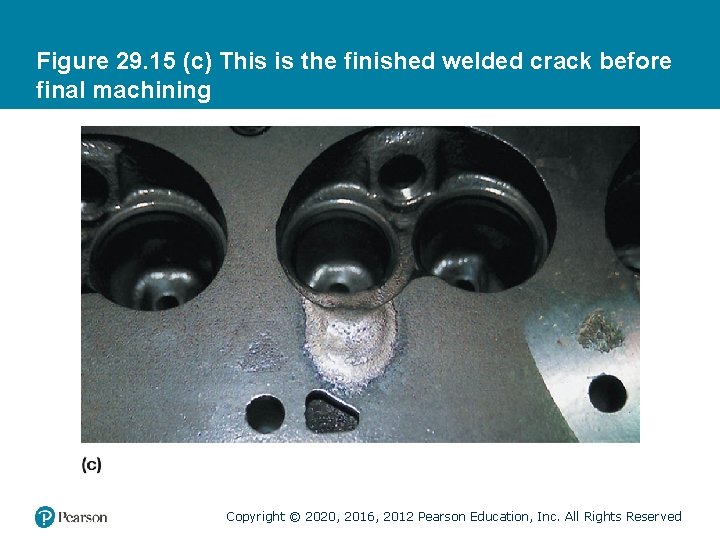
Figure 29. 15 (c) This is the finished welded crack before final machining Copyright © 2020, 2016, 2012 Pearson Education, Inc. All Rights Reserved
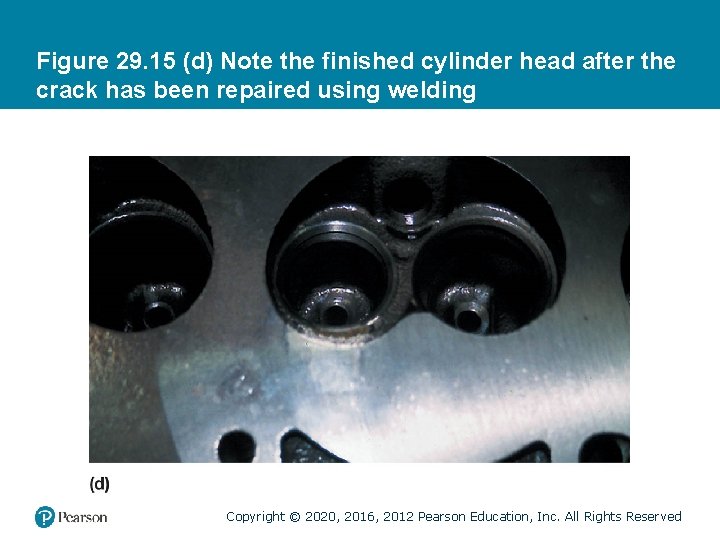
Figure 29. 15 (d) Note the finished cylinder head after the crack has been repaired using welding Copyright © 2020, 2016, 2012 Pearson Education, Inc. All Rights Reserved
Figure 29. 16 Reaming a hole for a tapered plug Copyright © 2020, 2016, 2012 Pearson Education, Inc. All Rights Reserved
Figure 29. 17 Tapping a tapered hole for a plug Copyright © 2020, 2016, 2012 Pearson Education, Inc. All Rights Reserved
Figure 29. 18 Screwing a tapered plug in the hole Copyright © 2020, 2016, 2012 Pearson Education, Inc. All Rights Reserved
Figure 29. 19 Cutting the plug with a hacksaw Copyright © 2020, 2016, 2012 Pearson Education, Inc. All Rights Reserved
Figure 29. 20 Interlocking plugs Copyright © 2020, 2016, 2012 Pearson Education, Inc. All Rights Reserved
Figure 29. 21 (a) A hole is drilled and tapped for the plugs Copyright © 2020, 2016, 2012 Pearson Education, Inc. All Rights Reserved
Figure 29. 21 (b) The plugs are installed Copyright © 2020, 2016, 2012 Pearson Education, Inc. All Rights Reserved
Figure 29. 21 (c) After final machining, the cylinder head can be returned to useful service Copyright © 2020, 2016, 2012 Pearson Education, Inc. All Rights Reserved
QUESTION 3: ? What is the purpose of stop drilling? Copyright © 2020, 2016, 2012 Pearson Education, Inc. All Rights Reserved
ANSWER 3: To prevent the crack from extending any further. Copyright © 2020, 2016, 2012 Pearson Education, Inc. All Rights Reserved
Copyright © 2020, 2016, 2012 Pearson Education, Inc. All Rights Reserved