
Automotive Plumbing Tubing and Pipe Chapter 24 2012
Automotive Plumbing: Tubing and Pipe Chapter 24 © 2012 Delmar, Cengage Learning
Objectives • Describe the different types of tubing used on automobiles • Understand the different types of tubing connections • Repair damaged tubing © 2012 Delmar, Cengage Learning
Introduction • Tubing and pipe – Found on automobiles and on shop equipment • This chapter covers: – Tubing and pipe service – Different types of plumbing parts – Connectors used with tubing and pipe © 2012 Delmar, Cengage Learning
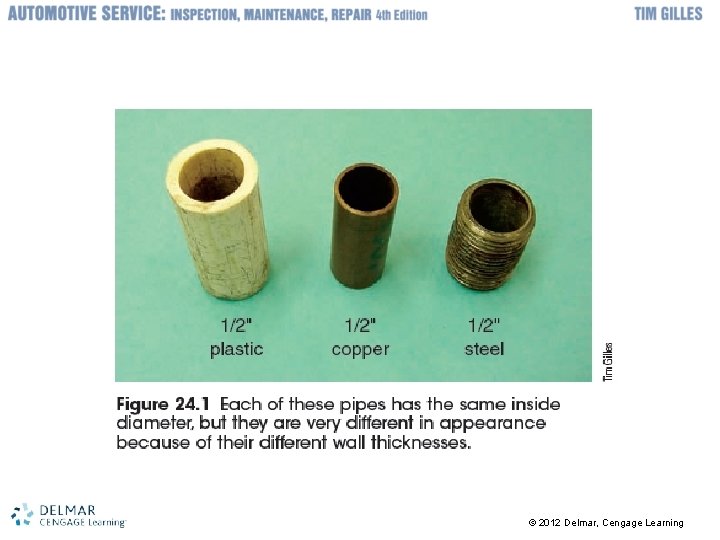
Tubing • Often called “line” – No threads at its ends – Can be made of copper, steel, or plastic • Manufacturers choose the least expensive alternative to do the job safely • Copper tubing – Can be soft or rigid – Work hardens • Plastic – Used for vacuum or oil pressure lines © 2012 Delmar, Cengage Learning
© 2012 Delmar, Cengage Learning
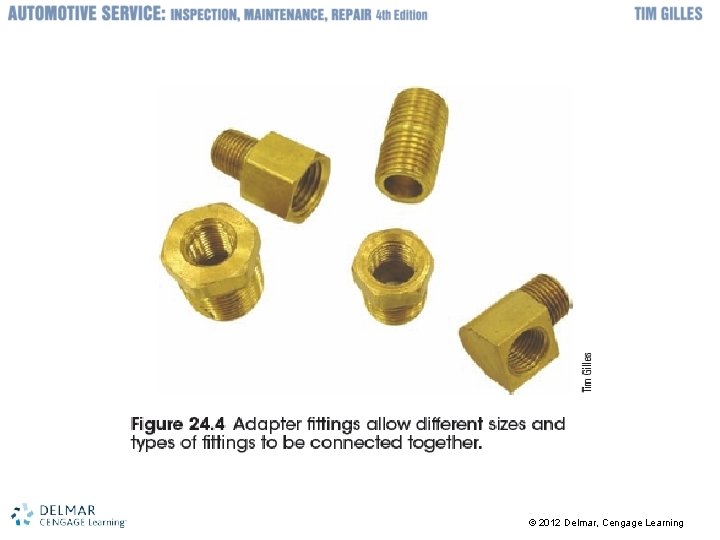
Tubing (cont'd. ) • Steel tubing – Galvanized to prevent rust – Double-walled when used for brake lines – Armor: Steel coil around outside of a break tube • Tube fittings – Many types of fittings join tubing to components – Connectors are used between tubing and parts (e. g. , oil pump) © 2012 Delmar, Cengage Learning
© 2012 Delmar, Cengage Learning
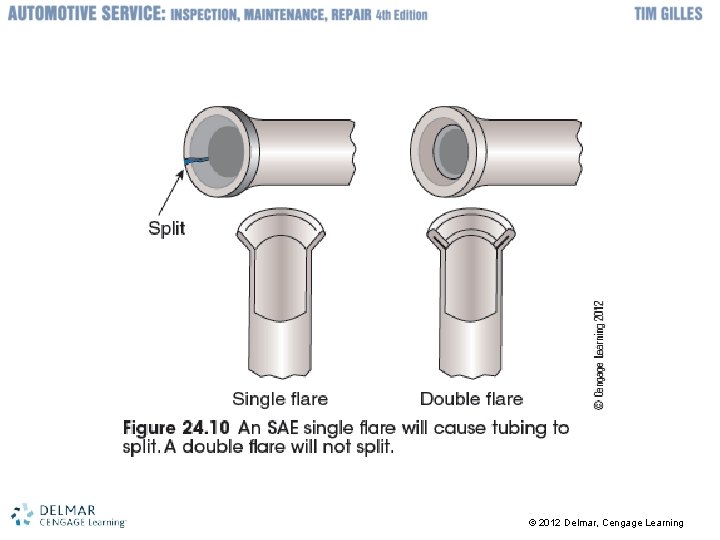
Flared Connections • Used when two steel fuel lines are connected – Flare connection is suited for high-pressure applications – Must be used for brakes or power steering • Two kinds of flares: – Double flare (SAE) – Bubble flare (ISO) © 2012 Delmar, Cengage Learning
Flared Connections (cont'd. ) • SAE-type double flare – Used with an inverted flare nut • SAE flare: can be a either a single or double – Single flare: not used on small automotive tubing • ISO flares: used since the early 1980 s – Bubble is formed in the line near its end © 2012 Delmar, Cengage Learning
© 2012 Delmar, Cengage Learning
Compression Fittings • Compression fittings: flareless fittings – One kind uses a brass sleeve called a ferrule • To install a compression fitting: – Slide nut onto tubing – Slide the sleeve onto the tubing – Insert the tubing as far into the fitting as possible – Tighten one and a fourth turns after both fittings have contact © 2012 Delmar, Cengage Learning
Compression Fittings (cont'd. ) • Characteristics – Should not be used on high-pressure applications – Can also be used with rigid plastic tubing – Double compression fitting: no separate sleeve but compresses front part of nut against tubing – O-ring connections: used to seal fittings • Unions – Join two pieces of tubing together © 2012 Delmar, Cengage Learning
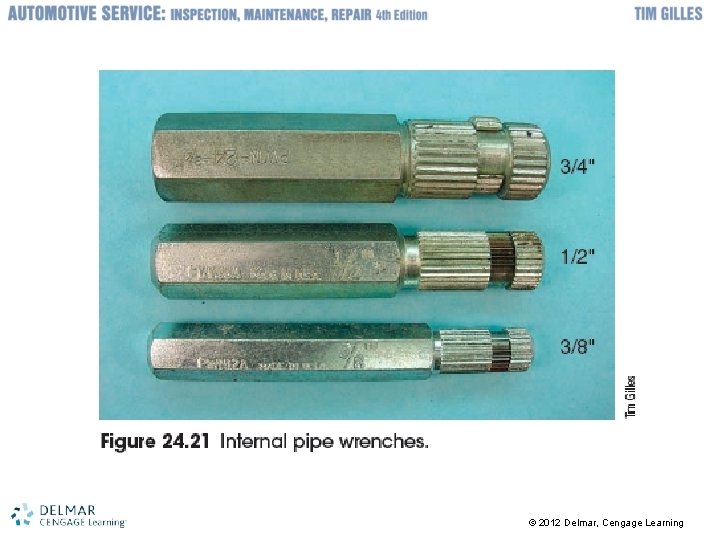
Pipe Fittings • Pipe threads are used for: – Heater outlets – Oil gallery – Coolant drain plugs – Oil and coolant temperature sending units – Compresses air lines in the shop • Fittings on copper, brass, or iron pipe – Use tapered threads © 2012 Delmar, Cengage Learning
Pipe Fittings (cont'd. ) • Characteristics – Size of pipe thread • Determined by the size of the piece of pipe – Pipe coupling • Joins two pipes – Street elbow • Male thread on one end – Close nipple • Tapered threads on each end that join in middle – Long nipple • Plain pipe separates the threads © 2012 Delmar, Cengage Learning
© 2012 Delmar, Cengage Learning
Shutoff Valves • Also called draincocks – Often found on the bottom of a radiator – Turning end of valve opens or closes it – Plastic radiator tanks usually have a plastic drain valve © 2012 Delmar, Cengage Learning
Tubing Service • Tubing comes in precut lengths with flare fittings • Considerations – Do not kink bulk tubing when unrolling – Use a tubing wrench or flare nut wrench to loosen a flare fitting – Damaged steel fuel lines can be cut and repaired • New lines fabricated with a flaring tool © 2012 Delmar, Cengage Learning
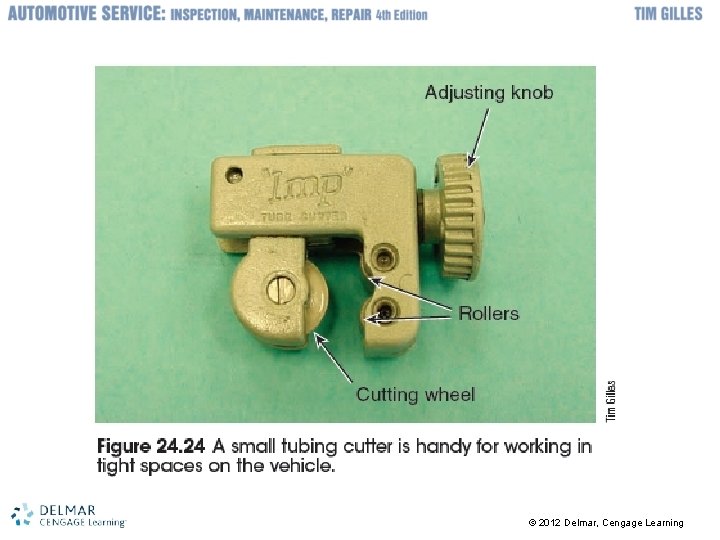
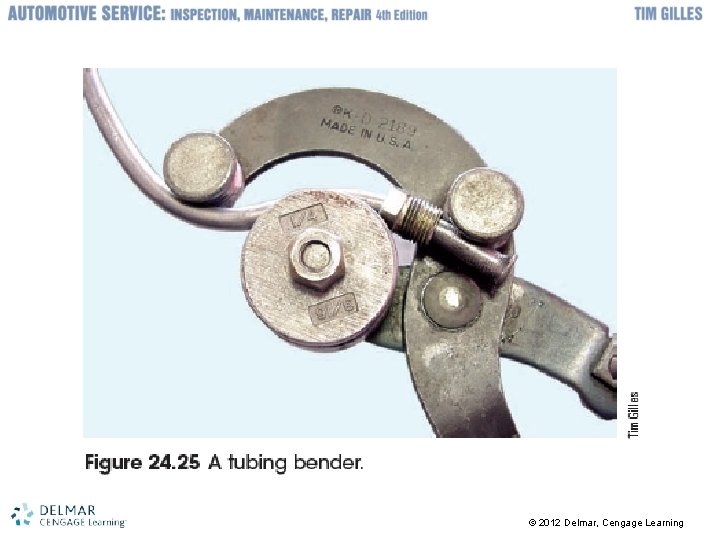
Tubing Service (cont'd. ) • Cutting tubing – Cut square on the end – Tubing cutter is tightened against tubing then rolled around it – Remove burrs • Bending tubing – Too sharp of a bend will cause a kink – Install fittings and flare both ends before bending tubing © 2012 Delmar, Cengage Learning
© 2012 Delmar, Cengage Learning
© 2012 Delmar, Cengage Learning
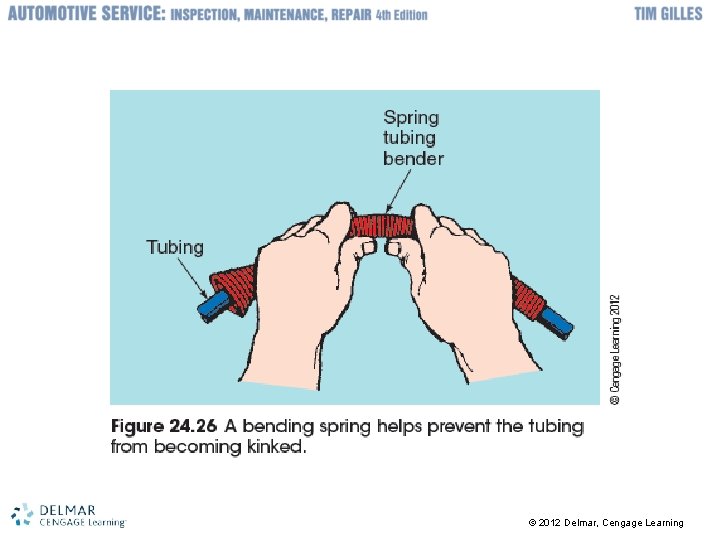
Tubing Service (cont'd. ) • Bending spring: installed over the tubing – Prevents kinking • Steel lines: should not have long, straight runs • Long runs: should be supported with clamps • Flaring the ends of tubing – Double flare or an ISO flare • Double flaring is a two-step procedure • ISO flaring – Bubble or ridge is formed in the line a short way back from its end © 2012 Delmar, Cengage Learning
© 2012 Delmar, Cengage Learning
Installing Tubing • When installing tubing – Leave first fitting loose • Union repairs – Union is used to repair a damaged line • Better repair than hose for high-pressure lines • Using hoses to repair tubing – When a section of steel fuel line is damaged, it is best to replace it and its flared ends and fittings © 2012 Delmar, Cengage Learning
Transmission Oil Cooler Line Repairs • Union – Best repair for a transmission cooler line • Kinks are often repaired with hose – If rubber hose is used: flare both ends of the metal tubing – Edges of a double flare can cut the rubber hose over time © 2012 Delmar, Cengage Learning
Nylon Fuel Injection Tubing • Nylon line is connected to steel line – Push connector is used – Some nylon lines are coupled together with a “spring lock” connector – There are two O-rings on the male coupling – If the garter spring is damaged or missing, it can be replaced in the coupling © 2012 Delmar, Cengage Learning
Pipe Service • Pipe is cut with a pipe cutter – Resembles a large tubing cutter • Pipe dies – Form threads on the outside of the pipe • Thread sealer – Used between threads • After hand tightening pipe – Tighten further a minimum of two and a half turns © 2012 Delmar, Cengage Learning
- Slides: 26