
Automotive Hotrod and Wettable Flanks Packaging Advancements Perry

Automotive Hotrod and Wettable Flanks Packaging Advancements Perry Tsao Systems and Applications Manager SVA-PPS-PRS (Performance Regulator Solutions) 1
Agenda • Overview of Automotive Hotrod and Wettable Flanks • Performance benefits of Automotive Hotrod • Layout techniques to minimize EMI • Best practices for thermal layout of Hotrod devices 2

Automotive Hotrod and Wettable Flanks
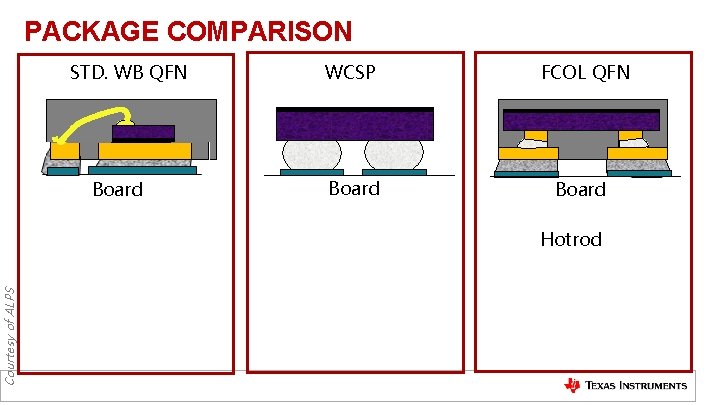
PACKAGE COMPARISON STD. WB QFN Board WCSP FCOL QFN Board Courtesy of ALPS Hotrod
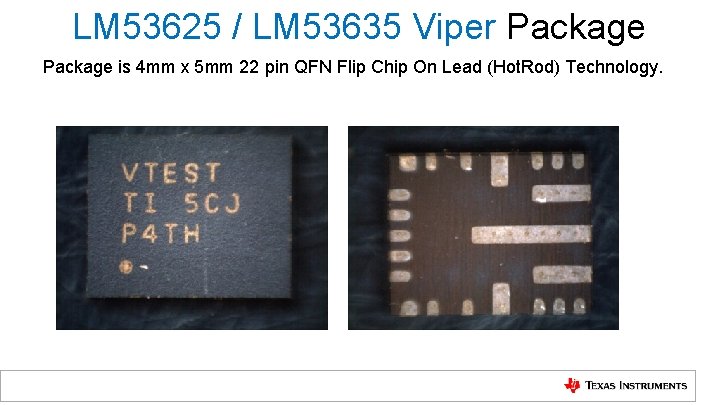
LM 53625 / LM 53635 Viper Package is 4 mm x 5 mm 22 pin QFN Flip Chip On Lead (Hot. Rod) Technology.

Wettable flanks • Wettable flanks guarantees visible side-wetting at good solder joints • Enables 100% Automotive Visual Inspection assembly processes • Dual plated punched process with notch on underside of the package. • Leadframe is punched out then replated. 6

Images of QFN Slotted & Standard Leads Slotted Leads – side view Standard Leads – side view Plated Slotted Leads – Bottom view Standard Leads – Bottom view
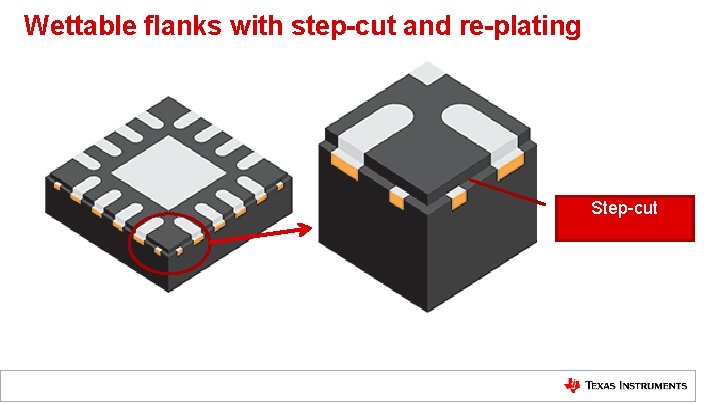
Wettable flanks with step-cut and re-plating Step-cut
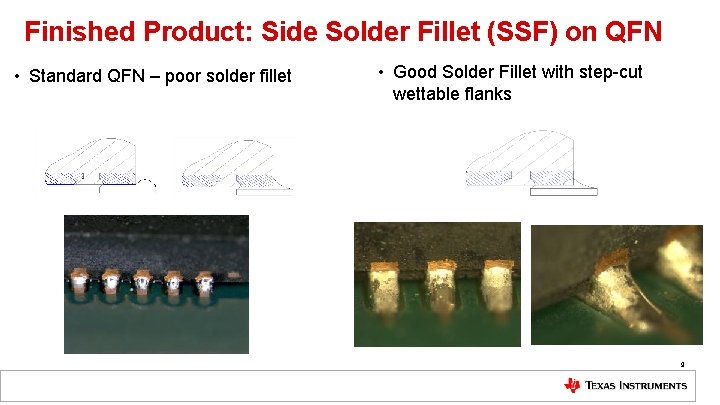
Finished Product: Side Solder Fillet (SSF) on QFN • Standard QFN – poor solder fillet • Good Solder Fillet with step-cut wettable flanks 9

Why do we need Automotive Hotrod?
Why do we need Automotive Hotrod? • Reduced Rds_on • Smaller size • Reduced parasitics => less switch node ringing => lower EMI 11
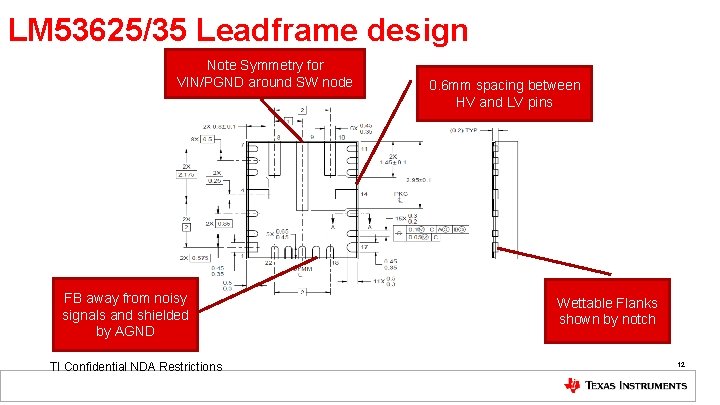
LM 53625/35 Leadframe design Note Symmetry for VIN/PGND around SW node FB away from noisy signals and shielded by AGND TI Confidential NDA Restrictions 0. 6 mm spacing between HV and LV pins Wettable Flanks shown by notch 12

Layout for EMI
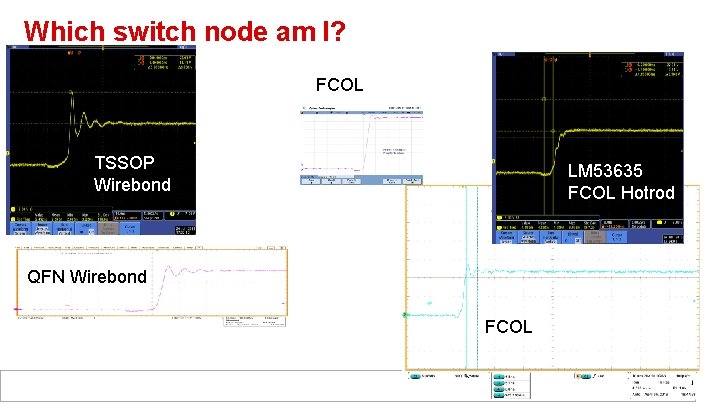
Which switch node am I? FCOL TSSOP Wirebond LM 53635 FCOL Hotrod QFN Wirebond FCOL 14
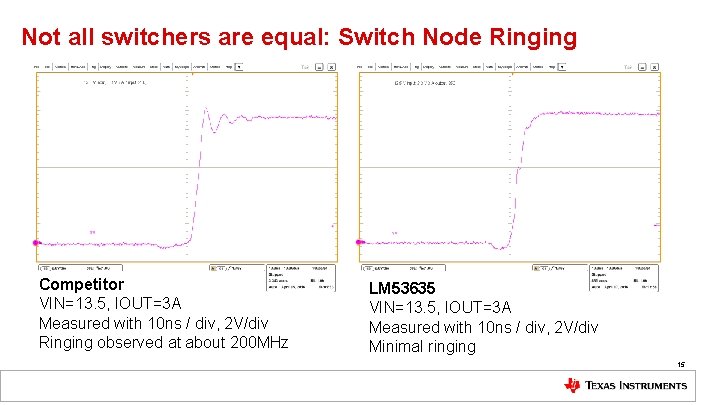
Not all switchers are equal: Switch Node Ringing Competitor VIN=13. 5, IOUT=3 A Measured with 10 ns / div, 2 V/div Ringing observed at about 200 MHz LM 53635 VIN=13. 5, IOUT=3 A Measured with 10 ns / div, 2 V/div Minimal ringing 15
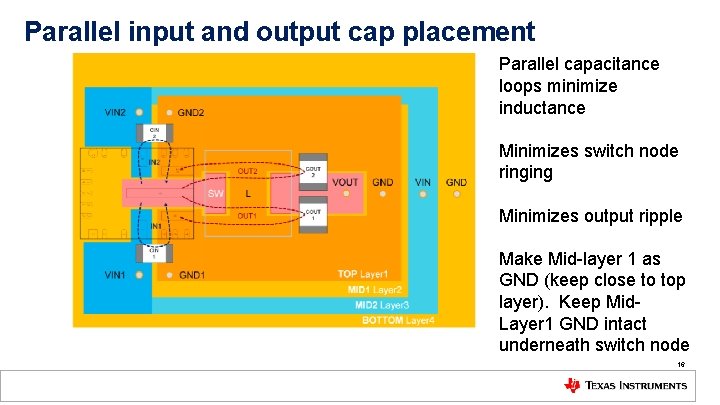
Parallel input and output cap placement Parallel capacitance loops minimize inductance Minimizes switch node ringing Minimizes output ripple Make Mid-layer 1 as GND (keep close to top layer). Keep Mid. Layer 1 GND intact underneath switch node 16
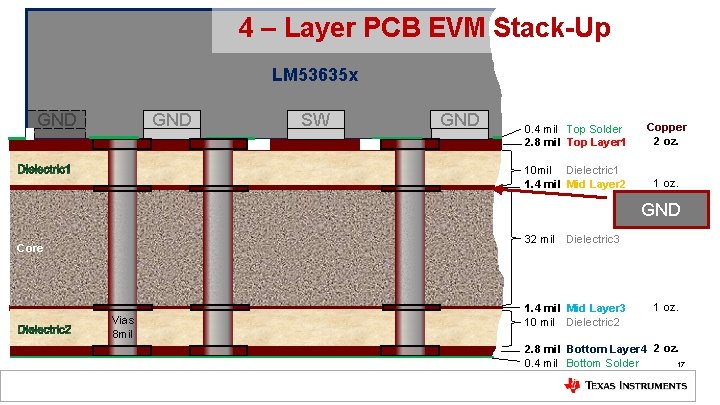
4 – Layer PCB EVM Stack-Up LM 53635 x GND SW GND 0. 4 mil Top Solder 2. 8 mil Top Layer 1 Copper 2 oz. 10 mil Dielectric 1 1. 4 mil Mid Layer 2 1 oz. GND 32 mil Dielectric 3 Core Vias 8 mil 1. 4 mil Mid Layer 3 10 mil Dielectric 2 1 oz. 2. 8 mil Bottom Layer 4 2 oz. 17 0. 4 mil Bottom Solder
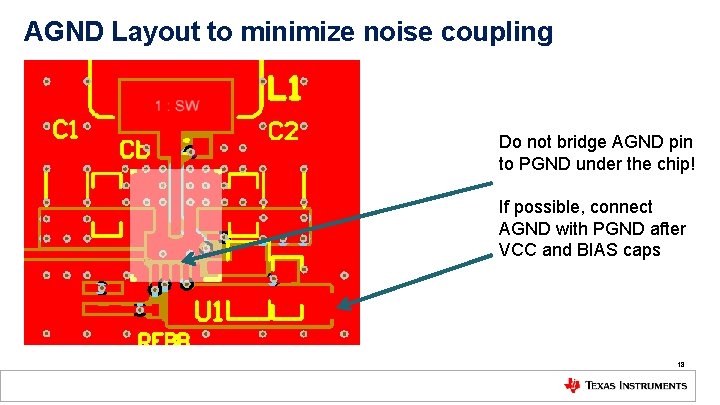
AGND Layout to minimize noise coupling Do not bridge AGND pin to PGND under the chip! If possible, connect AGND with PGND after VCC and BIAS caps 18
Thermals and layout
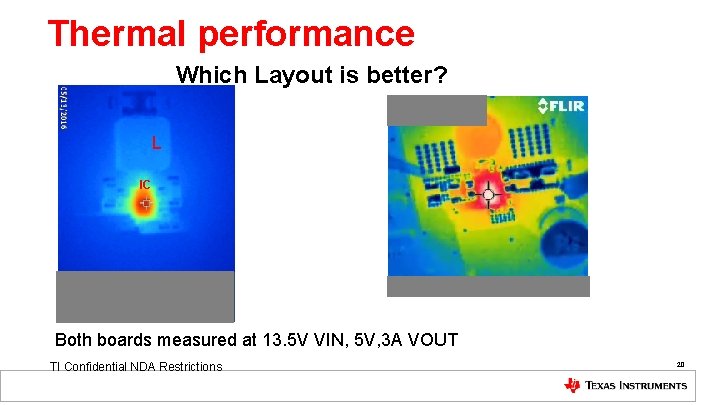
Thermal performance Which Layout is better? L IC Both boards measured at 13. 5 V VIN, 5 V, 3 A VOUT TI Confidential NDA Restrictions 20
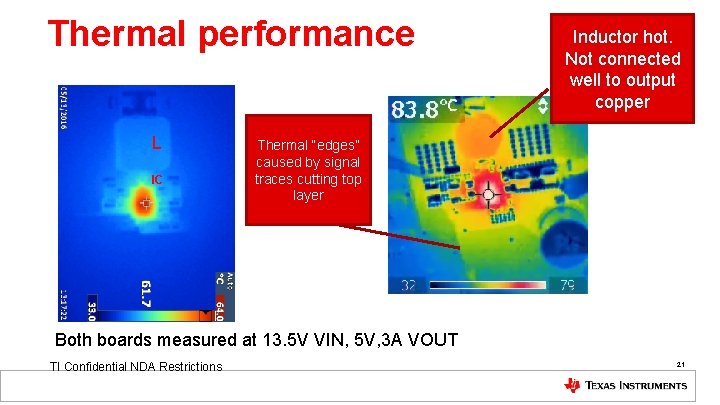
Thermal performance L IC Inductor hot. Not connected well to output copper Thermal “edges” caused by signal traces cutting top layer Both boards measured at 13. 5 V VIN, 5 V, 3 A VOUT TI Confidential NDA Restrictions 21
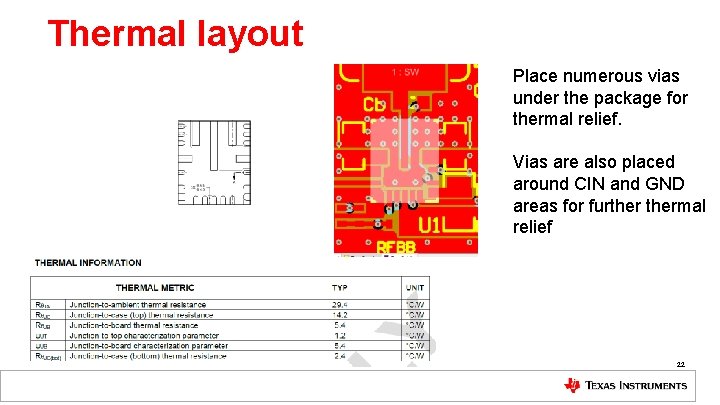
Thermal layout Place numerous vias under the package for thermal relief. Vias are also placed around CIN and GND areas for furthermal relief 22
Summary • Automotive Hotrod and Wettable Flanks – Big performance advantages with EMI and Efficiency – Qualified and ready to use! 23

Thank you Silicon Valley Analog - Performance Regulator Solutions Perry Tsao – Systems and Applications Manager perry, tsao@ti. com 24
- Slides: 24