
Automatically Balancing Intersection Volumes in A Highway Network
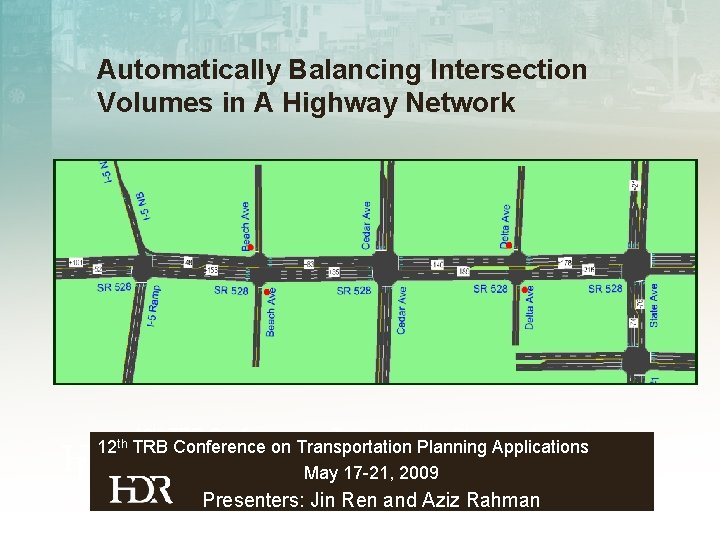
Automatically Balancing Intersection Volumes in A Highway Network 12 th th. TRB Conference on Transportation Planning Applications TRB 12 Conference TRB Conference on Transportation Planning Applications 12 th TRB Conference on Transportation May 17 -21, 2009 Planning Applications May 17 -21, 2009 Rahman Presenters: Jin Ren and Aziz Presenters: Jin Ren Jinand Ren. Aziz and Rahman Aziz Rahman Presenters: Jin Ren and Aziz Rahman
Presentation Outline q Need for Balanced Volumes q Current Balancing Techniques q New Automatic Balancing Techniques q Formation of Intersection Turn Matrix q Doubly Constrained Method q Successive Averaging or Maximizing and Iterative Balancing q Statistical Comparisons of Methods q Conclusion

Need for Balanced Volumes q Existing base highway network simulation in Synchro and VISSIM q Unbalanced upstream and downstream post -processed future flow q Build simulation confidence in audience q Ensure simulation model run results not wacky q Take into account mid-block driveway traffic in simulation
Current Balancing Techniques 1. Manual Adjustment: match the volumes departing one intersection to those arriving at the downstream intersection, or vice versa 2. EMME Demand Adjustments: create a trip table and run traffic assignment based on intersection volumes 3. VISUM T-Flow Fuzzy Technique: create a trip table to emulate intersection turning volumes
Pros and Cons of Each Technique 1. Manual Adjustment: a) uses a simple spreadsheet or Synchro b) time-consuming if numerous balancing iterations required 2. VISUM T-Flow Fuzzy Technique: emulate turns with balanced volumes, but intra-zonal traffic causes turning volume losses
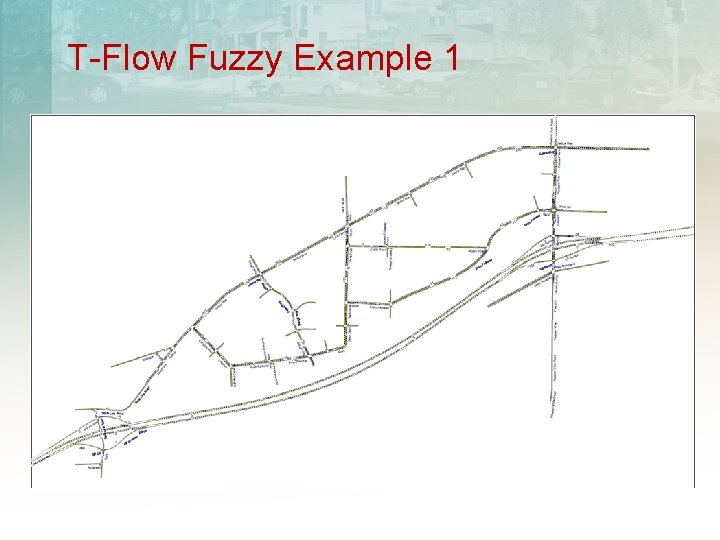
T-Flow Fuzzy Example 1
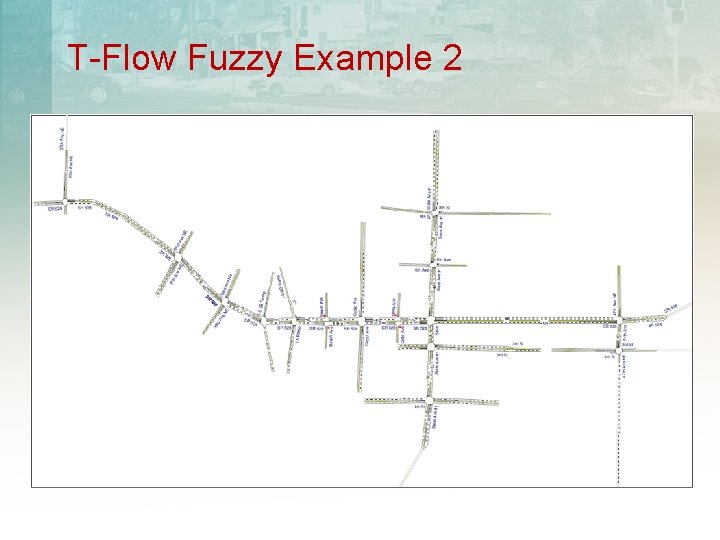
T-Flow Fuzzy Example 2

Why Introduce New Methods? q Develop a statistically sound technique q Reduce labor time on balancing q Generate more accurate turning volumes q Create an automatic process which is user-friendly and affordable q Build confidence in simulation with the balanced volumes
New Automatic Balancing Techniques q Successive Averaging/Iterative Balancing: iteratively average downstream and upstream link volumes and then balance intersections q Successive Maximizing/Iterative Balancing: iteratively maximize downstream and upstream link volumes and then balance intersections
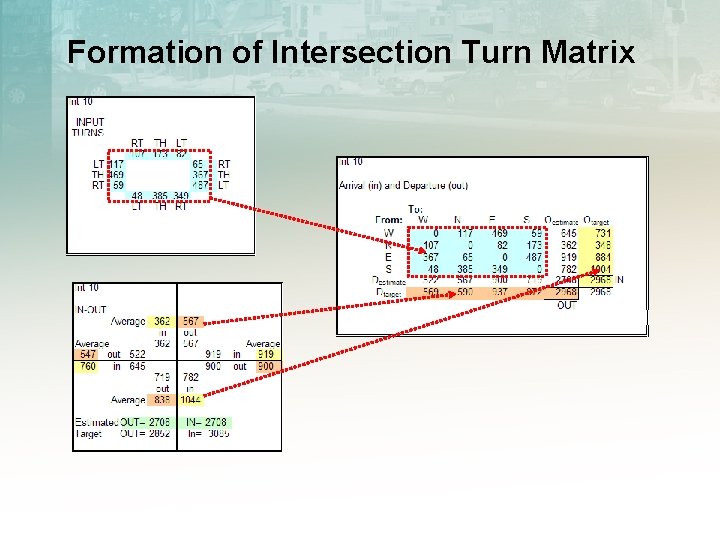
Formation of Intersection Turn Matrix
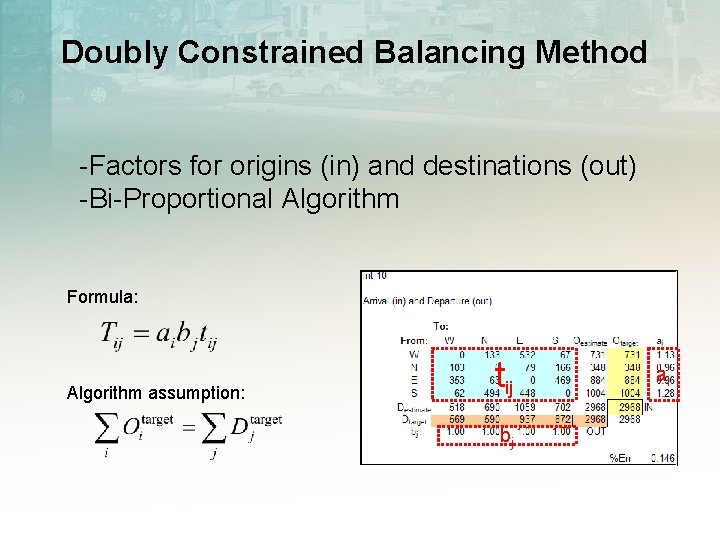
Doubly Constrained Balancing Method -Factors for origins (in) and destinations (out) -Bi-Proportional Algorithm Formula: Algorithm assumption: tij bj ai
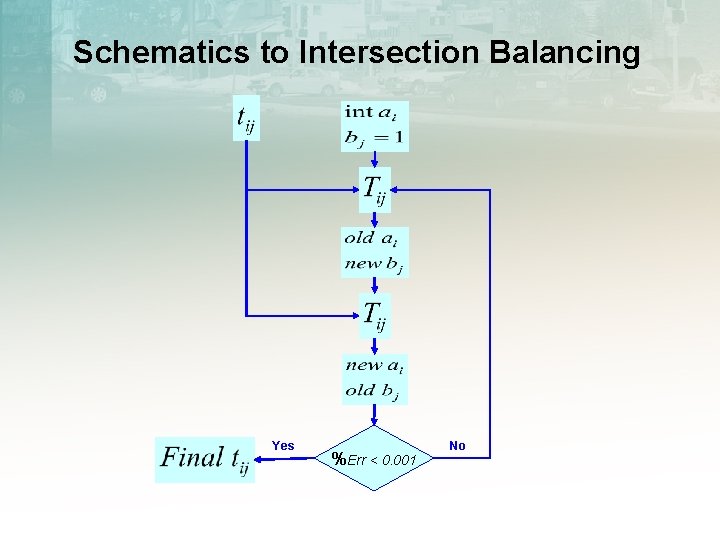
Schematics to Intersection Balancing Yes %Err < 0. 001 No

Equations for Intersection Balancing Doubly constrained: mth Iteration: Row wise mth Iteration: Column wise
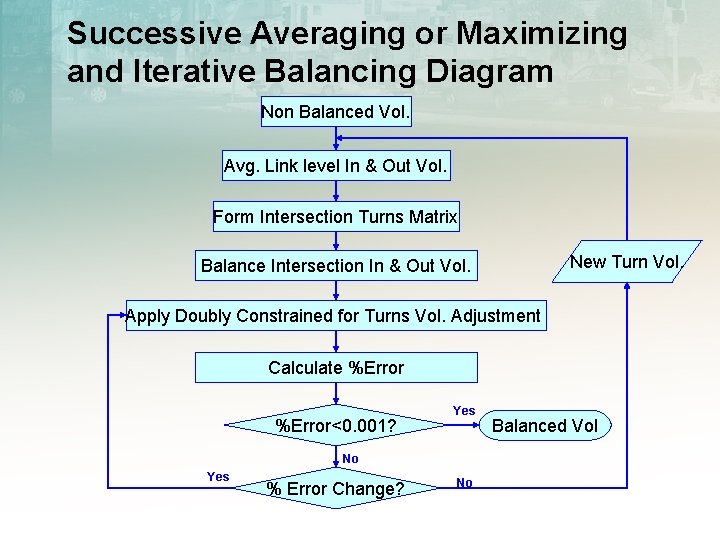
Successive Averaging or Maximizing and Iterative Balancing Diagram Non Balanced Vol. Avg. Link level In & Out Vol. Form Intersection Turns Matrix New Turn Vol. Balance Intersection In & Out Vol. Apply Doubly Constrained for Turns Vol. Adjustment Calculate %Error<0. 001? Yes No Yes % Error Change? No Balanced Vol
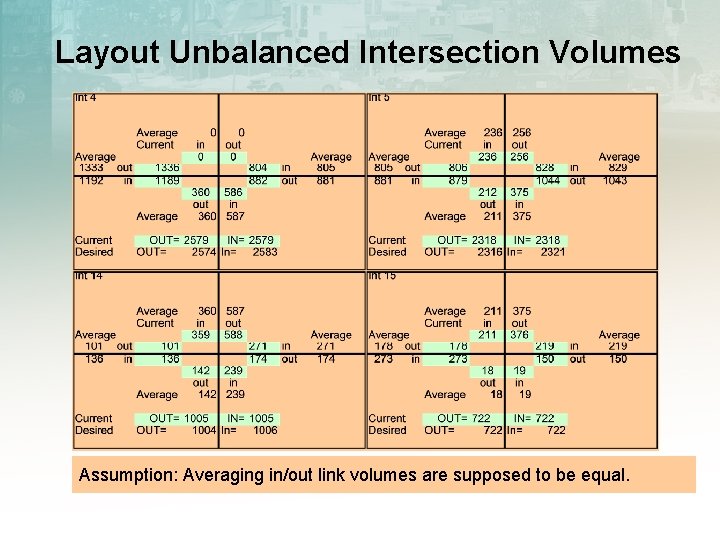
Layout Unbalanced Intersection Volumes Assumption: Averaging in/out link volumes are supposed to be equal.
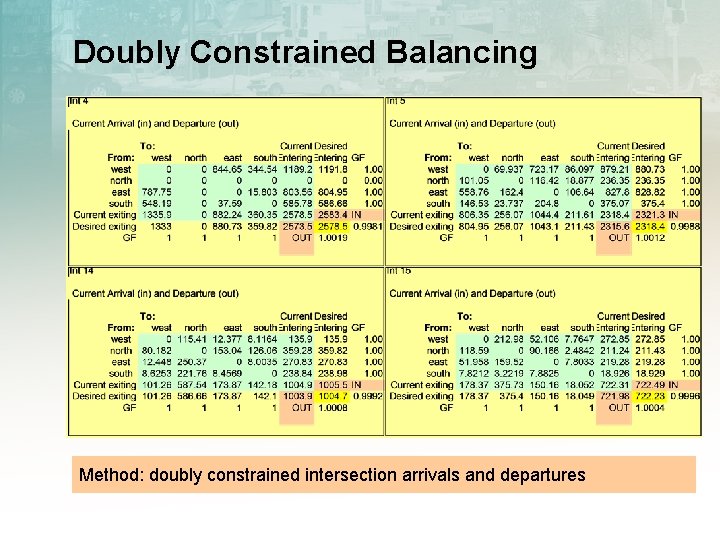
Doubly Constrained Balancing Method: doubly constrained intersection arrivals and departures
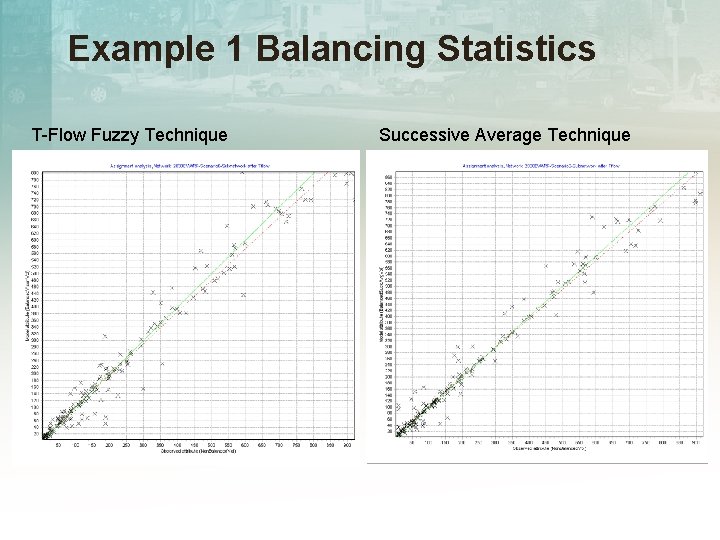
Example 1 Balancing Statistics T-Flow Fuzzy Technique Successive Average Technique
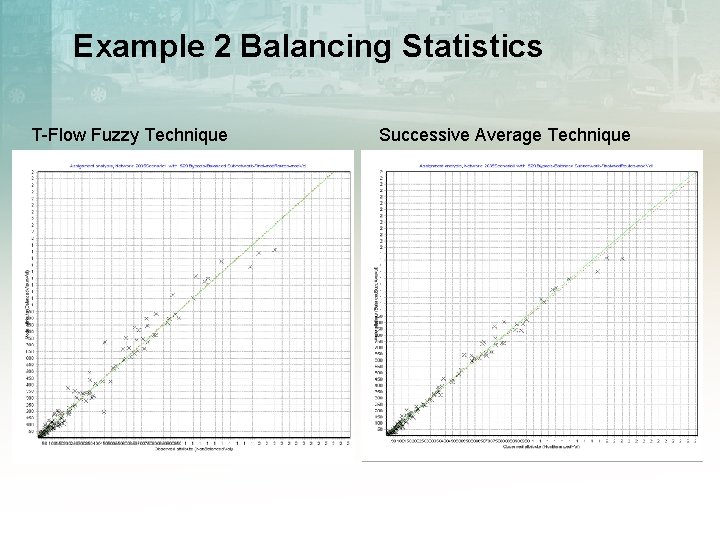
Example 2 Balancing Statistics T-Flow Fuzzy Technique Successive Average Technique
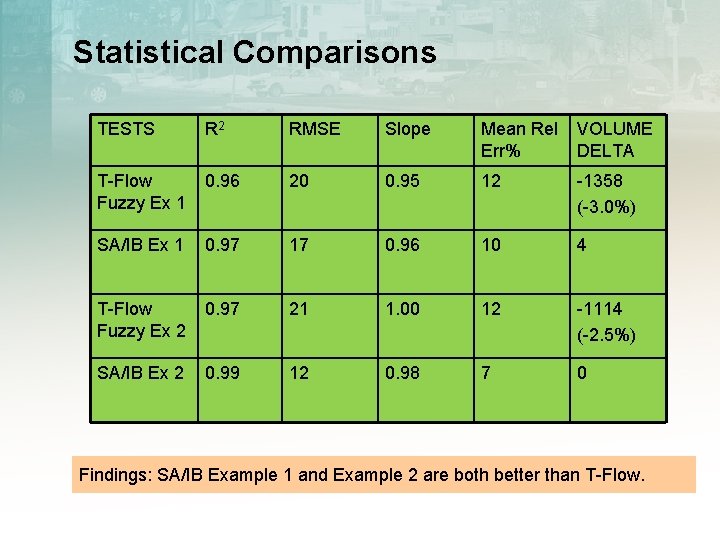
Statistical Comparisons TESTS R 2 RMSE Slope Mean Rel Err% VOLUME DELTA T-Flow Fuzzy Ex 1 0. 96 20 0. 95 12 -1358 (-3. 0%) SA/IB Ex 1 0. 97 17 0. 96 10 4 T-Flow Fuzzy Ex 2 0. 97 21 1. 00 12 -1114 (-2. 5%) SA/IB Ex 2 0. 99 12 0. 98 7 0 Findings: SA/IB Example 1 and Example 2 are both better than T-Flow.
Conclusion • An innovative mathematical method is presented with two practical examples • Successive averaging/iterative balancing technique shows better goodness of fit statistics • Automatic balancing technique saves time in traffic simulation process • The spreadsheet method can be implemented cost-effectively • Capacity constraint can be incorporated in the balancing algorithm in future
- Slides: 20