
Automatic measurement of choroidal thickness with SweptSource OCT
- Slides: 8
Automatic measurement of choroidal thickness with Swept-Source OCT in acute Vogt-Koyanagi-Harada Dra. Olga Garcia-Garcia, Dra. Natalia Diaz-Sanchez, Dr. Olaia Subira-Gonzalez, Dr. Pere Garcia-Bru, Dr. Javier Aguayo, Dr. Luis Arias, Dr. Josep M. Caminal Hospital Universitari de Bellvitge Barcelona
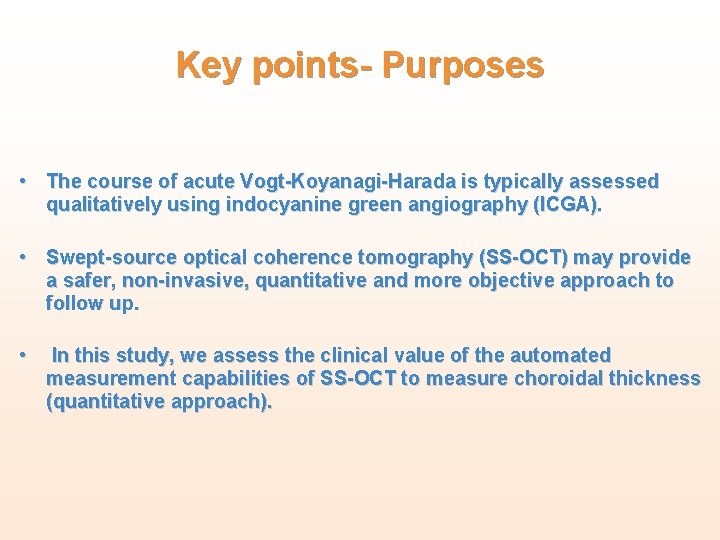
Key points- Purposes • The course of acute Vogt-Koyanagi-Harada is typically assessed qualitatively using indocyanine green angiography (ICGA). • Swept-source optical coherence tomography (SS-OCT) may provide a safer, non-invasive, quantitative and more objective approach to follow up. • In this study, we assess the clinical value of the automated measurement capabilities of SS-OCT to measure choroidal thickness (quantitative approach).
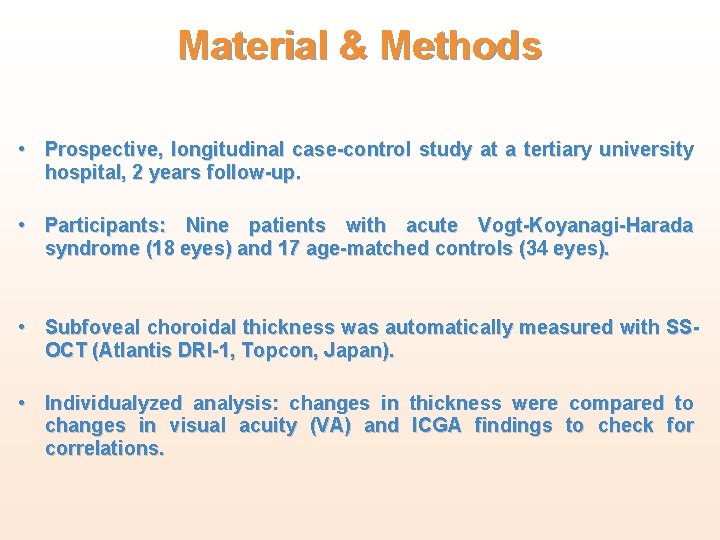
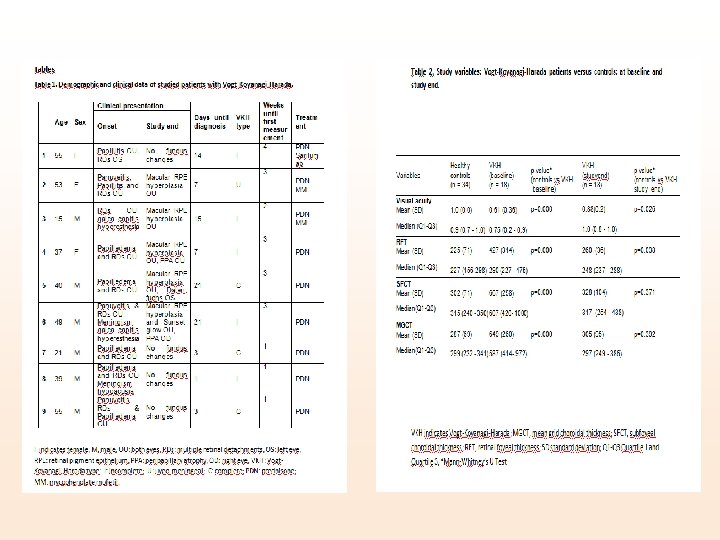
Material & Methods • Prospective, longitudinal case-control study at a tertiary university hospital, 2 years follow-up. • Participants: Nine patients with acute Vogt-Koyanagi-Harada syndrome (18 eyes) and 17 age-matched controls (34 eyes). • Subfoveal choroidal thickness was automatically measured with SSOCT (Atlantis DRI-1, Topcon, Japan). • Individualyzed analysis: changes in thickness were compared to changes in visual acuity (VA) and ICGA findings to check for correlations.
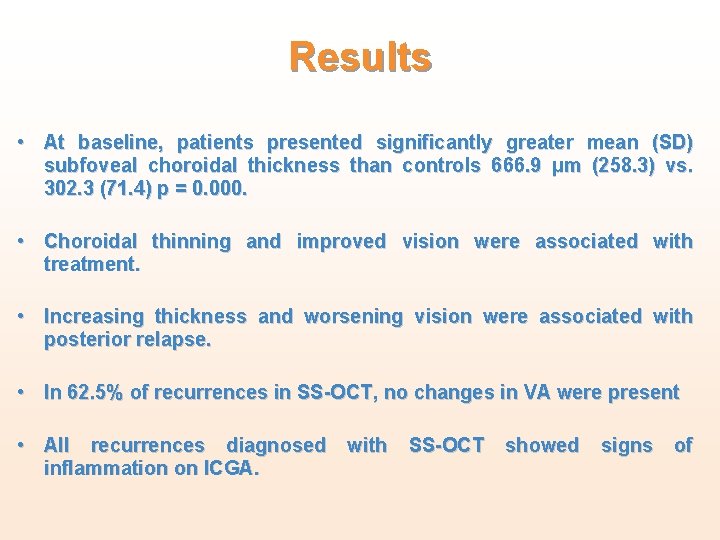
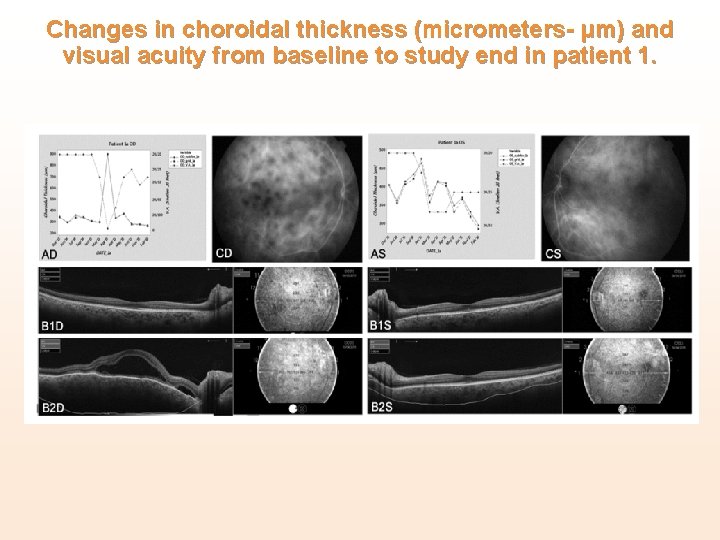
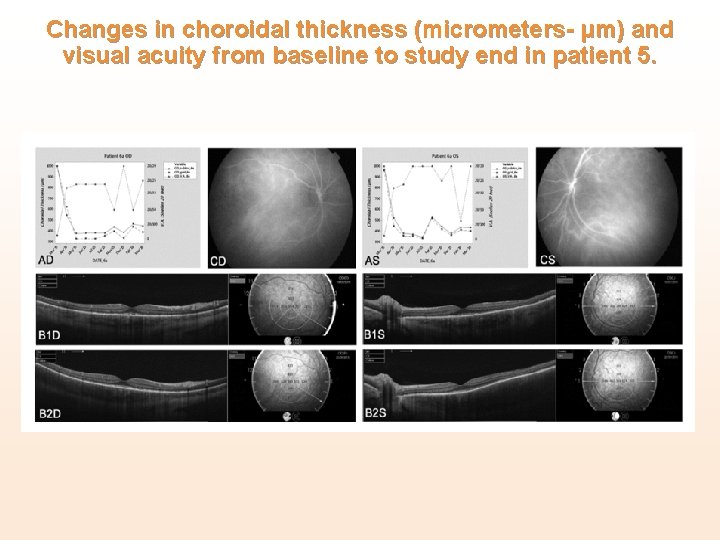
Results • At baseline, patients presented significantly greater mean (SD) subfoveal choroidal thickness than controls 666. 9 μm (258. 3) vs. 302. 3 (71. 4) p = 0. 000. • Choroidal thinning and improved vision were associated with treatment. • Increasing thickness and worsening vision were associated with posterior relapse. • In 62. 5% of recurrences in SS-OCT, no changes in VA were present • All recurrences diagnosed with SS-OCT showed signs of inflammation on ICGA.
Changes in choroidal thickness (micrometers- μm) and visual acuity from baseline to study end in patient 1.
Changes in choroidal thickness (micrometers- μm) and visual acuity from baseline to study end in patient 5.
Conclusions • Automatic measurement of choroidal thickness with SS-OCT is a rapid, non-invasive manner of detecting posterior segment recurrences and treatment response in acute Harada patients. • Swept-source tomography could reduce the need for angiography to monitor patients with Harada disease.