
Automatic Measurement of AFPL 3 by Using Clinical
Automatic Measurement of AFP-L 3% by Using Clinical Automatic Analyzer “Li. BASys” 본 과 이 외 의 자 료 도 2001. 11. 01 포 함 되 었 습 니 다. 생화학계 이은자
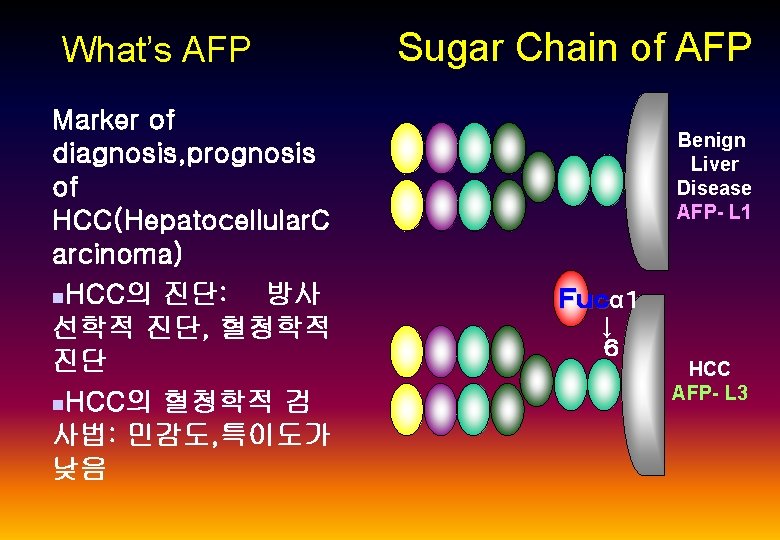
What’s AFP Marker of diagnosis, prognosis of HCC(Hepatocellular. C arcinoma) n. HCC의 진단: 방사 선학적 진단, 혈청학적 진단 n. HCC의 혈청학적 검 사법: 민감도, 특이도가 낮음 Sugar Chain of AFP Benign Liver Disease AFP- L 1 Fucα1 ↓ 6 HCC AFP- L 3
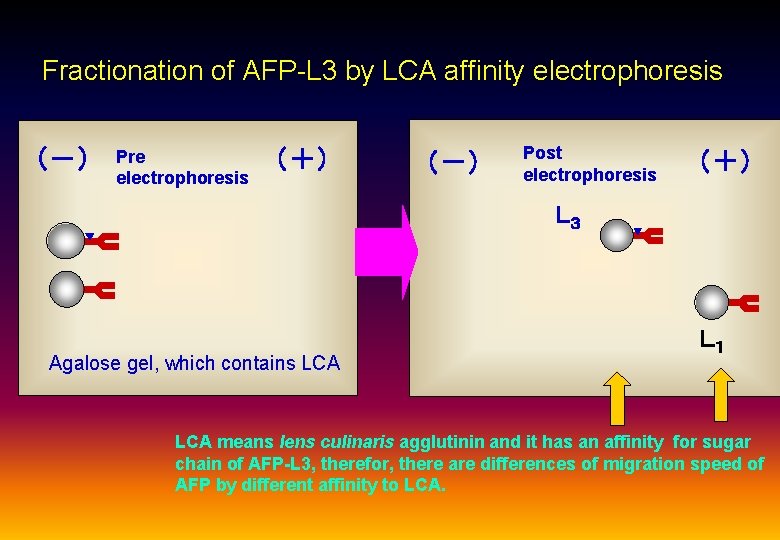
Fractionation of AFP-L 3 by LCA affinity electrophoresis (-) Pre electrophoresis (+) (-) Post electrophoresis (+) L3 Agalose gel, which contains LCA L1 LCA means lens culinaris agglutinin and it has an affinity for sugar chain of AFP-L 3, therefor, there are differences of migration speed of AFP by different affinity to LCA.
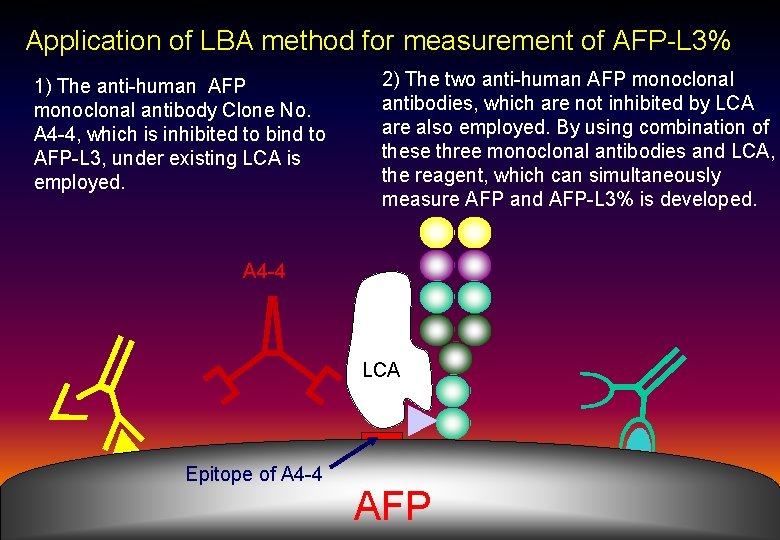
Application of LBA method for measurement of AFP-L 3% 1) The anti-human AFP monoclonal antibody Clone No. A 4 -4, which is inhibited to bind to AFP-L 3, under existing LCA is employed. 2) The two anti-human AFP monoclonal antibodies, which are not inhibited by LCA are also employed. By using combination of these three monoclonal antibodies and LCA, the reagent, which can simultaneously measure AFP and AFP-L 3% is developed. A 4 -4 LCA Epitope of A 4 -4 AFP
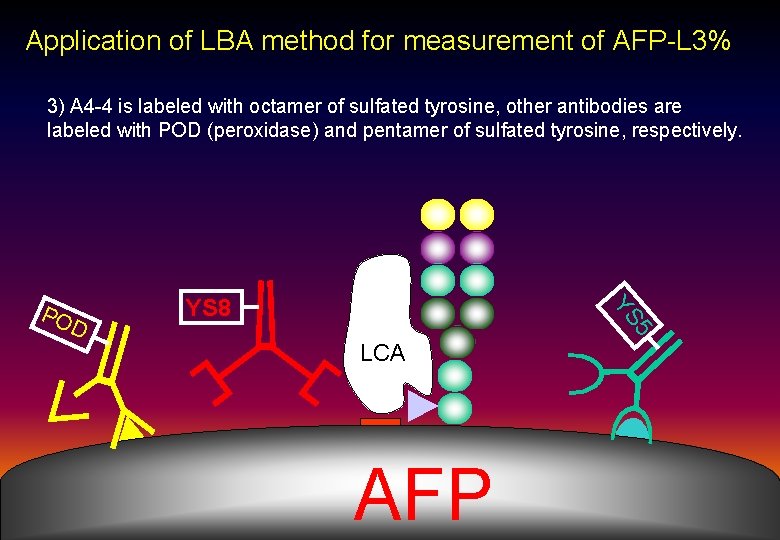
Application of LBA method for measurement of AFP-L 3% 3) A 4 -4 is labeled with octamer of sulfated tyrosine, other antibodies are labeled with POD (peroxidase) and pentamer of sulfated tyrosine, respectively. 5 D YS 8 YS PO LCA AFP
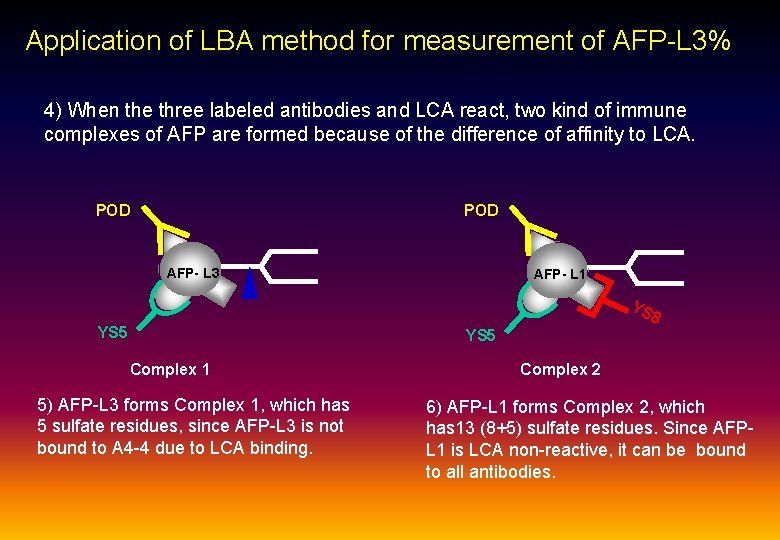
Application of LBA method for measurement of AFP-L 3% 4) When the three labeled antibodies and LCA react, two kind of immune complexes of AFP are formed because of the difference of affinity to LCA. POD AFP- L 3 AFP- L 1 YS 8 YS 5 Complex 1 5) AFP-L 3 forms Complex 1, which has 5 sulfate residues, since AFP-L 3 is not bound to A 4 -4 due to LCA binding. Complex 2 6) AFP-L 1 forms Complex 2, which has 13 (8+5) sulfate residues. Since AFPL 1 is LCA non-reactive, it can be bound to all antibodies.
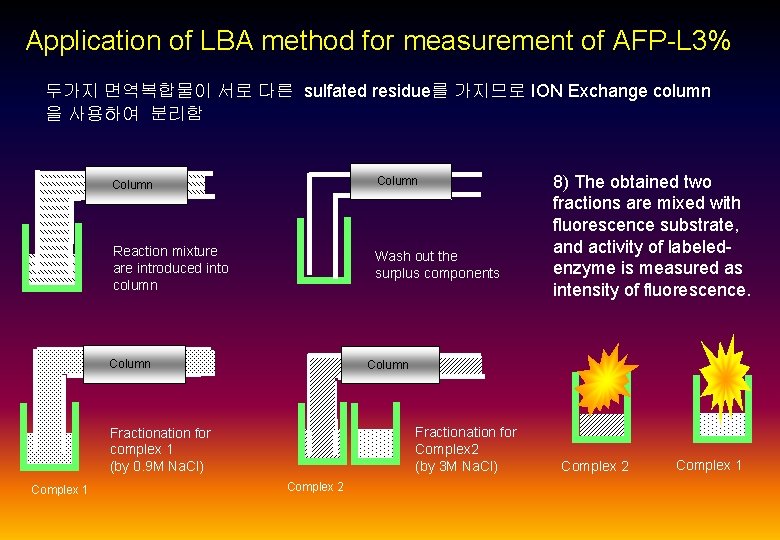
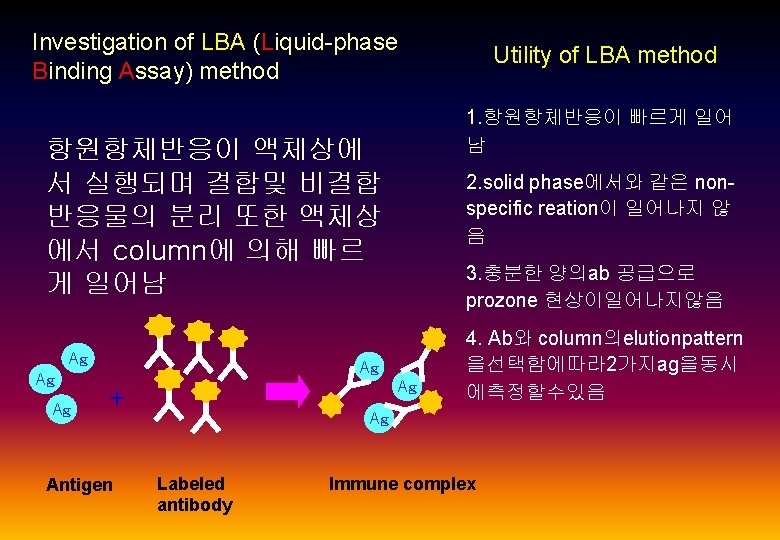
Application of LBA method for measurement of AFP-L 3% 두가지 면역복합물이 서로 다른 sulfated residue를 가지므로 ION Exchange column 을 사용하여 분리함 Column Reaction mixture are introduced into column Wash out the surplus components Column Fractionation for Complex 2 (by 3 M Na. Cl) Fractionation for complex 1 (by 0. 9 M Na. Cl) Complex 1 8) The obtained two fractions are mixed with fluorescence substrate, and activity of labeledenzyme is measured as intensity of fluorescence. Complex 2 Complex 1
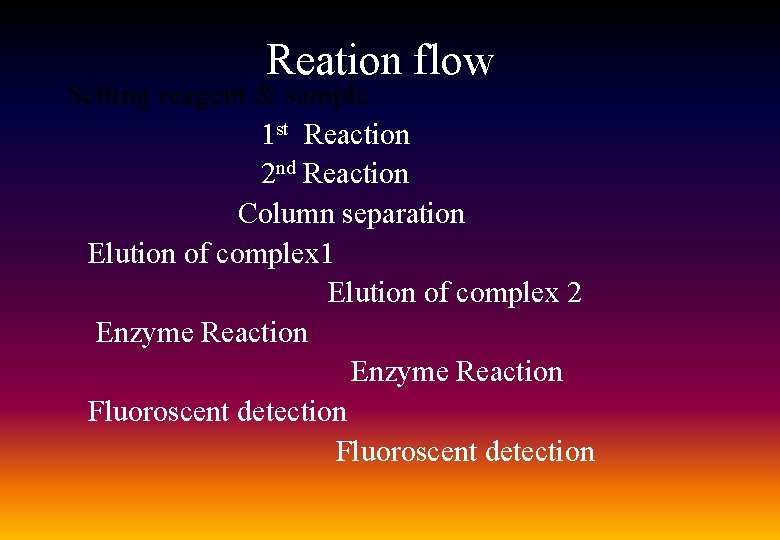
Reation flow Setting reagent & sample 1 st Reaction 2 nd Reaction Column separation Elution of complex 1 Elution of complex 2 Enzyme Reaction Fluoroscent detection
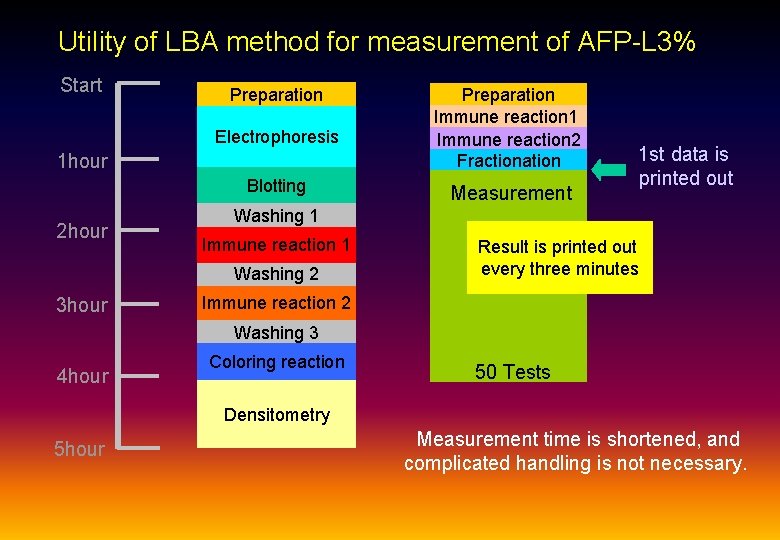
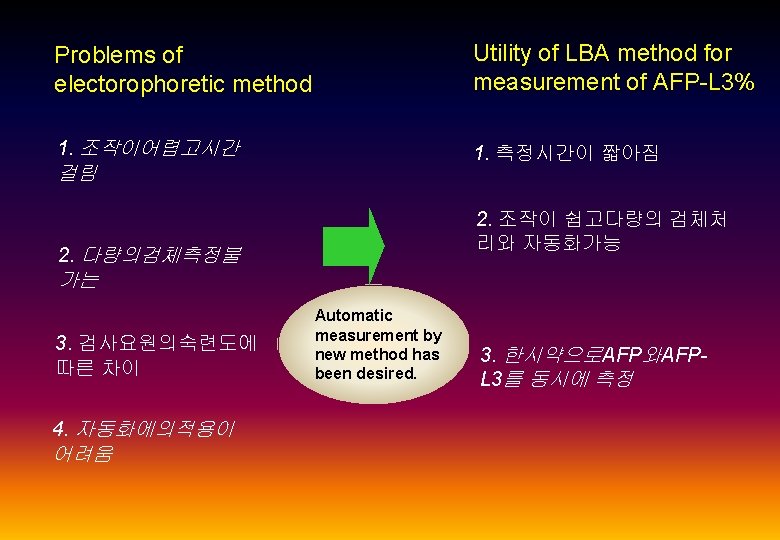
Utility of LBA method for measurement of AFP-L 3% Start Preparation Electrophoresis 1 hour Blotting 2 hour Measurement 1 st data is printed out Washing 1 Immune reaction 1 Washing 2 3 hour Preparation Immune reaction 1 Immune reaction 2 Fractionation Result is printed out every three minutes Immune reaction 2 Washing 3 4 hour Coloring reaction 50 Tests Densitometry 5 hour Measurement time is shortened, and complicated handling is not necessary.
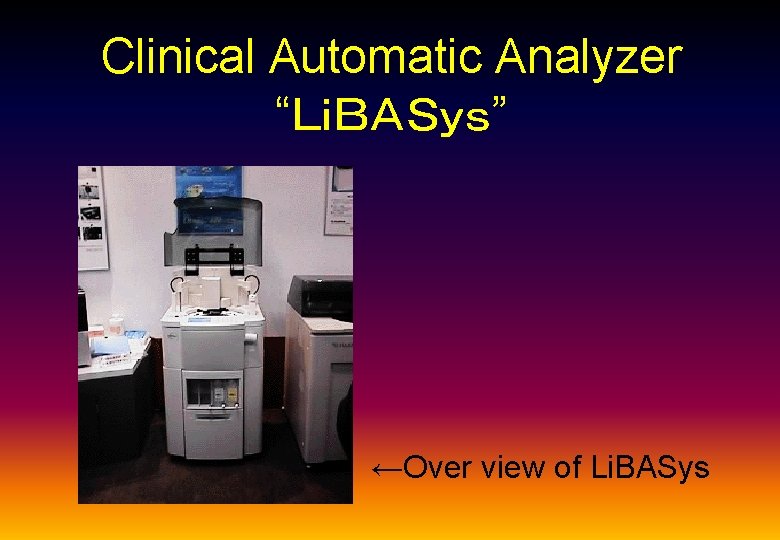
Clinical Automatic Analyzer “LiBASys” ←Over view of Li. BASys
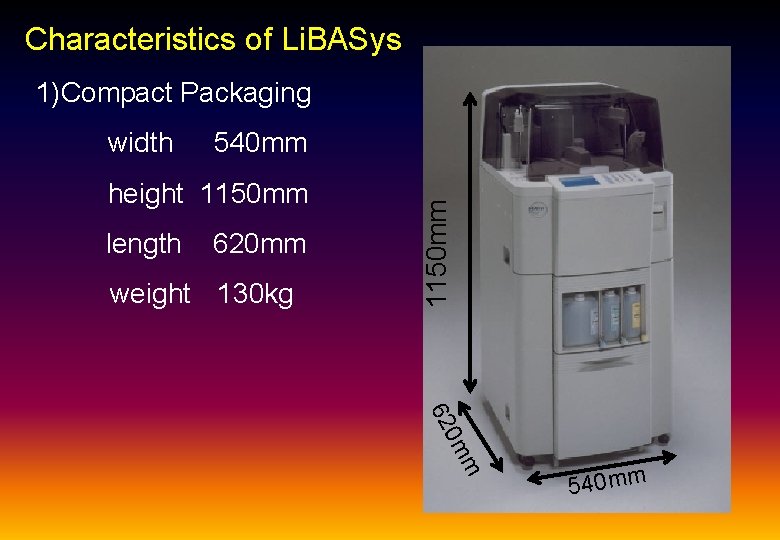
Characteristics of Li. BASys 1)Compact Packaging height 1150 mm length 620 mm weight 130 kg 1150 mm width 540 mm m 0 m 62 540 mm
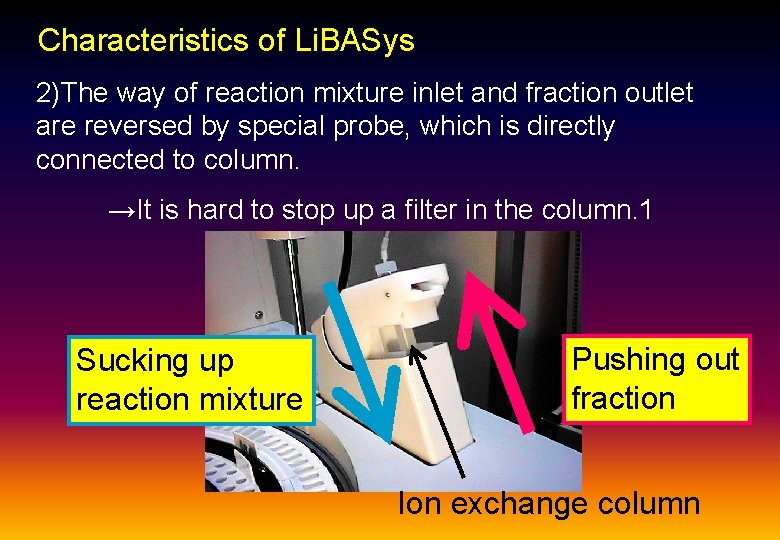
Characteristics of Li. BASys 2)The way of reaction mixture inlet and fraction outlet are reversed by special probe, which is directly connected to column. →It is hard to stop up a filter in the column. 1 Sucking up reaction mixture Pushing out fraction Ion exchange column
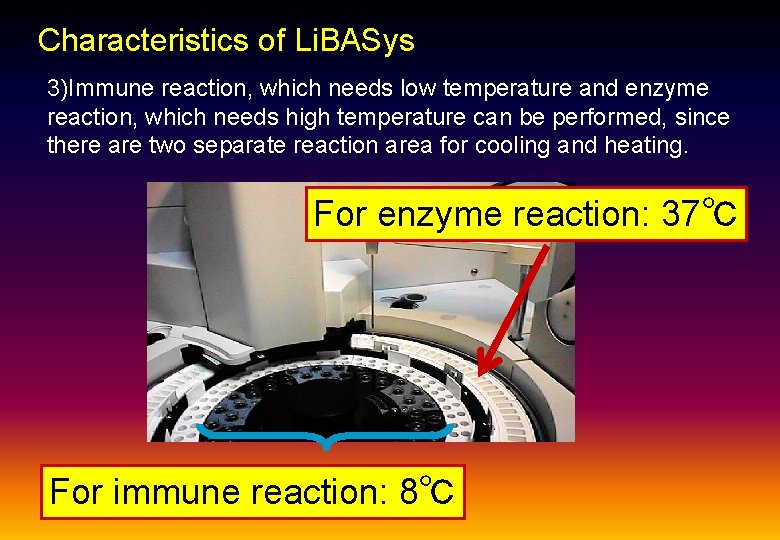
Characteristics of Li. BASys 3)Immune reaction, which needs low temperature and enzyme reaction, which needs high temperature can be performed, since there are two separate reaction area for cooling and heating. For enzyme reaction: 37℃ For immune reaction: 8℃
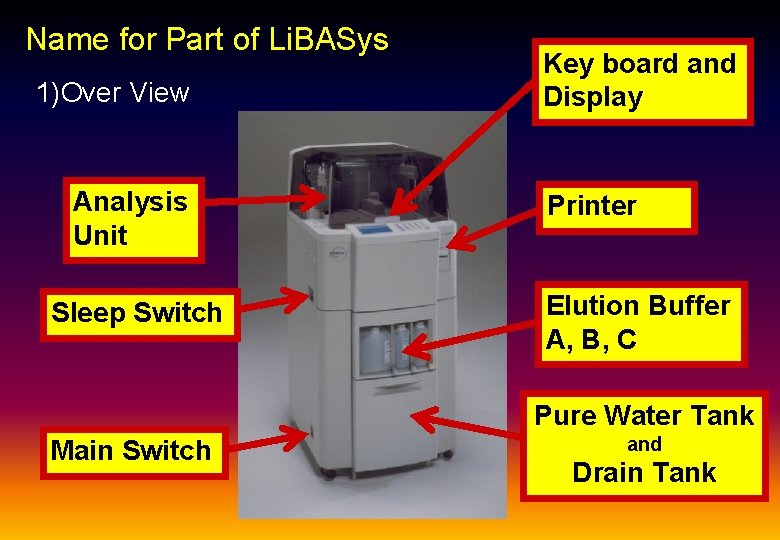
Name for Part of Li. BASys 1)Over View Analysis Unit Sleep Switch Key board and Display Printer Elution Buffer A, B, C Pure Water Tank Main Switch and Drain Tank
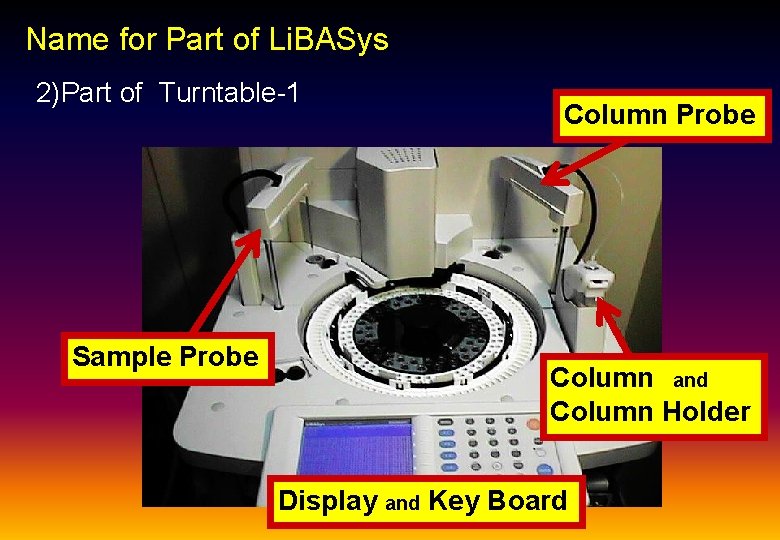
Name for Part of Li. BASys 2)Part of Turntable-1 Sample Probe Column and Column Holder Display and Key Board
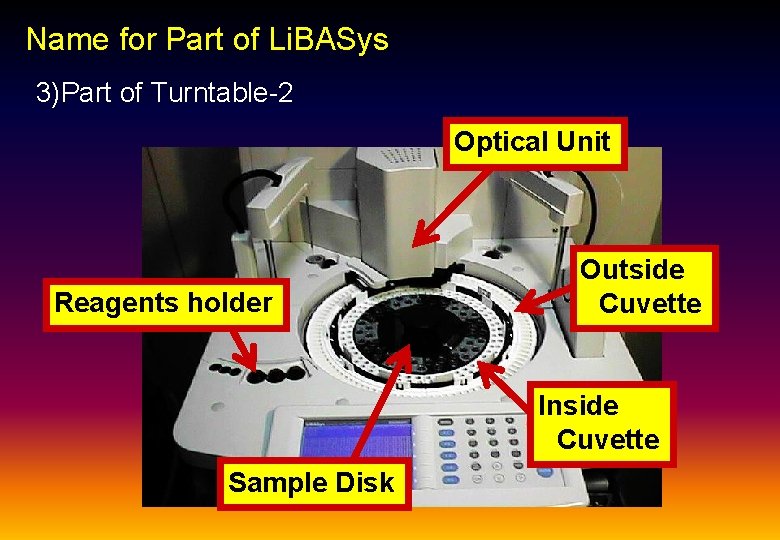
Name for Part of Li. BASys 3)Part of Turntable-2 Optical Unit Reagents holder Outside Cuvette Inside Cuvette Sample Disk
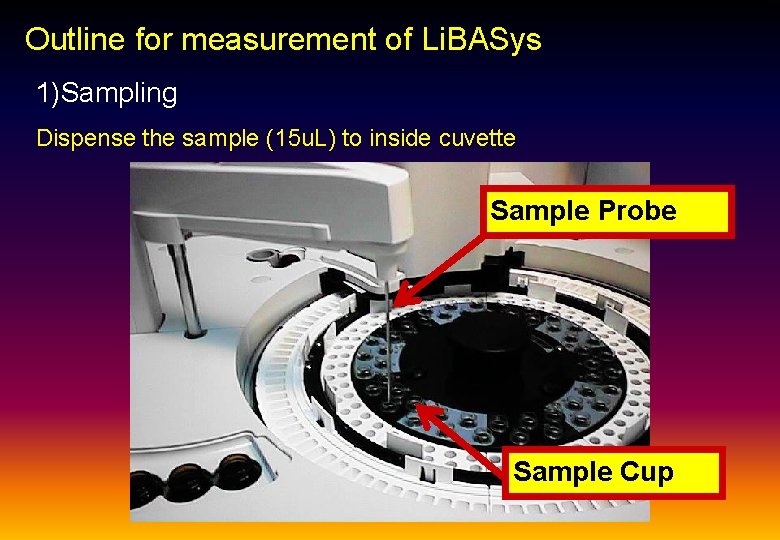
Outline for measurement of Li. BASys 1)Sampling Dispense the sample (15 u. L) to inside cuvette Sample Probe Sample Cup
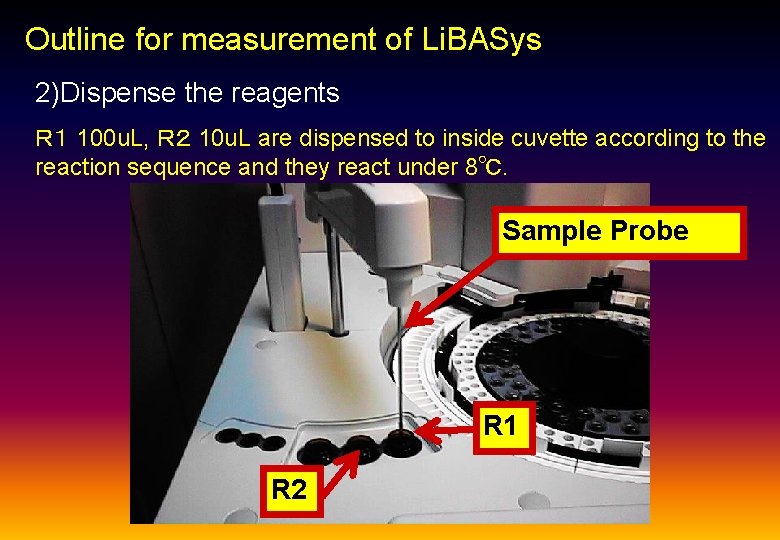
Outline for measurement of Li. BASys 2)Dispense the reagents R1 100 u. L, R2 10 u. L are dispensed to inside cuvette according to the reaction sequence and they react under 8℃. Sample Probe R 1 R 2
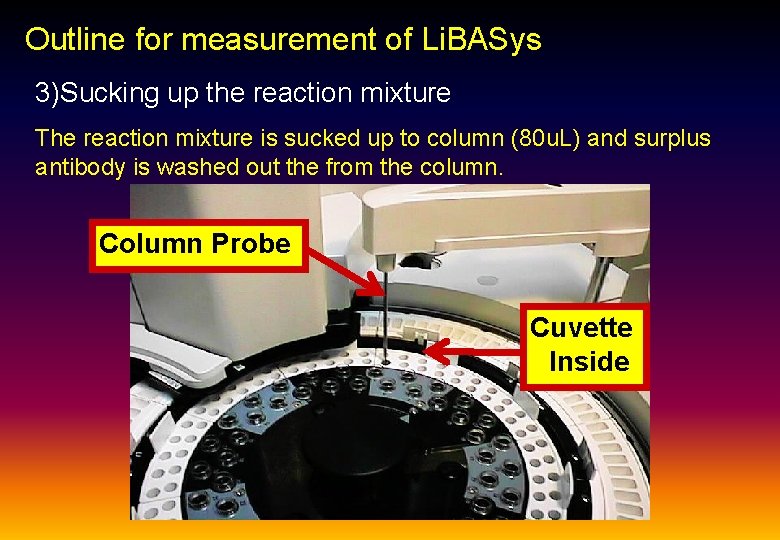
Outline for measurement of Li. BASys 3)Sucking up the reaction mixture The reaction mixture is sucked up to column (80 u. L) and surplus antibody is washed out the from the column. Column Probe Cuvette Inside
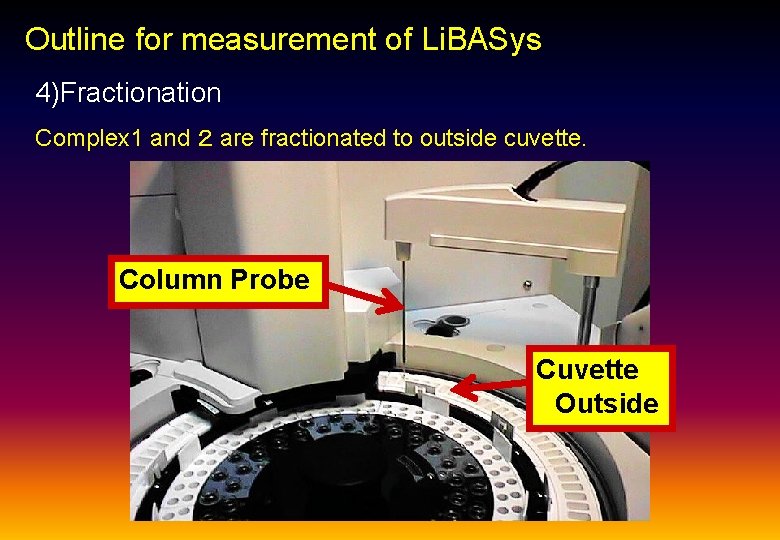
Outline for measurement of Li. BASys 4)Fractionation Complex 1 and 2 are fractionated to outside cuvette. Column Probe Cuvette Outside
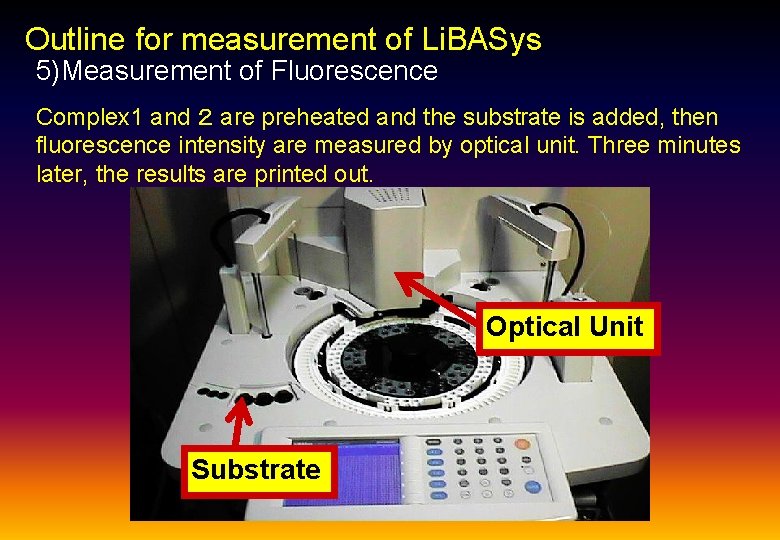
Outline for measurement of Li. BASys 5)Measurement of Fluorescence Complex 1 and 2 are preheated and the substrate is added, then fluorescence intensity are measured by optical unit. Three minutes later, the results are printed out. Optical Unit Substrate
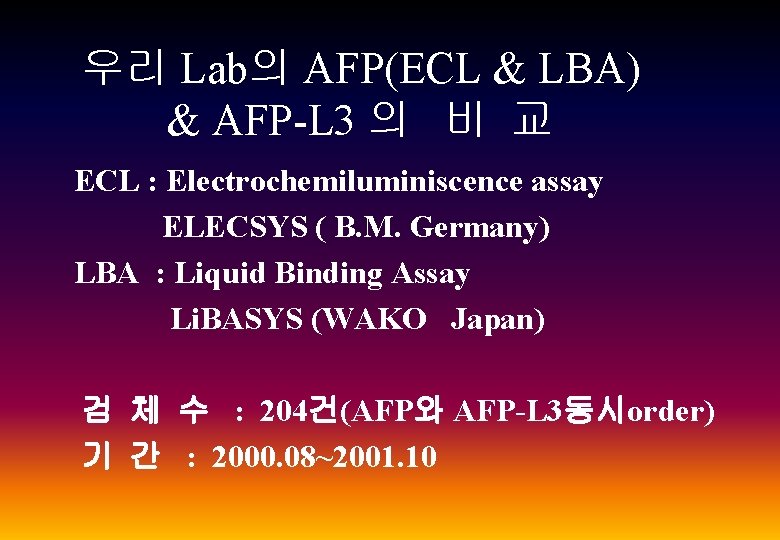
우리 Lab의 AFP(ECL & LBA) & AFP-L 3 의 비 교 ECL : Electrochemiluminiscence assay ELECSYS ( B. M. Germany) LBA : Liquid Binding Assay Li. BASYS (WAKO Japan) 검 체 수 : 204건(AFP와 AFP-L 3동시order) 기 간 : 2000. 08~2001. 10
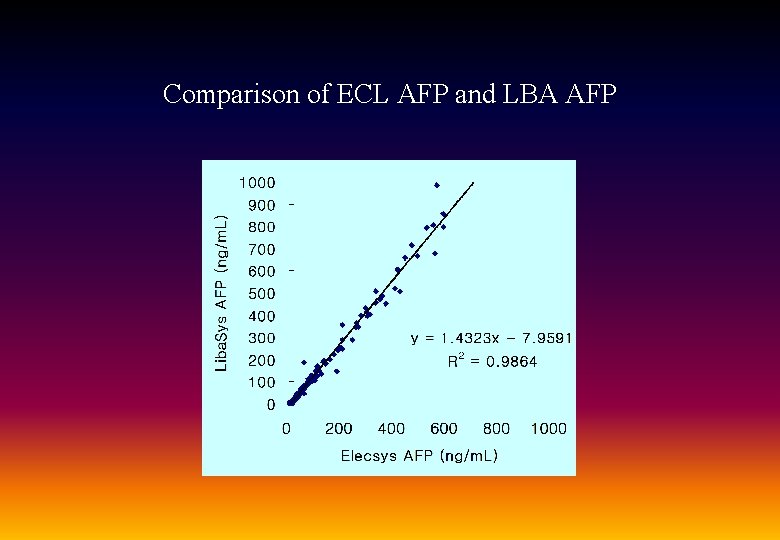
Comparison of ECL AFP and LBA AFP
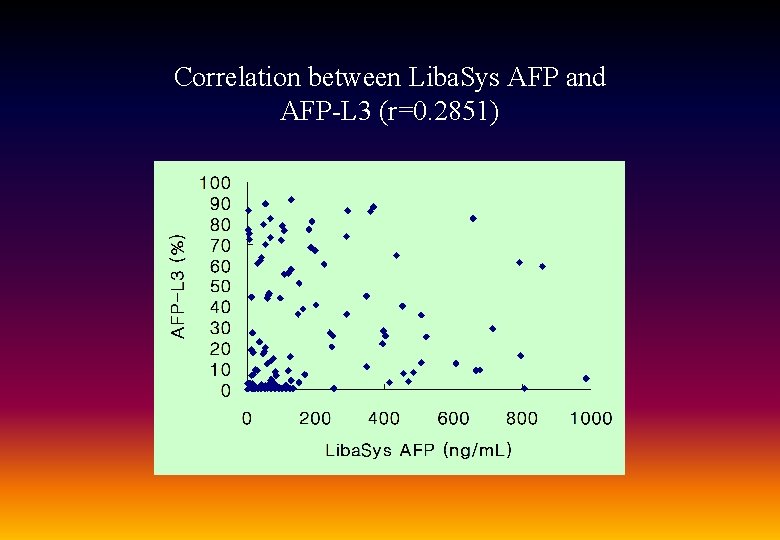
Correlation between Liba. Sys AFP and AFP-L 3 (r=0. 2851)
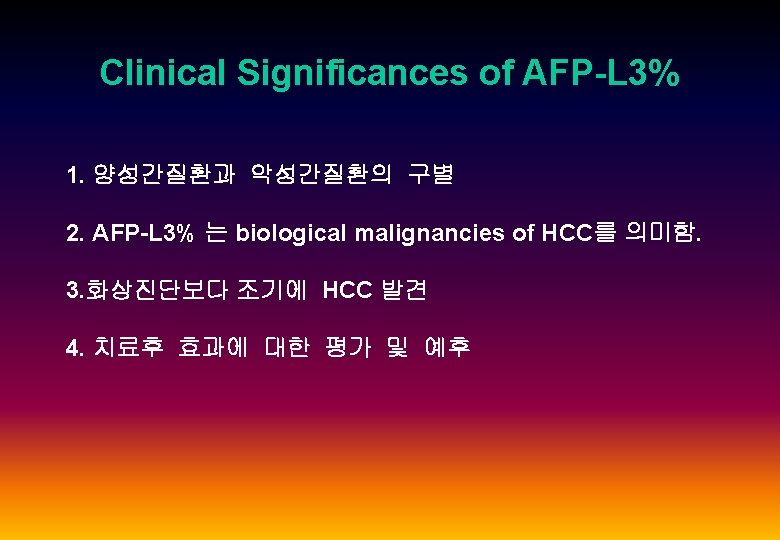
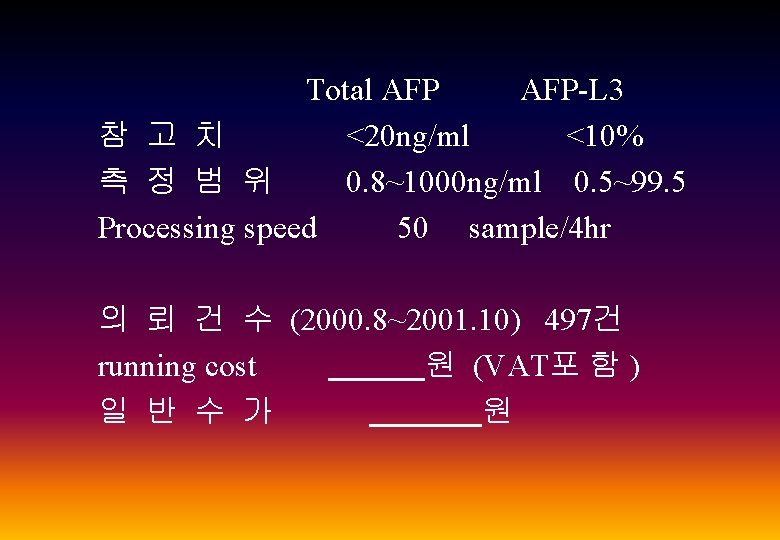
Total AFP-L 3 참 고 치 <20 ng/ml <10% 측 정 범 위 0. 8~1000 ng/ml 0. 5~99. 5 Processing speed 50 sample/4 hr 의 뢰 건 수 (2000. 8~2001. 10) 497건 running cost 원 (VAT포 함 ) 일 반 수 가 원
- Slides: 29