
Automated Tracking and Reporting of Resident Experiences in


- Slides: 22
Automated Tracking and Reporting of Resident Experiences in Continuity Clinic Using Clinical Classification Software Greg Garrison, MD Vicki Jacobsen, MD Bob Bonacci, MD
An Alternate Title: Capturing a Resident’s Continuity Clinic Experience
Goals • Learn how Clinical Classification Software (CSS) available through Agency for Healthcare Research and Quality (AHRQ) can be used to summarize resident experience in clinic • Evaluate the utility of using a radar graph • Discuss how the tool can be used to tailor individual resident educational plans 3
Disclosures • Greg Garrison, MD – None • Vicki Jacobsen, MD – None • Robert Bonacci, MD – None
New FM-RC Requirements • Numbers, numbers and more numbers • Highlight the importance of tracking the number of encounters – Pediatric encounters – Women’s health encounters – Geriatric encounters
Resident Patient Panel • Over last several years panels have been streamlined – Total panel number – Gender mix – Pediatric patients – Geriatric patients 6
Goal • Develop a snapshot of each resident’s patient experience at clinic. 7
Data • Residents – Busy, self-logging not a sustainable option • Electronic Medical record is not FM-RC friendly • Billing data is separate from clinical data
Initial Questions • How many patients seen in FMC? – Count notes per resident • How many pediatric patients seen in FMC? – Count notes where patient’s age < 18 • What proportion of patients seen are continuity patients? – Combine with panel data and count visits where physician = PCP
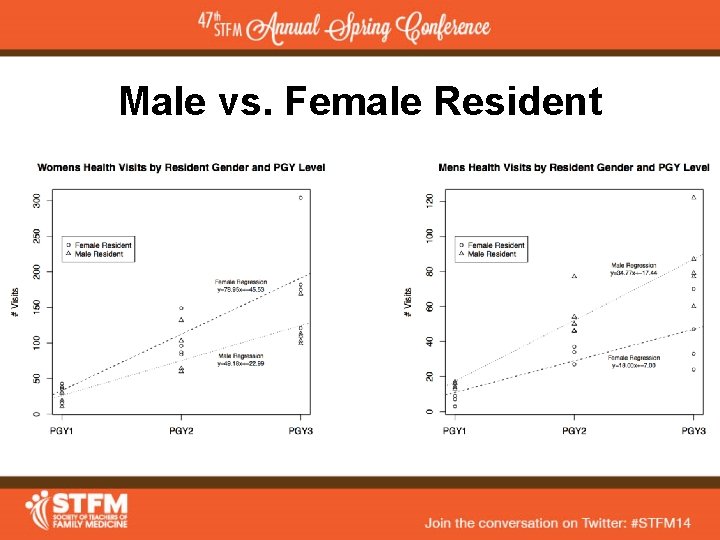
The Residency Clinic • A nagging sense that female resident experience was different from a male resident experience – Continuity OB – Women’s health – Musculoskeletal – Procedures – Complex medical encounters
But how to capture experience? • Counts are great, but. . . • We want to know experience • Can we develop a tool….
Attributes of the Tool • Create a visual depiction of the resident experience that is easy to interpret • Ability to compare individual experience with peer group experience • Identify potential educational gaps
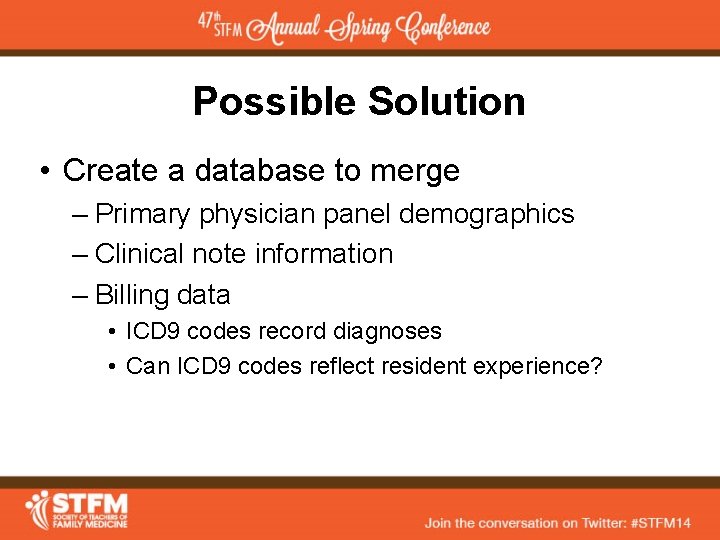
Possible Solution • Create a database to merge – Primary physician panel demographics – Clinical note information – Billing data • ICD 9 codes record diagnoses • Can ICD 9 codes reflect resident experience?
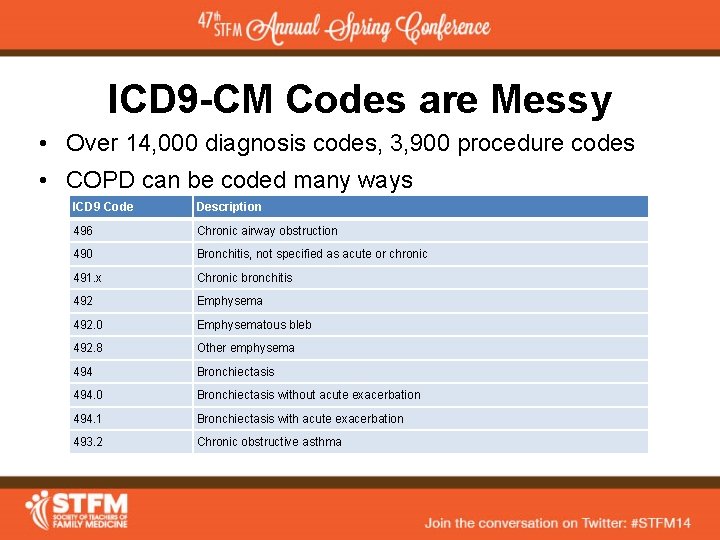
ICD 9 -CM Codes are Messy • Over 14, 000 diagnosis codes, 3, 900 procedure codes • COPD can be coded many ways ICD 9 Code Description 496 Chronic airway obstruction 490 Bronchitis, not specified as acute or chronic 491. x Chronic bronchitis 492 Emphysema 492. 0 Emphysematous bleb 492. 8 Other emphysema 494 Bronchiectasis 494. 0 Bronchiectasis without acute exacerbation 494. 1 Bronchiectasis with acute exacerbation 493. 2 Chronic obstructive asthma
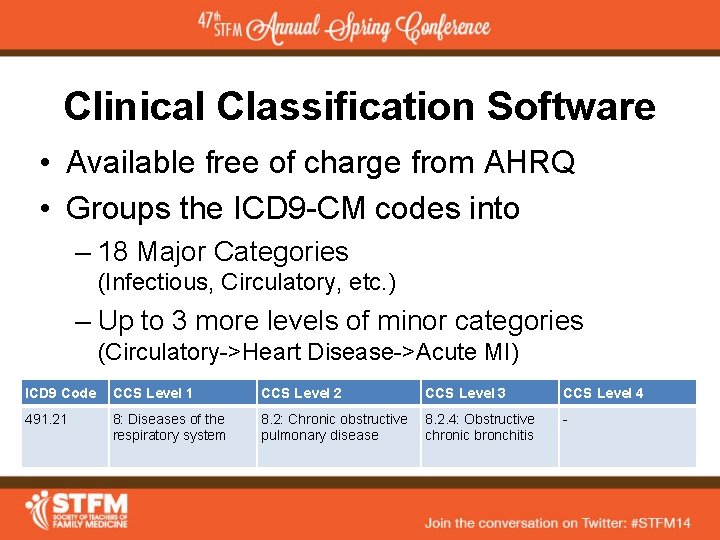
Clinical Classification Software • Available free of charge from AHRQ • Groups the ICD 9 -CM codes into – 18 Major Categories (Infectious, Circulatory, etc. ) – Up to 3 more levels of minor categories (Circulatory->Heart Disease->Acute MI) ICD 9 Code CCS Level 1 CCS Level 2 CCS Level 3 CCS Level 4 491. 21 8: Diseases of the respiratory system 8. 2: Chronic obstructive pulmonary disease 8. 2. 4: Obstructive chronic bronchitis -
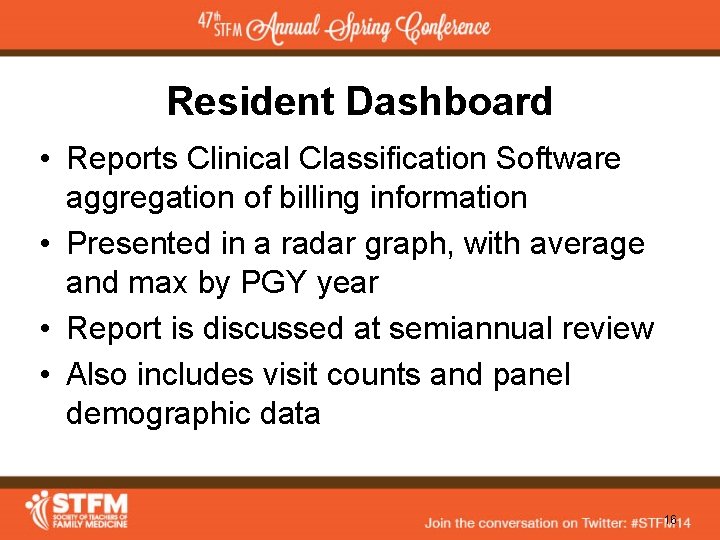
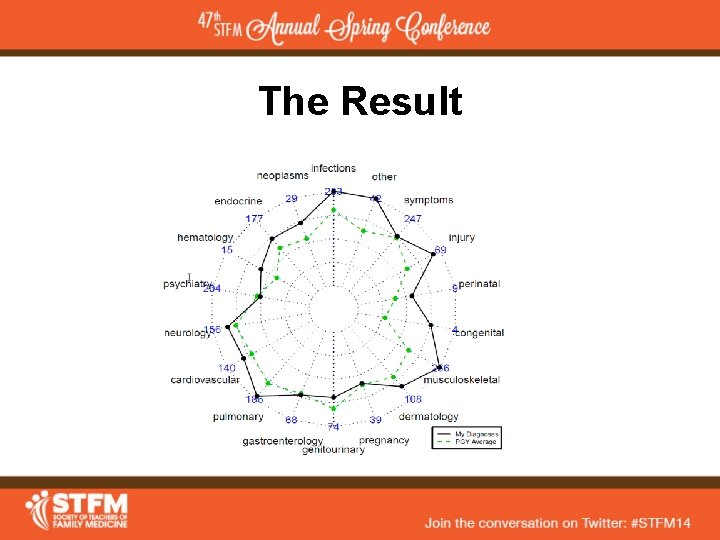
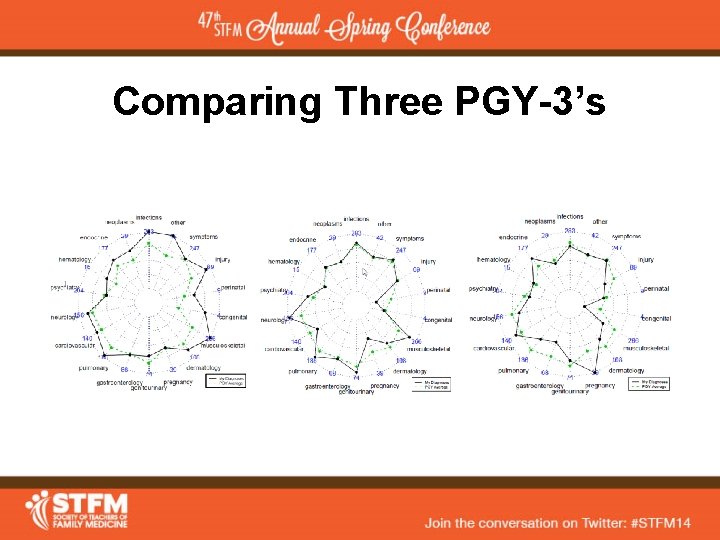
Resident Dashboard • Reports Clinical Classification Software aggregation of billing information • Presented in a radar graph, with average and max by PGY year • Report is discussed at semiannual review • Also includes visit counts and panel demographic data 16
The Result
Comparing Three PGY-3’s
So What About that Nagging Sense? • Female resident experience is different from a male resident experience… 19
Male vs. Female Resident
Capturing a Resident’s Clinic Experience • Is it important? • Confounders? • How can this tool be enhanced? 21
Thank You! • • Be sure to complete the session evaluation Bonacci. robert@mayo. edu Garrison. gregory@mayo. edu (technical) Jacobsen. vicki@mayo. edu 22