
AUTOMATED TEST ORACLES FOR MACHINE LEARNING SOFTWARE PD



![22 Smoke Tests for Classification • • • Data in [0, 1] Features close](https://slidetodoc.com/presentation_image_h2/6d295f162739207b06f730b5569af62f/image-29.jpg "22 Smoke Tests for Classification • • • Data in [0, 1] Features close")
- Slides: 44
AUTOMATED TEST ORACLES FOR MACHINE LEARNING SOFTWARE PD Dr. Steffen Herbold © All rights reserved
Contents • Motivation • Oracles and pseudo oracles • Trivial Oracles 2
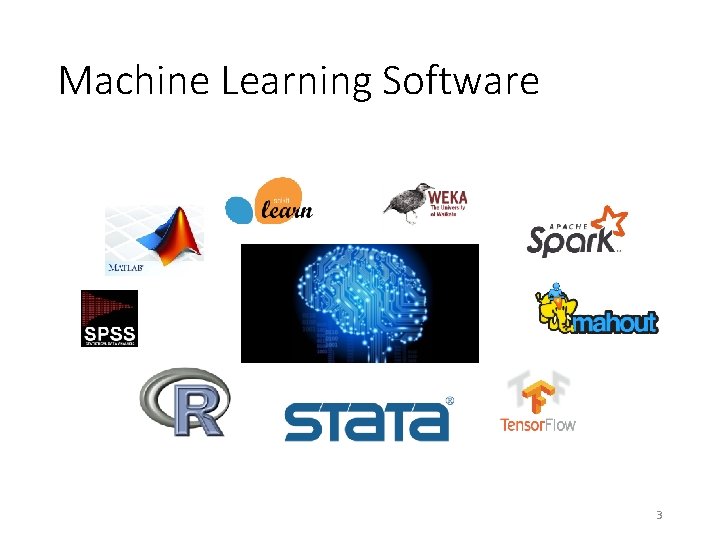
Machine Learning Software 3
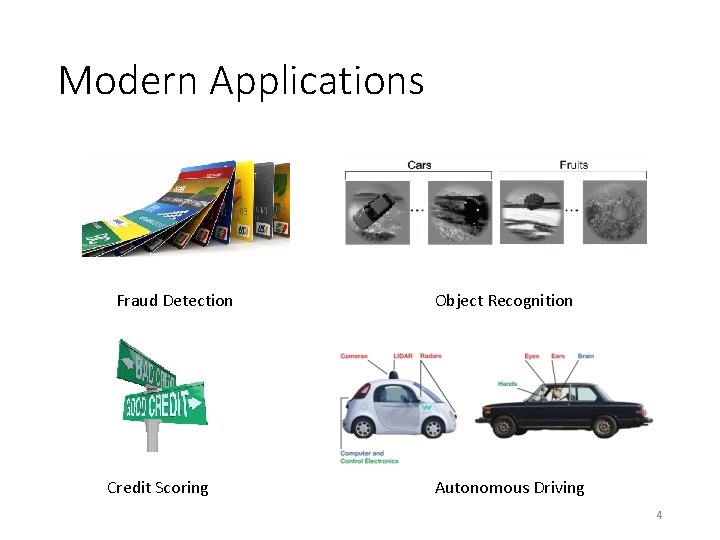
Modern Applications Fraud Detection Credit Scoring Object Recognition Autonomous Driving 4
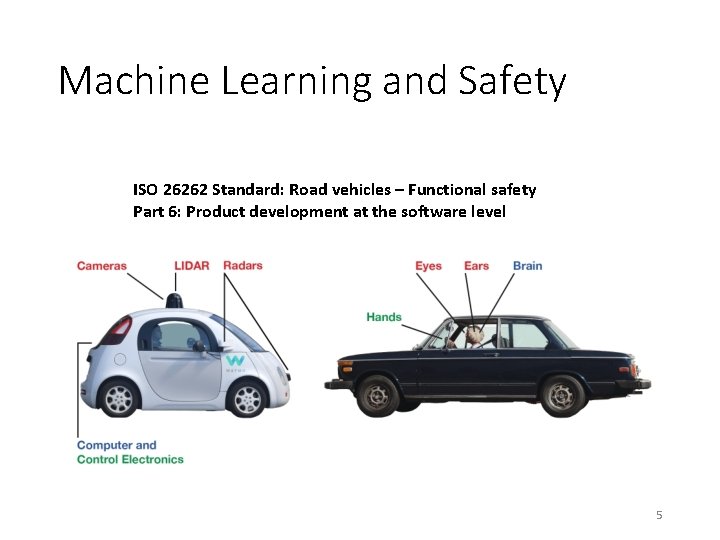
Machine Learning and Safety ISO 26262 Standard: Road vehicles – Functional safety Part 6: Product development at the software level 5
ISO 26262 Standard • Automotive Safety Integrity Level D (ASIL D) • „ASIL D represents likely potential for severely lifethreatening or fatal injury in the event of a malfunction and requires the highest level of assurance that the dependent safety goals are sufficient and have been achieved. ” • Defines requirements for quality assurance 6
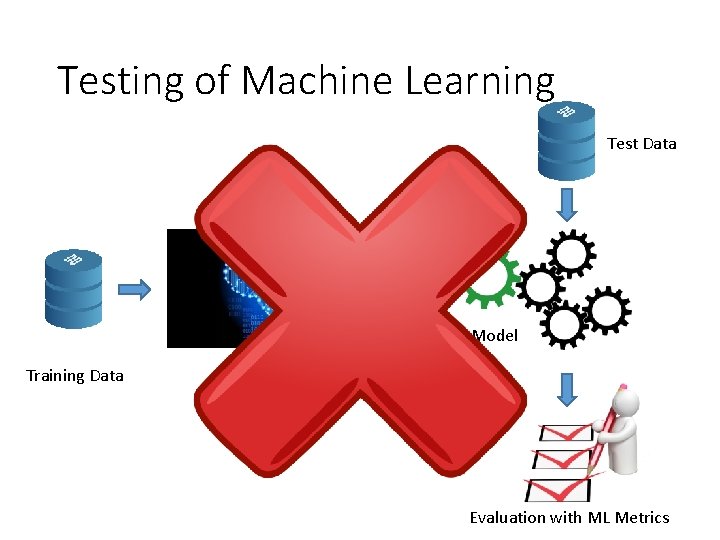
Testing of Machine Learning Test Data Model Training Data Learning Algorithm Evaluation with ML Metrics
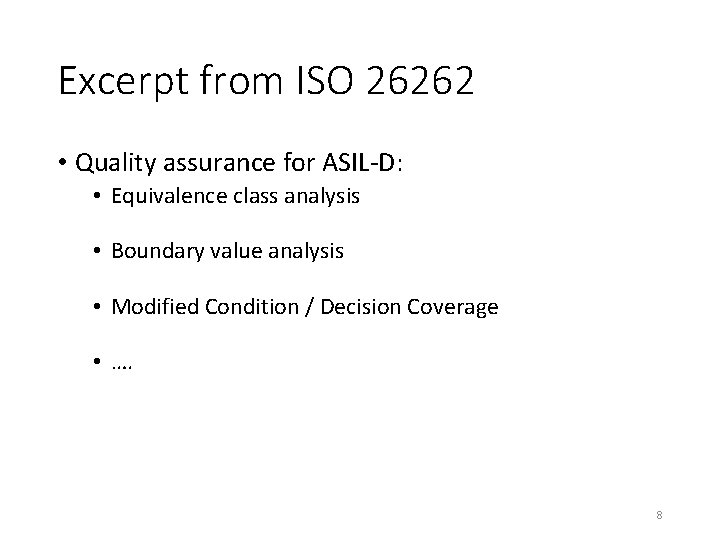
Excerpt from ISO 26262 • Quality assurance for ASIL-D: • Equivalence class analysis • Boundary value analysis • Modified Condition / Decision Coverage • …. 8
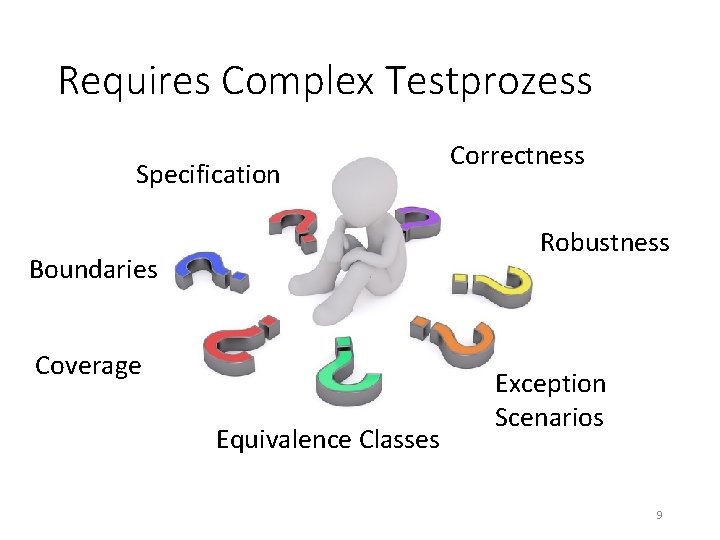
Requires Complex Testprozess Specification Correctness Robustness Boundaries Coverage Equivalence Classes Exception Scenarios 9
e r a w t f o S g n ni r a e L e n i h c a M g n i t s s e i Te m m u D r o f 10
Scientific Literature? 11
Contents • Motivation • Oracles and pseudo oracles • Trivial Oracles 12
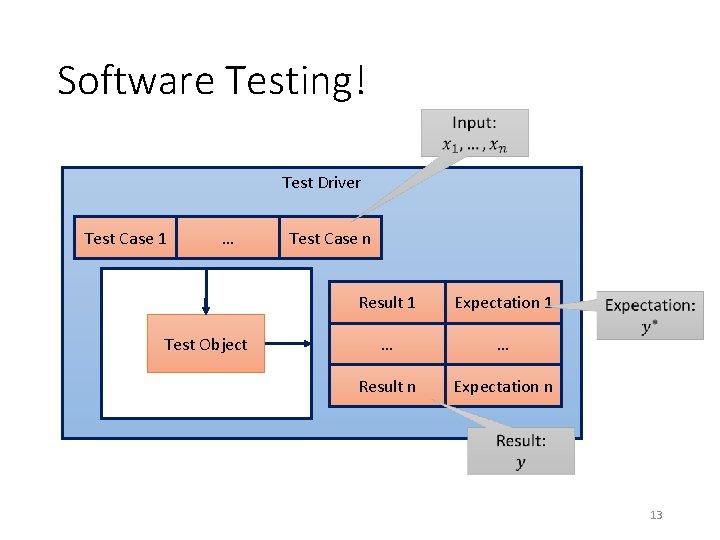
Software Testing! Test Driver Test Case 1 … Test Object Test Case n Result 1 Expectation 1 … … Result n Expectation n 13
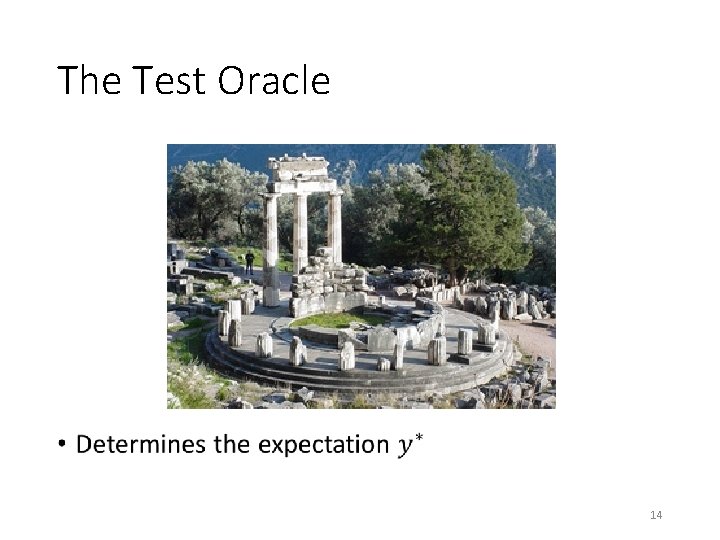
The Test Oracle • 14
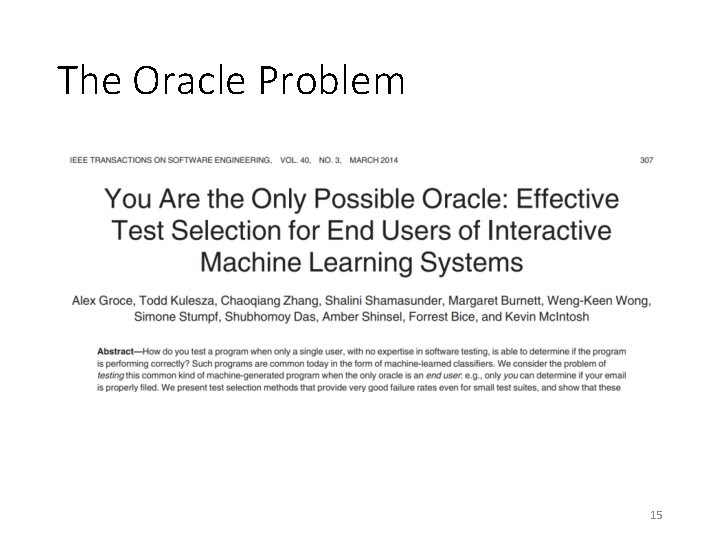
The Oracle Problem 15
Testing with Pseudo Oracles • Simulates a real oracle • Usefull to validate properties of algorithms M. D. Davis and E. J. Weyuker, “Pseudo-oracles for non-testable programs, ” 16 in Proceedings of the ACM ’ 81 Conference,
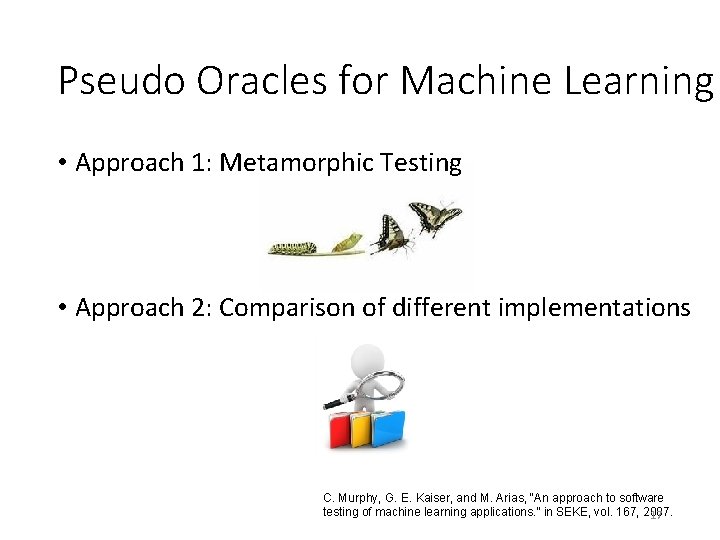
Pseudo Oracles for Machine Learning • Approach 1: Metamorphic Testing • Approach 2: Comparison of different implementations C. Murphy, G. E. Kaiser, and M. Arias, “An approach to software testing of machine learning applications. ” in SEKE, vol. 167, 2007. 17
Approach 1: Metamorphic Testing How does the output change, if I manipulate the input? 18
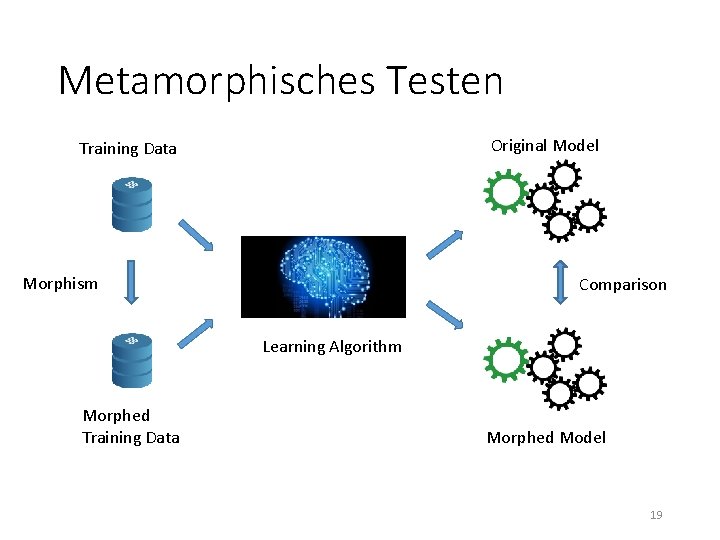
Metamorphisches Testen Original Model Training Data Morphism Comparison Learning Algorithm Morphed Training Data Morphed Model 19
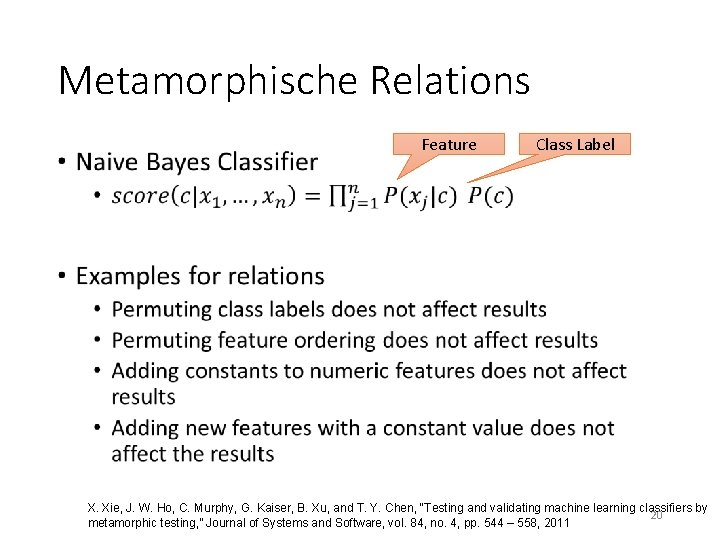
Metamorphische Relations • Feature Class Label X. Xie, J. W. Ho, C. Murphy, G. Kaiser, B. Xu, and T. Y. Chen, “Testing and validating machine learning classifiers by 20 metamorphic testing, ” Journal of Systems and Software, vol. 84, no. 4, pp. 544 – 558, 2011
Approach 2: Testing through other implementations Does my algorithm yield the same results as the competition? 21
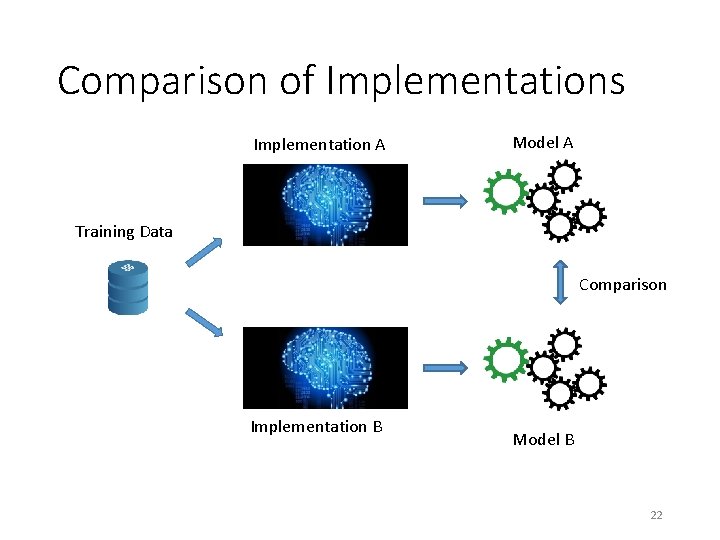
Comparison of Implementations Implementation A Model A Training Data Comparison Implementation B Model B 22
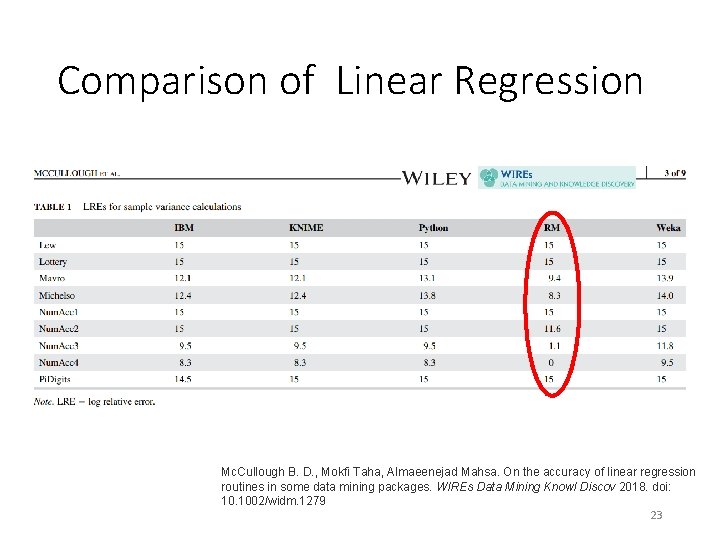
Comparison of Linear Regression Mc. Cullough B. D. , Mokfi Taha, Almaeenejad Mahsa. On the accuracy of linear regression routines in some data mining packages. WIREs Data Mining Knowl Discov 2018. doi: 10. 1002/widm. 1279 23
Contents • Motivation • Oracles and pseudo oracles • Trivial Oracles 24
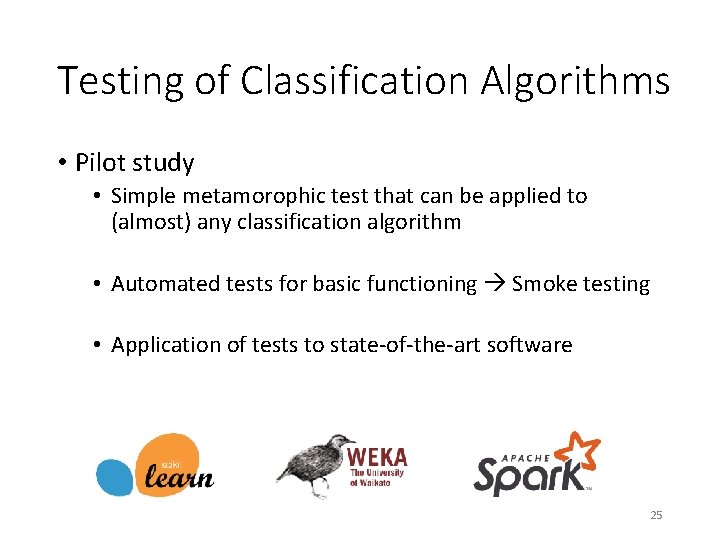
Testing of Classification Algorithms • Pilot study • Simple metamorophic test that can be applied to (almost) any classification algorithm • Automated tests for basic functioning Smoke testing • Application of tests to state-of-the-art software 25
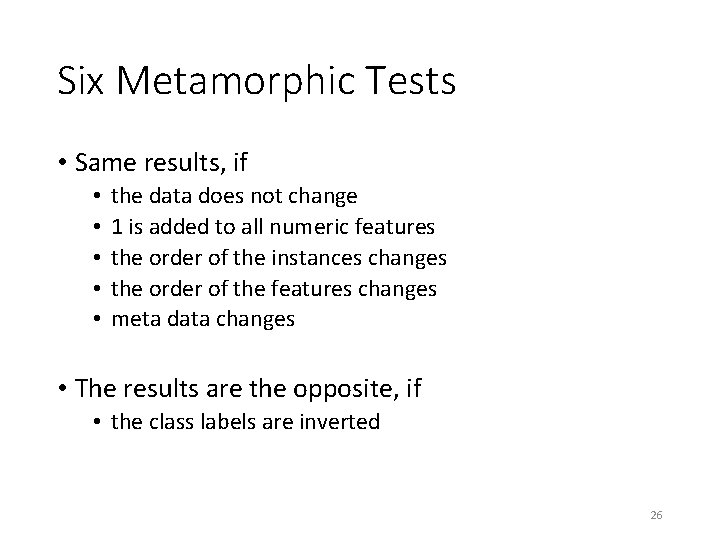
Six Metamorphic Tests • Same results, if • • • the data does not change 1 is added to all numeric features the order of the instances changes the order of the features changes meta data changes • The results are the opposite, if • the class labels are inverted 26
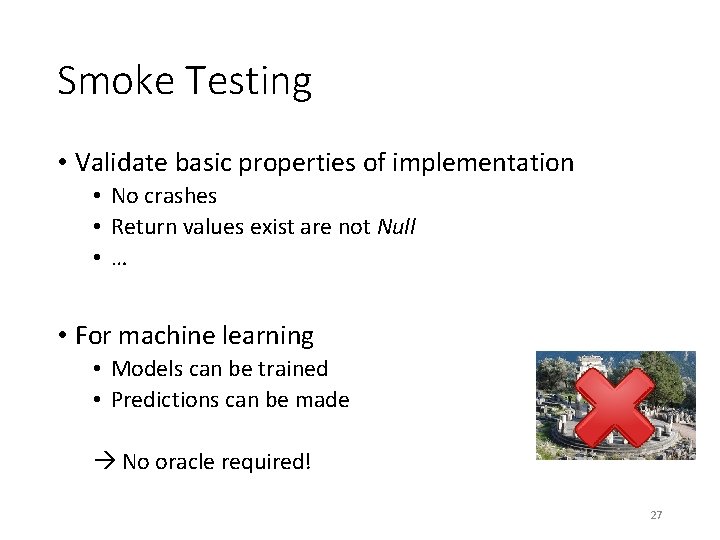
Smoke Testing • Validate basic properties of implementation • No crashes • Return values exist are not Null • … • For machine learning • Models can be trained • Predictions can be made No oracle required! 27
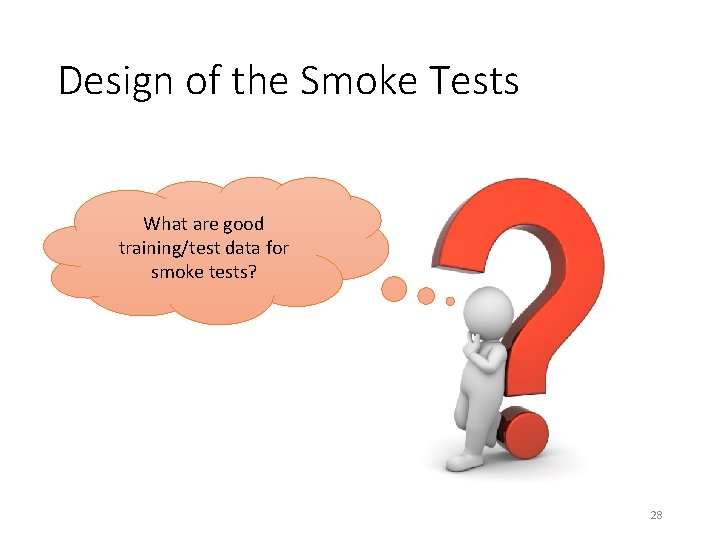
Design of the Smoke Tests What are good training/test data for smoke tests? 28
22 Smoke Tests for Classification • • • Data in [0, 1] Features close to machine precision Random classes Alle numeric values 0 Only single value in a class … 29
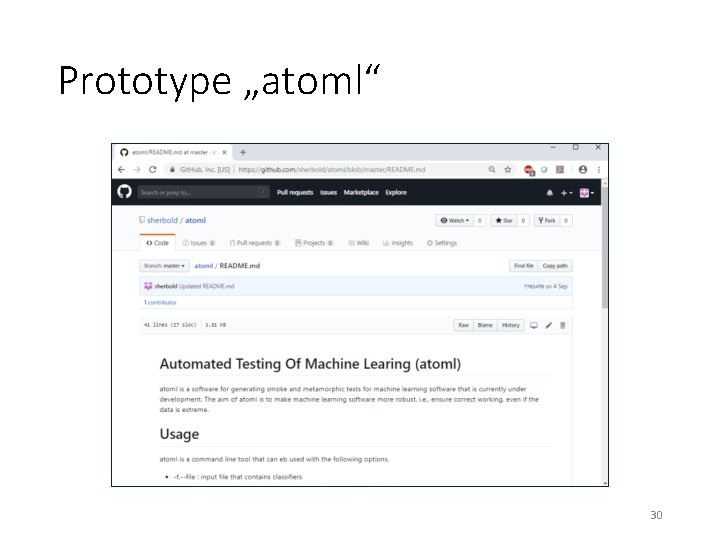
Prototype „atoml“ 30
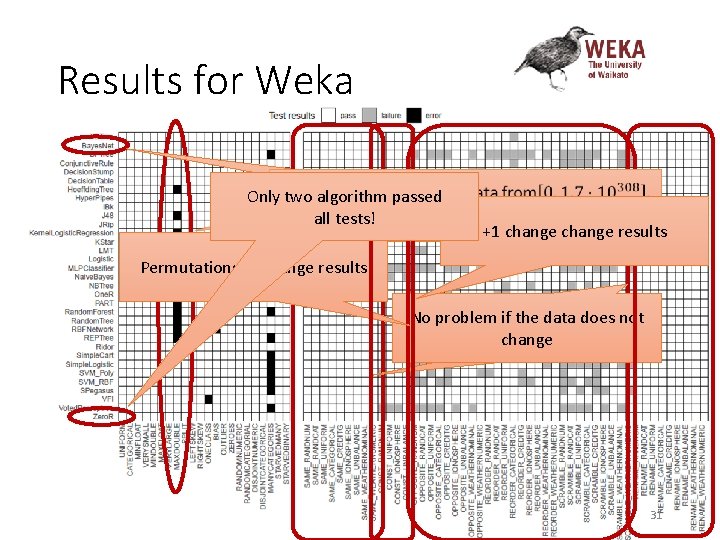
Results for Weka Only two algorithm passed Nur zwei Algorithmen komplett all. Probleme tests! ohne +1 change results Permutations of change results Keine Probleme, sich die No problem if thewenn data does not Datenchange nicht ändern 31
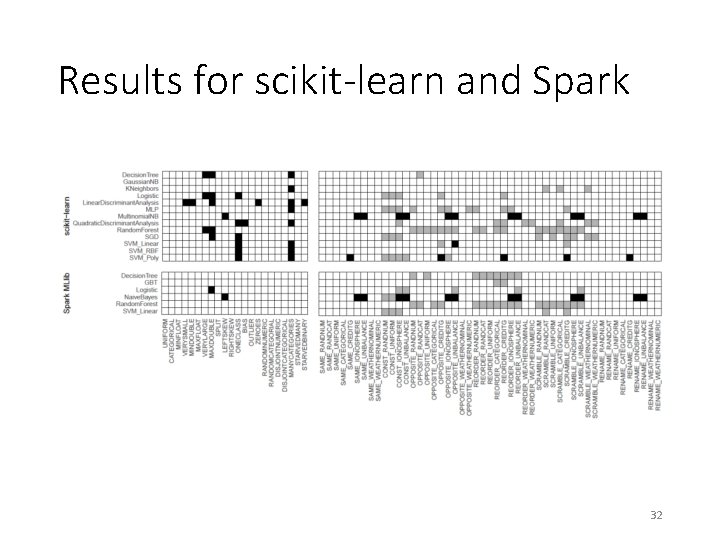
Results for scikit-learn and Spark 32
Developer Feedback ik a list. w ist@ al wek z ac. n. o t a scikit-learn@python. org dev @sp ark. apa che . org 33
Positive Feedback „This is definitely helpful!“ “This sounds like a useful tool. “ “Thanks for sharing your analysis. We really need more work in this direction. “ “Do you have any interest in applying your knowledge to industry? “ 34
„However“ … „However, I wanted to point out …“ „…not all your expectations are warranted…” “I suspect that…“ 35
Deviations not Always Wrong • Minibatches and Bagging • Instances/features are subdivided • Partitions depend on random seed and order of data • Asymmetric initializations • Order as tie breaker 36
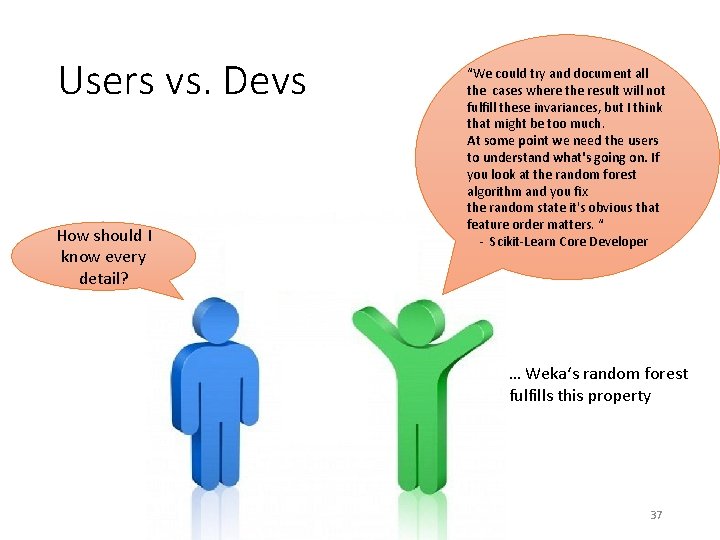
Users vs. Devs How should I know every detail? “We could try and document all the cases where the result will not fulfill these invariances, but I think that might be too much. At some point we need the users to understand what's going on. If you look at the random forest algorithm and you fix the random state it's obvious that feature order matters. “ - Scikit-Learn Core Developer … Weka‘s random forest fulfills this property 37
Deviation vs. Significance “Was the final difference in accuracy statistically significant? ” – Creator of Apache Spark 38
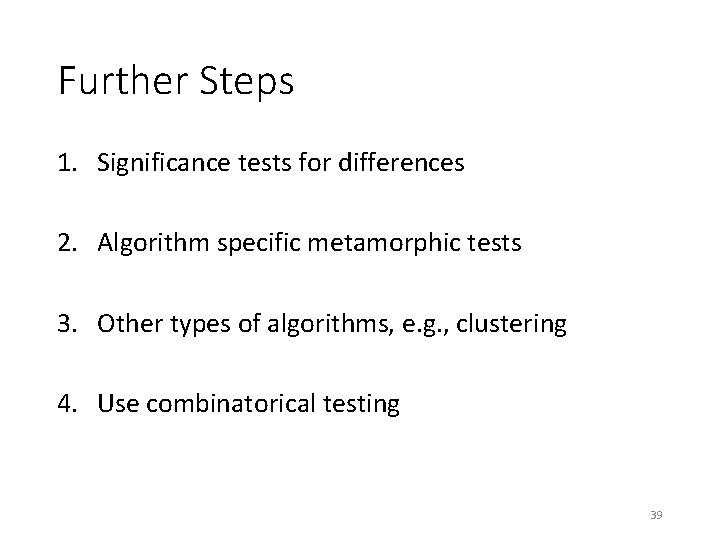
Further Steps 1. Significance tests for differences 2. Algorithm specific metamorphic tests 3. Other types of algorithms, e. g. , clustering 4. Use combinatorical testing 39
Hyperparameters and Testing How do hyper parameters affect my tests? 40
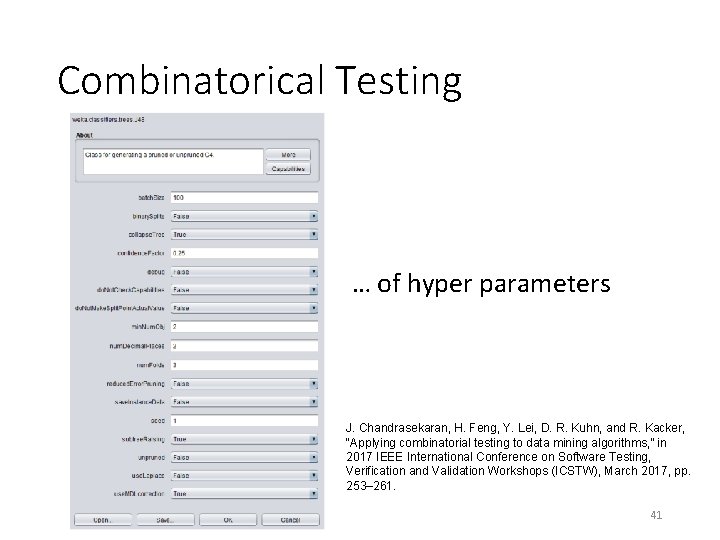
Combinatorical Testing … of hyper parameters J. Chandrasekaran, H. Feng, Y. Lei, D. R. Kuhn, and R. Kacker, “Applying combinatorial testing to data mining algorithms, ” in 2017 IEEE International Conference on Software Testing, Verification and Validation Workshops (ICSTW), March 2017, pp. 253– 261. 41
Agenda • Einführung und Motivation • Das Orakelproblem und Pseudoorakel • Fallstudie für Klassifikationsprobleme • Ausblick und Zusammenfassung 42
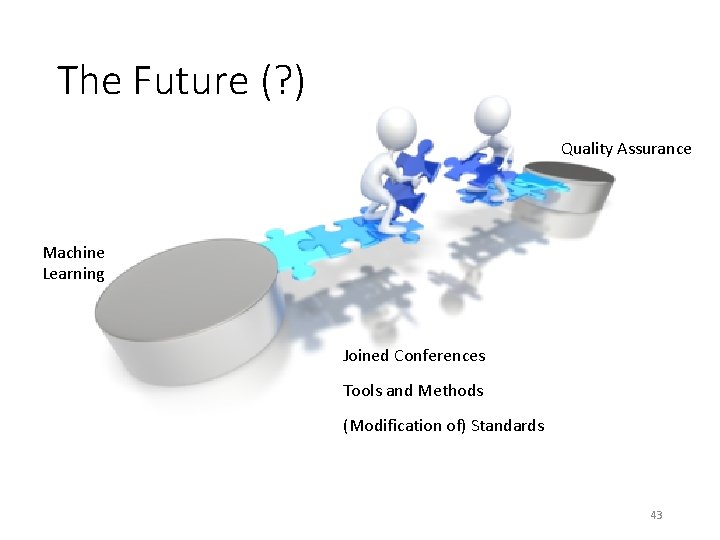
The Future (? ) Quality Assurance Machine Learning Joined Conferences Tools and Methods (Modification of) Standards 43
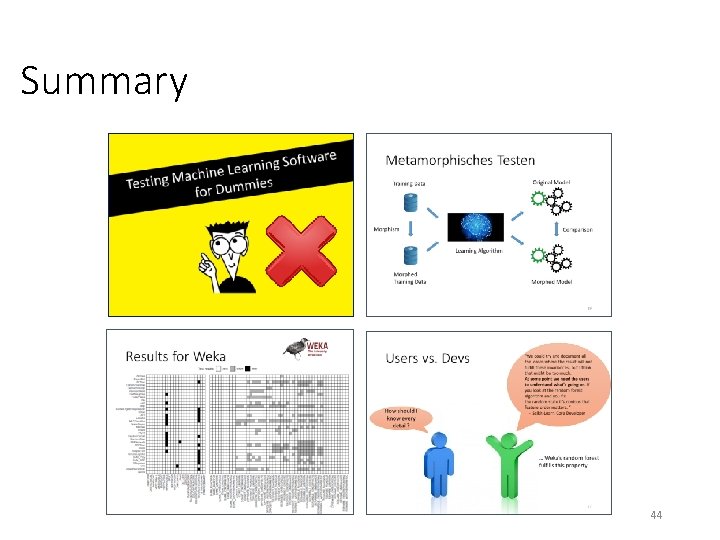
Summary 44