
Automated Monitoring of Injuries Due to Falls Using
- Slides: 25
Automated Monitoring of Injuries Due to Falls Using the Bio. Sense System Achintya N. Dey, MA 1, Jerome I Tokars, MD MPH 1, Peter Hicks, MPH 2, Matthew Miller, BA 2 and Roseanne English, BS 1 1 2 Division of Emergency Preparedness and Response National Center for Public Health Informatics Centers for Disease Control and Prevention Constella Group, LLC – an SRA International company The findings and conclusions in this presentation are those of the authors and do not necessary represent the views of the Centers for Disease Control and Prevention TM
Bio. Sense System • National real-time biosurveillance system to enable public health situational awareness • Current data sources: 569 hospitals, >1100 ambulatory care Departments of Defense (Do. D) and Veterans Affairs (VA) medical facilities, 2 large national laboratories • Data stored, analyzed, and visualized in a secure web-based application TM
Background • Falls are the leading cause of nonfatal medically attended injuries in the U. S. • Falls accounted for 21% of injury-related visits to U. S. emergency departments (ED) in 2005 • Falls are one of 11 injury-related subsyndromes currently tracked by Bio. Sense TM
Objectives • Identify and characterize clusters of falls in metropolitan areas during the 2007 -08 winter season • Assess association between falls clusters and severe weather TM
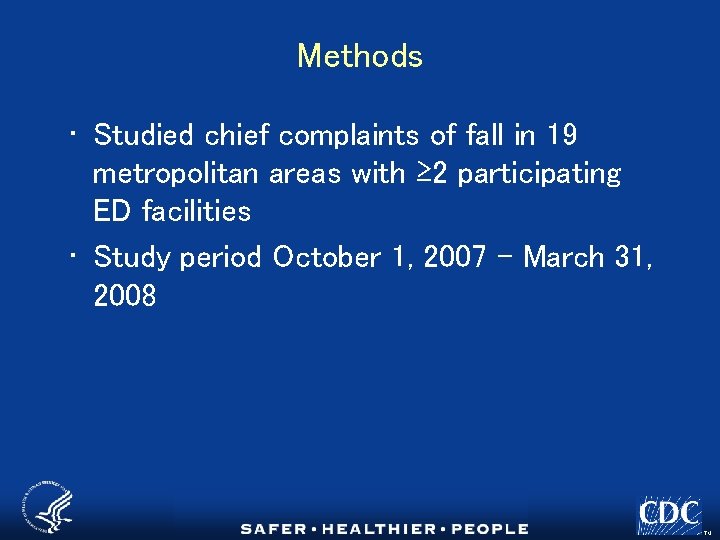
Methods • Studied chief complaints of fall in 19 metropolitan areas with ≥ 2 participating ED facilities • Study period October 1, 2007 – March 31, 2008 TM
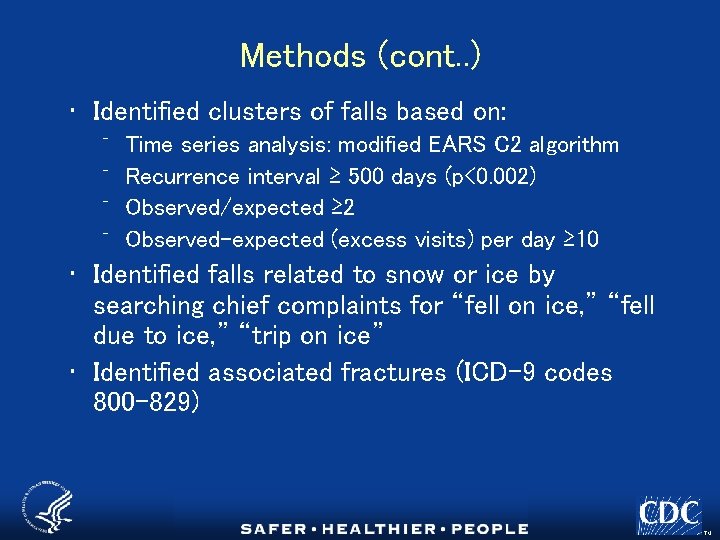
Methods (cont. . ) • Identified clusters of falls based on: ⁻ ⁻ Time series analysis: modified EARS C 2 algorithm Recurrence interval ≥ 500 days (p<0. 002) Observed/expected ≥ 2 Observed-expected (excess visits) per day ≥ 10 • Identified falls related to snow or ice by searching chief complaints for “fell on ice, ” “fell due to ice, ” “trip on ice” • Identified associated fractures (ICD-9 codes 800 -829) TM
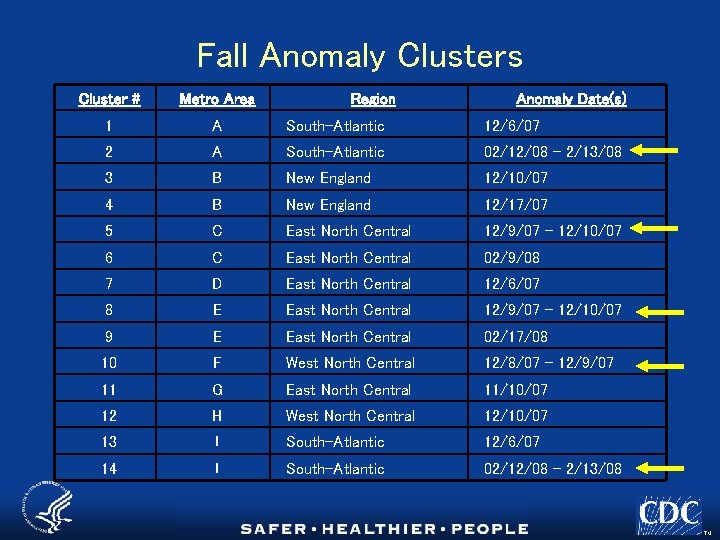
Fall Anomaly Clusters Cluster # Metro Area Region Anomaly Date(s) 1 A South-Atlantic 12/6/07 2 A South-Atlantic 02/12/08 – 2/13/08 3 B New England 12/10/07 4 B New England 12/17/07 5 C East North Central 12/9/07 – 12/10/07 6 C East North Central 02/9/08 7 D East North Central 12/6/07 8 E East North Central 12/9/07 – 12/10/07 9 E East North Central 02/17/08 10 F West North Central 12/8/07 – 12/9/07 11 G East North Central 11/10/07 12 H West North Central 12/10/07 13 I South-Atlantic 12/6/07 14 I South-Atlantic 02/12/08 – 2/13/08 TM
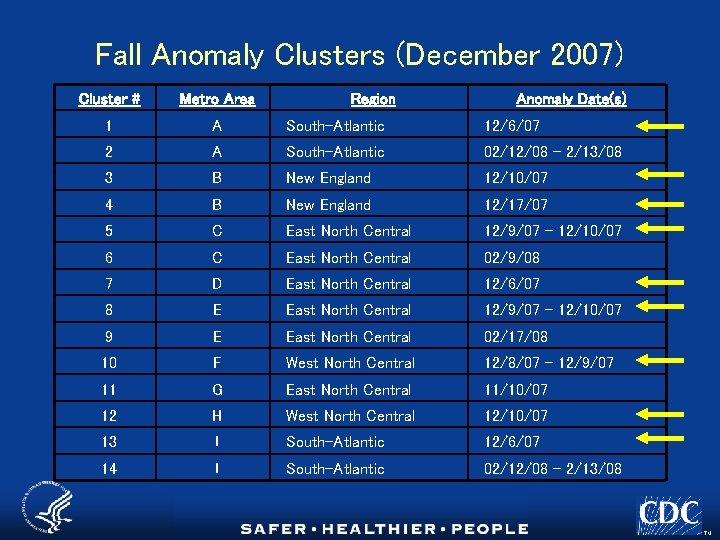
Fall Anomaly Clusters (December 2007) Cluster # Metro Area Region Anomaly Date(s) 1 A South-Atlantic 12/6/07 2 A South-Atlantic 02/12/08 – 2/13/08 3 B New England 12/10/07 4 B New England 12/17/07 5 C East North Central 12/9/07 – 12/10/07 6 C East North Central 02/9/08 7 D East North Central 12/6/07 8 E East North Central 12/9/07 – 12/10/07 9 E East North Central 02/17/08 10 F West North Central 12/8/07 – 12/9/07 11 G East North Central 11/10/07 12 H West North Central 12/10/07 13 I South-Atlantic 12/6/07 14 I South-Atlantic 02/12/08 – 2/13/08 TM
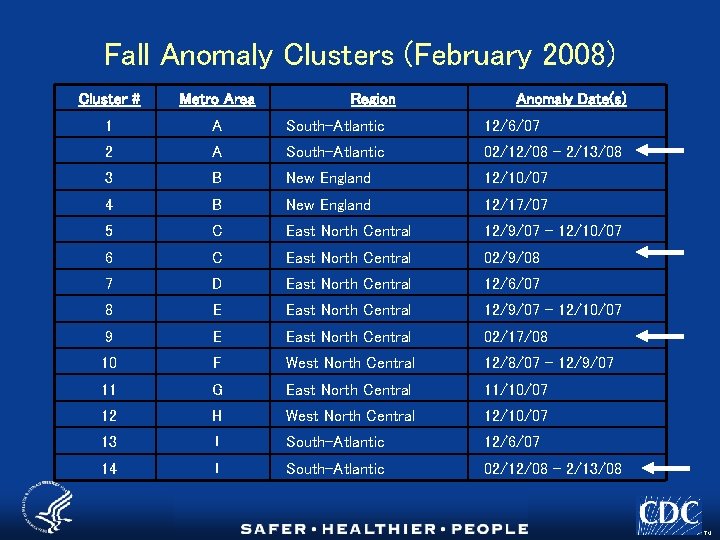
Fall Anomaly Clusters (February 2008) Cluster # Metro Area Region Anomaly Date(s) 1 A South-Atlantic 12/6/07 2 A South-Atlantic 02/12/08 – 2/13/08 3 B New England 12/10/07 4 B New England 12/17/07 5 C East North Central 12/9/07 – 12/10/07 6 C East North Central 02/9/08 7 D East North Central 12/6/07 8 E East North Central 12/9/07 – 12/10/07 9 E East North Central 02/17/08 10 F West North Central 12/8/07 – 12/9/07 11 G East North Central 11/10/07 12 H West North Central 12/10/07 13 I South-Atlantic 12/6/07 14 I South-Atlantic 02/12/08 – 2/13/08 TM
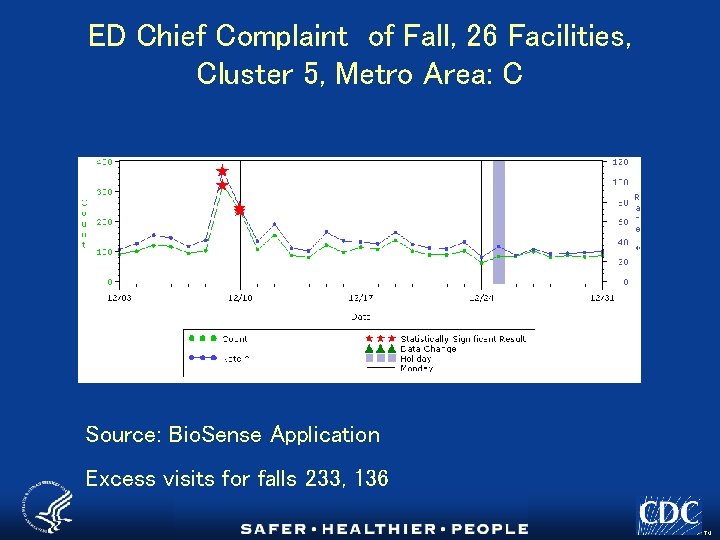
ED Chief Complaint of Fall, 26 Facilities, Cluster 5, Metro Area: C Source: Bio. Sense Application Excess visits for falls 233, 136 TM
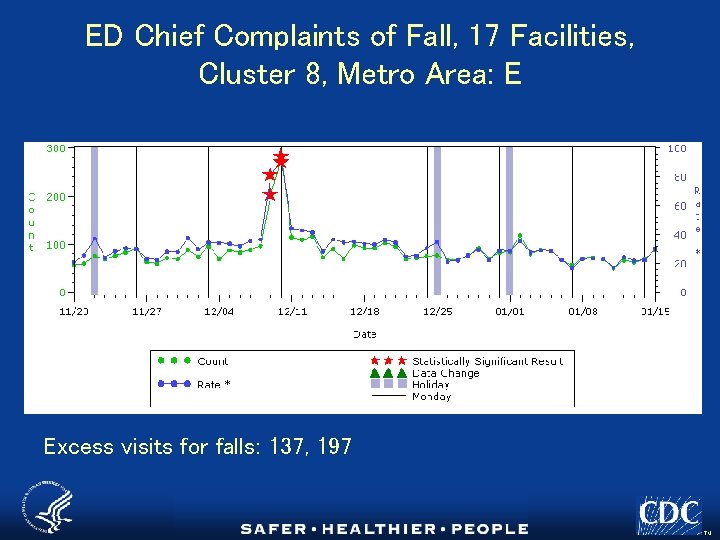
ED Chief Complaints of Fall, 17 Facilities, Cluster 8, Metro Area: E Excess visits for falls: 137, 197 TM
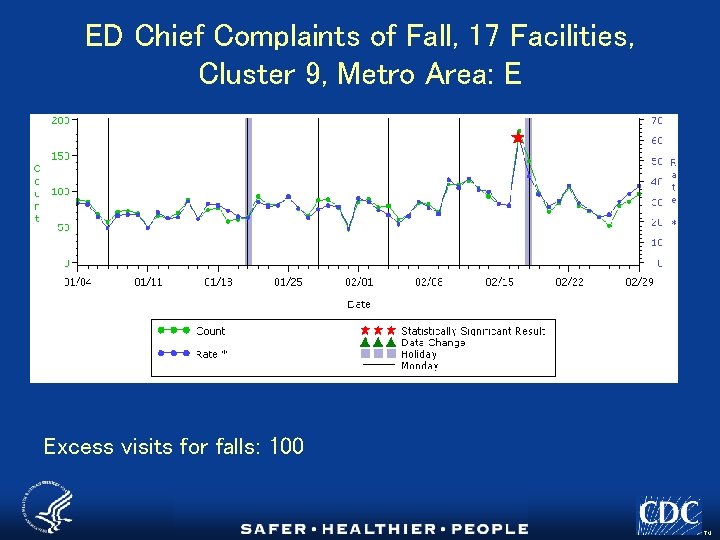
ED Chief Complaints of Fall, 17 Facilities, Cluster 9, Metro Area: E Excess visits for falls: 100 TM
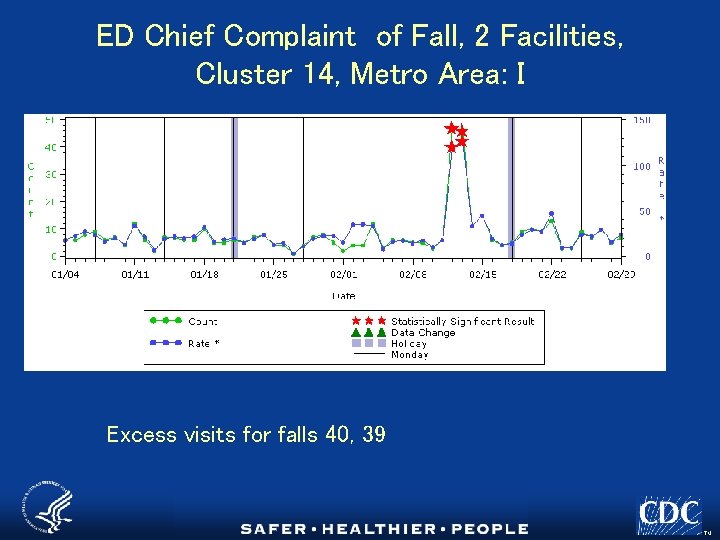
ED Chief Complaint of Fall, 2 Facilities, Cluster 14, Metro Area: I Excess visits for falls 40, 39 TM
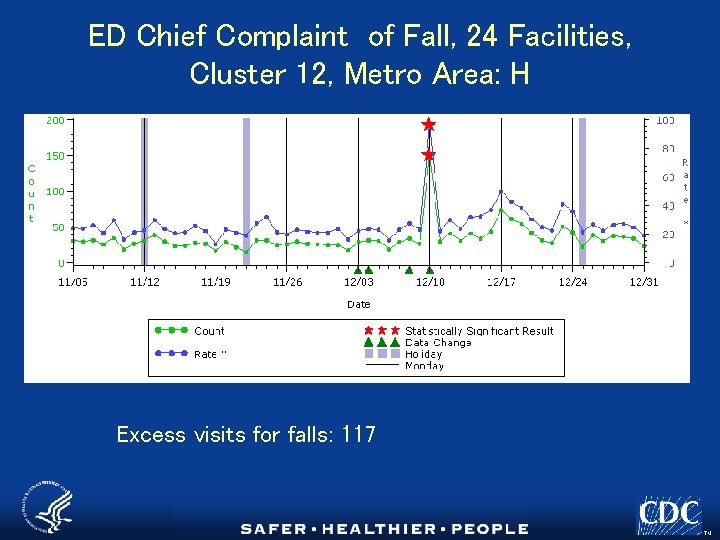
ED Chief Complaint of Fall, 24 Facilities, Cluster 12, Metro Area: H Excess visits for falls: 117 TM
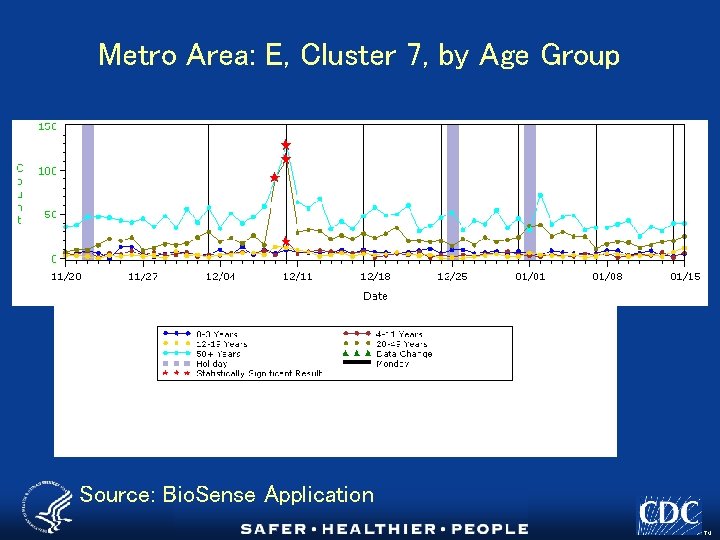
Metro Area: E, Cluster 7, by Age Group Source: Bio. Sense Application TM
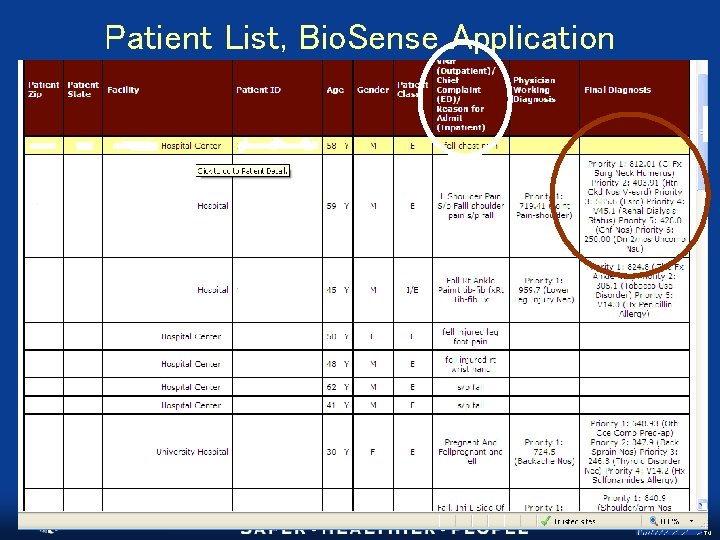
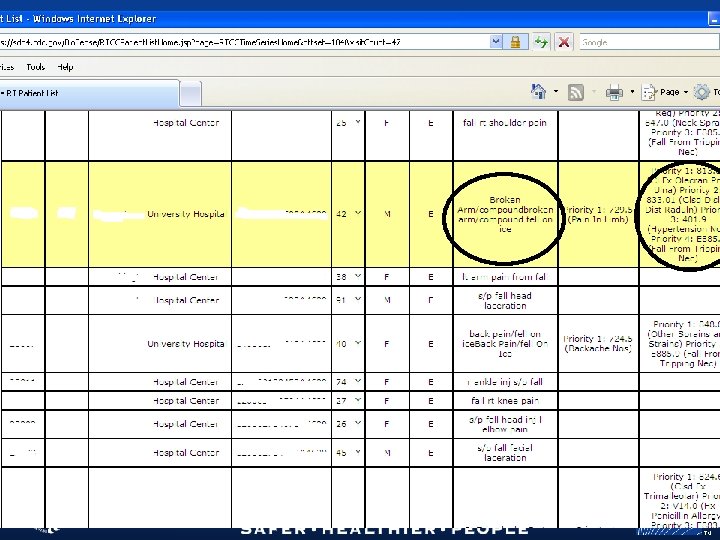
Patient List, Bio. Sense Application TM
TM
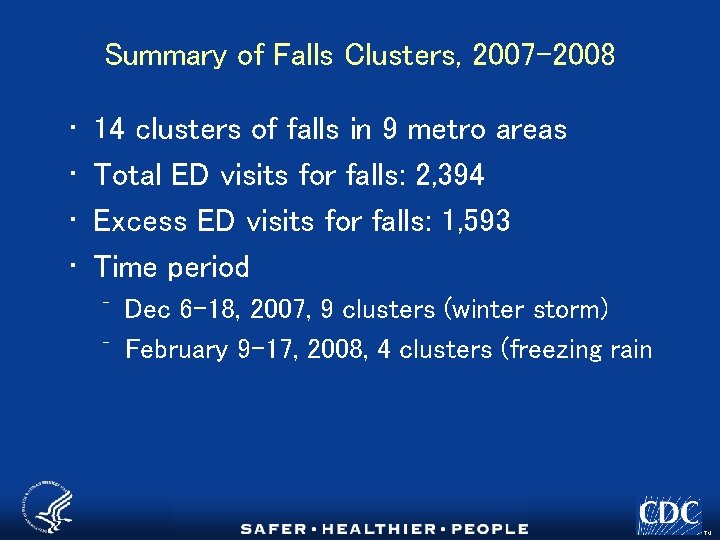
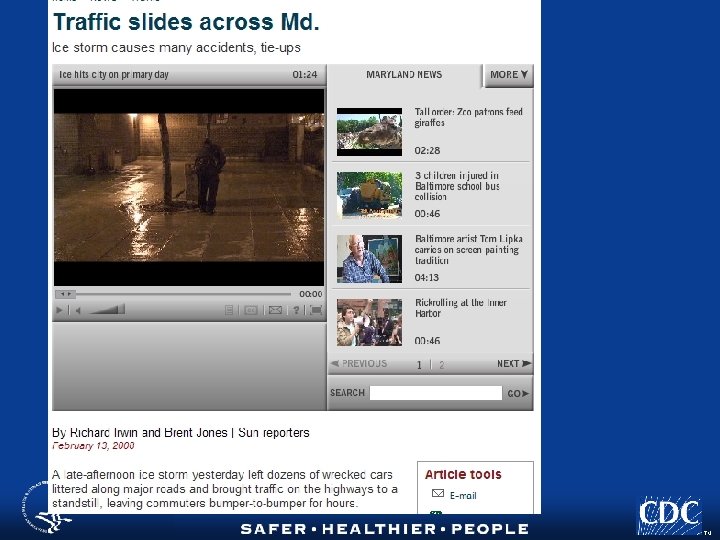
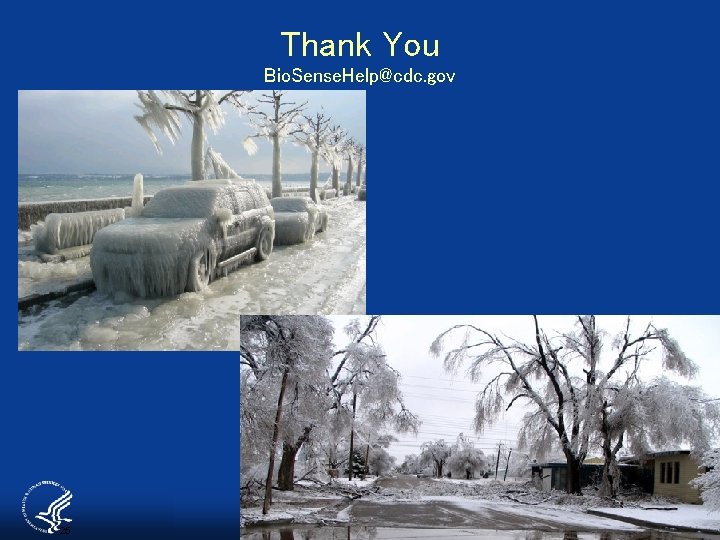
Summary of Falls Clusters, 2007 -2008 • • 14 clusters of falls in 9 metro areas Total ED visits for falls: 2, 394 Excess ED visits for falls: 1, 593 Time period ⁻ Dec 6 -18, 2007, 9 clusters (winter storm) ⁻ February 9 -17, 2008, 4 clusters (freezing rain TM
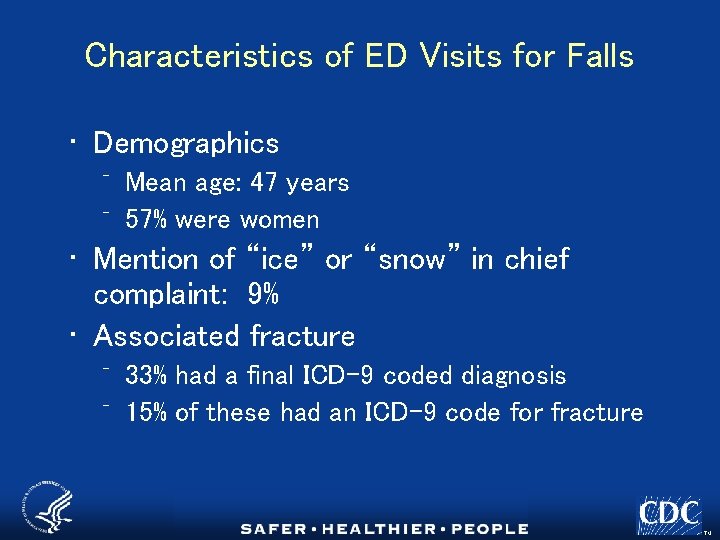
Characteristics of ED Visits for Falls • Demographics ⁻ Mean age: 47 years ⁻ 57% were women • Mention of “ice” or “snow” in chief complaint: 9% • Associated fracture ⁻ 33% had a final ICD-9 coded diagnosis ⁻ 15% of these had an ICD-9 code for fracture TM
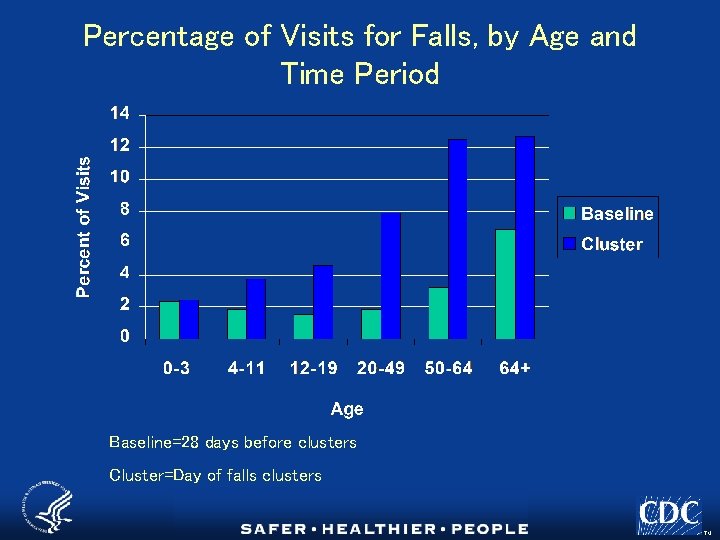
Percentage of Visits for Falls, by Age and Time Period Baseline=28 days before clusters Cluster=Day of falls clusters TM
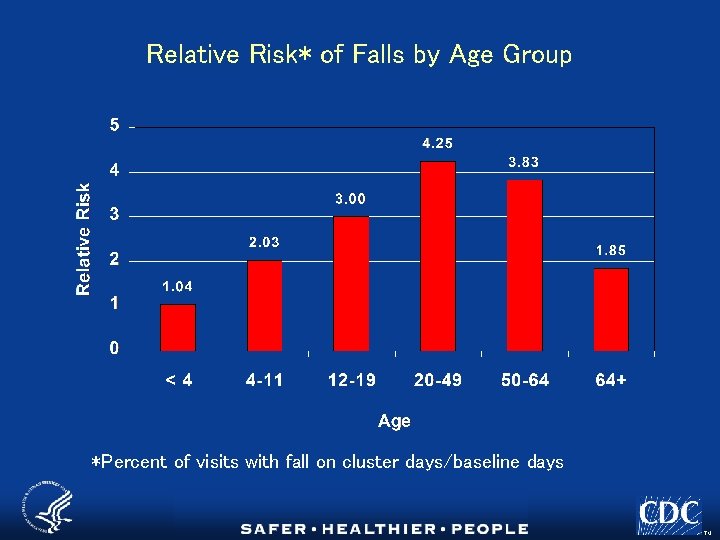
Relative Risk* of Falls by Age Group *Percent of visits with fall on cluster days/baseline days TM
TM
Discussion • Limitations of geographic coverage and data availability • Identified several large clusters of ED visits due to falls associated with severe weather • Increase in falls visits highest for 20 -49 years • Several earlier studies have shown similar results TM
Discussion, Utility • Surveillance for falls ⁻ Data available in near-real time ⁻ Permits rapid detection of increases in falls injuries ⁻ May be helpful in determining the effectiveness of public health campaigns ⁻ May be helpful in prevention programs • Surveillance for injuries due to natural disasters such as hurricanes in real time ⁻ Provide descriptive data ⁻ Track geographically TM
Thank You Bio. Sense. Help@cdc. gov 25 TM